1
9
VIRTUALIZER 3D FX2000 User Manual
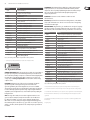
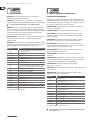
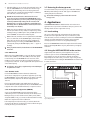
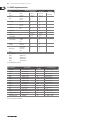
Parameter
Function
Speed
LFO1 Wave
Depth
Delay
Feedback
Wave
Semitones 1
Semitones 2
Semitones 3
Cents 1
Cents 2
Cents 3
Drum Depth
Horn Depth
Balance
Stereo Spread
Stereo Phase
Wideness
Base
Drive
Mode
Auto Modulation
Feedback LP
Damping
Speed of modulation
Sets the curve of the modulation
(triangular, sinusoidal, rectangular)
Modulation depth (L & R)
Length of delay
Routes back the processed signal to the input stage
Sets the curve of the LFO (Sine, Tri, Opto, Square,
Saw Up, Saw Down)
Pitch Shifter 1: detuning in semitones
Pitch Shifter 2: detuning in semitones
Pitch Shifter 3: detuning in semitones
Pitch Shifter 1: detuning in cents
Pitch Shifter 2: detuning in cents
Pitch Shifter 3: detuning in cents
Intensity of amplitude modulation of the bass loudspeaker (Leslie)
Intensity of amplitude modulation of the high pitch horn (Leslie)
Volume ratio between horn and drum
Stereo effect intensity
Phase angle between left and right modulation
Parameter variation (Ultra Chorus)
Starting point of modulation
Intensity of tube distortion
Selects various effect modes or between three modes with
increasing modulation intensity (Stereo Phaser)
Influences LFO frequency (dependent on input level)
Low pass cut-off frequency of feedback
Limits frequency range to simulate older chorus units
(Stereo / Vintage Chorus)
Tab. 2.3: Functioning of the modulation and pitch shifter effects’ parameters
1 (Low Frequency Oscillator): determines the speed and nature of modulation effects.
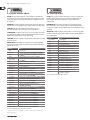
DYNAMICS
2.4 Dynamic effects
COMPRESSOR/LIMITER: When the signal level exceeds the level control limit of
the signal-processing unit, it must be limited dynamically to avoid distortions.
This is achieved by installing a compressor or a limiter. The limiter abruptly limits
the signal above a specified threshold, while a compressor acts “softly” over
a large range. The Analog Compr/Limiter is modeled after a famous analog
compressor unit.
EXPANDER: Background noises of all types (noise, humming etc) limit the
dynamic range of the actual signal. As long as the level of the actual
signal lies significantly above the background noise, the noise is inaudible.
The interference signal in this case is masked by the actual signal. The expander
is used to effectively expand the dynamic range of signals. Signals with small
amplitudes (such as background noise) can be weakened, thereby reducing the
background noise.
GATE: On stage and in studios, there are diverse applications where a noise
gate is needed. For example, microphones that tend to cause feedback can
be “defused”. In addition, you can use a gate to eliminate unwanted noise.
When used on vocals, for example, the signal is simply masked during pauses,
thus eliminating all noise. Needless to say, a gate used on vocals has to open very
quickly—otherwise, the first syllables of soft or whispered passages would not
be audible.
ULTRAMIZER: The ultramizer function divides the sound spectrum into two
frequency bands and, as a result, allows inaudible but extremely effective
compression. This is especially helpful during mix-down. The FX2000 analyses
the received audio material and automatically adjusts input gain and
compression parameters.
DENOISER: The denoiser is used to eliminate or reduce noise and
other interference.
DE-ESSER: A problem often encountered in recording situations, is the sibilant
(Ssss) sound of the human voice. The de-esser is used to remove strong hissing
sounds from the audio signal.
WAVE DESIGNER: Using this effect, you can influence the envelope of a signal by
specifying its volume. A (= Attack) indicates the time a tone needs to reach its
full volume. R (= Release) determines how long it takes before a tone dies away.
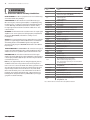
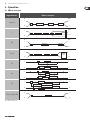
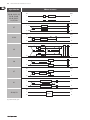
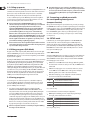
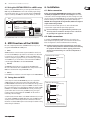
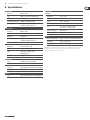
Parameter
Ratio1
Threshold
Limiter Threshold
M-Gain
Gain L
Gain R
Soft Knee
Attack3
Attack L
Attack R
Release4
Release L
Release R
Hold5
Range
Density
Speed
Split Frequency
Stereo FX
Enhancer Frequency
Band
LP Frequency
LP Depth
LP Speed
Gate Hold
Gate Response
Gate Threshold
Frequency
Function
Degree of compression (Compressor) / expansion (Expander)
Threshold point of Compressor / Expander / Gate
Threshold point of Limiter
Make-up gain
Make-up gain for left channel
Make-up gain for right channel
Bending of the characteristic curve2 at the threshold point
Response time
Response time of left channel (Wave Designer)
Response time of right channel (Wave Designer)
Release (right stop activates auto mode for Compr./Lim.)
Release of left channel
Release of right channel
Time until release process sets in
Degree of damping (Gate); dynamic limitation (Ultramizer)
Degree of compression (Ultramizer)
Recovery time (the higher the faster)
Split point between high and low band
Intensity of the stereo enhancer
Frequency of the HF6 enhancer
Separates low, high band & wide (Ultramizer / De-Esser)
Basic frequency (Denoiser)
Controls the amount of influence on the signal level (Denoiser)
Recovery time of low pass modulation (Denoiser)
Time until the gate process sets in (Denoiser)
Gate recovery time (Denoiser)
Amount of signal needed to open the noise gate (Denoiser)
Lower cut-off frequency of compression process (De-Esser)
Tab. 2.4: Functioning of the dynamic effects’ parameters
1 Ratio determines the relation of input to output level for all signals which exceed the threshold point.
2 The Soft Knee characteristic curve prevents a high compression rate (high ratio) from sounding unnatural.
3 Attack determines the time which the processor requires to react to signals which exceed the threshold point.
4 Release determines the time that the processor needs after falling below the threshold point to reach the
original level.
5 Hold determines the time before the release process sets in (release sets in after the signal falls below the
threshold point).
6 High frequency.