1
A40086, SEEG R25AM O/M
GUIDE
USEFUL THINGS TO KNOW ABOUT
MICROWAVES
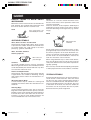
Metals
should not, as a rule, be used in microwave ovens
because microwaves cannot penetrate metals and
reach the food inside.
There are, however, some exceptions: Small strips of
aluminum foil can be used to cover parts to prevent
them from defrosting or cooking too fast (e.g., chicken
wings).
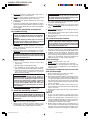
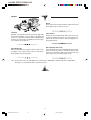
Microwaves set the water molecules contained in the
food vibrating. The resulting friction generates heat
that can be used to defrost or cook the food.
Food
The microwaves are
absorbed by the food
Metal
SUITABLE UTENSILS
Microwaves are
reflected
Glass, Glass-ceramics and Porcelain
Heat-resistant utensils made of glass, glass-ceramic
or porcelain are suitable. However, the utensils must
not contain metals (e.g., lead crystal) or be metalplated (e.g., gold rim, cobalt blue).
Small metal skewers and aluminum trays (of prepackaged food) may be used. However, they must
be small in proportion to the food. Aluminum containers, for example, must be filled to at least 2/3 to
3/4 with food. It is recommendable to transfer the
food into microwave-safe containers.
Glass, Porcelain, Ceramics
Plastics, paper etc.
Microwaves
pass through
When using aluminum trays or other metal utensils,
they must be placed at least 2.0 cm away from the
cavity walls. Otherwise the cavity walls may be damaged by sparking.
Ceramics
are usually suitable but they must be enamelled.
When using utensils that are not enamelled, moisture
can be absorbed by the material and heat it up. This
can cause the material to crack.
Do not use any utensils with metal-plating, metal parts
or metal projections like screws, ribbons, or handles.
Plastics and Paper Dishes
Heat-resistant and microwave-proof plastic utensils
or paper dishes are suitable for defrosting, heating
and cooking. Please follow the manufacturer's instructions.
TESTING UTENSILS
Perform the following test if you are unsure whether a
certain utensil is microwave-safe: Place the utensil
into the oven, put a glass containing about 150 ml of
water on or beside the utensil, and operate the microwave oven at 100% power for 1 to 2 minutes. If it is cool
or luke-warm to the touch, the utensil is suitable for
microwave use. Do not perform this test on plastic
dishes because the plastic might melt.
Microwave Plastic Wrap
or heat-resistant wrap is suitable for covering and
wrapping food. Please follow the manufacturer's instructions.
Roasting Bags
can be used in microwave ovens. Do not close the
bags with a metal clip because the clip may cause the
bag film to melt. Close the bag with string and pierce
it several times with a fork. Films that are not heatresistant, e.g., films to retain product freshness are
not recommended for use in microwave ovens.
8
SEEG R22/23/25.En1-14
8
03.8.28, 9:08 PM