1
Introduction
The information age has seen the development of electronic pathways that
carry vast amounts of valuable commercial, scientific, and educational
information between financial institutions, companies, individuals, and
government organisations. Unfortunately the unprecedented levels of
access provided by systems like the Internet also expose this data to
breaches of confidentiality, disruption of service, and outright theft. As a
result, there is an enormous (and still growing) demand for the means to
secure these online transactions. One report by the Computer Systems
Policy Project (a consortium of virtually every large US computer
company, including Apple, AT&T, Compaq, Digital, IBM, Silicon
Graphics, Sun, and Unisys) estimated that the potential revenue arising
from these security requirements in the US alone could be as much as
US$30-60 billion in the next few years, and the potential exposure to
global users from a lack of this security is projected to reach between
US$320 and 640 billion.
Unfortunately the security systems required to protect data are generally
extremely difficult to design and implement, and even when available tend
to require considerable understanding of the underlying principles in order
to be used. This has lead to a proliferation of “snake oil” products that
offer only illusionary security. Many organisations have held back from
deploying online information systems because the means to secure them
weren’t readily available, or because they previously attempted weak,
easily broken security that was unacceptable to users.
The cryptlib security toolkit provides the answer to this problem. A
complete description of the capabilities provided by cryptlib is given
below.
cryptlib Overview
cryptlib is a powerful security toolkit that allows even inexperienced
crypto programmers to easily add encryption and authentication services to
their software. The high-level interface provides anyone with the ability to
add strong security capabilities to an application in as little as half an hour,
without needing to know any of the low-level details that make the
encryption or authentication work. Because of this, cryptlib dramatically
reduces the cost involved in adding security to new or existing
applications.
At the highest level, cryptlib provides implementations of complete
security services such as S/MIME and PGP/OpenPGP secure enveloping,
SSL/TLS and SSH secure sessions, CA services such as CMP, SCEP,
RTCS, and OCSP, and other security operations such as secure
timestamping (TSP). Since cryptlib uses industry-standard X.509,
S/MIME, PGP/OpenPGP, and SSH/SSL/TLS data formats, the resulting
encrypted or signed data can be easily transported to other systems and
processed there, and cryptlib itself runs on virtually any operating system
— cryptlib doesn’t tie you to a single platform. This allows email, files,
and EDI transactions to be authenticated with digital signatures and
encrypted in an industry-standard format.
cryptlib provides an extensive range of other capabilities including full
X.509/PKIX certificate handling (all X.509 versions from X.509v1 to
X.509v3) with additional support for SET, Microsoft AuthentiCode,
Identrus, RPKI, SigG, S/MIME, SSL, and Qualified certificates, PKCS #7
certificate chains, handling of certification requests and CRLs including
automated checking of certificates against CRLs and online checking
using RTCS and OCSP, and issuing and revoking certificates using CMP
and SCEP. In addition cryptlib implements a full range of certificate
authority (CA) functions, as well as providing complete CMP, SCEP,
RTCS, and OCSP server implementations to handle online certificate
enrolment/issue/revocation and certificate status checking. Alongside the
certificate handling, cryptlib provides a sophisticated key storage interface
that allows the use of a wide range of key database types ranging from
PKCS #11 devices, PKCS #15 key files, and PGP/OpenPGP key rings
through to commercial-grade RDBMS’ and LDAP directories with
optional SSL protection.
In addition to its built-in capabilities, cryptlib can make use of the crypto
capabilities of a variety of external crypto devices such as hardware crypto
accelerators, Fortezza cards, PKCS #11 devices, hardware security
modules (HSMs), and crypto smart cards. For particularly demanding
applications cryptlib can be used with a variety of crypto devices that have
received appropriate FIPS 140 or ITSEC/Common Criteria certification.
The crypto device interface also provides a convenient general-purpose
plug-in capability for adding new functionality that will be automatically
used by cryptlib. cryptlib also provides a general-purpose crypto HAL
(hardware abstraction layer) interface that allows it to use the native crypto
capabilities available in some ARM, MIPS, and PPC cores used in
embedded systems and devices.
cryptlib is supplied as source code for AMX, BeOS, ChorusOS, DOS,
DOS32, eCOS, µC/OS-II, embedded Linux, FreeRTOS/OpenRTOS, IBM
MVS, µITRON, Macintosh/OS X, OS/2, PalmOS, RTEMS, Tandem,
ThreadX, a variety of Unix versions (including AIX, Digital Unix, DGUX,
FreeBSD/NetBSD/OpenBSD, HP-UX, IRIX, Linux, MP-RAS, OSF/1,
QNX, SCO/UnixWare, Solaris, SunOS, Ultrix, and UTS4), uClinux,
VM/CMS, VxWorks, Windows 3.x, Windows 95/98/ME, Windows
CE/PocketPC/SmartPhone, Windows NT/2000/XP/Vista/Windows 7 (32and 64-bit versions), VDK, and Xilinx XMK. cryptlib’s highly portable
nature means that it is also being used in a variety of custom embedded
system environments. cryptlib comes with language bindings for C / C++,
C# / .NET, Delphi, Java, Perl, Python, and Visual Basic (VB).
cryptlib features
cryptlib provides a standardised interface to a number of popular
encryption algorithms, as well as providing a high-level interface that
hides most of the implementation details and uses operating-systemindependent encoding methods that make it easy to transfer secured data
from one operating environment to another. Although use of the highlevel interface is recommended, experienced programmers can directly
access the lower-level encryption routines for implementing custom
encryption protocols or methods not directly provided by cryptlib.
Architecture
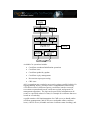
cryptlib consists of a set of layered security services and associated
programming interfaces that provide an integrated set of information and
communications security capabilities. Much like the network reference
model, cryptlib contains a series of layers that provide each level of
abstraction, with higher layers building on the capabilities provided by the
lower layers.
At the lowest level are basic components such as core encryption and
authentication routines, which are usually implemented in software but
may also be implemented in hardware (due to the speed of the software
components used in cryptlib, the software is usually faster than dedicated
hardware). At the next level are components that wrap up the specialised
and often quite complex core components in a layer that provides abstract
functionality and ensures complete cross-platform portability of data.
These functions typically cover areas such as “create a digital signature” or
“exchange an encryption key”. At the highest level are extremely
powerful and easy-to-use functions such as “encrypt a message”, “sign a
message”, “open a secure link”, and “create a digital certificate” that
require no knowledge of encryption techniques, and that take care of
complex issues such as key management, data encoding, en/decryption,
and digital signature processing.
High-level interface
Secure data
enveloping
Secure communications
sessions
Certificate
management
Security services interface
Key
exchange
Digital
signature
Key
generation
Encryption services interface
Native
encryption
services
Adaptation
layer
Adaptation
layer
Third-party
encryption
services
Third-party
encryption
services
Key management
Key store interface
Native
database
services
Adaptation
layer
Third-party
database
services
cryptlib’s powerful object management interface provides the ability to
add encryption and authentication capabilities to an application without
needing to know all the low-level details that make the encryption or
authentication work. The automatic object-management routines take care
of encoding issues and cross-platform portability problems, so that a
handful of function calls is all that’s needed to wrap up data in signed or
encrypted form with all of the associated information and parameters
needed to recreate it on the other side of a communications channel. This
provides a considerable advantage over other encryption toolkits that often
require hundreds of lines of code and the manipulation of complex
encryption data structures to perform the same task.
S/MIME
cryptlib employs the IETF-standardised Cryptographic Message Syntax
(CMS, formerly called PKCS #7) format as its native data format. CMS is
the underlying format used in the S/MIME secure mail standard, as well as
a number of other standards covering secure EDI and related systems like
HL7 medical messaging and the Session Initiation Protocol (SIP) for
services like Internet telephony and instant messaging.
The S/MIME implementation uses cryptlib’s enveloping interface which
allows simple, rapid integration of strong encryption and authentication
capabilities into existing email agents and messaging software. The
resulting signed enveloped data format provides message integrity and
origin authentication services, the encrypted enveloped data format
provides confidentiality, and the authenticated encrypted data format
provides all of these services at once. In addition cryptlib’s S/MIME
implementation allows external services such as trusted timestamping
authorities (TSAs) to be used when a signed message is created, providing
externally-certified proof of the time of message creation. The complexity
of the S/MIME format means that the few other toolkits that are available
require a high level of programmer knowledge of S/MIME processing
issues. In contrast cryptlib’s enveloping interface makes the process as
simple as pushing raw data into an envelope and popping the processed
data back out, a total of three function calls, plus one more call to add the
appropriate encryption or signature key.
PGP/OpenPGP
Alongside the PKCS #7/CMS/SMIME formats, cryptlib supports the
PGP/OpenPGP message format, allowing it to be used to send and receive
PGP-encrypted email and data. As with the S/MIME implementation, the
PGP implementation uses cryptlib’s enveloping interface to allow simple,
rapid integration of strong encryption and authentication capabilities into
existing email agents and messaging software. Since the enveloping
interface is universal, the process involved in creating PGP and S/MIME
messages is identical except for the envelope format specifier, allowing a
one-off development effort to handle any secure message format.
SSH and SSL/TLS
cryptlib supports secure network sessions using the SSH and SSL/TLS
security protocols. As with envelopes, cryptlib takes care of the session
details for you so that all you need to do is provide basic communications
information such as the name of the server or host to connect to and any
other information required for the session such as a password or
certificate. cryptlib takes care of establishing the session and managing
the details of the communications channel and its security parameters, and
provides both client and server implementations of all of these session
types.
PKI Services: CMP, OCSP, RTCS, SCEP, TSP
In addition to SSH and SSL/TLS, cryptlib also implements a full range of
PKI services in its secure session interface, again providing both client and
server implementations of all protocols. These services include the
certificate management protocol (CMP), simple certificate enrolment
protocol (SCEP), real-time certificate status protocol (RTCS), online
certificate status protocol (OCSP), and timestamping (TSP).
By tying a key or certificate store to the session, you can let cryptlib take
care of any key management issues for you. With a CMP or SCEP server
session cryptlib will use the certificate store to handle the certificate
management process. In this way a complete CMP-based CA that handles
enrolment, certificate update and renewal, and certificate revocation, can
be implemented with only a handful of function calls.
Plug-and-play PKI
Working with certificates can be complex and painful, requiring the use of
a number of arcane and difficult-to-use mechanisms to perform even the
simplest operations. To eliminate this problem cryptlib provides a plugand-play PKI interface that manages all certificate processing and
management operations for you, requiring no special knowledge of
certificate formats, protocols, or operations. Using the plug-and-play PKI
interface with an appropriately-configured CA means that cryptlib will
automatically and transparently handle key generation, certificate
enrolment, securely obtaining trusted CA certificates, and certifying the
newly-generated keys for the user, all in a single operation. Similarly,
certificate validity checking can be performed using an online real-time
status check that avoids the complexity and delayed status information
provided by mechanisms like CRLs. The plug-and-play PKI interface
removes most of the complexity and difficulty involved in working with
certificates, making it easier to use certificates than with any of the
conventional certificate management mechanisms.
Certificate Management
cryptlib implements full X.509 certificate support, including all X.509
version 3 extensions as well as extensions defined in the IETF PKIX
certificate profile. cryptlib also supports additional certificate types and
extensions including SET certificates, Microsoft AuthentiCode and
Netscape and Microsoft server-gated crypto certificates, Identrus
certificates, qualified certificates, resource PKI (RPKI) certificates,
S/MIME and SSL client and server certificates, SigG extensions, and
various vendor-specific extensions such as Netscape certificate types and
the Thawte secure extranet.
In addition to certificate handling, cryptlib allows the generation of
certification requests suitable for submission to certification authorities
(CAs) in order to obtain a certificate. Since cryptlib is itself capable of
processing certification requests into certificates, it is also possible to use
cryptlib to provide full CA services. cryptlib also supports creating and
handling of certificate chains required for S/MIME, SSL/TLS, and other
applications, and the creation of certificate revocation lists (CRLs) with
the capability to check certificates against existing or new CRLs either
automatically or under programmer control. In addition to CRL-based
revocation checking, cryptlib also supports online status protocols such as
RTCS and OCSP. cryptlib also implements the CMP protocol which fully
automates the management of certificates, allowing online certificate
enrolment, issue, update/replacement, and revocation of certificates, and
the SCEP protocol, which automates the certificate issue process. Using
CMP removes from the user any need for technical knowledge of
certificate management, since all details are managed by the CA.
cryptlib can import and export certification requests, certificates,
certificate chains, and CRLs, covering the majority of certificate transport
formats used by a wide variety of software such as web browsers and
servers. The certificate types that are supported include:
•
Basic X.509 version 1 and 2 certificates
•
Extended X.509 version 3 certificates
•
AuthentiCode code signing certificates
•
Certificates conformant to the IETF PKIX profile
•
Identrus certificates
•
IPsec server, client, end-user, and tunnelling certificates
•
Qualified certificates
•
Resource PKI (RPKI) certificates
•
Server-gated crypto certificates
•
SET certificates
•
SigG certificate extensions
•
S/MIME email certificates
•
SSL/TLS server and client certificates
•
Timestamping certificates
In addition cryptlib supports X.509v3 IETF, S/MIME, SET, and SigG
certificate extensions and many vendor-specific extensions including ones
covering public and private key usage, certificate policies, path and name
constraints, policy constraints and mappings, and alternative names and
other identifiers. This comprehensive coverage makes cryptlib a single
solution for almost all certificate processing requirements.
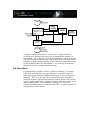
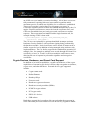
The diagram below shows a typical cryptlib application, in which it
provides the full functionality of both a CA (processing certification
requests, storing the issued certificates locally in a certificate database, and
optionally publishing the certificates on the web or in an LDAP directory)
and an end entity (generating certification requests, submitting them to a
CA, and retrieving the result from the web or a directory service).
To handle certificate trust and revocation issues, cryptlib includes a
certificate trust manager that can be used to automatically manage CA
trust settings. For example a CA can be designated as a trusted issuer that
will allow cryptlib to automatically evaluate trust along certificate chains.
Similarly, cryptlib can automatically check certificates against RTCS and
OCSP responders and CRLs published by CAs, removing from the user
the need to perform complex manual checking.
CA Operations
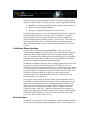
cryptlib includes a scalable, flexible Certificate Authority (CA) engine
built on the transaction-processing capabilities of a number of proven,
industrial-strength relational databases running on a variety of hardware
platforms. The CA facility provides an automated means of handling
certificate issuance without dealing directly with the details of processing
request, signing certificates, saving the resulting certificates in keys stores,
and assembling CRLs. This constitutes a complete CA system for
issuance and management of certificates and CRLs. A typical cryptlib CA
configuration is shown below.
Available CA operations include:
•
Certificate enrolment/initialisation operations
•
Certificate issue
•
Certificate update/key update
•
Certificate expiry management
•
Revocation request processing
•
CRL issue
All CA operations are recorded to an event log using cryptlib’s built-in CA
logging/auditing facility, which provides a comprehensive audit facility
via a full account of certificate requests, certificates issued or renewed,
revocations requested and issued, certificates expired, and general CA
management operations. The logs can be queried for information on all
events or a specified subset of events, for example all certificates that were
issued on a certain day.
cryptlib contains a full implementation of a CMP server (to handle online
certificate management), and SCEP server (to handle online certificate
issue), a RTCS server (to handle real-time certificate status checking), and
an OCSP server (to handle revocation checking). All of these servers are
fully automated, requiring little user intervention beyond the initial
enrolment process in which user eligibility for a certificate is established.
These services make it easier than ever to manage your own CA.
Certificate expiration and revocation are handled automatically by the CA
engine. Expired certificates are removed from the certificate store, and
CRLs are assembled from previously processed certificate revocation
requests. These operations are handled with a single function call, for
example issuing a CRL is done with:
cryptCACertManagement( &cryptCRL, CRYPT_CERTACTION_ISSUE_CRL,
cryptCertStore, CRYPT_UNUSED );
The CA keys can optionally be generated and held in tamper-resistant
hardware security modules, with certificate signing being performed by
the hardware module. Issued certificates can be stored on smart cards or
similar crypto devices in addition to being managed using software-only
implementations. The CA facility supports the simultaneous operation of
multiple CAs, for example to manage users served through divisional CAs
certified by a root CA. Each CA can issue multiple certificates to users,
allowing the use of separate keys bound to signature and encryption
certificates.
Crypto Devices, Hardware, and Smart Card Support
In addition to its built-in capabilities, cryptlib can make use of the crypto
capabilities of external crypto devices and on-chip encryption accelerators,
crypto cores, and other hardware. External device types supported
include:
•
Crypto smart cards
•
Dallas iButtons
•
Datakeys/iKeys
•
Fortezza cards
•
Hardware crypto accelerators
•
Hardware security modules (HSMs)
•
PCMCIA crypto tokens
•
PCI crypto cards
•
PKCS #11 devices
•
USB tokens
Both these external devices and on-chip encryption hardware present in
some embedded processors and devices can be used by cryptlib to handle
functions such as key generation and storage, certificate creation, digital
signatures, and message en- and decryption. Typical applications include:
•
Running a certification authority inside tamper-resistant hardware
•
Smart-card based digital signatures
•
Message encryption/decryption in secure hardware
cryptlib manages any device-specific interfacing requirements so that the
programming interface for any crypto device is identical to cryptlib’s
native interface, allowing existing applications that use cryptlib to be
easily and transparently migrated to using crypto devices. The ability to
mix and match crypto devices and the software-only implementation
allows appropriate tradeoffs to be chosen between flexibility, cost, and
security.
Certificate Store Interface
cryptlib utilizes commercial-strength RDBMS’ to store keys in the
internationally standardised X.509 format. The certificate store integrates
seamlessly into existing databases and can be managed using existing
tools. For example a key database stored on an MS SQL Server might be
managed using Visual Basic or MS Access; a key database stored on an
Oracle server might be managed through SQL*Plus.
In addition to standard certificate stores, cryptlib supports the storage and
retrieval of certificates in LDAP directories, HTTP access for keys
accessible via the web, and external flat-file key collections such as PKCS
#15 soft-tokens and PGP/OpenPGP key rings. The key collections can be
freely mixed (so for example a private key could be stored in a PKCS #15
soft-token, a PGP/OpenPGP key ring or on a smart card with the
corresponding X.509 certificate being stored in a certificate store, an
LDAP directory, or on the web).
Private keys can be stored on disk encrypted with an algorithm such as
triple DES or AES (selectable by the user), with the password processed
using several thousand iterations of a hashing algorithm like SHA-1 or
SHA-256 (also selectable by the user) and the key data protected from
tampering with an algorithm like HMAC-SHA1 or HMAC-SHA256
(again selectable by the user). Where the operating system supports it,
cryptlib will apply system security features such as ACLs under Windows
NT/2000/XP/Vista/Windows 7 and file permissions under Unix to the
private key file to further restrict access.
User Interface
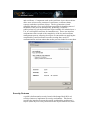
In addition to its general security functionality, cryptlib includes a number
of user interface components that simplify the task of working with keys
and certificates. Components such as the certificate viewer shown below
allow users to browse the contents of certificates, certificate chains,
requests, and other certificate objects. The key generation wizard
simplifies the task of key and certificate generation by handling most of
the details of the process automatically, producing a complete
public/private key pair and certificate request suitable for submission to a
CA, or a self-signed certificate for immediate use. These user interface
components remove much of the complexity of the key and certificate
management process, allowing developers to concentrate on applying the
completed keys and certificates towards securing data, email, or
communications sessions rather than on the process needed to create them.
Security Features
cryptlib is built around a security kernel with Orange Book B3-level
security features to implement its security mechanisms. This kernel
provides the interface between the outside world and the architecture’s
objects (intra-object security) and between the objects themselves (inter-
object security). The security kernel is the basis of the entire cryptlib
architecture — all objects are accessed and controlled through it, and all
object attributes are manipulated through it. The kernel is implemented as
an interface layer that sits on top of the objects, monitoring all accesses
and handling all protection functions.
Each cryptlib object is contained entirely within the security perimeter, so
that data and control information can only flow in and out in a very
tightly-controlled manner, and objects are isolated from each other within
the perimeter by the security kernel. For example once keying information
has been sent to an object, it can’t be retrieved by the user except under
tightly-controlled conditions. In general keying information isn’t even
visible to the user, since it’s generated inside the object itself and never
leaves the security perimeter. This design is ideally matched to hardware
implementations that perform strict red/black separation, since sensitive
information can never leave the hardware.
Associated with each object is a set of mandatory ACLs that determine
who can access a particular object and under which conditions the access
is allowed. If the operating system supports it, all sensitive information
used will be page-locked to ensure that it’s never swapped to disk from
where it could be recovered using a disk editor. All memory
corresponding to security-related data is managed by cryptlib and will be
automatically sanitised and freed when cryptlib shuts down even if the
calling program forgets to release the memory itself.
Where the operating system supports it, cryptlib will apply operating
system security features to any objects that it creates or manages. For
example under Windows NT/2000/XP/Vista/Windows 7 cryptlib private
key files will be created with an access control list (ACL) that allows only
the key owner access to the file; under Unix the file permissions will be set
to achieve the same result.
Embedded Systems
cryptlib’s high level of portability and configurability makes it ideal for
use in embedded systems with limited resources or specialised
requirements, including ones based on Altera NIOS, ARM7, ARM9, ARM
TDMI, Coldfire, Fujitsu FR-V, Hitachi SuperH, MIPS IV, MIPS V,
Motorola ColdFire, NEC V8xx series, NEC VRxxxx series, Panasonic/
Matsushita AM33/AM34, PowerPC, PowerQUICC, Samsung CalmRISC,
SH3, SH4, SPARC, SPARClite, StrongArm, TI OMAP, and Xilinx
MicroBlaze processors, as well as a large range of licensed derivatives of
these cores, too many and varied to enumerate here. cryptlib doesn’t
perform any floating-point operations and runs directly on processors
without an FPU, and through its crypto HAL (hardware abstraction layer)
capabilities can take advantage of on-chip or in-system cryptographic
hardware capabilities and crypto cores where available, typically on some
of the more advanced ARM, MIPS, and PPC cores.
The code is fully independent of any underlying storage or I/O
mechanisms, and works just as easily with abstractions like named
memory segments in flash memory as it does with standard key files on
disk. It has been deployed on embedded systems without any
conventional I/O capabilities (stdio) or dynamic memory allocation
facilities, with proprietary operating system architectures and services
including ATMs, printers, web-enabled devices, POS systems, embedded
device controllers, and similar environments, and even in devices with no
operating system at all (cryptlib runs on the bare metal). It can also run
independent of any form of operating system, and has been run on the bare
metal in environments with minimal available resources, in effect
functioning as a complete crypto operating system for the underlying
hardware.
Because cryptlib functions identically across all supported environments,
it’s possible to perform application development in a full-featured
development environment such as Windows or Unix and only when the
application is complete and tested move it to the embedded system. This
flexibility saves countless hours of development time, greatly reducing the
amount of time that needs to be spent with embedded systems debuggers
or in-circuit emulators since most of the development and code testing can
be done on the host system of choice.
If required the cryptlib developers can provide assistance in moving the
code to any new or unusual environments.
Performance
cryptlib is re-entrant and completely thread-safe, allowing it to be used
with multithreaded applications under operating systems that support
threads. Because it is thread-safe, lengthy cryptlib operations can be run
in the background if required while other processing is performed in the
foreground. In addition cryptlib itself is multithreaded so that
computationally intensive internal operations take place in the background
without impacting the performance of the calling application.
Many of the core algorithms used in cryptlib have been implemented in
assembly language in order to provide the maximum possible
performance, and will take advantage of crypto hardware acceleration
facilities present in some CPUs such as the Via CPU family. These
routines provide an unprecedented level of performance, in most cases
running faster than expensive, specialised encryption hardware designed to
perform the same task. This means that cryptlib can be used for highbandwidth applications such as video/audio encryption and online network
and disk encryption without the need to resort to expensive, specialised
encryption hardware.
Programming Interface
cryptlib’s easy-to-use high-level routines allow for the exchange of
encrypted or signed messages or the establishment of secure
communications channels with a minimum of programming overhead.
Language bindings are available for C / C++, C# / .NET, Delphi, Java,
Perl, Python and Visual Basic (VB).
cryptlib has been written to be as foolproof as possible. On initialisation it
performs extensive self-testing against test data from encryption standards
documents, and the APIs check each parameter and function call for errors
before any actions are performed, with error reporting down to the level of
individual parameters. In addition logical errors such as, for example, a
key exchange function being called in the wrong sequence, are checked for
and identified.
Documentation
cryptlib comes with extensive documentation in the form of a 350-page
user manual and a 320-page technical reference manual. The user manual
is intended for everyday cryptlib use and contains detailed documentation
on every aspect of cryptlib’s functionality. In most cases the code needed
to secure an application can be cut and pasted directly from the appropriate
section of the manual, avoiding the need to learn yet another programming
API.
The technical reference manual covers the design and internals of cryptlib
itself, including the cryptlib security model and security mechanisms that
protect every part of cryptlib’s operation. In addition the technical manual
provides a wealth of background information to help users understand the
security foundations on which cryptlib is built.
Algorithm Support
Included as core cryptlib components are implementations of the most
popular encryption and authentication algorithms, AES, Blowfish, CAST,
DES, triple DES, IDEA, RC2, RC4, RC5, and Skipjack conventional
encryption, MD2, MD4, MD5, RIPEMD-160, SHA-1, and SHA-2/SHA256 hash algorithms, HMAC-MD5, HMAC-SHA1, HMAC-RIPEMD-160,
and HMAC-SHA2 MAC algorithms, and Diffie-Hellman, DSA, ECDSA,
ECDH, Elgamal, and RSA public-key encryption algorithms. The
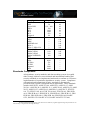
algorithm parameters are summarised below:
Algorithm
AES
Blowfish
Key size
128/192/256
448
Block size
128
64
Algorithm
CAST-128
DES
Triple DES
IDEA
RC2
RC4
RC5
Skipjack
MD2
MD4
MD5
RIPEMD-160
SHA-1
SHA-2 / SHA-256
HMAC-MD5
HMAC-SHA1
HMAC-SHA2
HMAC-RIPEMD160
Diffie-Hellman
DSA
ECDSA
ECDH
Elgamal
RSA
Key size
128
56
112 / 168
128
1024
2048
832
80
—
—
—
—
—
—
128
160
256
160
Block size
64
64
64
64
64
8
64
64
128
128
128
160
160
256
128
160
256
160
4096
40961
521
521
4096
4096
—
—
—
—
—
—
Standards Compliance
All algorithms, security methods, and data encoding systems in cryptlib
either comply with one or more national and international banking and
security standards or are implemented and tested to conform to a reference
implementation of a particular algorithm or security system. Compliance
with national and international security standards is automatically
provided when cryptlib is integrated into an application. These standards
include ANSI X3.92, ANSI X3.106, ANSI X9.9, ANSI X9.17, ANSI
X9.30-1, ANSI X9.30-2, ANSI X9.31-1, ANSI X9.42, ANSI X9.52, ANSI
X9.55, ANSI X9.57, ANSI X9.62, ANSI X9.63, ANSI X9.73, ETSI TS
101 733, ETSI TS 101 861, ETSI TS 101 862, ETSI TS 102, FIPS PUB
46-2, FIPS PUB 46-3, FIPS PUB 74, FIPS PUB 81, FIPS PUB 113, FIPS
PUB 180, FIPS PUB 180-1, FIPS PUB 186, FIPS PUB 198, ISO/IEC
8372, ISO/IEC 8731 ISO/IEC 8732, ISO/IEC 8824/ITU-T X.680,
1
The DSA standard only defines key sizes from 512 to 1024 bits, cryptlib supports longer keys but there is no
extra security to be gained from using these keys.
ISO/IEC 8825/ITU-T X.690, ISO/IEC 9797, ISO/IEC 10116, ISO/IEC
10118, ISO/IEC 15782, ITU-T X.842, ITU-T X.843, PKCS #1, PKCS #3,
PKCS #5, PKCS #7, PKCS #9, PKCS #10, PKCS #11, PKCS #15, RFC
1319, RFC 1320, RFC 1321, RFC 1750, RFC 1991, RFC 2040, RFC 2104,
RFC 2144, RFC 2202, RFC 2246, RFC 2268, RFC 2311 (cryptographyrelated portions), RFC 2312, RFC 2313, RFC 2314, RFC 2315, RFC 2437,
RFC 2440, RFC 2459, RFC 2510, RFC 2511, RFC 2528, RFC 2560, RFC
2585, RFC 2630, RFC 2631, RFC 2632, RFC 2633 (cryptography-related
portions), RFC 2634, RFC 2785, RFC 2876, RFC 2898, RFC 2984, RFC
2985, RFC 2986, RFC 3039, RFC 3058, RFC 3114, RFC 3126, RFC 3161,
RFC 3174, RFC 3183, RFC 3211, RFC 3218, RFC 3261 (cryptographyrelated portions), RFC 3268, RFC 3274, RFC 3279, RFC 3280, RFC 3281,
RFC 3369, RFC 3370, RFC 3447, RFC 3546, RFC 3565, RFC 3739, RFC
3770, RFC 3779, RFC 3851, RFC 3852, RFC 4055, RFC 4086, RFC 4108,
RFC 4134, RFC 4210, RFC 4211, RFC 4231, RFC 4250, RFC 4251, RFC
4252, RFC 4253, RFC 4254, RFC 4256, RFC 4262, RFC 4279, RFC 4325,
RFC 4334, RFC 4346, RFC 4366, RFC 4387, RFC 4419, RFC 4476, RFC
4648, RFC 4680, RFC 4681, and the Payment Card Industry (PCI) Data
Security Standard (cryptography-related portions). In addition cryptlib can
be used as an add-on security module to provide security services as per
ISO/IEC 62351 for SCADA protocols such as IEC 60870-5, DNP 3.0, IEC
60870-6 (TASE.2 or ICCP), IEC 61850, and IEC 61334 (DLMS).
Because of the use of internationally recognised and standardised security
algorithms, cryptlib users will avoid the problems caused by home-grown,
proprietary algorithms and security techniques that often fail to provide
any protection against attackers, resulting in embarrassing bad publicity
and expensive product recalls.
Configuration Options
cryptlib works with a configuration database that can be used to tune its
operation for different environments. This allows a system administrator
to set a consistent security policy which is then automatically applied by
cryptlib to operations such as key generation and data encryption and
signing, although they can be overridden on a per-application or per-user
basis if required.
cryptlib Applications
The security services provided by cryptlib can be used in virtually any
situation that requires the protection or authentication of sensitive data.
Some areas in which cryptlib is currently used include:
•
Protection of medical records transmitted over electronic links.
•
Protection of financial information transmitted between branches
of banks.
•
Transparent disk encryption.
•
Strong security services added to web browsers with weak,
exportable security.
•
Running a CA.
•
Encrypted electronic mail.
•
File encryption.
•
Protecting content on Internet servers.
•
Digitally signed electronic forms.
•
S/MIME mail gateway.
•
Secure database access.
•
Protection of credit card information.
Encryption Code Example
The best way to illustrate what cryptlib can do is with an example. The
following code encrypts a message using public-key encryption.
/* Create an envelope for the message */
cryptCreateEnvelope( &cryptEnvelope, cryptUser, CRYPT_FORMAT_SMIME );
/* Push in the message recipient's name */
cryptSetAttributeString( cryptEnvelope, CRYPT_ENVINFO_RECIPIENT,
recipientName, recipientNameLength );
/* Push in the message data and pop out the encrypted result */
cryptPushData( cryptEnvelope, message, messageSize, &bytesIn );
cryptFlushData( cryptEnvelope );
cryptPopData( cryptEnvelope, encryptedMessage, encryptedSize,
&bytesOut );
/* Clean up */
cryptDestroyEnvelope( cryptEnvelope );
This performs the same task as a program like PGP using just 6 function
calls (to create a PGP/OpenPGP message, just change the
CRYPT_FORMAT_SMIME to CRYPT_FORMAT_PGP). All data
management is handled automatically by cryptlib, so there’s no need to
worry about encryption modes and algorithms and key lengths and key
types and initialisation vectors and other details (although cryptlib
provides the ability to specify all this if you feel the need). This is all
that’s required — just copy the above code into your application to
S/MIME-enable it.
The code shown above results in cryptlib performing the following
actions:
•
Generate a random session key for the default encryption algorithm
(usually triple DES or AES).
•
Look up the recipient’s public key in a key database.
•
Encrypt the session key using the recipient’s public key.
•
Encrypt the signed data with the session key.
•
Pass the result back to the user.
However unless you want to call cryptlib using the low-level interface,
you never need to know about any of this. cryptlib will automatically
know what to do with the data based on the resources you add to the
envelope — if you add a signature key it will sign the data, if you add an
encryption key it will encrypt the data, and so on.
Secure Session Code Example
Establishing a secure session using SSL/TLS is similarly easy:
CRYPT_SESSION cryptSession;
/* Create the session */
cryptCreateSession( &cryptSession, cryptUser, CRYPT_SESSION_SSL );
/* Add the server name and activate the session */
cryptSetAttributeString( cryptSession, CRYPT_SESSINFO_SERVER_NAME,
serverName, serverNameLength );
cryptSetAttribute( cryptSession, CRYPT_SESSINFO_ACTIVE, 1 );
If you prefer SSH to SSL, just change the CRYPT_SESSION_SSL to
CRYPT_SESSION_SSH and add a user name and password to log on. As
with the encryption code example above, cryptlib provides a single unified
interface to its secure session mechanisms, so you don’t have to invest a
lot of effort in adding special-case handling for different security protocols
and mechanisms.
The corresponding SSL/TLS (or SSH if you prefer) server is:
CRYPT_SESSION cryptSession;
/* Create the session */
cryptCreateSession( &cryptSession, cryptUser, CRYPT_SESSION_SSL_SERVER );
/* Add the server key/certificate and activate the session */
cryptSetAttribute( cryptSession, CRYPT_SESSINFO_PRIVATEKEY, privateKey );
cryptSetAttribute( cryptSession, CRYPT_SESSINFO_ACTIVE, 1 );
As with the secure enveloping example, cryptlib is performing a large
amount of work in the background, but again there’s no need to know
about this since it’s all taken care of automatically.
Certificate Management Code Example
The following code illustrates cryptlib’s plug-and-play PKI interface:
CRYPT_SESSION cryptSession;
/* Create the CMP session and add the server name/address */
cryptCreateSession( &cryptSession, cryptUser, CRYPT_SESSION_CMP );
cryptSetAttributeString( cryptSession, CRYPT_SESSINFO_SERVER, server,
serverLength );
/* Add the username, password, and smart card */
cryptSetAttributeString( cryptSession, CRYPT_SESSINFO_USERNAME, userName,
userNameLength );
cryptSetAttributeString( cryptSession, CRYPT_SESSINFO_PASSWORD, password,
passwordLength );
cryptSetAttribute( cryptSession, CRYPT_SESSINFO_CMP_PRIVKEYSET,
cryptDevice );
/* Activate the session */
cryptSetAttribute( cryptSession, CRYPT_SESSINFO_ACTIVE, TRUE );
This code takes a smart card and generates separate encryption and signing
keys in it, requests a signature certificate from the CA for the signing key,
uses that to obtain a certificate for the encryption key, obtains any further
certificates that may be needed from the CA (for example for S/MIME
signing or SSL server operation), and stores everything in the smart card.
Compare this to the hundreds or even thousands of lines of code required
to do the same thing using other toolkits.
Oh yes, and cryptlib provides the CA-side functionality as well — there’s
no need to pay an expensive commercial CA for your certificates, since
cryptlib can perform the same function.
Licensing and Pricing
cryptlib is distributed under a dual license that allows free, open-source
use under a GPL-like license (aka the "Sleepycat" license) and closedsource use under a standard commercial license. In addition, cryptlib is
often free for use in low-cost, non-open-source applications such as
shareware, and for personal and research use.
NB: All cryptlib users must have a valid software license. Please contact
the cryptlib sales team for further details, and a license estimate.
Contact
Sales and Licensing
Shayne Jones
Digital Data Security Limited
24 Durness Place, Orewa
Auckland 0932, New Zealand
Mailto:[email protected]
Ph: +649 411 7297
Fax: +649 837 5817
Technical Support
Mailto:[email protected]
Visit www.cryptlib.com for more information.
All intellectual property, trademarks and copyrights are the property of Digital Data
Security Limited. © June 2010. All rights reserved.