1
3.3
Kernel Extraction: Outlining
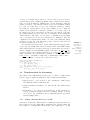
Each of the identified tuning targets, often loops, will be extracted from the
original code to form separated functions (or routines). The ROSE AST outliner is invoked to generate such functions. This kernel extraction step can be
automatically invoked by the code triage program or manually initiated by users
via the outliner’s command line interface.
The ROSE AST outliner handles multiple input languages, including C,
C++ and recently Fortran. It also provides both command line and programming interfaces for users to specify the targets to be outlined. Detailed information of using the ROSE outliner can be found in Chapter 27 of the ROSE
Tutorial. You can also refer to a paper [8] for the algorithm we use to outline
kernels. For the code triage program, the programming interface of the Outliner
is used as below:
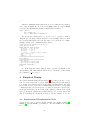
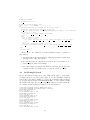
// recognize options for outliner
Outliner::commandLineProcessing(argvList);
...
SgForStatement* target_loop= findTargetLoop(hot_node);
if (isOutlineable (target_loop))
outline(target_loop);
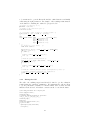
The ROSE AST outliner accepts user options to further guide its internal
behavior. −rose:outline :parameter wrapper will wrap all parameters of the outlined
function into an array of pointers. −rose:outline : new file will separate the outlined
function into a new source file to facilitate external tools for further handling.
−rose:outline :use dlopen will transform the code to use dlopen() and dlsym() to dynamically load the outlined function from a library.
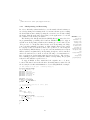
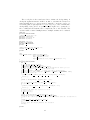
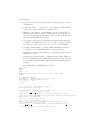
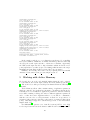
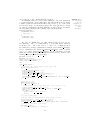
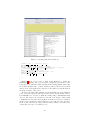
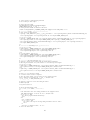
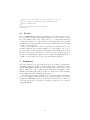
For the SMG2000 example, the most time-consuming loop is outlined and a
call to it is used to replace the loop in the original code. The loop is actually
expanded from a macro hypre BoxLoop3For(). ROSE is able to identify it after a
bottom up metrics propagation phase in ROSE-HPCT. The kernel extraction’s
result is shown in the following code listing:
// A p r o t o t y p e o f t h e o u t l i n e d f u n c t i o n i s
void O U T 1 6 7 5 5 ( void ∗∗ o u t a r g v ) ;
i n s e r t e d a t t h e b e g i n n i n g o f t h e code
// The t a r g e t l o o p i s r e p l a c e d by a c a l l t o t h e o u t l i n e d f u n c t i o n
// w i t h parameter wrapping s t a t e m e n t s
void ∗ o u t a r g v 1 1 5 2 7
[21];
∗( o u t a r g v 1 1 5 2 7
+ 0 ) = ( ( void ∗)(& h y p r e n z ) ) ;
∗( o u t a r g v 1 1 5 2 7
+ 1 ) = ( ( void ∗)(& h y p r e n y ) ) ;
∗( o u t a r g v 1 1 5 2 7
+ 2 ) = ( ( void ∗)(& h y p r e n x ) ) ;
∗( o u t a r g v 1 1 5 2 7
+ 3 ) = ( ( void ∗)(& h y p r e s z 3 ) ) ;
∗( o u t a r g v 1 1 5 2 7
+ 4 ) = ( ( void ∗)(& h y p r e s y 3 ) ) ;
∗( o u t a r g v 1 1 5 2 7
+ 5 ) = ( ( void ∗)(& h y p r e s x 3 ) ) ;
∗( o u t a r g v 1 1 5 2 7
+ 6 ) = ( ( void ∗)(& h y p r e s z 2 ) ) ;
∗( o u t a r g v 1 1 5 2 7
+ 7 ) = ( ( void ∗)(& h y p r e s y 2 ) ) ;
∗( o u t a r g v 1 1 5 2 7
+ 8 ) = ( ( void ∗)(& h y p r e s x 2 ) ) ;
∗( o u t a r g v 1 1 5 2 7
+ 9 ) = ( ( void ∗)(& h y p r e s z 1 ) ) ;
∗( o u t a r g v 1 1 5 2 7
+ 1 0 ) = ( ( void ∗)(& h y p r e s y 1 ) ) ;
∗( o u t a r g v 1 1 5 2 7
+ 1 1 ) = ( ( void ∗)(& h y p r e s x 1 ) ) ;
∗( o u t a r g v 1 1 5 2 7
+ 1 2 ) = ( ( void ∗)(& l o o p k ) ) ;
∗( o u t a r g v 1 1 5 2 7
+ 1 3 ) = ( ( void ∗)(& l o o p j ) ) ;
∗( o u t a r g v 1 1 5 2 7
+ 1 4 ) = ( ( void ∗)(& l o o p i ) ) ;
∗( o u t a r g v 1 1 5 2 7
+ 1 5 ) = ( ( void ∗)(& rp ) ) ;
∗( o u t a r g v 1 1 5 2 7
+ 1 6 ) = ( ( void ∗)(& xp ) ) ;
∗( o u t a r g v 1 1 5 2 7
+ 1 7 ) = ( ( void ∗)(&Ap ) ) ;
∗( o u t a r g v 1 1 5 2 7
+ 1 8 ) = ( ( void ∗)(& r i ) ) ;
∗( o u t a r g v 1 1 5 2 7
+ 1 9 ) = ( ( void ∗)(& x i ) ) ;
9