1
Network Load Control
8.2.3
8.2 Multicast Application
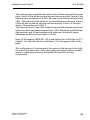
Description of IGMP Snooping
The Internet Group Management Protocol (IGMP) describes the distribution
of Multicast information between routers and terminal devices on Layer 3.
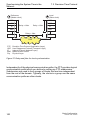
Routers with an active IGMP function periodically send queries to find out
which IP Multicast group members are connected to the LAN. Multicast
group members reply with a Report message. This Report message contains
all the parameters required by the IGMP. The router records the IP Multicast
group address from the Report message in its routing table. The result of this
is that it transfers frames with this IP Multicast group address in the
destination field only in accordance with the routing table.
Devices which no longer want to be members of a Multicast group can cancel
their membership by means of a Leave message (from IGMP version 2), and
they do not transmit any more Report messages. In IGMP versions 1 and 2,
the router removes the routing table entry if it does not receive any Report
messages within a specified period of time (aging time).
If there are a number of routers with an active IGMP function in the network,
then they work out among themselves (in IGMP version 2) which router
carries out the Query function. If there is no router in the network, then a
suitably equipped Switch can perform the Query function.
A Switch that connects a Multicast receiver with a router can evaluate the
IGMP information with the aid of the IGMP Snooping procedure.
IGMP Snooping translates IP Multicast group addresses into MAC Multicast
addresses, so that the IGMP functions can also be used by Layer 2 Switches.
The Switch records the MAC addresses of the Multicast receivers, with are
obtained via IGMP Snooping from the IP addresses, in the static address
table. The Switch thus transmits these Multicast packets exclusively at the
ports at which Multicast receivers are connected. The other ports are not
affected by these packets.
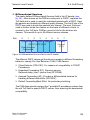
A special feature of the device is that you can specify whether it should drop
data packets with unregistered Multicast addresses, transmit them to all
ports, or only to those ports at which the device received query packets. You
also have the option of additionally sending known Multicast packets to query
ports.
Default setting: “Off”.
110
Basic Configuration
Release 6.0 07/2010