1
5
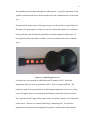
simpler “slider” touch surface we had originally planned on implementing. This added
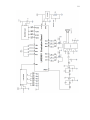
some development time to the capacitive touch section. We used the CapSense
CY8C20534 chip from Cypress to interpret the touch surface input and produce suitable
outputs for the microcontroller. The CapSense chip also controls the six lights on either
side of the touchpad; these will light up in sequence as a user slides his or her finger
across.
Flash Memory One of the most difficult aspects of the design and implementation of the project was
figuring out how to store the sound data in a way that could easily be accessed by the
microcontroller. Most microcontrollers contain less than 100 KB of onboard flash
memory. This is a lot of memory for code storage, but insufficient for storing any kind of
multimedia; a sound file even a few seconds long can be hundreds of kilobytes. (We had
decided early on that our guitar should output “real” sampled guitar noises, not simple
tones.)
The first challenge was deciding which medium the data should be stored on. The
aforementioned Atmel application note [1] used an external flash memory chip to store
and play back recorded sound data. However, this solution was unsuitable for use in the
guitar because there is no easy way to load data from an external source to the flash chip.
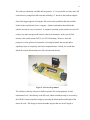
Through my research I found that SD cards, commonly used in cameras, cell phones and
other mobile devices, were also popular in microcontroller projects. The SD card can be
accessed through a standard SPI interface available on most microcontrollers. Due to
SD’s popularity, there is a large amount of code and documentation available on the web.