1
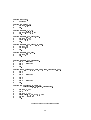
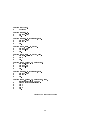
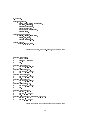
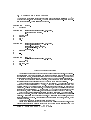
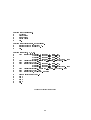
:- lib(apply_macros).
coloured(Countries) :Countries = [A,B,C,D],
applist(value,Countries),
ne(A,B), ne(A,C), ne(A,D), ne(B,C), ne(B,D), ne(C,D).
value(red).
value(green).
value(blue).
Figure 1: A Generic Logic Program for Map Colouring
decision variable, in this problem, has the same set of choices, modelled as possible values for
the variables (red, green and blue). There are six constraints, each of which is modelled by
the same relation (ne meaning not equal to).
The rst command :- lib(apply_macros). loads an ECLi PSe library. Much of the
functionality of ECLi PSe is held in dierent libraries, some of which will be introduced in
the next section. The library apply macros holds the denition of the applist predicate, which
applies a predicate to each element of a list. applist(value,Countries) is equivalent to value(A),
value(B), value(C), value(D).
2.2 Why Logic Programming
The requirements on ECLi PSe are of two kinds: to enable such problems to be modelled
simply and naturally; and to enable the resulting problem model to be solved eciently. The
separation of modelling and solving is supported in ECLi PSe by distinguishing the conceptual
model, expressed as a \pure" logical ECLi PSe program, from the design model, which is
constructed from the conceptual model by adding control to the ECLi PSe program.
This combination of requirements is dicult to satisfy - perhaps impossible if a completely
general modelling language is required, suitable for every kind of application. However the
applications for which ECLi PSe is designed are decision support applications involving combinatorial problems.
Logic programming is peculiarly apt for modelling problems of this kind for two reasons.
It is based on relations
It supports logical variables
Since every combinatorial problem is naturally modelled as a set of variables and a set of
constraints (i.e. relations) on those variables, the facilities of logic programming precisely
match the requirements for modelling combinatorial problems.
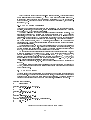
Every predicate in a logic program denes a relation, either explicitly as a set of facts, or
implicitly in terms of rules. We can recall the example from the [Wal97]. The predicate meat
was dened by two facts:
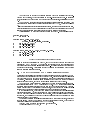
meat(beef,5).
meat(pork,7).
whilst the predicate main (meaning \main course") was dened by two rules:
main(M,I) :- meat(M,I).
main(M,I) :- fish(M,I).
Variables in logic programming are logical variables. Thus it is entirely natural to initialise
the problem variables (for example by writing Countries = [A;B; C; D]) and then to constrain
them (for example by writing ne(A;B ) and so on).
We briey compare ECLi PSe as a modelling language with formal specication languages,
mathematical modelling languages, mainstream programming languages and object oriented
languages.
3




![[U2.05.04] Notice d`utilisation pour le calcul de charge](http://vs1.manualzilla.com/store/data/006367682_1-b11bc4d44ba03a3631d8ed47808e9773-150x150.png)