1
structure, but the leaf level is a mesh structure such that each sink
is connected to the nearest point on the mesh. Although this is
a very effective way to minimize skew variation across corners,
the mesh structure consumes enormous wire resources and power.
Su and Sapatnekar [20] use mesh structures for the top-level tree
which consumes less wire resource and power as compared to [18].
However, this consumes 59%-168% more wire resource than a tree
structure. Further, the authors do not optimize skew variation which
still exists in the bottom-level subtrees. Rajaram et al. [16] [17]
propose a nontree construction method to insert crosslinks1 in a
clock tree by estimating subtree delays using the Elmore delay
model. The authors verify their method with SPICE-based Monte
Carlo simulations and report skew variability reduction. However,
the approach consumes excess additional wire and power due to
crosslink insertions. Mittal and Koh [15] propose a greedy method
to insert crosslinks to reduce skew variation.
To our knowledge, there has been no systematic framework
for minimization of clock skew variation (across multiple signoff
corners) for clock trees. Our work exploits both global and local
iterative optimizations to minimize skew variations across different
PVT corners which is very important for high-speed processor and
multimedia blocks that operate at multiple modes/corners. Further,
instead of minimizing the maximum skew or skew variation, we
minimize the sum of skew variations over all sink pairs, which will
reduce the potential costs of gate sizing and buffer insertion for
multi-corner timing closure.
3.
4.
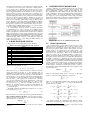
Figure 1: Overview of our optimization framework.
PROBLEM FORMULATION
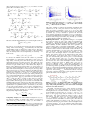
The notations we use in this paper are given in Table 1.
4.1
Table 1: Description of notations used in our work.
Term
ck
αk
fi
Pi
c
skewi,ik0
Meaning
operating corner, (0 ≤ k ≤ K; c0 is the nominal corner)
normalization factor of corner ck with respect to c0
sink (e.g., flip-flop) in clock tree, (1 ≤ i ≤ N)
clock path from clock source to fi
clock skew between sink pair ( fi , fi0 ) at corner ck
sj
c
D jk
ck
∆j
ck
Dmax
ck ,ck0
vi,i0
arc (i.e., tree segment without branching) in clock tree, (1 ≤ j ≤ M)
original arc delay at corner ck
delay change of arc s j at corner ck from optimization
maximum latency of a clock path at corner ck
normalized skew variation across corner pair (ck , ck0 ) between ( fi , fi0 )
Vi,i0
worst normalized skew variation across all corner pairs between ( fi , fi0 )
For a corner pair (ck , ck0 ), we define the normalized skew
variation between sink pair ( fi , fi0 ) as
c ,ck0
c
= |αk · skewci,ik 0 − αk0 · skewi,ik 0 |
vi,ik 0
0
(1)
where skew
is defined as the latency difference between
capture and launch clock paths at ck . We emphasize that our
optimization is local skew-aware, so that we only optimize skews
between launch-capture sink pairs that have valid datapaths in
between them (i.e., we avoid the pessimism that would result from
use of global skew in the formulation). αk is the normalization
factor at corner ck with respect to the nominal corner. Note that
αk is an input parameter and can be determined by technology
information (e.g., ratio between buffer delays at ck and c0 ), clock
tree properties (e.g., Vth and sizes of buffers in the tree), etc.
Further, one can define specific αk values for each sink pair. In
our work, we define αk as the average skew ratio between c0 and
ck over all sink pairs.
We further define the maximum skew variation across corners,
for each sink pair ( fi , fi0 ), as
c ,ck0
∀(ck ,ck0 )
Global Optimization
We construct a linear program (LP) to reduce the sum of skew
variations between all sink pairs in a clock tree. Based on the
LP solution, we determine the desired delay changes of arcs at
all corners and perform buffer insertion and removal, as well as
routing detour, to accomplish the desired delay changes. We
determine number of buffers, buffer size and length of routing
detour based on lookup tables. However, the achievable delay
values are discrete due to the limited number of buffer sizes.
Further, placement legalization and routing congestion also lead to
discrepancy between desired delay and actual delay after ECOs in
the P&R tool. Therefore, to minimize the sum of skew variations
as well as to increase the likelihood that the solution is practically
implementable, we formulate the LP such that it minimizes the total
amount of delay changes with respect to an upper bound on sum of
skew variations. As a result, we implicitly minimize the number
of ECO changes. We then sweep this upper bound to search for
the achievable solution with minimum sum of skew variations. The
objective function is:
Minimize
(skewci,ik 0 )
Vi,i0 = max vi,ik 0
OPTIMIZATION FRAMEWORK
Figure 1 illustrates our optimization framework. We perform
global and local optimizations to reduce skew variations. The
global optimization constructs a linear program (LP) and uses
it to guide buffer insertion, buffer removal, and routing detours.
Local optimization is based on a machine learning-based predictor
of latency changes. It iteratively minimizes skew variation via
tree surgery (i.e., driver reassignment), buffer sizing, and buffer
displacement. The iterative optimization continues until there is no
further improvement or other stopping condition is reached.
|∆cjk |
∑
(4)
1≤ j≤M, 0≤k≤K
where ∆cjk is the latency change on arc s j at corner ck .2 The upper
bound U on the sum of skew variations is specified as
Vi,i0 ≤ U
∑
(5)
( fi , fi0 )
where Vi,i0 is the maximum normalized skew variation for the sink
pair ( fi , fi0 ) over all corner pairs (ck , ck0 ), and is calculated based
on the following constraint.
Vi,i0 ≥αk · (
(Dcjk0 + ∆cjk0 ) −
∑
c0
(D jk0
c0
+ ∆ jk0 ) −
∑
c0
(D jk0
c0
+ ∆ jk0 ) −
∑
(Dcjk0 + ∆cjk0 ) −
s j0 ∈Pi0
−αk0 · (
s j0 ∈Pi0
(2)
Vi,i0 ≥αk0 · (
s j0 ∈Pi0
Based on the above, we address the following problem formulation:
Skew Variation Reduction Problem. Given a routed clock tree,
minimize the sum over all sink pairs of the maximum normalized
skew variation across all corners.
−αk · (
∑ (Dcj
∑
s j0 ∈Pi0
k
s j ∈Pi
+ ∆cjk )
ck 0
+ ∆ jk ))
ck 0
+ ∆ jk ))
∑ (D j
s j ∈Pi
∑ (D j
s j ∈Pi
∑ (Dcj
s j ∈Pi
k
c
0
c
0
+ ∆cjk ))
(6)
(3)
We further constrain the optimization such that the solution
returned does not degrade (i) local skew at any corner, nor (ii) the
1 A crosslink is an additional wire between any two nodes of a given
formulate ∆cjk as positive and negative components to handle
the absolute values in our formulation.
Minimize
∑
Vi,i0
∀( fi , fi0 )
clock tree.
2 We