1
3 Advanced concepts
3.1 Network transports
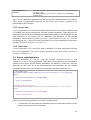
eProsima RPC over DDS provides two network transports. These transports define how
a connection is established between a proxy and a server. The transports are:
High performance and reliable UDP transport: The recommended option in LAN
TCP transport, designed to use DDS in WAN scenarios.
3.1.1 UDP Transport
The purpose of this transport is to create a connection between a proxy and a server
that are located in the same local network. This transport is implemented by two
classes. One is used by server proxies and the other is used by servers.
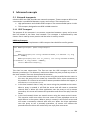
UDPProxyTransport
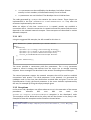
UDPProxyTransport class implements a UDP transport that should be used by proxies.
class UDPProxyTransport: public ProxyTransport
{
public:
UDPProxyTransport(std::string remoteServiceName, int domainId = 0, long
timeout = 10000L);
UDPProxyTransport(const char *to_connect, std::string remoteServiceName,
int domainId = 0, long timeout = 10000L);
virtual ~UDPClientTransport();
};
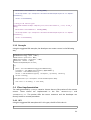
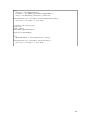
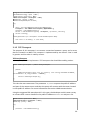
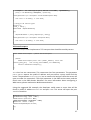
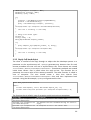
This class has two constructors. The first one sets the UDP transport to use DDS
discovery mechanism. This discovery mechanism allows the proxy to find any server in
the local network. There are three potential scenarios:
In the local network there is not any server using the provided service name. In
this case, the proxy will not create any connection until a server announces to
the network. If a client tries to invoke a remote procedure before this happen, it
will raise a ServerNotFoundException.
In the local network there is only one server using the provided service name.
When a proxy is created, it will find the server and will create a connection
channel with it. When the client application uses the proxy to call a remote
procedure, this server will execute this procedure and return the reply from the
server.
In the local network there are several servers using the same service’s name.
This scenario could occur when the user wants to have redundant server to
avoid failures in the system. When a proxy is created, it will find all servers and
will create a connection channel with each one. When the client application
uses the proxy to call a remotely procedure, all servers will execute the
procedure but the client will receive only one reply from one server.
24