1
US007448025B2
(12) Ulllted States Patent
(10) Patent N0.:
Kalafatis et a].
(54)
(45) Date of Patent:
QUALIFICATION OF EVENT DETECTION
5,752,062 A
5/1998 Gover et a1. .............. .. 702/186
5,796,637 A *
8/1998 Glew et a1. ................ .. 702/190
LEVEL
5,796,939 A
11/1998
gjgggjigg A
8/2000
6 112 318 A *
8/2000 Jou
(Us), Scott D- D10“ B°dgers>
Hlllsboro, OR (Us); Brlllkley 511F111",
6,205,468 B1*
6,256,775 B1*
3/2001 Diepstraten 61 a1.
7/2001 Flynn
LeWiSburg, PA (Us)
6,356,615 B1*
3/2002 Coon etal. ................. .. 377/16
_
“
_
7,
,
,
(73) Assignee: Intel Corporation, Santa Clara, CA
Notice:
Larsen et a1.
............. .. 709/107
............. .. 712/227
. t l
ppl
e
a.
. . . . . . . . . .
. . . ..
714/47
709/107
717/127
OTHER PUBLICATIONS
(Us)
Power PC 604 RISC Microprocessor User’s Manual, Chapter 9:
Performance Monitor Microprocessor User’s Manual, 1994, p. 9-1
Subject to any disclaimer, the term of this
through 9.12,
patent is extended or adjusted under 35
*
U.S.C. 154(1)) by 1223 days.
“ted by exammer
Primary ExamineriTuan Dam
Assistant ExamineriMichael .IYigdall
(21) Appl' NO‘: 09/751’813
(22) Filed:
Dec- 29, 2000
_
_
(zlgnziioggeg, Agent, or Fzrm Blakely, Sokoloff, Taylor &
(65)
Prior Publication Data
US 2002/0124237 A1
Sep. 5, 2002
(51)
Int_ CL
G06F 9/44
G06]? 9/46
(57)
ABSTRACT
A method and apparatus for monitoring the performance
characteristics of a multithreaded processor executing
(200601)
(200601)
us. Cl. ..................................... .. 717/128; 718/107
Field of Classi?cation Search ............... .. 717/127,
instructions from tWo or more threads simultaneously. Event
detectors detect the occurrence of speci?c processor events
during the execution Of instructions from threads Of a multi
threaded Process“ Specialized even‘ Select Control registers
717/128; 712/227; 709/107; 702/186
are programmed to control the selection, masking and quali
See application ?le for Complete Search history'
(56)
8/1998 Ben) 61 a1.
5,835,705 A
lcheal D. Cranford, Hlllsboro, OR
(52)
(58)
Nov. 4, 2008
BY THREAD ID AND THREAD PRIVILEGE
(75) Inventors: grim“ Kalafatis’ ponlapd’ OR (Us);
(*)
US 7,448,025 B2
fying of events to be monitored. Events are quali?ed accord
ing to their thread 1D and thread current privilege level (CPL).
Each event that is quali?ed is counted by one of several
programmable event counters that keep track of all processor
References Cited
U.S. PATENT DOCUMENTS
events being monitored. The contents of the event counters
can then be accessed and sampled via a program instruction.
5,524,250 A
6/1996 Chesson et 31,
5,557,548 A
9/1996
5,657,253 A
8/1997 Dreyer et a1. ............. .. 702/186
Gover et a1. .............. .. 702/176
30 \L
20
EVENT SELECT CONTROL REGISTER
ES
T0 EVENT
/ 1O
SIGNALS
EM
/
SIGNALS
40
r
E0
/
50
SELECTED
T1 EVENT
CPU
28 Claims, 2 Drawing Sheets
cl'z-oEs?TgF
MUX
SINGLE
MUX
EVENT ,
I
LOGIC
CIRCUIT
TX EVENT
SIGNALS
70
L PROGRAMMABLE COUNTER 1 I4
| PROGRAMMABLE COUNTERZ I4
I PROGHAMMABLECOUNTER18 I
TIME STAMP COUNTER
60
_
US. Patent
Nov. 4, 2008
Om
‘l
mm
ov\
AH
ilk
310
Sheet 1 of2
US 7,448,025 B2
US. Patent
Nov. 4, 2008
IE. #53
CO
wO
|o._. Emj
ON
Sheet 2 of2
US 7,448,025 B2
US 7,448,025 B2
1
2
QUALIFICATION OF EVENT DETECTION
softWare applications Will execute on the processor. There
BY THREAD ID AND THREAD PRIVILEGE
LEVEL
fore, hardWare designs can be optimiZed to deliver the best
performance for the execution of common softWare (e.g.,
operating systems).
FIELD OF THE INVENTION
A draWback of the aforementioned performance monitor
ing system is that it primarily focuses on the operation of the
The present invention relates generally to the ?eld of pro
processor Without consideration as to Which thread, of a mul
cessors and, more speci?cally, to a method and apparatus for
tithreaded processor, is being executed. For example, in a
multimedia application that combines both audio processes
and video processes, the user could use the foregoing system
monitoring the performance of multithreaded processors.
BACKGROUND AND RELATED ART
to determine a greater than normal number of data cache
read/Write misses have occurred during the execution of the
In a typical processor system, one or more applications are
application. Using techniques currently knoWn in the art
running (i.e., being executed by the processor). As knoWn in
alone, hoWever, the user Wouldnot be able to determine Which
individual threads of execution, e.g., those contained in the
the art, the code of an application can be divided into a
plurality of processes and each process can be divided into a
plurality of threads. Thus a thread can be a series of instruc
tions that are executed by the processor to achieve a given task
audio or video processes, Were contributing to the number of
data cache read/Write misses. This limitation is even more
(e.g., a subroutine). Processors are often sWitching betWeen
threads of a process and betWeen processes of one or more 20
applications (e.g., in a multi-tasking environment), but these
problematic in multithreaded processors, Wherein threads are
executed simultaneously, because keeping track of When a
processor sWitches betWeen threads Will not be su?icient to
determine precisely at Which thread an event has occurred.
single-threaded processors, as they are currently knoWn in the
art, are only capable of supporting one thread of execution at
time. In other Words, single-threaded processors cannot
be advantageous to determine from Which thread and at What
execute instructions over tWo or more threads simultaneously, 25
privilege level the event is occurring.
and the use of multiple threads requires that these processors
continuously sWitch back and forth betWeen threads. HoW
ever, recent advancements in processor technology have
alloWed the development of multithreaded processors that
What is needed then is a method and apparatus for detect
ing events that are generated by a speci?c thread, or set of
threads, of a multithreaded processor. As Will be seen, the
can support tWo or more threads of execution simultaneously.
Ultimately, if a particular event that is being monitored is
adversely affecting the operation of an application, it Would
30
Before the development of simultaneous multithreading,
computer architects could further improve the performance
of their machines by measuring and monitoring the various
executing simultaneously. In general, the present invention
can accomplish this by combining event quali?cation by
thread ID With event quali?cation by thread current privilege
parameters that affect the performance of the processor. For
example, by measuring the system performance of the
level (CPL).
35
machine When it executes its intended applications, the com
puter architect is better assisted in his or her effort to design a
SUMMARY OF THE INVENTION
balanced computer system. System performance monitoring
In one embodiment of an apparatus of the present invention
is typically accomplished With the use of on-chip perfor
mance registers Which can monitor certain processor events
that can characterize processor performance. For example, in
several models of the Intel Pentium® processor, the folloWing
performance registers are provided on-chip: a 64-bit Time
Stamp Counter (TSC), tWo programmable event counters
(CTRO, CTRl), and a control and event select register
(CESR). The CESR can be programmed to alloW the event
counters (CTRO, CTRl) to count the occurrence of speci?c
40
45
events or to count clock signals While an event condition is
present or absent. For example, by placing the appropriate
date values into the CESR, the ?rst counter, CTRO, can be set
up to count the number of times a data read operation is
performed by the processor. Once CTRO is set up to perform
this task, each time the processor performs a data read opera
tion, CTRO increments its internal count. Similarly, the CESR
can be programmed to alloW the second counter, CTRl, to
50
55
simultaneously count a different event. The event counts that
60
cache read/Write misses, loading of a segment registers, etc.
The performance monitoring system described above is
execute instructions over a plurality of threads simulta
neously. The processor includes at plurality of event detectors
adapted to detect the occurrence of speci?c processor events
during the execution of processor instructions. The processor
also includes a plurality of specialiZed event select control
registers Which are programmed to control the selection,
masking and qualifying of events to be monitored. Events are
quali?ed by their thread ID and thread current privilege level
(CPL) such that the present invention can attribute the pro
cessor event to the execution of a speci?c thread. Events that
are quali?ed are ultimately counted by one of several pro
grammable event counters that keep track of all processor
events being monitored. The contents of the event counters
can be accessed and sampled via a program instruction thus
providing information concerning processor performance.
The present invention Will be understood more fully from
the detailed description Which fools and from the accompa
nying ?gures, Which, hoWever, should not be taken to limit the
invention to the speci?c embodiments shoWn but are for
explanation and understanding only.
useful to softWare programmers. For example, the perfor
mance monitoring system can detect events that tend to indi
cate ine?iciencies in the design of softWare applications. In
addition, processor designers and computer architects can
also bene?t since the system alloWs them to observe hoW
a multithreaded processor is provided that is adapted to
BRIEF DESCRIPTION OF THE DRAWINGS
are ultimately stored in the registers of event counters (CTRO,
CTRl) can be accessed by a user in order detect events that
characterize a processor’s performance. There are numerous
events that can be monitored using this system such as data
present invention can determine if certain events are gener
ated from an individual thread or from a series of threads
65
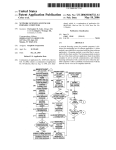
FIG. 1 is a block diagram of the performance monitor
feature of the present invention.
FIG. 2 illustrates the control and event select register for
controlling event selection, masking, and quali?cation.
US 7,448,025 B2
3
4
DETAILED DESCRIPTION
sub-areas in processor 10 is tWenty-four, and the number of
sub-areas in each area varies betWeen three and eight. Each
local sub-area contains tWo event selection control registers
A method and apparatus for monitoring events that con
tribute to the performance of a multithreaded processor is
described. In general, the current invention is used to charac
teriZe multithreaded processors in real systems on a per
thread basis. This characterization can be used to tune (or
(ESCRs). Each ESCR is capable of controlling the detection
of events generated from its respective local sub-area. Pro
cessor 10 also contains event counters 70 Which includes a
total of eighteen 40-bit programmable event counters. In
addition, each of the four aforementioned local areas contain
improve) application and operating system performance.
This capability is key to getting a computer system to operate
at a desired level of performance When tuning, for example,
multi-media and/or real-time applications. In the folloWing
betWeen four and six event counters. Each ESCR of processor
10 is capable of coupling to an individual event counter as
long as that event counter is contained Within the same
respective local area. For example, ESCR 30 is one of the
many ESCRs utiliZed for controlling parts of event counters
70. As seen in FIG. 1, ESCR 30 may couple to programmable
counter 1 or programmable counter 2 because they are con
tained Within the same local area as ESCR 30; hoWever,
ESCR 30 may not couple to programmable counter 18
because it is not contained With the same local area.
description, numerous speci?c details are set forth such as
event types, bit lengths, register quantities and siZes, etc., in
order to provide a thorough understanding of the present
invention. It Will be obvious, hoWever, to one skilled in the art
that these speci?c details may not be needed to practice the
present invention. In other instances, Well-knoWn computer
architectural elements and electrical circuits have not been
described in particular detail in order to avoid unnecessarily
obscuring the invention.
ESCR 30 controls event selection, masking, and quali?ca
20
For the purposes of the present invention, the term “multi
threaded processor” shall be taken to refer to any machine that
include a 6-bit event selection (ES) ?eld, a 16-bit event mask
is capable of executing a sequence of instructions (e.g.,
(EM) ?eld, and four additional event quali?cation (EQ) bits
(T0_USR, T0_OS, T1_USR, T1_OS). As mentioned earlier,
macro- or microinstructions) over a plurality of internal
threads simultaneously. In addition, a “processor” shall be
taken to include, but not be limited to, general purpose micro
processors, special purpose microprocessors, graphics con
tion. ESCR 30 accomplishes these tasks via several ?elds of
programmable bits. As illustrated in FIG. 2, these ?elds
25
ESCR 30 is capable of coupling to several programmable
event counters represented by event counters 70. The contents
of each event counter of event counters 70 may be pro
trollers, audio controllers, multi-media controllers, micro
grammed by an instruction from processor 10, and the pro
controllers, or netWork controllers. Further, the term
gramming of an event counter Will initiate its coupling to an
“processor” shall be taken to refer to, inter alia, Complex
Instruction Set Computers (CISC), Reduced Instruction Set
30
Computers (RISC), or Very Long Instruction Word (VLIW)
processors.
For the purposes of the present invention, the term “event”
shall be taken to refer to any logic signal or other electrical
35
signal that indicates the occurrence or duration of some par
ticular activity on the multithreaded processor. For example,
both hardWare performance events (usually referred to as
EMON events) and microbreakpoint events can be detected
by the present invention. EMON events are used to under
stand hoW an application or operating system is performing
40
ESCR such that it may begin counting a selected event. It
should be understood that the quantity of either the event
counters or the ESCRs may be different in alternate embodi
ments Without consequence to the practice of the present
invention.
Event monitoring begins When event signals are transmit
ted by event detectors contained in multithreaded processor
10. These event signals include such things as cache hits,
clock pluses, address generation interlocks, etc. In one
embodiment of the invention, processor 10 contains betWeen
forty and ?fty event detectors, and each detector is capable of
detecting the occurrence of a speci?c event during the simul
and refer to the occurrence or duration of processor activity
taneous execution of one or more threads (T0, T1, . . . TX).
generated by hardWare/softWare interactions. Microbreak
The detection of events Will trigger the transmission of event
signals 20 from processor 10 to a set of tWo multiplexers in
point events are used for debugging and alloW designers to
freeZe the operation of a processor once a certain number of
45
these events occur. Typically, the signals Which comprise the
list of events monitored by the present invention are ones
Which already exist or are generated as part of the normal
operation of the multithreaded processor.
Certain exemplary embodiments of the present invention
are described as being implemented primarily in either hard
Ware or softWare. It Will nonetheless be appreciated by those
skilled in the art that many features may readily be imple
mented in hardWare, softWare or a combination of hardWare
and softWare.
An example of a computer architecture including an
embodiment of the present invention is shoW in FIG. 1. FIG.
1 illustrates an integrated circuit comprising a multithreaded
multiplexed by MUX 50. Subsequently, the EM ?eld of
ESCR 30 instructs MUX 50 to select a subclass of events to
50
maskedileaving, ultimately, only a single event signal trans
mitted to logic block 60.
An example of a class of events that may be selected by the
ES ?eld is branches retired. This class can be further divided
into six subclasses of branches retired: micro, macro, not
55
taken, taken, predicted and mispredicted. The EM ?eld Will
effectively ?lter out the subclasses of events that are not to be
counted, leaving only one subclass of branches retired to be
quali?ed (e. g., micro-branches retired).
processor 10 having a central processing unit (CPU) Which is
capable of executing a sequence of instructions. Included on
series (MUXs 40 and 50). The ?rst step of event selection
occurs When the ES ?eld of ESCR 30 instructs MUX 40 to
select a class of events from event signals 20 to be further
60
the integrated circuit is an apparatus for monitoring the per
formance of the multithreaded microprocessoriparticularly
the various parameters and events associated With the normal
operation of the processor.
After event selection and masking, an event must qualify
under an additional set of conditions before it is counted by an
event counter. Event quali?cation occurs at logic block 60 and
is controlled by the values set in the four EQ bits (T0_USR,
T0_OS, T1_USR and T1_OS) ofESCR 30. The functions of
these bits are shoWn in Table 1 below. These bits are set in a
sor 10 is divided up into four local areas and each local area is
speci?c order to qualify an event by thread ID and by thread
current privilege level (CPL). The thread ID indicates the
further divided up into local sub-areas. The total number of
event source, i.e., the thread at Which the event occurred. The
In one embodiment of the invention, multithreaded proces
65
US 7,448,025 B2
6
5
thread CPL indicates the privilege level that the thread Was
operating at When the event occurred. A CPL of 0 indicates
that thread Was executing an application level instruction, and
a CPL of 1, 2, or 3 indicates that the thread Was executing a
A supervisor mode program can be used to access and
sample the contents of any one of the eighteen event counters,
of event counters 70, at any time using a read from model
speci?c register (RDMSR) instruction provided for in one
embodiment. It should be noted that an event counter is
supervisor level instruction. For example, CPL quali?cation
makes it possible to distinguish betWeen system level (OS)
cleared Whenever the processor is reset. A supervisor mode
cache miss rates and user (U SR) level cache miss rates.
program may also reset or preset an event counter using a
Write to model-speci?c register (WRMSR) instruction. Either
the RDMSR or WRMSR instructions copy the contents of the
TABLE 1
BIT
0
TlfUSR
1
TlfOS
2
TOLUSR
3
TOiOS
NAME
speci?c counters into a pair of registers. Each of these event
counters may also be programmed to count any event from a
DESCRIPTION/FUNCTION
predetermined list of events. The events to be counted by
IF (Thread = T1)AND(T1iCPL =1 1213),
event counters 70 are selected by programming one of the
ESCRs, such as ESCR 30.
Each event counter is controlled independently by one of
output event count
IF (Thread = T1) AND (TliCPL = 0),
output event count
IF (Thread = T0)AND (TOLCPL = 1 l 2 l 3),
output event count
IF (Thread = TO) AND (TOiCPL = 0),
output event count
forty-eight event control registers. This means that in addition
to programming, each event counter of FIG. 1 can be either
20
It Will be understood that the use of the present invention is
not limited to multithreaded processors containing only tWo
threads (T0 and T1). The present invention can be used With
processors utiliZing a plurality of threads, and this is achieved
by expanding the number of EO bits utiliZed in the event
simultaneously and, therefore, may be generating events
simultaneously. Furthermore, since monitoring particular
25
aspects of a processor’s performance sometimes requires the
calculation of speci?c rates (e.g., cache miss rates, hit rates,
clocks per instruction, etc.) it is critical that the synchronous
operation of the event counters be preserved.
At any time during the monitoring process, system soft
30
Ware can program/ sample the contents of each of the registers
of event counters 70 through the execution of a single instruc
select control registers.
It Will be appreciated that by combining event quali?cation
by thread ID With event quali?cation by thread current privi
lege level (CPL), a ?ner degree of quali?cation is provided
than Would be available if instead tWo sets of bits Were
de?ned: one set to qualify by thread and one set to qualify by
tion: the WRMSR instruction for programming and the
RDMSR instruction for sampling. The act of reading the
CPL (e.g., four bits T0, T1, OS, and USR). For example there
is no Way to get the effect of setting the TO_USR and T1_OS
bits using T0, T1, OS, and USR bits alone.
Logic block 60 quali?es an event by logically testing its
35
thread ID and thread CPL against the conditions set forth by
the EQ bits. For example, if both the T0_OS and T1_OS are
counters 70. If all of the above bits are set, then essentially no
quali?cation is made With respect to thread ID or CPL and all
events detected Will be reported to event counters 70. Any
RDMSR instruction. Moreover, event counters 70 are non
of certain events does not alter the behaving or sloW doWn the
40
45
event that is not quali?ed by logic block 60 is rejected and is
never counted.
The events to be monitored by the present invention may be
considered to be of tWo types: those that count occurrences
and those that count durations. Occurrence events are counted
in a single clock cycle. If an event can happen tWice in one
50
55
The performance monitoring apparatus further comprises
time stamp counter 90 Which increments on every clock cycle
of multithreaded processor 10. In one embodiment, time
stamp counter 90 is a dedicated, free-running 64-bit counter
Which continues to count unless speci?cally reset, preset or
disabled by processor 10. One Way that event counters 70 may
be accessed is by a user level read time stamp counter instruc
tion. This instruction is provided to alloW a program of any
privilege level to sample the value of an event counter. This
occurs Without disruption of the count or operation of the
processor. The operating system may also disable the time
stamp counter feature in secure environments.
operation of the processor.
As an example of the versatility of the present invention
consider as an example the situation in Which three threads of
a processor are operating simultaneously and it is desirable to
monitor user-level cache miss rates of the ?rst thread as
compared to user-level cache miss rates of both the second
and third thread. For this situation, one event counter can be
programmed to count the read/Write operations Which occur
in the ?rst thread operating at a CPL of 1, 2, or 3. Another
counter can be programmed to count the number of misses.
Together, these tWo event counts can be used to derive the
cache miss rate in the ?rst thread (the number of read/Writes
divided by the number of misses). Similarly, this method can
be applied to the second and third threads, and the present
invention Will alloW the counting of events generated by all
clock cycle, the counter is incremented by tWo. For duration
events, event counters count the total number of clocks that
the condition is true.
counters does not disturb the operation of the counters them
selves; that is, the contents of the registers of event counters
70 may be accessed in a non-intrusive manner by utiliZing an
intrusive to multithreaded processor 10; that is, the counting
set, then only events generated by T0 (thread 0) or T1 (thread
1), While their respective CPL values are equal to Zero, Will be
detected and reported to event counters 70. Similarly, if only
the TO_USR and T0_OS bits are set, then only events gener
ated by T0 at any privilege level Will be reported to event
enabled or disabled simultaneously. This feature alloWs the
event counters to operate in concert With each other, thereby
maintaining synchronous counting as a function of time. It
Will be appreciated that this feature is critical in a multi
threaded processor Where multiple threads are operating
three threads operating simultaneously. In general, the per
formance monitor feature can be used to monitor a feW key
events, Which can then be combined to generate statistics on
the operation of the processor.
60
Whereas many alternations and modi?cations to the
present invention Will no doubt become apparent to one
skilled in the art after having read the foregoing description,
it is to be understood that the particular embodiments shoWn
and described by Way of illustration are in no Way intended to
65
be limiting. For example, although this disclosure has men
tioned speci?c events that may be monitored for purposes of
illustration, other events, conditions or signals may also be
monitored Without detracting from the spirit or scope of the
US 7,448,025 B2
8
7
11. The method in claim 10, Wherein the qualifying the
present invention. Therefore, reference to the details of the
illustrated diagrams is not intended to limit the scope of the
event further includes requiring that the event has a prese
lected thread CPL.
claims Which themselves recite only those features regarded
12. The method of claim 11, Wherein thread CPL indicates
a privilege level at Which the thread Was operating at When the
event occurred.
as essential to the invention.
What is claimed is:
1. An apparatus, comprising:
13. The method of claim 10, Wherein the preselected thread
ID represents a thread of the plurality of threads Where the
a processor to execute a plurality of threads simulta
neously, each thread including a series of instructions
and resulting in an event;
an event selection control register (ESCR) coupled to the
event occurred.
14. The method of claim 9, Wherein the thread CPL indi
cates a privilege level at Which the thread at Which the event
occurred Was operating When the event occurred.
processor;
a ?rst multiplexer coupled to the ESCR to select a class of
events, based on a ?rst set of control signals from the
ESCR, from a group of event signals issued from the
processor;
15. A system, comprising:
a storage medium coupled With a processor, the processor
to execute a plurality of threads simultaneously, each
second multiplexer coupled to the ESCR and the ?rst mul
thread including a series of instructions and resulting in
tiplexer to mask, based on a second set of control signals
from the ESCR, subclasses of the class of events in order
an event;
an event selection control register (ESCR) coupled to the
processor; a ?rst multiplexer coupled to the ESCR to
to select an event that belongs to a subclass that is not
masked;
20
select a class of events, based on a ?rst set of control
25
signals from the ESCR, from a group of event signals
issued from the processor;
a second multiplexer coupled to the ESCR and the ?rst
multiplexer to mask, based on a second set of control
signals from the ESCR, subclasses of the class of events
a logic circuit coupled to the ESCR and the second multi
plexer to qualify the event based on a thread ID and a
thread current privilege level (CPL), the thread ID indi
cating a source of the event including a thread of the
plurality of threads Where the event occurred; and
an event counter to count the event quali?ed by the logic
circuit.
in order to select an event that belongs to a subclass that
is not masked;
a logic circuit coupled to the ESCR and the second multi
plexer to qualify the event that is to be selected based on
2. The apparatus of claim 1, Wherein the ESCR comprises
a ?rst ?eld of bits to store the ?rst set of control signals to
select the class of events.
30
3. The apparatus of claim 2, Wherein the ESCR further
comprises a second ?eld of bits to store the second set of
control signals to mask the subclasses.
4. The apparatus of claim 1, Wherein the event counter is
stopped and cleared before a neW event is selected.
occurred;
an event counter to count the event quali?ed by the logic
35
5. The apparatus of claim 4, Wherein the event counter is
circuit; and
an access location to alloW access to the event counter to
determine a current count of the event.
preset to a certain state.
6. The apparatus of claim 1, Wherein the class of events
includes hardWare performance and breakpoint events.
7. The apparatus of claim 1, Wherein the thread CPL indi
a thread ID and a thread current privilege level (CPL),
the thread ID indicating a source of the event including
a thread of the plurality of threads Where the event
40
16. The system of claim 15, Wherein the access location
alloWs access to determine the count Without disturbing the
operation of event counter.
17. The system of claim 16, Wherein the ESCR comprises
cates a privilege level at Which the thread at Which the event
occurred Was operating When the event occurred.
8. The apparatus of claim 1, further comprising an access
a ?rst ?eld of bits to store the ?rst set of control signals to
select the class of events.
location to alloW access to the event counter to determine a
18. The system of claim 17, Wherein the ESCR further
current count of the event.
45 comprises a second ?eld of bits to store the second set of
control signals to mask the subclasses.
19. The system of claim 15, Wherein the event counter is
9. A method, comprising:
executing a plurality of threads simultaneously, each
thread including a series of instructions and resulting in
stopped and cleared before a neW event is selected.
20. The system of claim 19, Wherein the event counter is
an event;
instructing a ?rst multiplexer, based on a ?rst set of signals
from an event selection control register (ESCR), to
select a class of events from a group of event signals
issued from the processor;
instructing a second multiplexer, based on a second set of
50
signals from the ESCR, to mask subclasses of the class
55
cates a privilege level at Which the thread at Which the event
occurred Was operating When the event occurred.
60
23. A machine-readable medium having stored thereon
data representing sets of instructions, the sets of instructions
Which, When executed by a machine, cause the machine to:
execute a plurality of threads simultaneously, each thread
including a series of instructions and resulting in an
21. The system of claim 15, Wherein the class of events
includes hardWare performance and breakpoint events.
22. The system of claim 15, Wherein the thread CPL indi
of events in order to select an event that belongs to a
subclass that is not masked;
qualifying the event, by a logic circuit, based on a thread ID
and a thread CPL, the thread ID indicating a source of the
event including a thread of the plurality of threads Where
the event occurred;
event;
counting the event quali?ed by the logic circuit using an
instruct a ?rst multiplexer, based on a ?rst set of signals
from an event selection control register (ESCR), to
event counter; and
accessing the event counter to determine a current count of
the event.
10. The method in claim 9, Wherein the qualifying the event
includes requiring that the event has a preselected thread ID.
preset to a certain state.
select a class of events from a group of event signals
65
issued from the processor;
instruct a second multiplexer, based on a second set of
control signals from the ESCR, to mask subclasses of the
US 7,448,025 B2
10
class of events in order to select an event that belongs to
a subclass that is not masked;
qualify the event, by a logic circuit, based on a thread ID
and a thread CPL, the thread ID indicating a source of the
event including a thread of the plurality of threads Where
the event occurred;
count the event quali?ed by the logic circuit using an event
counter; and
access the event counter to determine a current count of the
event.
24. The machine-readable medium of claim 23, Wherein to
qualify the event includes requiring that the event has a pre
selected thread ID.
25. The machine-readable medium in claim 24, Wherein to
qualify the event further includes requiring that the event has
a preselected thread CPL.
26. The machine-readable medium of claim 24, Wherein
thread CPL indicates a privilege level at Which the thread Was
operating at When the event occurred.
27. The machine-readable medium of claim 23, Wherein
the thread CPL indicates a privilege level at Which the thread
at Which the event occurred Was operating When the event
occurred.
28. The machine-readable medium of claim 23, Wherein
the preselected thread ID represents a thread of the plurality
of threads Where the event occurred.
*
*
*
*
*