1
HOWTO - INKSCAPE
different widths and dash styles of
the strokes all had to be manually
set afterwards via the Fill and
Stroke dialog.
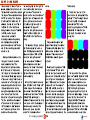
value of -50% in the field leads to
rows of 50%, 0%, 0% (Lightness
doesn't wrap either). -25% will give
us the expected outcome.
I had promised to cover the
Trace tab in this instalment, but
the Color tab ended up being a
more nuanced topic than I had
previously expected, so the Trace
tab has been postponed until next
time.
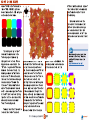
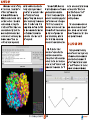
Try creating a larger array of
clones with small values in the
fields to get gently sweeping
changes in color or tone. Or use
bigger values – especially in the
“H” field – to get bold differences
between the clones. Finally, try
drawing a simple leaf with veins
but an unset fill. Group the parts,
then use the tiled clones dialog to
create an array of them. With a
little use of the Random fields in
each of the tabs we've discussed
so far – plus some negative offsets
in the Shift tab to pull everything
together a little – you can quickly
and easily create an autumnal
forest floor background.
You may recall that it's possible
to unset the stroke of a parent
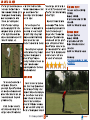
Mark uses Inkscape to create three
object as well as its fill. This also
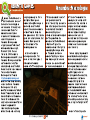
varies. In this final example, I've
works with the Tiled Clones dialog, cloned a yellow rounded square
but, as there is only one Colour
with an unset stroke, but the
tab, there's no way to use different
generated colors for the fill and
stroke: you can unset the fill color,
the stroke color, or both, but
anything that's unset will be given
the same generated color. There's
also no way to set any of the other
stroke parameters through this
dialog – although you can manually
set them on each clone afterwards.
This means that the Tiled Clones
dialog isn't a great help if you want
to create hundreds of clones
whose stroke width or line style
full circle magazine #95
27
webcomics, 'The Greys', 'Monsters,
Inked' and 'Elvie', which can all be
found at
http://www.peppertop.com/
contents ^