1
CustomAir®by RAMVAC®
User Guide
OPERATION
Theory of Operation
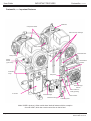
When power is applied, fresh air is taken in through air filters and compressed by the pump pistons. The compressed air is very warm
and is cooled for use by the heat exchanger and fan. Air is then delivered to coalescing filter to remove most of the moisture. The coalescing filter is equipped with a automatic draining feature that allows the draining of the excess moisture. The cool air enters the desiccant style
dryer assembly to complete the moisture removal by removing 99.7% of the water vapor from the air. Air is directed into the dryer cartridges,
from one to the other, by electronically controlled solenoid valves. The timing for the solenoid valves is varied between models and provided
by the C1 Control. While the air is moving through one cartridge, the desiccant in the other cartridge is being dried by air directed through an
orifice in the outlet shuttle valve. This valve cycle will be noticeable by a short burst of air from the purge valves. When the air has left the dryer
assembly it goes through a particulate filter to remove any remaining particulates from the air. It is then collected in the tank where a pressure
gauge displays the tank air pressure. The tank pressure is monitored by a pressure transducer in the C1 Control, which runs the motors on
demand. Pressure is factory set to start the compressor at 80 psi and shut off at 100 psi. Pressure settings are not adjustable.
Getting Started
CustomAirby RAMVAC 1000 series compressor is easy to operate and
maintain.
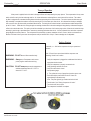
WARNING: DO NOT direct air flow toward the body.
WARNING: Always turn off compressor and remove
power plug from outlet when servicing.
CAUTION: DO NOT attempt to operate the compressor at
ambient temperature below 0º C / 35º F or
above 40º C / 104º F.
SOF_7.5.1-07-04
Effective date: 02-Jul-08
Note: If Sound Cover was ordered with the compressor see
“Installing Sound Cover” section.
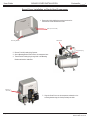
1. Verify the compressor is plugged into a dedicated circuit with an
appropriate electrical outlet.
2. Verify the compressor is properly connected to the
facility plumbing and fresh air source.
3. Verify the outlet valve is closed.
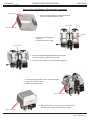
4. Vent pressure gauge
a. Turn yellow tab on top of gauge from closed to open to vent.
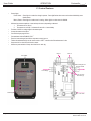
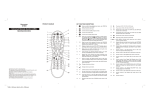
5. Push and hold the power button on the C1 Control for
approximately 5 seconds to start.
Note: The power light will go off when the button is held.
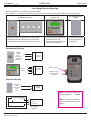
6. Test for leaks. See “Testing Compressor for Leaks”.
7. Turn the shut off valve to open.
8. The compressor installation is complete.
Page 5