1
user manual
Washer-dryer
EWX 14450 W
2 electrolux
Electrolux. Thinking of you.
Share more of our thinking at www.electrolux.com
CONTENTS
Safety information
Product description
Control panel
Washing programmes
Drying Programmes
First use
Personalisation
Daily use
2
4
5
8
10
10
11
11
Use - Drying
14
Use - Washing & Drying
15
Helpful hints and tips
15
Drying Hints
17
Care and cleaning
18
What to do if...
22
Technical data
25
Consumption values
25
Subject to change without notice
Important! Read carefully & keep for future
reference.
• During high temperature wash programmes the door glass may get hot. Do
not touch it!
• Make sure that small pets and children
do not climb into the drum. To avoid this,
please check into the drum before using.
• Any objects such as coins, safety pins,
nails, screws, stones or any other hard,
sharp material can cause extensive damage and must not be placed into the machine.
• Only use the advised quantities of fabric
softener and detergent. Damage to the
fabric can ensue if you over-fill. Refer to
the manufacturer’s recommendations of
quantities.
• Wash small items such as socks, laces,
washable belts etc in a washing bag or
pillow case as it is possible for such
items to slip down between the tub and
the inner drum.
• Do not use your washing machine to
wash articles with whalebones, material
without hems or torn material.
• Always unplug the appliance and turn off
the water supply after use, cleaning and
maintenance.
• Under no circumstances should you attempt to repair the machine yourself. Repairs carried out by inexperienced people
may cause injury or serious malfunctioning. Contact your local Service Centre.
Always insist on genuine spare parts.
SAFETY INFORMATION
• The safety of Your appliance complies
with the industry standards and with legal
requirements on the safety of appliances.
However, as manufacturers, we feel it is
our duty to provide the following safety
notes.
• It is most important that this instruction
book should be retained with the appliance for future reference. Should the appliance be sold or transferred to another
owner, or should you move house and
leave the appliance, always ensure that
the book is supplied with the appliance in
order that the new owner can get to
know the functioning of the appliance
and the relevant warnings.
• You MUST read them carefully before installing or using the appliance.
• Before first starting up, check the appliance for any damage incurred during
transport. Never connect up a damaged
appliance . If parts are damaged, contact
your supplier.
• If the appliance is delivered in the winter
months when there are minus temperatures. Store it at room temperature for 24
hours before using for the first time.
General safety
• It is dangerous to alter the specifications
or attempt to modify this product in any
way.
Installation
• This appliance is heavy. Care should be
taken when moving it.
electrolux 3
• When unpacking the appliance, check
that it is not damaged. If in doubt, do not
use it and contact the Service Centre.
• All packing and transit bolts must be removed before use. Serious damage can
occur to the product and to property if
this is not adhered to. See relevant section in the user manual.
• After having installed the appliance,
check that it is not standing on the inlet
and drain hose and the worktop is not
pressing the electrical supply cable
against the wall.
• If the machine is situated on a carpeted
floor, please adjust the feet in order to allow air to circulate freely under the appliance.
• Always be sure, that there is no water
leakage from hoses and their connections after the installation.
• If the appliance is installed in a location
subject to frost, please read the “dangers
of freezing” chapter.
• Any plumbing work required to install this
appliance should be carried out by a
qualified plumber or competent person.
• Any electrical work required to install this
appliance should be carried out by a
qualified electrician or competent person.
Use
• This appliance is designed for domestic
use. It must not be used for purposes
other than those for which it was designed.
• Only wash and dry fabrics which are designed to be machine washed or dried.
Follow the instructions on each garment
label
• Do not overload the appliance. See the
Washing Programme Table.
• Before washing, ensure that all pockets
are empty and buttons and zips are fastened. Avoid washing frayed or torn articles and treat stains such as paint, ink,
rust, and grass before washing. Underwired bras must NOT be machine washed.
• Garments which have been in contact
with volatile petroleum products should
not be machine washed. If volatile cleaning fluids are used, care should be taken
to ensure that the fluid is removed from
•
•
•
•
•
•
the garment before placing in the machine.
As some duvets and eiderdowns should
be washed/dried in large commercial machines because of their bulk, please
check with the manufacturer of the item
before washing in a domestic machine.
The users should always check that they
have not left their gas lighters (disposable
or otherwise) in their clothing.
Never tumble dry items that have had
contact with chemicals such as dry
cleaning fluid. These are of a volatile nature and could cause an explosion. Only
tumble dry items which have been washed in water or require airing.
Plastic detergent dispensers should not
remain in the drum during the drying cycle, as the plastic used is not designed to
withstand the heat. If you wish to washthrough-to-dry you should use the conventional detergent dispenser drawer.
Never pull the power supply cable to remove the plug from the socket; always
take hold of the plug itself.
Never use your new appliance if the power supply cable, the control panel, the
working surface or the base are damaged so that the inside of the appliance is
accessible.
Child safety
• This appliance is not intended for use by
person (including children) with reduced
physical sensory or mental capabilities or
lack of experience and knowledge unless
they have been given supervision or instruction concerning use of the appliance
by a person responsible for their safety.
• The packaging components (e.g. plastic
film, polystyrene) can be dangerous to
children - danger of suffocation! Keep
them out of children’s reach.
• Keep all detergents in a safe place out of
children’s reach.
• Make sure that children or pets do not
climb into the drum. To prevent children
and pets becoming trapped inside the
drum the machine incorporates a special
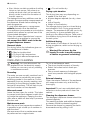
feature. To activate this device, rotate the
button (without pressing it) inside the
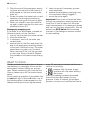
door clockwise until the groove is horizontal. If necessary use a coin.
4 electrolux
To disable this device and restore the
possibility of closing the door, rotate the
button counterclockwise until the groove
is vertical.
PRODUCT DESCRIPTION
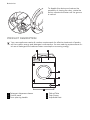
Your new appliance meets all modern requirements for effective treatment of laundry
with low water, energy and detergent consumption. Its new washing system allows total use of detergent and reduces water consumption so saving energy.
1
2
3
4
5
6
1 Detergent dispenser drawer
2 Control panel
3 Door opening handle
4 Rating Plate
5 Drain pump
6 Adjustable feet
electrolux 5
Detergent dispenser drawer
Compartment for detergent used for
prewash and soak phase or for stain remover used during the stain action phase (if
available). The prewash and soak detergent
is added at the beginning of the wash programme. The stain remover is added during the stain action phase.
Compartment for powder or liquid detergent used for main wash. If using liquid
detergent pour it just before starting the
programme.
Compartment for liquid additives (fabric
softener, starch).
Follow the product manufacturer’s recommendations on quantities to use and do not
exceed the «MAX» mark in the detergent
dispenser drawer. Any fabric softener or
starching additives must be poured into the
compartment before starting the wash programme.
CONTROL PANEL
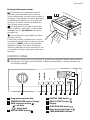
Below is a picture of the control panel. It shows the programme selector dial as well as
the buttons, pilot light and the display. These are presented by relevant numbers on
the following pages.
1
1 Programme selector dial
2 TEMPERATURE button (Temp.)
3 SPIN reduction button
–
= No Spin
–
= Rinse Hold
4 EXTRA RINSE button
2
3
5
6
7
8
9
10
4
5
6
7
8
DRYING TIME button
DELAY START button
Display
START/PAUSE button
Door locked pilot light
TIME MANAGER buttons
9
10
6 electrolux
Programme Selector Dial
It allows you to switch the appliance on/off
and/or to select a programme.
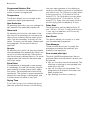
Temperature
This button allows you to increase or decrease the washing temperature.
Spin Reduction
By pressing this button you can change the
spin speed of the selected programme.
Rinse hold
By selecting this function the water of the
last rinse is not emptied out to prevent the
fabrics from creasing. Before opening the
door it will be necessary to empty out the
water. To empty out the water, please read
the paragraph «At the end of the programme».
No spin
By selecting this option, all spinning phases
are suppressed and replaced by a drain, so
as not to wrinkle the laundry. Recommended for extremely delicate fabrics. On some
programmes the rinses will be performed
with more water.
Extra Rinse
This appliance is designed to save energy.
If it necessary to rinse the laundry using an
extra quantity of water (extra rinse), select
this option. Some additional rinses will be
performed. This option is recommended for
people who are allergic to detergents, and
in areas where the water is very soft.
Drying Time
If you wish to carry out a timed drying programme, press this button until the drying
time you want appears on the display according to the fabrics (cottons or synthetics)
you have to dry. For Cottons you can select
a drying time from 10 minutes to 250 minutes (4.10). For Synthetics you can select
a drying time from 10 minutes to 130 minutes (2.10). Every time you press this button the drying time increases by 5 mins.
Delay Start
The programme can be delayed from 30
min - 60 min - 90 min, 2 hours and then by
1 hour up to a maximum of 20 hours by
means of this button.
Start Pause
This button allows you to start or to interrupt the selected programme.
Time Manager
These buttons allows you to modify the
programme duration automatically proposed by the appliance.
Door locked pilot light
The pilot light 9 illuminates when the programme starts and indicates if the door can
be opened:
• light on: the door cannot be opened. The
machine in working or has stopped with
water left in the tub.
• light off: the door can be opened. The
programme is finished or the water has
been emptied out.
• light flashing: the door is opening
electrolux 7
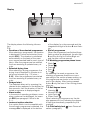
Display
7.3
7.4
7.1
7.2
The display shows the following information:
7.1:
• Duration of the selected programme
After selecting a programme, the duration
is displayed in hours and minutes (for example 2.05 ). The duration is calculated
automatically on the basis of the maximum recommended load for each type of
fabric. After the programme has started,
the time remaining is updated every minute.
• Selected drying time
After selecting a drying programme, the
drying time is displayed in minutes or in
hours and minutes (e.g. 130 mins =
2.10 ). After the programme has started
the time remaining is updated every minute..
• Delayed start
The Selected delay set by pressing the
relevant button appears on the display for
few seconds, then the duration of the selected programme is displayed again.
• Alarm codes
In the event of operating problems, some
alarm codes can be displayed, for example E20 (see paragraph «What to do
if...»).
• Incorrect option selection
If an option which is not compatible with
the set wash programme is selected, the
message Err is displayed at the bottom
of the display for a few seconds and the
integrated red light of button 8 start flashing.
• End of programme
When the programme has finished three
flashing zeros are displayed, the pilot light
9 and the pilot light of button 8 go out
and the door can be opened.
7.2: Washing programme phase icons
• Wash
• Rinses
• Drain
• Spin
• Dry
By selecting the wash programme, the
washing programme phase icons corresponding to the various phases making up
the programme are shown in the bottom
part of the display. After having pressed
button 8 only the icon of the running phase
stays on.
7.3: Soil degree icons
• Intensive
• Normal/Daily
• Light/Quick
• Super Quick
When selecting a programme on the display appears an icon indicating the degree
of soiling automatically proposed by the
machine.
(see «Personali7.4: Child safety lock
sation» paragraph).
8 electrolux
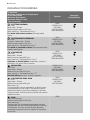
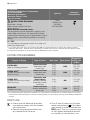
WASHING PROGRAMMES
Programme
Maximum and Minimum Temperature
Cycle Description
Maximum Spin Speed
Maximum Fabrics Load
Type of Laundry
Options
- COTTONS NORMAL
90°-Cold
Main wash - Rinses
Maximum spin speed 1400 rpm
Max. load 6 kg - Reduced load 3 kg 1)
For white and coloured cotton (normally soiled
items).
SPIN
RINSE HOLD
NO SPIN
EXTRA RINSE
TIME MANAGER
- COTTONS WITH PREWASH
90°-Cold
Prewash - Main wash - Rinses
Maximum spin speed 1400 rpm
Max. load 6 kg - Reduced load 3 kg 1)
For white or coloured cottons with prewash phase
(heavily soiled items).
SPIN
RINSE HOLD
NO SPIN
EXTRA RINSE
TIME MANAGER
- SYNTHETICS
60°-Cold
Main wash - Rinses
Maximum spin speed 900 rpm
Max. load 3 kg - Reduced load 1,5 kg 1)
Synthetic or mixed fabrics: underwear, coloured
garments, non-shrink shirts, blouses.
SPIN
RINSE HOLD
NO SPIN
EXTRA RINSE
TIME MANAGER
- DELICATES
40°-Cold
Main wash - Rinses
Maximum spin speed 700 rpm
Max. load kg 3 - Reduced load kg 1,5 1)
Delicate fabrics: acrylics, viscose, polyester.
RINSE HOLD
NO SPIN
EXTRA RINSE
TIME MANAGER
- SYNTHETICS EASY IRON
60°-Cold
Main wash - Rinses
Maximum spin speed 900 rpm
Max. load 1 kg
This programme can be selected for synthetic items
and mixed fabric to be ironed. The laundry is gently
washed and spun to avoid any creasing. In this way
ironing is easier. Furthermore the machine will perform
additional rinses.
SPIN
RINSE HOLD
NO SPIN
EXTRA RINSE
- SPIN
Drain and long spin
Maximum spin speed 1400 rpm
Max. load 6 kg
Separate spin for hand washed garments and after
programmes with the Rinse Hold and Night Cycle option selected. You can choose the spin speed by
pressing the relevant button to adapt it to the fabrics
to be spun.
SPIN
Detergent
Compartment
2)
electrolux 9
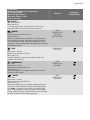
Programme
Maximum and Minimum Temperature
Cycle Description
Maximum Spin Speed
Maximum Fabrics Load
Type of Laundry
Options
- DRAIN
Draining of water
Max. load 6 kg
For emptying out the water of the last rinse in programmes with the Rinse Hold option selected.
- RINSES
Rinses
Maximum spin speed 1400 rpm
Max. load 6 kg
With this programme it is possible to rinse and spin
cotton garments which have been washed by hand.
The machine performs 3 rinses, followed by a final
long spin. The spin speed can be reduced by pressing
the relevant button.
SPIN
RINSE HOLD
NO SPIN
EXTRA RINSE
- SILK
30°
Main wash - Rinses
Maximum spin speed 700 rpm
Max. load 1 kg
Delicate washing programme suitable for silk and
mixed synthetic items.
RINSE HOLD
NO SPIN
- HANDWASH
40°-Cold
Main wash - Rinses
Maximum spin speed 900 rpm
Max. load 2 kg
Special programme for delicate fabrics with «hand
washing» care symbol.
SPIN
RINSE HOLD
NO SPIN
- WOOL
40°-Cold
Main wash - Rinses
Maximum spin speed 900 rpm
Max. load 2 kg
Washing programme for machine washable wool as
well as for hand washable woollens and delicate fabrics. Note : A single or bulky item may cause imbalance. If the appliance doesn’t perform the final spin
phase, add more items, redistribute the load manually
and then select the spinning programme.
SPIN
RINSE HOLD
NO SPIN
Detergent
Compartment
10 electrolux
Programme
Maximum and Minimum Temperature
Cycle Description
Maximum Spin Speed
Maximum Fabrics Load
Type of Laundry
- ECOCOTTONS ECONOMY
90°-40°
Main wash - Rinses
Maximum spin speed 1400 rpm
Max. load 6 kg
White and fast coloured cotton.
This programme can be selected for slightly or normally soiled cotton items. The temperature will decrease and the washing time will be extended. This allows to obtain a good washing efficiency so saving
energy.
Detergent
Compartment
Options
SPIN
RINSE HOLD
NO SPIN
EXTRA RINSE
O = OFF
For cancelling the programme which is running or to
switch the machine off .
1) If you select the Quick option by pressing button 10, we recommend that you reduce the maximum load as
indicated. (Red. load = reduced load). Full loading is possible however with somewhat reduced cleaning results.
2) If using liquid detergents, a programme without PREWASH must be selected.
DRYING PROGRAMMES
Type of Fabric
Max Load
Spin Speed
Suggested
drying time
in Mins
EXTRA DRY
Ideal for towelling materials
Cotton and linen
(bathrobes, bath
towels, etc)
4 kg
3 kg
2 kg
1400
200-220
125-135
75-85
STORE DRY1)
Suitable for items to put away
without ironing
Cotton and linen
(bathrobes, bath
towels, etc)
4 kg
3 kg
2 kg
1400
190-210
115-125
65-75
STORE DRY
Suitable for items to put away
without ironing
Synthetics and
mixed fabrics
(jumpers, blouses,
underwear, household linen)
2 kg
1 kg
900
115-125
40-50
IRON DRY
Suitable for ironing
Cotton and linen
(sheets, tablecloths,
shirts, etc.)
4 kg
3 kg
2 kg
1400
160-180
95-105
55-65
Degree of Drying
1) In compliance with EC directive EN 50229 the COTTON reference programme for the data entered in the Energy
Label must be tested dividing the maximum washing load by two equal parts and drying with DRYING TIME each
of them.
FIRST USE
• Ensure that the electrical and water
connections comply with the installation instructions.
• Remove the polystyrene block and
any material from the drum.
• Pour 2 litres of water into the main
of the deterwash compartment
gent drawer in order to activate the
ECO valve. Then run a cotton cycle
at the highest temperature without
any laundry in the machine, to re-
electrolux 11
move any manufacturing residue
from the drum and tub. Pour 1/2 a
measure of detergent into the main
wash compartment and start the
machine.
PERSONALISATION
Acoustic signals
The machine is provided with an acoustic
device, which sounds in the following cases:
• at the end of the cycle
• if there is a fault.
By pressing the 4 and 5 buttons simultaneously for about 6 seconds, the acoustic
signal is deactivated (except if there is a
fault). By pressing these 2 buttons again,
the acoustic signal is reactivated.
Child safety lock
This device permits you to leave the appliance unattended and not to worry that chil-
dren might be injured by or cause damage
to the appliance. This function remains enabled also when the washing machine is not
working.
There are two different ways to set this option:
1. Before pressing button 8: it will be impossible to start the machine.
2. After pressing button 8: it will be impossible to change any other programme or
option.
To enable or disable this option press simultaneously for about 6 seconds buttons
ap5 and 6 until on the display, the icon
pears or disappears.
DAILY USE
Load the laundry
Open the door by carefully pulling the door
handle outwards. Place the laundry in the
drum, one item at a time, shaking them out
as much as possible. Close the door.
Measure out the detergent and the fabric softener
Pull out the dispenser drawer until it stops.
Measure out the amount of detergent required, pour it into the main wash compartor in the appropriate compartment
ment
if the selected programme/option it requires
(see more details in «Detergent dispenser
drawer»).
If required, pour fabric softener into the
compartment marked
(the amount used
must not exceed the «MAX» mark in the
drawer). Close the drawer gently.
12 electrolux
Reduce the spin speed by pressing
button 3
By selecting a programme, the appliance
proposes automatically the maximum spin
speed provided for that programme.
Press button 3 repeatedly to change the
spin speed, if you want your laundry to be
spun at a different speed. The relevant light
illuminates.
Select the required programme by
turning the programme selector dial (1)
Turn the programme selector dial to the required programme. The washing machine
will propose a temperature and automatically select the maximum spin value provided for the programme you have chosen.
You can change these values by operating
the corresponding buttons. The green pilot
light of the button 8 starts to flash.
The selector dial can be turned either clockwise or counterclockwise. Turn to position
to reset programme/Switching the machine off.
At the end of the programme the selec,
tor dial must be turned to position
to switch the machine off.
Caution! If you turn the programme
selector dial to another programme
when the machine is working, the red
pilot light of button 8 will blink 3 times
and the message Err is displayed to
indicate a wrong selection. The
machine will not perform the new
selected programme.
Select the temperature by pressing
button 2
By selecting a programme, the appliance
proposes automatically a default temperature.
Press this button repeatedly to increase or
decrease the temperature, if you want your
laundry to be washed at a different temperature.
Select the available option by pressing
buttons 3, 4 and 5
Depending on the selected programme, different functions can be combined before
pressing the button 8. By selecting an option the relevant pilot light illuminates.
If an incorrect option is selected, the integrated red pilot light of the button 8 flashes
3 times and the Err message appears on
the display for few seconds.
For compatibility among the washing
programmes and the options see
chapter «Washing Programmes».
Select the Delay Start by pressing
button 6
Before you start the programme, if you wish
to delay the start, press the button 6 repeatedly, to select the desired delay. The
relevant pilot light goes on.
The selected delay time value (up to 20
hours) will appear on the display a few seconds, then the duration of the programme
will appear again.
You must select this option after you have
set the programme and before you press
button 8.
You can cancel or modify the delay time at
any moment, before you press button 8.
Selecting the delayed start:
1. Select the programme and the required
options.
2. Select the delay start by pressing the
button 6.
3. Press button 8:
– the machine starts its hourly countdown.
– The programme will start after the selected delay has expired.
Cancelling the delayed start after having
pressed button 8:
1. Set the washing machine to PAUSE by
pressing button 8.
electrolux 13
2. Press button 6 once until the symbol 0’
is displayed
3. Press button 8 again to start the programme.
Important! The selected delay can be
changed only after selecting the washing
programme again.
The Delay Start can not be selected with
DRAIN programme.
Start the programme by pressing
button 8
To start the selected programme, press the
button 8, the green pilot light of the button
8 stops blinking.
To interrupt a programme which is running,
press the button 8: the green pilot light
starts blinking.
To restart the programme from the point at
which it was interrupted, press the button 8
again. If you have chosen a delayed start,
the machine will begin the countdown. If an
incorrect option is selected, the red pilot
light of the button 8 blinks for 3 times the
message Err is displayed for a few seconds.
Select the Time Manager option by
pressing buttons 10
By pressing these buttons repeatedly, the
duration of the washing cycle can be increased or decreased. The soil level icon
will appear on the display to indicate the
chosen degree of soil. This option is available only with Cotton, Synthetic and Delicate programmes.
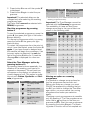
Soil Level
Icon
Type of fabric
Intensive
For heavy soiled
items
Normal
For normal soiled
items
Daily
For daily soiled
items
Light
For slightly soiled
items
Quick
For very slightly
soiled items
Soil Level
Icon
Super Quick
Type of fabric
For items used or
worn for a short
time
1)
1) We recommend you to reduce the load sizes (see
Washing programmes table).
Important! The Time Manager cannot be
selected with the Economy programmes.
The availability of these soil level icons
change according to the type of fabric as
shown in the following chart.
Fabric
Soil Level
Cottons
95°/90°C
X
X
X
X
X
X
60°C/50°C
X
X
X
X
X
X
40°C
X
X
X
X
X
X
30°C
X
X
X
X
X
X
Cold
X
X
X
X
X
X
60°C/50°C
X
X
X
X
40°C
X
X
X
X
30°C
X
X
X
X
Cold
X
X
X
X
40°C
X
X
X
X
30°C
X
X
X
X
Cold
X
X
X
X
Synthetics
Delicates
Altering an option or a running
programme
It is possible to change some options before the programme carries them out .
Before you make any change, you must
PAUSE the appliance by pressing the button 8 (if you wish to change the Time Manager option, you must cancel the running
programme and make your selection
again).
Changing a running programme is possible
only by resetting it. Turn the programme seand then to the new prolector dial to
gramme position. Start the new programme
by pressing the button 8 again. The washing water in the tub will be not emptied out.
14 electrolux
Interrupting a programme
Press the button 8 to interrupt a programme which is running, the corresponding green pilot light starts blinking.
Press the button again to restart the programme.
Cancelling a programme
to cancel a proTurn the selector dial to
gramme which is running.
You can select now a new programme.
Opening the door
After the programme has started (or during
the delay time) the door is locked, if you
need to open it, set first the machine to
PAUSE by pressing the button 8.
After a few minutes the pilot light 9 goes
out and it is possible to open the door.
If this pilot light remains lit, this means that
the machine is already heating or that the
water level is too high. In any case, do not
try to force the door!
If you cannot open the door but you need
to open it you have to switch the machine
off by turning the selector dial to O. After a
few minutes the door can be opened (pay
attention to the water level and temperature!).
After closing the door, it is necessary to select the programme and options again and
to press button 8.
Stand by : once the programme has finished after a few minutes the energy saving
system will be enabled. The brightness of
At the end of the programme
The machine stops automatically. Three
) appear on the disblinking zeros (
play and the pilot light of button 8 goes off.
If a programme or an option that ends with
water left in the tub has been selected, the
door remains locked to indicate that the
water must be emptied out before opening
the door.
Follow the below instructions to empty out
the water:
1. Turn the programme selector dial to
.
2. Select the draining or spinning programme.
3. Reduce the spin speed if needed, by
pressing the relevant button.
4. Press button 8.
At the end of the programme, the door is
released and can be opened. Turn the proto switch the
gramme selector dial to
machine off.
Remove the laundry from the drum and
carefully check that the drum is empty. If
you do not intend to carry out another
wash, close the water tap. Leave the door
open to prevent the formation of mildew
and unpleasant smells.
the display is reduced. By pressing any button the appliance will come out of the energy saving status.
USE - DRYING
Drying only
Warning!
The recommended load size is 3 kg for cottons and line and 2 kg for synthetic items.
It is also possible to dry up to 4 kg of
cotton items (see the «Drying Programme » table).
Warning!
The water tap must be open and the
drain hose must be positioned in the
sink or connected to the drain pipe.
1. Load the laundry.
2. Select a spin cycle at the maximum spin
speed allowed for the type of laundry in
order to obtain the best drying performances.
3. Select the drying programme for Cottons or Synthetic in the Drying sector of
the programme selector dial.
4. Set the timed drying: press the button
5 until the time you want appears on the
display (see the «Drying Programme» table). Every time you press this button
the drying time increases by 5 minutes.
Note!
The programme time will automatically
increase by some minutes.
electrolux 15
5. Press button 8 to start the programme.
The time remaining is updated every minute.
6. At the end of the programme, the buzzer sounds. Three blinking «0.00» zeros
appear on the display.
During the last 10 minutes of the drying
cycle the appliance performs an anticrease phase. Through this time the
door is locked. The door locked light is
on. The display shows three flashing zeros «0.00».
If you wish to open the door before or
during the anti-crease phase or to interrupt it, press any button or turn the
programme selector dial to any programme position (except O).
7. Turn the selector dial to the O position
to switch the machine off.
8. Remove the laundry from the drum.
Note!
The different type of cottons (towelling,
sheets, shirts, and so on) or any laundry
items rolling up during the spinning phase
may result in partial dryness. In the exceptional case that at the end of the cycle the
laundry remains slightly wet, we suggest
that you unfold the rolled up items, redistribute them evenly in the drum and select
an additional drying cycle of 20-30 minutes.
USE - WASHING & DRYING
NON-STOP programme - Washing and
Timed Drying
The recommended load size is 3 kg for cotton and 2 kg for synthetic.
It is also possible to dry up to 4 kg of
cotton items (see the «Drying Programme » table).
Caution! Do not use a dosing
device/ball when carrying out a
washing and drying programme.
1. Load the laundry and add detergent and
fabric softener.
2. Switch the machine on by turning the
selector dial to the set washing programme/fabric.
HELPFUL HINTS AND TIPS
Sorting out the laundry
Follow the wash code symbols on each
garment label and the manufacturer’s
washing instructions. Sort the laundry as
follows: whites, coloureds, synthetics, delicates, woollens.
3. Select the required options by pressing
the relevant buttons.
If possible, do not select a spin
speed lower than that proposed by
the appliance to avoid too long a
drying time therefore saving energy.
In any case the reduction of the spin
speed is only possible after selecting
drying.
The lowest values you can select are
900 r.p.m. for cottons and synthetics
and 700 r.p.m. for delicate fabrics.
4. Set the drying time by pressing button
5. The display shows the whole duration
of the washing and the set drying cycle.
5. Start the programme by pressing button
8. The time remaining is updated every
minute on the display.
6. At the end of the programme turn the
selector dial to the O position to switch
the machine off and remove the laundry.
16 electrolux
Temperatures
The following weights are indicative:
95° or 90°
for normally soiled white cottons and linen (e.g. tea cloths,
towels, tablecloths, sheets...)
bathrobe
1200 g
quilt cover
700 g
man’s work shirt
600 g
sheet, man’s pyjamas
500 g
60°/50°
for normally soiled, colour fast
garments (e.g. shirts, night
dresses, pyjamas....) in linen,
cotton or synthetic fibres and
for lightly soiled white cotton
(e.g. underwear)
tablecloth
250 g
pillow case, towelling towel,
night dress, man’s shirt
200 g
for delicate items (e.g. net curtains), mixed laundry including
synthetic fibres and woollens
bearing the label «pure new
wool, machine washable, nonshrink»
tea cloth, ladies’ briefs, napkin, blouse, men’s underpants
100 g
40°-30°Cold
Before loading the laundry
Never wash whites and coloureds together.
Whites may lose their «whiteness» in the
wash.
New coloured items may run in the first
wash; they should therefore be washed
separately the first time.
Make sure that no metal objects are
left in the laundry (e.g. hair clips, safety
pins, pins).
Button up pillowcases, close zip fasteners,
hooks and poppers. Tie any belts or long
tapes.
Remove persistent stains before washing.
Rub particularly soiled areas with a special
detergent or detergent paste.
Treat curtains with special care. Remove
hooks or tie them up in a bag or net.
Maximum loads
Recommended loads are indicated in the
washing programme charts.
General rules:
• Cotton, linen: drum full but not too
tightly packed;
• Synthetics: drum no more than half full;
• Delicate fabrics and woollens: drum
no more than one third full.
Washing a maximum load makes the most
efficient use of water and energy.
For heavily soiled laundry, reduce the load
size.
Laundry weights
The following weights are indicative:
1) do not use acetone on artificial silk
Removing stains
Stubborn stains may not be removed by
just water and detergent. It is therefore advisable to treat them prior to washing.
Blood: treat fresh stains with cold water.
For dried stains, soak overnight in water
with a special detergent then rub in the
soap and water.
Oil based paint: moisten with benzine
stain remover, lay the garment on a soft
cloth and dab the stain; treat several times.
Dried grease stains: moisten with turpentine, lay the garment on a soft surface and
dab the stain with the fingertips and a cotton cloth.
Rust: oxalic acid dissolved in hot water or a
rust removing product used cold. Be careful
with rust stains which are not recent since
the cellulose structure will already have
been damaged and the fabric tends to hole.
Mould stains: treat with bleach, rinse well
(whites and fast coloureds only).
Grass: soap lightly and treat with bleach
(whites and fast coloureds only).
Ball point pen and glue: moisten with
acetone1), lay the garment on a soft cloth
and dab the stain.
Lipstick: moisten with acetone as above,
then treat stains with methylated spirits.
Treat any residual marks with bleach.
Red wine: soak in water and detergent,
rinse and treat with acetic or citric acid,
then rinse. Treat any residual marks with
bleach.
Ink: depending on the type of ink, moisten
the fabric first with acetone1), then with
acetic acid; treat any residual marks on
white fabrics with bleach and then rinse
thoroughly.
electrolux 17
Tar stains: first treat with stain remover,
methylated spirits or benzine, then rub with
detergent paste.
Detergents and additives
Good washing results also depend on the
choice of detergent and use of the correct
quantities to avoid waste and protect the
environment.
Although biodegradable, detergents contain
substances which, in large quantities, can
upset the delicate balance of nature.
The choice of detergent will depend on the
type of fabric (delicates, woollens, cottons,
etc.), the colour, washing temperature and
degree of soiling.
All commonly available washing machine
detergents may be used in this appliance:
• powder detergents for all types of fabric
• powder detergents for delicate fabrics
(60°C max) and woollens
• liquid detergents, preferably for low temperature wash programmes (60°C max)
for all types of fabric, or special for woollens only.
The detergent and any additives must be
placed in the appropriate compartments of
the dispenser drawer before starting the
wash programme.
If using liquid detergents, a programme
without prewash must be selected.
Your appliance incorporates a recirculation
system which allows an optimal use of the
concentrated detergent.
Follow the product manufacturer’s recommendations on quantities to use and do
not exceed the «MAX» mark in the detergent dispenser drawer.
Degrees of water hardness
Water hardness is classified in so-called
“degrees” of hardness. Information on hardness of the water in your area can be obtained from the relevant water supply company, or from your local authority.
A water softener must be added when
water has a medium-high degree of
hardness (from degree of hardness II).
Follow the manufacturer’s instructions.
The quantity of detergent can then always be adjusted to degree of hardness I (= soft).
Level
Characteristic
Degrees of water
hardness
German
°dH
French
°T.H.
1
soft
0-7
0-15
2
medium
8-14
16-25
3
hard
15-21
26-37
4
very hard
> 21
> 37
DRYING HINTS
Preparing the drying cycle
As a dryer, the appliance works on the condensation principle.
Therefore, the water tap must be open
and the drain hose must drain water into a sink or into the drain pipe, even
during the drying cycle.
Attention!
Before starting the drying programme, reduce the loads of washed laundry, in order
to obtain good performances.
Laundry not suitable for drying
• Particularly delicate items such as synthetic curtains, woollen and silk, garments with metal inserts, nylon stockings, bulky garments such as anoraks,
•
•
•
•
bed covers, quilts, sleeping bags and duvets must not be machine dried.
Avoid drying dark clothes with light coloured fluffy items such as towels as
these can attract the fluff.
Remove the laundry when the appliance
has finished drying.
To avoid a static charge when drying is
completed, use either a fabric softener
when you are washing the laundry or a
fabric conditioner specifically for tumble
dryers.
Garments padded with foam-rubber or
materials similar to foam-rubber must not
be machine dried; they represent a fire
hazard.
18 electrolux
• Also, fabrics containing residue of setting
lotions or hair sprays, nail solvents or
similar solutions must not be machine
dried in order to avoid the formation of
harmful vapours.
The detergent and any additives must be
placed in the appropriate compartments of
the dispenser drawer before starting the
wash programme.
If using liquid detergents, a programme
without prewash must be selected.
Your appliance incorporates a re-circulation
system which allows an optimal use of the
concentrated detergent.
Follow the product manufacturer’s recommendations on quantities to use and do
not exceed the «MAX» mark in the detergent dispenser drawer.
Garment labels
For drying, follow the indications given on
the manufacturer’s labels:
•
= May be tumble dried
•
= Drying at high temperature
•
= Drying at reduced temperature
•
= Do not tumble dry.
Drying cycle duration
The drying time may vary depending on:
• speed of the final spin
• dryness degree required (iron dry, store
dry)
• type of laundry
• weight of the load size .
The average drying time for a timed drying
are indicated in the «Drying programmes»
chapter. The experience will help you to dry
your laundry in a more suitable way, according to the different fabrics. Take note of
the duration drying time of the already performed cycles.
Additional drying
If the laundry is still damp at the end of the
drying programme, select a short drying cycle again.
Warning! Do not over dry the
laundry in order to avoid creasing
of fabrics or garment’s shrinking.
CARE AND CLEANING
Warning! You must disconnect the
appliance from the electricity supply,
before you can carry out any cleaning
or maintenance work.
Descaling
The water we use normally contains lime. It
is a good idea to periodically use a water
softening powder in the machine. Do this
separately from any laundry washing, and
according to the softening powder manufacturer's instructions. This will help to prevent the formation of lime deposits.
After each wash
Leave the door open for a while. This helps
to prevent mould and stagnant smells forming inside the appliance. Keeping the door
open after a wash will also help to preserve
the door seal.
Maintenance wash
With the use of low temperature washes it
is possible to get a build up of residues inside the drum.
We recommend that a maintenance wash
be performed on a regular basis.
To run a maintenance wash:
• The drum should be empty of laundry.
• Select the hottest cotton wash programme.
• Use a normal measure of detergent,
must be a powder with biological properties.
External cleaning
Clean the exterior cabinet of the appliance
with soap and water only, and then dry
thoroughly.
Important! Do not use methylated spirits,
solvents or similar products to clean the
cabinet.
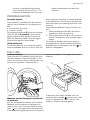
Cleaning the dispenser drawer
The detergent dispenser drawer should be
cleaned regularly.
The washing powder and additive dispenser drawer should be cleaned regularly.
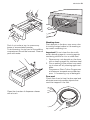
Remove the drawer by pressing the catch
downwards and by pulling it out.
electrolux 19
Flush it out under a tap, to remove any
traces of accumulated powder.
To aid cleaning, the top part of the additive
compartment should be removed. Clean all
parts with water.
Washing drum
Rust deposits in the drum may occur due
to rusting foreign bodies in the washing or
tap water containing iron.
Important! Do not clean the drum with
acidic descaling agents, scouring agents
containing chlorine or iron or steel wool.
1. Remove any rust deposits on the drum
with a cleaning agent for stainless steel.
2. Run a washing cycle without any washing to clean off any cleaning agent residues.
Programme: Short Cotton Programme
at maximum temperature and add approx. 1/4 measuring cup of detergent.
Door seal
Check from time to time the door seal and
eliminate eventual possible objects that
could be trapped in the fold.
Clean the chamber of dispenser drawer
with a brush.
20 electrolux
Drain pump
The pump should be inspected regularly
and particularly if:
• the appliance does not empty and/or
spin;
• the appliance makes an unusual noise
during draining due to objects such as
safety pins, coins etc. blocking the
pump;
• a problem with water draining is detected
(see chapter “What to do if...” for more
details).
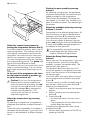
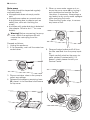
5. When no more water comes out, unscrew the pump cover (A) by turning it
anti-clockwise and remove the filter.
Use pliers, if necessary. Always keep a
rag nearby to dry up any water spillages
when removing the cover.
Clean the filter under a tap, to remove
any traces of fluff.
Warning! Before unscrewing the pump
cover, switch the appliance off and
remove the mains plug from the
socket.
Proceed as follows:
1. Unplug the appliance.
2. If it is necessary, wait until the water has
cooled down.
A
B
3. Place a container close to the pump to
collect any spillage.
4. Release the emergency emptying hose
(B), place it in the container and remove
its cap cover
6. Remove foreign bodies and fluff from
the filter seat and from the pump impeller.
Check carefully whether the pump impeller rotates (it rotates jerkily). If it
doesn’t rotate, please contact your
Service Centre.
electrolux 21
7. Put the cap back on the emergency
emptying hose and place the latter back
in its seat.
8. Replace the filter into the pump by inserting it correctly into the special
guides. Screw the pump cover firmly by
turning it clockwise.
Warning!
When the appliance is in use and depending on the programme selected there can
be hot water in the pump.
Never remove the pump cover during a
wash cycle, always wait until the appliance
has finished the cycle, and is empty. When
refitting the pump cover, ensure it is securely retightened so as to stop leaks and
young children being able to remove it.
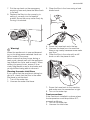
3. Clean the filter in the hose using a hard
bristle brush.
4. Screw the hose back onto the tap.
5. Unscrew the hose from the machine.
Keep a rug nearby because some water
may flow.
6. Clean the filter in the valve with a stiff
brush or with the piece of cloth.
Cleaning the water inlet filters
If you notice that the machine is taking longer to fill, check that the filter in the water
inlet hose is not blocked.
1. Turn off the water tap.
2. Unscrew the water inlet hose.
7. Screw the hose back to the machine
and make sure the connection is tight.
8. Turn on the water tap.
Frost precautions
If the machine is installed in a place where
the temperature could drop below 0°C,
proceed as follows:
1. Turn off the water tap.
2. Unscrew the inlet hose.
22 electrolux
3. Place the end of the emergency emptying hose and that of the inlet hose in a
bowl placed on the floor and let water
drain out.
4. Screw the water inlet hose back on and
reposition the emergency emptying
hose after having put the cap on again.
5. When you intend to start the machine
up again, make sure that the room temperature is above 0°C.
Emergency emptying out
If the water is not discharged, proceed as
follows to empty out the machine:
1. pull out the plug from the power socket;
2. close the water tap;
3. if necessary, wait until the water has
cooled down;
4. place a bowl on the floor and place the
end of the emergency emptying hose into the bowl. Remove its cap. The water
should drain by gravity into the bowl.
When the bowl is full, put the cap back
on the hose. Empty the bowl. Repeat
the procedure until water stops flowing
out;
5. clean the pump if necessary as previously described;
6. replace the emergency emptying hose
in its seat after having plugged it;
7. screw the pump again.
Important! Every time you drain the water
through the emergency emptying hose you
must pour 2 litres of water into the main
wash compartment of the detergent drawer
and then run the drain programme. This will
activate the ECO Valve device avoiding
that part of the detergent remains unused
at next washing.
WHAT TO DO IF...
Certain problems are due to lack of simple
maintenance or oversights, which can be
solved easily without calling out an engineer. Before contacting your local Service
Centre, please carry out the checks listed
below.
During machine operation it is possible that
the red pilot light of button 8 blinks, one of
the following alarm codes appears on the
display and some acoustic signals sound
every 20 seconds to indicate that the machine is not working:
•
: problem with the water supply.
•
: problem with the water draining.
•
: door open.
Once the problem has been eliminated,
press the button 8 to restart the programme. If after all checks, the problem
persists, contact your local Service Centre.
electrolux 23
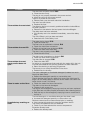
Problem
Possible cause/Solution
The machine does not start:
The door has not been closed. E40
• Close the door firmly.
The plug is not properly inserted in the power socket.
• Insert the plug into the power socket.
There is no power at the socket.
• Please check your domestic electrical installation.
The main fuse has blown.
• Replace the fuse.
The selector dial is not correctly positioned and the button 8 has
not been pressed.
• Please turn the selector dial and press the button 8 again.
The delay start has been selected.
• If the laundry are to be washed immediately, cancel the delay
start.
The Child Safety Lock has been activated.
• Deactivate the Child Safety Lock.
The machine does not fill:
The water tap is closed. E10
• Open the water tap.
The inlet hose is squashed or kinked. E10
• Check the inlet hose connection.
The filter in the inlet hose is blocked. E10
• Clean the water inlet hose filter.
The door is not properly closed. E40
• Close the door firmly.
The machine does not
empty and/or does not
spin:
The drain hose is squashed or kinked. E20
• Check the drain hose connection.
The drain filter is clogged. E20
• Clean the drain filter.
An option or a programme that ends with the water still in the tub
or a that eliminates all the spinning phases has been selected.
• Select the draining or spinning programme.
The laundry is not evenly distributed in the drum.
• Redistribute the laundry.
There is water on the floor:
Too much detergent or unsuitable detergent (creates too much
foam) has been used.
• Reduce the detergent quantity or use another one.
Check whether there are any leaks from one of the inlet hose fittings. It is not always easy to see this as the water runs down the
hose; check to see if it is damp.
• Check the water inlet hose connection.
The drain or inlet hose is damaged.
• Change it with a new one.
The cap on the emergency emptying hose has not been replaced
or the filter has not been properly screwed in after cleaning action.
• Refit the cap on the emergency emptying hose or screw the filter fully in.
Unsatisfactory washing results:
Too little detergent or unsuitable detergent has been used.
• Increase the detergent quantity or use another one.
Stubborn stains have not been treated prior to washing.
• Use commercial products to treat the stubborn stains.
The correct temperature was not selected.
• Check if you have selected the correct temperature.
Excessive laundry load.
• Reduce the laundry load.
24 electrolux
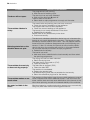
Problem
Possible cause/Solution
The door will not open:
The programme is still running.
• Wait the end of washing cycle.
The door lock has not been released.
• Wait until the pilot light 9 goes off.
There is water in the drum.
• Select drain or spin programme to empty out the water.
The machine vibrates is
noisy:
The transit bolts and packing have not been removed.
• Check the correct installation of the appliance.
The support feet have not been adjusted
• Check the correct levelling of the appliance.
The laundry is not evenly distributed in the drum.
• Redistribute the laundry.
Maybe there is very little laundry in the drum.
• Load more laundry.
Spinning starts late or the
machine does not spin:
The electronic unbalance detection device has cut in because the
laundry is not evenly distributed in the drum. The laundry is redistributed by reverse rotation of the drum. This may happen several
times before the unbalance disappears and normal spinning can
resume. If, after 10 minutes, the laundry is still not evenly distributed in the drum, the machine will not spin. In this case,redistribute the load manually and select the spin programme.
• Redistribute the laundry.
The load is too small.
• Add more items, redistribute the load manually and then select
the spinning programme.
The machine does not dry
or does not dry properly:
The drying time has not been selected.
• Select the drying time.
The water tap is not turned on. (E10)
• Open the water tap.
The drain filter is clogged. (E20)
• Clean the drain filter.
The machine is overloaded.
• Reduce the laundry load.
The selected drying time was not suitable for the laundry.
• Select the suitable drying time for the laundry.
The machine makes an unusual noise:
The machine is fitted with a type of motor which makes an unusual
noise compared with other traditional motors. This new motor ensures a softer start and more even distribution of the laundry in the
drum when spinning, as well as increased stability of the machine.
No water is visible in the
drum:
Machines based on modern technology operate very economically
using very little water without affecting performance.
electrolux 25
Mo
Prodd. ...
. No ... ...
. ...
...
..
Se
r. No
. ...
...
...
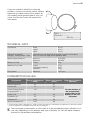
If you are unable to identify or solve the
problem, contact our service centre. Before
telephoning, make a note of the model, serial number and purchase date of your machine: the Service Centre will require this
information.
Mod. ... ... ...
Prod. No. ... ... ...
Ser. No. ... ... ...
TECHNICAL DATA
Dimensions
Width
Height
Depth
60 cm
82 cm
54 cm
Electrical connection
Voltage - Overall power - Fuse
Information on the electrical connection is given on the rating
plate, on the inner edge of the appliance door.
Water Supply Pressure
Minimum
Maximum
0,05 MPa
0,8 MPa
Maximum Load
Cotton
6 kg
Maximum Dry Load
Cotton
Cotton Big Capacity
Synthetic
3 Kg
4 Kg
2 Kg
Spin Speed
Maximum
1400 rpm
CONSUMPTION VALUES
Programme
Energy consumption
(KWh)
Water consumption
(litres)
2.1
57
Cottons 60°
1.2
53
Cotton Energy Saving
Programme 60° 1)
1.02
42
Cottons 40°
0.7
53
Synthetics 40°
0.5
40
Delicates 40°
0.55
56
Wool/ Handwash 30°
0.25
58
White Cottons 90°
Programme duration
(Minutes)
For the duration of
the programmes,
please refer to the
display on the control panel.
1) «Cotton Energy Saving programme » at 60°C with a load of 6 kg is the reference programme for the data entered
in the energy label, in compliance with EEC 92/75 standards.
The consumption data shown on this chart is to be considered purely indicative, as it
may vary depending on the quantity and type of laundry, on the inlet water temperature and on the ambient temperature.
26 electrolux
electrolux 27
www.electrolux.com/shop
132938780-A-032010