1
Note:
•
The outdoor temperature alarm is only applicable to Channel 1.
•
The alarm icon “
“ (outdoor high alarm) or “
“ (outdoor low
alarm) will be shown in normal display when the weather alarm is
set ON.
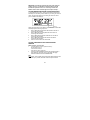
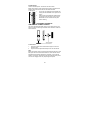
When the alarming outdoor temperature is reached, the alarm will sound.
The weather alarm indicator
, high or low alarm icon and the
temperature reading will be flashing on LCD. The alarm will sound for
120 seconds if no one stops the alarm. User may press any key to stop
the buzzer ringing. Then the weather alarm indicator, alarm icon and the
temperature reading will be still flashing but the sound is stopped.
If the alarm key is not pressed, the weather alarm indicator will keep
flashing, indicating that alarm temperature has been reached before.
User may press the Alarm key once to switch off the weather alarm
indicator.
WEATHER ALARM OPERATIONS
WEATHER ALARMS
The Weather alarms are selectable for when certain weather conditions
are met according to the user’s requirements. For example, the user can
set the thresholds for the outdoor temperature to +104°F (+40ºC) (high)
and +14ºF
(-10°C) (low), while only enabling the high alarm and disabling the low
alarm (i.e. temperatures < +14ºF (-10°C) won’t trigger alarm, but
temperatures > +104ºF (+40°C) will).
Alarm setting
Outdoor Temperature
Minimum
-40°F (40ºC)
Maximum
+139.8°F (59.9ºC)
HYSTERESIS
To compensate for fluctuation of the measured data, which may cause
the weather alarm to sound constantly if the measured reading is close
to user set level, a hysteresis function has been implemented for each
weather alarm. For example, if the high temperature alarm is set to
+77°F (+25°C) and the current value moves to +77°F (+25°C), the alarm
will be activated (if it has been enabled). Now when the temperature
drops to +76.8°F (+24.9°C) or below and thereafter again increases to
beyond +78°F (+25°C), the data will be blinking, but no alarm will be
activated. It has to drop to below +75.2°F (+24°C) (with a pre-set
hysteresis of 2ºF (1°C)) so that the alarm can be produced again.
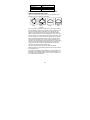
Hysteresis values for the various weather data types are given in the
following table:
19