1
NucleoSpin® RNA
5.3 RNA preparation from up to 109 bacterial cells
Additional reagent to be supplied by user:
•
Lysozyme
Before starting the preparation:
•
1
Check if Wash Buffer RA3 and rDNase were prepared according to section 3.
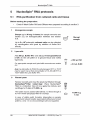
Homogenize sample
Resuspend the bacterial cell pellet (Gram-negative strains) in 100 μL TE
buffer (10 mM Tris-HCl, 1 mM EDTA; pH 8) containing 1 mg/mL lysozyme by
vigorous vortexing. Incubate at 37 °C for 10 min.
For preparation of RNA from Gram-positive bacteria, resuspend cells in 100 μL TE
containing 2 mg/mL lysozyme. It may be necessary to optimize incubation time and
lysozyme concentration, depending on the bacterial strain.
Note: Due to the much higher concentration of genome equivalents in a nucleic acid
preparation of bacteria compared with eukaryotic material, it may be necessary to use
a lower quantity of cells for the preparation.
2
Lyse cells
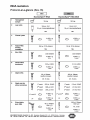
Add 350 μL Buffer RA1 and 3.5 μL ß-mercaptoethanol to the suspension and
vortex vigorously.
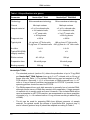
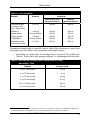
For appropriate sample and lysis buffer amounts see section 2.2.
Note: As alternative to ß-ME the reducing agent DTT or TCEP may be used. Use a
final concentration of 10–20 mM DTT or TCEP within the Lysis Buffer RA1.
3
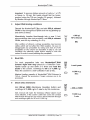
Filtrate lysate
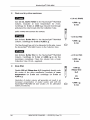
Reduce viscosity and turbidity of the solution by filtration through NucleoSpin®
Filters (violet rings). Place NucleoSpin® Filters in Collection Tubes (2 mL),
apply mixture, and centrifuge for 1 min at 11,000 x g.
In case of visible pellet formation (depending on sample amount and nature) transfer
supernatant without any formed pellet to a new 1.5 mL microcentrifuge tube (not
supplied).
Alternatively, the lysate may be passed ≥ 5 times through a 0.9 mm needle (20 gauge)
fitted to a syringe.
MACHEREY-NAGEL – 02 / 2013, Rev. 15
25