1
David F. Place: How to Refold a Map
Sharing is good
Well, there’s no time like the present. Let’s approach this problem in a way very
similar to our work in the previous section. In order to create an extensible version
of balanced binary trees, let’s have the types we want to store in the tree do all
of the work specific to each collection type; they can then share one definition of
balanced tree operations.
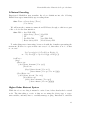
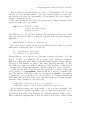
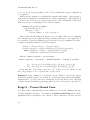
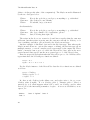
We’ll create a class to provide an interface to the different behaviors we expect as
in Listing 5. We name the first method synthesize in analogy with the synthesized
attributes of attribute grammars [9]. We add this code to Data.Set and edit each
occurrence of the Bin data constructor to be mkBin as we did previously. This
time, we don’t need to change the use of Bin in patterns because we are not
changing its definition. Let’s change the type and module name to BBTree. (See
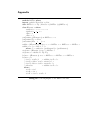
Listing 10 in the Appendix for details.)
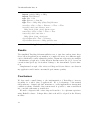
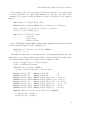
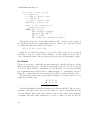
class Element a where
synthesize :: a → a → a → a
synthesize x = x
eZero :: a
eZero = ⊥
getContent :: (Element a) ⇒ BBTree a → a
getContent Tip = eZero
getContent (Bin x
)=x
mkBin :: (Element a) ⇒ Size → a → BBTree a → BBTree a → BBTree a
mkBin sz x l r = Bin sz x 0 l r
where x 0 = synthesize (getContent l ) x (getContent r )
Listing 5: The Element Class and utilities.
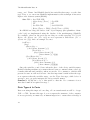
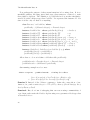
The trees are now constrained to hold only members of the Element class.
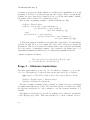
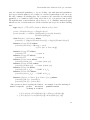
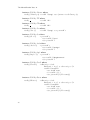
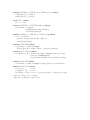
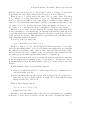
Listing 6 and Listing 7 offer a taste of the proposed refactoring of Data.Set and
Data.Map. The data constructor SE is used for creating set elements for insertion
into a BBTree used as a set. We’ve added a modified version of lookup to BBTree
which returns the entire object found in the subtree. The functions defined in the
Set module simply add and remove constructors to keep the types in alignment.
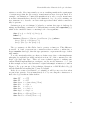
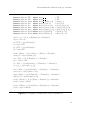
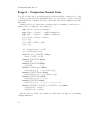
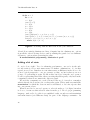
For Map, we construct map elements with ME . The ME type has specific
instances of classes Eq and Ord that compare only the keys. Our Map module’s
lookup wraps and unwraps the values in a way compatible with the interface of
Data.Map.
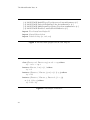
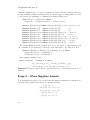
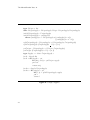
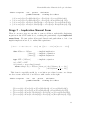
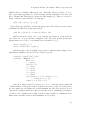
Now, let’s redefine our incremental function map in this new regime as in List-
9