1
more difficult to be bypassed or subverted than user mode interceptions.
There are two categories of system calls on NT-based Windows
OS according to the functionalities they provide. The first category
is system calls for basic OS services like file I/O and object management, whose kernel-mode interface is well documented in [34].
However, the second category of system calls, which are composed
of system calls managing daemon service, GUI window and network interface, either have no corresponding kernel mode interface,
or have a kernel mode interface but have no clear documentation.
To intercept this category of system calls, we move the virtualization layer to the user-mode DLL interface. Therefore, the current
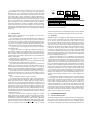
FVM virtualization layer consists of two components, as shown in
Figure 2. The kernel-mode component is a kernel driver that modifies the system call entry point in the System Service Dispatch Table(SSDT) within the kernel, while the user-mode component is a
DLL that modifies the library function entry point in the Import Address Table(IAT) of the application process. Once the virtualization
layer is attached to the host machine, it can redirect different requests from user-mode applications through FVM’s virtualization
logic.
For each type of system resources, such as files, registries and
kernel objects, FVM only intercepts a subset of all the system calls
used for that type of resources. This is because most read/write
system calls are based on resource handles, which must be obtained through a previous create/open system call. The current
FVM layer redirects requests at the create/open time. Therefore,
when a read/write system call comes in, the handle it carries already points to the correctly redirected version. Consequently, system calls for read/write requests are not intercepted in the FVM
layer.
When an application process accesses system resources through
the FVM layer, FVM should be able to determine which VM this
process logically belongs to. For this purpose, FVM maintains internal mappings between VM Ids and associated process Ids. Each
VM is assigned a unique Id at the creation time, and initially only
the Id of the VM shell process is associated with this VM Id. Later
on, when descendant processes of the VM shell are created, their Ids
are associated with the same VM Id. This is implemented through
a process creation call-back routine registered by the FVM layer
driver (PsSetCreateProcessNotifyRoutine). The call-back routine is
invoked whenever a process is created, passing in the Ids of both
the parent process and the new process, whose Id will then be associated with the same VM Id of the parent process. In this way,
for a given resource request, the FVM layer can look up the internal mappings to find out the requesting process’s VM Id, based on
which it can rename the resource request accordingly. In addition,
the FVM layer does sanity checks on a process’s VM Id and its
resource request to ensure that a process running in a VM cannot
access other VM’s root directories for files, registries and kernel
objects in any way.
The system call interception mechanism of the FVM layer is
designed to be extensible so that it can serve as a reusable framework for other projects that require similar system call interceptions. However, recent Windows kernel on x64 platform disables
system call interception through PatchGuard [35]. Fortunately, this
restriction can still be bypassed [35]. The current FVM prototype is
implemented and tested on Windows 2000 Professional and Windows 2000 Server. In terms of implementation complexity, the current FVM prototype intercepts 42 kernel-mode system calls and 18
user-mode library functions, with around 10,000 lines of C code in
kernel, and an equal amount of user-level C/C++ code.
4.2 File Virtualization
File virtualization under the FVM architecture isolates, from the
host environment, both regular disk files (file, directory) and special device files (named pipe, mailslot) that are updated by a VM.
For regular disk files, the FVM layer uses a special copy-on-write
(COW) mechanism, under which the entire file is copied instead
of individual file blocks. In other words, the FVM layer copies the
entire file on the host machine to the VM’s root file directory when
the file is opened for write purpose by a process in the VM. Although block-based COW is more efficient than file-based COW,
it is also more complicated as it needs to duplicate some file system metadata. The current FVM prototype uses file-based COW
for simplicity. FVM ensures that the file attribute and its directory
structure are also duplicated when the file is being copied. In particular, FVM may need to convert some DOS 8.3 names to regular
names in order to duplicate the directory structures consistently.
Similar to virtualizing disk files, when a process in a VM tries to
create a special device file like a named pipe, the FVM layer will
create the file in the VM’s root directory. Therefore, such a special
file can only be communicated by processes in the same VM.
In general, file-related system calls that take a file name argument, such as NtCreateFile(), should be intercepted for virtualization, while system calls taking a file handle argument, such as
NtWriteFile(), are not necessary to be intercepted because the file
handle already points to the correct (redirected) file version. However, there are still several handle-based system calls which require
interception and special handling. First, a process in a VM can use
NtQueryInformationFile() to query a file’s various attributes, including the full file path, from a file handle. When the file handle
points to a redirected version of file in this VM, the full file path
obtained from the system call must be renamed back to the original
name on the host machine. Second, when a process in a VM try
to delete or rename a file, it eventually invokes the NtSetInformationFile() system call. Because FVM needs to keep a log of deleted
or renamed files for each VM, it must obtain from the file handle
the file name to be removed and then put the name into the log. In
particular, when the system call is used to rename a file, FVM still
needs to rename the target file name argument in the same way as
its renaming operating on name-based system calls like NtCreateFile(). Finally, a process in a VM can use NtQueryDirectoryFile()
to list file entries under a particular directory. Because the directory entries for a VM may reside at two branches, with original
entries on the host machine and updated versions of some entries
in the VM, the returned directory entries must be the host entries
overwritten by the VM entries of the same directory. To accomplish this task, FVM first obtains all the qualified VM entries and
logs their names in a hash table. When querying file entries in the
VM directory is complete, FVM opens the corresponding directory
on the host and continues to query file entries there. In addition,
FVM must parse the returned results by removing any duplicates
that have been queried on the VM directory, and removing file entries appearing in the delete log.
4.3 Registry Virtualization
Windows registry is the repository where system and user configurations are stored and must be virtualized to isolate any configuration updates in a VM from the host machine. To reduce implementation complexity, FVM embeds a VM’s registry entries in the host
machine’s registry and manages them using Windows’ own registry
subsystem. More concretely, FVM creates a root registry hive under the key \HKEY CURRENT USER for each VM to store the VM’s
local registry entries. For example, when a VM (say vm1) is created,
FVM will add a registry key at \HKEY CURRENT USER\vm1 as the
VM’s registry root. When a process in vm1 accesses a registry key,
FVM can rename the registry key argument by adding the prefix