1
b.
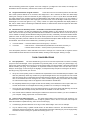
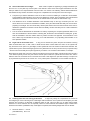
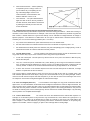
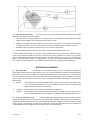
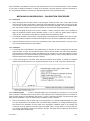
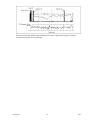
Diamond Goal distance – 346 km (A/B/C/A)
as required by SC3-1.4.6b(ii). A-club-C is
just an indirect way of completing the A-C
leg of the triangle flight. If flown in the
reverse direction, it would meet the 3TP
distance definition of SC3-1.4.9b.
c.
Silver distance – If the pilot abandoned the
flight more than 50 km on the way towards A
and then returned, Silver distance is achieved
by claiming the furthest point from the club
as the virtual finish.
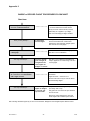
3.8 Abandoned turn points and other declared task problems (SC3-1.4.1a)
A failed declared task may still fulfill the requirements of another soaring performance – rather than focusing on
the failure, look for what was achieved. For example, a free record may be possible if any declared way point had
been missed. A flawed distance-to-a-goal record attempt can be evaluated as straight distance for badge or
Diploma purposes. A 3TP distance is viable task in its own right or claimed when a declared closed course is
marred by one or more of the following problems (SC3-1.4.5 refers):
a.
any number of the declared turn points were achieved, but not in declared order.
b.
the start and/or finish for an intended closed course was not achieved as required by SC3-1.4.6.
c.
the declared start and finish points were achieved, but yield a disqualifying loss of height penalty; a start at
release and/or a finish at a finish fix will often solve this problem.
3.9 The 3TP distance task
The 3TP distance task allows several options in both the declaration of the
way points and how they may be used. A maximum of five way points may be declared:
a.
A start and a finish point. The start point may also be used as a turn point. The release or MoP stop may
also be the start point.
b.
One, two, or three turn points, achievable in any order, allowing up to four legs to be summed for total distance. A single TP might be claimed for a “dog-leg” course or for a failed out-and-return course that was not
correctly “closed”. At least one TP must be achieved otherwise only straight distance can be claimed.
c.
If all the TPs are flown in the declared sequence and the start and finish points are identical, a triangle
distance or speed task can also be claimed.
This is a good task for a Silver attempt. Using one of two TPs more than 50 km away is a popular option, with
start and finish planned at the home airport, and you can choose the better one to go to during the flight. Another
uses two TPs with the home airport near their mid-point so you are close to home for the entire flight. See 2.2 for
an example on how the loss of height limit applies to a Silver distance flight.
3.10 Free record flights (SC3-1.4.7)
For free distance record flights, the way points are declared after the
flight is done. A normal declaration is still made before the flight that includes the usual non-flight information, but
task way points can be omitted. The pilot is free to fly anywhere between take-off and landing and, after the flight,
select fixes from the position evidence to be the declared way points of the soaring performance. See para 4.5
for details on selecting fixes. A free record flight may also be claimed from a failed declared flight or by extending
the turn position of a completed declared flight.
3.11 Limit on declared TPs
You cannot have more TPs declared than the claimed task requires. For
example, an out-and-return (SC3-1.4.6a) must have only one declared TP, and a distance-to-a-goal (SC3-1.4.4)
flight can have none – neither can be claimed from a portion of a triangle or 3TP course. The Task Table at the
end of Chapter 1 of the Code will assist your planning. Note that the 10 kilometre restriction on TP spacing only
applies to record tasks; it does not apply if you plan to claim a triangle task for a badge flight.
SC3 Annex C
7
2014