1
4 Embedded Software (Firmware)
50
transmission and reception of MAC protocol data units (MPDU) across the PHY data
service, Figure 4.7. Among the major features of MAC sublayer are beacon management,
GTS management, channel scanning, association and disassociation. The Chipcon RF
transceiver provides numerous other important MAC layer services including: frame validation, acknowledged frame delivery, channel access and encryption.
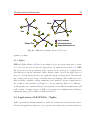
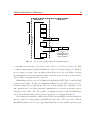
Figure 4.8 depicts a high-level overview of the MAC/PHY internal composition. As
shown, up to 4 tasks are used to control protocol execution as well as process incoming
data from the physical and network (application) layers.
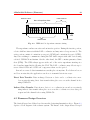
When the FFD is configured as a PAN coordinator, the “Beacon Network” task, having the highest priority, commences beacon frame transmissions. The subsequent beacon
transmissions are scheduled using the hardware timer, thus providing necessary transmission accuracy. Moreover, the task implements superframe timings for both contention based
(CAP) and guaranteed time slot (GTS) periods and carries necessary data sending. At the
end of the active period, before putting the PAN coordinator to low-power mode, the task
engages service maintenance functions: new beacon generation, GTS slot defragmentation
and reports to higher layers any untransferred data.
The “Device Task” is present in both RFD and FFD firmware configurations. This task
can run in conjunction with “Beacon Network” to provide beacon transmissions if the FFD
acts as a router, rather than the PAN coordinator. In simpler network configurations (star
topology), the FFD device would either act as an RFD or a PAN coordinator, thus limiting
total number of running tasks to three. After proper configuration has taken place, the
“Device Task” begins synchronization process by tracking the beacon frame. Given that the
expected packet has been received, the task enters the CAP period followed by the GTS,
if available, to finally enter the MAC sublayer maintenance period. If the synchronization
process has failed, the task would report loss of beacon to the upper layers.
Handler tasks used for inter-layer communication run at the second-highest level of
priority. Processing of data and MAC management requests have been consolidated into
a single task “Handle NWK to MAC Messages”. As mentioned previously, the message
passing architecture is only used for messages that might require longer processing times
to complete. These are requests for data transfers or network control messages requiring
packet transmissions.
As shown in Figure 4.8, the message requests are stored in queues that are provided by
the operating system, thus facilitating overall inter-task communication.