1
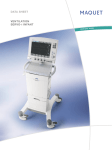
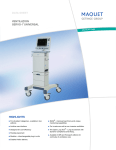
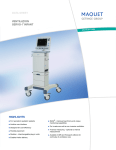
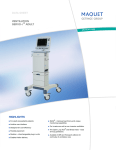
DATA SHEET VENTILATION SERVO-s | The Gold Standard | Critical Care | SERVO-s | 3 | SERVO-s – PROVEN SERVO SIMPLICITY, RELIABILITY AND SENSITIVITY MAQUET – THE GOLD STANDARD Leading the way: MAQUET is a premier international provider of medical products for intensive care and operating rooms. A firm commitment to investment in research and development ensures that MAQUET products continue to make significant contributions to improving patient care. MAQUET SERVO ventilators set the standard for the field of critical care. Based on proven SERVO technology, SERVO-s offers state-of-the-art mechanical ventilation in a straightforward package. It is reliable, sensitive to patient effort, and easy to use. SERVO-s delivers top performance for both pediatric and adult patients in a variety of hospital ventilatory care settings. SERVO-s proudly takes its place in the SERVO ventilator family. SERVO-s: Proven Servo simplicity, reliability and sensitivity. MAQUET – The Gold Standard. | 4 | SERVO-s | Critical Care | HIGHLIGHTS SERVO-s For adult and pediatric patients A ventilator system designed to operate in a variety of hospital ventilatory care settings Ventilation modes: Controlled ventilation: – Volume Control (VC) – Pressure Control (PC) Supported ventilation: – Pressure Support (PS)/CPAP Combined ventilation: – SIMV (VC) + PS – SIMV (PC) + PS Options: – Alarm output connection for external alarm – Non Invasive Ventilation (NIV) (Pressure Support, Pressure Control) Supports invasive ventilation as well as Non Invasive Ventilation (NIV) with leakage compensation High level of sensitivity to your patients efforts – Precise gas delivery system – Extreme speed in sensing and regulation Simple to learn – Self-intuitive user interface Simple to operate – Large color display with clear graphic presentation – Selectable between touch screen, direct access knobs or dial – Fast/simple start up procedure e.g. automated pre-use check with user configured pre-set ventilator settings – Suction Support – Previous Mode functionality – High-resolution flow, pressure and volume waveforms Simple to maintain/clean – One-piece interchangeable part for cleaning – Extended maintenance interval (5000 hours) – Maintenance information given via graphical user interface Reliable – Battery back-up (60 minutes) – Apnea back-up – Direct access knobs for vital settings – Enhanced alarm system Uninterrupted bedside quality ventilatory treatment during in-hospital transportation with Mobile Cart Possibility for shelf mounting Diagnostic trend tools ensure accurate time and detail recording for up to 24 hours after an event Volume/Pressure and Flow/Volume loops Non-consumable and maintenance-free ultrasonic O2 sensor optional to consumable O2 cell | Critical Care | SERVO-s | 5 | GENERAL INFORMATION SERVO-s The SERVO-s ventilator is based on proven SERVO technology, ensuring safe, reliable and high quality ventilation. By combining state-of-the-art sensitivity and reliability with simplicity, SERVO-s ensures top performance for both adult and pediatric patients in a variety of hospital ventilatory care treatment facilities. SERVO-s features a range of user interface tools which allow the ventilator to be tailored to the clinical situation. Ease of training, operation and maintenance are key SERVO-s features. The SERVO Feedback Control System in SERVO-s immediately responds to patient needs in terms of pressure and flow changes. Even the smallest deviations from set values are sensed, fed back to the SERVO-controlled valves and regulated – several hundred times a second. Thus the SERVO Feedback control system gives the patient exactly the ventilation you have chosen. This improves lung protection, patient interaction and promotes spontaneous breathing by providing timely assistance – thus reducing the work of breathing and improving patient comfort. The results are improved care quality and cost-effective operation. SERVO-s can be positioned on the Mobile Cart for greater flexibility and mobility. The intuitive graphical user interface of the SERVO-s facilitates control and rapid system response. Direct access knobs ensure fast changes of vital settings when needed. Staff will be able to make the right decisions and choose the right settings – even in stressful moments. SERVO-s can also be secured on a shelf, using the shelf base for attachment. | 6 | SERVO-s | Critical Care | GENERAL INFORMATION SERVO-s Four different ventilation modes let you tailor patient treatment to individual needs: Volume Control (VC): Instead of delivering only a set flow as in a traditional volume control mode – which may work against the patient’s own effort – SERVO-s senses the patient’s demand for higher flow during inspiration. This will ensure improved patient interaction by delivering set tidal volume as a minimum, or a higher tidal volume if demanded by the patient. Pressure Control (PC): Thanks to the SERVO feedback control system, which constantly reacts to deviations in pressure, the SERVO-s Pressure Control mode ensures that a constant pressure is maintained through the inspiration time and thereby secures an even gas distribution. SERVO-s supports both invasive ventilation and Non Invasive Ventilation (NIV). SERVO-s supports invasive ventilation and also Non Invasive Ventilation (NIV) with an effective leakage compensation, thus maintaining the pressure set to the patient. NIV supports ventilation in the Pressure Control and Pressure Support modes. In the case of apnea, a ventilator controlled breathing frequency is automatically activated to maintain desired ventilation. Pressure Support / Continuous Positive Airway Pressure (PS) / CPAP: Easy triggering and fast response to changing patient demand is important in assisted breathing. When ventilating a patient in Pressure Support mode with SERVO-s, customization to every patient’s needs can easily be achieved by adjusting inspiratory rise time and cycle-off criteria, thus optimizing flow adaptation to patient effort, work of breathing and patient comfort. A back-up apnea function ensures safe invasive ventilation in the Pressure Support mode. Synchronized Intermittent Mandatory Ventilation (SIMV): In this combination mode the ventilator will deliver controlled mandatory breaths. These are synchronized with the breathing efforts of the patient. The patient can breathe spontaneously in between the mandatory breaths. SIMV ensures that patient-triggered breaths are always supported. | Critical Care | SERVO-s | 7 | GENERAL INFORMATION SERVO-s The automated pre-use check – which only takes a few minutes – offers a fast and simple start-up procedure with an optimal calibration before connecting to a patient. The user can configure the ventilator to start up exactly the way he wants. The default ventilation mode as well as all the corresponding default ventilation parameters can be set by the user. SERVO-s is designed for easy cleaning and maintenance. With a one-piece interchangeable expiratory cassette, you can instantly make the system ready for the next patient. The Suction Support function pauses the ventilator from cycling during a tracheal suction procedure. The oxygen concentration can be manually set during pre- and post oxygenation phases. A Previous Mode functionality allows for easy switching back to the previous ventilation mode with its latest settings. The Alarm output connection option provides connectivity to an external alarm system. The monitoring capabilities of SERVO-s ensure more accurate time and detail recording through trend alternatives. Information can be retrieved for further analysis up to 24 hours after an event. SERVO-s is now available with a non-consumable and maintenance-free O2 sensor as an option to the consumable O2 cell, which needs replacement about once a year. The new O2 sensor is based on ultrasonic technology. Existing SERVO-s ventilators can easily be upgraded. Built-in rechargeable batteries provide a 60-minute backup in case of mains power failure. Total battery capacity is shown in time on the display for added safety. Aeroneb Pro is a stand-alone nebulizer system based on vibration technology. It is small and lightweight and can easily be connected to the SERVO-s. For added flexibility in hospitals with no central air supply, the Compressor Mini has been designed to supply the ventilator with dry, filtered, compressed air. The quiet, compact design makes it particularly suitable for bedside use. | 8 | SERVO-s | Critical Care | TECHNICAL SPECIFICATIONS SERVO-s The system – general Classification: Standards: Electromagnetic compatibility (EMC): – Emission: – Immunity: Patient range: Operating conditions Operating temperature: Relative humidity: Atmospheric pressure: Lowest pressure in breathing system: The device complies with requirements of Medical Device Directive 93/42/EEC. Class I equipment. According to IEC 60 601-1/EN 60 601-1. EN IEC 60 601-1 (Class I, Type B). EN IEC 60 601-2-12. EN 794-1. According to EN IEC 60601-1-2 Edition 2. According to EN IEC 60601-1-2 Edition 2. Tidal volume 100 to 2000 ml (patient weight approximately 10 to 250 kg) . +10 to +40ºC 15 to 95% non-condensing 660 to 1060 hPa –400 cm H2O Non-operating conditions Impact: Peak acceleration: 15 g. Pulse duration: 6 ms. Number of impacts: 1000. Storage temperature: –25 to +60 ºC (–13 to 140 ºF) Storage Relative < 95% Humidity: Storage Atmospheric 470 to 1060 hPa Pressure: Power supply Power supply, automatic range selection: External 12 V DC: Battery capacity: Battery backup time: Battery recharge time: Max power consumption: 100 – 120 V AC ±10%, 50 – 60 Hz, or 220 – 240 V AC ±10%, 50 – 60 Hz. 12.0 to 15.0 V DC, 10 A Rechargable, 12 V, 7 Ah Approximately 1 h Approximately 6 h At 100 – 120 V: 2 A, 190 VA, 140 W. At 220 – 240 V: 1 A, 190 VA, 140 W. The ventilator – general Dimensions: – User Interface and Patient Unit: – User Interface: – Patient Unit: Weight: Method of triggering: Max. operating pressure: Bias flow: W 355 x D 53 x H 295 mm W 380 x D 300 x H 210 mm Approximately 18 kg Flow and pressure Approximately 115 cm H2O 2 l/min Screen Type: Size: Viewing area: TFT-LCD module 31 cm (12.1”) diagonal 246.0 x 184.5 mm (See dimensional drawings page 13–14) W 380 x D 300 x H 520 mm | Critical Care | SERVO-s | 9 | TECHNICAL SPECIFICATIONS SERVO-s Gas supply Inlet gas pressure: Connection standards available: Unavailable gas/loss of gas pressure: 200 – 650 kPa / 2.0 – 6.5 bar / 29 – 94 PSI AGA, DISS, NIST, or French standard. The flow from an unavailable gas (Air or O2) is automatically compensated for so that the patient gets the preset volume and pressure. Patient system gas connectors Conical fittings: Male 22 mm / female 15 mm. In accordance with ISO 5356-1. Gas exhaust port: Male 30 mm cone Inspiratory channel Pressure drop: Internal compressible factor: Gas delivery system: Inspiratory flow range: Expiratory channel Pressure drop: Internal compressible factor: PEEP regulation: Expiratory flow range: Rise time, expiratory flow measurement: Max. 6 cm H2O at a flow of 1 l/s Max. 0.1 ml/cm H2O Microprocessor controlled valves 0 to 3.3 l/s Max. 3 cm H2O at a flow of 1 l/s Max. 0.1 ml/cm H2O Microprocessor controlled valves 0 to 3.2 l/s <12 ms for 10 – 90 % response at a flow of 0.05 – 3.2 l/s Alarms Airway pressure (upper): – Invasive ventilation: – Non Invasive Ventilation: High continuous pressure: O2 concentration: Expired minute volume (Upper alarm limit): Expired minute volume (Lower alarm limit): Gas supply: Apnea: Respiratory frequency: Battery: High end expiratory pressure: Low end expiratory pressure: Leakage out of range in NIV: No patient effort in NIV: Technical: Autoset (alarm limits) specification*: – High airway pressure: – Upper minute volume: – Lower minute volume: – Upper respiratory frequency: – Lower respiratory frequency: – High end expiratory pressure: – Low end expiratory pressure: 16 – 120 cm H2O 16 – 60 cm H2O Set PEEP level +15 cm H2O exceeded for more than 15 seconds. Set value ±6 vol% or <18 vol% 0.5 – 60 l/min 0.5 – 40 l/min Below 200 kPa / 2.0 bar / 29 PSI and above 650 kPa / 6.5 bar / 94 PSI 15 – 45 s 1 – 160 breaths/min Limited battery capacity: 10 min. No battery capacity: less than 3 min. Low battery voltage. 0 – 55 cm H2O 0 – 47 cm H2O. Note: Setting the alarm to 0 (zero) is equal to alarm off. Yes. Described in the User’s manual. 45 s Yes. Described in the User’s manual. * Invasive ventilation, controlled modes only. Mean peak pressure +10 cm H2O or at least 35 cm H2O. Expiratory minute volume + 50%. Expiratory minute volume – 50%. Breathing frequency + 40%. Breathing frequency – 40%. Mean end expiratory pressure + 5 cm H2O. Mean end expiratory pressure – 3 cm H2O. | 10 | SERVO-s | Critical Care | TECHNICAL SPECIFICATIONS SERVO-s Ventilation Modes – Invasive ventilation Controlled ventilation: – Volume Control (VC): Volume controlled ventilation. – Pressure Control (PC): Pressure controlled ventilation. Supported ventilation: – Pressure Support (PS)/ Pressure supported ventilation / CPAP: Continuous Positive Airway Pressure ventilation. Combined ventilation: Synchronized Intermittent Mandatory – SIMV (VC) + PS: Ventilation based on volume controlled ventilation with pressure support. – SIMV (PC) + PS: Synchronized Intermittent Mandatory Ventilation based on pressure controlled ventilation with pressure support. Ventilation Modes – Non Invasive Ventilation (optional) – NIV Pressure Control: Non invasive pressure controlled ventilation. – NIV Pressure Support: Non invasive pressure supported ventilation. Loop and waveform presentations Loops: Volume / Pressure. Flow / Volume. Real time waveforms: Pressure waveform. Flow waveform. Volume waveform. Monitoring Breathing frequency: Spontaneous breaths per minute (RRsp): Peak Airway Pressure: Mean Airway Pressure: Pause Airway Pressure: End Expiratory Pressure: End Expiratory Flow: Inspired Tidal Volume: Expired Tidal Volume: Inspired Minute Volume: Expired Minute Volume: Ti/Ttot: I : E Ratio: Measured O2 Concentration: Spontaneous Exp. Minute Volume (MVe sp): Leakage fraction in NIV (%): Supply pressure (O2 and air): Battery remaining time: Barometric pressure: Log function Event log: Service log: Displayed value Trended value* * Stored trend values for up to 24 hours Yes Yes Yes Yes Yes Yes Yes Yes Yes Yes Yes Yes Yes Yes Yes Yes No Yes Yes Yes Yes Yes Yes Yes Yes Yes No No Yes Yes Yes Yes Yes Yes Yes No No No Alarms. Ventilator settings. Apnea periods. Immediate functions. Technical alarms. Test results. Preventive maintenance. Service report history. Configuration log. | Critical Care | SERVO-s | 11 | TECHNICAL SPECIFICATIONS SERVO-s Parameter settings Parameter: Inspiratory tidal volume (ml): Inspiratory minute volume (l/min): Apnea, time till alarm (s): Pressure level (cm H2O): PEEP (cm H2O): PEEP in NIV (cm H2O): CMV frequency (breaths/min): SIMV frequency (breaths/min): Breath cycle time, SIMV (s): PS above PEEP (cm H2O): PS above PEEP in NIV (cm H2O): Back-up pressure above PEEP (cm H2O): NIV Back-up rate (breaths/min): O2 concentration (%): TInsp (s): NIV Back-up TInsp (s): I:E Ratio: TPause (% of breath cycle time): Flow trigger sensitivity level (fraction of bias flow): Press. trigg sensitivity (cm H2O): Insp. rise time (% of breath cycle time): Insp. rise time (s): Insp. cycle off (% of peak flow): Insp. cycle off in NIV (% of peak flow): Oxygen breaths: Start breath: Pause hold: Alarm silence/reset: Compliance compensation: Setting range: 100 – 2000 0.5 – 60 15 – 45 0 – (120 – PEEP) 0 – 50 2 – 20 4 – 100 1 – 60 1 – 15 0 – (120 – PEEP) 0 – (32 – PEEP) 5 – (120 – PEEP) Suction Support Pre oxygenation time: Post oxygenation time: Suction phase time: Adjustable oxygen level: Max. 2 min Max. 1 min No maximum level 21 – 100 % Communication/Interface Serial port: RS-232C - isolated. For data communication via the Communication Interface Emulator (CIE). Network connection MIB (Medical Information Bus) monitor (optional): connection –20 – 0 0 – 20 Non Invasive Ventilation (NIV) (optional) Ventilation modes: Pressure Support. Pressure Control. Max. leakage 50 l/min compensation level: Leakage overrange Automatic detection: Disconnect detection: Automatic Connect detection: Manual, or automatic via bias flow Backup rate (in NIV Manually adjustable breathing rate. Pressure Support): The breathing rate is controlled by the ventilator in the event of apnea. 0 – 0.4 1 – 70 10 – 70 Alarm output connector (optional) Connector: 4-pole Modular connector Ratings: Max 40 V DC, Max 500 mA, Max 20 W 100% for 1 minute Initiation of 1 breath (In SIMV mode initiation of 1 mandatory breath) Insp. or exp. (0 – 30 seconds) 2 minute silence and reset of latched alarms On/Off Service Regular maintenance: 4 – 20 21 – 100 0.1 – 5 0.5 – 2 1:10 – 4:1 0 – 30 0 – 100% Once every 12 months or at least after 5000 hours of operation. Note For inaccuracies and more detailed technical specifications please refer to the User’s manual. | 12 | SERVO-s | Critical Care | TECHNICAL SPECIFICATIONS SERVO-s ACCESSORIES Aeroneb® Pro Nebulizer System (optional) See separate data sheet. Mobile Cart SERVO-s (optional) Weight: 25 kg Dimensions: H 830 mm (with handles 1,040 mm) x L 650 mm x W 500 mm (see dimensional drawing below) Shelf base SERVO-s (optional) Weight: 0.1 kg Dimensions: H 8 mm x L 160 mm x W 60 mm (see dimensional drawing below) Gas cylinder restrainer SERVO-s (optional) Max load: 2 x 5-liter bottles Compressor Mini (optional) See separate data sheet. | Critical Care | SERVO-s | 13 | TECHNICAL SPECIFICATIONS SERVO-s DIMENSIONAL DRAWINGS SERVO-s on Mobile Cart SERVO-s on Shelf base | 14 | SERVO-s | Critical Care | TECHNICAL SPECIFICATIONS SERVO-s Mobile Cart SERVO-s Shelf Base SERVO-s | Critical Care | SERVO-s | 15 | ORDERING INFORMATION SERVO-s SERVO-s, Ventilator and accessories: See separate information: “SERVO-s, System Version 3.1 — System Flow Chart” (Order no: 66 70 112). SE-171 95 Solna, Sweden Phone: +46 (0) 8 730 73 00 www.maquet.com For local contact: Please visit our website www.maquet.com GETINGE Group is a leading global provider of equipment and systems that contributes to quality enhancement and cost efficiency within healthcare and life sciences. Equipment, services and technologies are supplied under the brands ARJO for patient hygiene, patient handling and wound care, GETINGE for infection control and prevention within healthcare and life science and MAQUET for Surgical Workplaces, Cardiopulmonary and Critical Care. • SERVO-s, System Version 3.1 – Data Sheet • Printed in Sweden • 0306 3. • Rev. 03 English • Price: Group 10 • NOT FOR DISTRIBUTION IN USA • © Maquet Critical Care AB 2006. All rights reserved • MAQUET reserves the right to modify the design and specifications contained herein without prior notice • Order No. 66 70 115 • Maquet Critical Care AB