1
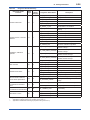
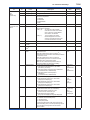
(2) Technical Data
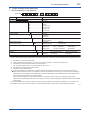
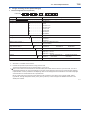
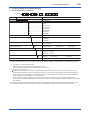
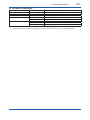
Article 3, Paragraph 3 of PED, denoted as
Sound Engineering Practice (SEP).
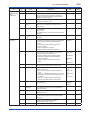
(3) Operation
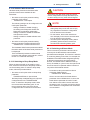
CAUTION
• The temperature and pressure of fluid should
be maintained at levels that are consistent
with normal operating conditions.
• The ambient temperature should be
maintained at a level that is consistent with
normal operating conditions.
• Please take care to prevent water hammer
and the like from inducing excessive
pressures in pipes and valves. If phenomena
are likely, install a safety valve or take
some other appropriate measure to prevent
pressure from exceeding PS.
• Take appropriate measures at the device or
system level to protect transmitters if they
are to be operated near an external heat
source.
2.11 Low Voltage Directive
Applicable standard:
EN61010-1, EN61010-2-030
(1) Pollution Degree 2
"Pollution degree" describes the degree to
which a solid, liquid, or gas which deteriorates
dielectric strength or surface resistivity is
adhering. " 2 " applies to normal indoor
atmosphere. Normally, only non-conductive
pollution occurs. Occasionally, however,
temporary conductivity caused by condensation
must be expected.
(2) Installation Category I
(Anticipated transient overvoltage 330 V)
2-8
<2. Handling Cautions>
2.12 Regulatory Compliance
for Radio and
Telecommunication
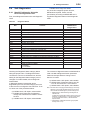
Please confirm that a installation region fulfils
a standards, require additional regulatory
information and approvals, contact to
Yokogawa Electric Corporation.
2.12.1 Radio and Telecommunications
Terminal Equipment Directive (R&TTE)
We, Yokogawa Electric Corporation hereby
declare that this equipment, model EJX-L series
is in compliance with the essential requirements
and other relevant provisions of Directive
1999/5/EC.
The CE declaration of conformity for R&TTE
for this product can be found at http://www.
yokogawa.com/fld/
2.12.2 FCC compliance
This equipment contains transmitter module
FCC ID: SGJ-WFC001.
This device complies with Part 15 of FCC
Rules. Operation is subject to the following
two conditions: (1) this device may not cause
interference, and (2) this device must accept
any interference, including interference that
may cause undesired operation of this device.
Co-located:
This transmitter must not be co-located or
operated in conjunction with any other antenna
or transmitter.
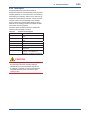
FCC WARNING:
Changes or modifications not expressly
approved by the party responsible for
compliance could void the user’s authority to
operate the equipment.
"Overvoltage category (Installation category)"
describes a number which defines a transient
overvoltage condition. It implies the regulation
for impulse withstand voltage. " I " applies to
electrical equipment which is supplied from the
circuit when appropriate transient overvoltage
control means (interfaces) are provided.
IM 01C27C01-01EN