1
CHAT Manual
113
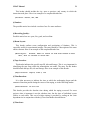
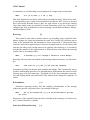
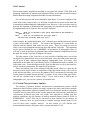
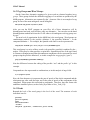
lations into English. For example, German “Sie”/sie” could be either “you,” “she,” or
“they.” Choosing a single English meaning for the stem helps fix the German form.
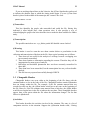
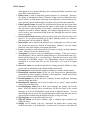
16.6 Affixes
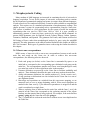
Affixes and clitics are coded in the position in which they occur with relation to the
stem. The morphological status of the affix should be identified by the following markers
or delimiters: - for a suffix, # for a prefix, and & for fusional or infixed morphology.
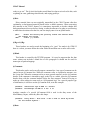
The & is used to mark affixes that are not realized in a clearly isolable phonological
shape. For example, the form “men” cannot be broken down into a part corresponding to
the stem “man” and a part corresponding to the plural marker, because one cannot say
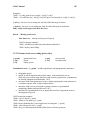
that the vowel “e” marks the plural. For this reason, the word is coded as n|man&PL.
The past forms of irregular verbs may undergo similar ablaut processes, as in “came,”
which is coded v|come&PAST, or they may undergo no phonological change at all, as in
“hit”, which is coded v|hit&PAST. Sometimes there may be several codes indicated
with the & after the stem. For example, the form “was” is coded v|be&PAST&13s.
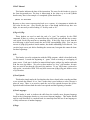
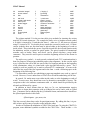
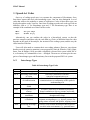
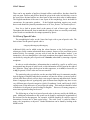
Affix and clitic codes are based either on Latin forms for grammatical function or English
words corresponding to particular closed-class items. MOR uses the following set of affix
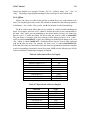
codes for automatic morphological tagging of English.
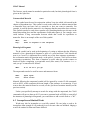
Table 46: Inflectional Affixes for English
Function
adjective suffix er, r
adjective suffix est, st
noun suffix ie
noun suffix s, es
noun suffix 's, '
verb suffix s, es
verb suffix ed, d
verb suffix ing
verb suffix en
Code
CP
SP
DIM
PL
POSS
3S
PAST
PRESP
PASTP
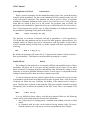
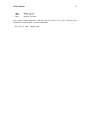
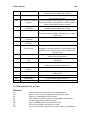
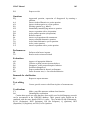
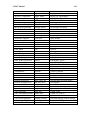
Table 47: Derivational Affixes for English
Function
adjective and verb prefix un
adverbializer ly
nominalizer er
noun prefix ex
verb prefix dis
verb prefix mis
verb prefix out
verb prefix over
Code
UN
LY
ER
EX
DIS
MIS
OUT
OVER