1
There are two ways to do this: a CHMOD command or using your FTP client. For the
purposes of this guide and keeping it simple, we won’t be getting into the more technical
process of CHMOD commands. Let’s consider what you can do with your FTP client.
Most FTP clients – such as Transmit or Cyberduck for OS X, WS FTP or FileZilla for
Windows – allow you to set these permissions without needing to do so from the command
line.
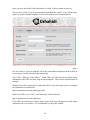
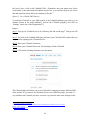
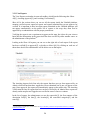
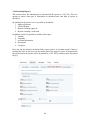
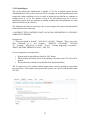
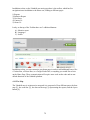
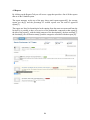
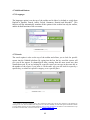
Here’s an example of that. Figure 2 is an
example of using Transmit for OS X to set the
permission on the same config.php as in the
CHMOD example above. I’m able to use
Command-I to get info on this file, the same as
I’m able to do on the filesystem. In that
window, you can see I’m able to check the
boxes or enter the value of the level of
permissions I want to grant on that file.
Most FTP clients provide similar functionality,
either in the same way, or by right-clicking on
the file or folder. If you don’t see the option to
set permissions in your preferred client check
the documentation to see if it is a feature.
With that figured out, again, here are the files
and folders that need full read/write/execute
(777) permissions:
•
•
•
•
•
•
application/config/config.p
hp
application/config
application/cache
application/logs
media/uploads
.htaccess
Figure 2. This is an example of using the Transmit FTP client for OS X to set the permissions of a particular file.
If this is still confusing, not to worry, but you should enlist the help of someone more
technical to assist you with this process. The Ushahidi Skype chat, forums, and wiki are
also available as resources to help you.
Once those are set, we’re ready to go.
1.4 Installing the software
With the files uploaded and the permission set, you can start installing the application itself.
Begin by visiting your website, either at the “root” directory, subdirectory, or subdomain
where you put the files (most likely the “root” directory, meaning you’ll want to visit
http://yourdomain.org. (Let’s assume, for the purposes of this guide, that you are installing
this into the root folder.)
6