1
US006589292B1
(12) United States Patent
(10) Patent N0.:
US 6,589,292 B1
(45) Date of Patent:
*Jul. 8, 2003
Langford-Wilson
(54)
(75)
ELECTRONIC PUBLISHING SYSTEM
Inventor:
5,214,755 A
Alistair Langford-Wilson,Abbotsford
(AU)
*
8/1993 Torres
5,287,443 A
5,323,312 A
2/1994 Mameda 9t a1~
6/1994 Saito et al.
5,390,354 A
-
_
-
5,425,138 A
(73) Assignee. Cybergraphlc Systems, Ltd. (AU)
.
.
( * ) Notice:
.
.
5,434,961 A
.
2/1995 de Heus et al.
*
5,475,805 A
SubJect to any disclaimer, the term of this
5,517,621 A
patent is extended or ad]usted under 35
U-S-C- 154(b) by@ days~
5,555,362 A
5,633,996 A
5,649,216 A
This patent is subject to a terminal disclaimer.
5/1993 Mason ..................... .. 707/520
5,241,624 A
Kumakawa ............... .. 707/510
7/1995 Horiuchi et a1‘
12/1995
M
t
5/1996 Fulllggiaet a1‘
9/1996 Yamashita et aL
5/1997 Hayashi et al. ........... .. 707/513
*
5,678,039 A
5,742,837 A
5,953,733 A
6/1995
7/1997
Sieber ...................... .. 707/506
10/1997 Hinks et a1.
4/1998 Fukui et al.
*
9/1999
Langford-Wilson ....... .. 707/517
(21) Appl- NOJ 09/277,736
* cited by examiner
(22) Filed:
Primary Examiner—Stephen S. Hong
Mar‘ 29’ 1999
74 Art
hazhis,
Related US. Application Data
(62)
Division of application No. 08/667,699, ?led on Jun. 21,
A
' —B
gen’t Or FWm
urns’ D Dane’ S W6Cker &
(57)
ABSTRACT
1996, now Pat. No. 5,953,733.
(30)
Foreign Application Priority Data
The present invention has application ‘in electronic and
printed media such as newspapers, magazines and computer
Jun. 22, 1995
(AU) ............................................ .. PN3742
text systems. The present invention relates to a mechanism
by Which text and images for publishing can be prepared
7
(51)
Int. Cl. .............................................. .. G06F 17/21
and/Or edited The invention has particular application in the
(52)
(58)
US. Cl. ..................................................... .. 715/517
Field of Search ............................ .. 707/500, 501.1,
layout of newsholes~
707/513, 517, 530
_
(56)
The present application discloses an electronic media pub
lishing system comprising a data base in Which there is
References Cited
stored, inter alia, a layout style, a layout family, layout
U.S. PATENT DOCUMENTS
4,755,955 A
7/1988 Kimura et al.
children and layout cousins. There is also disclosed a
method of preparing a layout of information in Which a
neWshole is selected and resiZed if necessary in accordance
4,829,470 A
5/1989 Wang
With user de?nable rules.
5,079,724 A
5,113,488 A
5,181,162 A
1/1992 Shiraki et al.
5/1992 Bischel et al.
1/1993 Smith et al.
4 Claims, 5 Drawing Sheets
WCTURE
GAPTEGN
U.S. Patent
Jul. 8,2003
Sheet 1 0f 5
?aad gags M
?n: mp mm?
ihrea iims
FECTUQE
95$?“ E
Fi $2 W
US 6,589,292 B1
U.S. Patent
Jul. 8,2003
WIETURE
QAQTEQNE
Sheet 2 0f 5
US 6,589,292 B1
U.S. Patent
$23;
Jul. 8,2003
x,
2
Sheet 3 0f 5
US 6,589,292 B1
U.S. Patent
PEZCYQRE
GAPT? Q N
Jul. 8,2003
Sheet 4 0f 5
US 6,589,292 B1
U S Patent
Jul. 8,2003
Sheet 5 of5
US 6,589,292 B1
US 6,589,292 B1
1
2
tems Will require the layout
using those tools, Which is
consuming. In addition, these
guidance on the paper’s style
ELECTRONIC PUBLISHING SYSTEM
This is a division of application Ser. No. 08/667,699,
?led Jun. 21, 1996, now US. Pat. No. 5,953,733.
operator in determining hoW layouts should be designed.
They merely permit the layout operator to build the layout,
FIELD
The present invention relates to electronic and printed
publishing and provides a mechanism by Which text and
images for publishing can be prepared and/or edited.
Particularly, but not exclusively, the present invention is
directed at the layout of neWsholes.
The present invention has application in electronic and
to be constructed manually
labour-intensive and time
systems provide little or no
and do not assist the layout
once the operator has personally determined What should be
built.
US. Pat. No. 5,390,354 and GB 2,246,102 disclose hoW
10
neWsholes can be arranged to ?ll a given area (such as a
page). HoWever, they could not be used to generate the
neWsholes themselves.
US. Pat. No. 4,829,470, US. Pat. No. 5,287,443, US.
Pat. No. 5,113,488, US. Pat. No. 4,755,955 and US. Pat.
printed media, for example neWspapers, magaZines and
computer text systems.
15
BACKGROUND
No. 5,079,724 all relate to different aspects of manipulating
type and/or images to ?t a given shape. These disclosures do
The design of a neWspaper provides a particular style and
?avour discernible by the reader.
As used in this context, ‘design’ refers to the graphical
Would not assist in any Way in actually helping to build or
rules or guidelines that govern hoW elements (such as
not reach the concept of publication design rules, and they
determine the neWshole design. These inventions address
20
headlines, pictures and text) should be used to construct
neWsholes, including the number and type of elements
mechanical problems that may arise once it becomes nec
essary to pour text and/or images into those shapes to ?ll
them up.
Which may or may not be used in certain circumstances, the
siZe and position of those elements in each case, direction on
suitable typography, and usage of other graphic devices such
TERMINOLOGY
25
The publishing industry suffers from a lack of standard
as borders and colour.
terms to describe common features of the trade: jargon
The design style of a neWspaper is often considered
critical, for a number of reasons. For example, it has great
varies Widely not just from country to country, but even
bearing on the neWspaper’s “appeal” to different readers
(such as, large heavy headlines in a tabloid, or smaller
“digni?ed” headlines in a “quality” broadsheet). The readers
are attracted to buy the paper and this obviously helps to
determine that paper’s market. Designs also serve the pur
betWeen publishing houses. To clarify the present disclosure,
this brief glossary notes What We have used certain key terms
30 to mean.
Page: This term is standard but may sometimes be con
fused With “neWshole”, described next. Apage refers to the
physical, printed page or some representation of it, such as
pose of giving the neWspaper a unique or distinct look so
that they are distinguished from their competitors. For these
reasons, very often neWspapers spend considerable time,
effort and money on determining their design “style”.
35
Design: Refers to the graphical rules or guidelines that
govern hoW elements (such as headlines, pictures and text)
Currently, in many publishing environments, the design of
a neWspaper is controlled by only a feW people and is
communicated—often verbally—from one person to
should be used to construct neWsholes, including the number
40
another. These people may or may not also be responsible
and type of elements Which may or may not be used in
certain circumstances, the siZe and position of those ele
ments in each case, direction on suitable typography, and
usage of other graphic devices such as borders and colour.
for laying out the neWspaper (that is, implementing their
oWn design) but, typically, layout is performed by people
Who did not determine the design style but Who must learn
it and implement it as faithfully as possible.
As a result, a number of problems and issues may and do
arise With neWspaper layout:
1. It is possible for the design to be implemented incor
a paper or electronic “dummy” page Which is used for
planning and preparing the printed version.
NeWshole: We have used this term to describe a compo
45 nent of a page, such as a story or advertisement (typically,
We use it to mean “story” as in editorial reference, but
conceptually, “advertisement” also ?ts). A neWshole refers
to a portion of a page, Which portion has been used for a
common purpose or means (such a presenting a story). A
rectly in some cases, due to a misunderstanding or ignorance 50 page may contain one or many neWsholes Which are usually
of its requirements, or pressure of Workload, or lack of skill
discrete from each other. A neWshole may itself be com
by the layout operator. This may result in a glaring and
undesirable deviation from “style”.
2. It is possible under the existing arrangements for the
design and style of a neWspaper to change over a period of
55
prised of several elements: a story may contain headlines,
pictures and text, Which together make up the neWshole for
that story.
Layout: Refers to the Way these design guidelines are
time, due to changing interpretation of hoW it should be
applied, and/or a build-up of a series of minor “styles”
inaccuracies. Although this change may be subtle and may
instance.
occur over a period of a number of years, any change is often
vidual elements Within a neWshole, such as headlines,
noticed by readers of the neWspaper, With possible negative
implemented and actually put into practice in any particular
Layout (or neWshole) Element: This refers to the indi
60
effects on the readership of the neWspaper.
3. A layout, although it may be creatively faithful to the
design guidelines, may be inef?cient in its usage of space,
resulting in expensive Wastage of space and/or less neWs
being put in the paper.
4. Computer systems are available With electronic tools
that facilitate the building of layouts. HoWever, these sys
pictures, graphics, text, captions and so on.
Thus, pages contain neWsholes, neWsholes contain
elements, and Design is the rules and Layout is the imple
mentation of the design.
65
SUMMARY OF INVENTION
The present invention seeks to alleviate, at least, one
problem associated With the prior art.
US 6,589,292 B1
4
3
dance With the prede?ned rules and taking into
The present invention provides a system, apparatus and/or
method of preparing or editing teXt for publishing in Which:
account the speci?ed desires of the database user
and/or
a neWshole is ?lled in accordance With a design, and
resiZing of the neWshole takes place if the ?t is not in
accordance With predetermined criteria.
Advantageously, if the neWshole is resiZed, any number of
5
C. Graphically displays for the user the correct or
suitable layouts and alloWs selection of one of them
and/or
D. Prevents the user of the database from selecting
unsuitable or incorrect layouts and/or
the layout element(s) may also be resiZed.
In another form, the present invention enables the various
elements of a neWshole to be arranged (siZed and positioned)
and formatted (styles, using devices such as typography,
E. Automatically builds the ?nal layout, including
transparently resiZing the selected layout and its
elements to suit the neW siZe speci?ed by the user, in
accordance With the rules that have been de?ned for
colour and borders) in a manner that:
I. suits or matches the particular neWshole design
(presentation) rules of a publication, and or
II. alloWs the particular siZe and area of the neWshole to
be automatically ?tted (or ?lled up) consistent With
those design rules, by:
that layout and/or
15
F. Automatically monitors any further edits that the user
may make to the layout after it is draWn, and
measures these against the prede?ned design rules.
A. alloWing the user to prede?ne relationships betWeen
the various components of the neWshole, Which
relationships determine each component’s siZe and
position relative to the others’, and/or
B. permits automatic recalculation of each compo
Depending on the nature and circumstances of those
changes and the dictates of the prede?ned design
rules, the present invention may further assist the
user by: automatically adjusting the layout (or its
elements) to accommodate or suit the user’s manual
edits; and/or suggesting that an entirely different
layout Would be more appropriate according to the
prede?ned design style; and/or alloWing the user to
accept that suggestion, at Which point the softWare
nent’s siZe and position so that the neWshole can be
?lled.
The present invention determines the shapes that com
prise a neWshole and/or What those shapes are (What they
represent), and/or hoW big each one is, and/or Where each is
placed Within the neWshole.
For simpli?cation purposes, the present invention is
25
may automatically build the neW layout and/or use it
to replace the previous one.
Apreferred embodiment of the present invention Will noW
called NAILS, an acronym Which stands for “NeWspaper
be described With reference to the accompanying draWings,
Automated Intelligent Layout System”. (HoWever, the
in Which:
present invention is not limited in application to neWspapers,
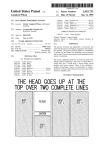
FIGS. 1, 2 and 3 illustrate examples of layout presentation
but can be used for any electronic or printed media Where
material is laid out or presented according to a certain style
NAILS refers to the Way the various elements of a neWshole
FIG. 4 illustrated a resiZed FIG. 1
may be arranged (siZed and positioned) and formatted
(styled, using devices such as typography, colour and
35
separate daily and Sunday neWspapers). The present inven
borders) in a manner that:
tion utilises a database for each of those publications.
I. Suits or matches the particular design (presentation) of
a publication and/or
Within each publication, the database is programmed
preferably in a hierarchical structure, Which is:
Publication
Section
II. Uses resiZing to alloW the particular siZe and area of the
neWshole to be automatically ?tted (or ?lled up) con
sistent With those design rules.
NAILS achieves these aims by providing any number of the
Layout Style
Layout Family
folloWing facilities:
III. It alloWs the publication’s design style to be de?ned
by providing means Whereby the publication can:
Layout child
Layout cousins
45
Section refers to the various sections of the publication,
such as NeWs, Sport, Business and so on. (The publication
de?nes these according to its needs). Section Was chosen as
decisive division in the database because it is betWeen
different Sections that a neWspaper’s design style is most
A. Prede?ne suitable layouts and store these into a
database and/or
B. Determine and prede?ne the conditions or circum
stances in Which each of these layouts may be
considered suitable for use and/or
likely to vary. In other Words, the design style (layout and
C. De?ne, for each of these layouts, rules governing the
typography) is likely to be more consistent Within a Section
but different Sections may have slightly different styles or
behaviour of each element of layout, as to its siZe,
position and typographic style and so on. This facil
ity alloWs the publication to prede?ne relationships
FIGS. 5—7 illustrate FIGS. 1, 2 and 3 With by-lines added.
The NAILS system provides a separate “Working area”
for each publication published by a neWspaper (such as
design needs. The present invention facilitates this, although
55
the neWspaper may also decide that each Section Will be the
betWeen the various components of the neWshole,
same.
Which relationships determine each component’s
Layout Styles eXist Within each Section and are de?ned by
the publication. Each Section has its oWn set of Layout
siZe and position relative to the others’.
IV. It facilitates the selection and usage of layouts (from
Styles, though these can be copied into multiple Sections if
a database) in accordance With the prede?ned design
style. To achieve this, it:
they have common usage. The number of Styles Within a
Section is not limited. Typically, Styles are set up to re?ect
A. AlloWs the user of the database to specify the
generic layout uses, indicative of the Section’s needs, for
general type and style of the layout desired for the
eXample: lead stories, picture stories, ?llers, secondary leads
current neWshole, in a quick, easy and intuitive
and so on.
65
The Layout Families eXist Within each Layout Style and
manner and/or
B. Determines Which layouts are or are not suitable or
are de?ned by the publication. Each Family represents a
correct for usage in the current neWshole, in accor
layout variation or option Within that Style: for eXample, a
US 6,589,292 B1
5
6
Style called “Picture stories” might contain options Which
feature both horizontally and vertically oriented pictures,
and options such as placing the picture at certain positions
type of layout Within a Layout Style; its Children then
represent embodiments of that layout at various distinctive
siZes.
variations or options can be.
For example, the con?guration of the Headline may and
usually Will change as the layout’s siZe increases: a small
The Layout Children are contained With each Family and
again are de?ned by the publication. Each child Within a
feature tWo lines of headline at a pointsiZe of 14 pt With the
Family must have a unique siZe (Width and depth) and the
only other element being one column of body text; but this
headline con?guration Would not be used if the same layout
Within the story layout. There is no restriction on What these
story of one column Wide by 10 cm deep (4 inches) might
siZe of no tWo Children can overlap: Within one Family, tWo
or more Children may have the same Width or depth, but no 10 Were required to be used at six columns Wide by 30 cm (12
inches) deep; instead, the publication might choose to use
tWo can have the same Width and depth. Typically, the
Children in a Family Will together form a contiguous range
of siZes, so that the maximum limit of one Child Will be
de?ned by the minimum siZe of the next Child. Although the
softWare Will by default enforce this, it is preferred as it is
not mandatory. The publication may specify a different
maximum siZe (Width or depth or both) for any Child (if only
one line of headline at a pointsiZe of 42 pt and might also
change the body text from one column to six separate
columns. Although the speci?cs of the headline and body
15
text are different in each case, the layout can still be said to
be “genetically consistent” in that both represent the same
approach of headline-over-body text. FIGS. 1—3 shoW hoW
a certain style of layout presentation may be implemented
differently at various siZes, according to the general sort of
design rules that neWspapers typically folloW.
one dimension has a speci?ed maximum, the softWare Will
use the default for the other dimension) so long as the
resulting combination of Width and depth is smaller than the
This illustrates the concept of Families and Children. It
Would be thoroughly confusing if, in the case described
next Child’s minimum siZe.
The Layout Cousins represent “alternative Children”.
Although they are not part of the primary selection process,
they are used to provide greater options to layout operators.
above, one Child contained a Subheading, Picture and
Caption Which Were not present in other Children Within the
Their use is described later. A Layout Cousin is related to a 25 Family. Instead of implementing these entirely different
layouts as different Children Within the same Family, the
Layout Child: they both have the same siZe. A Layout Child
may have more than one Cousin.
concept underlying the present invention Would suggest that
It should be pointed out that While many neWspapers
Would be familiar With the concept of “Sections”, the
featuring head-over-body, the other featuring the use of
concepts of Layout Styles (as used here), Layout Families,
Headline, Subheading, Picture, Caption and Body.
the publication should set up tWo different Families, one
Layout Children and Layout Cousins are unique to the
Additionally, When Children are stored into the database,
present invention. To our knowledge, neWspapers do not
currently use such devices or concepts to organise their
one Child Within each Family Will be identi?ed as the “Head
of Family”, for purposes described later.
design style.
35
Description of Populating the Database
de?ned betWeen the various elements of a layout (Child or
The present invention, in one form, provides tools for
Cousin), such as the headline, subheading pictures, captions,
con?guring, managing and populating the database. These
tools are preferably but not essentially provided through
bylines, body text and so on.
These relationships are de?ned using a “dialog box”
menu bars and other computer functions Within the appli
cation. They alloW the publication to store/remove Sections,
Styles, Families, Children and Cousins to/from the database.
The publication may draW (graphically) each Child in the
base layout application being used With the present inven
tion. Since one form of the present invention depends on the
Within the application (a small on-screen “Window”, opened
via a menu bar or other command, that presents various
options to the user).
45
theory that layouts Will alWays be selected and siZed
upWards (made larger than their original siZe, not smaller),
the Child Will be draWn at its smallest intended siZe.
The publication Would then de?ne, for each Child or
The options available alloW the publication to de?ne, for
any element, one of four different types of relationship:
A proportional relationship. In this case, the proportion is
deduced from that Which currently exists. For example, a
picture may already occupy 60% of the depth of the total
layout; specifying its depth to remain proportional Would
maintain the picture at 60% of the total layout depth, even
Cousin, relationships betWeen its various elements (such as
headlines, pictures, captions, body text and so on). This is
if the layout is subsequently resiZed.
A ?xed-difference relationship. In this case, the softWare
measures the actual difference betWeen tWo values, and
maintains that. For example, a picture may be 5 cm (2
done using the ResiZing Expressions noted beloW.
When a Child or Cousin is stored into the database, the
publication nominates Which Section/Style/Family it
Description of ResiZing Expressions
The ResiZing Expressions alloW relationships to be
55
belongs to (and can create neW Sections/Styles/Families as
inches) shorter than the total layout; specifying its depth
to remain a “?xed difference” from the layout’s depth
Would maintain the picture at 5 cm less than the layout’s
depth, even if the layout is resiZed.
needed). The present invention then checks for any existing
Children Within that Family that may have a con?icting siZe
range and automatically resolves that con?ict by resetting
No relationship. The speci?ed value does not change.
the existing Child’s maximum siZe (Width, depth or both, as
Aspeci?ed expression or algorithm Which the user enters. In
the case may be) to the minimum dimension/s of the neW
Child.
this case, the user may enter a mathematical and/or logical
expression, Which Will be used to calculate a neW value
It is also expected that all the Children Within a Family
Will exhibit What may be called “genetic consistency”, in
that they should all appear similar. That is, if one Child
features a Picture above the main Heading, they all should.
When the layout is resiZed. For example, the user might
specify a picture’s depth to be 50% of the neWshole depth,
This is because a Family represents a particular variation or
65
plus 2 cm.
Each of these expressions may be applied, completely
independently, to an element’s Width, depth, horiZontal
US 6,589,292 B1
8
7
position or vertical position. In each case (With the exception
?xed-difference from the layout’s depth; h-position, left
of the manually entered expressions), the speci?c values
point is a ?xed-difference from the left point of the second
used for proportional or ?xed-difference calculation are
leg of body text; v-position, top of picture is a ?xed
deduced from those values present in the layout as currently
draWn.
In each case, the relationship may be speci?ed as being
difference from the bottom of the headline.
In this case, as the layout Was made Wider, the headline
Would continue to stretch the full Width of the layout; the
individual columns of body text Would continue to each
relative to any other element in the layout, or to the
dimensions of the layout itself. For example, the publication
may de?ne the vertical position of a picture (in a certain
Child) as being a “?xed difference” relative to the position
of a headline.
occupy roughly one-third of the layout’s Width (We say
10
layout Width); the second and third columns of body text
The Width or depth of an element may be speci?ed
relative to any other element’s (or the layout’s) Width or
Would move to the right, so that they continue to be correctly
offset from the ?rst column and from each other, evenly
spaced across the Width of the neWshole; and the picture
depth, using “proportional” or “?xed-difference”
calculations, or using a speci?ed expression, or none. A
Maximum limit may also be placed on an element’s Width
or depth, Which Will not be exceeded.
The horiZontal or vertical position value of an element has
roughly, because there is a space betWeen each column of
text, so each column is slightly less than 33% of the total
15 Would continue to be the same Width as the second column
of body text, Would continue to be positioned in line With
that column, and Would continue to sit under the headline
and on top of the second column of body text.
We note also that, in the above example, that the Width
additional options. First, the reference point of the position
may be speci?ed as being the element’s top, middle or
bottom point (for vertical positions) or its left, centre or right
and the horiZontal position of the picture could have been
point (for horiZontal positions). Secondly, this may be
speci?ed using different variations of the ResiZing Expres
speci?ed as being relative to the top/middle/bottom (or
sions to achieve the same result.
left/centre/right, as the case may be) position of the nomi
nated reference element (or layout).
Thus, the vertical position of the picture (described
Description of Using the Present Invention to
25
above) Would be speci?ed not just as being relative to the
position of the headline. It Would additionally be de?ned as:
the, top, middle or bottom point of the picture is relative to
Automatically Build Layouts
The layout editor uses the present invention, once the
Using these ResiZing Expressions, the inventors have
database has been set up containing layouts (Children) that
have ResiZing Expressions de?ned for them.
The present embodiment of the present invention permits
found that virtually any desired relationship can be easily
and quickly de?ned, and that as a result, virtually any
resizing effect can be achieved.
different methods of usage. Only one is described here.
The layout editor may de?ne, on the electronic version of
the page to be laid out, an overall siZe for the particular story
the top, middle or bottom of the headline.
layout. The method for achieving this may vary depending
As an example, a layout may contain a headline at the top
(over three columns, say) With three individual columns of
35
on Which application is being used as the base layout
application (the present invention may Work With many
different layout applications), but typically this Would
body text underneath. At the top of the second column of
body text, but still underneath the headline, may sit a small
picture (see FIG. 2).
involve graphically draWing a box to indicate the desired
Using these ResiZing Expressions, it Would be possible to
specify that:
Width and depth of the total layout. The speci?ed siZe of the
layout is knoWn as the “target” siZe.
The layout editor may then invoke the present invention,
The headline Will continue to stretch the full Width of the
layout (its vertical siZe and vertical and horiZontal posi
as it is embodied in a computer application, using a menu bar
or other computer command.
tion do not need to change, but its Width could be speci?ed
as either proportional to the layout’s Width, or a ?xed
difference from the layout’s Width since in this case, both
expressions Would have the same result). Thus, if the
layout Was made Wider, the headline Would continue to
This Will open a separate computer WindoW. If the layout
45
present invention is able to tell the present invention Which
Section the current page belongs to, the present invention
Will by default select that Section. If not, or if the current
Section’s layouts are not actually desired, the user may
select a Section manually.
stretch across its full Width.
The ?rst column of body text might be de?ned as: Width,
proportional to the Width of the layout; depth, a ?xed
difference from the layout’s depth; h-position, none;
v-position, top of body a ?xed-difference from the bottom
of the headline.
The second column of body text might be de?ned as: Width,
proportional to the Width of the layout; depth, a ?xed
application system being used in conjunction With the
With the desired Section speci?ed, the user selects a
Layout Style. The possibilities, as de?ned in the database,
are listed in the present invention’s WindoW.
55
difference from the layout’s depth; h-position, left point is
a ?xed-difference from the right point of the ?rst leg of the
?rst leg of body text; v-position, top of body a ?xed
When this is done, the present invention reads the siZe of
the target layout, notes the Section and the Layout Style
requested, and searches for Families Within the Section/
Style Which contain Children Whose minimum siZe is
difference from the bottom of the picture.
The third column of body text might be de?ned as: Width,
proportional to the Width of the layout; depth, a ?xed
smaller than or equal to the target’s and Whose maximum
siZe is equal to or greater than the target’s.
Because of the restriction that each Child Within a Family
difference from the layout’s depth; h-position, left point is
must have a unique siZe (Width/depth combination), only
a ?xed difference from the right point of the second leg of
body text; v-position, top of body a ?xed-difference from
the bottom of the headline.
The picture might be de?ned as: Width, proportional to the
Width of the second column of body text; depth, a
one Child can be selected from Within each Family. It is
possible that some Families may have no Children suitable
65
for the target’s siZe.
Once the possible Children are knoWn, the present inven
tion displays them Within its WindoW as a series of
US 6,589,292 B1
10
“thumbnails”—small, representative pictures of What each
press the key assigned to a Section/Style/Family; the
present invention Would then automatically search that
Family for the correct Child and ?ll in the layout effec
layout Would look like.
At the same time, it resiZes each Child to ?t the target,
tively With a one-shot command (or, of no target Was
using the Resizing Expressions de?ned for, and embedded
de?ned, it Would place the “Head of Family” Child for
that Section/Style/Family onto the page).
Within, each Child.
Thus, the layout editor is shoWn a number of layouts, each
of Which ?ts the target siZe, and each of Which also suits the
A function is provided Whereby a user may select, on the
page, a layout Which Was already created using the present
publication’s particular design style for that Section (since
invention, and then “cycle through” alternative layouts. In
the database is set up and subsequently searched in such a
manner as to preclude “unsuitable” layouts being displayed).
10
layouts is chosen form the other Families Within that
To complete the operation, the layout editor simply selects
the layout Which appears most desirable. The present inven
tion then “instructs” or “directs” the underlying layout
application to build the selected layout according to the rules
de?ned for it.
Section/Style. This presents a convenient means of revis
ing or changing a layout Which has already been draWn,
15
in light of further developments concerning the page’s
overall design.
When the completed layout has been draWn into the target
Thus, instead of having to build the layout manually in
each case, the layout editor is simply able to Work by
on the page, the layout is built as a series or set of objects
Which are in the “native” format used by the underlying
application. That means the nature of the objects may vary
depending on the needs of the underlying application, but
that in any case, the objects Will be editable Within that
selecting from a set of possibilities, and the computer is able
to do all of the “leg Work” required to actually build the
layout.
application.
This offers tremendous gains in the folloWing areas:
speed, faithful (consistent and accurate) implementation of
design style, avoidance of design style errors, and simplicity
of operation. It should be noted that the same series of
actions are used to build any layout, regardless of its
this case, the alternative layouts are selected from With the
Section/Style as the current layout. Each of the alternative
The Layout Cousins referred to throughout this document
alloW the layout editor to select variations on a particular
25
Child, Where the variation may not be substantial enough
to Warrant inclusion of the Cousin as a Child Within its
complexity, Whereas When using manual layout
oWn right, in a separate Family. For example, the layouts
in FIGS. 1—3 could conceivably also include Bylines for
the reporter or contributing agency. Although some pub
applications, the amount of labour increases With the com
plexity of the layout.
lications have a policy of alWays (or mostly) including
Description of Additional Functions and Points
Bylines, others alloW the Bylines to be included or
excluded according to certain criteria (even, sometimes,
The present invention provides a number of additional
features, functions and methods of usage, including (but not
the Whim of the layout editor). And even on those
limited to):
publications that do regularly include Bylines, there may
need to be alternative Byline styles to accommodate, for
The invention is not limited or restricted to requiring a 35
“target” layout siZe to be de?ned prior to requesting a
selection of possible layouts. In this case, the procedure is
example, the differences betWeen a credit for a staff
reporter and a credit for an agency reporter. In all of these
cases, separate alternative Families could be set up to
the same except that a target is not speci?ed, and the
present invention does not search for a speci?c siZe of,
supply layouts With different Byline con?gurations
layout Within the nominated Section/Layout Style.
(including no Bylines), but this Would hardly seem Worth
Instead, it retrieves-those Children Within the Families of
the effort. It may also cause some confusion by presenting
to the layout editor too many choices for selection,
the selection Section/Layout Style Which have been
marked as being “Head of Family”. The layout editor may
especially since the distinguishing features betWeen the
select one of these and it Will be placed on the page at its
45
default siZe. It can subsequently be resiZed.
If a layout, Which has been selected and placed on the page,
is resiZed so that either or both of its maximum dimen
sions are exceeded, the present invention monitors this
and offers the layout editor a number of choices, one of
The present invention, may operate With any knoWn layout
select the particular layout that is desired, but modify
using it a simple command to include various Byline
and alloWs the publication to ensure that When it is
application available commercially.
55
included into the layout, it too folloWs the desired design
style. FIGS. 5—7 illustrate the same layouts as FIGS. 1—3,
but after Bylines have been added using Layout Cousins
related (or assigned) to those Children. Another example
of Layout Cousins might be to alloW easy implementation
of changes that do not affect the layout at all, only its
typography. The layouts in FIGS. 1—3 all have bold-face
headlines and, although it is not illustrated, might have
roman-face body text. An alternative presentation could
for use With one layout application can easily be con
verted to Work With any other layout application.
A function is provided Whereby a particular Section/Layout
Style/Family can be assigned (or “mapped”) to a “hot
key”, a key on a keyboard designated to carry out a
particular computer command. This functions as a sort of
computer “shorthand”. It alloWs a certain style or type of
be roman-face headlines With bold-face text, and this too
could be achieved neatly through the use of Layout
layout to be assigned and then employed by a single
command. In this case, it might not be necessary for the
user to open the present invention’s WindoW and make
any selections: the user could simply de?ne a target and
publication Would set up Layout Cousins Which Would
mirror the layout in the primary Child, but Would offer the
different Byline con?gurations. The layout editor can then
styles. The Byline could, of course, be added manually,
but automating its inclusion again simpli?es the operation
Which (the default) is to replace the Child With the Child
Which has been speci?ed for use at the neW siZe.
Furthermore, its database of stored layouts provides a con
venient means of “translating” layouts betWeen one appli
cation and another, so that a database of layouts designed
different Families Would be so minor. In these cases, the
65
Cousins.
In FIGS. 1, 2 and 3 it can be seen that the three layouts
have different overall siZes and shapes and that the detailed
particulars of each layout also vary to a certain extent:
US 6,589,292 B1
11
12
The speci?c headline con?guration is different in each
layout, FIG. 1 has three lines of headline, FIGS. 2 and 3
each have tWo lines. Furthermore, the pointsiZe of each of
the headlines is different in each layout.
Each layout contains a small picture and caption, but the
speci?c position and relative position of this varies. In
FIG. 1, its relative position is in column 1. In FIGS. 2 and
3 its relative position is column tWo, hoWever, its speci?c
throughout the process the layout editor Was guided as to
position is different since the columns in FIG. 3 are Wider
than those in FIG. 2.
What the suitable layouts might be, and that the ?nal
construction Was fully automated.
Example Bene?ts
1. Much faster to produce layouts. Initial tests on existing
neWspapers shoW the present invention Would be useable
for about 80% or more of neWsholes, on average, and that
10
existing manual Work necessary With existing softWare
programs. This provides neWspapers With the potential to
make signi?cant productivity gains, in an area (layout)
that currently requires a large number of specialist and
The number of body text columns varies betWeen the layouts
and the columns in FIG. 3 are Wider.
HoWever, it may also be seen from these illustrations that
from a design perspective, the publication might actually
consider all of these layouts to be variations of single style
or type of layout. This is because the general “look and feel”
of the layouts is consistent With each other; the only reason
the speci?cs vary betWeen them is because they are different
15
highly-paid staff.
2. System training is a major overhead for neWspapers. On
average, We ?nd that a layout editor requires tWo Weeks
of full-time computer training before they can start pro
ducing pages: most of this (7 out of 10 days) is devoted
siZes.
For example, if this layout Were indeed required to be four
columns Wide, it Would not usually be considered satisfac
to learning hoW to produce typical layouts on the layout
softWare. We estimate that With the present invention the
average layout editor Would be fully conversant, practised
tory simply to enlarge the layout in FIGS. 1 to ?t, producing
a layout that looks like FIG. 4.
Even if the layout Were adjusted so that it had three
columns of text, instead of one extremely Wide column, it
can be seen that headline con?guration is all Wrong. Instead,
in each of these, the use of the present invention Would
eliminate or alleviate betWeen 70% and 95% of the
and able to start real Work in under four hours, and that
several days of additional training (Which might not be
25
required, in many cases) could then be carried out “on the
job”.
3. Layout training: A layout editor neW to layout requires
substantial training purely in terms of layout design
ability. This time is typically measured in months, some
it Would be understandable that the neWspaper might prefer
a layout similar to the one shoWn in FIG. 3. This is What the
present invention alloWs.
Using conventional methods of draWing layouts manually
times years. Even an experienced layout sub-editor, on
(using a computer application), the layout editor Would need
joining a neW and unfamiliar neWspaper (or even a neW
to be familiar With this style as it is used by the publication,
and Would further need to understand hoW the style is to be
section Within his current neWspaper), may have to spend
Weeks learning the “house style” before he can run
implemented at these various siZe. Finally, the layout editor
Would need to build the desired layout manually, ensuring
also that the style is adapted accurately to the particular siZe
required. This Would require the layout editor to manually
35
eliminated.
draW each box for each element of the layout, to siZe and
4. When a neWspaper embarks on a “re-design”, this is
position each box correctly and then apply correct typo
graphical styling to each box.
According to the present invention, these three layouts
(and probably other, also similar layouts) Would be stored as
costly and lengthy process Where an entirely neW design
is invented and then brought into practice. The nature of
this typically requires the change to be “all or nothing”.
There are extreme difficulties in re-training existing staff
in preparation for this. The present invention removes the
different Children Within the same Family.
The layout editor Would then de?ne the target siZe
(requiring the simple draWing of a single box on the page)
Without any “hand holding”. Since the present invention
“knoWs” the house style”, can illustrate this (graphically)
to the layout editor and manages and controls the imple
mentation of that style, this time Would virtually be
45
hassle since the design team can simply set up a neW,
and Would invoke the present invention’s WindoW. If the
default Section (for the current page) Was suitable, and it
alternative database. During the design stage, this also
nearly alWays Will be, the layout editor Would proceed by
experimentation. Then, When it is ready for use, the
neWspaper simply sWitches (over night) to the neW data
base. All that is required is a brief (under 1 hour)
familiarisation brie?ng for the layout editors, or perhaps
alloWs them to carry out considerable “real life” testing
selecting a Layout Style, for example, “News stories With
small pictures”. (If the default Section, Was not correct, the
layout editor Would select the correct one from a list).
a short Written overvieW of the changes.
The application Would then display layouts appropriate to
5. Provides consistency of style and ?avour of publication to
the siZe of the draWn target, one layout (Child) from each
Family Within the selected Layout Style (excepting any
Families that do not have suitably siZed Children). The
55
layout editor Would expect to see a series of graphical
readers.
6. In many cases, more efficient ?lling of neWsholes.
I claim:
1. A method for preparing a publication, comprising the
steps of:
storing in a database a plurality of layout families, each
thumbnails each shoWing a layout. If the layouts in FIGS.
1—3 had been stored as Children in a Family Within the
“News stories With small pictures” style, and the target Was
of suf?cient siZe, the layout in FIG. 3 Would be shoWn in one
of the thumbnails.
representing a different format for elements of a
neWshole, each layout family including a plurality of
The layout editor Would then simply select that layout and
layout children Which pertain to neWsholes of respec
the present invention Would instruct or direct the underlying
application to draW the completed layout into the target on
the page.
tively different siZes;
storing resiZing expressions that are respectively associ
This Would complete the layout operation. Notice, the
layout Was completed in only a feW simple steps, that
65
ated With said layout children and Which specify geo
metric relationships betWeen elements of a neWshole
for an associated layout child;
US 6,589,292 B1
14
13
layout children and Which specify geometric relation
designating a target size for a neWshole;
searching said database and selecting layout children
ships betWeen elements of a neWshole for an associated
Whose associated siZes correspond to said target siZe;
resiZing each of the selected layout children in accordance
With the stored expressions, to ?t the target siZe;
displaying the formats for the selected layout children;
designating one of the displayed formats; and
generating a neWshole in accordance With the designated
layout child;
format.
2. The method of claim 1 Wherein the children Within a
means for designating a target siZe for a neWshole;
means for searching said database and selecting layout
children Whose associated siZes correspond to said
target siZe;
means for resiZing each of the selected layouts in accor
10
family respectively pertain to mutually exclusive ranges of
layout children;
siZes in at least one geometric dimension.
means for designating one of the displayed formats; and
3. An electronic publishing system for preparation of one
or more publications including:
a database storing a plurality of layout families, each
layout family representing a different format for ele
ments of a neWshole and including a plurality of layout
children Which pertain to neWsholes of respectively
different siZes, the database further storing resiZing
expressions that are respectively associated With said
dance With the stored expressions, to ?t said target siZe;
a display Which displays the formats for the selected
15
means for generating a neWshole in accordance With the
designated format.
4. The system of claim 3, Wherein the children Within a
family respectively pertain to mutually exclusively ranges of
siZes in at least one geometric dimension.
UNITED STATES PATENT AND TRADEMARK OFFICE
CERTIFICATE OF CORRECTION
PATENT NO. : 6,589,292 B1
DATED
: July 8, 2003
INVENTOR(S) : Alistair Langford Wilson
Page 1 0f 1
It is certified that error appears in the above-identified patent and that said Letters Patent is
hereby corrected as shown below:
Title page,
Item [54], should read -- ELECTRONIC PUBLISHING SYSTEM WITH PLURAL
SELECTABLE LAYOUTS FOR NEWSHOLES ——.
Signed and Sealed this
Twenty-third Day of September, 2003
JAMES E. ROGAN
Director ofthe United States Patent and Trademark O?‘i'ce