1
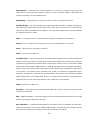
APPENDIX D: GLOSSARY
Access Point ?
An internetworking device that seamlessly connects wired and wireless
networks.
Ad-Hoc ? An independent wireless LAN network formed by a group of computers, each with an
network adapter.
AP Client – One of the additional AP operating modes offered by 54mbps Access Point, which
allows the Access Point to act a s an Ethernet-to -Wireless Bridge, thus a LAN or a single computer
station can join a wireless ESS network through it.
Authentication Type ? Indication of an authentication algorithm which can be supported by
the Access Point:
Open System : Open System authentication is the simplest of the available authentication
algorithms. Essentially it is a null authentication algorithm. Any station that requests
authentication with this algorithm may become authenticated if 802.1 1 Authentication Type at
the recipient station is set to Open System authentication.
Shared Key : Shared Key authentication supports authentication of stations as either a member
of those who knows a shared secret key or a member of those who do es not.
Backbone ? The core infrastructure of a network , which transports information from one
central location to another where the information is unloaded into a local system.
Bandwidth ? The transmission capacity of a device, which is calculated by how much data the
de vice can transmit in a fixed amount of time expressed in bits per second (bps).
Beacon ? A beacon is a packet broadcast by the Access Point to keep the network synchronized.
Included in a beacon are information such as wireless LAN service area, the AP address, the
Broadcast destination addresses, time stamp, Delivery Traffic Indicator Maps, and the Traffic
Indicator Message (TIM).
Bit ? A binary digit, which is either -0 or -1 for value, is the smallest unit for data.
Bridge ? An internetworking function that incorporates the lowest 2 layers of the OSI network
protocol model.
-99-