1
Standard Chiller/HP modulare per compressore a vite Generico/Bitzer con driver CAREL
16.
Forced capacity control
Inputs used
•
Water temperature at evaporator outlet
•
Compressor delivery temperature
•
Condensation pressure
•
Current
Parameters used
•
High delivery temperature prevention threshold
•
High delivery temperature prevention differential
•
High pressure prevention threshold
•
High pressure prevention differential
•
Antifreeze temperature prevention threshold
•
Antifreeze temperature prevention differential
•
Forced selection of compressor at minimum/maximum power
•
High current alarm threshold
•
High current alarm percentage differential
•
Delay time to signal the high current alarm
•
Delay time to prevent high current from compressor start
Outputs used
•
All compressor capacity control relays
16.1.1
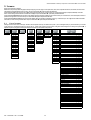
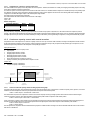
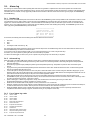
Description of the condensing pressure-antifreeze-discharge temperature prevent function
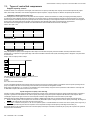
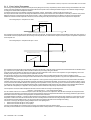
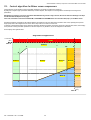
The compressor forced capacity control function prevents the unit from operating in abnormal conditions of pressure, refrigerated water temperature or condensation
temperature, thus preventing any intervention by specific alarms. A parameter is provided for selecting the compressor operating mode if forced capacity control is
enabled. The compressor can be taken to minimum/maximum power according to the selection when:
•
High delivery temperature threshold exceeded
•
High pressure threshold exceeded
•
Antifreeze temperature threshold exceeded
Soglia temperatura
mandata
Differenziale
Soglia pressione
condensazione
Differenziale
Soglia temperatura
antigelo
Temperatura mandata
compressore
Pressione
condensazione
Temperatura uscita
evaporatore
Differenziale
16.1.2
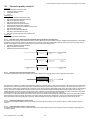
Description of the high current prevent function
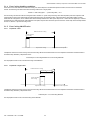
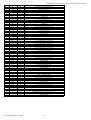
If the probe for measuring the current input is enabled and correctly configured, forced capacity control is active for the high current condition.
Parzializzazione
costante
D1
Differenziale
percentuale
S1
Soglia allarme
Alta corrente
Corrente
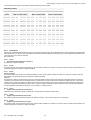
The high current is controlled on a settable alarm threshold and differential. After a delay time from when compressor starts, is the current measured exceeds the set
alarm threshold, a preventive action starts, which involves gradually decreasing the capacity of the compressor. The frequency of capacity reduction is equal to 1/3
of the set time T1 (delay time for signalling the high current alarm); in the case of compressors with stepped capacity control, the number of steps on will gradually be
reduced, in the case of compressors with continuous capacity control, the unload will be managed with impulses lasting equal the minimum set time. There is a
settable differential to return from the forced capacity control condition, expressed as a percentage of the alarm differential. The return of the current to values below
the alarm threshold and in any case within the set differential will not cause any variation to the capacity of the compressor.
The activation of a further forced capacity-control function due to pressure or temperature will be managed by assigning higher priority to the function that involves a
greater decrease in compressor capacity. The duration of the current measured above the alarm threshold for a continuous time that exceeds the set time, will
involve the activation of the corresponding high current alarm, with the immediate shutdown of the compressor and the need for manual reset by the user.
16.1.3
Compressors with stepped capacity control
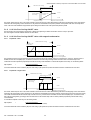
For compressors with stepped capacity control, forced capacity control means that the compressor has to operate at minimum or maximum power according to
selection.
16.1.4
Compressors with continuous capacity control.
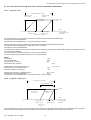
For compressors with continuous capacity control, forced capacity control means that the compressor has to operate in continuous charging or discharging mode
according to selection.
Cod.: +030221296 - Rel. 1.4 11/09/08
38