1
7. Automatic Calibration
The instrument is calibrated at the factory with the shipped sensor, and does not need to
be re-calibrated prior to use. Do not re-calibrate the unit unless you suspect a problem.
The XPDM instrument takes advantage of the pre-designed saturation point of Xentaur
HTF™ sensors. Because Xentaur HTF™ sensors saturate at a factory designed dewpoint above +20°C, they can be calibrated by simply exposing them to a micro-climate
with any dewpoint above +20°C and adjusting the calibration equation.
Remember that the micro-climate does not have to be accurate, it just has to be higher
than the pre-designed saturation level.
The automatic calibration procedure is as follows:
1. Make sure that the ambient temperature where you are performing the autocal is
above +20°C. Check the temperature of the unit using its built in temperature indication.
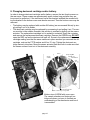
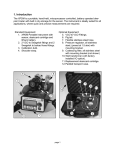
2. Remove the adapter from the bulb (hand pump).
3. Moisten the sponge with 1 or 2 drops of water and replace the adapter back on
the mouth of the bulb.
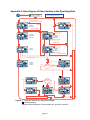
4. Turn instrument on. Refer to section 5.2.
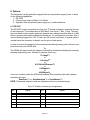
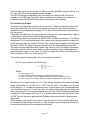
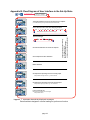
5. Press the Mode key twice. The display will indicate #
6. Press the Up key, to confirm you want to perform a calibration.
7. Pull sensor actuator to measurement position, and pump into one of the input
ports.
8. Push Up key to initiate the calibration procedure.
9. Keep pumping intermittently to assure wet micro climate in sample cell, while the
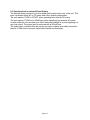
display is flashing &'.
10. After one minute, the instrument displays calibration numbers to be stored in the
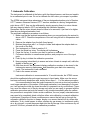
instruments memory, displays % and thereafter goes back into measuring
mode. The instrument is now calibrated.
11. Push in the sensor actuator.
Instrument calibration is recommended in 12 month intervals, the XTR65 sensor
should be recalibrated after prolonged exposure to liquid water. Make sure the sensor
has been sufficiently dried down and, simply follow steps 1 - 11 of the above procedure.
It is recommended to keep the sensor exposure to room air as short as possible to
avoid super saturation of the sensor. While super saturation is not damaging to the sensor, it will prolong the initial dry-down time after it is exposed to a dry environment. Therefore, move the sensor out of the dry-storage only after you are ready to proceed with the
calibration procedure and push the sensor in dry-storage immediately after the calibration procedure is completed. Under certain conditions, an over (super) saturated sensor
may need to be completely dried out before either auto calibration or manual calibration
is performed. Symptoms of these conditions are a sensor that will not go through the
automatic calibration function to the display, or a sensor that will not dry down after
calibration. To dry, install sensor in either a known dry gas stream i.e. instrument quality
air or dry nitrogen, or push the sensor back into the dry-storage. After a minimum dry out
period of 24 hours, proceed with the calibration procedure.
page 14