1
Wizzers Workshop Radionics Machine User manual Excerpts
Ancillary to optional Radionic circuit for pulser described above
Setting the Dials
•
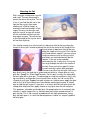
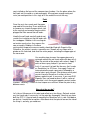
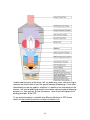
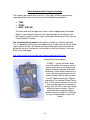
Place a sample in the witness well.
•
Set all the dials in the circuit you are working with to the start position. This will be the
lowest numerical setting on the scale of numbers for each dial.
•
Start with the first dial in the circuit. This will generally be marked as dial 1, but if your
dials are not individually numbered, then it will be the dial closest to the witness well for
that circuit.
•
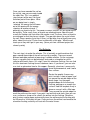
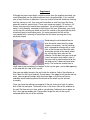
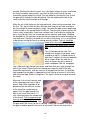
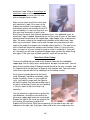
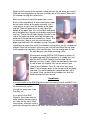
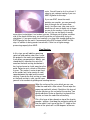
Slowly turn the dial while rubbing the stick pad. When you get a stick, stop turning the dial
and wait a second or two before moving on to the next dial.
•
Move on to the next dial in the series and repeat the above step. Keep doing this until all
the dials in the series are set to the position that gives the best stick.
•
Alternately, if you are a dowser, you can simply dowse over the stick pad in order to
determine when the dial is set correctly.
•
Once the dials for the circuit are set, make a note of the number setting and machine
configuration in your log book. Then next time, you can simply put the sample in the
witness well and set the dials without having to use the stick pad.
Using a Stick Pad
•
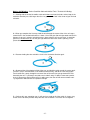
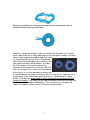
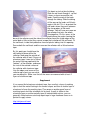
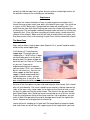
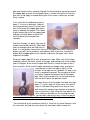
Pay attention to the sensation in your hand while it is touching the pad, or near the pad.
You may notice a tingling sensation in the palm of your hand while it is near the pad, or
touching the pad (this for persons more familiar with reiki and other ‘hands on’ energy
work systems than with radionics machines). If so, you will likely notice that the sensation
is most pronounced at a certain dial position. That would be what you are looking for, and
that is the number setting which (if applicable) you should record for that dial in your log
book.
•
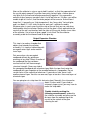
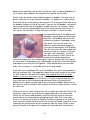
Understand that the ‘stick’ is a subtle sensation. It will be a slight difference in the amount
of friction between your hand and the pad. Do not expect it to suddenly clamp your hand
to the pad. Use your fingertips or the side of your thumb, and use a steady and even
motion. You can either use a circular motion or go back and forth across the pad.
•
You may find that you get a stick when turning the dial, but then you go past it (with the
dial) and cannot find it when turning the dial in the opposite direction. If so, turn the dial
all the way to the start position, remove your hand form the pad, and start over. I believe
that this phenomenon comes from a buildup of capacitance in the circuit which
discharges when the circuit achieves resonance with a component of the emission
spectrum of the sample in the witness well, but I am not certain at this point. In any case,
it is relatively common observation, and easily remedied by simply starting over.
•
Use a little less pressure on the pad as you go from one dial to the next. Start out rubbing
relatively firmly against the pad while you set the first dial, and finish by lightly drawing
your fingertips across the pad while you set the last dial. Understand that the ‘stick’
generated by the last dial you set is ‘still there’, therefore the next dial you tune will be a
bit more subtle than the one before it, and so on and so on, through the series of dials.
- 53 -