Transcript
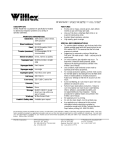
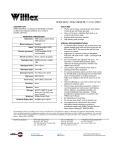
Product Information Bulletin 11117HT PolyWhite Wilflex PolyWhite is a plastisol ink specifically formulated to address dye migration problems on a variety of specialty substrates involving 100% polyester and polyester blended fabrics. Highlights Compliant with CPSIA (Consumer Product Safety Improvement Act) 2008 Section 101, Lead Content in Substrates (<300 ppm lead); 16 CFR, Part 1303, Lead in Paint (<90 ppm lead). Printing Parameters Opacity Bleed Resistance Smooth Surface Flash Gloss Printability 9 9 9 7 5 8 Fabric Types 100% cotton, cotton blends, 100% polyester Excellent bleed resistance for polyester fabrics. Use as a first-down, underbase flash white or an overprint stand-alone white. Odorless. High opacity, good coverage. Mesh Counts: 86-230 threads/in(24-90 threads/cm) recommended Tension: 25-35 n/cm² recommended Fast Flashing. Squeegee Printing Tips To optimize bleed resistance, set the dryer belt at the highest possible speed while still ensuring that the ink film reaches 320 F. This ensures that the ink’s heat exposure is minimal. Suggestions for automatic printing of PolyWhite: First print 230 mesh screen -- flash -second print 86 mesh screen. Use minimal pressure on first print. Low quality polyester fabrics are likely to have dye migration issues. To determine a material’s bleed potential, please reference the testing procedures outlined in the Wilflex User’s Manual. Use consistent, high tensioned screen mesh to optimize performance properties. To increase production speeds, use finer mesh counts for the flash plate to decrease gel time. Set flash dwell times on heated pallets to simulate production. Adjust your settings so that the ink is just dry to the touch. Precautions Perform fusion tests before production. Failure to cure ink properly may result in poor wash fastness, inferior adhesion and unacceptable durability. Ink gel and cure temperatures should be measured using a Thermoprobe placed directly in the wet ink film and verified on the production run substrate(s) and production equipment. It is the responsibility of the printer to determine that the correct ink has been selected for a specific substrate and the application processes meet your customer’s standards or specifications. Pre-test PolyWhite on light colored or stone washed garments. Avoid stacking printed garments hot because such colors are more prone to color distortion. Fabric and dye characteristics can vary between manufacturers and from dye lot to dye lot. Avoid overflashing, as it can result in poor inter-coat adhesion of overprint colors. Stir plastisols before printing. Do not dry clean, bleach or iron printed area. Email: [email protected] Durometer: 60-70, 60/90/60 Edge: Square, sharp Stroke: Hard flood, medium speed Avoid excess pressure. Stencil Direct: 2 over 2 Capillary/ thick film: N/A Off contact: 1/16” (.2 cm) Gel/Cure Temperatures Gel: 220 F (104 C) Cure: 320 F (160 C) entire film Pigment Loading N/A Additives Extender: None Reducer: 3% max - 10025VB QEC Viscosity Buster Storage 65°-90°F (18°-32°C) Avoid direct sun. Use within one year of receipt. Wilflex screen wash Health & Safety MSDS: www.polyone.com ® Wilflex™ inks by PolyOne. www.wilflex.com/pib ©2009 PolyOne Corporation All Rights Reserved. Effective 5/05/2009. Not all Wilflex products are available in every country. The information in this publication is based on information and experience believed reliable. Since many factors may affect processing for an application, processors must carry out their own tests and experiments to confirm suitability for intended use. You must make your own determination of suitability for your intended use and environmental acceptability, the safety and health of your employees, and purchasers of your product. Wilflex PolyWhite 5.2009 :: c0001 Clean Up