1
Alarm indications
Alarm indications
Different types of alarms
There are many monitoring functions integrated in Hydrolution.
To alert you to any malfunctions, the control computer
transmits alarm signals that can be read from the front panel
display.
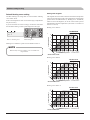
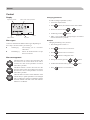
What happens in the event of an alarm?
■The background lighting in the display starts flashing and
the status lamp lights red.
■Some alarms change operating mode to “Add. heat only.”
and reduce the supply temperature to the minimum
permitted temperature to notify you that something is
wrong.
■Alarms with automatic reset (do not need to be
acknowledged when the cause has disappeared).
■Existing alarms that require corrective action by you or the
installer.
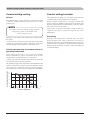
Recommended actions
1. R
ead off which alarm has occurred from the heat pump’s
display.
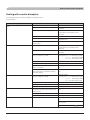
2. As a customer you can rectify certain alarms. See the table
below for relevant actions. If the alarm is not rectified, or is
not included in the table, contact your installer.
Alarm text on the display
Alarm description
Check/remedy before installers/service
technicians are called
LP-ALARM
Tripped low pressure sensor.
Check that the thermostats for the radiators/
under-floor systems are not closed.
HP-ALARM
Tripped high pressure sensor.
Check that the thermostats for the radiators/
under-floor systems are not closed.
OU power failure / OU Com. error
Outdoor unit not powered / Communication
cut
Check that any circuit breakers to the outdoor
unit are not off.
Display not lit
Check and replace any blown circuit and
main fuses.
Check that the circuit breaker to the indoor
unit is not off.
Check that the switch (SF1) is in normal position (1).
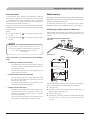
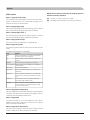
Resetting alarms
No harm in resetting an alarm. If the cause of the alarm remains,
the alarm recurs.
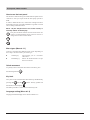
■When an alarm has been triggered, it can be reset by switching
indoor unit off and on using the switch (SF1).
■When the alarm cannot be reset using the switch (SF1), the
operating mode, “Add. heat only”, can be activated to
resume a normal temperature level in the house. This is
most easily carried out by holding the “Operating mode”
button in for 7 seconds.
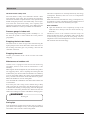
NOTE
Recurring alarms mean that there is a fault in the
installation.
Contact your installer!
17