1
QUALITY MANUAL
METHODS FOR MEASURING RADON IN AIR AND WATER
WITH CHARCOAL CANISTERS, LIQUID SCINTILLATION VIALS,
ELECTRET ION CHAMBERS AND CONTINUOUS RADON MONITORS.
RADON TESTING CORPORATION OF AMERICA
2 HAYES STREET ELMSFORD, NEW YORK 10523
TELEPHONE: 914-345-3380
FAX NUMBER: 914-345-8546
LABORATORY QA OFFICER…Andreas C. George
Telephone: 914-345-3380 Ext. 601
Signature………………………………
LABORATORY DIRECTOR…Dante Galan
Telephone: 914-345-3380 Ext. 623
Signature:……………………………..
LABORATORY MANAGER…Nancy Bredhoff
Telephone: 914-345-3380 Ext. 614
Signature…………………………………
DATE: September 2012
TABLE OF CONTENTS
Description
Organizational Chart
Section
1.0
Page
3
Quality Policy Statement
2.0
4
Protocols for Measurement Trace-ability
(Radon Collector Custody)
3.0
5
Inventory of Appropriate Resources and Facility
4.0
7
Procedures for Sample Handling
5.0
10
Procedures for Results Reporting
6.0
12
Procedures for Calibration and Maintenance of Equipment
7.0
13
Internal Audits and Equipment Maintenance Records
8.0
14
Corrective Actions
9.0
17
Managerial Review
10.0
19
Record Retention
11.0
20
Dealing with Complaints
12.0
21
Laboratory Personnel Training
13.0
22
Appendix 1
23
Appendix 2
24
Appendix 3
25
Appendix 4
27
Appendix 5
28
Attachment A
29
Attachment B
30
Attachment C
40
Attachment D
41
Attachment E
42
Attachment F
45
2
Document No. 2
Section: 1.0 Rev 9.0
Date:
September 2012
Page:
3 of 45
ORGANIZATIONAL CHART
President
(Nancy Bredhoff)
Laboratory Director
(Dante Galan)
Lab. Analysis and Reporting
Tel. 914-345-3380
Laboratory Technician
(Lisa Sardanelli)
Analysis of Radon Collectors
Dir. of Analytical Operations
Quality Assurance Officer
(Andreas C. George)
QA/QC Activities
General and Administrative
(Thomasina Suttles)
(Renee Baezer-Charles)
Shipping, Handling and Weighing
Of Radon collectors
(Christian Terrones)
Fabrication, Preparation and Recycling of Radon Collectors
(Justin Miller)
The QA/QC Officer is organizationally independent of the Laboratory analysis and
reporting to avoid conflict of interest.
All the individuals cited in the organizational plan are involved in their
respective capacity to fabricate radon collectors, shipment, handling, analysis,
data interpretation and in the management of the radon project.
See Attachment A for listing of Technicians/Specialists affiliated with RTCA’s
Radon Measurement Business in New Jersey.
3
Document No. 2
Section: 2.0 Rev 9.0
Date:
September 2012
Page:
4 of 45
QUALITY POLICY STATEMENT:
The responsibilities of the staff listed on the organizational plan fit their
respective job description with some overlapping in the lower tier positions.
The QA officer oversees the entire radon project in terms of the quality of the
work and makes sure it meets the standards set for such work. EPA established
the standards for radon measurements, exposure protocols and result
interpretation, with occasional revisions. RTCA follows the procedures and
recommendations advanced and approved by EPA.
The QA officer oversees the results of the different analytical procedures
reported by the Laboratory Director and makes recommendations and adjustments
accordingly to ensure quality measurements with quality results. The QA officer
advises the President and the Laboratory Director on a regular basis on the
assessment, precision and quality of the measurements using the monthly and
blind calibration. The monthly QC report includes a statistical summary of the
duplicate collector performance that is the most important way of assessing the
status of the entire analytical operations.
The QA Officer and the Laboratory Director keep Company management informed on
the steps taken to fix a problem and to ensure quality work. Any corrected
action is documented and enforced immediately after a discrepancy or deficiency
is discovered.
The Company’s analytical data is resident on the computer file server and
network. The Company’s computer system is backed-up nightly; and a weekly backup tape is secured in off-site storage. Analytical reports, quality control
measurements and test information forms are batched together on a monthly basis
for storage purposes, as well as for use of retrieval of information, if
necessary. The Company retains hard copies of daily analytical reports and
quality control measurements for radon in air for a period of at least five (5)
years and for radon in water for a period of at least ten (10) years. The
Company retains customer test information forms in on-site storage for radon in
air for a period of at least five (5) years and for radon in water for a period
of at least ten (10) years.
The Company reviews all new work to ensure that it has the appropriate
facilities and resources before commencing such work. When processing an order,
the Company’s customer service representative checks with the Production Manager
for availability of test kit inventory and estimated shipping date. Although
the Company cannot predict when test kits will be returned for analysis, the
Company has the analytical capacity to handle a much larger workload than it
currently processes in an eight-hour work shift. If the Company were to
experience an unusually high return of test kits for analysis at the same time,
the Company could add one or two additional shifts per day in the lab, and the
associated data processing could be performed by temporary labor.
4
Document No. 2
Section: 3.0 Rev 9.0
Date:
September 2012
Page:
5 of 45
PROTOCOLS FOR MEASUREMENT TRACEABILITY (COLLECTOR CUSTODY):
Trace-ability is linked to an individual collector identification number. This
is true for all methods used at RTCA for radon detection in both air and in
water. The collector and the sampling protocol information card are common coded
with the same identification number eliminating sample mix-ups and
uncertainties. Charcoal devices are pre-weighed when the collectors are barcoded prior to packaging for shipment. RTCA’s radon measurement business
certification number is stamped on test kit packaging. The test kits are
shipped expeditiously via United Parcel Service. A log of the daily shipments is
permanently kept at RTCA. If a customer purchases a test kit on-site at the RTCA
facility, then the invoice will reflect that.
The placement of the radon collector is always traced via information entered on
the exposure information card that also lists several other parameters such as
name and test address, placement location, start and stop time of the test and
general conditions existing in the house during the test.
Radon collectors returned to the laboratory after exposures are logged in daily
by their individual identification number and /or client name. The sample
custodians at RTCA are responsible for the daily log report of received
collectors. A permanent record is maintained via RTCA’s computer database.
The Company calibrates the analytical balances to certify that the weights of
radon devices taken before and after exposure are traceable to a standards
laboratory. The Laboratory Director maintains Certificates of Calibration.
Before analysis, the returned collector is weighed to determine the water vapor
acquired during exposure. This applies to the charcoal methods for radon
collection only. The pre-weight information is subtracted from the post-weight
to obtain the net water gained by the radon collector. This information is
recorded permanently and is used to determine the appropriate calibration factor
needed for the calculation of the radon concentration. Other parameters needed
for complete trace-ability are:
1.
2.
3.
4.
5.
6.
7.
8.
Time and date of analysis.
Exposure start and stop time and dates.
Id. No. of analyzer used.
Analyzer type and detection efficiency or calibration factor
Background gamma count in the region of interest.
Alpha background in the region of interest.
Gross gamma count in the region of interest for charcoal canisters.
Gross alpha count in the region of interest for the liquid scintillation
charcoal method
9. Gross ionization or voltage drop in electret ion chambers
10.Background contribution for electret ion chamber in voltage drop.
11.Calibration factor corresponding to the sampling period and the amount of
water gained by the charcoal canisters.
12.Calibration factor for radon in water analysis dependent on the radon
standard solution.
13.Calibration factor for the electret ion chamber detectors obtained from
exposures in a calibration facility with known radon concentration
5
Document No. 2
Section: 3.0 Rev 9.0
Date:
September 2012
Page:
6 of 45
14.Decay factor for all methods except for electret ion chambers
15. The continuous radon monitor (CRM) is calibrated initially by the
manufacturer, in a traceable standard radon atmosphere. Every six months the
monitor is recalibrated. The CRM is equipped with a battery that operates for
at least a year. If the battery becomes low, the CRM will not be able to start
a test.
Using all the information recorded on the information card and the laboratory
pre-analysis test procedures mentioned above, the computer software program
automatically calculates the concentration of radon at the time of sampling. The
information card with the client’s recorded exposure data is stored in the
permanent archives.
The necessary parameters noted above are used in the data reduction formulas
listed in the appendices to calculate the radon concentration and the lower
limit of detection (LLD). If the need arises to cross check the computer
calculations, then the formulas listed in the appendices can be used for
manually calculating the radon concentration.
The test data of the CRM is accumulated in hourly records and stored in nonvolatile memory. At the end of each test period (48 hours/or 2 days to 240
hours/or 10 days), the recorded information is uploaded from the CRM to the
computer. The calculated hourly radon concentrations and temperature readings
are used to generate a graphical representation of the data, with a table of
average values. Customized test reports are automatically generated and can be
printed in the field. Secondary radon testers obtain immediate results by
connecting to a remote file server via modem. The server faxes test reports to
the secondary tester. Hard copies of the test reports are reviewed, signed by
the Radon Measurement Specialist and mailed the next business day.
6
Document No. 2
Section: 4.0 Rev 9.0
Date:
September 2012
Page:
7 of 45
INVENTORY OF APPROPRIATE RESOURCES AND FACILITY. The Status of the Laboratory:
Every aspect of the radon measurement process is reviewed on a daily basis to
make certain that there is an adequate supply of freshly constructed or
regenerated collectors and detectors to meet the demand. Radon collectors of the
3 and 4 inch size canisters are loaded with exactly 50 g and 90 g of freshly
activated carbon respectively and they are stored in inventory. The liquid
scintillation vials are loaded with 2 g of activated carbon from the same lot
and batch of charcoal as the canisters. They are prepared in advance and remain
sealed until they are sent out for a radon test. Fabrication of new radon
collectors and detectors goes on daily, with continuous maintenance of the
existing stock for prompt shipping.
Liquid scintillation glass vials for radon in water analysis are prepackaged and
are available in large supply for prompt shipping with instructions for
sampling.
RTCA’s long-term electrets, Ra-Dome™, are prepared in advance. Ra-Domes are
registered for their respective application and are labeled with a bar coded
identification number before they are shipped out for radon testing. The Ra-Dome
electret configuration has a raised electret for a more uniform distribution of
the surface charge.
The Ra-Dome electrets are charged to between 700 - 800 Volts and then are stored
for a minimum of one month in protective caps in a low radon environment. Their
surface volt potential is followed for up to one month for possible voltage
drift until they are shipped for radon testing.
The Company reviews all new work to ensure that it has the appropriate
facilities and resources before commencing such work. When processing an order,
the Company’s customer service representative checks with the Production Manager
for availability of test kit inventory and estimated shipping date. Although
the Company cannot predict when test kits will be returned for analysis, the
Company has the analytical capacity to handle a much larger workload than it
currently processes in an eight-hour work shift. If the Company were to
experience an unusually high return of test kits for analysis at the same time,
the Company could add one or two additional shifts per day in the lab, and the
associated data processing could be performed by temporary labor.
All analytical systems are maintained operational at all times by performing the
daily routine QA and QC checks, including analytical balance calibration,
analytical systems performance checks with radiation standards, background
radioactivity measurements with unexposed collectors or detectors and computer
software performance. A look at the data from day to day operation is a good
indicator of consistency and reproducibility. In situations where questions
arise, control charts can be very useful to identify a possible discrepancy and
correct it.
7
Document No. 2
Section: 4.0 Rev 9.0
Date:
September 2012
Page:
8 of 45
The computer system required for handling all the information for analysis and
calculation is tested and its integrity is evaluated daily at the beginning of a
workday and after 2 hours of use.
The voltage meter that measures the surface potential difference initially and
after the exposure of an electret ion chamber is terminated, is checked daily
with a reference voltage source.
The analytical balances are auto-calibrated at the beginning of each day with
NIST tolerance S calibration sources. Analytical balances are required with all
methods that use charcoal collectors for radon testing. The Company calibrates
the analytical balances to certify that the weights of radon devices taken
before and after exposure are traceable to a standards laboratory. The
Laboratory Director maintains Certificates of Calibration.
The analyzer gamma counting systems used for the 3 and 4 inch charcoal canisters
are aligned daily with a cesium radioactive source and their counting
efficiencies in the gamma energy region of interest is verified daily with
certified Ra -226 / Radon -222 standards with known radon concentration and with
the same counting geometry. The counting time is 10 minutes. Any deviation above
or below 2% from one day to the next is investigated. The counting systems
gamma background is verified with unexposed charcoal collectors in the same
energy region of interest on a weekly basis and more frequently if the need
arises. The counting time is 10 minutes.
The RTCA 3” and 4” canisters have no inherent radiological background in the
region of interest. The background effect is usually from cosmic radiation that
is nearly constant at RTCA. Measurements of background that show sensitivity
above the lower limit of detection (LLD, are investigated. Field blanks offer an
additional check on the effect of background on the LLD.
The liquid scintillation analyzer used for radon measurements in air and in
water is aligned with a liquid tritium source and its alpha counting efficiency
is determined daily with duplicate Ra / Rn certified sources in the region of
interest using the same counting geometry. The analytical method is the EPA
Liquid Scintillation Method 913.0 (Pia, H. and Hahn, P., 1993). The counting
time for radon in air analysis is ten minutes. The counting time for radon in
water analysis is 30 minutes. Deviation in counting efficiency of more than 2%
is investigated. The background is measured daily at the same counting geometry
for the same length of time with duplicate unexposed vials at the same counting
geometry. Any deviation from the LLD is investigated.
Potential drop must be calibrated daily and in between measurements with a
reference voltage source. Any deviation by 2 volts from the reference
calibration source triggers an investigation. The voltmeter should be used at
nearly the same temperature for initial and final voltage readings after
exposure. The long-term electrets supplied by RTCA eliminate the possibility of
voltage drift due to the temperature difference during the readings by requiring
that the electrets be read at the RTCA facility in an environmentally controlled
environment.
8
Document No. 2
Section: 4.0 Rev 9.0
Date:
September 2012
Page:
9 of 45
The background contribution to the Rad Elec. electret returning after an
exposure is estimated for different environments while the background
contribution to the RTCA electret ion chamber is measured directly by using a
second chamber that is impervious to radon and senses only the background.
The CRM’s electronics perform continuous self-checks and if a malfunction is
detected, the monitor will not report test results.
Each member of the staff has the technical knowledge and experience for their
assigned tasks. The duties and responsibilities of the technical assistants
overlap making certain that the appropriate facility and resources are available
at all times before commencing work.
Instructions and Test Information Card for Deploying Charcoal Canisters are
attached. See Attachment B.
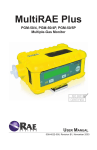
See User Manual for instructions for deploying continuous radon monitor.
9
Document No. 2
Section: 5.0 Rev 9.0
Date:
September 2012
Page:
10 of 45
PROCEDURES FOR SAMPLE HANDLING
1. Samples received from the field are handled by logging all the entries
recorded on the sample information card. Start & stop time information is
scanned into RTCA’s computer database by an optical card scanner.
2. Observing the radon collectors to make sure their integrity was not violated.
Make sure the seal labels on charcoal canisters and the screw caps on liquid
scintillation vials were properly fastened to ensure air tightness after the end
of exposure.
3. The condition of the electret ion chamber must be checked before and after
the end of exposure to observe if any deviation from the normal use is
encountered. In the RTCA Ra-Dome, the exposure is terminated by taping the
sample ports tight and by sealing the ion chamber in an aluminized bag that is
impervious to radon.
4. Charcoal collectors are post weighed to look for unusual trends or
irregularities in the amount of water gain. An experienced technician will
initiate an investigation if unusual data on water gain are observed. Water
samples for radon analysis are observed to see if the vials are completely
filled without air bubbles or air space before proceeding for analysis.
5. Electret ion chambers are not affected by humidity during exposure but
caution should be exercised by reading the electrets in an environment where the
temperature is nearly constant.
6. The collectors are ready for analysis if their integrity was not violated and
the information recorded on the sample card is in accordance with EPA sampling
protocols such as the duration of sampling and appropriate placement in a home.
Also, the arrival of the collectors at RTCA must be timely to ensure analysis
that is compatible with the principle and the method of measurement. For radon
in air and in water using the gamma and alpha analytical methods the collector
arrival time should not exceed 10 days. Since, express or next day mailing is
standard procedure at RTCA, radon test samples generally arrive within 2-3 days
after the end of exposure. The return time for electret ion chambers is not as
critical as charcoal collectors because there is no radon decay involved after
the end of testing.
7. The CRM should be handled with care and be exposed according to EPA
protocols. The CRM should not be exposed in a location with large electric and
magnetic fields, or in conditions of extreme temperature and humidity
variations. By following EPA protocols on placement, the monitor will
discriminate against thoron. To avoid data transmission errors, make sure the
cable is firmly connected between the CRM and the computer. Never disconnect
the cable during the start test or stop test procedures.
10
Document No. 2
Section: 5.0 Rev 9.0
Date:
September 2012
Page:
11 of 45
Where a sample or portion of the sample is to be held secure (for example, for
reasons of record, safety or value to enable check calibrations or tests to be
performed later), the laboratory shall store the sample in a fireproof locking
file cabinet to protect the condition and integrity of the sample. However,
since all of the samples that the laboratory analyzes have a half-life of
approximately 4 days and need to be analyzed within 12 days after taking the
sample, there is not a great need to secure the integrity of samples over a long
time period. The company will rely on the courts for disposition of any samples
in question.
11
Document No. 2
Section: 6.0 Rev 9.0
Date:
September 2012
Page:
12 of 45
PROCEDURES FOR RESULTS REPORTING
Analytical results are batched daily and checked for discrepancies before
releasing information to clientele.
Detectors are sorted for analysis by type of service associated with client.
Priority service entails processing of detector the same day it is received at
the lab for analysis. Priority service is geared to accommodate the Company’s
nation-wide network of professional testers primarily involved in residential
real estate radon tests. Standard service entails report generation within a
week of receiving detector at lab for analysis. Standard service is geared for
governmental survey work. All of the Company’s analysis results are reported on
stationary with a pre-printed disclaimer. The results are reported and
interpreted according to EPA published recommendations. For tests conducted in
New Jersey, results are reported and interpreted according to NJ DEP published
recommendations. Test methods are clearly identified on the results report.
Each results report includes the signature of the Laboratory Director, which is
accomplished through an electronic identification of the Laboratory Director’s
signature.
A results report may be revised and reissued, if the client indicates to the lab
that the exposure time information used to calculate the result is incorrect and
needs to be updated. Once the test record file is updated with correct exposure
time, the record is recalculated and a new report is issued. In this case, the
report will be stamped “Report Reissued”.
The report of the test results obtained with the CRM can be generated by
clicking the report/print buttons from the monitor’s operating software.
print or fax the client report, click the printer icon on the toolbar.
To
12
Document No. 2
Section: 7.0 Rev 9.0
Date:
September 2012
Page:
13 of 45
PROCEDURES FOR CALIBRATION AND MAINTENANCE OF EQUIPMENT:
The calibration and performance of all types of RTCA charcoal collectors for
radon in air with their specific analytical system was verified initially in a
radon calibration facility traceable to NIST, at different conditions of
exposure such as radon concentration, humidity, temperature and length of
exposure. For radon in water, the system calibration is done with certified
standards of radon in solution.
Electret ion chambers are initially calibrated in a radon calibration facility
traceable to NIST under different conditions of radon concentration and time of
exposure.
To maintain continuous calibration, the RTCA collectors or detectors are spiked
on a monthly basis by having six replicate collectors of each type exposed in a
commercial calibration facility traceable to NIST or equivalent Standards
Laboratory. Bowser Morner of Ohio satisfies the requirements of a standard radon
calibration facility traceable to NIST and is the source of the monthly spikes.
The results of each spiked collector or detector must be within plus or minus
25% of the reference value.
The initial calibration of the CRM is performed by the manufacturer in a radon
environment traceable to a standards laboratory. CRM’s must be calibrated at
least twice per year. At the end of one year, the CRM’s batteries must be
replaced. This is accomplished at the same time the unit is recalibrated.
13
Document No. 2
Section: 8.0 Rev 9.0
Date:
September 2012
Page:
14 of 45
INTERNAL AUDITS AND EQUIPMENT MAINTENANCE RECORDS
Annual internal quality systems audits are performed to verify compliance with
all QA and QC requirements. The QA director observes day-to-day operations and
if any QA and QC deficiencies exist he takes action to correct them immediately.
Audits are performed according to the following procedures:
1. Fabrication of the test collectors using the same materials and methods
for reproducibility purposes and reducing variability. Identical canisters are
filled with the exact amount of carbon from the same production lot and batch.
RTCA has in stock a very large quantity of activated carbon from the same
production lot to reduce the variability encountered with mixed production lots.
The fabricated radon collectors are regenerated at the same temperature
overnight and sealed airtight with a seal label until the time of exposure.
After exposure they are resealed airtight with a fresh seal label. After
analysis the collectors are recycled for new tests. The collection efficiency of
the collectors after several exposures and recycles was found unchanged. This is
also confirmed with spiked radon collectors that have been routinely recycled
several times.
The same QC steps and procedures are used for the fabrication of liquid
scintillation (LS) radon collectors. The LS type collector is used for a single
exposure and it is not recycled. Clean and unused 20 ml glass vials are used to
collect water for the measurement of radon. They are prepackaged, stored and
shipped out upon request. Analysis of the water sample is carried out in
duplicate unused 20 ml glass vials for a one-time use.
Electret ion chambers of a specific type are manufactured identically in terms
of materials and size. Sensitivity is a function of the thickness of the Teflon™
electret disk used in the ion chamber. Teflon disks from the same production lot
are desirable for mounting in holders made of conducting polymer resin. Since
electrets in ion chambers are sensitive to radon leaking inside and to gamma
radiation while in storage, they must be kept in keeper storage caps to avoid
loss of charge caused by ionization due to these background sources.
The continuous radon monitor automatically and continuously performs three selfchecks to ensure its proper operation. They are: Battery level, internal
communications and collecting electrode voltage. These are performed even when
the CRM is not actively recording radon data for a radon test. If the CRM fails
any of the self-checks, it sets an electronic flag. Therefore, the CRM software
looks for this flag prior to starting or stopping a test. The software notifies
the user for every possible problem with the test and does not allow the user to
download the data from the CRM and voids the test.
Tamper Detection: The alpha smart system provides five features to minimize
tampering either with the device or the conditions during a test, by providing
hourly measurements of temperature, a handle that allows the CRM to be secured
in place, special diffusion vents to prevent tampering, no displaying of the
hourly measurements for radon concentration, and due to its small size it can
fit inside an RTCA TC-30 Centurion Tamper Detection Cage.
14
Document No. 2
Section: 8.0 Rev 9.0
Date:
September 2012
Page:
15 of 45
2. Proficiency Testing. The calibration status of RTCA's radon collectors and
the analytical system is established on a monthly basis by having 6 replicate
radon collectors of every type spiked in a radon calibration facility traceable
to a primary standards facility such as NIST or its equivalent. EPA recommends
calibration of the entire system only once per year. By using the spike method
the analytical system calibration is accomplished on a monthly basis.
The monthly spikes are done at different radon concentration levels and at
different conditions of humidity and temperature to simulate conditions in the
indoor environment. To meet EPA proficiency criteria, the accuracy or the
relative percent difference of the RTCA test method should fall within plus or
minus of 25% of the true value. The monthly spikes indicate whether the
calibration factors used for calculation of radon concentration are still valid.
The calibration of the CRM is performed initially and at semi-annual intervals.
For daily analyzer performance checks, certified Radium - 226 / Radon - 222
standards are used. The gamma and alpha background of the analytical systems
are conducted on a daily basis by using unexposed charcoal canisters and liquid
scintillation vial collectors. Both instrument performance and background
information are documented on a daily performance report. From this internal
audit, the status of the entire analytical system is assured and maintained in
good order.
3. The precision of the test method is determined by exposing duplicate tests in
the same location in the field. The creation of control charts of duplicates on
a monthly time frame provides the criteria for the monthly and annual
performance of the exposure and analytical procedures. Radon tests conducted in
duplicate in the same location are very useful in finding if the test was
conducted according to test protocols and if the correct data were used on the
sample information card. RTCA, analyses hundreds of duplicate tests per month
and constructs separate control charts for duplicates averaging < 4 pCi/L or > 4
pCi/L in order to evaluate the integrity of the collectors, the measurement
precision, the consistency of the analytical system and whether the proper test
protocols and procedures were followed during exposure.
4. Field Blanks are a very important check on the behavior of radon collectors
during handling storage and shipment. RTCA encourages radon testers to submit on
a regular basis unexposed collectors that are handled in the same fashion as the
exposed ones. Any deviation of the Blanks above the lower limit of detection
(LLD), triggers an investigation to sort out the problem. RTCA analyses a
minimum of 25 blanks per month internally and encourages radon testers in the
field to include blanks as part of their QA QC process.
5. Reanalysis of radon collectors is performed when there is a question about
the results. Usually a question arises because the radon tester has provided the
wrong information about the test. Standard practice is for RTCA to recount the
collector to eliminate the possibility of counting discrepancy before recycling.
No radon collector is recycled or disposed until the results of the radon
analysis are examined and approved by the Laboratory Director.
15
Document No. 2
Section: 8.0 Rev 9.0
Date:
September 2012
Page:
16 of 45
6. Equipment Maintenance Records. All equipment necessary for obtaining an
accurate radon result are maintained in good order on a daily basis The
analytical balances used to measure the weight of carbon placed in each radon
collector and to measure the pre - weight and post - weight of radon collectors
used for a test are calibrated daily with NIST traceable class S weights. The
counting system consisting of NaI / PMT analyzers are standardized on a daily
basis using Radium - 226 / Radon - 222 sealed standards that have the same
counting geometry as the test collector. The total gamma background on all the
NaI / PMT counting systems is determined daily with unexposed collectors using
the same gamma region of interest as with the standardization. The liquid
scintillation counting system for radon in air and radon in water, undergoes the
same maintenance using the appropriate alpha standard sources and blanks.
16
Document No. 2
Section: 9.0 Rev 9.0
Date:
September 2012
Page:
17 of 45
CORRECTIVE ACTIONS
The QA Officer assesses the QC data and determines if the QC measurements are
acceptable or not. The Laboratory Director initiates and recommends corrective
action when deemed necessary. For out-of-control situations, the QA Officer
specifies corrective action. If corrective action is necessary, the Laboratory
Analyst investigates all of the steps used to arrive at a result and to find the
likely source of a discrepancy. Any situations that are found to be out of
control are investigated and corrective action is taken and documented. The
situation is monitored to see if the frequency of occurrence could facilitate in
uncovering future discrepancies. The QA Officer then examines the written
corrective action taken and approves or denies its implementation.
Control charts to observe trends in performance are very useful to evaluate QC.
Using the method of Quality Control Charts, Tables, Calculations and
Construction, which is recommended in item 261 of the NYS Environmental
Laboratory Approval Program Certification Manual, periodic evaluation of the
daily performance of the different analyzers is performed to evaluate the
analytical system. Visual inspection of the daily performance checks usually is
sufficient to verify the reproducibility and consistency of the entire system.
Standard Protocols to Deal with Discrepancies and Departure from Normal
Procedures:
If a discrepancy or departure from the above audits is identified it is
investigated and corrective action is implemented. A departure from previous
established procedures and performance checks is easily identified. Anomalous
data are scrutinized by double-checking the entire analytical system including
the computer and every step taken to arrive at the final result. The laboratory
management protocols are very concise and do not allow any departures from the
set and documented policies and procedures.
Procedures for feedback and corrective action include investigation at the
onset. Any departure from documented policies is investigated. The source of
the problem needs to be identified: i.e. analytical equipment, test device
preparation, analytical standards, field operations, analytical equipment and
computer equipment. If the problem is chronic, analytical data may not be
released.
For quality control samples, the control chart for duplicate exposures is based
on a 28% RPD warning level and a 36% control limit for duplicates of 4.0 pCi/L
or greater. For duplicates of less than 4.0 pCi/L, the warning and control
levels are set at 50% and 67% respectively. Two successive warning level
duplicates or one control limit violation triggers:
1.
2.
3.
A call to the end user to determine if proper protocol for duplicate
measurements has been observed.
Examination of the detector pair for structural integrity.
Evaluation of the analytical systems involved in the analysis of the
aberrant pairs.
17
Document No. 2
Section: 9.0 Rev 9.0
Date:
September 2012
Page:
18 of 45
Any field spike with an IRE greater or less than 25% triggers:
1.
2.
Evaluation of the analytical systems involved.
Destructive evaluation of the detector in question.
Any field blank of greater than 0.3 pCi/L will result in:
1.
2.
An examination of the analytical system employed.
Examination of the aberrant unit along with a recount to determine the
origin of any spurious factors that could effect the measurement.
The Company QA Officer maintains records of all daily QC activities, including
control charts on a monthly basis. The QA Officer will immediately report
control limit violations to the President. The Director of Analytical
Operations will oversee all required corrective actions. The QA Officer
maintains a log of all corrective actions.
Any problems encountered in the field with the CRM can be addressed by
contacting RTCA. Troubleshooting is addressed by supplying solutions to
problems such as use of the proper computer cable, the integrity of the cable
connection. A valid test report can be issued only if the test is a minimum of
48 hours or a minimum of 24 hours if the test is conducted in New Jersey.
18
Document No. 2
Section: 10.0 Rev 9.0
Date:
September 2012
Page:
19 of 45
MANAGERIAL REVIEW:
The laboratory management conducts a review of its quality system and testing
and calibration activities on an on-going basis throughout the year. A review
of the procedures for routine analyzer QA and QC steps are conducted daily; QA
measurements for blanks, spikes & duplicates are conducted monthly. Any
discrepancies found are identified and corrected. A QC report is prepared on a
monthly basis. The QC Report includes assessment, precision and completeness of
measurement data accuracy through results from blind calibration measurements
and spiked samples. The QC report also includes a statistical summary on all
duplicate measurements and associated percentage variations. Although the
Quality Assurance Officer prepares an annual report for management and state
government contracts to summarize the Company’s QA data, the Company cannot wait
for an annual report to identify QA problems in the lab.
The Quality Manager prepares a final audit report and maintains an audit history
that includes checklists, audit reports and corrective action plans.
Management reviews the quality system on an annual basis to ensure that
procedures in the Quality Manual and Laboratory Methods Manual have been
followed, to determine the effectiveness of the procedures in controlling the
quality data and to identify the need to modify any of the laboratory
procedures. Management reviews annually all areas described in the quality
system, policies, work instructions, and records affecting the quality of work.
The Quality Assurance Manager initiates the audit and ensures that it is
conducted in an efficient manner. The Quality Manager is trained in auditing
techniques by reading and understanding the SOP and reference books related to
internal auditing. During the audit the Quality Manager ensures that procedures
are being followed and record their findings onto the audit checklist. Audit
findings are reviewed with the staff responsible for the procedures audited. If
the Quality Manager generates a deficiency report, the audited staff responds to
initiate the corrective action. The corrective action must be completed within
90 days. Clients are notified immediately when audit deficiencies cast doubt on
the correctness or validity of the calibration or test results.
19
Document No. 2
Section: 11.0 Rev 9.0
Date:
September 2012
Page:
20 of 45
RECORD RETENTION:
The Company’s analytical data is resident on the computer file server and
network. The Company’s computer system is backed-up nightly; and a weekly backup tape is secured in off-site storage. Hard copies of analytical reports,
quality control measurements and test information forms are batched together on
a monthly basis for storage purposes, as well as for use of retrieval of
information, if necessary. The Company retains hard copies of daily analytical
reports and quality control measurements for a period of at least five (5)
years. The Company retains customer test information forms in on-site storage
for a period of at least five (5) years.
In the event that a laboratory transfers ownership or goes out of business, the
laboratory has developed a plan to ensure that the records are maintained or
transferred according to client’s instructions. All hard and electronic copies
of analytical reports and customer test information forms for the past five
years will transfer to the new owner for storage and safekeeping as part of the
sales agreement. Should the company go out of business, records for government
contract work will be returned to clients if requested; otherwise all hard
copies will be destroyed.
20
Document No. 2
Section: 12.0 Rev 9.0
Date:
September 2012
Page:
21 of 45
DEALING WITH COMPLAINTS:
Should radon testers complain about the test devices during handling, shipment
or after analysis, RTCA investigates its internal laboratory procedures and the
exposure protocols used by the tester to trace the source of any discrepancy.
Since RTCA radon collectors or detectors are shipped promptly with clear
instructions for their deployment there is no room for complaint concerning
quick shipment. Analysis of the test collectors is usually done the same day
received or the next day at RTCA depending on the test method. Radon results
exceeding the EPA recommended safe value (the action level) are reported
promptly with interpretation and explanation about what steps to take to reduce
the high radon concentration to an acceptable level. If the RTCA sampling and
shipping instructions and protocols are followed by the radon testers there
should not be any room for complaints. Radon results < 4 pCi/L, are usually
reported the next day after analysis.
If there is a complaint about the radon results, an investigation is triggered
to find the source of the discrepancy. Complaint is recorded on Log Form (See
Attachment F). The radon tester is contacted immediately to interrogate him or
her on the procedures and protocols used during the test. In almost every case
the source of the discrepancy can be traced back to the radon tester who failed
to follow the test protocols or marked wrong test information on the sample
card.
Other sources of the discrepancy can be traced to a prolonged exposure of the
radon collector that is beyond the usefulness of the charcoal method or due to
delay in shipping the test collector back to the laboratory for timely analysis.
Based on the findings of the investigation of a complaint, the decision is made
whether to void the test and retest.
21
Document No. 2
Section: 13.0 Rev 9.0
Date:
September 2012
Page:
22 of 45
LABORATORY PERSONNEL TRAINING:
The laboratory technicians have a combination of experience gained through
internal training and classroom education to perform all the tasks necessary to
fabricate, maintain, ship and analyze radon collectors of any type used at RTCA.
The training is acquired by participating in a two day radon course dealing with
radon fundamentals, radon sources, radon and radon decay product measurement
methods and techniques in air and water, sampling protocols, QA, QC and
radiation safety. Candidates receive a certificate or become certified by
passing successfully an EPA recognized written examination.
The on-site training deals with every aspect of the RTCA radon program including
maintenance and operation of all the analytical systems. The personnel are
trained and become well versed in the standard operating procedures from the
time a test collector goes out for sampling until its return for analysis and
measurement of the radon concentration. If the standard operating procedures
are revised, the cover page clearly indicates the effective date of any change,
the revision number and the signature of the approving authority.
The assistant laboratory technicians acquire expertise through on-site training
in preparation and handling of radon test collectors for shipment and analysis.
They are trained in the maintenance and operation of the analytical balances,
and the counting equipment for the analysis of radon test samples in both in air
and in water. Training is supplemented with classroom participation on the
fundamentals of radon measurements and audio tapes that cover radiation safety
for their personal protection and for other personnel working in the analytical
laboratory.
Employee review of training materials and standard operating procedures
pertinent to the employee’s job function is documented. Each employee reviews
and signs off on a Quality Policy Statement (Attachment C) that is communicated
to employees during the training of new hires. The adherence to quality is
understood, implemented and maintained by employees at all levels. The signed
Quality Policy Statement is filed in the employee’s personnel records.
The Technical Director and the Quality Assurance Officer must sign a
Demonstration of Capability Certification Statement (Attachment D) for each
employee performing a test. A copy of the Demonstration of Capability
Certificate is filed in the personnel records for each employee performing a
test method.
All employees must perform their specialized duties in conformance with RTCA SOP
for Data Integrity. The Company requires new employees to read and sign a NonDisclosure Agreement prior to starting employment. Management instructs the
employee that all analytical work performed by the Company is confidential
information and is only to be released to authorized clientele. The Company
also requires employees to read and sign a Code of Ethics Statement (Attachment
E) that addresses improper conduct and conflict of interest situations. The
signed Non-Disclosure Agreement and Code of Ethics Statement is filed in the
employee’s personnel records.
22
Appendix 1
1. Data Reduction and Validation of 3 and 4 Inch Charcoal Collector
Results:
GN - B
Rn = ------------------------- where,
E x CF x TS x DF
Rn
GN
B
E
CF
TS
DF
=
=
=
=
Concentration of radon during exposure period
Gross counting rate, (cpm)
Background counting rate, (cpm)
Gamma counting efficiency of analyzer for the 3 and 4 inch
charcoal collectors in the region of interest, (cpm) /pCi)
= Calibration factor based on the length of exposure and the
amount of water gained.
= Exposure period, (minutes)
= Decay factor of radon from the midpoint of exposure until the
time of counting.
2. The Lower Limit of Detection (LLD) for the 4 and 3 inch collectors is
calculated from the following expression:
__
LLD = 4.65√Br
Bt
Br = background counts
Bt = time background counted, (min)
Example:
A 4 inch canister shows a background Br = 68 cpm. Efficiency = 0.4203
cpm /pCi
Bt = 10 minutes. Exposure time TS = 4 days = 5760 minutes. Counted 72
hours after the end of exposure. Decay factor DF = 0.404 at the time
of counting.
Water gain = 2.5 g
Calibration factor CF= 0.0518 obtained from the
calibration curve.
___
LLD = 4.65 √680 = 12.0 cpm. To convert to pCi/L then
10
LLD = 12.0 cpm / E x CF x Ts x DF or
LLD = 12.0 / 0.4203 x 0.0518 x 5760 x 0.404 = {0.24 pCi/L}
The 2 sigma error at the 95% confidence level =
_______________________________________
2 √Gross Counts + Background Counts
---------------------------------------------Gross Counts – Background Counts
23
Appendix 2.
Data reduction and Validation of Charcoal Liquid Scintillation Vial Results:
1. Calculation of radon concentration
GN - B
Rn = ------------------------ where,
E x CF x TS x DF
Rn
GN
B
E
CF
TS
DF
=
=
=
=
=
The concentration of radon, (pCi/L)
Gross counting rate, (cpm)
Background counting rate, (pCi/L)
Alpha counting efficiency of analyzer in the region of interest
Calibration factor based on the length of exposure and the amount
of water gained.
= Exposure period, (minutes)
= Decay factor for radon from the midpoint of exposure until time of
counting.
2. The LLD is calculated in the same manner as the charcoal canisters.
Example:
The LLD for a 20 ml vial sample with background Br = 74 cpm and counted
for Bt = 10 min. is
____
LLD = 4.65 √740 = 12.6 cpm
10
For a 4 day exposure TS
Counting efficiency E =
Calibration Factor CF =
Decay factor DF = 0.404
= 5760 min
5.45 cpm / pCi
0.0013
when counted 3 days after the end of exposure.
12.6
LLD = ----------------------------------------5.45 x 0.0013 x 5760 x 0.404
= 0.7 pCi/L
The 2 sigma error at the 95% confidence level =
_______________________________________
2 √Gross Counts + Background Counts
---------------------------------------------Gross Counts – Background Counts
24
Appendix 3.
Data Reduction and Validation for Liquid Scintillation Radon in Water Results:
1. Calculation of radon concentration
Rn (in water)
GN
B
E
DF
V
GN - B
= --------------- where,
E x DF x V
=
=
=
=
Gross counting rate, (cpm)
Background counting rate, (cpm)
Alpha counting efficiency in the region of interest, (cpm) /pCi)
Decay factor from the time of sample collection to time of
analysis
= Volume of standard, background and sample which is constant at
(0.008 L)
Example:
A water sample for radon collected for analysis showed GN = 500 cpm
The background B = 5.71 cpm. The counting efficiency CF was 5.685 cpm /pCi and
the decay factor DF was 0.404.
Since the volume of water sample analyzed is 0.008 L, then
500 - 5.71
Rn (in water) = --------------------------- = 26,900 pCi /L
5.685 x 0.404 x 0.008
To convert radon in water to radon in air equivalent, divide by 10,000
Example: radon in water is 26,900 pCi/l and radon equivalent in air is
26,900 /10,000 = 2.69 pCi /L
________
2. The LLD is calculated from LLD = 4.65 √Br / Bt
Br = Background counts
Bt = the time the background was counted
Example:
_________
If Br = 5.71 cpm and Bt = 30 min then 4.65 √5.71 x 30 = 2.02 cpm.
30
If the analyzer Efficiency E = 5.685 cpm /pCi and the decay factor DF = 0.8217
then
2.02 cpm
LLD =----------------------------------- = 54.0pCi/L
5.685 cpm/pCi)x 0.8217 x 0.008 L
25
Appendix 3 continued
The 2 sigma error at the 95% confidence level =
_______________________________________
2 √Gross Counts + Background Counts
---------------------------------------------Gross Counts – Background Counts
Example:
Gross Counts = 500 x 30 = 15,000
Background
= 5.71 x 30 = 171.3
____________ _
The error = 2 √15,000 + 171.3
----------------15,000 – 171.3
= 0.017
If Radon = 26,900 pCi/L + 0.017, then Radon = 26,900 + 457 pCi/L
26
Appendix 4.
Data Reduction and Validation for Electret Ion Chambers
(Ra-Dome & E-PERM)
Concentration Calculation:
(Vi - Vf) - (B)
Rn pCi/L) = ---------------------CF x T
Where
Vi
Vf
B
T
CF
=
=
=
=
=
Initial voltage
Final voltage
Voltage drop due to background in Volts
Exposure time, (days)
Calibration factor in Volts / pCi-L. days
In the Ra-Dome system, site-specific background is measured. In the Rad Elec.
the background is estimated depending on elevation and the background history of
the measurement location.
Example:
Vi
Vf
B
T
CF
=
=
=
=
=
700 volts
177 volts
23 volts in 365 days
365 days
0.170 obtained from the calibration and,
(700 - 177) - (23)
Rn = --------------------------------- = 8.1 pCi /L
0.170 x 365
______
The LLD for the Ra-Dome = 4.65 x Sb where Sb = √Br /Bt
Br = Background in volts
Bt = Time background was counted (days)
Example:
Ra -Dome electret ion chamber exposed shielded from radon entry for
365 days showed a background of 23 volts
___
LLD = 4.65 √23
365 days
= .061 volts/day
= and
The 2 sigma error at the 95% confidence level =
_______________________________________
2 √Gross Voltage drop + Background Voltage
---------------------------------------------- =
Gross Voltage drop – Background Voltage
________
2 √523 + 23
523 - 23 = 0.09 or 9%
27
Appendix 5.
1.
Data Reduction Validation for the RTCA E-Smart CRM:
Concentration Calculation:
Total gross alphas – Background
Rn (pCi/L) = --------------------------------------------------------E x T
Where:
Total gross alphas = All alphas or counts recorded during the sampling period
Background = 4.3 counts
T = Sampling time in Hrs., minus first 4 hours of sampling period.
E = Monitor sensitivity in alphas or counts /Hr/pCi/L = 16.2 cph/pCi/L
Example: A CRM sampled for 48 hrs.
Total gross alphas(counts)in(48-4) = 44 hours = 3,600 counts
Total background in 44 hours = 4.3 cph x 44 = 189.2 counts
E= 16.2 cph/pCi/l
3,600 – 189.2
Rn (pCi/L) = -----------------16.2 x 44
= 4.8 pCi/L
The Lower Limit of Detection (LLD) for the CRM is calculated from the following
expression:
2.
LLD =
__________
_____4.65√background_______________
Time in hours minus first 4 hours of sampling
___
LLD = 4.65 √ 189 = 1.4 counts per hour (cph)
44 hours
3. The 2 sigma error
@ 95% confidence level
________________________________
= 2x √Gross counts + background counts
------------------------------------Gross counts – background counts
Example using the above information:
________________
The error = 2x √3,600 + 189.2
----------------------- = 3.6%
3,600 – 189.2
The error for 4.8 pCi/L is + 3.6 % or 4.8 pCi/L + 0.15 pCi/L
At 2.0 pCi/L, the error is 7.5%, at 4.0 pCi/L the error is 4.5% and at 10.0
pCi/L the error is 2.5%
28
Attachment A
New Jersey Technicians Listing
29
Attachment B
A
30
31
32
33
34
35
36
37
38
39
Appendix C: Quality Policy Statement for RTCA Employees
It is the Company’s objective to produce technically defensible laboratory test results that
accurately and precisely measure the radon concentration in air and water samples. The Company
is committed to reaching and routinely performing laboratory work in conformance to the NELAC
standards, resulting in the overall improvement in laboratory quality over time. Demonstration of
the Company’s commitment to reach it’s objective will result in the following:
*Adequately staffed and equipped laboratory facility
*Successful participation in the proficiency testing program operated by the New York State
Environmental Laboratory Approval Program
*Successful implementation of a NELAC compliant quality system
*Annual internal audits with management review
*Successful biennial assessments by the New York State Environmental Laboratory Approval
Program
*Timely reporting of laboratory results to customers
*Laboratory test results that are supported by quality control data and documented laboratory test
procedures
It is understood that this commitment to quality is implemented and maintained by employees at all
levels. Management will document the commitment to quality through the employee evaluation
process, the training procedure, the internal audit process, and the document control process.
I agree to abide by the above “Quality Policy” for personnel employed by RTCA. I understand that
employment does not constitute any form of license. Additionally, I release and forever discharge
RTCA and RTCA subcontractors from any and all liabilities, claims, demands, or causes of action
whatsoever, which now exist or which may hereafter arise on account of my (the undersigns)
activities henceforth as an employee of RTCA. The undersigned applicant further acknowledges
that this release is being given as a prerequisite for having filed application for employment by
RTCA.
Signature
Print Name
Date
40
Attachment D
Demonstration of Capability
Certification Statement
Date:
Laboratory Name:
Laboratory Address:
Analyst(s) Name(s):
Matrix:
[Radon In Air]
[Radon In Water]
[Method number, SOP#, Rev#, analyte]
We, the undersigned, CERTIFY that:
1. The analysts identified above, using the cited test method(s), which is in use at this facility
for the analyses of samples under the National Environmental Laboratory Accreditation
Program, have met the Demonstration of Capability.
2. The test method(s) was performed by the analyst(s) identified on this certification.
3. A copy of the test method(s) and the laboratory-specific SOPs are available for all personnel
on-site.
4. The data associated with the demonstration capability are true, accurate, complete and selfexplanatory (1).
5. All raw data (including a copy of this certification form) necessary to reconstruct and
validate these analyses have been retained at the facility, and that the associated information
is well organized and available for review by authorized assessors.
______________________
Technical Director’s
Name & Title
_______________________
Signature
_________
Date
______________________
Quality Assurance
Officer’s Name
_______________________
Signature
_________
Date
41
Attachment E
Code of Ethics for RTCA Employees
3.0
PURPOSE
The following Code of Ethics serves as an agreement with Radon Testing Corporation of America
(“RTCA”) employees who are currently employed by RTCA. The established rules are necessary to
protect the life, health, property and welfare of the public, and to maintain the credibility of the RTCA
operation. Accordingly, each RTCA employee agrees to retain full responsibility and liability for his/her
actions and agree to comply with the following Code of Ethics:
3.0
CODE OF ETHICS
Responsibility:
Protect the safety, health and welfare of the public, by performing all certified activities in accordance
with properly established and approved procedures.
Integrity:
Perform all certified activities honestly and treat the public, clients and employer in an impartial and
ethical manner. All details of the certified activity shall faithfully and accurately reflect the inspections;
procedures used, and result obtained.
Conflict of Interest:
Consciously avoid conflicts of interest situations and openly disclose such conflicts to all concerned
parties.
Improper Conduct:
Refrain from work activities outside the area of certification without prior approval.
Safety:
Act in a safe and responsible manner while conducting certified activities, ensuring that all required and
necessary safety procedures are in place and are being used by one’s self and others for whom one is
responsible.
3.0
PENALTY
Violation of this Code of Ethics by any RTCA Employee might be cause for discontinuing employment.
I agree to abide by the above “Code of Ethics” for personnel employed by RTCA. I understand that employment does
not constitute any form of license. Additionally, I release and forever discharge RTCA and RTCA subcontractors from
any and all liabilities, claims, demands, or causes of action whatsoever, which now exist or which may hereafter arise
on account of my (the undersigns) activities henceforth as an employee of RTCA. The undersigned applicant further
acknowledges that this release is being given as a prerequisite for having filed application for employment by RTCA.
Signature
Print Name
Date
42
Appendix E – Code of Ethics
1. Conflict of interest. No employee should have any interest, financial or otherwise, direct or
indirect, or engage in any business or transaction or professional activity or incur any
obligation of any nature, which is in substantial conflict with the proper discharge of his/her
duties in the public interest.
2. No employee should accept other employment which will impair his independence of
judgment in the exercise of his/her official duties.
3. No employee should accept employment or engage in any business or professional activity
which will require him to disclose confidential information which he has gained by reason
of his official position or authority.
4. No employee should disclose confidential information acquired by him in the course of
his/her official duties nor use such information to further his/her personal interests.
5. No employee should use or attempt to use his/her official position to secure unwarranted
privileges or exemptions for himself/herself or others.
6. No employee should engage in any transaction as representative or agent of the government
with any business entity in which he has a direct or indirect financial interest that might
reasonably tend to conflict with the proper discharges of his/her official duties.
7. An employee should not by his/her conduct give reasonable basis for the impression that
any person can improperly influence him or unduly enjoy his/her favor in the performance
of his official duties, or that he/she is affected by kinship, rank, position or influence of any
party or person.
8. An employee should abstain from making personal investments in enterprises which he/she
has reason to believe may be directly involved in decisions to be made by him/her or which
will otherwise create substantial conflict between his/her duty in the public interest and
his/her private interest.
9. An employee should endeavor to pursue a course of conduct which will not raise suspicion
among the public that he/she is likely to be engaged in acts that are in violation of his trust.
10. No employee employed on a full time basis nor any firm or association of which such an
employee is a member nor corporation a substantial portion of the stock of which is owned
or controlled directly or indirectly by such an employee, should sell goods or services to any
person, firm, corporation or association which is licensed or whose rates are fixed by the
agency in which such an employee serves.
11. If any employee shall have a financial interest, direct or indirect, having a value of ten
thousand dollars or more in any activity which he is subject to the jurisdiction of a
regulatory agency, he/she should file a written statement that he/she has such a financial
interest in such activity which statement shall be open to public inspection.
12. Violations – In addition to any penalty contained in any other provision of law any such
employee who shall knowingly and intentionally violate any of the provisions of the Code
of Ethics may be fined, suspended or removed from office or employment in the manner
provided by law.
43
Attachment E
The following laboratory staff have read this Code of Ethics. I certify that the requirements
have been communicated to me and that I am trained in its use. A copy of this page will be
distributed to the employee training record file. I will not engage in any activities that could
possibly negatively impact the integrity of data produced in this organization.
_________________________
Signature
_______________________ ____________
Name
Date
_________________________
Signature
_______________________ ____________
Name
Date
_________________________
Signature
_______________________ ____________
Name
Date
_________________________
Signature
_______________________ ____________
Name
Date
_________________________
Signature
_______________________ ____________
Name
Date
_________________________
Signature
_______________________ ____________
Name
Date
_________________________
Signature
_______________________ ____________
Name
Date
_________________________
Signature
_______________________ ____________
Name
Date
_________________________
Signature
_______________________ ____________
Name
Date
_________________________
Signature
_______________________ ____________
Name
Date
_________________________
Signature
_______________________ ____________
Name
Date
_________________________
Signature
_______________________ ____________
Name
Date
44
Attachment F
Complaint/Corrective/Preventive Action Log
Open Date: __________
Initiated By: ___________________
-------------------------------------------------------------------------------------------------------BASIS:
DESCRIPTION:
METHOD:____________
__ Audit
__ Complaint
__ PT failure
__ QC failure
__ SOP departure
__ Prevention
Data:
__ Type
__ Samples
______________
_______________________________________________________
_______________________________________________________
Recorded By: _________________________________ Date: ________________
---------------------------------------------------------------------------------------------------ROOT CAUSE:/PUROPOSE:
Investigated By: ________________________________ Date: _______________
--------------------------------------------------------------------------------------------------POTENTIAL CORRECTIVE/ PREVENTIVE ACTIONS:
Recommended By: ____________________________ Date: _________________
--------------------------------------------------------------------------------------------------ACTIONS PERORMED:
Disposition of Data:
__ Reanalyzed
__ Rejected
__ Qualified
__ Recalled
Performed by: ______________________ Date: ___________
---------------------------------------------------------------------------------------------------FOLLOW-UP ACTIVIES:
__Continue another corrective action
__ Change to SOP# Assessed by: ______________________ Date: ___________
---------------------------------------------------------------------------------------------------
45