1
Cardiac Resynchronisation Therapy (CRT) Devices
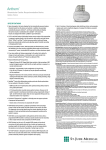
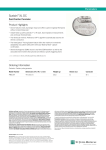
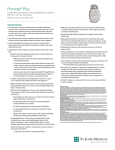
Anthem™ RF
Cardiac Resynchronisation Therapy Pacemaker
Product Highlights
Q
InvisiLink™ wireless telemetry, in conjunction with the Merlin@home™
wireless transmitter and Merlin.net™ Patient Care Network (PCN), allows
for daily remote monitoring and follow-up
Q
AT/AF Alerts can be programmed to notify patients and their clinics when
a programmed AT/AF threshold or continuous episode duration has been
exceeded, or when a high ventricular rate accompanies the AT/AF episode
Q
Exclusive AF Suppression™ algorithm is clinically proven to suppress episodes
of paroxysmal and persistent AF
Q
AT/AF burden trend provides a graphical representation of the percentage of
time in AT/AF and the number of AT/AF episodes in the previous 52 weeks
Q
Up to 14 minutes of stored electrograms help identify key intrinsic and
pacemaker-related events and simplify the diagnosis of complex ECG rhythms
associated with heart failure
Merlin@home™
Transmitter
Compatible
Ordering Information
Contents: Cardiac pulse generator
Model Number
Dimensions (H x W x T, mm)
Weight (g)
Volume (cc)
Connector
PM3212
58 x 52 x 6
25
13,71
IS-1
Indications: Implantation of Anthem and Anthem RF devices is indicated for: maintaining synchrony of the
left and right ventricles in patients who have undergone an AV nodal ablation for chronic atrial fibrillation
and have NYHA Class II or III heart failure, the reduction of the symptoms of moderate to severe heart failure
(NYHA Class III or IV) in those patients who remain symptomatic despite stable, optimal medical therapy,
and have a left ventricular ejection fraction ) 35% and a prolonged QRS duration, implantation of Accent™,
Accent RF, Anthem, and Anthem RF devices is indicated in one or more of the following permanent conditions:
syncope, presyncope, fatigue, disorientation, or any combination of those symptoms. Rate-Modulated
Pacing is indicated for patients with chronotropic incompetence, and for those who would benefit from
increased stimulation rates concurrent with physical activity. Dual-Chamber Pacing is indicated for those
patients exhibiting: sick sinus syndrome, chronic, symptomatic second- and third-degree AV block, recurrent
Adams-Stokes syndrome, symptomatic bilateral bundle branch block when tachyarrhythmia and other causes
have been ruled out. Atrial Pacing is indicated for patients with sinus node dysfunction and normal AV and
intraventricular conduction systems. Ventricular Pacing is indicated for patients with significant bradycardia
and normal sinus rhythm with only rare episodes of A-V block or sinus arrest, chronic atrial fibrillation, severe
physical disability. AF Suppression is indicated for suppression of paroxysmal or persistent atrial fibrillation
episodes in patients with one or more of the above pacing indications.
Contraindications: Implanted Cardioverter-Defibrillator (ICD). Devices are contraindicated in patients
with an implanted cardioverter-defibrillator. Rate-Adaptive Pacing may be inappropriate for patients who
experience angina or other symptoms of myocardial dysfunction at higher sensor-driven rates. An appropriate
Maximum Sensor Rate should be selected based on assessment of the highest stimulation rate tolerated by
the patient. AF Suppression stimulation is not recommended in patients who cannot tolerate high atrial-rate
stimulation. Dual-Chamber Pacing, though not contraindicated for patients with chronic atrial flutter,
chronic atrial fibrillation, or silent atria, may provide no benefit beyond that of single-chamber pacing in such
Customer Support: 46-8-474-4756
Brief Summary: Prior to using these devices, please review the Instructions for Use for a complete listing of
indications, contraindications, warnings, precautions, potential adverse events and directions for use. Devices
depicted may not be available in all countries. Check with your St. Jude Medical representative for product availability
in your country. Unless otherwise noted, ™ indicates that the name is a trademark of, or licensed to, St. Jude
Medical or one of its subsidiaries. ST. JUDE MEDICAL, the nine-squares symbol and MORE CONTROL. LESS RISK.
are registered and unregistered trademarks and service marks of St. Jude Medical, Inc. and its related companies.
©2011 St. Jude Medical, Inc. All rights reserved.
patients. Single-Chamber Ventricular Demand Pacing is relatively contraindicated in patients who have
demonstrated pacemaker syndrome, have retrograde VA conduction, or suffer a drop in arterial blood pressure
with the onset of ventricular pacing. Single-Chamber Atrial Pacing is relatively contraindicated in patients
who have demonstrated compromise of AV conduction. Atrial Fibrillation. Anthem devices are contraindicated
in patients having chronic atrial fibrillation or intermittent atrial fibrillation that does not terminate. For
specific contraindications associated with individual modes, refer to the programmer’s on-screen help.
Potential Adverse Events: The following are potential complications associated with the use of any pacing
system: air embolism, body rejection phenomena, cardiac tamponade or perforation, hematoma, bleeding
hematoma, seroma, formation of fibrotic tissue, local tissue reaction, inability to interrogate or program due to
programmer or device malfunction, infection/erosion, interruption of desired pulse generator function due to
electrical interference, either electromyogenic or electromagnetic, lead malfunction due to conductor fracture
or insulation degradation, loss of capture or sensing due to lead dislodgement or reaction at the electrode/
tissue interface, loss of desired pacing and/or sensing due to lead displacement, body reaction at electrode
interface, or lead malfunction (fracture or damage to insulation), loss of normal device function due to battery
failure or component malfunction, pacemaker migration or pocket erosion, pectoral muscle or diaphragmatic
stimulation, phrenic nerve stimulation, pneumothorax/hemothorax, endocarditis, excessive bleeding, induced
atrial or ventricular arrhythmias, myocardial irritability, pericardial effusion, pericardial rub, pulmonary
edema, rise in threshold and exit block, valve damage, cardiac/coronary sinus dissection, cardiac/coronary
sinus perforation, coronary sinus or cardiac vein thrombosis.
Refer to the User’s Manual for detailed indications, contraindications, warnings, precautions and potential
adverse events.
Cardiac Resynchronisation Therapy (CRT) Devices
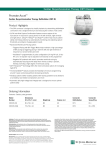
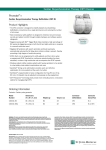
Anthem™ RF
Cardiac Resynchronisation Therapy Pacemaker
Product Specifications
PHYSICAL SPECIFICATIONS
Model
Telemetry
Dimensions (mm)
Weight (g)
Volume (cc)1
Connector
PARAMETER
Resynchronisation Therapy
QuickOpt™ Timing Cycle
Optimisation
RV and LV Pulse Width (ms)
RV and LV Pulse Amplitude (V)
RV Pulse Configuration
LV Pulse Configuration
Ventricular Sense Configuration
Ventricular Pacing Chamber
First Chamber Paced
Interventricular Pace Delay (ms)
Rate-Modulated
PM3212
RF
58 x 52 x 6
25
13,71
IS-1
SETTINGS
Sensed/Paced AV Delay; Interventricular Paced Delay
0,05; 0,1–1,5 in steps of 0,1
0,25–4,0 in steps of 0,25; 4,5–7,5 in steps of 0,5
Unipolar; Bipolar
Unipolar; Bipolar; LV Tip-RV Ring; LV Ring-RV Ring
BV Unipolar Tip; BV Bipolar; RV Unipolar Tip; RV Bipolar;
LV Unipolar Tip; LV Bipolar; RV Unipolar Ring; LV Tip-RV Tip
BV; RV only; LV only (temporary mode)
Simultaneous2; RV; LV
10–80 in steps of 5
Negative AV
Hysteresis Search (ms)
Shortest AV/PV Delay (ms)
Atrial ACap™ Confirm
Primary Pulse Confirmation
Backup Pulse Confirmation
Backup Pulse Amplitude (V)
Searchable Intervals (hrs)
Atrial Pulse Configuration
Atrial Sense Configuration
Atrial Sensitivity3,4 (Fixed) (mV)
Atrial Pulse Amplitude (V)
Atrial Pulse Width (ms)
RVCap™ Confirm
Searchable Interval (hrs)
LVCap™ Confirm
Searchable Interval (hrs)
SenseAbility™ Technology
A Max Sensitivity (mV)
V Max Sensitivity (mV)
Threshold Start
Decay Delay (ms)
Ventricular Sensitivity (fixed) (mV)
DDT Trigger5
DDT Timing5
Base Rate (min-1)
Hysteresis Rate (min-1)
Search Interval (min)
Cycle Count
Intervention Rate (min-1)
-1
Intervention Duration (min )
Recovery Time
Rest Rate (min-1)
Maximum Tracking Rate (min-1)
Sensed AV Delay (ms)
Paced AV Delay (ms)
Ventricular Pace/Sense
Refractory7 (Fixed) (ms)
Atrial Pace Refractory
Atrial Sense Refractory
PVARP (ms)
Atrial Protection Interval (ms) 5
Far-Field Protection Interval (ms) 5
Off; Low; Medium; High
Off; Low; Medium; High
125–475 in steps of 25
On; Off; Passive
80–150 in steps of 5; 160-180 in steps of 10
Auto (-0,5); Auto (+0,0); Auto (+0,5); Auto (+1,0);
Auto (+1,5); Auto +(2,0); 1-7 in steps of 0,5
Auto (-1); Auto (+0); Auto (+1); Auto (+2); Auto (+3); 1-16
Very Fast; Fast; Medium; Slow
Fast; Medium; Slow; Very Slow
AF Management
AF Suppression™ Algorithm
Lower Rate Overdrive (min-1) 5
Upper Rate Overdrive (min-1) 5
No. of Overdrive Pacing Cycles
Rate Recovery (ms)
Auto Mode Switch
Off; On
10
5
15–40 in steps of 5
8; 12
Off; DDD(R) to DDI(R); DDD(R) to DDT(R); DDD(R) to VVI(R);
DDD(R) to VVT(R); VDD(R) to VVI(R); VDD(R) to VVT(R)
40-170 in steps of 5
Stored Electrograms
Off; -10 to -120 in steps of 10
25–50 in steps of 5; 60–120 in steps of 10
On; Off; Monitor
Bipolar
Bipolar
5,0
8; 24
Unipolar (tip–case); Bipolar (tip–ring)
Unipolar Tip (tip–case); Bipolar (tip–ring); Unipolar Ring (ring–case)
0,1–0,5 in steps of 0,1; 0,75–2,0 in steps of 0,25; 2,5–5,0 in steps of 0,5
0,25–4,0 in steps of 0,25; 4,5–7,5 in steps of 0,5
0,05; 0,1–1,5 in steps of 0,1
On; Off; Monitor
8; 24
On; Off; Monitor
8; 24
Off; On (Automatic Sensitivity Control adjustment for atrial and
ventricular events)
0,2-1,0 in steps of 0,1
0,2-2,0 in steps of 0,1
(Atrial and Ventricular Post-Sense) 50; 62,5; 75; 100%
(Atrial Post-Pace) 0,2-3,0 in steps of 0,1 mV
(Ventricular Post-Pace) Auto; 0,2-3,0 in steps of 0,1 mV
(Atrial and Ventricular Post-Sense) 0; 30; 60; 95; 125; 160; 190; 220
(Atrial Post-Pace) 0; 30; 60; 95; 125; 160; 190; 220
(Ventricular Post-Pace) Auto; 0; 30; 60; 95; 125; 160; 190; 220
0,5-12,5 in steps of 0,5 3,4
Rate/Timing
Mode
(GMCRM769EN)
Slope
Reaction Time
Recovery Time
AMS Base Rate (min-1)
Output/Sensing
A00(R); AAI(R); AAT(R); VOO(R); VVI(R); VVT(R); DOO(R);
DVI(R); DDI(R); DDT(R); DDD(R); VDD(R); Pacing Off
R wave
DDI
30–130 in steps of 5; 140–170 in steps of 10
Off; 30-150 in steps of 56
Off; 1; 5; 10; 15; 30
1–16
Off; Same Base Rate; 80-120 in steps of 10 (Intrinsic +0;
Intrinsic +10; Intrinsic +20; Intrinsic +30)
1–10
Fast; Medium; Slow; Very Slow
Off; 30-150 in steps of 5
90–130 in steps of 5; 140–180 in steps of 10
25; 30–200 in steps of 10; 225–325 in steps of 25
25; 30–200 in steps of 10; 225–300 in steps of 25; 350
125; 160-400 in steps of 30; 440; 4708
190-400 in steps of 30; 440; 4708
93; 125; 157; 190-400 in steps of 30; 440; 4708
125–500 in steps of 25
125
16
1 ± 0,5 cc
2 LV first with 10 ms interventricular delay.
3 Sensitivity is with respect to a 20 ms haversine test signal.
4 Values 0,1-0,4 not available in a Unipolar Sense Configuration.
5 This parameter is not programmable.
6 The highest available setting for hysteresis rate is 5 min-1 below the programmed base rate.
7 In dual-chamber modes, the maximum Ventricular Refractory Period is 325 ms.
8 Programming options dependent on pacing mode.
9 During atrial NIPS in dual-chamber modes, the shortest Coupling Interval will be limited by the programmed AV/PV Delay.
10 S1 Burst Cycle is applied at the preprogrammed S1 cycle length.
Customer Support: 46-8-474-4756
Brief Summary: Prior to using these devices, please review the Instructions for Use for a complete listing of
indications, contraindications, warnings, precautions, potential adverse events and directions for use. Devices
depicted may not be available in all countries. Check with your St. Jude Medical representative for product availability
in your country. Unless otherwise noted, ™ indicates that the name is a trademark of, or licensed to, St. Jude
Medical or one of its subsidiaries. ST. JUDE MEDICAL, the nine-squares symbol and MORE CONTROL. LESS RISK.
are registered and unregistered trademarks and service marks of St. Jude Medical, Inc. and its related companies.
©2011 St. Jude Medical, Inc. All rights reserved.
Item GMCRM769EN
Rate Responsive AV/PV Delay
Rate Responsive PVARP/VREF
Shortest PVARP/VREF
Sensor
Max Sensor Rate (min-1)
Threshold
Options
Priority Options
Channel
Triggers
Advanced Hysteresis
AMS Entry/AMS Exit/
AMS Entry and Exit
AT/AF Detection
Magnet Response
High Atrial Rate
Rate (min-1)
No. of Consecutive Cycles
High Ventricular Rate
Rate (min-1)
No. of Consecutive Cycles
PMT Termination
Consecutive PVCs
No. of Consecutive PVCs
Noise Reversion
Off; Low; High
1; 2; 3
Off; Low; High
Off; Low; High
Off; Low; High
Off; Low; High
Off; Low; High
125-300 in steps of 25
2; 3; 4; 5; 10; 15; 20
Off; Low; High
125-300 in steps of 25
2; 3; 4; 5; 10; 15; 20
Off; Low; High
Off; Low; High
2; 3; 4; 5
Off; Low; High
Other
Magnet Response
Ventricular Intrinsic
Preference, VIP™ (ms)
VIP Search Interval
VIP Search Cycles
of the Atrial Tachycardia
Detection Rate (min-1)
Post Vent. Atrial Blanking
(PVAB) (ms)
Ventricular Safety Standby
PVC Response
PMT Options
PMT Detection Rate (min-1)
Lead Type
NIPS Options
Stimulation Chamber
Coupling Interval9 (ms)
S1 Count
S110 ; S2; S3 and S4 Cycle (ms)
Right Ventricular
Support Rate (min-1)
Sinus Node Recovery Delay (s)
Diagnostic Trends
Off; Battery Test
Off; 50–150 in steps of 25; 160-200 in steps of 10
30 sec.; 1; 3; 5; 10; 30 min.
1; 2; 3
110–200 in steps of 10; 225–300 in steps of 25
60-200 in steps of 10; 225; 250
Off; On
Off; Atrial Pace 8
Off; Passive; Atrial Pace8
90–180 in steps of 5
Uncoded; Unipolar; Bipolar
Atrial; Right Ventricular
200-800 in steps of 10
2-25 in steps of 1
Off; 100–800 in steps of 10 (Fixed or Adaptive)
Off; 30-95 in steps of 5
1-5 in steps of 1
AT/AF Activity; Exercise; Lead Impedance; P and R Wave; A and V threshold
Patient Notifiers
Programmable Notifiers (On; Off)
Device Reset
Entry into Backup VVI Mode
Audible Duration (sec)
Number of Audible Alerts
per Notification
Number of Notifications
Time Between Notifications (hours)
Device at ERI; Atrial Lead Impedance Out of Range;
Ventricular Lead Impedance Out of Range; LV Lead Impedance
Out of Range; AT/AF Burden; AT/AF Episode Duration;
High V Rate During AT/AF
On
On
2; 4; 6; 8; 10; 12; 14; 16
2
1–16
10; 22