1
Apeks Regulator Service and Repair Manual
14
14. Loosen the vise to turn the first stage over, and re-secure it so that the
HP balance plug faces straight up. Apply a torque wrench with 6mm
hex key socket to tighten the balance plug to a torque measurement of
12 foot-lbs.
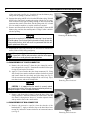
15. Reposition the first stage inside the vice and secure it with the connector (Yoke or DIN) facing straight up. Apply a torque wrench with
a w" box wrench torque adapter (Yoke) or 6mm hex key socket (DIN).
(see Fig. 11.) Tighten the connector to 12 foot-lbs.
16. Loosen the vice to remove the first stage, and remove the vise mounting tool. Install all O-rings(9&18) onto all hoses and port plugs(8&17).
Install all LP and HP hoses and port plugs into the valve body, and
tighten the port plugs clockwise until snug. Apply a torque wrench
with respective crow foot to tighten each hose at the first stage fitting
to a torque measurement of 40 (±5) inch-pounds.
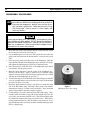
Figure 11
Torqueing Yoke Connector
FINAL ADJUSTMENT AND TESTING PROCEDURES
1. Connect the intermediate pressure test gauge either to a quick-disconnect inflator hose, or to the female fitting of a second stage LP
hose, depending on the connection of the test gauge. Check to ensure
there are no open ports and that all hoses are securely connected at
both ends, with no open fittings.
Before testing intermediate pressure, it is important to connect the first
stage to a fully assembled and properly adjusted second stage. This
will provide a safety relief valve if the intermediate pressure exceeds
155-170 psi. If a properly adjusted second stage is not available, be
sure to open the bleed valve of the test gauge before pressurizing. Failure to relieve intermediate pressure in excess of 400 psi may result in
damage to the test gauge or LP hose.
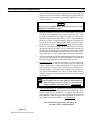
2. Check to ensure that the first stage spring adjuster(1) is correctly set
to its preliminary adjustment; exactly flush with the top of the diaphragm cap(2). (See Fig. 12.)
3. Connect the first stage to a filtered air source of 500 psi, and slowly
pressurize the first stage. While closely monitoring the IP test gauge
to ensure that the intermediate pressure does not rise above 120 psi,
slowly turn the knob of the bleed valve clockwise until it is completely shut.
If a second stage is not connected to the first stage and the intermediate pressure rises above 200 psi, immediately reopen the bleed valve of
the test gauge and shut off the air supply. Refer directly to Table 3 Troubleshooting, and remedy as needed before proceeding further.
4. When the intermediate pressure has stabilized below 120 psi, apply a
6mm hex key to turn the spring adjuster clockwise in small increments of adjustment. While turning the spring adjuster, it is impor-
Figure 12
Adjustment Screw Pre-setting