1
v)
8
t
3Q
I
The 1995 Oldsmobile Cutlass Supreme! Owner’s Manual
.....................................
........................
...
How to Use this Manual
:.
.~II
This section tells you how to use your manual and includes safety and vehicle damage warnings
and symbols.
Seats and Restraint Systems
1-1
This section tells you how to, use your seats and safety belts properly.
It also explains the “SRS’;.system.
2-1
Features and Controls
This section explains howto start and operate .your Oldsmobile.
3- 1
Comfort Controls and Audio Systems
This’section tells you how to adjust the ‘ventilation and comfort conpols and how to operate your
audio system.
YourDrivingandtheRoad
4-1
Here you’ll find information and tips about the road and how to drive under different conditions.
5-1
ProblemsontheRoad
This section tells you what .to ifdoyou have a problem while driving, such as
a flat tire or
overheated engine, etc.
Service.and Appearance Care
6- 1
Here the manual tells you how to keep your Oldsmobile running properly and looking good.
7-1
Maintenanceschedule...
This section tells you when to perform vehicle maintenance and what fluids and lubricants to use.
Customer Assistance Information
8-1
get service publications.
This section tells you how to contact Oldsmobile for assistance and to
how
8-4.
It also gives you infomation on “Reporting Safety Defects” on page
9-1
Index
Here’s an alphabetical listing of almost every subject in this manual.
You can use itto quickly find
something you want to read.
...........................................................
................................................................
..................................................
...........................................................
...............................................................
..........................................................
............................................................
.....................................................
..............................................................................
We support voluntary
technician certification.
I
GENERAL MOTORS,GM'and the GM Emblem,
OLDSMOBILE and the OLDSMOBILE Rocket
Emblem areregistered trademarks of General Mators
Corporation.
WE SUPPORT
VOLUNTARY TECHNICIAN
CERTIFICATIONTHROUGH
National Institute for
AUTOMOTIVE
SERVICE
EXCELLENCE
* .! *. ..
This manual includesthe latest information at the
time it
was printed.We reserve the right to make changes in the L
product after, that time without further notice.
For
vehicles first sold in Canada, substitute the name
For Canadian Owners Who Prefer
"General Motorsof Canada Limked" for Oldsmobile
Division wheneverit appears in this manual.
French Language Manual:
Please keep this manual in your Oldsmobile,
so it will
be thereif you ever need it when you're on the road.If
you,sell the vehicle, please leave this manual itinso the
new owner canuseit.
Litho in U.S.A.
Part No. 22647449 A Second Edition
a
.
Aux propridtaires canadiens:Vous pouvez vous procurer
,
un exemplaire de ce guide en fransais chez votre
concessionaire ou au DGN Marketing Services Ltd.,
1500 Bonhill Rd., Mississauga, Ontario
-L5T 1C7.
'Copyright General Motors Corporation 1994
All Rights Reserved
I
'
.
./
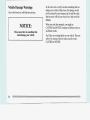
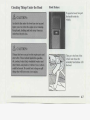
Vehicle Damage Warnings
Also in this book you will find these notices:
NOTICE:
These mean there is something that
could damage your vehicle.
In the notice area, we tell
you about sometlung that can
damage your vehicle. Many times, this damage would
not be covered byyour warranty, andit could be cos'tly.
But thenotice'will teil you what to do to help avoid the
damage.
When youread other'manuals, you might see
CAUTION and NOTICE warningsin diffei-ent colors or
in different words.
You'll also see warning labels on your vehicle. They use
yellow for cautions, bluefor notices and thewords
CAUTION or NOTICE.
.
I
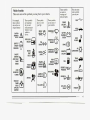
3.
For example,
these sym%ols
are used on an
original battery:
CAUTION
POSSIBLE
INJURY
A
These symbols
are important
for you and
your passengers
whenever your
vehicle is
driven:
z: A
;p
CAUSTIC
POWER
WINDOW
SPARK OR
FLAME
COULD
EXPLODE
BATTERY
n-
HAZARD
WARNING
FLASHER
WINDSHIELD
WASHER
6$
e
I
pf
A
=
=o
HIGH
LAMPSoR
BEAM
,I#$,
FOG LAMPS
30
'
BAllERY
CHARGING
SYSTEM
BRAKE
WINDSHIELD
DEFROSTER
RADIATOR
COOLANT
,I-1
RADIO
VOLUME
ak
(a)
a 43
CONDITIONING
AIR
REAR
WINDOW
DEFOGGER
VENTILATING
.
FAN
SPARKS OR
FLAMES
FUSE
WINDSHIELD
WIPER
TURN
SIGNALS
BURNS
These symbols
are on some of
your controls:
These symbols
have to do with
your lights:
'r'-4
PROTECT
EYES BY
SHIELDING
Here are some
other symbols
you may see:
These symbols
are used on
warning and
indicator lights:
Vehicle Symbols
These are some of the symbols you may find on your vehicle.
b
ENGINE OIL
PRESSURE W
.
TEMP
ANTI-LOCK
BRAKE
h
LIGHTER
k
OIL
(@)
SPEAKER
b
V
I
.
‘
.
lllll
11)1
Section 1 Seats and Restraint 'Systems
Here you'll find information about the seats in your
Oldsmobile and how to use your safety belts properly.
You can also learn aboutsome things you should not do
with air bags and safety belts.
Seats and Seat Controls
This section tells you how to adjust the seats and explains
reclining seatbacks, folding rear seats and head restraints.
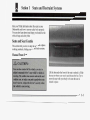
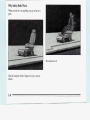
Manual Front Seat
Lift the bar under the front
of the seat to unlock it. Slide
the seat to where you want it and release the bar. Try to
move the seat with your body to be sure the seat is
locked in place.
1-1
Power Seat (Option)
Reclining Front Seatbacks(2-Door Models)
.:
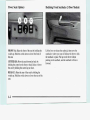
FRONT (A): Raise thefront of the seatby holding the
switch up. Hold the switch'down to lower the front of
the seat.
CENTER (B): Move the seatforward or back by
holding the control to the front or back. Raise or
lower
the seatby holding the control up or down.
REAR (C): Raise the rearof the 'seatby holding the
switch up. Hold the switch down lower
to
the rearof the
seat.
Lift the lever to release the seatback, then move the
seatback'to where you wantit. Release the lever to
lock
the seatbackin place: Pull up on the lever withyut
pushing on the seatback, andthe seatback will move
forward.
'
.Reclining Front Seatbacks
(4-DOor Models)
Lift the leverto release the seatback, themmove the
seatback to whereyou want it. Release the lever to
lock
the seatback in place. Pull up
on the lever without
pushing on the seatback,and the seatback will move
forwgrd.
1-4
.
,
But don’thave/,aseatback reclined: if your vehicle is
moving.
I
Seatback Latches (2=Door,Models)
The front seat folds forward
to let people get into the
back seat. Your seatback
will move back andforth
freely, unless YQU come to a
sudden stop. Thenit will
lock in place.
I
If your vehicleis parked facing downa fairly steephill,
the seatback may not fold without some help
from you.
To fold thelocked seatback forward, push the seatback
toward the rear andlift this latch. Then the seatback will
fold forward. The latch must be down for the seat to
work properly.
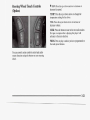
Head Restraints
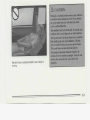
Slide the head restraint upor down so that the topof the
restraint is closest to the topof your ears. This position
reduces the chanceof a neck injuryin a crash:
/'
,
.
.
. .
I
Split Folding Rear Seat (Option)
Safety, Belts:They’re for Everyone
‘Thispart of the manual tells you how to use safety bel&
properly. It qlso tells yousome things you’,shouldnot do
with safety beltsi
And it explains the Supplemental Restraint System, or
“air bag’”system.
I ’
,
’ ,
.
.
I
Your vehicle has alight-that
comes on as,areminder to
buckle up. (See “Safety Belt
Reminder Light” in the
Index.)
In many states andCanadian provinces, the law says to
wear safety belts. Here’s why:They work.
You never knowif you’ll be,in a crash.If you do have a
crash, you don’t know
if it will be a badone.
A few crashes are mild, and some crashes canbe so
serious that even buckled
up a person wouldn’t survive.
But most crashes arein between. In many of them,
people who buckle up can survive andsometimes walk
away. Without beltsthey could have been badly hurtor
killed.
After more than25 years of safety belts in vehicles, the
facts are clear. Inmost crashes bucklingup does matter
... a lot!.
,
1-7
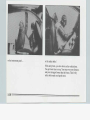
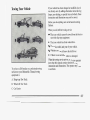
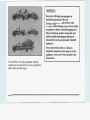
Put someoneon it.
Take the simplest vehicle. Suppose it’s
just a seat on
wheels.
1-8
I'
Get it up to speed.Then stop the vehicle.The rider
doesn't stop.
The person keeps going until stoppedby something.
In a real vehicle,it could be the windshield...
.
1-9
Here Are Questions Many People Ask @
About Safety Belts-- and the Answers
A:
&: Won’t I be trappedin the vehicle after an
accident ifI’m wearing a safety belt?
A:
You could be, -- whether you’re wearing a safety 1
belt or not. But you can unbuckle a safetybelt,
even if you’re upside down. And yourchance of
being conscious during and after an accident, so
you can unbuckle and get out, ismuch greater if
you are belted.
&.’ Why don’t theyjust put in air bagsso people
won’t have to wear safety belts?
A:
If I’m,a good driver, andI never drive far from
home, why shouldI wear safety belts?
You may be an excellent driver,but if you’re in an
accident -- even one that isn’t your fault-- you and
your passengers can be hurt. Being a good driver
doesn’t protect youfrom things beyond.your
control, such as bad drivers.
Most accidentsoccur within 25 miles (40 km)of
home. And the greatest number
of serious injuries
and deathsoccur .at speeds of less than 40 mph
(65 km/fi).
Safety belts arefor everyone.
Air bags are in many vehicles today and will be in
more of them in the future.But they are
supplemental’systemsonly; so they work with
,safety belts-- not instead of them. Everyair bag
system ever offered for sale has requiredthe use of
safety belts.Even if you’re in a vehicle that has air
bags, you stillhave to buckle up to getthe most
protection. That’s truenot only in frontal collisions,
but especially inside and other collisions.
1-11
,
I
I
How to ,Wear Safety Belts Properlv
Adults
This part is anly for people of adult size.
Be aware that there are special
things,to know about
safety, belts and children. And there are different rules
for smaller children and babies.
If a child will be riding,
in your, Oldsmobile, .see the part
of this manual called
“Children.” Follow those rules
for everyone’s
protection.
’
I
,
First, you’ll want to
&ow which restraintlsysterns your
vehicle has.
We’ll start withthe driver position.
Driver
Position
.
This part describes the driver’s restraint system.
Lap-Shodder Belt
,
The driver hasa’lap-shoulderbelt. Here’show to wear it
properly.
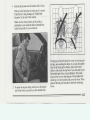
slowly.
1. Close and lock the door.
’
2.- ‘Adjustthe seat (tosee how, see “Seats” in the Index)
so you can sit up straight.
,
-1-12
I
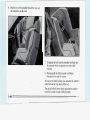
3. Pick up the latch plate and pull the belt across you.
Don’t letit get twisted.
The shoulder belt may lock
if you pull thebelt across
you very quickly.If this happens,let the beltgo back
slightly to unlockit. Then pull the belt across’
you
more
\
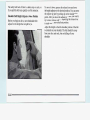
The safety belt locks if there's a sudden stop or crash, or
To move it down, squeeze the release lever and move
ifyoupullthebeltveryquicklyoutoftheretractor.theheightadjustertothedesiredposition.Youcanmove
the adjuster Up just by pushing up on the shoulder belt
ShoulderBeltHeightAdjuster (4-DOOr Models)
guide.Afteryoumovetheadjustertowhereyouwantit,
Beforeyoubegin to drive,movetheshoulderbelttrytomove
adjuster to the
height
that
is right for you.
to
make
sure
it downwithoutsqueezingthereleaselever
it has
locked into position.
Adjust the heightso that the shoulder portionof the belt
is centered onyour shoulder. Thebeltihould be away
from your face and neck, but not falling off your
shoulder.
I
. "
..
.
.
I
t:
'
E
.
.
. . >.
* -
@
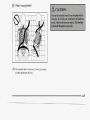
What'syrong with this?
A:
The shoulder belt is too loose. It won't give nearly
as much protection this way.
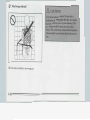
&." What's wrong with this?
'I
I
'
I
I
A:
1
The belt is .twisted across the body.
1-18
'
.'
I
1
There is an air bag readiness
light on the instrument
,
-panel, which shows AIR
BAG or the-airbag symbol.
The s.ystem checks theair
bag’s electrical systemfor
malfunctions. The light tells
you if there is an electrical
,problem. See “AirBag
Readinkss Light”in the .
I Index for more bformation.
’
.
\
,
,
i
..
.
-,
..
c:
.
... ,, .” 3
~
,
J
1-20
i
.
.
Howdoesan
air bagrestrain?
.*-=
In moderate to severe frontal or near-frontal collisions,
even belted occupants can contact the steering wheel or
the instrument panel. The air bag supplements the.
protection provided by safety belts.Air bags distribute.
the force of the impact more evenly over the occupant’s
upper body, stoppingthe occupant more gradually. But,
air bags would not help you in many types
of collisions,
including rollovers and rear and
side impacts, primarily
because an occupant’s motionis not toward theair bag.
Air bags should never be regarded as anything more
than asupplement to safety belts,and then only in
moderate to severe: frontal
or near-fmptal collisions.
,
.
What will you see after an air bag inflates?.
After .the air bag inflates, it quickly- deflates.This occurs
so quickly that some people may not even realize the air
bag inflated. Some components of the air bag module in
the steering wheklhub for the driver’s air bag, or the
instrument panel for the right front passenger’s bag, will
be hot for a short time,.but the part of the bag that comes
into contact with you will not
be hot to thetouch.’There
will be some smoke and dustcoming fromvents in the
deflated>airbags. Air bag inflation will not.
prevent the
driver from seeing or from being able to steer the vehicle, nor will it stop people from leaving the vehicle.
I
In many crashes severe enoughto inflate an air bag,
windshields are broken by vehicle deformation.
Additional windshield breakage may also occur
from
the
.
.
right--frontpassenger air bag.
,
The air bags are designed to inflate only once.AfteT
they inflate,you’ll need some new parts for your air
bag system. If you don’t get them,the air bag syskm
won’t be there to help protect you in another crash.
A new system will include air bag modbles
and
possibly other parts.The service manual for your
vehicle c,overs the need to replace other parts.
.
0
Your vehicle is equipped with a diagnostic module,
Servicing Your Air Bag-Equipped
which recordsinformation about -the air bag system. Oldsmobile
The module recordsinformation about the readiness
Air bags affect how your Oldsmobile should be..
of the system, when the sensors are activated and
serviced. There are partsof the air bag systemin several
driver’s safety beltusage at deployment.
places around your vehicle.
,You don’t want the system
Let only qualified technicians work on your air bag to inflate while someoneis working on your vehicle.
system. Improper service can mean that your air bag Your Oldsmobile retailer and the1995 Cutlass Supreme
system won’t work properly.See your retailerfor
Service Manual haveinfomation about servicing. your
service.
vehicle andthe air bag system. To purchase a service
manual, see “Service Publications”
in the Index.
NOTICE:
If you damage the cover for the driver’s or the
right front passenger’s air bag, they maynot
work properly. You may haveto replace the air
bag module in the steering wheel or both the air
bag moduleand the instrument panel fop the
right front passenger’s air bag. Do not openor
break the air bag covers.
The air bag system does not need regular maintenance.
Safety Belt Use During Pregnancy
’
Safety belts workfor everyone, including prqgnant
women. Like ‘alloccupants, theyare more likely to.be’
seriously injuredif they don’t wear safety belts.
A pregnant woman should wear a lap-shoulder belt, and
the lap portion should be worn as lowas possible
throughout the pregnanky.
The best way to protect the fetusis to protect the
mother. When a safety belt is worn properly, it’s more
likely that thefetus won’t be hurt in a crash.For
pregnant women, asfor anyone, the key to making
safety belts effective is wearing them properly.
Right Front -Passenger
Position
The right front passenger’s safety beit works
the same
way as the driver’s safety belt.See “Driver Position,”
earlier in this section.
When the shoulderbelt is pulled out all the “way,
it will
lock. If it does, let it go back all theway and start again.
1-25
To make the belt shorter,pull its free end as shown until,
the beltis snug.
Rear Seat Passengers
It’s very important for rear seatpassengers to buckle up!
Accident statistics show that unbelted
people in the rear
seat are hurt more often in crashes than those who are
wearing safety belts.
Rear passengers who aren’t safety belted
c.an be thrown
out of the vehicle in a crash. And they
can strike others
in the vehicle who are wearing safety belts.
Rear Seat Outside Passenger Positions
(2-Door Models)
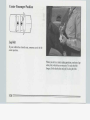
Buckle, position andrelease it the same way as the lap
part of a lap-shoulderbelt. If the beltisn’t long enough,
see “Safety BeltExtender” at theend of this section.
Make sure the release button on thebuckle is positioned
,soyou wouldbe able to unbuckle the safety belt quickly
if you ever had to.
u
If you have a four-door model, see “Rear Seat Outside
Passenger Positions(4-DOOr Models)” later inthis section.
~
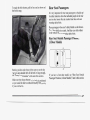
If .the belt stops before
it reaches the buckle,tilt the
.latch plate and keep pulling until you can buckle
it.
- -
Pull up on the latch plate to make sure
it is secure.
,
’
’
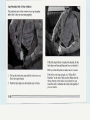
1. Pick up the latch plate and pull the belt across you.
Don’tlet it gettwisted.
2. Push the latch plate into the buckle untilit clicks.
I
,
If the belt is not long
enough, see “Safety Belt
Extender” at the endof this section. Make sure the
release buttonon the buckle is positioned so you
‘wouldbe able to unbuckle the safety belt quickly
if
you ever had to.
,
3. To make the lap part tight, pull down on thebuckle
end of the beltas you pull up on the shoulder part.
.
The lap part of the belt shouldbe worn low andsnug on
the hips, just touching the thighs.In a crash, this applies
force to the strong pelvic bones. And you’d
be less
likely to slide under the
lap belt. If you slid under it, the
belt would applyforce at youi abdomen. This could
cause serious or even fatal injuries. The shoulder belt
should go over the shoulder and across
the chest. These
parts of the body are best able to take belt restraining
forces.
The safety belt locks if there’s a sudden stop or a crash.
1-29
Rear Seat Outside Passenger Positions
@-DoorModels)
U
If you have a two-door model,see “Rear Seat Outside
Passenger Positions (2-Door Models)” earlier
in this
section.
Lap-Shoulder Belt (&Door Models)
The positions next to the windows have lap-shoulder
belts., Here’show to wear one properly.
.
\
To.-unlatkhthe belt, just push the buttonan the buckle,
1-30
,
. ,.
’..
.
,
21 ’ ’Push the latch plate intothe buckle untilit clicks.
Pull up on the latch plate to make sure
it is secure.
When the shoulderbelt is pulled out all the way, it
will lock.If it does; lit it go back all the way and
.start again.
If the belt is not longenough, see “Safety Belt
Extender” at the endof this section.
Make sure
button
the release
on the buckle is
positioned so you wouldbe able to unbuckle the
safety belt quicklyif you ever had to.
I
I
1. Pick up the latch plate and pull the belt across you.
Don’t let it get twisted.
I
.
The shoulder belt maylock if you pull the belt across
you very quickly.If this happens, let the belt go back
slightly to unlock it. Then pull the belt across you
more slowly.
3. To make the lap part tight, pull down on the buckle
end of the belt as you pull on
up the shoulder part.
. .
The lap partof the belt should be
.worn low and snugon
the hips,just touching the thighs.In a crash, this applies
force to the strong pelvic bones. And
you’d be less
likely to slide under the
lap belt. If you slid underit, the
belt would apply force at your abdomen.
This could
cause serious or even fatal injuries. The shoulder belt
should go over the shoulder andacross the chest. These
parts of the body are best able to take belt restraining
forces.
Rear Safety Belt Comfort Guides
for Children and Small Adults
(4-Door,Models)
seatback and the interior body, about half-way down the
edge of the seatback. Hereis how you should install the
comfort guides on the shoulder belts:
=
1. Pull the elastic cordout from between the edge or
Four-door models may have rear shoulder belt comfort guides.the seatback and the
interiorbody;to remove the
This feature will provide added comfort for children who haveguide from its storage clip.
outgrown child restraints and for small adults. Thecomfoc
guides pull the shoulder belts away from the neck and head.
2. Slide the guide under and past the belt. The elastic
cord must be underthe belt. Then, place the guide
There isone guide for each outside passenger position in
over the belt, and insert the two edges of the belt into
the rear seat.You will find them tucked in between the
the slots of the guide.
,
is twisted andit lies flat.
3. Be sure that the belt not
The elastic cord must be under the belt and the
guide on top.
.
4. Buckle the belt around the child, andsure
make
that both
the shoulder belt are secured properly.
the lap belt and
crosses the shoulder:
Make sure that the shoulder belt
See “Safety Belts, Rear Seat Passengers”
in the Index.
To-removeand store thecomfort guides, just perform
these stepsin reverse order.Squeeze the beltedges
together so that you cant&e them out from the guides.
Pull the guide upward toexpose its storage clip, and
then slide theguide onto the clip. Rotate the guide and
clip inward and in between the seatbackand the interioz‘
body, leaving only the
loop of elastic cordexposed.
’
Children
Children Smaller
Everyone in a vehicle needs protection!That includes
infants and all children smaller than
adult size. In fact,
the law in every statein the United States and in every
Canadian province says children
up to some agemust \be
restrained while ina vehicle.
\\
/
1-36
and Babies
Be sureto follow the instructionsfor the restraint.YOU
~,:$i
may find these instructionson the restraint itselfor in -a
.
booklet, or both. These restraints use the belt system in
, '
._.j;;jyour vehicle, but
the child also has to be secured within
:$;the restraint to help reduce the chance
of personal injury.
':@Theinstructions that come' with
the infant or child
Yjrestraint'will
.&
show youhow-to do that.
L.-3$&
,
'
..I.
?d
,
. #.e
I
,
. ,.<:' ^
Where to Put the-Restraint
accident statistics show that children are safer
if they
in the rear rather than the
front seat. We at
Motors therefore recommend that you put your
child restraint in the rear seat.
Never-puta rear-facing
child restraintin'the front passenger seat. Here'swhy:
.
,
Wherever you install it,
be sure to secure the child
restraint properly.
Keep iri mind that unsecured childFestraint can move
. around in a collision
or sudden stop and injure people
in
the vehicle.Be sure to properly secure any child
restraint in your vehicle-- even when no child is in it.
. i n
,
1-38
6. To tighten the belt, feedthe shoulder beltinto the
retractor while you push down the
on child restraint.
7. Push and pull the child restraint in different
directions to be sure
it is secure.
To remove the child restraint,
just unbuckle the vehicle’s
safety belt and let go
it back all theway. The safety belt
will move freely again and
be ready to work for an adult
or larger child passenger.
1-42
i
.
I
5. Buckle theielt. Make s&e the release, buttonis
positioned sd you would be .able to unbuckle the
&y
;<:;<&
safety belt quickly'if you ever. had
to.
.
. , '.
y,, "c".u,
$..l;;&;,r
&?,
,.
,?
'
g.::;!
A
, :<&
,
I
.
If the^ shoulder belt goes infront of the child’sface or
neck, putit behind the child restraint.
You’ll be using the lap-shoulder belt. See the earlier part
about the top strap if the child restraint has one.
1,
1. Because your vehicle has a rightfibnt passenger air
bag, always move the seat as far back asit will go
before securing aforward-facing child restraint. (See
“Seats” in the Index.)
2. Put the restraint on the seat. Follow the instructions
for the child restraint.
3. Secure the child in the child restraint asthe
instructions say.
4. Pick up the latch plate,:and run the lap and shoulder
portions of the vehic1e”s safety belt through or
around the restraint. The child restraint instructions
will show ypuhow.
5. Buckle the belt.
Make sure the release buttonis positioned so you
would be able to unbucklethe safety belt quicklyif
you ever: had
*,to.
1-45
I
-
.
the retractorto set the lock.
I
I
I
I
'
7. To tighten the belt, feed the shoulder belt back into
the retractor whileyou pu.sh. down on
the child
restraint.
8. Push.and pull the child restraintin different
directions to be sureit is secure.
To remove the child festraint,
just unbuckle the vehicle's
safety belt and let go
it back all theway.
The safety belt will move freely again
and be ready to
work for an adult or larger child passenger.
Children who; have outgrown child restraints should
wear the vehicle’s.safety belts.
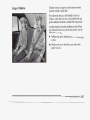
Larger Children
If,you have the choice, a child should
sit next to a
wihdow ‘so‘the child can wear a lap-shoulder belt and
getthe.additional restrainta shoulder belt can provide.
properly. belts
‘Accident statistics show that children are safer,i€they
are restrained in the rear seat. But they need to use the
safety
0 Children.who aren’t buckled up
Can be thrown out in
crash.
I.
, a ,
,
Children who aren’t buckledup .can strike other
people who. we.
1-47
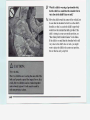
&.’ What if a childis wearing a lap-shoulder belt,
,
but the childis so small that the shoulder belt is
very close to thechild’s face or neck?
A:
i l
,
,
Move the child toward the center
of the vehicle, but
be sure that the shoulder belt still isthe
onchild’s
,-.
. 5 shoulder, so that in a crashthe child’s upper body,
:. .? would have the,restraint that belts provide.If the
see
child is sittingin a rear seat outside position,
Comfo~?Guides” in the Index.
“Rear Safety Belt,
If the child isso small thatthe shoulder belt isstill
very close to the. child’s face
or neck, you might
want to placethe child in the center seat position,
only a lap belt.
the one that has
,”%
v2
Wherever the child sits; the lap portion
of the belt
should beworn low and snug on the hips, just touching
the child’s thighs.This applies beltforce to the child’s
pelvic bonesin a crash.
I
1-49
.
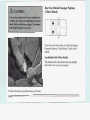
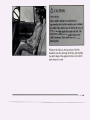
I Safety Belt Extender
If the vehcle’s safety belt will fasten around you,
you
should’use it.
But if a .safety beltisn’t long enough to fasten, your
retailer wi1.l order you an extender. It’s free. When you
go in to orderit; take the heaviest coatyou will wear,so
the extenderwill be 1ong.enoughfor you. The extender
will bejust for you, andjust for the seatin your vehicle
that you choose. Don’t let someone
else use it; anduse it
only forthe seat ‘itis made tofit. To wear it,just attach it
to the regular safety belt.
Checking ,Your Restraint Systems
Now and then, make sure all your belts, buckles, latch
plates, retractors,anchorages and reminder systems are
working properly.Look for any other loose or damaged
restraint system parts. If you see anything that might
keep a restraint system from doing
its job, have it
repaired.
Torn or frayed belts may not protect you
in a crash.
They can rip apart underimpact forces. If a beltis torn
or frayed, get new
a one right away.
1-50
,
,
.Replacing Seat,and Restraint System
”Parts After, a Crash
If you’ve had a crash,
do you need new belts?
After a very minor collision, nothing
may be necessary.
But if the belts were stretched,
as they would beif worn
during a more severe crash, then you need
new belts.
If belts are cut or damaged, replace them. Collision
damage alsomay mean you will need to have safety belt
or seat parts repaired or replaced.
New parts and repairs
may be necessary ,even if the belt wasn’t being used at
the timeof the collision.
I
Section 2 FeaturesandControls
Here you can learn about the many standard and
optiond features on yourOldsmobile, and information
on starting, shifting and braking.
Also explained are the
instrument panel andthe warning systems that tell you if
everything is working properly-- and what todo if you
have aproblem.
Keys
2-1
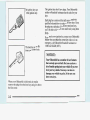
The ignition keys are
for the ignition only.
'
.
.
\
I
'. ..
'
.
.
.
..
.
\..
The door keys are €or the.
doors and all other locks.
The ignition keys don't have plugs.
Your Oldsmobile
retailer or Roadside Assistance
ha
keys.
Each plug hasa code on it that tells. your retailer or a
qualified locksmithhow to make extra door keys. Keep
the plugs in a safe place.
If you lose your door keys,
you'll be able to havenew ones made easily using these
plugs.
If you need a new ignition key, contact your Oldsmobile
retailer who can obtain the correct key code, or,
an in
emergency; call Oldsmobile Roadside Assistance at
1.-80?-442-OLDS (6537).
NOTICE:
. '
Your Oldsmobile has a number of new features
that canhelp prevent theft. But you can have a
lot of trouble getting into your vehicle if you ever
lock your keys &side. You may even have to.
damage your vehicle to get So
in. be sure you
have 'extrakeys.
-
When a new Oldsrnobile is delivered, the retailer
removes the plugsfrom the door keys and gives them to,
the first owner.
'
..
1
2-2
I
Door Locks
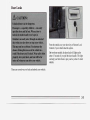
Fmm the outside, use your door key or Remote Lock
Control, if your vehicle has this option.
On two-door models, thedoor lock will light up for
about 15 seconds. if you pull
the dbor handle. The light
can help you find where toput your key, when it’s dark
outside.
There we several ways tolock and unlock your vehicle.
2-3
I
. .
Automatic Door Locks
Just close’your doors and turn on the ignition. All.
of the
doors will.lack when you move your shift1,everout of’
PARK (P) or NEUTRAL (N). All doors willunlock
automaticallywhentheignitionisturnedoff.
. .
If someone needs to get out
while the vehicleis running,
have that person use the manual
or power lock. When
the door is closed again,it will lock automatically
as long as the shiftlever is out of PARK (P) or
NEUTRilL (N) and the ignition ison. Note that’the
door must be opened, then closed, or the door ‘will not
automatically relock.
From the inside, push the lever down
to lock the door.
,Tounlock, push the iever up.
Power Door Locks
If you don’t want the doors to unlock automatically
when you turn the ignitionoff,,you can remove the Lock
Contro€’fusein the instrument.pane1 fuse block.
See
“Fuses andCircuit Breakers” in the Index.
Leaving Your Vehicle
Press the power door lock switch to lock or unlock all
If you are leaving the vehicle, take your keys, open your
doors.
door and set the locks from inside. Then get and
out
On four-door models, the reardQorsdo not have power
close the door.
door lock switches.The lever on each rear door works
only that door’s lock.It won’t lock or unlock all the
doors.
I
Remote Lock Control (Option)
If your Oldsmobile has this option, youcan lock and
unlock yourdoors or unlock your truqk from up to
30 feet (9 m) away using the keychain transmitter
supplied withyour vehicle.
Your Remote Lock Control operates on a radio
frequency subject to Federal Cornmanications
Commission (FCC) Rules.
This device complies with Part 15 of the FCC Rules.
Operation is subject tothe following two conditions:
(1) This device may not cause harmful interference, and
(2) This device must accept any interferenc'ereceived,,
including interference that, may
cause undesired
operation.
Should interference to this system occur, try this:
Check to -determine
if battery replacement is
necessary.'See the instructions on battery
replacement.
Check the distance.You may be too -farfrom your
vehicle. This product has a maximummnge.
Check the location.Other vehicles or objects mavbe
blocking the signal.
See your Oldsmobile retailer or a qualified
technician for service.
Changes or modificationsto this system by other than an
authorized service facilitycould void authorization to
use thisequipment.
2-5
Operation
Matching
Transmitter(s) To Your Vehicle
Press UNLOCK once to
unlock the driver’s door.
Press UNLOCK again
within five seconds to
unlock. all the doors.
The
interior lamps willcome
on (see “Illuminated
Entry” in the Indexfor
more details).
To lock all doors, press DOOR.To unlock thetrunk,
press the trunk symbol on
the transmitter. The trunk will
only unlockif your transaxleis in PARK (P) and your
ignition is in LOCK, OFF or ACC.
Each key chain transmitter
is coded to prevent another
transmitter from unlocking your vehicle.If a transmitter
is lost or stolen, a replacement
can be purchased through
your retailer. Remember to bring any remaining
transmitters with you when you
go to your retailer.
When the retailer matches the replacement transmitter
to
your vehicle, the’remaining transmitters must
also be
matched. Once the new transmitter
is coded, the lost
transmitter will not unlock your vehicle.
You can match a transmitter to as many different
vehicles as you -own, provided they are equipped with
exactly the same model system. (Genezal Motors offers
several different ,models
of these systems on their
vehicles.) Each vehicle can have only
two transmitters
matched toit.
See your retailer to match transmitters to another
vehicle.
..
-6
Y.
.
.
_ .
Battery Replacement
Under no&al use, the batteries in your key chain
transmitter should last about two years.
You can tell the batteries are weakif the transmitter
won't work at the normal
range i'n any location. If you
have to get close to your vehicle before
the transmitter
works, it's probably time to change the batteries.
To replace your batteries:
1. Insert aflat object like a dime into the slot on the
back of the transmitter.'Gently pry apart the front
and back.
2. Gently pry the batteries outof the transmitter.
3: Put the new batteries intothe transmitter as shown
on the transmitter. UseDuracella batteries,, type
DL2016, or equivalent.
Make sure the
4. Put the two halves back together.
halves are together tightlyso water won't get in.
5 . Test the transmitter.
2-7
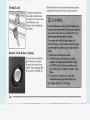
Trunk Lock
,
To unlockthetrunk from
the outside, insert the door
key and turnit. You can also.
use the RemoteLock
Control, if your vehiclehas .
this' option.
. .._
'
,
Remote Trunk Release (Option)
,
1
Remember that your trunkcan be opened at any time
using this lock release. Be sure. tolock your doors.
,
Press the button behind the
glove-boxdoor to unlock
the trunk from inside your
vehicle. Your transaxle shift
lever must be in PARK (P).
Glove Box
Key in the Ignition
If you walk awayfrom your vehicle with the
keys
inside, it’s an easy target€orjoy riders or professional
thieves -- so don’t do it.
When you paik your Oldsmobile and open the driver’s
door, you’ll hear a chime reminding you to remove your
key from the ignition and take
it with you. Always do
this. Your steering wheel will be locked, and
so will your
igmtion and transaxle.And remember to lock the doors.
Parking at Night
Park in a lighted spot, close all windows and
lock your
vehicle. Remember tokeep your valuables outof sight.
Put them in a storagearea, or take them with you.
Use the door key to lock and unlock the glove box..To
open, lift the latch.
Theft
..
Vehicle theft is big business, especiallyin some cities.
Although yourOldsmobile has anumber of theft
deterrent features, we know that
nothing we put onit
can make it &possible to steal. However, there are ways
you can help.
Parking Lots
If you park in a lot where someone will
be watching
your vehicle, it’s best to
lock it up and take your keys.
But-whatif you have to leave your ignition
key? What if
you have to leave something valuable in your vehicle?
0
0
Put your valuables in a storage area, like yourtrunk
or glove box.
Lock the glove box.
Lock all the doors except the driver’s.
Then take the door key with you.
2-9
’
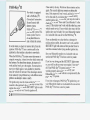
PASS-Key@II
r
J
Your vehicle is equipped
with the PASS-Key’II
(Personalized Automotive
Security System) -theft
deterrent system.
PASS-Key’II is a passive
theft deterrent system. This
means you don’t have to
do anything different to
arm or disarm the system.
q
Clean and dry the key. Wait about three minutes and try
again. The security light may remain on during this
time. If the starter still won’t work, and the key appears
to be clean and dry, wait about three minutes and try
another ignition key. At this time, you may also want to
check the fuses (see “Fuses and Circuit Breakers” in the
Index). If the starter won’t work with the other key, your
vehicle needs service. If your vehicle does start, thefirst
ignition key may be faulty.See your Oldsmobile retailer
or a locksmith who can service the
PASS-Key’II.
If you accidentally use a key that has a damaged or
missing resistor pellet, the starter‘won’t work, and the
SECURITY light will come on. But you don’t have to
wait three minutes before trying another ignition key.
It works when you insert or remove the key from the
ignition. PASS-Key’II uses a resistor pelletin the
ignition key that matches a decoder in your vehicle.
See your Oldsmobile retailer or a locksmith who can
When the PASS-Key@II system senses that someone
is
service the PASS-Key@II
to have a new key made.
using the wrong key, it shuts down the vehicle’s starter and
If you’re ever driving and the SECURITY light comes
fuel systems. For about three minutes,
.the starter won’t
on, you will be able to restart your engine if you turn
it
work and fuel won’t go to the engine. If someone tries
to
off. Your PASS-Key’II system, however, is not
start your vehicle againOr uses another key during this
working properly and must be serviced by your
time, the vehicle will notstart. This discourages someone
from randomly trying different keys with different resistor Oldsmobile retailer. Your vehicle is not protected by the
PASS-Key@II system.
pellets in an attempt to make a match.
If you lose or damage a PASS-Key@II ignition key, see
The ignition key must be clean and dry before it’s
your Oldsmobile retailer or a, locksmith who can service
inserted in the ignition dr the- engine may start.
not If the
engine does not start and the SECURITY light is on, the PASS-Key@II to have a new key made.
key may be dirty or wet. Turn the ignition off.
2-10
. . .
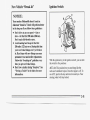
New Vehicle “Break-In”
Ignition Switch
C
NOTICE:
Your *modern Oldsmobile doesn’t need
an
elaborate “break-in.” But it will perform better
in the long run if you follow these guidelines:
0 Don’t drive at any one speed fast or
slow for the first 500 miles (804 km).
Don’t make full-throttle starts.
0 Avoid making hard stops for the f i s t
200 miles (322km) or so. During this time
’
your new brake linings aren’t yet broken
in. Hard stops withnew linings can mean
premature wear and earlierreplacement.
Follow this “breaking-in” guideline every
time you get newbrake linings.
0 Don’t tow a trailer during “break-in.” See
“Towing a Trailer” in the Index for more
information.
--
0-
. .
With the ignition key in the ignition switch, you can turn
the switchto five positions:
ACC (A): This position lets you use thingslike the
radio and windshield wipers when the engine
is off. To
use ACC, push in the key and turnit toward you.Your
steering wheel will stay locked.
3-1I
I
.
I
.
LOCK: Before youput the key into the ignition switch,
the switch'is in LOCK. It's also the only position in
which you can remove your
key. This position locks
your ignition, steering wheel and transaxle.
It's a
theft-deterrent feature.
OFF (B): This position lets you turn off the engine but
still turn the steering wheel.It doesn't lock the steering
OFF if you must have your
wheel like LOCK. Use
vehicle pushed or towed.
RUN (C): This position is where the key returns after
you start your vehicle. With the
engine off,.you can use
RUN to display someof your warning and indicator
lights.
START (D): T ~ position
S
starts your engine.
A wafning chime willsound if you open the driver's
door when the ignitionis in OFF, LOCK or ACC and
the key is i n the ignition.
"
1
i
'
"I
I
To start your engine:
1. Without pushing the accelerator pedal, turn your
ignition key to START. When the engine starts, let
go of the key The idle speed will go down as your
engine gets warm.
NOTICE:
--
Holding your key in START for longer than
15 seconds at a time will cause your battery to be
drained much sooner. Andthe excessive heat can
.damage your starter motor.
NOTICE:
Your engine is designed to work with the
electronics in your vehicle. If you add electrical
parts oraccessories, youcould,changethe way
the fuel injection system operates. Before adding
electrical equipment, check with your retailer. If
you don’t, your engine might not perform
properly.
If you ever have
to have your vehicle towed, see
the part of this manual that tells how to do it
without damaging your vehicle. See “Towing
Your Vehicle”in theIndex.
.
2. If-yourengine won’t staq (or starts but then stops),
it could be flooded with too much gasoline.Try
pushing your accelerator pedalall the way to the
floor and holdingit there as you hold the key in
START for about three sec,onds.If the vehicle starts
briefly but then stops again,do the same thing, but
this time keep the pedal downfor five or six seconds.
This clears the extra gasolinefrom the engine.
2-13
\.
.
\
Driving Through Deep Standing Water
NOTICE:
If you drive too quicklythrough deep puddlesor
standing water, water can come in through your
engine’s air intake and badly damage your
engine. Neverdrive through water that is slightly
lower than the underbody of your vehicle. If you
can’t avoid deeppuddles or standing water, drive
through them very slowly.
Engine Coolant Heater (Option)
In very cold weather,0 O F (- 18 C ) or colder, the engine
coolant heater can help. You’ll get easier starting and
better fuel economy during engine warm-up. Usually,
the coolant heater should
be plugged in a minimum of
four hours prior to starting your vehicle.
O
NOTICE:
After you’ve used the coolant heater,be sure to
store the cord as it was beforeto keep it away
from moving engineparts. If you don’t, it could
be damaged.
To use the coolant heater:
1. Turn off the engine.
2. Open the hood and unwrap the electrical cord.
3. Plug it into a normal, grounded 110-volt outlet.
’
2-14.
.
.
.
,
. .
.r
. .
~~~~
~
~
~~
~~~
~.
-
~
_
_
~
I!” sure the shift leveris fully into PARK (P) range
before starting the engine. Your Oldsmobile has a
!brake-transaxle shift interlock.You must fully apply
your regular brakes before you can shift
from PARK (P)
Bwhen the ignition
is in RUN. If you cannot shift out of
PARK.(P),ease pressure on the shift lever by pushing
it all the wayinto PARK (P) while keeping the brake
pedal pushed down. Release the shift lever button
if you
have a console shift. Then move the shift lever
out of
PARK (P), being sure to press the shift lever button
if
you have a console shift.See “Shifting Out of
PARK (P)” in the Index.
REVERSE (R):Use this gearto back up.
~
~~~
.
NEUTRAL (N): In this position, your engine doesn’t
connect with the wheels.
To restart when you’re
already moving, use NEUTRAL(N) only. Also, use
NEUTRAL (N) when your vehicleis being towed.
NOTICE:
Shifting’ to REVERSE (R) while your vehicle is
:
moving forward could damage your transaxle.
Shift to REVERSE (R) only after your vehicle
is
stopped.
To rock your vehicle back and forth
to get out of snow,
ice or sand without damaging your transaxle,see
“Stuck: In Sand, Mud, Iceor Snow” in the Index.
I NOTICE:
Damage to your transaxle caused by shifting out
of PARK (P) or NEUTRAL (N) with the engine
racing isn’t covered by your warranty.
DRIVE (D): This position is for normal driving. Itis the
Overdrive position. If you needmore power for passing,
and you’re:
-
-
Going less than 35 mph (56 M),
push your
accelerator pedal about halfway down.
THIRD (3): THIRD ( 3 ) is like DRIVE (D),but you
never go into Overdrive.
Here are some times you might
choose THIRD ( 3 )
instead of DRIVE (D):
-
When driving on hilly, winding roads.
Going about 35 mph (56 k m h ) or more, push the
accelerator pedal all the waydown.
-
When towing a trailer,so there is less shifting
between gears.
You’ll shift down tothe next gear and have more
power.
- When going down a steep hill.
NOTICE:
SECOND (2):This position gives youmore power but
lower fuel economy.You can use SECOND (2) on hills.
It can help control your speed
as you go down steep
mountain roads,but then you would also want to use
lr brakes off and on.
If your vehicle seems tb start up ratherslowly, or
if it seems not toshift gears as you go faster,
something may be wrong witha transaxle system
sensor. If you drive very far that way, your
vehicle can bedamaged. So, if this happens, have
your vehicle serviced rightaway. Until then,you
can use SECOND (2)when you are driving less
than 35 mph (56 km/h) and DRIVE(D) for
higher speeds.
NOTICE:
Don’t drive in SECOND (2)for more than
5 miles (8 km), or at speeds over 55 mph
(88 km/h), or you can damage your transaxle. Use
DRIVE @) or THIRD (3) as much aspossible.
Don’t shift into SECOND(2)unless you are going
slower than 65 mph (105 km/h), or you can
damage yourengine.
.,
‘
FIRST (1): This position gives you even more power - .
(but lower fuel economy) thanSECOND (2).You can
use it on very steep hills,or in deep. snow or mud.
If the
shift lever is putin FIRST (l),the transaxle won’t shift
into first gear until the vehicle
is going slowly enough.
.
Parking Brake
The parking brake uses the brakes
on the rear wheels.
I
To set the parking brake,
hold the regular brake pedal
down with your right foot.
Push down the parking
brake pedal with your left
foot.
.
NOTICE:
If your frontwheels can’t rotate, don’ttry to
drive. This might,happen if you were stuck in
a solid
very deepsand or mud- or were’up against
object. Youxoulddamage your ,transaxle.
Also, if you stop whengoing uphill, don’t hold.
your vehicle there withonly the accelerator
pedal. This could overheat and damage the
transaxle. Use your brakes.orshift into PARK (P)
to hold yourvehicle in position on ahill.
To release the parking brake, hold the regular brake pedal
clown with your right foot and pushthe parking brake
p d with your left foot.m e n you lift your left foot, the
parking brake pedal will follow to
it the released position.
NOTICE:
Driving with theparking brake on can cause
your rear brakesto overheat. You may have to
replace them, andyou could also damage ‘other
parts of your vehicle.
If youare towing atrailer and are parking onanyhill,
see “Towing a Trailer” the Index. That section shows
what to do first to keep the trailer from moving.
i n ’
Shifting
Into PARK (P)
Column Shift
1. Hold’the brake pedal down with your right foot and
set the parking brake.
2. Move shift
the
lever into PARK (P) position
like
2-19
c
Torque Lock
Shifting Out ofPARK (P)
If you are parking on ahill and you don’t shiftyour
transaxle into PARK (P) properly,the weight of the
vehicle may puttoo much force on theparking pawl in
the transaxle.You may find it difficult to pullthe shift
lever out of PARK (P). This is called “torque lock.”To
prevent torque lock, set the parking brake and then shift
into PARK (P) properly before you 1,eave the driver’s
seat. To fmd out how, see “Shifting Into PARK (P)” in
the Index.
Your Oldsmobile has a brake-transaxle shift.interlock.
You must fully apply your regularbrakes before you can
shift from PARK (P) when the ignition isin RUN. See
“Automatic Transaxle” in the Index.
If you cannot shift outof PARK (P), ease pressure on
the shift leverby pushing it all the way into PARK (P)
whil‘e keeping the brake pedal pushed down.Release the
shift lever buttonif you have a console shift. Then move
the shift lever out of PARK (P), being sure to press the
shift lever button’
if you have aconsole shift.
When youare ready todrive, move the shift lever out
of
PARK (P) before you releasethe parking brake.
If “torque lock” does occur, you may need to.have
another vehicle push yours little
a uphill to takesome of
the pressdre from the transaxle, so you can pull the shift
lever out of PARK (P).
If you ever hold the brake pedal down but still can’t
shift outof PARK (P), try this:
,
.
1. Turn the key to OFF.
2. Apply and hold thebrake until the end of step 4.
3. Shift to NEUTRAL (N).
4. Start the vehicle and shift tothe drive gear you want.
5. Have the vehicle fixed as soon as you can.
2-21
Parking Over Things That Burn
Engine Exhaust
I
Running Your Engine While You’re
Parked
It’s better notto park ‘with theengine running. But if you
ever have to, here are some things to know.
2-23
Power Windows
I
3
The driver’s window switch has
an auto-down feature.
This switch is labeled AUTO. Tap the rearof the switch,
and the driver’s window will opena small amount.If the
rear of the switchis pressed all theway down, the.
window will go all theway down.
To stop the window whileit is lowering, press the front
of the switch.To raise the window, press and hold the
front of the switch.
On four-door models,the driver’s window controls also
include a lock-out, switch. Press
LOCK to stop’front and
rear passengersfrom using. their window switches.
The
driver can still control all the windows with the lock on.
Press the other side
of .the LOCK button for normal
window operation.
Horn
‘S*witches on the driver’sdoor armrest control each of the Press either horn symbol on your steering wheel to
windowswhentheignitionis
on. Inaddition,eachsoundthehorn.
passenger door has a switch
for its own ‘window.
Tilt Steering Wheel
c
Turn SignaVMultifunction Lever
A tilt steering wheel allows
you to adjustthe steering
wheel before you drive.You
can also raise it to the
highest .level to give your
legs moreroom when you
e& and enter the vehicle.
To tilt thewheel, hold the steering wheel andpull,the
lever. Move the steering wheel toa comfortable level,
then release thelever to lock the wheel in place.
The lever on the left sideof the steering column
includes
your:
"
0
Turn Signal and Lane Change Indicator
0
Headlamp HighLLow Beam
WindshieldWipers
0
WindshieldWasher
0
Cruise Control (Option)
2-25
.
,
’
. .
n r n Signal and Lane ChangeIndicator
The turn signal has two upward
(for,Right) and two
downward (for Left) positions.
These positions allow
you to signal a turn or a lane, ch&ge.
To signal a turn, move thelever all theway up or down.
When the turnis finished, the leverwill return
automatically.
’
-
e
, *
I
I
.
A green arrow on the
instrument panel will flash
in’the direction of the turn
br lane change.
.
.
To signal a lane change,
just raise or lowerthe lever
until the green arrow starts.to flash. Holdit there until
you complete your lanechange. The lever willreturn by
itself when you release
it.
I
As you signal a turn or a lane change,
if the arrows don’t
flash butJust stay on, a signal
bulbmay be burned out
and other drivers won’t see your turn signal.
If a bulb is burned out, replace
it to help avoidan
accident. If the green arrows don’t
go on at all when you
signal a turn, check the fuse (see “Fuses and Circuit
Breakers” in the Index) and
for burned-out bulbs.
A chime will soundif you leave your turn signal on
for
more than,1/2 mile (0.8 km):
. .-.
’ .-..
Headlamp HighLow Beam
To change your headlamps
from low beam to high
beam, or highto low, pull
the multifunction lever all
the way toward you. Then
release it.’When the high
beams areoni, a blue light
on the instrument panel also
will be on.
I
I
2-26
.
.
Windshield Wipers
Heavy snow or ice can overload your wipers.A circuit
breaker will stop them until the
motor cools. Clear away
snow orice to prevent an overload.
I
You control the windshield
wipers by turning the band
marked WIPER. For a
singl’e wipi.ng cycle, turn
the
band to MIST. Hold it there
until the wipers,&ut, then
let go. The wipers will stop
after one cycle. If you want
more cycles, hold the band
on MIST longer.
~
For steady wiping atlow speed, turn the band toLO. For
high-speed wiping, turn the band furtber, toHI. To stop
the wipers, turn the band to OFF.
Windshield Washer
At the topof the
multifunction lever, there’s
a paddle withthe word
PUSH on it. To spray
washer fluid on the
windshield, push the paddle.
The wipers will runfor
several sweeps and then
either stop orreturn to your
preset speed.
You can set the wiper speed for a long or short delay
between wipes.This can be very useful in light rain or
snow. Turnthe band to choose the delay time. The
closer to. LO, the shorter the delay.
Be sure to clear ice and snow from the wiper blades
before using them. If they’re frozen to.the.windshield,
carefully loosen or thaw them.If your bladesdo become
damaged, get new blades or blade inserts.
~
2-27
\
.
Cruise Control (Option)
With- cruise control,
you can maintain a 'speed
of about
25 mph (40 km/h)
or more without keeping y ~ u€oot
r on
the. accelerator. Thiscan,really help on-long trips. Cruise
control dqesnot work at speeds below about25 mph
(40
,
>
~
'km/h);
To Set Cruise Control
To Resume a Set Speed
1. Move the cruise control switch to ON.
Suppose you set yourcruise control at a desired speed
and then you applythe brake. This, of course, shutsoff
the cruise control. But you don’t need to reset
it.
Once you’re going about
25 mph (40 km/h) or more,
you can move the cruise
control switchfrom ON to
R/A (Resume/Accelerate)
for about half a second.
You’ll go right back up to
your chosen speed and stay
there.
2. Get up to thespeed you want.
3. Push in the SET,button
at the enid of the lever
and releaseit.
4. Take yourfoot off the
accelerator pedal.
To Increase Speed While Using Cruise Control
There are two ways to go to a higher speed. Here’s the
first: ,.
1. Use the accelerator pedal to get to the higher speed.
2. Push in the SET button, then release the.button and
.the accelerator pedal. You’ll now cruise at the higher
speed.
2-29
..
Here's ,the second way to go to a higher speed:
0
Move the cruise switchfrom ON to R/A. Hold it
there untilyou get up to-the speed you want, and
then releasethe switch.
0
Push in the SET button until you reach the lower.
speed you want, then releaseit.
0
To slow down in very small amounts, pushthe SET
button for less than halfa second. Each time you do.
this, you'll go 1 mph (1.6 km/h) slower.
Using Cruise Control on Hills
How well your cruise control will work on hills depends
upon your speed, load and the steepness
of the hills.
to step on the
When goingup steep hills, you may have
accelerator pedal to maintain your speed. When
going
0 To increase your speedin very small amounts,move
a
gear
the switch to R/A for less than half a second and then downhill, you may have to brake or shift tolower
to keep your speed down.
'Of course, applyingthe brake
release it. Each time you
do this, your vehicle willgo
takes
you
out
of
cruise
control.
Many drivers
find this to
1 mph (.1.6km/h) faster.
be too much trouble and
don't use cruise control on
The accelerate featurewill only work after youset the
steep hills.
the cruise controhpeed by pushing theSET button.
To Get Out of Cruise Control
To Reduce Speed While Using Cruise Control
There are two ways 'toturn off the cruise control: - :x.
There are two ways to reduce, your speed while using
Step lightly on the brake pedal; OR
cruise control:
Passing Another Vehicle WhileUsing Cruise Control
Use the accelerator pedal to increase your speed.
men
you take your footoff the pedal, your vehicle will slow
down to the cruise control speed- you set earlier.
Instrument Panel Lamps
The DRL system willmake your low-beam headlamps
come onat reduced brightness in daylight when:
You can brighten or dim the instrument panel lamps by
moving the dial.If you turn the dial all the way to INT,
your courtesy or interior lamps will come on.
0
The ignition is on,
0
The headlamp switch is off, and
Daytime Running Lamps (Canada Only)
0
The parking brake is released.
Daytime Running Lamps (DRL) can make it easier for
others to see the front
of your vehicle during the day.
DRL can be helpfulin many different driving
conditions, but they can
be especially helpful in the
short periods after dawn and before sunset.
When the DRL are on, only your low-beam headlamps
will be on. The taillamps, sidemarkerand,other lamps
won't be on. Your instrument panel won't belit up
either.
When it's dark enough outside, your low-beam
headlamps will changefo full brightness. The other
lamps that comeon with your headlamps will also come
on.
A light sensor makes the DRL work,so be sure the light
sensor hole on top
of the instrument panel isn't covered.
When it's bright enough outside, the regular lamps will
.go off, and your low-beam headlamps change to the
reduced brightness ofDRL.
;
To idle your vehicle with theDRL off, set the parking
brake while the ignition is
in OFF or LOCK. Then start
your vehicle. The DRL will stay off until you release the
parking brake.
As with any vehicle, you should turn on the regular
headlamp system any time you need
it.
.
3 13
Interior Lamps
Illuminated Entry
When anydoor is opened, several lamps come on. These
lamps are courtesylamps. They make it easy fo_ryou to
enter and leave your vehicle.You can also turn these
lamps on bymoving the dial near theheadlamp knob all
the way up to INT.
Your courtesy lamps will come on and stay on fora set
time whenever you:
Pull a front door handle.
Press UNLOCK on the Remote Lock Control
(if equipped).
’
Some of the lamps have switches so you can turn them
on, even when the doors are closed.These lamps are
reading lamps: To avoid draining your battery, be sure to
turn off all reading lamps when leaving your vehicle.
Battery Saver
Your vehicle has afeature to help prevent you from
draining the battery, in case you accidentally leave the
courtesy lamps on. If you leave the dial turned all the
way up toI N T , or if youleave a door open, the lamps
will automatically turnoff after 10 minutes if the
ignition is off.
This feature will not turn off the reading lamps, only .the
lamps controlledby the dial. Be sure turn
to off ‘myreading
lamps using the switch before you leave the vehicle.
0
I
Press DOOR on the Remote LockControl
(if equipped).
If you open a door, the
lamps will stay onwhile it’s open
and then turnoff automatically about 18 seconds after
you close it. If you don’t open a door, the lamps will
’
turn off after about 18 seconds, unless you pressed
UNLOCK on theRemote Lock Control.If you pressed
UNLOCK and don’t open a door, the lamps rwill off
turn
after about 55 seconds.
1
Illuminated entry includes feature
a
called theater
dimming. With theater dimming, the lamps
don’t just
turn off at the end of the delay time. Instead, they slowly
dim during the delay time until theygo out. The delay
time is cancelledif you turn the ignition key
to RUN or
START, so the lamps will go out right away.
When the ignitionis on, Illuminated Entryis inactive,
which meansthe courtesy lamps won’t come on.
Rearview Mirror Reading
DomeLamp
Lamps
These lamps go, on when you open the doors. When the
doors are closed, turn the lamps on and off with the
switches.
'
'
Rear Reading Lamps
Mirrors
Adjust all the mirrorsso you can. see clearly when
you
are sitting in acomfortable driving position.
Inside Daymight Rearview Mirror
These lamps are ne,a each passenger door. They will go
on when youopen the doors. When thedoors are closed,
push the button to turnthe lamp on and off.
To reduce glare from lamps behindyou, move the lever
to the night position.
2-35
1
ManualOutside,Mirrors
Convex 0utside.Mirror
Adjust the right mirrorby hand. To adjust the left
'Your passenger's side .mirror is convex.
mirror, move theknob in the direction you want to move
A convex mirror's surface is curved
so you can see more
the mirror.
from the driver's seat.
Power Outside Mirrors (Option)
The electric mirror control
is on the driver's doqr. Turn
the control to the left to.
adjust the leftmirror or to
the'right to adjust the right
mirror. Then move the
control in the dnection you
.want to move the-mirror.;
After you adjust thepirrors, turn the control to the
center position .to turn it off.
2-36
,
.
Put small loads, like grocery bags, behind the net.
It can
help keepthem from falling over during sharp turns or
quick starts and stops.
Convenience Net (Optibn)
The net isn’tfor larger, heavier loads. Store them in the
trunk as far forward as you
can.
You can unhook the netso that it will lie flat when
you’re not using it. You can also push the net dowmand
hook it under the plastic hooks..
, .
Storage and Compartments
.
_ .
Storage Armrest
.
.
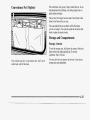
To use the storage area, fold downthe armrest. Press the
latch-on the front’edge and pull up.To use the
cupholder, flip it forward.
,
I
Your vehicle mayhave a convenience net. You’llsee iton the back wall of the trunk.
You may also havean armrest in the rear.
It may have a
storage area and cupholders.
Center Console
Luggage Carrier (Option)
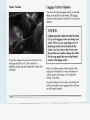
If you have the optional
luggage carrier, you can load
things on the deck lidof your vehicle.The luggage
carrier has slats attached the
to deck lid, a rear rail and
tiedowns.
I
I NOTICE:
Loading cargo thatweighs more than50 pounds
(23 kg) on the luggagecarrier may damage your
vehicle. When you carry largethings, never let
them hang over the rear or sides
the of your
*vehicle.Load your cargo.sothat it .rests on the
slats anddoes not scratch or damage thevehicle.
Put. the cargo against the rear rail and itfasten
securely to the luggage carrier.
To open the storage area, press up on the latch
theon
front edge and lift the cover.The console has a
cupholder, cassette tape and compact disc storage and a
Don’t exceed the maximum vehicle capacity when
coinholder.
loading your Oldsmobile. For more information on
vehicle capacity and loading,see ‘‘Loading Your
Vehicle” in the Index.
To prevent damage orloss of cargo, stop driving now
and then and make sure the
luggage carrier and cargo
are still securely fastened.
2-38
....
I
Accessory Outlet
Sun Visors
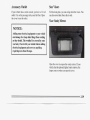
If your vehicle has a center console, you have
a 12-volt
outlet. It is .on the passenger side, near the floor. Open
the cover to use the outlet.
To block out glare, you can swing down the visors.You
can also move them from side to side.
Visor Vanity Mirrors
NOTICE:
Adding someelectrical'! equipment
to your vehicle
can damage itor keep other thingsfrom working
as they should. This wouliin't be covered your
by
warranty. Check with your retailer before adding
electrical equipment and never use anything
requiring more than20 amps.
Open the coverto expose the vanity mirror.If your
vehicle has the optional lighted vanity mirrors, the
lamps come on when you open the cover.
2-39
..
Sunroof (Option)
~~~
~
~.
The sunroof glass panel cannot be opened or closed
if
your vehicle has an electrical failure.
Ashtrays and Lighter
Center Front Ashtray
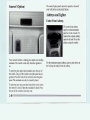
The center front ashtray
may.be on the instrument
panel or on the console.To
'emove the console ashtray,
open the lid andlift out the
ashtray using the snuffer.
Your sunroof includes a sliding glass panel and a sliding
sunshade. The switch works only when the ignition
is
on.
For the instrument panel ashtray, open
it, push down on
the locking tab and pull out the ashtray.
To open the glass panel and sunshade, press the rear of
the switch. Letgo of the switch to stop the panel any
in
position. Press the frontof the switch to close the glass
panel. The sunshade can onlybe,closed by hand.
To open the rear vent, press the front
of the switch when
the sunroof is closed. Open the sunshade by hand. Press
the rearof the switch to close the vent.
2-40
. .
I
Cigarette Lighter
Rear Ashtrays
To remove the
rear ashtray,
- open it, push down on the
snuffer and pull the ashtray
out.
I
To use the lighter,just push it in all the way andlet go.
When it’s ready,it will pop back by itself.
NOTICE:
Don’t hold a cigarette lighter in with yourhand
able to
while it is heating.If you do, it..won’t be
back awayfrom the heating element when it’s
ready. That can make it overheat, damaging the
lighter and the heating element.
.
NOTICE:
- -
~-
~
Don’t put papers and other
things that burn into
your ashtrays. If you do,cigarettes or other
smoking materials could set themon fire, causing
damage.
2-41
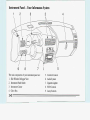
,InstrumentPanel -- Your Information System
1
2
3
2
9
8 ’
7
The main components of your instrument panel are:
1. Side Window Defogger Vent
2. Instrument Panel Outlet
3. Instrument~Cluster
4. Glove Box
2-42
5
6
5.
6.
7.
8.
9.
comfort Controls
Audio System
Cigarette. Lighter
HUD Controls
Lamp C,ontrols
. .
.’
,
. .
..
\
HOT APPLY
BRAKE
TO SHIFT FROM PARK
,
/
\\
UNLEADED FUEL ONLY
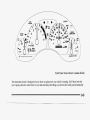
United States Version Shown, Canadian Similar
Your instrument cluster is designed to let you know at aglance how your vehicleis running. You’ll know how -fast
you’re going, about how muchfuel is in your tank and many other things you need
to drive safely and economically.
2-43
-
.
-
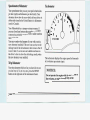
Tachometer
The tachometer displays theengine speed in thousands
of revolutiotts per minute(rpm).
1.
NOTICE:
Do not operate the engine with the tachometer in
the red area, or engine damage may occur.
2-44
.
!
!
.,
-
.
.I
,
...., .
. ,
<
'
Warning Lights, Gagesand Indicators
This part describes the warninglights and,gages that
may be on your vehicle.The pictures will help you
locate them.
dangerous. So please get to know your warninglights
and gages.They’re a big help.
Fuel Gage
Your fuel gage tells you
about how muchfuel YOU
have left when the ignition
is on. When the indicator
nears EMPTY (E), you still
have a little fuel left, but
you should get more soon.
Warning lights and gagescan signal that somethingis
wrong beforeit becomFs serious enough tocause an
expensive repair or replacement. Paying attention to
your warning.lights and gages couldalso save you or
others from injury.
Warning lights come on when there maybe or is a
problem with one of your vehicle’s functions.As you
will see in the details on the next few pages,
some
warning lightscome on briefly when you start the
engine just to let you know they’re working.If you are
‘familiarwith this section, you should notbe alarmed
when this happens.
Gages can indicate when there may be or
is a problem
with one-ofyour vehicle’s functions. Often gages and
warning lights work together to
let you know when
there’s a problem with your vehicle.
When one of the warning lights comeson and stayson
when you are driving,or when one of the gages shows
there may be a problem,
check the section thattells you
what to do about it. Please follow this manual’s advice.
Waiting to do repairs can be costly -- and even
UNLEADED FUEL ONLY
I
I
Here are some things owners ask about. All these
situations are normal anddo not show a problem with
your fuel gage:
0
At the service station, the pump shuts off before the
gage reads FULL (F).
0 .
It takes a little more or less fuel fill
to up than the gage
indicated. For example, the gage may have indicated
the tank was half full, butit actually took a little more
or less than half the tank‘s capacity tofill it.
The gage moves a little when you turna corner or
speed up.
2-45
Low Fuel Light
If your fuelis low, alight
will come on andstay on
until you add fuel. It will
also come onfor a few
secQnds when youfirst turn
on the ignitionas a check to
show you it's working.If it
doesn't comeon then, have
it fixed.
I
Safety Belt Reminder Light
8
-10
When the’key is turned to
RUN or START, a chime
will come on for about eight
seconds to remind people to
fasten their safety belts,
unless the driver’s safety
belt is already buckled.The
safety belt lightWill also
come on and stay on until
the driver’s belt is buckled.
Air Bag Readiness Light
There is an air bag readiness
light on the instrument
panel, which shows i?lIR BAG or shows the air bag
symbol. The system checks the air bag’s electrical
system for malfunctions. The light ‘tellsyou if there is an
electrical problem.The system check includes the air
bag sensors and modules,the wiring and the diagnostic
module. For more information on the air bag system,,see
“Air Bag” in the Index.
’
You will see thislight flash
for a few seconds when you
turn your ignition toRUN
or START. Then the light
should go out. This means
the system is ready.
If the air bag readiness light doesn’t
come on when you
start your vehicle, or stays on, or comes on when you
are driving, your air bag
system may not work properly.,
Have your vehicle serviced right away.
2-47
Brake System Warning Light
Your Oldsmobile’s
hydraulic brake systemis
divided into two parts.If
one part isn’t working, the
other part can still work and
stop you. For good braking,
though, you need both parts
working well.
If the light comes on while you
are driving, pulloff the
road and stop carefully.
You may notice that the pedal
is
harder to push. Or,the pedal maygo closer to the floor.
It may take longer to stop.
If the lightis still on,or if the
anti-lock brake system warning light
is flashing, have
the vehicle towedfor service. (See “Anti-Lock Brake
System Warning Light” and “Towing Your Vehicle” in
the Index.)
If the warning light comes on, there could be a brake
problem. Have your brake system inspected right away.
:This light should come on briefly as you start the
vehicle. If it doesn’t come on then, have
it fixed so it
mill be ready to warn you
if there’s a problem.
The brake.system warninglight will also comeon when
and it will stayionif your
you set your parking brake,
parking brake doesn’t release fully.
If it stays on after
your parking brakeis fuily released,it means you have a
brakerproblem.
2-48
Anti-Lock Brake System Active Light
When your anti-lock system
is adjusting brake pressure
to help avoid a braking skid,
the LOW TRAC light will
come on.
‘ This light tells.you that
your engine coolant has
, overheated or your radiator
cooling fanis not working.
Slippery road conditions will exist
if this light comes on, If you have been operating your vehicle under normal
so adjust your driving accordingly.
The light will stay on driving conditions, you should pull
off the road;stop’
for a few seconds after the system stops adjusting brake your vehicle and turn.off the engine as soon as possible.
pressure.
Hot Coolant Can Burn You Badly!
The LOW TRAC light also comes on briefly, as a bulb
In “Problems onthe~Road,”this manual shows what to
check, when the engineis started. If the light doesn’t
do. See “Engine Overheating”in the Index.
come on then, haveit fixed so it will be thereto tell you
when the systemis active.
\
2-50
Engine Coolant Temperature Gage
Low Coolant Warning Light
You have a gage that shows
the engine coolant
temperature. If the gage
pointer moves into the red
area, your engine is too hot!
i
APPLY BRAKE TO SHIF1
That reading meansthe same thing as the warning light.
It means that your engine coolant has overheated. If you
have been operating your vehicle
under normal driving
conditions, youshould pull off the road, stop your
vehicle and turn off the engine as soon as possible.
Hot Coolant Can Burn You Badly!
In “Problemson the Road,” thismanual shows what to
do. See “Ennine Overheatine” in the Index.
COOLANT
If this light comes on, your
system is low on coolant
and theengine may
overheat. See “Engine
Coolsint” inthe Index and
have your vehicle serviced
as soon as you can.
~
MalfunctionIndicatorLamp
(Service Engine Soon Light)
computer monitors
1 Aoperation
of your fuel,
1ESET
0
SERVICE
ENGINE SOON
ignition and emission
control systems.This light
should come on when the
ignition is on, but the
engine is not running, as a
check,to'show you it is
working.
If it does not comeon at all, haveit fixed right away. If
it stays on, orit comes on while you are driving,'the
computer is indicating that you have a problem.You
should take your vehicle
in for servicesoon.
,
I
.
NOTICE:
If you keep driving your vehicle with this light
on, after a while the emission controls won't
be as good
work as well, your fuel economy won't
and your en'gine may not run as smoothly. This
could lead to costly repairs not covered by your
warranty.
/\
-
.(I
Low Oil Level Light
V
I
LOW.O(L
LEVEL
I
Security Light
Your engine is equipped’
wiih an oil level monitoring
system. Whenthe ignition
key is turned on, the
LOW
OIL LEVEL light will
briefly flash.If the light
‘doesnot flash,have it fixed
-1 so it will be ready to warn
you if there’s a problem.
n
I ‘ A‘n-1
8
-
. .
,
.
If the light stays on,,stop the vehicle ona level surface
and turn theengine off. Check the oil level using the
engine oil dipstick. (See “Engine Oil”in the Index.) If
thti light does not flash,have the low oil level sensor
system repaired so it will be ready to warn you if there’s
a problem.
The oil level monitoringsystem only checks oil level
during the brief period between key on and
engine
crank. It doesnot monitor engine oil level when the
engine is running. Additionally,an oil level check.is
only performed if the
engine has been turnedoff for-a
considerable periodof time, allowing the oil normally in
circulation todrkn back into the oil pan.
I
RESET
This light willcome on
when youturn the key to
start and stayon until the
vehicle starts.It will also
come on and stay on
if your
key is too dirty or wet for
the PASS-Key% system to
read the resistor pellet.
,
80
If the resistor pelletis damaged or missing, the light will
flash.
If you’re driving and the security
light comes on
and remains on, yourPASS-Key’II system is not
working pro erly. Your vehicle is not protected by
PASS-Key 11, and you shouldsee your retailer.
2
2-54
t
I
Head-Up ,Display (Option)
If you have the Head-Up Display (HUD), you can see
the speedometer reading, inEnglish or metric units,
displayed “through” the windshield.
The HUD also shows these lights when they are lit on
the instrument panel:
0
Turn Signal Indicators
0
High-Beam Indicator Symbol
When you sit straight in your seat, the HUD
image will
appear slightly to the right.
When the ignition key is turned to RUN,
all possible
HUD images will come on. Then the Head-Up Display
will operate normally.
NOTICE:
OilWarning Symbol
Coolant Temperature.Symbo1
Charging System Symbol
.
Although theHXJD image appears to be near the
front of the vehicle, do not use it as a parking aid.
If
The .HUD was not designed for that purpose.
you try to use it that way,-suchin,a
as parking
lot, you may misjudge distance and run into
something.
Low Fuel Symbol
0
1
J
2-55
.
..
2. Adjust your seat,if necessary, to a comfortable
position. '
3. Press the up arrowon the image switch until the
HUD image stops moving. Then press the down
arrow until the image is as low as possible but in full
view.
4. Turn the HUD dimmer dial down until theHUD
image is no brighter than necessary.
To turn the HUD
off, turn the dial all theway down.
If the sun comes out, it becomes cloudy,
or if you turn
on your headlamps, you may need
to adjust theHUD
brightness again. Polarizing sunglasses could make the
HUD image harder to see.
To adjust the HUD so you can seeit properly:
I
1~.Start your engine and turnthe HUD d i m e r dial all
the,way
up.
When the headlamps are off, the HUD image will
be ata preset daytime brightness.
When the headlamps are on, the HUD image
brightness is controlled by the dimmer dial.
2-56
CareHead-Up-Display
of the
h s h the
ENGLISHMETRIC
switch to change the
speedometer from English
to metric, or metric to
English. The switch is on
the instrument panel, to the
left of the steering-column.
If you don't have the switch, youcan't change the
display.
Clean the insideof the windshield as neededto remove
any dirt or film thatreduces the sharpness or clarity'of
the HUD image.
"
To clean the HUD, spray household glass cleaner on a
soft, clean cloth. Wipethe HUD lens gently, then dryit.
Do not spray cleaner directly on the lens because the
cleaner could leak into the unit.
2-57
,If the HUD Image Is Not Clear.
0
Is the HUD image too bright?
Are the windshield and HUD.lens clean?
Your windshield is part of the HUD system.If you ever
have to havea new windshield,be sure to get one
designed for HUD. If y9u don't, the-HUDimage may
look blurred andout of focus.
,
I'
'
Section 3 Comfort Controls and Au,dio Systems
In this section you'll find out how to operate the comfort
With this system, you can control the heating, cooling
control systems and audio systems offered with your and ventilation
in your vehicle. The system works best if
Oldsmobile. Be sure to read about the particular system
you keep your windows closed while using it.
supplied with your vehicle.
Air Conditioning with Electronic
Controls
System Controls
Fan ,Knob
The left knob selects theforce of air you want. To turn
the fan off, turn the knob to OFF.The fan must be on to
run the air conditioning compressor.
Temperature I(nob
The center knob changes the temperature of the .air
coming through the system. Turn this knob toward red
(clockwise) for warrner air. Turn it toward blue
(counterclockwise) for cooler air.
3-1
'
Mode Knob
The right knob has several settings to control the .,
direction bf air flow. For each setting, set the
temperatureto a comfbrtable setting.
I
" A X : This setting recirculates muchof the air inside
your vehicle andsends it through the instrument panel
ogtlets. The air conditioningcompressor will run
automatically in this setting mless -the outside
temperature is below 40°F (4.5"C). (Even when the
compressor is runhing, yducan control the temperature.)
-'
.+e
/J VENT: This setting brings in outside air and
directs it through theinstrument panel outlets.
-bo
?# BI-LEVEL: This setting bringsin outside air and
directs it twoways. Halfof the air is directed through
the instrument panel outlets. Mostof the remaining airis
directed through thefloor ducts and a little to the defi-ost
andsidewindowvents.
.
'
0
Ir/r
I
FLOOR: This setting sends most of the air
through the ducts near the floor.
The rest comes outof'
the defroster andside window vents.
3-2
Air Conditioning
Heating
On very hot days,open the windows long enough to let
hot inside air escape.This reduces the time the
compressor has to run, whichshould help fuel economy.
On cold days use
FLOOR with thetemperature knob all
the way in the red area.The system will bringin outside
air, heatit and sendit to thefloor ducts.
For quick cool-down on very hot days,use MAX with
the temperature knob all the way in theblue area. If this
setting is used.for long periods of time, the airin your
vehicle may become too dry.
If your vehicle has anengine coolant heatkr, you can use
it to helpyour system provide warm airfaster when it's
cold outside(0" F (-18 O C ) or lower). An engine coolantheater warms the coolant yourengine and heating
system use to provide heat. See "Engine Coolant
Heater" in the Index.
For normal cooling on hot days, use
VENT with the
temperature knobin the blue area and the
NC'button
pushed in. The system will bring in outside
air and cool it.
On cool but sunny days, the sun may warm your upper
body, but your lower body may not be warmenough.
You can use BI-LEVEL with the,terhperatureknob in
the middle and the A/Cbutton pushed in. The system
will bringin outside air and directit to your upper body,
while sending slightly warmedair to yourlower body.
You may notice this temperature difference more at
some times than others.
.
'
Ventilation
For mild outside temperatures when little heating or
cooling is needed, use
VENT to direct outsideair through
your vehicle. Your vehicle also has the flow-through
ventilation system described later in this section.
Defogging and Defrosting Windows
Your system'has two settings for clearing the frontand
side windows.To defrost the windows'quickly,use
DEFROST withthe temperature knob allthe way in the
red area.To warrn passengers while keeping the
windows'clean, use QEFOG.
J
3-3
Air Conditioning with Automatic and
Auxiliary Temperature Control
System Controls
Fan Knob
The left knob selects the forceof air you want when the
system is not in AUTO.
The display will show the
speed. To turn the systemoff, push the knob.
Driver TemperatureKnob
1
1
With this system you set a temperature.
You can then
either let the system adjust air flow and force to
maintain the temperature, or
you can manually adjust
the flow and force, The system works best if you keep
your windows closed while usingit.
The right knob sets the temperature
for the entire system
when the light on the
PASS button isn’t lit.If the light is
lit, the knob sets the
temperature for the driver. Turn the
knob toward red (clockwise) r&ise
to the temperature.
Turn it toward blue (counterclockwise) to lower the
temperature. The display will show your selectionfor a
few seconds, then the outside
temperature will show. If
you push the knob, the system will control fan
the speed
and air flow. AUTO will show
on the display.
Passenger Temperature Knob
The knob on the passenger's
door adjusts the air
.temperatureon the
passenger's side so it is
warmer orcolder-than -the
temperature set by the
driver.
Push the PASS button on thesystem face so the light
on it is lit. Turn theknob on the door toward red
(clockwise) to raise the temperature. Turnit toward blue
(counterclockwise) tolower the temperature.
Mode Buttons
The center panel has' several settings to control the
direction of air flow when the system is not in 'AUTO.
The indicator light on the button will glow when
the
button is pressed.
RECIRC: This setting recirculatesmuch of the air
inside your vehicle andsends it through the instrument
panel outlets. The air conditioningcompressor will run
automatically in this setting unless the outside
temperature is below 40°F (4.5"C).
UPPER: This setting brings in outside air and directs
it
through theinstrument panel outlets.
BI-LEV. This setting brings in the outside air and
directs it two-ways.Half of the air is directed through
the instrument panel outlets.Most of the remaining air is
directed through the floor ducts and little
a to the defrost
and side window vents.
LOWER: This setting sends most of the airthrough the
ducts'near the floor. The rest comes out of the defrost
and side window vents.
DEFOG: This setting allows halfof the air togo to the
floor ducts and half to the defrost and
side window
vents.
DEF: This setting directs mostof the airthrough the
defrost and side window vents. Some of the air goesto
the floor ducts.The air conditioning compressor will run
automatically in this setting unless the outside
temperature is below 40°F (4.5"C).
Automatic Control
For normal cooling on hot days, use UPPER with the
A/C button pushedin. The system will.bring in outside
For themost efficient operation,you ,should.setthe
air and coolit.
system temperature and press the knob.
The system will
,
select the best fan speed and air flow, settings to keep On cool but .sunny days, the sun may warm your upper
body, but your lower body may not be warm enough.
you comfortable.The air conditioning compressor will
You can use BI-LEV with the A/C’ button pushed
in.’
run if the outsidetemperature is above40°F (4.5” C).
The system will bringin outside air and direct
it to your
YOU maynotice a delay of three to four minutes before
upper body, while sending slightly warmed air to your
the fan comes on.
lower body. You maynotice this temperature difference
more at some timesthan.others.
Manual Control
If you prefer to manually control the heating, cooling
and ventilationin your vehicle, push UPPER, BI-LEV,
LOWER, DEFOG orDEE AUTO will go off the
display. Set the system to thetemperature and fan
speed you want.The system will try to maintain the
temperature you set using the mode you select.
The
following suggestions will help the system run more
efficiently in manual mode.
Air Conditioning
On very hot days, open the windows long enough to
let hot insideair escape. This reduces the time the
compressor has to run, which should help
fuel economy.
For quick cool-down on very hot days, use RECIRC.
If
this settingis used for long periodsof time, the airin
your vehicle may become too
dry.
Heating
On cold days use LOWER.
The system will bring in
outside air, heatit and sendit to thefloor ducts.
If your vehicle hasan engine coolant heater,you, can use
it to help yoursystem provide warm air faster when it’s
cold outside(0°F (-18°C) or lower).An engine coolant
heater warms the‘coolant your
engine and heating
system use to provide heat.
See “Engine Coolant
Heater” in the Index.
Ventilation
For mild outside temperatures when little heating
or
cooling is needed, use-UPPERto direct outsideair through
your vehicle. Your vehicle also has the flow-through
ventilation system described later inthis section.
3-6
-
Defogging
and
Defrosting
Windows
Your system has two settings for clearing the front and
side windows. To defrost the windows quickly,use DEF.
To warm passengers while keeping the windows clean,
,
use DEFOG.
Rear Window Defogger
1
Do
not
attach
anything like a temporary
vehicle
license
or decal across thedefogger grid.
NOTICE:
Don’t use a razor blade or something else sharp
If you do, you
on the inside of the rear window.
could cut or damage the warming grid, and the
repairs wouldn’t be covered by your warranty.
The rear window.defoggeruses a warming grid to
remove fog from the rear window. Press the button to
turn thedefogger on. It will turn itselfoff after about ten
minutes. If you turn it on again,the defogger will only
run for,about five minutes before turning off. You can
also turn it off by pressing the button again.
3-7
Flow-Through Ventilation System
Audio Systems
Your vehicle's flow-through ventilation system supplies
outside air info the vehicle when
it is moving. Outside
air will also enter the vehicle when the air conditioning
fan is running.
Your Delco@aubo system has been designed to operate
easily and give years
of listening pleasure.You will get
the most enjoyment out
of 'it if you acquaint yourself with
it first. Find out what your Delco@system
cpn do and how .
,to operdte all its controls,
to be sureyou're getting the most
out of the advanced engineering that went into it.
Ventilation Tips
I
Keep the hood and fkont air inlet free of ice, snow or
any other obstruction,such- as leaves. The heater and Setting the Clock
defroster will work far better, reducing the chance
of
You can set the-clockwith the ignition onor off.
fogging the insideof your windows.
1. Press and hold HR until the correct hour appears.
The letter A or'-Pmay appearin'the display for,AM
When you enter a vehicle in cold weather, set the
mode toFLQOR or LOWER and the fan to .the
or PM.
highest speedfor a few moments before driving off. 2. Press and holdMN until the correct minute appears.
This helps clear the intake ,ducts
of snow and
moisture and reduces the chance
of fogging the
inside of your windows.
,
'0
Keep the air path under the frontseats'clear of
objects. This helps air to circulate throughout your
vehicle.
until the display flashes. If you press the button when
the ignition is off, theclock will show for a'few seconds.
Finding a Station
AM/FM: Press this buttonto get AM, FM1 or M . 2 .
The display showsyour selection.
TUNE:'Press this knob lightly so it extends. Turnit to
choose radio stations.Push the knob back in when
you're not usingit.
SEEK: Press the up ordawn arrow to go to the next
higher orlower station. The sound will be muted while
seeking.
Presets: The five pushbuttons let you return to your
favorite stations-You can set up to -15stations (5 AM,
AM/I?M Stereo Radio
5 FM1 and 5 FM2).
Playing the Radio
1. Press A M m ' to select the band.
Push PWR to turn thesystem on oroff.
2. Find the station you want.
VOL: Turn this knob clockwise to increase volume.
3. Press .andhold one of the five numbered buttons.
Turn it counterclockwise to decrease volume
4. The sound will mute.When it returns, release the
RCL: Press this button briefly to recall the station being
button.
Played Or the 'lock
To change what is nomallY
Wheneveryoupressthatnumberedbutton,
the station
shown on the display (station or time), press the button
you set will return.
until you see the display you want, then hold
the button
.
I
.
3-9
SCAN: Press this button and release to listen to stations
a few seconds.The radio will go to a station, stopfor a
few seconds, thengo on to the next station. Press the
button again to stop scanning.The sound will be muted
while scanning, and SCAN will appear on the display.
If
you-<press SCAN for more than two seconds, the radio
will .changeto PSCAN mode. PSCAN will appear on
the display.
PSCAN: Press SCAN for more than two s,econds, and
PSCAN will appearon the display. The radio will go to
the first preset station, stopfor-afew seconds, thengo
on to the next preset station. Press SCAN again to stop
scanning.
Setting theTone
BASS: Press this knob lightlyso it extends. Turn the
knob to increase or decrease bass.
The middle position is
a detent.
3-10
TREB: Press this knob lightlyso it extends..Then pull
the knob all the way out. Turn
it to increase or decrease
treble. The middle position is a detent.
Push the knob backin when you’re not usingit.
Adjusting the Speakers
BAL: Press this knob lightlyso it extends. Turn the
knob tomove,the sound to the leftor right speakers. The
middle position is a detent and balances the speakers.
FADE: Press the knob lightly.so it extends. Then pull
the knoball the way out. Turnit to move the sound to
the frontor rear speakers..The middle position is a
detent and balances the speakers.
Push the knob back in when you’re not using
it.
Optional A W M Stereo ‘Radios
Your Oldsmobile may have a radio with a cassette tape
player, acompact disc player or both.To play the radio,
follow the instructions earlier in this manual
under
“AM/FM Stereo Radio.” For other features, see the
following instructions for the feature your radio has.
If your radio has acassette tape playeror a compact disc
player, it will also have automatic tone control:
TONE: This feature allows you tochoose preset treble
and bass equalization settings
designed for jazz, vocal,
pop, rock and classical stations.JAZZ will appear on the
display when youfirst pre.ss TONE. Each‘time.you press
it, another setting willappearon the display. Pressit
again after CLASSIC appears, and MANUAL will
appear. Tone control will return to the treble and bass
knobs. Also, if you use the treble and bass
knobs,
control will return to
them and MANUAL will appear.
You can set an equalization setting witheach preset
station. After you tune in
the station, press TONEto
choose the equalization settingfor the station.’Then
press and boldthe numbered preset button.
Playing a Cassette Tape
The longer side with the tape visible
should face to the
right. If the ignition ison, but the radio is off, the tape
will begin playing.If you hearoothing or heai a garbled
sound, the tape may not
be in squarely. Press EJECT to
remove the tape and start over.
I
3-11
If E and a number appear
in the display, the tape won’t
play becauseof an error.
E10: The tape is tight, and the player can’t turn the
tape hubs. Remove the tape. Hold
the tape with the
’ .:.
open end down and tryto turn the right hub
counterclockwise with’apencil. Turn the tape over
-:;I. and try to turn the right hub.
If the hubsdo not turn
.,X easily, your tape may be damaged and should not be
- used in the player. Try a new tape
...
to make sure your
..-.).:,?
.
.-- :.
player is working properly.
p
.I
, .
.
,
1
1
~
a
Ell: The tape is broken.
/
.,
’
:@.’i
i( -
*:
,.;)
.:,
’-.
,’..’!’..
.’
.,K
I
.
E12 Communicationproblem.
While the tapeis playing, use the VOL, FADE, BAL,
TREB and BASS controls just as you do for the radio.
Other controls may have different functions when a tape
is inserted. The displaywillshow TP andanarrow to
show which sideof the tape is playing.
Your tape biasis set automatically. Whena metal or
chrome tapeis inserted, HI-BIAS appears on the
display. If you want to insert a tape when the ignition
is
off, first press EJECT or RCL.
3-12
SEEK: Press the upor down arrow to search for the
next or previous selection on the tape.
Your tape must
have at least four secondsof silence between each
selection forSEEK to work.
SCAN: Press this button to listen to each selection for a
few seconds.The tape will goto the next selection, stop
for a few seconds, then go on
to the next selection. Press
the button again to stop scanning.The sound will be
muted while scanning, and SCAN will appear
on the
display.
REV: Press this button to reverse the tape rapidly. Press
itagaintoplaythetape.
FWD: Press this button to advance quickly to another
part of the tape. Press the button again to play the tape.
PROG: Press this button to change the side of the tape
thatisplaying.
NR: Press this button to reduce background noise.
Dolby@B Noise Reduction manufactured under license
from Dolby Laboratories Licensing Corporation.
“Dolby” and theOn@
symbol are trademarks of Dolby
Laboratories Licensing Corporation.
A”:
Press this button to play the radio when
a tape
is playing. The tape will stopbut remain in the player.
TAPE: Press this button tochange to the tape function
when the radio is on. A box will appear around TP on
the displaywhen the tapeis active.
EJECT: Press this button toremove the tape. The radio
will play.
t.
Cln: This message may appear on the display. If it does,
your cassette tape playerneeds to be cleaned. It will still
play tapes,but you should clean it.as soon as possibleto
prevent damage to your tapesand player. See “Care of
Your Cassette Tap,ePlayer” in the Index. After you clean
the player, press andhold EJECT for five seconds to
reset the Cln indicator. “- - -” will appear in the display
to show the indicator was reset.
I
‘
k?
b
Playing a CompactDisc
Insert a disc partwayinto the slot, label side up. The
player will pullit in. If the ignitionis on, but .the radio is
off, the disc will begin playing.If YOU want to insert a
disc,,when,the ignition isoff, first press EJECT.
If you’re driving on a very rough road, the disc may not
play andERR may appear on the display.The disc
should play when the road gets smoother.
If ERR
appears on the display and the disc
comes ‘backout, it
could be that:
The disc is upside down.
3-13
.
.
I
I
.
-It isdirt); scratched or Wet.
.
,.
.
,
.
FWD: Press andhold,this button to advance to a
It is very humid. If so, wait about an hour and try . . passage quickly.You -will hear sound at a reduced
volume. The display will show elapsed time.
again.
J
C O W : Press
this
button
make
tosoft
and
loud
RCL: Press this button to see which track is playing.
passages more nearly equal in volume. COMP will
Press it again- withinfive seconds tosee how long it has
appear on the display.
been playing. (elapsed time).
To change whatis normally
shown on the display (track or elapsed time), press the RDM: Press this button to hear the tracks in random
button .until you
see the display you want, then hold the. order. Pressit again toturn off random'play.
button until the display flashes.
AM/FM: Press this buttonto play the radiowhen.a disc
SEEK: Press the down m o w to go to the start of the
is playing. The disc will stop but'remain in the player.
current track, if more than eight seconds. have,piayed:
CD: Press this button tochange.tothe disc function
Press theup arrow togo to the next track.If you holdwhen the radiois on. The disc will start playing atthe
the button or press
it more than once, the player will
point where it was stopped. A box will appear around
continue miwing backor forward through the disc.
CD on the display when the disc is active.
,
'
"
3;'.
'
8'
'. 8
1
-buttonagain
toscanning.
- stop
-
I
-
REV: Press and hold this button to returna to
passage
quickly. You will hear sound at a reduced volume.
The
display will show elapsed time.
,
3-14
off the
ignition
radio
or with
disc
a
in the
you
turn
If
player, it will stay in the player. When ,you turn'
on the
ignition or system, the disc will start playing where
it
was stopped.
8'
,
TAPE CD: Press this button tochange to the taDe or
disc function when the radio-is on.
Ifboth a tap; and a
disc are installed, thesystem will first go to tape play; a
box willappear around TP on the display.If TAPE CD
is pressed again, thesystem will go to disc play; a box
will appear around CD on the'display.
EJECT: Press this buttonto remove the disc or tape.
The item with a boxaround it in the display will eject,
and the radio wi€l play.
,
THEFTLOCK"
Playing Both Cassette Tapes and Compact .Discs
If your system has both acassette tape player and a
compact disc player,most of the functions work as
described above.The only unique fezares are noted
below. .
NR: Press this button to make
soft and loud pi ages
more nearlyequal in volume. COMP will appear on the
display.
Your system has this feature if it shows THEFTLOCK
on its face. THEFTLOCKis a theft-deterrent feature
that can be used or ignored. If you ignore it, your system
will play normally.I€ you use it, your system can't be
turned onif it is stolen because it locks anytime battery
power is removed. To unlock it, a code must be entered.
These instructions will tell you how to entercode
a into
,your system. They also .tell you howunlock,
to the
system with yourcode and how to shut off
the
THEFTLOCK system.
If you lose or forget your code and
cmnot unlock the
system, contact your retailer.
3-16'
a
.
.
Disabling THEFTLOCK
If you want toturn off THEFTLOCK, you will need to
enter your code.If you lose or forget your code,see
your retailer.
1. Turn the ignition on and the radio off.
2. Press the 1 and 4 preset buttons at the same time and
hold until SEC shows on the display.
You now have only 15 seconds between each of the
following steps.
3. Press MN and “000”will appear on the display.
4. Press MN again and hold until the last two digits
of
your code appear.
5. Press and holdHR until the first digit or digitsof
your code appear.
4. Press AM/FM after you make sure the code matches
!lie one you wrote down.“- - -” should appear on the
display, meaning your system is unsecured. If SEC
appears, you enteredthe wrong code and the system
is still secured.
Understanding Radio Reception
FM Stereo
EM Stereo will give you the best sound,
but FM signals
will reach only about 10 to 40 miles (14 to 45 km). Tall
buildings or hills can interfere with
FM signals, causing
the sound tocome and go.
AM
The range for most AM stations is greater thanfor F”,
especially at night. The longer range, however, can
cause stations tointerfere withveach other. AM can also
pick up noisefrom things like storms and power lines.
To lower this noise,try reducing the treble level.
Tips about Your Audio System
Hearing damagefrom loud noise is almost undetectable
until it is toolate. Your hearing. can adapt to higher
volumes of sound. Sound that seemsnormal can be loud
and harmful to your hearing. Take precautions by
adjusting the volume control on your radio to a safe
sound level before your hearing adapts to it.
3-17
~
To help avoid hearing lossor damage:
Adjust the volume control to the lowest setting.
0
Increase volume slowly until you hear comfortably
and clearly.
NOTICE:
Before you add any sound equipment to your
vehicle like atape player, CB radio, mobile
telephone ortwo-way radio be sure you can
add whatyou want. If you can, it’s very
important to do properly.
it
Added sound
equipment may interfere with the operation
of
your vehicle’s engine, Delco@radio or other
systems, and even damage them. And, your
vehicle’s systems may interfere withthe
operation of sound equipment that has
been
added improperly.
So, before adding sound equipment,check with
your retailer andbe sure tocheck Federal rules
covering mobile radio and telephoneunits.
--
--
Care of Your Cassette Tape Player
A tape player thatis not cleaned regularly is subject to
reduced sound quality, ruining the cassette or damaging
the mechanism. Tape cassettes that are not properly
stored in their plastic cases away ,from contaminants,
direct sunlight, and extreme heat may not operate
properly and could cause premature failure
of the tape
player.
Your tape player should be cleaned with every
50 hours
of use to provide optimum performance.Your radio may
display Cln to indicate that you have used your tape
player for 50 hours without resetting the tape clean
timer. If you notice a reductionin sound quality,
regardless of when the tape player was last cleaned, try
playing a different cassette to see if the tape
or the tape
player is at fault.If the second cassette resultsin no
improvement in sound quality, try cleaning the tape
player.
Proper tape player cleaning shouldbe done with a
scrubbing action, nonabrasive cleaner cassette. Thisis a
wet-type cleaning system that uses a cleaning cassette
with pads that scrub the tape head
as the hubs of the
cleaner cassette turn.To properly clean your tape player,
follow the instructions with the cleaning cassette. If you
I
use this typeof cleaner, the radiomay display anerror'
and eject the cartridge. This is nongal and is the result
of an added feature in the tape player that detects broken
tapes. If an error occurs, you will need to insert the
;
cleaning cassette atleast three times to thoroughlyclean
the tape player.
You may preferto use a non-scrubbing action, wet-type
cleaner. This type of cleaner uses a fabrio belt to clean
the tape head.This type of cleaner cassette willnotcause an error, but it may not ckan the tape playeras
thoroughly as the scrubbing-type cleaner.
n scrubbing action cleaneris available through your
retailer (GM Part No. 12344600).
Cassettes are subject'to wear, and the sound quality may
degrade over time. Always verify that the cassette tape
is in good condition and the tape playeris clean before
obtaining service on your tape player.
Care of Your Compact Discs
Handle discs carefully.Store them in th,eir original cases
or other protective cases and away
from direct sunlight
and dust.If the surface of a disc is soiled, dampen a
clean, soft cloth,in a mild, neutral detergent solution and
clean it, wiping from the center to the edge.
Be sure never to touch the signal surface when
handling
discs. Pick up discs by grasping the outer
edges or the
edge of the hole and the outer edge.
Fixed Mast Antenna
The fixed mastantenna can withstand most car washes
without being damaged.If the mast shouldever become
slightly bent, you can straighten
it out by hand. If the
mast is badly bent, asit might beby van.dals, you should
replace it.
I
Check everyonce in awhile to be sure the mastis still
tightened tothe fender.
3-19
:Power Antenna Mast Care
Your power antenna will look
its best and work well if
it’s cleaned from timeto time. To clean the antenna
mast:
1. Turn on the ignition and radio to raise the antenna.
2. Dampen a clean cloth with mineral spiritsor
equivalent solvent.
3. Wipe the cloth over the mast sections, removing any
dirt.
I NOTICE:
Before entering an automatic carwash, turn off
your radio to make the power antenna
go down.
This will prevent the mast from
possibly getting
damaged. If the antennadoes not go down when
you turn the radiooff, it may be damaged or
need to be cleaned. In either case, lower the
antenna by hand by carefully pressing the
antenna down.
4. Wipe dry with a clean cloth.
i.
5. Make the antenna go up and down by turning the
radio or ignition off andon.
6. Then repeat if necessary.
If the mast portion of your antenna is damaged, you can
easily replaceit. See your retail.er for a replacement kit
and follow the instructions in the
kit.
NOTICE:
Don’t lubricate the power antenna. Lubrication
could damageit.
‘i
3-20
.. .
. .
Steering Wheel Touch Controls
(Option)
8S FAN: Press the up or down arrows
to increase or
decrease fan speed.
TEMP: Press the up or down arrows tochange the
temperature setting for the driver.
’
VOL: Press the up or down
arrows to increase or
decrease volume.
SEEK: Press the buttonto tune to the next radio station.
If a tapeor compact disc is playing, the player will
advance to the next selection.
PROG: Press to play a station you have programmed on
the radio preset buttons.
You can control certain comfort control and audio system functions using the buttons on your steering
wheel.
3-21
:NOTES-
?
.
1
I
,
3-22
.
. .
.
I
Section 4 Your Driving and the Road
~~~
~~~~
-
Defensive Driving
The best advice anyone can give about driving is: Drive
defensively.
Please start with a very important safety device in your
Oldsmobile: Buckle up. (See “Safety Belts” inthe
Index.)
Defensive driving really means“be ready for anything.”
On city streets, rural roads, or freeways,
it means
“always expect the unexpected.”
Assume that pedestrians or other drivers are goingbeto
careless and”makemistakes. Anticipate what they might
do. Be ready for their mistakes.
Here you’ll findinformation about driving on different
kinds of roads and invarying weather conditions. We’ve
also included many other useful tips onldriving.
Rear-end collisions are about the most preventable
of
accidents. Yet they are common. Allow enough
following distance. It’s the best defensive driving
maneuver, in both city and rural driving.You never
know when the vehiclein front of you is going tobrake
or turn suddenly.
4-1
’
~
I
1
~
Drunken Driving
Death and injury associated with
dnnking and drivingis
a national tragedy.. It’s the number one contributor to the
highway death toll, claiming ,thousandsof victims every
year.
The obvious way to solve this highway safety problem
is for people never to drink alcohol and then drive. But
what if people do? How much
is “too much”if the
driver plans to drive? It’s a lot less than many might
think. Although it depends on each person and situation,
here is some generalinformation.onthe problem.
Alcohol affects four thmgs that anyone needs to drive
a
veEcle:
The Blood Alcohol Concentration (BAC)
of someone
who is drinking depends upon four things:
~
Judgment
How much alcohol consumed
0
MuscularCoordination
The drinker’s body weight
0
Vision
Attentiveness
Police recordsshow-thatalmost halfof all motor
vehicle-related’deathsinvolve ‘alcohol.In most cases,
these deathsare the resultof someone who was drinking
and driving. In recent years; some 18,000 annual motor
the use
vehicle-related deaths have been associated with
of alcohol, with more- than
300,000 people injured.
,’
1
Many adults -- by some estimates, nearly half the adult
‘population-- choose neverto drink alcohol,so they
never drive after drinking.
For persons under 21, it’s
-against the law in every
U.S. state to drink alcohol.
i There are good medical, psychological and
developmentd reasons for these laws.
, .
,
4-2
0
The amount of food that is consumed before and
during drinking
The length of time it has taken the drinker to
consume the alcohol
According to the American Medical Association, a
180-pound (82 kg) person who drinks three 12-ounce
(355 ml) bottlesof beer in an hour will end
up with a
BAC of about 0.06 percent. The,personwould reach the
same BAC by drinking three 4-ounce (120 ,ml) glasses
of wine or three mixed drinksif each had 1-1/2 ounces
(45 ml)of a liquor like whiskey, gin or vodka.
It’s the amount of alcohol that counts.For exmple, if
the same person &ads three double martinis (3 ounce$
or 90 ml of liquor each) withinan hour, the person’s
BAC would be close to 0.12 percent. A person who
consumes fb.odjust before orduring drinking will have a
somewhat lower BAC level.
There is a gender difference, too. Women generally have
a lower relative percentage of body water than men.
Since alcohol is carriedin body water,this means that a
woman generally willreach a higher BAC level than a
.
..
1
'
I
i
Anti-Lock Brakes (A S )
Your Oldsmobile hasan advanced electronic braking
system thatwill help preventa braking skid.
RPM X1000
This light on the instrument
panel will come on briefly
when you start vour vehicle.
I
When you start your vehicle, or when
you begin to drive
away, you may hear a momentary motor or clicking
noise. And you may even notice that your brake pedal
moves a little while this is going
on. This is the A B S
system testing itself.If there’s a problem withthe
anti-lock brake system, the anti-lock
brake system
warning light will stay on or flash.
See “Anti-Lock Brake System Warning Light”in the
Index.
. .
The anti-lock system can change the brake pressure
faster than anydriver could. The computer is
programmed tomake the mostof available tireand.road
conditions.
Here's how anti-lock works. Let's say the road
is wet.
You're driving safely.Suddenly an animal juqps out in
front of you.
'
You slam on the brakes.Here's what happens withABS:
A computer senses that wheelsare slowing down. If one
of the wheels isabout to stop rolling, thecomputer will
separately workthe brakes at each front wheel and at the
rear wheels.
You' can steer around the obstacle while braking hard.
As you brake, yourcomputer keeps receiving updates on
wheel speed and controls braking pressure accordingly.
Remember: Anti-iock doesn’tchange the timeyou need
Steering
to getyour foot up to the brake pedal.
If you get too
close tothe .vehicle infront of you, you won’thave time
Power Steering
to applyyour brakes if that vehicle suddenly. slows or
engine
stops. Always leave enough room up ahead to stop, evenIf you lose power steering assist because the
stops or the systemis not, functioning,you can steer but
though you have anti-lock brakes.
it will
take
much
more
effort.
. ..
To Use Anti-Lock
,_
Steering Tips
Don’t pump the brakes.
Just hold the brake pedal down
and let anti-lock workfor you. You may feel the system
working, or you may notice some noise, but isthis
normal. When your anti-lock system is adjusting brake
pressure to help avoid a braking skid, the LOW TRAC
light willcome’on.,See “Anti-Lock Brake System
Active Light” in the Index.
Braking.,inEmergencies
Usti your anti-lock braking system when
you’needto.
With anti-lock, youcan steer andbrake at the same
time. In many emergencies, steeringcan help you more
than even the very best braking. .‘
Driving on Curves
It’s important to take curves at a reasonable speed.
A lot of the “driver lost control” accidents mentioned on
the news happen on curves. Here’s why:
Experienced driver or beginner,
each of us is subject to
the samelaws of physics when driving on curves.
The
traction of the tires against the road surface makes it
possible for the vehicleto change its path when youturn
the front wheels.If there’s no traction, inertia will keep
the vehicle going in the same direction.
If you’ve ever
tried to steer a vehicle on wet
ice, you’ll understand this.
The traction you can get in curve
a
depends on the
condition of your tires and the road surface,
$theangle at
which the curve is banked, and your speed. While
you’re in a curve, speed is the
one factor you can
control.
Suppose you’re steering through a sharp curve. Then
you suddenly accelerate. Both controlsystems -steering and acceleration-- have to do their work where
the tires meet the road. Adding
the sudden acceleration
can demand too muchof those places. You can lose
control.
Steering in Emergencies
There are times when steering canbe more effective
than braking. Forexample, you come over a hill and
find a truck stopped in your lane, or a car suddenly pulls
out from nowhere, or a child darts out
from between
parked cars and stops right front
in of,you. You can
What should you do if’thisever happens? Ease up on the
avoid these problemsby braking -- if’you can stopin
accelerator pedal, steer the vehicle
the way you wantit
time. But sometimes you can’t; there isn’t room. That’s
to go, and slow down.
the time for evasive action -- steering around the
problem.
Speed limit signs near curves warn that you should
adjust your speed.Of course, theposted speeds are
Your Oldsmobile can perform very well in emergencies
based on good weather and road conditions. Under less like these. First apply your brakes.
It is better to remove
favorable conditions you’ll want to
go slower.
as much speedas you can from a possible collision.
If you need to reduce your speed as’youapproach a Then steer
around the problem, to the left or right’
curve, do it before you enter the curve, while your front
depending on the,space available.
wheels are straight ahead.
Try to .adjust your speed
so you can “drive” throughthe
c y e . Maintain a reasonabie, steady speed.Wait to
accelerate until you areout of the curve, and then
accelerate gently intothe straightaway.
4-9
. .
An emergency like this requires close attention and a
quick decision. Ifyou are holding the steering wheel at
the recommended9 and 3 o'clock positions, you.can
turn it a full 180 degrees very quickly without removing
either hand. But you have act
to fast, steer quickly, and
just as quickly straighten the wheelonce you have
avoided the object.
'
I'
, .
The fact. that such emergency situations are always
possible is a good reasonto practice defensive driving at
all times and wear safety belts properly.
4-10
Passing
The driver of a vehicleabout to pass anotheron a
two-lane highway waitsfor just the right moment,
accelerates, moves around the vehicle ahead, then
goes
back into the right lane again. A simple maneuver?
Not necessarily!Passing another vehicle on a two-lane
highway is a potentiallydangerous move, since the
passing vehicleoccupies the same lane as oncoming
traffic for several seconds.A miscalculation, an errorin
judgment, or a brief surrender to frustration
or anger can
suddenly put the passing driver face to face with the
worst of all traffic accidents -- the head-on collision.
So here are some tips for passing:
0 “Drive ahead.” Look down the road, to the sides, and
to crossroadsfor situations that might affect your
passing patterns. If you have any doubt whatsoever
about makinga successful pass, waitfor a better time.
0 Watch for traffic signs, pavement markings, .and
lines. If you can see a sign upahead that might
indicate a turnor an intersection, delay your pass.
A
broken centerline usually indicates it’sall right to
pass (providing the roadahead is clear).’Nevercross
a solidline on your sideof the lane ora double solid
line, even if the road st ns empty of approaching
traffic..
~
0
Do not .get too close to
the vehicle you want to pass
while you’re awaiting an opportunity. For one thing,
following too closelyreduces your areaof vision,
especially ifyou’re following a larger vehicle. Also,
you won’thave adequate space if the vehicle ahead
suddenly slows or stops. Keep back a reasqnable
distance.
When it looks like a chance to pass is ,coming up,
start to accelerate but stay the
in right lane and don’t
get too close. Time your move
so you will be
increasing speed- as
the time comes to move into
the
other lane.If the way isclear‘to pass, you will have a
“running start” thatmore than makes upfor the
distance you wouldlose by droppingback...And if
something happehs tocause you to cancel your pass,
you need only slow down and drop
back again and
wait for another opportunity.
If other cars are lined up to pass a slow vehicle, wait
your turn.But take care that someone isn’t trying
to
pass you as you pull out to pass the slow vehicle.
Remember- toglance over your shoulder and check.
the blind spot.
’
0
,
4-11
..
. .
Check your mirrors,glance over your shoklder,and
start your left lane
change signal before movingout
of the right lane to pass. When you are far’enough
ahead of the passed vehicle to see its front
in your
inside mirror, activate your
right$lane ,change signal
and move back intothe right lane. (Remember that
your right outside mirror
is convex. The vehicleyou
just passed may seem to be,farther away fromyou
than it really is.)
Try not to passmore than one vehicle at atihe on
two-lane roads. Reconsider before passing the
next
vehicle.
0
Don’t overtakea slowly moving vehicle too rapidly.
Even though thebrake lights are not flashing,
it.may
be slowing down or startingtu turn.
0
If you’re being passed, makeit easy for the
following driver to get ahead
of you. Perhapsyou
cmease a,little to the right.
I
4-12
.
.
:
‘ .
..
~
Loss of Control
Let’s review what driving experts say about what ’
happens when the three control systems (brakes, steering
and acceleration) don’t have enough friction where the
tires meet .the road
to do what ‘the driver has asked.
In any emergency, don’t give up. Keep trying to steer
and constantly seek anes-c-gperoute or area. ~less
f
danger.
Skidding
In a skid, a driver can
lose, control
of the vehicle.
.*
Defensive drivers avoid most skids by taking reasonable
care suited to existing conditions,
and by not
“overdriving” those conditions.But skids are always
possibk.
The three typesof skids correspondjo your
Oldsmobile’s three control systems.
In the braking skid
your wheels aren’t rolling.
In the steering or cornering
skid, too much speed or steering
in a curve causes tires
to slip and lose cornering force. And
in the acceleration
skid too much throttle causes the driving wheels
to,spin.
A cornering skid andan acceleration skid are best
handled by easing your
foot off the acce1,erator pedal.
Driving at Night
If your. vehicle starts to slide, ease your foot off the
accelerator pedaland’quickly steer the way you want the
vehicle togo. If you start steering quicklyenough,.your
vehicle may straighten out. Alwaysbe ready for a
second skid if it occurs.
Of course, traction is reducedvvhen water, snow,ice,
gravel, or other materialis on the road. For safety, you’ll
want to slow down and adjust your driving to these
conditions. It is important to slow down on slippery
surfaces because stopping distance will ,be longer
and
vehicle‘ control more limited.
’’
While driving-on a surface with reduced traction, try .
your best toavoid sudden steering, acceleration, or
braking (including engine braking by shifting to alower
gear). Any sudden changes could cause the tires to slide.
You may pot realize the surfaceis slippery until your
vehicle is skidding.Learn to recognize warning clues -such as enough water, ice or packed snowon the road to
make a “mirrored surface” -- and slow down when you
have any doubt.
I
~
Night driving is rnore’dangerousthan day driying. One
reason is that some drivers are likely be
to impaired--by alcohol or drugs, with night visionproblems, or by .
fatigue.
Here are some tips on night driving.
Remember: Any anti-lock brake system ( A B S ) helps
avoid,only the braking skid.
0
’
Drive defensively.
-
Don’t drink anddrive.
4-13
, .
.
Adjust your inside rearview mirror toreduce the
glare from headlamps behind you.
,e Since you can’t see as well, you may needto slow
. ..
down and keep morespace between you .and other
:vehicles.
Slow down, especiallyon higher speed roads.Your
beadlpps can light up only
so much road ahead.
In remote areas, watch for animals.
If you’re tired, pull off the road in a safe place and
rest.
Night,Vision
No :one can see as well
at night as in the daytime. But as
we get older these differences increase.
A 50-year-old
driver may requireat.least twice as much light tosee the
same thing at night as a 20-year-old.
What you do in the daytime can also affect your night
vision. For example, if you spend the day in bright.
sunshine you are wise to wear sunglasses.
Your eyes will
have less trouble adjusting to night.
Bat if you’re
driving, don’t wear sunglasses at night. They may cut
down on glarefrom headlamps, but they alsomake a lot
of things invisible.
4-14
.
. ..
.
You can be temporarily blindedby approaching lights.It
can take a second or two, or even several seconds,
for
your eyes to readjust to the dark. When you faced
are
with severe glare (asfrom a driverwho doesn’t lower
the high beams, or a vehicle with misaimed headlamps),
slow down a little. Avoid staring directly into the
approaching lights.
Keep your windshield and all
the glass on your vehicle
clean -- inside and out.G l e e at night is made much
worse by dirt on the glass. Even the inside
of the glass
can build up a film causedby dust. Dirty glass makes
lights dazzle and flash more than clean glass would,
making the pupils of your eyes contract repeatedly.
Remember that your headlamps light
up far lessof a
roadway when you arein a turn or curve. Keep your
eyes moving; thatway, ips easier to pick out dimly
lighted objects. Just as your headlamps should be
checked regularlyfor proper aim,SO should youreyes
be examined regularly. Some drivers sufferfrom night
blindness the inability tosee in dim light-- and aren’t
even awareof it.
3-
The heavier the rain, the harder it is to see. Even
if your
windshield wiper blades are in good
shape, a heavyrain
can make it harder to see road signs and traffic signals,
pavement markings, the edge of the road, and even
people walking.
Driving in the Rain
It’s wise tokeep your wipingequipment in good shape
and keep your windshield washer tank filled. Replace
your windshield wiper inserts when they show signs
of
streaking ormising areas on the windshield, or when
strips of rubber start to separatefrom the inserts.
i
Rain and wet roadscan mean driving trouble. On a wet
road you can’t stop,aGcelerate or turn aswell because
your tire-to-road tractionisn’t as, good as on dry roads.
And, if your tires don’t have much treadleft, you’ll get
even less traction.. It’s always wise to
go slower and be
cautious if rain starts tofall while you are driving. The
surface may get wet suddenly when your reflexes are
tuned for driving on.dry pavement.
.
4-15
~~
I
Driving too fast through large water puddles or even
Hydroplaning doesn’t .happen often. But
it can if your
going through some car washes can cause problems, too. tires haven’t much tread
or if the pressurein one or
The water may affect your brakes. Try to avoid puddles. more is low. It can happenif a lot,of water is standing on
But if you can’t, try to slow down before you hit them. the road.If you can see reflectionsfroin trees, telephone
poles, or other vehicles, and raindrops “dimple” the
water’s surface, there could be hydroplaning.
1
Hydroplaning usually happens at higher speeds. There
just isn’t a hard and
fast rule about hydroplaning.The
best adviceis to slow down whenit is iaining.
Some Other Rainyweather Tips
0 ,Turn on your low-beam headlights
-- not just your
parking lights-- to help make you ,more visible
to
others.
0
Besides slowing down, allow some extra following
distance. And be especially carefbl when you pass
another vehicle. Allow yourself more clear room
ahead, and, be prepared to have your view restricted
by road spray.
0
Have good tires with proper tread depth. (See
“Tires” in the Index.)
Hydroplaning
Hydroplaning is dangerous.So much water can build up
under your tires that they
can actually ride on the water.
This can happenif the roadis wet enough and you’re
going fast enough. When your vehicle
is hydroplaning,
it has little or no contact with the road.
!
City Driving
Here are ways to increase your safetyin city driving:
Know the best way toget to where you are going.
Get a city map and plan your trip into an unkriown
part of the city just as you wouldfor .a cross-country
trip.
0
Try to use the freeways that rim and crisscross most
large cities. You’ll save time and energy. (See the
next part, “Freeway Driving.”)
Treat a green light as a warning signal.A traffic light
is there because the corner is busy enough
to need it.
When alight hulls green, andjust before you start to
move, check both waysfor vehicles that havenot
cleared the intersection or may be running the red
light.
One of the.biggest problems with city streets is
the
amount of traffic on them. You’ll wantto watch out for
what the other drivers are doing and pay attention to
traffic signals.
3
Once you are m,oving onthe freeway, make certain you
allow a reasonablefollowing distance. Expect to move
slightly slowerat night.
When you want toleave the freeway, move to the
proper
lane well i n advance. If you-miss your exit do not, under
any circumstances, stop andback up. Drive on to the
next exit.
The exit ramp can be curved, sometimes quite sharply.
Is your vehicle ready
for a long trip? If you keep it
serviced and maintained, it’s ready to go.
If it needs
service, have it done before starting out.Of course,
you’ll findexperienced and able service expertsin
Oldsmobile retailers all across North America. They’ll
be ready and willingto help if you needit.
Here are some things youcan check before a trip:
0
,Windshield Washer Fluid: Is the reservoirfull? Are
all windows clean inside
and outside?
0
Wiper Blades: Are theyin good shape?
The exit speed is usually. posted.
Reduce your speed according to your speedometer,not
to your sense of motion. After drivingfor any distance
at higher speeds, you may tend to think yougoing
are
slower’thanyou actually are.
0
Fuel, Engine Oil, Other FZuids: Have you checked
levels?
all
,
0
Lights: Are .they all working?
Are the lenses clean?
Before Leaving ona Long-Trip
0
Tires: They are vitallyimportant to a safe,
trouble-free trip. Isthe tread gaod enough for
long-distance driving?Are the tires all inflated to the
recommended pressure?
0
Weather Forecasts: What’s the weatheroutlook
along your route?Should you delay your trip a short
time‘to avoid a majorstorm system?
0
Maps: Do you have up-to-date maps?
Make sure you’re ready. Try tobe well rested.If you
must start when you’re not fresh -- such as after a day’s
work .-- don’t plan to maketoo many miles thatfirst part
of the journey.Wear comfortable clothing andshoes you
can easily drive in.
,
If you drive regularlyin steep country,or if you're
planning to visit there,here are some tips thatcan make
your trips safer andmore enjoyable.
Keep your vehicle-in good shape. Check all fluid
1evel.sand. alsothe brakes; tires, coolingsystem and
transaxle. These parts can work,hard on mountain
roads.
Know how to go down hills. The most important
thing to know is this:
let your'engine do some of the
slowing down. Shift to a lower,gear when you go
down asteep or long hill.
.
.
e Know,how to gauphill. You may want to shift down
to a lowerg e k The 1ower.gearshelp coolyour engine
and tramaxle, andyou can climb thehill better.,
, ,
Stay in your ownlane when driving ontwo-lane
roads iri hills or mountains. Don't swing wide or cut
across the center of the road, Drive at speeds that let
you stayin your own lane.
'
%
As you go over the top of a hill, be alert. There, dould
be something in your lane, like a stalledc a or
~ an
accident.
You.m&ysee highway ,signs on mountains that warn
,of special problems. Examples are long grades,
passing or no-passing zones, afalling rocks &ea,or
winding roads.Be aleq to theseaad'take appropriate
action.
4-21
Winter Driving
Here are some tips for winter driving:
Have your Oldsmobilein good shape for winter. Be
sure yourengine coolant mix is correct.
You may want to put winter emergency supplies in
your trunk.
4-22
Include an ice scraper, asmall brush or broom, a supply
of .windshield washer fluid, a rag, some winter outer
clothing, a small shovel,
.aflashlight, a red cloth, and
a
couple of reflective warning triangles.And, if you will
be driving under severe conditidns, include a small bag
of sand, a pieceof old carpet ora couple of burlap bags
to help provide .traction.
Be sure you properly secure
these items in your vehicle.
least tractionof all. You can get “wet ice” when it’s
about freezing (32°F; OOC) and freezing rain begins to
Most of the time, those places where your tires meet the fall. Try to avoid driving on wetice until salt and sand
road probablyhave good traction.
crews can get there.
Driving on Snow or Ice
too.fast, the drive wheels will spin and polish the surface
under the tires even more.
‘Your anti-lokk brakes
improve your ability to make a
hard stopon a slippery road. Even though you have the
anti-lock braking system, you’ll want to begin stopping
sooner than you would on drypavement. See
“Anti-Lock” in the Index.
Allow greater following distance on any slippery
road.
What’s the worsttime for this? “Wet ice.” V&y cold
snow or ice can be slick and hard to drive on.
But wet
ice can be even more,trouble because it may offerthe
Watch for slippery spots. The road might be fine
until youhit a spot that’s coveredwith ice. On an
otherwise clear road,ice patches may appearin
shaded areas where the sun can’t reach: around
clumps of trees, behind buildings, or urider bridges.
Sometimes the surfaceof a curve or anaverpass may
remain icywhen the.surrounding roads are clear. If
you see a-patch of ice ahead of you, brake before you
are on it. Try not to brake while you’re actually on
the ice, and avoid‘sudden steering maneuvers.
4-23
.
MFD BY GENERAL MOTORS CORP
INFORMATION
VE’HICLE
CAP.,
(CTR.
@ OCCUPANTS
TIRE-LOADING
FRT.
RR.
TOTAL
LBS.
WT.
K G ~
MAX. LOADING-& GVWR SAME AS VEHICLE
.XXX’.
COLD
TIRE
CAPACITY
WEIGHT
PRESSURE
SPEED
TIRE SIZE
RTG
PSI/KPa
I
’
I
THIS VEHICLE CONFORMS TO ALL APPLICABLE U.S. FEDERAL MOTOR VEHICLE
SAFETY, BUMPER, AND THEFT PREVENTION
STANDARDS IN EFFECT ON.THE DATE OF
MANUFACTURE SHOWN ABOVE.
IF TIRES ARE HOT, ADD 4PSI/28KPa
SEE OWNER’S MANUAL FOR ADDITIONAL
INFORMATION
The other 1abel.isthe Certificationlabel, found on the
rear edge of the driver’s door.It tells you the gross.’
weight capacity of your vehicle, called the GVWR
.
Two labelspn your vehicle showhow much weight it
The GVWR includes the
may properly carry.The Tire-Loading Information label (Gross Vehicle Weight Rating).
fuel and cargo.
is inside the trunk lid. The label tells you the- proper
size, weight of the vehicle, all occupants,
Never exceed theGVWR for your vehicle orthe Gross
speed rating and recommended inflation pressures
for
Axle Weight Rating (GAWR)for either the front or
re*
the tireson your vehicle.It also givesyou important
axle.
information about the number‘ofpeople that canbe in
your vehicle and .the total weight you can carry.
This
If you do have a heavy load,spread it out. Don’t carry
includes the weightof all occupants, cargo and all
m o p than 167 pounds (75 kg) in your trunk.
nonfactory-installed options.
.
4-26
NOTICE:
Your warranty does not cover partsor
components that,
fail because of overloading.
If you put things inside your vehicle -- like suitcases,
tools, packages or anything else -- they .will go as fast as
the vehicle goes.If you have to stopor turn quickly, or
if there is a crash, they’ll keep going.
4-27
I
I
NOTICE:
Pulling a trailer improperly can damage your
vehicle and resaltin costly repairs not covered by
jour warranty. To pull a trailer correctly, follow
the advice in this part, and see your Oldsmobile
retailer for important information about towing
a trailer with your vehicle.
I
I
If You Do Decide To Pull A Trailer
Three important considerations have to do with weight:
If you do, here are some important points.
Weight of the Trailer
0
0
There are m a y different laws, including speeci limit
restrictions, having to do with trailering. Make sure
your rig will be legal, not only
where you live but
also where you’llbe driving. A good source for this
information can be stateor provincial police.
Consider using a sway control.
You can ask a hitch dealerabout sway controls.
0
0
0
Don’t tow a trailerat all during the first 1000 miles
(1 600 km)your new vehicle is driven. Your engine,
axle or other parts couldbe damaged.
Then, during the first 500 miles (800 km) that you
tow a trailer, don’t drive
over 50 mph (80 km/h)
and
don’t make startsat,full throttle. This helps your
engine and other partsof your vehicle wear in the
at
heavier loads.
How heavy can a trailer safely be?
It should never weigh more than 1,000 pounds
(450: kg).
But even thatcan be too heavy.
It depends on how you plan to use your rig.
For
example, speed, altitude,road grades, outside
temperature and how much your vehicle
is,used to pulla
trailer are all important. And,
it can also depend on any
special equipment that you have on your vehicle.
You can ask your retailerfor our trailering information
or advice, or you can writeus at Oldsmobile Network,.
P.O. Box 30095, Lansing, MI 48909.
In Canada, write to General Motorsof Canada Limited,
Customer Assistance Center, 1908Colonel Sam Drive,
Oshawa, Ontario L l H 8P7.
Obey speed limit restrictions when towing
a trailer.
Don’t drive faster than the’maximumposted speed
for trailers (or no more than55 mph (90 km/h))
to
save wear on your vehicle’s parts.
4-29
I
Weight of Trailer
the Tongue
-.
<
The tongue load (A) of any trailer is animportant
weight to’measure becauseit affects the total capacity
weight of your‘vehicle. The capaci,ty weight includes the
curb weight of the vehicle, any cargo you may carry in
it, and the people who will be riding in the vehicle. And
if you will tow a trailer, you must subtract the tongue
load from your vehicle’s capacity weight because your
vehicle will be carrying that weight, too.
See “Loading
Your Vehicle” in the’Index for .more information about
your vehicle%maximum load capacity.
A
I
Hitches
Safety Chains
It’s important to have the correct hitchequipment.
Crosswinds, large trucks goingby, and rough roads area
few reasons why you’llneed’theright hitch. Here are
some rules to follow:
You should always attach chains between your vehicle
and your trailer. Cross the safety chains under tongue
the
of the trailer so that thetongue will notdrop to the road
if it becomes separated from the.hitch. Instructions
about safety chainsmay be provided by the hitch
manufacturer or bythe trailer manufacturer. Followthe
manufacturer’s recommendation for attaching safety
chains and do not attach themto‘the bumper. Always
leave just enough slack so you can turn with yourrig.
And, never allow safety chains to
drag on the ground.
0
0
Will youhave to make any holes in the body
of your
vehicle when youinstall a:trader hitch? If you do,
then be sure to seal the holes
later when you remove
the hitch.If you don’tseal them, deadly carbon
monoxide (CO) from your exhaust can getinto your
vehicle (see “Carbon Monoxide”in the Index). Dirt
and water can, too.
The bumpers on your vehicle are
not intended for
hitches. Do notattach rental lvtchesor other
bumper-type hitches tothem. Use only a
frsune-mounted hitch thatdoes not attach to the
bumper.
Trailer Brakes
Because you have anti-lock brakes, do not try to tap into
your vehicle’sbrake system. If you do, both brake
systems won’t work well,or at all.
-
I
Driving with a Trailer
Following Distance
Towing a trailer requires a certain amount of experience.
Stay at least twice as far behind the vehicle .ahead as-you
Before setting out for the open road, you'll want to get would when driving your vehicle without
a trailer. This$,
to know your rig. AcquQint yourself with the feel of
can help you avoid situations that require heavy br-it
~.. .
and sudden turns.
handling and braking with the added weight
of the
trailer. And alwayskeep in mind that,the vehicle you are
driving is nowagooddeallonger
and notnearlyas
.
Passing
responsive your
as vehicle
is by
itself.
You'll
need
more
passing
distance
up
ahead
when
.
Before you start, check the.trailer hitch and platform
you're' towing a trailer. And, because you're a good deal
(and attachments), safety chains, electrical connector, longer, you'll need to
go much farther beyond the
lights,tiresand mirror adjustment. If thetrailerhaspassedvehiclebeforeyoucanreturntoyourlane.
electric brakes, start your vehicle and trailer moving and
then apply the trailer brake controller by hand to be sure
Backing Up
thebrakesareworking. This lets youcheck,yourHoldthebottom
of the steeringwheelwith one hand.
electrical
connection
at
the
same time.
Then,
to
move
the
trailer
to the left, just move
that
hand
,'
During your trip, check occasionally to' be sure that the to the left.To move the trailer to the right, move your
load is secure, and that the lights and any trailer brakes hand to the right. Always back up slowly and, if
someone
are have
still
possible.
working.
guide you.
?'
-
.
Making
’hrns
.~
~~~
~
~~
~
NOTICE:
c e..
Makingverysharpturnswhiletraileringcould
cause the trailer to come in contact with the
be damaged.Avoid
vehicle.Yourvehiclecould
making very sharp turns while trailering.
trailer,atowing
When
the green arrows
your on
instrument panel willflash for turns even if the bulbs on
the trailer are burnedoat. Thus, you may think drivers
behind
you
It’s
are
not.
seeing
are
signal
when
your
they
,
important to check occasionally to be sure the trailer
bulbs ‘ b estill w’orking.
I-
When you’re turning with a trailer, make wider turns
than normal.Do this so your trailer won’tstrike soft
shoulders, curbs,road signs, trees, or other objects.
Avoid,jerkyor sudden maneuvers. Signal wellin
advance.
lhrn Signals When Towinga Trailer
When you tow a trailer, your vehicle has
to have a
different turn signal flasherand extra wiring.The green
arrows on your instrument panel will flash whenever
you signal a turnor lane change. Properly hooked up,
the trailer lamps will also flash, telling other drivers
you’re about to turn, change lanes or,stop.
DrivingOnGrades
I
Reduce speed and shift toa lower gear before you start
down along or steep downgrade. If you don’t shift
down, you mighthave to use your brakesso much that
they would get hot and
no longer work well.
On a long uphill grade, shift down and reduce your
speed to around45 mph (70 k d h ) to reduce the
possibility of engine and transaxle overheating.
If you are towing a trailer, you may prefer to drive in
THIRD (3) instead of DRIVE (D) (or, as you need to, a
lower gear).
4-33
8’.
.
Parking onHills
When You Are Ready to Leave After
Hill
You really should not park your vehicle, with a trailer Parking o,n a
attached, on a hill. If something goes wrong, your rig
could start to move. People
can be injured, andboth^
your vehicle and the trailer
can be darnaged.
But if you ever have to park your rig on a hill, here’s
how to do it:
.I. Apply your regular brakes, but don’t shift into
..
!PARK (P) yet.
1. Apply your regular brakes and hold the pedal down
while you:
Start your engine;
Shift into a gear; and
Release the parking brake.
2. Let up on the brake pedal.
2. ‘Havesomeone place chocks under the trailer wheels. 3. Drive slowly until the trailer isdear of the chocks.
3. When the wheel chocks are in place, release the
4. Stop and have someone pickup and store the chocks.
regular brakes until the chocks
absorb the load.
Maintenance When Trailer Towing
4. Reapply the regular brakes. Then apply your parking
Your vehicle will need service more often when
you’re
brake, and then shift to
PARK (P).
pulling a trailer.See the Maintenance Schedule for,more
.on this. Things that are especially
important in trailer
operation are automatic transaxle fluid (don’t oyerfill),
engine oil, belt, cooling system, .and brake adjustment.
Each of these is covered in this manual, and the
Index
will help you find them quickly.
If you’re trailering, it’s
a good ideato review these sections before you start
your trip.
Check periodically to see that
all hitch nuts and bolts are
tight.
4-34,
I
Section 5 Problemsonthe
Here you’ll find what todo about some problems that
can occur on the road.
Hazard Warning Flashers
Road
Your hazard warning flashers let you warn others.
They
also let police know you have a problem. Your front and
rear turn signal lamps will
flash on and off.
Press the switch to make your
front and rear turn si,gnal
lamps flash on andoff. Your hazard warning flashers
work no matter what position your key
is in, and even if
the key isn’tin.
To turn off the flashers, pressthe switch again. When
the hazard warning flashers are
on, your turn signals
’won’t
work.
I
5-1
/
2. Get the vehicles closeenougn so the jumper cables
4. Open the hoodsand locate the batteries.
can reach, but be sure the vehicles aren’t touching
each other. If they are,it could causea ground
connection you don’t want.You wouldn’t be able to
start your Oldsmobile, and the bad grounding could
damage the electrical systems.
You could be injuredif the vehicles roll.Set the
parking brake firmlyon each vehicle. Putan
automatic transaxle inPARK (P) or a manual
transaxle inNEUTRAL (N).
3. Turn off the ignition on both vehicles. Turn off all
lamps that aren’t needed, and radios.
This will avoid
sparks and helpSave both batteries. Andit could
save your radio!
“NOTICE:
If you leave your radio on,
it could be badly
damaged. The repairs wouldn’t be covered by
your warranty.
5. Find the positive (+) and negative (-) terminals
on each battery. Your Oldsmobile has
a remote
positive (+) jump starting terminal.The terminal is
on the same sideof the engine compartmentas your
battery. You should always use the remote
positive (+) terminal insteadof the positive(+)
terminal on your battery. To uncover the remote .
positive (+) termihal, lift the red plastic cap.
1
5-3
\
. .
6. Check that thejumper cables don’t have looseor
missing insulation.If they do, you couldget a shock.
The vehicles could be damaged, too.
Before you connect the cables, hereare some basic
things you should know. Positive(+) will .go to
positive (+) and negative(-) will go to negative(-)
or a metal enginepart. Don’t connect(+) to (-), or
you’ll get a short that would damage the battery and
maybe otherparts, too.
8. Don’t let the other: end
l
touch.metal.Connect it
toihe positive (+)
terminal of the good
battery. Use a remote
.
positive (+) terminal if
the vehicle hasone.
’
.
7. Conpect the red positive (+) cable topositive
the
tekninal of the vehicle with the battery.
dead
Use
remote positive (+>terminal if the vehicle
one.
has
(+)
a
,9. Now connect the black
negative (-) cable to the
good
battery’s
negative
(-) terminal.
Don’t
let
thetouch
end
other
anything until the next
step. T h e other end of
the negativecable
doesn’t go to the dead
battery. It goes to a
heavy, unpainted, metal
part on theengine of the
vehicle withthe dead
battery;
5-5
10. Attach the cable at least18 inches (45 cm) away
from the dead battery, but not near
engine parts that
move. The electrical connectionis just as goad
there, but thechance of sparks getting back tothe
battery is much less.
11. . Now start the vehicle with the good battery
and'run
the engine for a while.
12. Try to start the vehicle with the dead battery.
If it
won't start after a few tries,
it probably needs
service.
5-6
13. Remove the cablesin reverse order to prevent
electrical shorting. Takecare that they don't touch
each other or any other metal.
I
A. Heavy Metal Engine Part
B. Good Battery
C. DeadBattery
Towing Your Vehicle
If your vehiclehas been changed or modified since
it
was factory-new by adding aftermarket items likefog
lamps, aero skirting, or special tires and wheels, these
instructions and illustrations may not
be correct.
Before you do anything, turn on the hazard warning
flashers.
When you call, tell the towing service:
That your vehiclecannot be towed from the front or
rear with sling-typeequipment.
0
That your vehicle has front-wheel drive.
The make, model, andyear of your vehicle.
Whether you can still move the shift lever.
0
Try to have a GM retailer or a professional towing
service tow yourOldsmobile. The usual towing
equipment is:
If there was an accident, what was damaged.
When the towing service arrives, let the tow operator
know that this manual contains detailed towing
instructions and illustrations.The operator may want
to see them.
A. Sling-type Tow Truck
B. Wheel-lift Tow Truck
C. Car Carrier
5-7
.
r
.
.
When your vehicleis being towed,have the ignition
key off. The steering wheel should be clamped in a
straight-ahead position, with a clamping device
designed for towing service.DQnot use the vehicle’s
steering column lockfor this. The transaxle shouldbe’in
NEUTRAL (N) and the parking brake released.
Don’,t have your vehicle towed on the front wheels,
unless you must..If the vehicle ‘must
be towed on the
front wheels, don’tgo more than 35 mph (56 km/h) or
farther than50 miles (80 km)or your transaxlewilLbe
damaged. If these limits mustbe exceeded, then the
front wheels haveto be supported on a dolly.
Front Towing Hook-up
e.
Attach T-hook chains in
front-of the, wheelsinto the
side slots of the cradle on
both sides.
\
5-9
NOTICE:
;
Use wheel-lift or car carrier equipment. Additional
ramping may be requiredfor car carrier equipment. Use
safety chains and wheel straps.
Do not tow with sling-type equipmentor
fascidfog lamp damagewill occur.
Towing a vehicle over rough surfaces could
damage a vehicle. Damage can occur from vehicle
to groundor vehicle to wheel-lift equipment. To
help avoid damage, installa towing dolly and
raise thevehicle until adequate clearance
is
obtained between the ground and/orwheel-lift
equipment.
Do not attachwinch cables or J-hooks to
suspension components when using
car carrier
equipment. Always use T-hooks inserted in the
T-hook slots.
Attach a separate safety
chain aroupd the outboard
end of each.lower-control
arm.
.
...
'I' \
.
'
Rear Towing Hook-Up
I
Attach T-hook chains into
the slots inthe bottom of
the floor pan just ahead of
Use wheel lift or car carrier equipment. Additional
ramping may be'required for car carrierequipment. Use
safety chainsand wheel straps.
;
5-11
,
.
NOTICE:
Do not tow with sling-type equipment or the rear
bumper valance will be damaged.
Towing a vehicle over rough surfacescould
damage a vehicle, Damage can occurfrom vehicle
to ground or
vehicle to wheel-lift equipment. To
help avoid damage, installa towing dolly and
raise thevehicle until adequate clearance
is
obtained between the ground and/orwheel-lift
equipment.
Do not attachwinch cables or J-hooks to
suspension components when using
car carrier
equipment. Always use T-hooks inserted in the.
"-hook slots.
5-12
Attach a separate safety
chain around the outboard
end of each lower control
arm.
!
,
. .
Engine Overheating
NOTICE:
You will find a,coolant temperature gage anda w&ng
light about a hot engine on yourinstrument panel. See
“Engine Coolant Temperature Gage” and “Engine
Coolant Temperature WarningLight” in the Index. You
also have a low’coolantlight on yourinstrument panel.
See “Low Coolant Light” in the Index.
If Steam Is,Coming From Your Engine
If your engine catches fire because you keep
driving withno coolant, your vehicle can be
not be
badly damaged. The costly repairs would
covered by your warranty.
If No Steam Is Coming,FromYour Engine
If you get theoverheat -warning butsee-orhear no
steam, the problem may not be too serious.
Sometimes
the engine can geta little too hot when you:
~
Climb a long hill on a hot day.
0
Stop after high speed driving.
0
Idle for long periods in traffic.
’
Tow a trailer.
5-13
If you get the overheat warning with no sign of steam,
tw this for a minuteor so:
1. Turn off your air conditioner.
2. Turn on your heater to full hotat the highest fan
speed and open the windowas necessary.
3. If you're in a trafficjam, shift to NEUTRAL(N);
otherwise, shift to the highest gear while driving
-DRIVE (D) or THIRD(3).
If you no longer have the overheat warning,
you can
drive. Just tobe safe, drive slower for about ten minutes.
If the warning doesn't come back on, you can drive
normally.
right
If the warning continues, pull over, stop, and park your
vehicle
If there's still no signof steam, you canidle the engine
for two orthreeminuteswhile you're parked,toseeif
the warning stops. But then, if you still have the
warning, turn off the engine and get everyone out of the
vehicle until it cools down.
You may decide not tolift the hood but to get service
help right away.
5-14
3.1L L82 (Code M) Engine
A. Coolant
recovery
tank
B. Radiatorpressure cap
C. Electric engine fans
,
3.4L LO1 (Code X) Engine
Y
The coolant level should be at or above COLD
the
mark.
If it isn’t, you mayhave a leak in the radiator hoses,
heater hoses, radiator, waterpump or somewhere else in
the cooling system.
If the coolant inside the coolant recovery tank is boiling,
don’t do anything else (untilit cools down.
5-15
How to Add Coolant tothe Coolant
Recovery Tank
If you haven’t found a problem yet, but the’coolant level
isn’t at theCOLD mark, add a50/50 mixture of clean
water (preferably distilled) and a proper antifreeze at the
coolant recovery‘tank.(See “Engine Coolant” in the
Index for more information about the proper coolant
mix .)
NOTICE:
Engine damage from running your engine
without coolant isn’t coveredby your warranty.
If there seems to be no leak, with the engine
on check to
see if the electric engine fan(s) are running.If the engine
is overheating, both fan(s) should be running.If they
aren’t, your vehicle needs service.
5-16
NOTICE:
In cold weather, water can freeze and
... , .
crack,,the
i
.
ar
engine, radiator, heater core and other parts.' Use
the recommended coolant.
When the coolant in the coolant recovery tank
is at the
COLD mark, start your vehicle.
If the overheat warning continues, there'sone more
thing you can try.You can add the proper coolantmix
directly to the radiator,
but be sure the cooling system
is
cool beforeyou do it.
5-17
NOTICE:
Your enginehas a specific radiator fill procedure.
Failure to follow this procedure could cause your
engine to overheat andbe severely damaged.
1. You can remove the
radiator pressure cap
when the cooling
system, including the
radiator pressure cap
and upper radiator
hose, is no l6nger
hot. Turn the pressure
cap slowly totheleft
until it first stops.
(Don’t press down
while turning.the
pressure cap.) -
If you hear a hiss, wait for that to stop.A hiss means
there is still some pressure left.
,5-18
. .
3. After the engine cools, open the coolantair bleed
valve.
3:
...
.
-
1
.
.
,
... .
"3;
1L L82 (Code M) Engine
3.1L V6 (VIN Code M): There are two bleed valves.
One is located on the thermostat housing. The other
is
located on the thermostat bypass tube.
,
/
.
I,
.
"
5-19
4. Fill the radiator
with the proper
mix, up.to the base
of the 'filler neck.
1
3.4L LQ1 (Code X) Engine
3.4L V6 (VIN Code X): There are two bleed valves.
They are located on the thermostat housing and heater
inlet pipe.
If you see a stream.of coolant
coming from an air
bleed valve, close the valve. Otherwise, close
thevalves after the radiator
i.s filled.
5. Rinse or wipe any spilled coolant from theengine
and compartment.
6. Then fill the coolant recovery tank to the COLD
mark. 7. Put the cap back on the coolant recovery tank,but
leave the radiator pressurecap off.
~.
8. Start the engine 'and letit run until you can feel the
upper radiator hose getting hot.
Watch out for the
engine fans.
9. By this time the coolant level insidethe radiator
filler neck may be lower.
If the levelis lower, add
more of the proper mix through thefiller neck until
the level reaches the base
of the filler neck.
5-21
10. Then replace the
’ pressure cap. At any
time during this
procedure if coolant
begins to flow out of
the filler neck, reinstall
the pressure cap. Be
sure the arrowson the
pressure cap line up
like this.
11. Check the coolantin the recovery tank.The level in
the coolant recovery tank shouldbe at the HOT
mark when the engineis hot or at the COLD mark
when the engineis cold.
If a Tire Goes Flat
It’s unusual for a tire to “blow out” while you’re driving,
especially if you maintain your tires properly.
If air goes
to leak out slowly.
out of a tire, it’s much more likely
But if you should ever have a “blowout,” here are a few
tips about what to expect and what to do:
If a front tirefails, the flat tire will create a drag that
pulls the vehicle toward that side. Take your foot
off the
accelerator pedal and grip the steering wheel firmly.,
Steer to maintainlane position, then gently brake to a
stop well out of the traffic lane.
A rear blowout, particularly on a curve, acts much like a
skid and may require thesame correction you’d usein a
skid. In any rear blowout, remove your foot from the
accelerator pedal. Get the vehicle under control by
steering the way you want the vehicle to go.
It may be
very bumpy and noisy, but you can still steer. Gently
brake to a stop, welloff the road if possible.
If a tire goes flat, the next part shows how
usetoyour
jacking equipment to change flat
a tire safely.
I
”
I
Turnthe Wing nut
-counterclockwise
and
’
,.
spacer ...m@
qernoye the spare
.
‘tire.
Turn the nut holdingthe jack and wrench.
counterclockwise and remove ,it. Then
remove
. ,
the,jack and wrench.
,
,
I
5-25
a few inches.
Position thejack under the
vehicle and raise thejack
lift head until it fits firmly
into the notch in the
vehicle's frame nearest the
flat
tire.
-.
,
I?
Put the compact spare tire near you.:
..
I
NOTICE:
,
-
Rasing your-vehicleWith the jack improperly
positioned mi damage .thewehide or mqy allow
the ,vehicl-e'.fall
to.off the jack. Be-surito fit the
jacklift head iato the proper Location before
mising your vehicIe.
'
.
.
.
.
.
Kaise the,velaicleby turning the jack handle clockwise.
Raise the vehiclefar enough o€€-the,grsundfor the spare.
tire to fit under the vehicle,. Remove allwheel nuts &d
take off !he flat tire.
I
t
I
I
\
5-26
1
Don’t try to put the wheelcover on yourcompact spare
tire. It won’tfit. Store the wheel cover in the trunk until
you havethe flat tire repaired or replaced.
NOTICE:
m e e l covers won’tfit on your compact spare.
~f
you try to put a wheel cover
on your compact
spare, you could damage the cover or the spare.
After you’ve put the compact spare tire on your vehicle
you’ll need tostore the flat tire in your trunk. Use the
following procedure to securethe flat tire in the trunk.
Put the flat tire in the trunk so the side that faces out
when it is on the vehicle isfacing down. The full-size
tire will notfit down into the well. Place it so the front is
in the well and the r e a ’is outof the well.
Put the bolt throughone of the wheel nut holes, install
the retainerover the bolt, then install the wing nut.
Put
the spacerand nut next tothe tire in the well.Store the
cover as far forward as possible.
iI
5-29
Compact Spare Tire
’
Although the compact spare was fully inflated when
your vehicle was new,it can lose air after a time. Check
the inflation pressure regularly.
It should be 60 psi
(420 P a ) . After installing thecompact spare on your
vehicle, you should stop as soon as possible and make
sure your spare ‘tire
is correctly inflated. The compact
spare ismade to perform well atposted speed limitsfor
distances up to 3,000 miles (5 000 km), so,you can
finish your trip andhave your full-size tire repaired or
replaced where you want. Of course, it’s best to replace
your spare with a full-size tire as soon as you can. Your
spare will last longer and
be in good shape in case you
need it again.
NOTICE:
Don’t take your compact spare through an
automatic car wash with guide rails.The
compact spare can get caught on the rails.
That
can damage the tire and wheel, and maybe other
parts ,of your vehicle.
Don’t use your compact spire on some other vehicle.
And don’t mix yourcompact spare or wheel with other
wheels or tires. They won’t
fit. Keep your spare and its
wheel together.
NOTICE:
Tire chains won’t fit your compact spare.Using
them will damage your vehicleand destroy the
chains too. Don’t usetire chains on your compact
spare.
5-31
If You’re Stuck: In .Sand, Mud, Ice or
Snow
NOTICE:
What you doh’t want to do when your vehicle
is ,stuckis
to spin your wheels too fast.
The method known as
%vocking”can help you get out when you’re stuck, but
you must use caution.
Spinning your:wheels can destroy parts
of your
vehicle as well as the tires. If you spin the wheels
too fast while shifting your transaxle back and
forth, you can destroy your transaxle.
,
.
For information >about using tire chains
on your vehicle,
see “Tire Chains” in the Index.
~
Rocking your vehicle to get it out:
First, turn your steering wheel
left and right. That will
clear the area around your front wheels. Then shift back
and forth between REVERSE (R) and
a forward gear,
spinning the -wheels as little as possible. Release the
accelerator pedal while you shift, and press lightly
on
the accelerator pedal when the transaxleinisgear. If
that doesn’t getyou out after a few tries, you may need
to be towed out.
If you do need to be towed out,
see
“Towing Your Vehicle” in the Index.
I
Section 6 ServiceandAppearanceCare
rn
Here you willfind information about the care of your
Oldsmobile. This section begins with service andfuel
information, andthen it shows how to check important
fluid and lubricant levels.There is also technical
information about your vehicle, and a part devoted
to its
appearance care.
We hope you’ll want to keep your GM vehicle all GM.
Genuine GM parts haveone of these marks:
-
Service
Your Oldsmobile retailer knows your vehicle best and
wants you to be happy withit. We hope you’ll go to
your retailer for all your service needs. You’ll get
genuine GM parts and GM-trained and supported
service people.
I
-
6-1
~
~~~~
~
~
~ . .
~~
~-.
_
~
~
~
~~~
~~
..,.
i
. ...
~-I-.-...------_
Doing Your Own ServiceWork
If you want todo some of your own service work, you’ll
want toget the proper Oldsmobile Service Manual.
It
tells youmuch-moreabout how to service your
Oldsmobile than this manual can.
To order the proper
service manual, see “Service Publications” in the Index.
Your vehicle has an‘air bag system. Before attempting to
do your own service work, see “Servicing
Your Air
Bag-Equipped Oldsmobile” in the Index.
You should keep a record
with.all parts receipts and list
the mileage and thedate of any service work you
perform. See “Maintenance Record” in the Index.
NOTICE:
If you try to do your own service work without
bowing enough aboutit, your vehicle could be
damaged.
6-2
‘
Fuel
Use regularunleaded gasoline rated at 87octane or
higher. It should meet specifications ASTMD4814 in
the United States and CGSB 3.5-92 in Canada. These
fuels should have the proper additives, so you should not
have to addanything to thefuel.
In the United States and Canada, it’s easy tobe sure you
get the rightkind of gasoline (unleaded). You’ll see
UNLEADED right on the pump. Andonly unleaded
nozzles willfit into your vehicle’sfiller neck.
Be sure the posted octane.is at least 87.If the octane is
less than 87, you may get a heavy knogking noise when
you drive.If it’s badenough, it can‘damageyour engine.
If you’re using fuel rated at 87
octane or higherand you
still’hearheavy knocking, your engine needs service.
But don’t worry if you hear a little pinging noise when
you’re accelerating or driving up a hill. That’s normal,
and you don’thave to buy ahigher octane fuel to get rid
of pinging. It’sthe heavy, constantknock that means
you have a problem.
What about gasoline with blending materials that
contain oxygen (oxygenates), such as MTBE or alcohol?
MTBE is “methyl tertiary-butyl ether.”Fuel that is no
more than 15%MTBE isfine for your vehicle.
Ethanol is ethyl or grain alcohol.Properly-blended fuel
that is nomore than 10%ethanol is fine for your
vehcle.
Methanol is methyl or wood alcohol.
NOTICE:
Fuel thatis more than5% methanol is bad for
your vehicle.DonTt use it. It can corrode metal
parts in your fuel system and also damage plastic
and rubber parts. That damage wouldn’t b,e
, covered under your warranty. And even 5%
at or
and corrosion
less,, there must be “cosolvents”
preventers inthis fuel to help avoid these
problems.
4
Gasolines for Cleaner Air
I
Fuels in Foreign Countries
Your use of gasoline with deposit control additives will
help prevent deposits from formingin your engine and
fuel system. That helps keep your engine in tune and
your emission control system working properly. It’s
good for your vehicle, and you’llbe doing your part for
cleaner air.
If you plan on drivingin another country outside the
U.S. or Canada, unleaded fuel may be hard to find.Do
not use leaded gasoline.If you use even one tankful,
your emission controls won’t work well
or at all. With
continuous use, spark plugs can get fouled, the exhaust
system can corrode, and your engine oil can deteriorate
quickly. Your vehicle’s oxygen sensor will be damaged.
Many gasolines are now blended with oxygenates.
General Motors recommends that you use gasolines with All of that means costly repairs that wouldn’t be covered
by your warranty.
these blending materials, suchas MTBE and ethanol.By
doing so, you can help clean the air, especially
in those
To check onfuel availability, ask an auto club,or
parts of the country that have high carbon monoxide
contact a major oil company that
does business in the
levels.
country where you’ll be driving.
In addition, some gasoline suppliersare now producing
You can also write usat the following address for
reformulated gasolines. These gasolines are specially
advice. Just tellus where you’re going and give your
designed to reduce vehicle emissions. General Motors
Vehicle Identification Number (VIN).
recommends that you use reformulated gasoline. By
General Motors Overseas Distribution Corporation
doing so, you can help clean the air, especially in those
North American Export Sales (NAES)
parts of the country thathave high ozone levels.
1908 Colonel Sam Drive
You should ask your service station operatorsif their
Oshawa, Ontario L1H 8P7
gasolines contain deposit control additives and
oxygenates, and if they have been reformulated to
reduce vehicle emissions.
6-4
.
I
\
. -
I
t
~
.
NOTICE:
If you need a new cap, be sure to get the right
type. Your retailer can get one foryou. If you get
the wrong type, it may not fitor have proper
venting, and yourfuel tank and emissions system
might be damaged.
Be careful notto spill gasoline. Clean gasoline
from
painted surfaces assoon as possible.See “Cleaning the
Outside of Your Oldsmobile” in the. Index.
When you put the
cap back on, turnit to the right until
you hear at least three clicks.
With the 3.4LLQ1 (Code X) engine, when youopen the hood, you’ll see:
1. Radiator Pressure Cap
7. Coolant Bleed Valves
2. Engine Coolant Reservoir
8. Automatic Transaxle Fluid Dipstick
3. Power Steering Fluid Reservoir
9. Brake Fluid Reservoir
4. Electric Engine Fans
10.Air Cleaner
5. Engine Oil Dipstick
11. Windshield Washer Fluid Reservoir
6. Engine Oil Fill Cap
6-9
Before closing the hood, be sure all the filler caps are on
properly. Thenjust pull the hood down and close
it
firmly.
Engine Oil
LOW OIL
LEVEL
..
,
‘I:
’.
c
~.
.I
If the LOW OIL LEVEL
light on the instrument
panel co-mes on,it means
you need to check your
engine oil level right away.
For more information, see
“Low Oil Level Light” in
the Index.
You should check your engine oil level regularly; this
is
an added reminder.
It’s agood idea to check your engine oil every time you
get fuel. In order to getan accurate reading, the oil must
be warm and the vehicle mustbe on level ground.
,3.1L.L82(Code M) Engine
The engine oil dipstick handleis the yellow loop near
the frontof the engine.
Turn.off,the engine and give the
oil a few minutesto
drain back into the oil
pan. If you don’t, theoil dipstick ’
might not show the actual level.
When to Add Oil
,
If the oil is at or belowthe upper mark, then you’ll need
to add some oil. But you must use the rightkind. This
part explains’ what
kind of oil to use.For crankcase
capacity, see “Capacities and Specifications” in the’
Index.
NOTICE:
.
.
3 4L LQ1 (code X) Engine
.k
To Check Engine Oil
Don’t add too much oil.
If your engine hasso
much oil that the oil level gets above the
cross-hatched area that shows the proper
operating range, your engine could be damaged.
Pull out the dipstick and cleanit with a paper towel
-or
cloth, then pushit back in all theway. Remove it again,
keeping the tip down, and check the level.
6-11
~
,What Kind of Oil to Use
Oils of the proper quality for your vehicle can be
identified by looking for the “Starburst” ‘symbol.The ,
“Starburst”’symbo1 indicates that the oil has been
certified by the American Petroleum Institute(API), and
is preferred for use in your gas.oline engine.
. .
, .
3.1L L82 (Code M) Engine 3.4L LQl (Code X) Engine
Just fill it enough to put the level somewhere
in the
proper operating range. Push the dipstick all way
the
back in whenyou’re through.
,
If you change your ownoil,
be sure you use
oil that has
the “Starburst” symbolon
the frontof the oil
container. If you haveyour
oil changed for you, be sure
the oilput into yourengine
is American Petroleum
Institute certified for.
gasoline engines.
You should also use &@
proper viscosity oil for your
vehicle, its s h ~ w nin the fdowing chart:
’
3.
I
..
MOT
WEATHER
.
I
,
-n
“F
“C
+ 100I - -- +3a
+ 80I - -- +27
+ 60I -
--
+ 16,
+ 40I - -- f
I
-
~ 4
+ 20I - -- - 7
0
-_
- -18
I
COLD
WEAT~EA
PO. NOT USE S4E OOW-50 6R.ANV OTHER
GRAUE OIL NOT RECOMMENDED .,
Air Cleaner
Pull out the filter.Be sure to install the air filter and
install the cover tightly when you
are finished.
To check or replacethe air filter, remove the four screwsRefer
to theSchedule
to determinewhen to’
and pull offthe cover.
replace the air filter.
See “Scheduled Maintenance Services” in the Index.
6-15
Automatic Transaxle Fluid
When to Check and Change
A good time to check your automatic transaxle fluid
level is when the engineoil is changed. Refer to the
Maintenance Schedule to determine when to change
your fluid.See “Scheduled Maintenance Services’’ in the
Index.
How to Check
Because this operation can be a little difficult, may
you
choose to have this done
at your Oldsmobile retailer
Service Department.
NOTICE:
If the air cleaneris off, a backfire can cause a
damaging engine fire. And, dirt can easily ,get
into your engine, which will damage
it. Always
have the air cleaner in place when you’re driving.
If yon do it yourself, be sure to follow all the
instructions here,or you could get a false readingon the
dipstick.
To check the fluid level
NOTICE:
0 Park your vehicle on a level place. Keep the
engine
running.
Too much or too little fluid can damage your
transaxle. Too much can mean that some of the
0 With theparking brake applied,.place the shift lever
fluid could comeout and fall on hot engine parts
in PARK (P).
or exhaust system parts, starting a fire. Be sure to 0 With your foot on thebrake pedal, move the shift
get an accurate reading you
if check your
lever through each gear range, pausingfor about
transaxle fluid.
three seconds in each range. Then, position the shik:
lever in PAkK (P).
Wait at least30 minutes before,checking the transaxle
0 Let the engine-run at idle for three tofive minutes.
fluid levelif you have been driving:
When outside temperatures are above 90°F (32°C).
0 At high speed for quite a while.
In heavy traffic -- especially in hot weather.
a While pulling a trailer.
To get the right reading;the fluid should be at normal
operating temperature, whichis 180°F to 200°F (82°C
to 93°C).
Get the vehicle warmedup by driving about 15 miles
(24 km)when outsidetemperatures are above50°F
(10°C). If it's colder than 50°F (lO"C), you may have
to drive longer.
J
'
6-17
3. Check both'sides of the dipstick, and read thelower
level. The fluid level mustbe:in the cross-hatched
area.
1. The transaxle fluid dipstick handle is the red loop
4. If the fluid level is in the acceptable range, push the
near the back of the engine. Pull out the dipstick and dipstick back in all
the way.
'wipe itwith aclean rag or paper towel.
3.1L L82 (Code M) Engine 3.4L LQ1 (Code X) Engine
2. Push it back in all the yay, wait three seconds and
then pull it back out again.
\
.
.
NOTICE:
To Check Coolant
~f
you use an improper coolant
mix, your engine
When your engine is cold, the coolant
level should be at
the COLD mark or a little higher. When your engine
is
warm, the level should be up
to the HOT mark or a little
higher.
could overheat and be badly damaged. The
repair cost wouldn’t be covered by your
warranty. Too much water in the mix canfreeze
and crack the engine, radiator, heater core and
other parts.
4-20
il
/
LOW
If this 1ight.comeson, it
means you’re low on engine
coolant.
To Add Coolant
Ifjyou need more coolant, add the propermix at the
coolant recovery tank.
If the coolant recovery tankis completely empty, add
coolant to theradiator. (See “Ennine Overheating” in the
Index.)
Add coolantmix at the recovery t q k , but be,carefulnot
to spill it.
6-21
I
the
When the engine
compartment is hot, the
level should be at theH
mark. When it’scold, the
level should be at the C
mark.
at If the fluid is
What to Add
Refer tothe Maintenance Schedule to determine what
kind of fluid to use.See “Recommended Fluidsand
Lubricants” in the Index.
I
NOTICE:
When adding power steering fluid or making a
complete fluid change, always use the proper
fluid. Failure to use the proper fluid can cause
leaks and damage hoses and seals.
A fluid lossin this system could indicate aproblem.
Have thesystem inspected and repaired.
6-23
Windshield Washer Fluid
What to Use
~
NOTICE:
0
When you need windshield washer fluid, be sure to read
the manufacturer’s instructions before use.If you will be
operating your vehicle in an area where the temperature
may fall below freezing, w .afluid $kt
has s~$f;Cimt.
protectionagainstfreezing. . .
To Add
0
When using concentrated washer fluid,
follow the manufacturer’s instructions for
adding water.
Don’t mix water with ready-to-use washer
fluid. Water can cause the, solution to freeze
and damage yourwasher fluid tank and
other partsof the washer system. Also,
water doesn’t clean as well as washer fluid.
Fill your washer fluidtank only 3/4 full
when it’s very cold. This allows for
expansion, which could damage the tank._if
it is completely full.
Don’t use radiator antifreeze in your
windshield washer. It can damage your
washer system and paint.
,
Open [hecap labeled WA,S,HERFLUID ONLY. Add
washer,fluid until the tankis full.
1
.
Brakes
Brake Master Cylinder
Your brake master cylinderis here. It is filled with
DOT-3 brake fluid.
There are only two reasons why the brake fluid level in
your master cylinder might go down. The first i s that the
brake fluid goes down toanacceptablelevel during,
normal brake lining wear. When new liningsare put in,
the fluid level goesback up. The other reason is that
fluid is leaking outof the b r e e system. If it is, you
should have your brake system fixed, since a leak means
that sooner or later your brakes won’t work well,or
won’t work at all. So, i t isn’t a good idea to “top off’
I
your brake fluid. Adding brake fluid won’t correcta
leak. If you add fluid when your linings are worn, then
you’ll have too muchfluid when you get newbrake
.linings. You should add (orremove) brake fluid, as
necessary, only when work
is done on the brake
hydraulic system.
I
When your brake fluid falls to a low level, your brake
warning light will come on. See “Brake System Warning
Light” intheIndex.
Halogen Bulbs
This section only applies to two-door Oldsmobiles.
If
you have a four-door Oldsmobile,
see your retailer when
your headlamp aim needs
to be checkedor adjusted.
Your vehicle hasthe 55 x 135 mini-quad headlamp
system. These headldmps have horizontal and vertical
aim indicators. The aim has been pre-set at the factory
and should need no further adjustment.
If your vehicleis damaged in an accident and the
headlamp aim seems tobe affected, see your
Oldsmobile. retailer. Headlamps on damaged vehicles
may require recalibrationof the horizontal aimby your
retailer.
Oldsmobile
,
Headlamp .A,jming
To check the aim, the vehicle should be properly
mepared as follows:
The vehicle must have all four tires aon
perfectly
level surface.
r
......
.........
:.:..:..:..,.:.
;.'
l
...............
.......
...........
..........:
...........
.........
:.............
................
........
.i
The v'ehicle should not have any snow, ice, or mud
attached to it.
There should not be any
cargo or loadingof vehicle,
except it should have a full tank of gas and one
person or 160 pounds (75 kg) on the driver's seat.
Tires should be properly inflated.
6-28
.,
I'
c
~~
~~
‘
~
~~~
~
~~
1
I
If you f i d that the headlamp aiming needs adjustment,
follow these steps:
3. Check the vertical aim indicator. The bubble should
be centered on0 (zero).
Start with the horizontal aim.Don’t try to adjust the
vertical aimfirst.
4. If the bubble isn’t on
0 (zero), turn the
vertical aimingscrew
to adjust the aim.
1. Check the horizontal aim indicator. The pointer
should be lined up with
0 (zero).
2. If the pointer isn’t at
0 (zero), turn the
horizontal aiming
screw to adjust theaim.
I
i
6-30
2.
L
*.
4.
8. Put the new headlamp in position.
Make sure the socket pointsin the same
direction as it did with the old headlamp.
9. Insert the tabs on the
aiming ring into the slots
in the headlamp
assembly.
10. Holding the aiming ring closed, insert the screws at
the end of the ring. Tighten the screws until the
aiming ring touches the plastic nuts on bothtop
the
and bottom.
1
0. Do not overtighten.
Do not damage the vertical aiming bubble.
1 6-32
'Headlamps(4-DOOr Models)
3. Lift the plastic locking
tab on the electrical
connector and pull the
connector from the bulb
socket.
1
4. Snap the electrical connector into a new bulb socket.
5 . Replace the bulb socketinto the housine and turn
clockwise.
1. Turn the socket c0,unterclockwise 1/6-turn until the
tabs on jhe bulb socket align with the slots
in the
housing.
2. Pull out the bulb socket.
\
6-33
1
9.
6.
Center High-Mounted Stoplamp
(4-DOOr Models)
2. Unclip the bulb carrier and pullit out.
I
r
To remove the stoplamp lens.to clean the
window, remove the two nuts on either side of
the housing.
;
3. Pull out the bulb.
\
I
4. Push in a new bulb.
1. Remove the two screws from the cover.
5. Clip the bulb carrierback into place.
6. Replace the cover and screws.
2. Pull down the cover.
6-38
-Tires
We don't make tires.Your new vehicle comes with high
quality tires madeby a leading tire manufacturer.
These
tires &e warranted by the tire manufacturers and their
warranties are delivered with every new Oldsmobile. If
your spare tire isa different brand than your road tires,
you will have a tire warranty folder
from each of these
manufacturers.
.
6-40
r
.._-
.
Tire Inspection and Rotqtion
Tires should be inspected every
6,000 to 8,000 miles
(IO 000 to 13 000 km) for any signs of unusual wear. If
unusual wear is present, rotate your tires as soon as
possible and check wheel alignment. Also check
for
damaged tires or wheels.See “When it’s Timefor New
Tires” and‘‘Fheel Replacement” laterin this sectionfor
more information.
The purposeof regular rotationisto achieve more
uniform wear forall tires on the vehicle. The first rotation
is the most important. See “Scheduled Maintenance
Services” in the Index for scheduled rotation intervals.
I
I
1
I
When rotatingyour tires, always, use the correct rotation
pattern sho.wn here.’
6-42
I
Don’t include the compact spare tire
in your tire
rotation.
f rontand
After the tireshave been rotated, adjust the
rear idlation pressures asshown.o n the Tire-Loading
Information label. Make certain that
all wheeI nuts are,
properly tightened.See “Wheel Nut Torque”in the
Index.
’,
‘\..
When it’s Timefor New Tires
0
Buying \New Tires
To find out what kindand size of tires you need, look at
the Tire-Loading Information label.
You need a newtire if:
You can see the indicators at three or more places
around the tire.
rubber.
I
0
The tread or sidewallis cracked, cut or snagged deep
enough to showcord or fabric.
1
The tire has a puncture,cut, or other damage that
can’t be repaired well becauseof the size or location
of the damage.
One way to tell when it’s
time for new tires is to
check the treadwear
indicators, which will
appear’when your tires have
only 1/16inch (1.6 mm) or
less of tread remaining.
a’ You can see cord or fabric showing through the tire’s
The tire has abump,
-.,
bulge or split.
’
Theltires installedon your vehicle .when
it was new had
a TirePerformance Criteria Specification (TPC Spec)
number on each tirk’s sidewall. When you get new tires,
get ones with thatsame TPC Spec number. That way,
your vehicle will coniinue to have tires that are designedto give proper endurance, handling, speed rating,
traction, ride and other thingsduring normal service on
your vehicle.If your tires have an all-season tread
design, theTPC number willbe foilowed by an “MS”
(for mudand snow).
\
If you ever replace, your tires with
those not having a
TPC Spec number, make sure they are the same size,
load range, speed rating and construction type (bias,
bias-belted or radial) as your original tires.
., .
Temperature A, B, C
The temperature grades areA (the highest), B, and C,
representing the tire's resistance to the generation
of
heat and its ability to dissipate heat when
tested.under
controlled conditionson a specifiedindoor laboratory
test wheel. Sustained high temperature can.cause the
material of the tire todegenerate and reduce tire life, and
excessive temperature can lead to sudden tire failure.
The grade C corresponds to alevel of performance
which allpassenger car tires must meet under the
Federal Motor Vehicle SafetyStandard No. 109. Grades
B and A represent higher.levels of performance on the
laboratory test wheel thanthe minimum requiredby law.
Warning: The temperature grade for this tire is
established for a tire that is properly inflated and not
overloaded. Excessive speed, underinflation, or
excessive loading, either separately or
in combination,
can cause heat buildup and possible tire failure.
These grades are molded on the sidewalls
of passenger
car tires.
Whili: the tires available as standard or optional
equipment on General Motors vehicles may vary with ,
respect to these grades, all such tires meet
General
Motors performance standards and have been approved
for use on General Motors vehicles. Allpassenger type
(P Metric) tires mustconform to Federal safety
requirements in addition to these grades.
Wheel Alignment and Tire Balance
The wheels on your vehiclewere aligned .and balanced
carefully at the factory to give
you the longest tirelife
and best overallperformance.
In mo,st cases, you will not need to have your wheels
aligned again. However,if you notice unusual tire wear
or your vehicle 'pullingone way or the other, the
,
alignment may need to be reset.If you notice your
vehicle vibrating when driving on a smooth road, your
wheels may need to
be rebalanced.
'
I
I
.
6-45
..
I
1
'..
Appearance Care
,.
Don't use any of these unless this manual
says you can.
In many uses, these will
damage your vehicle:
Remember, cleaningproducts can be hazardous.Some
0 Alcohol
. .
are toxic. Others can burst into
flame if you strike a
match or get them on a hot part
of the vehicle. Some are 0 Laundry Soap
dangerous if you breathe theirfumes in a closed space.
Bleach
When you use anything fqom a container to clean your
ReducingAgents
Oldsmobile, be sure to
follow the manufacturer's
warnings and instructions. And always open your .doors
Cleaning the Insideof Your Oldsmobile
or windows whenyou're cleaning the inside.
Use a vacuum cleaner often to
gFt rid of -dust&d loose
Never use theseto clean your .vehicle:
dirt. Wipe vinyl or leather with a clean, damp cloth.
0 Gasoline
Your Oldsmobile retailer has two
GM cleaners, a
0 Benzene
solvent-type spot lifter and
a foam-type powdered
w
i
l
l
clew
noma1
spots and stains,
very.
cleaner.
They
0 Naphtha,
well. Do not use them on vinyl
or leather.
0 Carbon Tetrachloride
Here are some cleaning tips:
,o Acetone
0 Always read the .instiuctions on the cleaner label.
'0 Paint Thinner
0 Clean up stains as soon as you
cim -- before tdeyset: ,
0 Turpentine
Use a clew cloth or sponge,8714change to.a clean area
0 Lacquer Thinner,
often. A soft brush maybe used if stains .are stubborn.
0 Use solvent-type cleanersin a well-ventilated area
0 Mail Polish Remover
only. . I f you use them, don't saturate the stained
area..
They can all be hazardous-- some more than others-'
-
1
,
.
8
-
.-
and they can all damage your vehicle, too.
6-48
I
.
0
If a ring forms after spot.cle;a'ning, clean the entire
area immediatelyor it will set.
,.
1
Using Foam-Type. Cleaner on Fabric
Vacuum and brush the area to remove any loose dirt.
Using Solvent-Type Cleaner on Fabric
Always clean a whole trim panel or section. Mask
surrounding trim along stitch or weltlines.
First, see if you have to use solvent-type cleaner at
all.
Some spots and stains will cleanoff better withjust
water and mild soap.
Mix Multi-Purpose Powdered Cleaner following the
If you need to use a solvent:
directions on the containerlabel.
@
Use suds only and apply with a clean sponge.
@
Don’t saturate the’material.
Don’t rub it roughly.
As soon as you’ve cleaned the section, use a sponge
to remove the suds.
Rinse the section with a clean, wetsponge.
Gently scxape excess soil from the trim material with
a clean, dull knife or scraper. Use very
little cleaner,
light pressure and clean cloths/(preferably
cheesecloth). Cleaning should start at the outside
of
the stain, “feathering” toward the center. Keep
changing to a clean sectionof the cloth.
e When you clean a stain from fabric, immediately dry
the area with a blow dryer to help prevent a cleaning
ring. (See the;previous NOTICE.)
Wipe off what’s left with a slightlydamp paper towel
of cloth.
Then dry it immediately with a blow dryer or a heat
lamp.
NOTICE:
Be careful.A blow dryer may scorch the fabric.
Wipe with a clean cloth.
6-49
._
Glass
Glass shouldbe cleaned often.GM Glass Cleaner
(GM Part No. 1050427) or a liquid household glass
cleaner will remove normal tobacco smoke and dust
films.
Cleaning the Outsideof the
Windshield and Wiper Blades
If the windshield is not clear after using the windshield
washer, or if the wiper blade chatters when running, wax
or other material may be on ’the blade or windshield.
Don’t use abrasive’ cleaners on glass, because they may Clean the outside of the windshield with
GM
cause scratches. Avoid placing decalson the inside rear
Windshield Cleaner, Bon-AmiPowder@(GM Part
window, since they may have to be scraped
off later. If
No. 1050011).The windshield is clean if beads do not
abrasive cleanersare used onthe inside of the rear
form when you rinseit with water.
window, an electric defogger element may be damaged.
Any temporary license should
not.~beattached across the Clean the blade by wiping vigorously with a cloth
soaked in full strength winqshield washer solvent. Then
defogger grid.
rinse the blade with water.
Wiper blades should be checked
on a regular basis and
replaced when worn..
Weatherstrips
.
.
Silicone grease on ,weatherstrips will make them last
longer, seal better, and not stick
or squeak. Apply
silicone grease with a clean cloth
at least every six
months. During very cold, damp weather
more frequent
application may be required. (See “Recommended
Fluids and Lubricants” in the Index.)
Cleaning the Outsideof Your
Oldsmobile
The paint finishon your vehicleprovides beauty, depth’
of color, gloss retentionand’durability.
Washing Your Vehicle
The best way to preserve your vehicle’s finish
is to keep
it clean by washing it often with lukewarm or cold water.
cleaning productsfrom your retailer. (See“Appearance
Care and Materials”in the Index.)
.Your Oldsmobile has a“basecoatklearcoat” paint finish.
The clearcoat gives moredepth and gloss to the colored
basecoat. Always use waxes and polishes that are
non-abrasive and madefor a basecoatklearcoat paint
finish.
NOTICE:
Don’t wash your vehicle
in the direct raysof the sun.
Machine compounding or aggressive
polishing on
Don’t use strong soaps or chemical detergents. Use
liquid hand, dish or car washing (mild detergent) soaps. a basecoatklearcoat paint finish may dull the
finish or leave swirl marks.
Don’t use cleaning agents that
are petroleum based, or
_..-., ..
that contain acid or abrasives. All cleaning agents
should be flushed promptly and not allowed to dry on
Foreign materials such as calcium chloride and other
the surface, or theycould stain. Dry the finish with a
salts, icemelting agents, road oil and tar, tree
sap, bird
soft, clean chamois or a 100%cotton towel toavoid
droppings, chemicals from industrial chimneys, etc. can
surface scratches and water spotting.
damage your vehicle’s finish
if they remain on painted
High pressure car washes may
cause water to enter your’ surfaces. Wash the vehicle as soon as possible.
If
vehicle.
necessary, use-non-abrasive cleaners that are marked
safe for painted surfacesto remove foreign matter.
_=I__
Finish Care
Occasional waxing or mild polishingof your
Oldsmobile by hand may be necessary to remove
residue from the paint finish.-Youcan get GM approved
x.-.:
~
’-,
- r
.
Exteriorpainted surfacesaresubjecttoaging,weather
and chemical fallout thatcan take theirtoll’overa period
of years. You can help tokeep the paisit finish looking
new by keeping your Oldsmobile garaged or covered
whenever possible.
’
Aluminum Wheels (If So Equipped)
Sheet Metal Damage
Your aluminum wheels have a protective coating similar
to the painted surfaceof your vehicle. Don’t use strong
soaps, chemicals, chrome polish, abrasive cleaners or
abrasive cleaning brushes on them because you could
damage this coating. After .rinsing thoroughly, a wax
may be applied.
If your vehicle is damaged and requires sheet metal
repair or replacement, make sure the body repair
shop
applies anti-corrosion material to the parts repaired or
replaced to restore corrosion protection.
Finish Damage
NOTICE:
Any stone chips, fractures or deep scratches in the finish
should be repaired right away. Bare metal will corrode
quickly and may developinto a major repair expense.
If you have aluminum wheels, don’t use an
automatic car wash that has hard silicon carbide
cleaning brushes. These brushes can take the
protective coatingoff your aluminum wheels.
Minor chips and scratches canbe repaired with touch-up
materials available from your retailer or other service
outlets. Larger areasof finish damage can be corrected
in your retailer’s body and paint shop.
Tires
To clean your tires, use a stiff brush with a tire cleaner.
When applying a tire dressing always take care to wipe
off any overspray or splashfrom‘paintedsurfaces.
Petroleum-based products may damage the paint finish.
6-54
Underbody Maintenance
Chemical Paint Spotting
Chemicals used for ice and snow.removal and dust
control can collect on the underbody. If these .are not
removed, accelerated coirosion (rust) can occur on the
underbody parts such as fuel lines, frame, floor pan, and
exhaust system even though theyhave corrosion
protection.
Some weather and atmospheric conditions can create
a chemical fallout. Airborne pollutants canfall upon
and attack painted surfaceson,your vehicle. This
damage can take twoforms: blotchy, ringlet-shaped
discolorations, and small irregular dark spots
etched
into the paint surface.
At least every spring, flush these materials
from the
underbody with plain water.Clean any areas where mud
and other debris can collect. Dirt packed in closed areas
of the frame should be loosened before being flushed.
Your retailer or an underbody vehicle -washing
system
can do this for you.
Although no defect in the paint
job causes this,
Oldsmobile will repair, at no charge to the owner, the
surfaces of new vehicles damagedby this fallout
condition within 12 months or 12,000 miles (20 000 h)
of purchase, whichever comes first.
Fiberglass Springs
I
NOTICE:
Don’t use corrosive or acidic cleaning agents,
engine degreasers, aluminum cleaning agents or
other harsh solvents to clean fiberglass springs;
they’ll damage the springs.
1
6-55
Appearance Care Materials
*
I
Not recommended for pigskin suede leather.
See your General Motors Parts Department for these products.
See your Maintenance Schedule for other products.
6-56
I
-- ’
,
I
.. .
Vehicle Identification Number (VIN)
Service Parts Identification Label
You’ll find this label on your spare
tire cover. It’s very
helpful if you ever needto order parts. On this labelis:
I
I
your VIN,
I
U
ENGINE
PLANT
YEAR
MODEL
CODE
/
1.&5
\
ASSEMBLY
This is the legal identifierfor your Oldsmobile. It
appears on a plate
in the front corner of the instrument
panel, on the driver’s side.You can see it if you look
through the windshield from outside your vehicle.The
VIN also appearson the’vehicleCertification and
Service Parts labels and the certificates of title and’
registration.
Engine Identification
I.
The eighth character in your VIN is the engine code.
This code will help you identifyyour engine,
specifications, andreplacement parts.
the model designation,
9
paint information, and
a list of all production options and special equipment.
Be sure that this labelis not removedfrom the vehicle.
Add-on Electrical Equipment
NOTICE:
Don’t add anything electricalto your Oldsmobile
first. Some
unless you check with your, retailer
electrical equipment can damage your vehicle and
the damage wouldn’t be covered by your warranty.
Some add-on electrical eqtiipment can keep other
components from workingas they should.
Your vehicle has anair bag system. Before attempting to
add anythng electrical to your Oldsmobile, see “Servicing
Your Air Bag-Equipped Oldsmobile” in the Index.
:
I
,
Fuses -and Circuit Breakers
I
.
-InstrumentPanel Fuse Block
The wiring circuits inyour vehicle are protectedfrom
shdrkircuits by a combination of fuses, circuit'breakers,
and fusiblet h e k a l links in the wiring itself.
This
greatly reduces the chance
of fires causedby electrical
problems.
Some fuses arein a fuse block on the passenger side
of
the instrument panel. Pulloff the cover labeledFUSES
to expose the fuses. Additionalfuses are in the
underhood electrical centerson the right and left sides
of
the kngine compartment.
Look atthe silver-colqred band inside thefuse. If the band
is broken or melted, replace the fuse. Be sure you replace
a bad fuse with a new one of the identical size 'and rating.
1
Circuit
Description
Breaker
C
Power, Windows
D
Power
Seats
D
\
Description
Fuse
1CIGARLIGHTER
-- Instrument Panel
Cigar Lighter
5
HAZARD
FLASHER
6
POWERACCESSORY #2 -- Sunroof
Control Unit
7
LOCKCONTROL -- Door Lock Relay
I/P ELECTRONICS BATTERY FEED -10
Chime Module, Electronic Brake Control
Module (EBCM), Theft Deterrent Module,
Radio, Radio Amplifier, Trip Computer
1' 1
STARTER MOTOR
12
ANTI-THEFT -- Theft Deterrent Module
14
HVAC BLOWER-MOTOR-- Blower
Motor Relay
15
HVAC #1 -- Ai-rTemperatureValve Motor,
Trip Computer,Daytime Running Lamps
Module (with D m ) , W A CControl
Assembly, Multifunction Lever Cruise
Control Switch
16
REAR DEFOG -- HVAC Control
Assembly Rear Window Defogger Switch
19
POWER
ACCESSORY #1-- Antenna
Relay, Power Mirror Switch, Door Lock
Switches, Door Handle Switches
21
AIRBAG -- Sensing and Diagnostic
Module (SDM)
Description
Fuse
23
STOPLAMPS -- TCCBrake Switch
24
HVAC #2 .-- HVAC Control Assembly,
Solenoid Box
-- VanityMirrors, I/P
28CTSYLAMPS
Courtesy Lamps, I/P Compartment Lamp,
Trunk Courtesy Lamp, Header Courtesy
and Reading Lamp, US Lighted Rearview
' Mirror, Dome and Reading Lamp, Quarter
Courtesy Lamps
29
WIPER -- Wiper Switch
30TURN
SIGNAL -- Turn,SignalFlasher
32
POWERLOCKS -- Door Lock-Relay
-- Electropic Brake Control Module
33ABS
(EBCM), ABS Relay
AUXILIARY
37
POWER
38
RADIO -- Radio, SteeringWheelRadio
Switches
ELECTRONICS
39
IGNITION
FEED
-Headlamp Switch, Cruise Control Cut-Out
Switch, Sensing and Diagnostic Module
(SDM), TCCBrake Switch, Instrument
Cluster, Chime Module, Second 'Gear Start
Switch, Head-Up Display (HUD) Switch,
Daytime Running Lamps Module (with
Dm)
'
- '
6-59
Fuse
I,
Description
WCMPT REL Remote Trunk Release, Backup
Lamps
"I-
ECM..B:AT
Powertrain Control Module (PCM),
Fuel Pump, Fuel Pump Relay, Fan
Cont #I Relay
TCC
Automatic Transaxle, Transaxle
Range Switch (VIN M only)
ENG EMIS
Fan Cont#2 Relay, A/C CMPR
Relay (VIN,M only)
:'[
Fuel Injectors
Fuse
Description
Relay
ECM
IGN
Powertrain
Cpntrol
Module
(PCM),
Mass Air Flow (MAF) Sensor
(VIN X only), EGR, CCP, Oxy
Sensor, Vac. Can. Switch
ELEK IGN
ElectronicIgnition
Module
14
FUEL PUMP
15
A/C CMPR
16
FAN CONT #2--- Secondary
Cooling Fan (Passenger Side)
17
FAN CONT #1 -- Primary Cooling
Fan (Driver Side)
18
Ignition Switch Relay
(m) Control
10
I/P Fuse Block
11
FAN CONT #1 Relay
12
Passenger Side Underhood Electrical
Center andUP Fuse Blocks: Fuses5 ,
14,23 and 32
13
FAN CONT #2:Relay andITP Fuse
Block Fuse 16, Power Seat Circuit
Breaker “D”
Description
me
'
10
IGN SW2 -- I/P
Fuse
Block:
PWR
WDO and Circuit Breaker"D";
Passenger Side Underhood
Electrical Center: TCC and ENG
EMIS Fuses
11
IGN SW1 -- I/P Fuse Block:
Radio, Wiper,W A C , ABS and
Turn Signal Fuses; Passenger Side
Underhood Electrical Center:
FPIJN, ECMIGNandELEKIGN
Fuses
-
L
DescriptionFuse
FOG
LPS
Fog
PARKLPS
Headlamp Switch
HORN
Horn
Relay,
Underhood
Lamp
VAR PIS
6-62
,.n
HD LPS -- Circuit Breakerto
Headlamp Switch-
13
ABS -- ABS Relay
Relay
Lamps
EVO Steering
Description
Description
14
ABS -- Anti-lock Brake System
15
FOG LPS
16
HORN
Headlamp Wiring
Power Windows and Other Power Options
The headlamp wiring is protectedby a circuitbreaker in
the underhood electrical center.An electrical overload
will cause the lamps to go on and off, orin some cases
to remain off.If this happens, have your headlamp
system checked right away.
Circuit breakers inthe fuse panel protectthe power
windows and other power accessories. When
the current
load is too heavy, the circuit breakeropens and closes,
protecting the circuit untilthe problem is fixed.
Windshield Wipers
The windshield wiper motoris protected by a circuit
breaker and a fuse.If the motor overheatsdue to heavy
snow, etc., the wiper will stop until the
motor cools. If
the overload is caused by some electrical problem, have
it fixed.
6-63
c
!
6-66
1
Section 7 Maintenance
Schedule
Introduction
IMPORTANT:
KEEP ENGINE OIL
AT THE PROPER
LEVEL AND CHANGE AS
RECOMMENDED
I
This section covers the $naintenmlce required foryoiir
Oldsmobile. Your vehicle,needs these services to retain
its
safety, dependability .and emission control performar ,
Your Vehicle and the Environment
Proper vehicle maintenance not only helps to keep your
vehicle in good working condition, but also helps the
environment. All recommended maintenance procedures
are important. Improper vehicle maintenance or the
removal of important components can significantly
affect the quality 'of the air we breathe. Improper fluid
levels or even the wrong tire inflation can increase the
level of emissions from your vehicle. TOhelp protect our
environment, and to help keep your vehicle
ingood
condition, please maintain your vehicle properly.
Have you purchased the GM Protection -Plan? The Plan
supplements your new vehicle warranties.See your
Oldsmobile retailer for details.
7-1
lat-
'
,PartA: Scheduled Maintenance
Services
Using Your Maintenance Schedule,
The proper fluids and lubricants to use are listed in
Part D. Make sure whoever services your vehicle uses
these. All parts should be replaced and all necessary
repairs done before you or anyoneelse drives the
vehicle.
We at General Motors want to help youkeep your
These schedules arefor vehicles that:
vehicle in good working condition.But we don? know
exactly how you’ll driveit. You may drive very short
carry passengers and cargo within recommended
limits. You will find these limits on your ve.hicle’s
distances only afew times a week. Or you may drive
Tire-Loading Information label. See “Loading Your
long distances all thetime in very hot, dusty weather.
Vehicle” in the Index.
You may use your vehicle in making deliveries. Or you
may drive it to work, to do errands or
in many other
are driven on reasonable road surfaces within legal
ways.
driving limits.
Because of all the differentways-people use theirGM
0 use the recommended unleaded fuel. See “Fuel” in
vehicles, maintenance needs vary. You may even need
the Index.
.more frequent checks and replacements than you’llfind
in the schedules in this section. So please read this
Selecting the Right Schedule
section a d n o t e how you drive.If you have any
First you’ll need todecide which of the two schedules is
questions on how tokeep your vehiclein good
right for your vehicle. Here’s how to
decide which.
condition, see your Oldsmobile retailer.
schedule to follow:
This part tells you themaintenance services youshould
have done and when youshould schedule them. If you
go to your retailerfor your service needs, you’ll know
that GM-trained and supported service people will
perform the work usinggenuine GM parts.
I T
I-
7-3
,i
Maintenance Schedule
I Schedule I Intervals
Schedule I Definition
Every 3,000 Miles (5 000 b)
or 3 Months,
'Whichever Occurs First
Follow MaintenanceSchedule I if any oneof these is
true for your vehicle:
'
0
Engine Oil and Filter Change
Most tripsare less than 5 to 10 miles (8 to 16 km).
This 'is particularly important when outside
temperatures are below freezing.
Every 6,000 Miles (10 000 km) or 6 months,
Whichever Occurs First
Chassis Lubrication
'Most trips include extensive idling (suchas frequent
driving in stop-and-go traffic).
Most trips are through dusty areas.
You frequently tow a trailer or usea carrier on top of
your vehicle.
Schedule I should alsobe followed if the vehicle is used
for delivery service, police, taxi, or other commercial
application.
\
I
-
At-6,000 Miles(10 000 km) Then Every
12,000 Miles (25 000 km)
Tire Rotation
Every 15,000 Miles (25 000 km).
Air Cleaner Filter Inspection, if driving in dusty conditic
ms
Every 30,000 Miles (50 000 km),
Air Cleaner Filter Replacement
Spark Plug Replacement
Spark Plug Wire Inspection
Fuel Tank, Cap and Lines Inspection
Engine Accessory Drive Belt Inspection (or every
24 months, whichever occurs first)
Cooling System Service (or every24 months, whichever
occurs first)
Every 50,000 Miles (83 000 km)
Autdmatic Transaxle Service (severe conditions only)
-
At 60,000 Miles(100 000 km) Then Every.
15,600 Miles (25 000 km)
Camshaft Timing Belt Inspection (3.4L CodeX engine only)
7-4
!
Maintenance Schedule
Schedule II~Definition
Follow ScheduleII only if none of the conditionsfrom
Schedule I is true.
1:; S.chedule 11. Intervals
(1,
k
Every 7,500Miles,(l2 500 km)
Engine Oil and Filter Change (or every12 months,
whichever occursfirst)
Chassis Lubrication (or every12 months, whichever
occurs first)
At 7,500 Miles (12 500 km) Then Every
15,000 Miles (25000 km)
Tire Rotation
Every 30,000 Miles (50 000 km)
Engine Accessory Drive Belt Inspection (or every
24 months, whichever bccursfirst)
24 months,
Cooling System Service (or every
whichever occursfirst)
Spark Plug Replacement
Spark Plug Wire Inspection
Air Cleaner Filter Replacement
Fuel Tank, Cap and Lines Inspection
Every 50,000 Miles (83 000 km)
Automatic Transaxle Service (severe conditions only)
At 60,000 Miles (100 000 km) Then Every 15,000
Miles (25000 km)
Camshaft Timing Bel& Inspection (3.4L
Code X
engine only)
-
-
I
7-5
a
I
1
,
.
'I
3 months,' whicheveraccurs first).
An Emission Control'Sew&?.
I
t
DATE
-
.
-
ACTUAL MILEaGE
, ,
1
SERVICED B E
' .
I
.
MaintenanceSchedule I
I
6,000 Miles.(10 000 km)
9,000 Miles (15 000 km)
Change engine oil and filter (or every
3 months, whichever occurs first).
An Emission Control Service.
-Lubricatethe shift linkage, parking brake
cable guides, underbody contact points and
linkage (or every 6 months, whichever
occurs first).
0Rotate tires. See “Tire Inspection and
Rotation’’ in the Index for proper rotation
pattern and additional information.
0Change engine oil ,and filter (or every
I
DATE
I
ACTUAL MILEAGE
ISERVICED
BYJ
3 months, whichever occursfirst).
An Emission Control Service.
DATE SERVICED
ACTUAL MILEAGE
BY:
I
I
MaintenanceSchedule I
I
.
I 12,OOO.,Miles(20 000 km)
d
, _
i
LI
. .
Change engine oil and filter (or every
3 months, whicheveroccurs first).
An Emission Control Service.
CI Inspect air cleanerfilter if you are driving
in dusty conditions.Replace filter if
necessary. An Emission Control Service.
DATE
BY:
ACTUALMILEAGESERVICED
L
7-8
.
15,000 Miles.(25 000 km)
Change engine oil and filter (or every
3 months, whichever occurs first).
An Emission Control Service. .
Lubrichte the shift linkage, parking brake
cable guides, underbody contact points and
linkage (or every 6 months, whichever
occurs first).
DATE
ACTUAL
MILEAGE
SERVICED
\
*
-
BY:
I
MaintenanceSchedule 1’
I
18,000 Miles (30’000,km)
21,000 Miles (35000 km)
0Change engine oil and filter (or every
0Change engine oil and filter (or every
3 months, whichever occursfirst).
An Emission Control Service.
3 months, whichever occurs “first).
An Emission Control Service.
Lubricate the shift linkage, parking brake
cable guides, underbody contact points and
linkage (or every 6 months, whichever
occurs first).
0Rotate tires. See “Tire Inspection and
Rotation” in the Index for proper rotation
pattern and additional information.
,
DATE
ACTUAL MILEAGE
SERVICED B E
.
DATE
,
ACTUALMILEAGE
SERVICEDBY:
7-9,
1
Y
..
.
I Mairrtenance Schedule I
0Change engine.oil and filter (or every
3 months,, whicheveroccurs first).
An Emission Confro1Service.
'
,‘MaintenanceSchedule I
..
33,000,Miles (55 000 ,km)
’
36,000 Miles (60 000 km)
0Change engine oil and filter (or every
Change engine oil’and filter (QT every
3 months, whichever occurs first).
An Emission, ControlSewice.
DATE
ACTUAL
MILEAGE
SERVICED
7-12
3 months, whichever occurs first).
An Emission ControlService.
0Lubricate the shift linkage, parking brake
cable guides, underbodycontact points and
linkage (or every 6 months, whichever
occurs first).
BY:
.
.
I
DATE
I
ACTUALMILEAGE
ISERVICED BY: I
Maintenance S c h e d u l e i l
39,000 Miles (65 000 km)
42,000 Miles (70 000 km)
0Change engine oil and filter (or every
0Change engine oil and filter (or every
‘ 3months, whichever occurs first).
An Emission Control Service.
I
ACTUAL MILEAGE
3 months, whichever occursfirst).
An Emission Control Service.
0Lubricate the shift linkage, parking brake
cable guides, underbody contact points and
linkage (or every 6 months, whichever
occurs first).
0Rotate tires. See “Tire Inspection,and
Rotation” in the Index for proper rotation
pattern and additionalinformation.
I
,
SERVICED BY:
DATE
‘
ACTUAL MILEAGE
SERVICED BY:
7-13
I
48,000 Miles (80 000 km)
0Change engine oil and filter (or every
3 months, whichever occurs first).' ,
An Emission Control Service.
0Lubricate the shift linkage, parking brake
cable guides, underbodycontact points and
linkage (or every 6 months, whichever
occurs first).
~,.
I
DATE
ACTUAL
MILEAGE
SERVICED
BY:
DATE
ACTUAL MILEAGE
.
SERVICED BY:
I
Change engineoil and a t e r (or every
3 months, whichever occurs first).
An Emission Control Sewice.
-I
ACTUAL MILEAGE
.
.
-57,000Miles (95 000 ,km)
.OChange engine oil and.filter (or every
.3,months, whichever.oCcurs first).
An Emission Control:Sewice.
. . . -.,. .
\
I
I
1
.
1
DATE
7-16
'
.Y
-
.
ACTUAL MILEAGE, SERVICED BY:
.
,
..
Maintenance ScheduleI
60,000 Miles (100 000 km)
.
I
0Change engine oil and filter (or,every
0Replace sparkplugs. An Emission
3 months, whichever occurs first).
An Emission Control Service.
Lubricate the shift linkage, parking brake
c.ableguides, underbody contact points and
linkage (or every-6months, whichever
occurs first).
Inspect engine accessory drive belt (or
every 24 months, whichever occurs first).
An Emission Control Service.
0Inspect camshaft timing belt. An Emission
Control Service.
El Drain, flush and refill cooling system (or
every‘24 months, whichever occurs first).
See “Engine Coolant” in the Index for what
to use. Inspect hoses. Clean radiator, ,
condenser, pressure cap and ‘neck.Pressure
test the cooling system and pressure cap.
An Emission Control Service.
Control Service.
Inspect spark plug wires. An Emission
Control Service. T
0Replace air cleaner filter. Replace filter
more often under dusty conditions.
An Emission Control Service.
0Inspect fuel tank, cap and lines for damage
or leaks. Inspect fuel cap‘gasket for any
damage. Replace parts as needed.An
Emission Control Service.
,
-
I
I
1
ACTUAL MILEAGE
DATE SERVICED
I
BY:
I
I
7-17
66,000 Miles (110 000 km)
Change engine oil and filter (or every
3 months, whichever occurs first).
An Emission Control Service.
DLubricate the shift linkage, parking brake
cable guides, underbody contact pointsand
linkage (or every 6 months, whichever
occurs first).
0Rotate tires. See “Tire Inspection and
Rotation” in the Indexfor proper rotation
pattern and additional information.
I
II
I
DATE
ACTUAL
MILEAGE
SERVICED
BY:
I
DATE
ACTUAL
MILEAGE
SERVICED
1
I
BY:
I
I
MaintenanceSchedule I
1
69,000 Miles (115 000 km)
72,000 Miles (120 000 km)
0Change engine oil and ,filter (or every
El Change engine oil and filter (or every
3 months, whichever occurs first).
An Emission Control Service.
I
DATE
ACTUAL MILEAGE
SERVICED BY:
3 months, whichever occurs first).
An Emission Control Service.
0Lubricate the shift linkage, parking brake
cable guides, underbody contact points and
linkage (or every 6 months, whichever
occurs first).
DATE
ACTUAL
MILEAGE
SERVICED BY:
I MaintenanceSchedule
I
I
I 75,000 Miles (125 000 km)
0Change engine oil,and filter (or every
3 months, whichever occurs first).
I
An Emission Control Service.
Inspect air cleaner filter if you are driving
in dusty conditions. Replacefilter if
necessary. An Emission Control Service.
E
l Inspect camshaft timingbelt. An Emission
Control Service.
78,000 Miles (130 000 km)
0‘Changeengine oil and filter (or every
3 months, whicheveroccurs first):
An Emission ControlSewice.
0Lubricate the shift linkage, parking brake-cable guides, underbody contact points and
linkage (or every6 months, whichever
occurs first).
0Rotate tires. See “Tire Inspection and
Rotation’’ inthe Index for proper rotation
pattern and additional information.
SERVICED BY:
ACTUAL MILEAGE
DATE
I
I
I
MaintenanceSchedule II
I
81,000 Miles (135 000 km)
84,000 Miles (140 000 km)
0Change engine oil and filter (or every
Change engine oil and filter (or every
3 months, whichever occursfirst).
An Emission Control Service.
0Lubricate the shift linkage, parking brake
cable guides, underbody contact points and
linkage (or every 6 months, whichever
occurs first).
3 months, whichevk occurs first).
An Emission Control Service.
DATE
ACTUAL MILEAGE
SERVICED BY:
7-21
I .
I '
~
90,'OOO.Miles (150 000 km) '
-
Control ,Sewice.
'
ACTUAL MILEAGE
I
,'
.
I MaintenanceSchedule I’ I
U.Drain, flush and refill cooling system (or
0Inspect fuel tank, cap and lines for damage
every 24 months, whichever occurs first).
See “Engine Coolant’’in the Index for what
to use. Inspect hoses. Clean radiator,
condenser, pressure cap and neck. Pressure
test the cooling system and pressure cap.
An Emission Control Sewice.
17 Replace spark plugs. An Emission
Control Service.
0Inspect spark plug wires.An Emission
Control Service.
c] Replace air cleaner filter. Replace filter
more often under dusty conditions.
An Emission Control Service.
or leaks. Inspect fuel cap gasket for any
damage. Replace parts as needed.
An Emission Control Sewice.
0Rotate tires. See “Tire Inspection and
Rotation” in the Index for proper rotation
pattern and additional information.
.
DATE.
.
ACTUAL MILEAGE
SERVICED
BY:
7-23
_.
linkage (aevery 6 months.,whichever;,
occ$lrs -first).
'
I
t
f
'
I
"
I
MaintenanceSchedule I
1
99,000 Miles (145 000 km)
0Change engine oil and filter- (or every
3 months, whichever occurs first).
An Emission Control Sewice.
DATE
100,000 Miles (144 000 km)
,Change automatic transaxle fluid and filter
if the vehicle-ismainly driven under one or
more of these conditions:
- In heavy city traffic wherethe outside
temperature regularlyreaches 90 OF
(32 * C) or higher.
- In hilly or mountainous terrain.
- When doing ,frequenttrailer towing.
- Uses such as foundin taxi, police or
delivery service.
I f you do not use'your vehicle under anyof
these conditions, thefluid and filter do not
require changing.
SERVICED BY:
ACTUAL MILEAGE
7-25
,
,
7,500 Miles (12 500 k t )
The services shownin this schedule up to 100,000miles
(166 000km)should be performed after 100,000miles
(144 000 km)at thesame intervals.
0Change engine oil and filter (or every
12 months, whicheveroccurs‘first).
An Emission\ControlService.
0Lubricate the shift linkage, parkingbrake
Footnotes
cable guides, underbodycontact points and
The U.S. Environmental Protection Agency or
the
linkage (or every 12 months, whichever
California Air Resources Board has determined that the
failure to performthis maintenance item will not nullify
occurs first).
the emission warranty or limit recall liability prior to the
O’Rotatetires. See “Tire Inspection and
completion of vehicle usefullife. We, however, urge that
Rotation” inthe Index for proper rotation
all recommendedmiintenance services be performed at
pgttem and additional information.
the indicated intervalsand the maintenance be recorded.
r
DATE
L
7-26
ACTUAL MILEAGEISERVICED
L
BY:
Maintenance Schedule I1
!
15,000 Miles (2 000 km)
22,500 Miles(37 500 km)
0Change engine oil and filter (or every
0Change engine oil and filter (or every
12 months, whichever occurs first).
An Emission Control Service. ,
Lubricate the shift linkage, parking brake
cable guides, underbody contact points and
linkage (or every 12 months, whichever
occurs first).
b
DATE
ACTUAL MILEAGE
12 months, whichever ‘occurs
first).
An Emission Control Service.
Lubricate the shift linkage, parking brake
cable guides, underbody contact points and
linkage (or every 12 months, whichever
occurs first).
17 Rotate tires. See “Tire Inspection and
Rotation” in the Index for proper rotation
pattern and additional infomnation.
SERVICED BY:
7-27
~
Maintenance ScheduleI1
30,000 Miles (50 000 km)
L_1 Change engine oil and filter (or every
0Replace spark plugs.An Emission
12 months, whichever occursfirst).
An Emission Control Service.
0Lubric'ate the shift linkage, parking brake
cable guides, underbody contact points and
linkage (or every 12 months, whichever
occurs first).
0Inspect engine accessory drive belt (or
every 24 months, whichever occursfirst).
An Emission Control Service.
0Drain, flush andrefill cooling system (or
every 24 months, whichever occursfirst).
See ''Engine Coolant" in the Index for what
to use. Inspect hoses. Clean radiator,
condenser, pressurecap and neck. Pressure
test the cooling system and pressure cap.
An Emission Control Service.
Control Service.
0Inspect spark plug wires.An Emission
" Control Service.
0Replace air cleaner filter.An Emission
Control Service.
0Inspect fuel tank, cap andlines for damage
or leaks. Inspectfuel cap gasket for any
damage. Riplace parts as needed.
An Emission Control Service.
7-28
DATE
ACTUAL
MILEAGE
SERVICED
BY:
37,500 .Miles,(62 500 km)
0Change engine oil and filter (or.every
12 months, whichever occurs first).
An Emission ControlService.
0Lubricate the shift linkage, parking brake
cable guides, underbody contact points and,
linkage (or every 12 months, whichever
occurs first).
0Rotate tires. See “Tire Inspection and
Rotation” in the Index for proper rotation
pattern and additionalinformation.
I
-
.
‘i
.50,000 Miles (83 000 km)
52,500 Miles (87 500 km)
0Change automatic transaxle fluid and filter
0Change engine oil and filter (or every
,
.
if the vehicle,is mainly driven under oneor
more of these conditions:
.
.
- In heavy city traffic where theoutside
temperature regularly reaches90 “F
(32°C) or higher.
- In hilly ormountainous terrain.
When doing frequent trailer towing.
- Uses such as foundin tax& policeor
delivery service.
Ij’you do not use your vehicle under anyof
these conditions, the
fluid and filter do not
require changing.
-,
DATE
ACTUAL
MILEAGE
SERVICED
BY:
12 months,’ whichever occurs
first).
An Emission Control Service.
0Lubricate.the shift linkage, parking brake
cable guides, underbody contact points and
.
linkage (or every 12 months, whichever
occurs first).
0Rotate tires. See “Tire Inspection and
Rotation” in the Index.for proper rotation
pattern and additional information.
DATE
ACTUAL
MILEAGE
.
’. .
SERVICED BY:
!
’
I Maintenance Schedule’II’‘‘1
,
I
.
.
.
.
.
.
I
. , I ,
60,000 Miles (100 000 km)
0Change engine oil and filter (or every
12 months, whichever occurs first).
An Emission Control Service.
Lubricate the shift linkage, parking brake
cable guides, underbody contact points and
linkage (or every 12.months,whichever-:
occurs first).
0Inspect engine accessory drive belt (or
every 24 months, whichever occurs first).
An ,Emission Control Service.
0Inspect camshaft timing belt. An Emission
Control Service.
Drain, flush and refill cooling system (or
every 24 months, whichever occurs first).
See “Engine Coolant” in the Index for what
to use. Inspect hoses. Clean radiator,
condenser, pressure cap and neck.,Pressure
’
test the cooling system and pressurecap.
An Emission Control Service.
0Replace spark plugs.An Emission Control
Service.
0Inspect spark plug wires.An Emission
Control Service. 3Replace air cleaner filter. An Emission
Control ~e‘rvice.
0Inspect fuel: tank, cap and lines for damage
or leaks. Inspect fuel cap gasket for any
damage. Replace parts as needed.
An Emission Control Service.
DATE SERVICED
ACTUAL MILEAGE
1/
BY:
7-33.
I Maintenance Schedule I1
,
67,500Miles (112 500 k t )
75,000 Miles’(125000 km)
0Change engine oil and filter (or every
0Change engine oil andfilter (or every
12 months, whichever occursfirst).
An Emission ControlSewice.
0Lubricate the shift linkage; parkng brake
cable guides,underbodycontactpointsand
linkage (or every 12 months, whichever
occurs
first):
.
. .
0Rotate tires. See “Tire Inspection and
Rotation” in the Index for proper rotation
pattern and additional information.
12 months, whichever occursfirst).
An Emission Control Service.
0Lubricate the shift linkage, parhng brake
’ cable ,guides,underbody contact poi,nts and
linkage (or every 12 month, whichever,
occurs first).
0Inspect- camshaft timing belt.
An Emission
Control Service.
‘’,
’
rI I
DATE
I
.
7-32
.
.
DATE
ACTUAL
MILEAGE
SERVICED
BY:
ACTUAL MILEAGE
I
1
\
J
I Maintenance Schedule I1
82,500 ,Miles (137 500 km)
90,000 Miles (150 000 km)
0Change engine oil and filter (or every
Change engine .oil and filter (or every
12 months, whicheveroccurs first).
An Emission Control Service.,
17 Lubricate the shift linkage, parking brake
cable guides, underbody contact points and
linkage (or every 12 months, whichever
’ occurs first).
0Inspect engine accessory drive belt (or
every 24 months, whichever occursfirst).
An Emission Control Service.
Inspect camshaft tirning belt. An Emission
Control Service.
(Continued)
12 months, whichever occurs first).
An Emission Controk Service.
Lubric.atethe shift linkage, parking brake
cable guides, underbody contact points and
linkage (or every 12 months,’ whichever
occurs first).
0Rotate tires. See “Tire Inspection and
Rotation” in the Index for proper rotation
pattern and additional information.
DATE
ACTUAL MILEAGE’ SERVICED BY:
7-33
P
1
1
MaintenanceSchedule I1
97,500 Miles (162 500 km)
100,000 Miles (164 000 km)
0Change engine oil and filter (or every
0Change automatic transaxle fluid and filter
12 months, whichever occurs first).
An Emission Control Sewice.
0Lubricate the shift linkage, parking b r a e
cable guides, underbody contact points and
linkage (or every 12 months, whichever
occurs first).
0Rotate tires. See “Tire Inspection and
Rotation’’ in the Index for proper rotation
pattern and additional information.
‘
I
DATE
ACTUAL MILEAGE
SERVICED BY:
if the vehicle is mainly driven under one or
more of these conditions:
- In heavy city traffic where the outside
temperatureregularly reaches 90°F ,
(32°C) or higher.
- In hilly or mountainous terrain.
- When doing frequent trailer towing.
- Uses such as found in taxi, police or
delivery service.
flyou do not use your vehicle under any of
these conditions, the fluid and filter do not
requife changing.
DATE SERVICED
ACTUALMILEAGE
BY:
7-35
,
I
~
’
Part B: OwnerChecksandServices
Windshield Washer Fluid Level
Listed beloware owner checks and services which
should be performed at the intervals specified to help
ensure the safety, dependability and emission control
performance of your vehicle.
Be sure any necessary repairs are completed
at once.
Whenever any fluids or lubricants are added to your
vehicle, make sure they are the proper ones, as shown
in PartD.
Check the windshield washer fluid level in the
if
windshield washer tank and add the proper fluid
necessary. See “Windshield Washer Fluid” in the Index
for further details.
At Each Fuel Fill
It is important for you or a service station attendant to
perform these underhood checks at each fuel fill.
At Least Once aMonth
Tire Inflation
Check tire inflation. Make sure tiresare inflated to the
pressures specifiedon the Tire-Loading Information
label. See “Loading Your Vehicle” in the Index.See
“Tires” in the Indexfor further details.
Cassette Deck
Engine Oil Level
1
Check the engine oil level and add the properif oil
necessary. See “Engine Oil” in the Index for further
details.
Engine Coolant Level
Check the engine coolant level and add the proper
coolant mixif necessary. See “Coolant” in the Index for
further details.
Clean cassette deck. Gleaning
should,bedone every
50 hours of tape play. See “Audio Systems” in the
Index for further details.
Power Antenna
Clean power antenna mast.
See “Audio*Syst$ms”in the
Index for further details.
Part D: Recommended Fluids and
Lubricants
NOTE: Fluids and lubricants identified below
by name,
part number or specificationmay be obtained from your
GM retailer.
USAGE
Engine Oil
Engine Coolant
Coolant
Supplement
FLUIDLUBRICANT
’
.
Engine oil with the American
Petroleum Institute CertifiedFor
Gasoline Engines “Starburst” symbol of the proper viscosity.To
determine the preferred viscosity
for your vehicle’s engine, see
“Engine Oil” in the Index.
50/50 mixture of water (preferably
distilled) and good quality ethylene glycol base antifreeze (GM
Part No. 1052753 or equivalent)
conforming toGM Specification
I825M or approved recycled coolant conforming‘to GM Specification 1825M.
GM PartNo. 3634621 or equivalent.
USAGE
FLUIDLUBRICANT
Hydraulic Brake
System
DelcoSupreme 11 BrakeFluid
(GM PartNo. 1052535 or equivalent DOT-3 brake fluid).
Parking Brake
Guides
Chassis lubricant (GM-Part
N.o. 1052497 or equivalent) or
lubricant meeting requirementsof
NLGI Grade 2, CategoryLB or
GC-LB.
I
Power Steering
System
GM Hydraulic Power Steering
Fluid (GM PartNo. 1052884 or
equivalent).
Automatic
Transaxle
DEXRON’-III Automatic Transmission Fluid.
Key Lock
Cylinders
Lubricate with Multi-Purpose.
Lubricant (GM PartNo.
1,2345 120) or synthetic
SAE
5W-30 engine oil.
Automatic
Transaxle Shift
Linkage
Engine oil.
,
7-41
USAGE
Chassis
Lubrication
Windshield
Washer Solvent
FLUIDLUBRICANT
Chassis lubricant (GM Part
No. 1052497 or equivalent) or
lubricant meeting requirementsof
NLGI Grade2, Category LB or
GC-LB.
GM Optikleen@ Washer Solvent
(GM Part No. 1051515)or equivalent.
Hood Latch
Assembly
a.
Pivots.
and Spring
Anchor
a. Engineoil.
b. ReleasePawl
b. Chassis lubricant (GM Part
No. 1052497 or equivalent) or
lubricant meeting requirements
of NLGI Grade 2, Category
LB’
or GC-LB.
7-42
- ,
I
I
USAGE
FLUIDLUBRICANT
I
Hood and Door Engine oilor Lubriplate Lubricant
(GM Part No. 1050109).
Hinges
Fuel Door Hinge Engine oil or Lubriplate Lubricant
Part
(GM
No. 1050109).
~
~~~
Weatherstrip
Dielectric
Silicone
Grease
(GM
I Conditioning
PartNo.12345579orequivalent).
~
I
I
See “Replacement Parts” in the Index for recommended
replacement filters, valves and spark plugs.
Part E: Maintenance Record
After the scheduled services are
performed, record the
date, odometer reading andwho performed the service
in the boxes provided after
the maintenance interval.
1
I ODOMETER ,I
Any ad&tional informationfrom “Owner Checks and
Services” or “Periodic Maintenance” can be added on
the followingrecord pages. Also,you should retain all
maintenance receipts.Your owner information portfolio
is aconvenient place to store them.
Maintenance Record
I
7-43
Maintenance Record
DATE
7-44
ODOMETER
READING
SERVICED
BY
-
MAINTENANCE
PERFORMED
I
1
I
I
I
Maintenance Record
ODOMETER
SERVICED
READING
DATE
7-46
BY
MAINTENANCE
PERFORMED
1
Section 8. -.. Customer Assistance Information
.~
Here you will find out how to contact
Oldsmobile if you
need assistance.This section includesinformation on:
Customer Satisfaction Procedure,Customer Assistance
for Hearing or Speech Impaired, BBB Auto Line -Alternative Dispute Resolution Program, Reporting
Safety Defects,Roadside Assistance and Service and
Owner Publications.
Customer Satisfaction Procedure
Your satisfaction and goodwill are important to your
retailer and Oldsmobile. Normally, any
concern with the
sales transaction or the operation
of your vehicle will be
resolved by your retailer’sSales or Service
Departments. Sometimes, however, despitethe best
intentions of all concerned, mis,understandingscan
occur. If yourconcern has not been resolvedt.0 your
satisfaction, the following steps should be taken:
Manager, contact the owner
of the retail facilityor the
General Manager.
STEP TWO -- If after contacting a memberof the retail
facility management,it appears yourconcern cannot be
resolved by the retail facility without further help,
contact theOldsmobile Customer Assistance Network
by calling 1-800-442-6537., InCanada, contact GM of
Canada Customer Assistance Center in Oshawa
by
calling 1-800-263-3777 (English) or 1-800-263-7854
(French).
In Mexico, call (525) 254-3777. InPuerto Rico, call
1-800-496-9992 (English) or 1-800-496-9993
(Spanish). In the U.S. Virgin Islands, call
1-800-496-9994. In other overseas locations,contact.
GM North AmericanExport Sales in Canada by calling
1-905-644-4112.
STEP ONE -- Discuss your concern with a member
of
your retail facilitymanagement. Normally, concerns can
be quickly resolved at that
level. If the matter has
already beenreviewed with the Sales, Service, or Parts
I
8-1
, .
Custorne'i.Assistance Representative
.
Oldsmobile Central' O E c e
920 Townsend St.
P.O. Box 30095
Lansing, MI.48909
GM Participation inBBB AUTO
LINE - Alternative Dispute
Resolution Program*
*This program may not be available
in all states,
depending on state law. Canadian owners refer toyour
Warranty and Owner AssistanceInformation booklet:
General Motors reservesthe right to change eligibility
limitations and/or to discontinueits participation in this
program.Both Oldsqobile and your Oldsmobile retailer &e
,
committed to making sure youare completely satisfied
with your new vehicle. Ourexperience.has shown that,
if a situation arises where you
feel your concern has not
been adequately addressed, the Customer Satisfaction
Procedure described earlier in this section
is v e q
successful.
There may be instances where an impartial third-party
can assist in arriving at a solution to
disagreement
a
regarding vehicle repairs or interpretation
of the New
Vehicle Limited Warranty. To assist in resolving these
disagreements.Oldsmobilevoluntarily participates in
BBB AUTOLINE.
BBB AUTOLINE is an out-of-court program
administered by the BetterBusiness Bureau system to
settle disputes betweencustomers and automobile
manufacturers. This program is availablefree of charge
to customers who currently own or lease a GM vehicle.
.
If you are not satisfied afterfollowing the Customer
Satisfaction Procedure, you may contact the BBB using
the toll-free telephone number, or write them at the
following address:
BBB AUTO LINE
Council of Better Business Bureaus
4200 Wilson Boulevard
Suite 800
Arlington, VA 22203
Telephone: 1-800-955-5 100
To'file a claim, you will be
asked to provide your name
and address, your Vehicle Identification Number
(VIN),
and a statementof the natureof your complaint.
Eligibility is limitedby vehicle age and mileage, and
other factors.
8-3
~
We prefer you utilizethe Customer Satisfaction
Procedure before you resort to AUTO
LINE, but you
may contact the BBB at any time.
The BBB will attempt
to resolve the complaint serving as an intermediary
between you and Oldsmobile.If this mediationis
unsuccessful, an informal hearing will be scheduled
where eligible customers may present their case
to an
impartial third-party arbitrator.
The arbitrator will make a decision which you may
.-.accept or reject. If you accept the decision, GM will be
hound by that decision.The entire dispute resolution
pocedure should ordinarily take about forty days from
. - ithe time youfile a claim until a decision
is made.
Some state laws may require you to use this program
:before filing a claim with a state-run arbitration program
ior in the courts. For further information, contact the
%BBBat 1-800-955-5100 or the Oldsmobile Customer
,Assistance Networkat 1-800-442-6537.
~~
~-
REPORTING SAFETY DEFECTS
TO THE UNITED STATES
GOVERNMENT
If you believe that your vehicle has a defect which could
cause a crash or could cause injury or death, you should
immediately inform the National Highway Traffic
Safety Administration (NHTSA),in addition to
notifying General Motors.
If NHTSA receives similar complaints,it may open an
investigation, andif it finds that a safety defect exists in
a groupof vehicles, itmay order a recall and remedy
campaign. However, NHTSA cannot become involved
in individual problems between you, your
retailer, or
General Motors.
To contact NHTSA, you may either call the Auto Safety
Hotline toll-free at 1-800-424-9393 (or 366-0123 in the
Washington,D.C.area)orwriteto:
I
NHTSA, U S . Department of Transportation
Washington, D.C. 20590
You can also obtain other information about motor
vehicle safety from the Hotline.
REPORTING SAFETY DEFECTS
TO THE CANADIAN
GOVERNMENT
If you live in Canada, and you believe that your vehicle
has a safety defect, youshould immediately notify'
Transport Canada, in additionto notifying General
Motors of Canada Limited.You may write to:
Transport Canada
Box 8880
Ottawa, Ontario'KlG 3J2
REPORTING SAFETY DEFECTS
TO GENERAL MOTORS
In addition to notifyingNHTSA (or Transport Canada)
in a situation like this,we certainly hopeyou'll notify
us.,Please call us at1-800-442-6537, or write:
Oldsmobile Customer Assistance Network
P.O. Box 30095
Lansing, MI 48909
In Canada, please call us at 17800-263-3777 (English)
or 1-800-263-7854 (French). Or, write:
General Motors of Canada Limited
Customer AssistanceCenter
1908 Colonel Sam Drive
Oshawa, Ontario L1H 8P7
Oldsmobile Roadside Assistance
,Program Features and Benefits
.
Th,e Oldsmobile Roadside Assistance
program means
help is just a toll-free callaway -- 24 hours a day,
365 days'a year.
Courteous and capable Customer Assistance Advisors
are on-call to provide you with prompt assistance.
24-Hour Oldsrnobile Roadside Assistan,ce
Telephone Number
I
1
!
'
1-800-442-OLDS (6537))isthe one number to callfor
assistance in the United States. Trained Customer
Assistance Advisors, on-call to
render assistance to
Cutlass Supreme drivers,can dispatch roadside
assistance apd towing service, locate
the nearest
Oldsmobile retail facility, take your request
for an
Oldsmobile computerized trip routing or simply answer
any questions the Cutlass
Supreme driver may have'
about the coverage provided by your Oldsmobile
Roadside AssistanceProgram. The Oldsmobile
Roadside Assistance number is fully staffed and,
operational 24 hours a day, 365 days a year.
Who Is Covered?
Oldsmobile Roadside Assistance (Oldsmobile 'Edge)
covers all 1995 Oldsmobile vehicles.*
Coverage isfor the Oldsmobile vehicle,regardless of
the driver, and is concurrent with the
Bumper-to-Bumper warranty period.
Oldsmobile reserves the right limit
to services or
reimbursement toan owner or driver when in
Oldsmobile's judgement the claims become excessive in
frequency or typeof occurr'ence.
"Vehicles sold in Canadahave a separate roadside
assistance program,as described later in this section.
Canadian Roadside Assistance
Vehicles, purchased in Canada have an extensive
roadside assistance program accessible from anywhere
in Canada or theU S A . Please referto the separate
brochure providedby the retailer orcall
1-800-268-6800 for emergency services.
Service andOwner Publications
Service Bulletins
Service bulletinscovering various subjects are regularly
sent toall General Motorsdealershipshetail facilities.
GM monitors product performance in thefield. When.
service methods arefound which promote better service
Toll-free telephone numbers for ordering information:
on GM vehicles, bulletins are created to help
the
technician perform better service. Service bulletins may
United States 1-800-551-4123
involve any numberof vehicles. Some will describe
Canada
1-800-668-5539
inexpensive service, others will describeexpensive
service. Some will advisenew or unexpected conditions,
Service Manuals
and others may helpavoid future costly repairs. Service
Service manuals contain diagnosis and repair
bulletins are meantfor qualified technicians.In some
information for all chassis’ and body systems. They may cases they refer to specialized tools, equipment and
be useful for owners who wish to geta greater
safety procedures necessary to service the vehicle.
Sinceunderstanding of their vehicle.They are also usefulfor
these bulletins are issued throughout the model year and
owners with the appropriate skill level or training who beyond, anindex is required and published quarterly to
wish to perform “do-it-yourself” service.These are
help identify specific bulletins. Subscriptions are
authentic General Motors service manuals meantfor
available. You can.order an index at the toll-free
professional, qualified technicians.
numbers listed previously, or ask
a GM dealerhetailer to
see an index or individual bulletin.
Service manuals, service bulletins, owner’s manuals and
other.service literature are availablefor purchase for all
current and many past model General
Motors vehicles.
Owner Publications
Owner’s manuals, warranty folders and v-arious owner
assistance bookletsprovide owners with general
operation and maintenance information.
8-7
NOTES
8-10
i
. .
Park
(P)
Position
. . . . . . . . .................... 215
Brakes.
Trailer
. . . . . . . . . . . . . . . . . . . . . . . . . . . . . . . . . 4-31
Reverse(R).Position .......................... Braking
2-16
. . . . . . . . . . . . . . . . . . . . . . . . . . . . . . . . . . . . . . . . 4-5
Second Gear (2) Position .......................
2-17
Braking,
In
Emergencies
.......................... 4-8
ng .....................................
2-15Break-In,NewVehicle
. . . . . . 1 . . . . . . . . . . . . . . . . . . . 2-11
rd Gear Position ...........................
2-17BTSI(BrakeTransaxleShiftInterlock)
. . . . . . . . . . . . . . 2-21
6- 16BTSI(BrakeTransaxle
Shift Interlock),
c Transaxle Fluid ........................
6- 19Maintenance
.................................
7-38
Adding . . . . . . . . . . . . . . !......................
Checking . . . . . . . . . . . . . . . . . . . . . . . . . . . . . . . . . . .
6-16
Bulb
Replacement
.....................
. . . 6-31,6-64
..
:Battery . . . . . . . . . . . . . . . . . . . . . . . . . . . . . . . . . . . . . .
6-27
Canada, VehiclesFirstSoldIn
....................... 11
Charge Light .................................
2-46
CanadianRoadsideAssistance ......................
8-6
5-2
Capacities
and
Specifications
...................... 6-65
.Jump Starting . . . . . . . . . . . ....................
. Replacement, Remote Lock Control . . . . . . . . . . . . . . . 2-7
Carbon
Monoxide
....................
2-22,4-25, 4-31
Saver . . . . . . . . . . . . . . . . . . . . . . . . . . . . . . . . . . . . . .
2-33
Cassette
Deck,
Maintenance
...................... 7-36
Warnings . . . . . . . . . . . . . . . . . . . . . . . . . . . . . . . . . . . . .
5-2
Cassette
Tape
Player
. . . . . . . . . . . . . . . . . . . . . . . . . . . . 3-11
8-3CassetteTapePlayerCare
........................ 3-18
utoLine . . . . . . . . . . . . . . . . . . . . . . . . . . . . . . . . .
:Bleed Valves, Coolant . . . . . . . . . . . . . . . . . . . . . . . . . . .
5- 19CDPlayer
. . . . . . . . . . . . . . . . . . . . . . . . . . . . . . . . . . . . . . 3-13
..:Blizzard ........................................ 4-24
Center
Console
. . . . . . . . . . . . . . . . . . . . . . . . . . . . . . . . . . 2-38
Center High-Mounted Stoplamp Bulb Replacement . . . . 6-37
. Adjustment . . . . . . . . . . . . . . . . . . . . . . . . . . . . . . . . . .
6-27CenterPassengerPosition
........................ 1-26
6-26
Certificatiomire Label ..........................
4-26
.Fluid, Adding . . . . . . . . . . . . . . . . . . . . . . . . . . . . . . .
Chains,Safety . . . . . . . . . . . . . . . . . . . . . . . . . . . . . . . . . . 4-31
. .
.Master Cylinder ..............................
6-25
Chains,Tire . . . . . . . . . . . . . . . . . . . . . . . . . . . . . . . . . . .
6-47
Parking . . . . . . . . . . . . :.......................
2- 18
Pedal Travel .................................
6-27
Changing a Flat Tire . . . . . . . . . . . . . . . . . . . . . . . . . . . . .
5-23
System Parts, Replacing . . . . . . . . . . . . . . . . . . . . . . .
6-27
Charging
System
Light
.......................... 2-46
System Warning Light .........................
2-48Checking
Your RestraintSystems . . . . . . . . . . . . . . . . . . 1-50
Trailer . . . . . . . . . . . . . . . . . . . . . . . . . . . . . . . . . . . . .
4-3 1
Checking
Transaxle Shift Interlock.......................
2-21
Automatic
Transaxle
Fluid
..................... 6-16
Transaxle Shift Interlock, Maintenance . . . . . . . . . . . 7-38
BrakeFluid . . . . . . . . . . . . . . . . . . . . . . . . . . . . . . . . .
6-25
Wear . . . . . . . . . . . . . . . . . . . . . . . . . . . . . . . . . . . . . . .
6-26
Engine
Coolant
. . . . . . . . . . . . . . . . . . . . . . . . . . . . . . 6-20
Brakes,
Anti-Lock . . . . . . . . . . . . . . . . . . . . . . . . . . . . . . . 4-6
Engineoil . . . . . . . . . . . . . . . . . . . . . . . . . . . . . . . . . .
6-11
.
,
'
I
9-2
.
I
Power Steering Fluid .........................
6-22
1-50
RestraintSystems . . . . . . . . . . . . . . . . . . . . . . . . . . . .
Things Under the Hood .........................
6-7
6-55
Chemical Paint Spotting ..........................
1-38
ChildRestraints . . . . . . . . . . . . . . . . . . . . . . . . . . . . . . . .
Securing in a Rear Outside Seat Position
(2-Door Models) ...........................
1-39
Securing in a Rear Outside Seat Position
(4-Door Models) . . . . . . . . . . . . . . . . . . . . . . . . . . .
1-41
Securing in the CenterRear Seat Positioh . . . . . . . . . . 1-43
Securing in the Right Front Seat Position. . . . . . . . . . . 1-44
1-39
TopStrap . . . . . . . . . . . . . . . . . . . . . . . . . . . . . . . . . . .
1-38
Where to Put .................................
CigaretteLighter . . . . . . . . . . . . . . . . . . . . . . . . . . . . . . . 2-41
.Other
Circuit Bfeaker, Power Windows and
Power Options . . . . . . . . . . . . . . . . . . . . . . . . . . . . . . . .
6-63
4-17
City Driving . . . . . . . . . . . . . . . . . . . . . . . . . . . . . . . . . . .
Cleaner, Air . . . . . . . . . . . . . . . . . . . . . . . . . . . . . . . . . . . 6-15
Cleaning
6-54
AluminumWheels ...........................
6-49
Fabric . . . . . . . . . . . . . . . . . . . . . . . . . . . . . . . . . . . . .
6-52
Glass . . . . . . . . . . . . . . . . . . . . . . . . . . . . . . . . . . . . . .
Inside of Your Oldsmobile .....................
6-48
Leather . . . . . . . . . . . . . . . . . . . . . . . . . . . . . . . . . . . .
6-51
Outside of the Windshield and Wiper Blades. . . . . . . 6-52
6-53
Outside of Your Oldsrnobile ....................
6-50
SpecialProblems ..............................
6-50
Stains . . . . . . . . . . . . . . . . . . . . . . . . . . . . . . . . . . . . . .
.Tires . . . . . . . . . . . . . . . . . . . . . . . . . . . . . . . . . . . . . .
6-54
6-51
Top of the Instrument Panel .....................
Vinyl . . . . . . . . . . . . . . . . . . . . . . . . . . . . . . . . . . . . . . 6-50
Clock, Setting-the .................................
3-8
Comfort Controls ................................
3-1
Comfort Guides. Rear Safety Belt. . . . . . . . . . . . . . . . . .'1-34
3-19
Compact Disc Care . . . . . . . . . . . . . . . . . . . . . . . . . . . . .
Compact Disc Player . . . . . . . . . . . . . . . . . . . . . . . . . . . .
3-13
5-31
Compact Spare Tire ..............................
2-20
Console Shift Lever . . . . . . . . . . . . . . . . . . . . . . . . . . . . .
2-38
Console.Center . . . . . . . . . . . . . . . . . . . . . . . . . . . . . . . .
4-5
Control of a Vehicle ..............................
4-12
Control. Loss Of ................................
ConVenience.Net . . . . . . . . .......................
2-37
2-36
Convex Outside Mirror . . . . . . . . . . . . . . . . . . . . . . . . . . .
6-19
Coolant . . . . . . . . . . . . . . . . . . . . . . . . . . . . . . . . . . . . . . . .
5-19
Bleed Valves .................................
2-14,6-14
Heater,Engine . . . . . . . . . . . . . . . . . . . . . . . . .
How to Add to the Coolant Recovery Tank . . . . . . . . 5-16
How to Add to the Radiator ....................
5-18
Temperature Gage . . . . . . . . . . . ; . . . . . . . . . . . . . . . 2-51
Temperature Light . . . . . . . . . . . . . . . . . . . . . . . . . . .
2-50
2-28
CruiseControl . . . . . . . . . . . . . . . . . . . . . . . . . . . . . . . . .
2-31
Erasing Speed Memory ........................
2-30
Getting Out Of ..............................
Passing Another Vehicle While Using . . . . . . . . . . . . 2-30
2-29
ToIncreaseSpeed ............................
ToReduceSpeed . . . . . . . . . . . . . . . . . . . . . . . . . . . .
2-30
To Resume a Set Speed . . . . . . . . . . . . . . . . . . . . . . . . .2-29
ToSet . . . . . . . . . . . . . . . . . . . . . . . . . . . . . . . . . . . . . 2-29
UseonHills . . . . . . . . . . . . . . . . . . . . . . . . . . . . . . . .
2-30
2-37
Cupholders . . . . . . . . . . . . . . . . . . . . . . . . . . . . . . . . . . . .
Customer Assistance for the Hearing or
SpeechImpaired . . . . . . . . . . . . . . . . . . . . . . . . . . . . . . .
8-2
Customer Assistance Information . . . . . . . . . . . . . . . . . . . 8-1
Customer Satisfaction Procedure ....................
8-1
Damage. Finish ...............................
6-54
Damage. Sheet Metal . . . . . . .-.....................
6-54
Daytime Running Lamps .......................... 2-32
DeadBattery . . . . . . . . . . . . . . . . . . . . . . . . . . . . . . . . . . .
5-2
Defects. Reporting ...............................
8-4
4-1
Defensive Driving ................................
Defogger. Rear Window ..........................
3-7
Defogging and Defrosting Windows . . . . . . . . . . . i ,. 3-3. 3-7
2-55
Display. Head-Up . . . . . . . .,......................
Dome Lights ...................................
2-34DoorLocks .....................................
2-3
1-12
Driver Position ..................................
Driver Temperature Knob .......................... 3-4
Driving '
AtNight . . . . . . . . . . . . . . . . . . . . . . . . . . . . . . . . . . .
4-13
4-17
City ........................................
4-1
Defensive ...................................
Drunken ....................................
4-2
Freeway ........................................ 4-18
In a Blizzard . . . . . . . . . . . . 1 . . . . . . . . . . . . . . . . 1 .. 4-24
In Foreign Countries ...........................
6-4
IntheRain ..................................
4-15
On -Curves . . . . . . . . . . . . . . . . . . . . . . . . . . . . . . . . . . .
-4-8
. On Grades with a Trailer . . . . . . . . . . . . . . : . : . . . . . . 4-33
On Hill and Mountain Roads ....................
4-20
On Snow and Ice .....................
1 . . . . . . . . 4-23
Through Deep Standing Water . . . . . . . . . . . . . . . . . . 2-13
Winter .......................................
4-22
4-32
With a Trailer ...............................
DrunkenDriving ................................
4-2
.
9-4
F i b & Cleaning ...............................
6-49
3.1.3.4
FanKnob ..................................
6-55
FiberglassSprings ...............................
6-5
Filling YourTank . . . ............................
6- 15
Filter. Air Cleaner ..............................
6-53
Finishcare . . . . . . . . . . . . . . . . . . . . . . . . . . . . . . . . . . . .
6-54
Finish Damage .................................
First Gear. Automatic Transaxle . . . . . . . . . . . . . . . . . . . 2-18
3-19
FixedMastAntenna .............................
5-1
Flashers. Hazard Warning .........................
Flat Tire. Changing . . . . . . . . . . . . . . . . . . . . . . . . . . . . .
5-23
6-65
Fluid Capacities . . . . . . . . . . . . . . . . . . . . . . . . . . . . . . . .
Fluid Levels. Maintenance ........................
7-36
7-41
Fluids and Lubricants ............................
6-37
Fog Lamp Bulb Replacement .......................
2-3 1
Fog -Lamps.Operation ...........................
ForeignCountries.Fuel . . . . . . . . . . . . . . . . . . . . . . . . . . 6-4
4- 18..
Freeway Driving ...............................
11
French Language Manual ...........................
Front Seatback Latches ...........................
1-5
6-3
Fuel . . . . . . . . . . . . . . . . . . . . . . . . . . . . . . . . . . . . . . . . . .
Filling Your Tank . . . . . . . . . . . . . :. . . . . . . . . . . . . . . 6-5
Gage . . . . . . . . . . . . . . . . . . . . . . . . . . . . . . . . . . . . . . 2-45
In Foreign Countries ...........................
6-4
LowLight ...................................
2-46
Fuse Block, Instrument Panel .....................
6-58
Fuses and-Circuit Breakers . . . . . . . . . . . . . . . . . ....... 6-58
GAWR (Gross Axle Weight Rating) . . . . . . . . . . . . . . . . . 4-26
2-15
GearPositions .................................
6-52
Glass.Cleaning ................................
2-9
GloveBox ......................................
GVWR (Gross Vehicle Weight Rating) . . . . . . . . . . . . . . 4-26
6-28
Halogen Bulbs .................................
Hazard Warning Flashers ..........................
5-1.
HeadRestraints . . . . . . . . . . . . . . . . . . . . . . . . . . . . . . . . .
1-3
2-55
Head-Up Display (HUD) .........................
6-28
HeadlampAiming ..............................
Headlamp Bulb Replacement ......................
6-31
Headlamp HighLow Beam Changer . . . . . . . . . . . . . . . . 2-26
6-63
Headlamp.Wiring ...............................
2-31
Headlamps. Operation ...........................
Hearing or Speech Impaired. Customer Assistance. . . . . . 8-2
3-3., 3-6
Heating .......................................
High-Beam Lamps. How to Change . . . . . . . . . . . . . . . 2-26
4-20
Highway Hypnosis ...............................
4-20
Hill and Mountain Roads .........................
4-31
Hitches, Trailer . . . . . . . . . . . . . . . . . . . . . . . . . . . . . . . . .
Hood Release . . . . . . . . . . . . . . . . . . . . . . . . . . . . . . . . . . .
6-7
Horn . . . . . . . . . . . . . . . . . . . . . . . . . . . . . . . . . . . . . . . . .
2-24
5-13
HotEngine . . . . . . . . . . . . . . . . . . . . . . . . . . . . . . . . . . . .
Hydroplaning ..................................
4-16
.
Ice. Driving On . . . . . . . . . . . . . . . . . . . . . . . . . . . . . . . .
G a g e . EngineCoolantTemperature
. . . . . . . . . . . . . . . 2-51Ignition
Key Positions . . . . . . . . . . . . . . . . . . . . . . . . . . .
.................................
Gasoline . . . . . . . . . . . . . . . . . . . . . . . . . . . . . . . .2-11
. . . . . . . Switch
6-3
Ignition
Gasolines for Cleaner Air ......................... Illuminated
6-4
Entry
System .........................
4-23
2-11
2-33
9-5
'I
"
.
Low Oil LevelLight .............................
LubricantsandFluids ............................
Lubrication.Body ..............................
Luggagecarrier ................................
; .......7-43
Maintenance Record ......................
Maintenance Schedule .............................. 7-1
7-36
Owner Checks and Services ....................
Periodic Maintenance Inspections . . . . . . . . . . . . . . . .7-40
Recommended Fluids and Lubricants . . . . . . . . . . . . 7-41
7-6
Schedule1 . . . . . . . . . . . . . . . . . . . . . . . . . . . . . . . . . . .
7-4
Schedule I Definition ..........................
7-26
ScheduleII .................................
7-4
Schedule 11 Defin.ition ..........................
Scheduled Maintenance Services . . . . . . . . . . . . . . . . . 7-3
Maintenance, Normal Replacement Parts . . . . . . . . . . . . 6-66
: 6-55
Maintenance, Underbody .........................
Maintenance, W e n Trailer Towing . . . . .1. . . . . . . . . . . . 4-34
Malfunction Indicator Lamp(Service Engine
Soon Light) ..................................
2-52
Manual Control, Comfort Controls . . . . . . . . . . . . . . . . . . 3-6
Manual Front Seat ...............................
1- 1
Manual Outside Mirror ..........................
2-36
6-3
Methanol (InFuel) ...............................
Mirrors .......................................
2-35
2-36
Convex Outside .............................
Inside DaymightRearview . . . . . . . . . . . . . . . . . . . .2-35
Manual Outside ............ ; . . . . . . . . . . . . . . . . . . 2-36
Power Outside ...............................
2-36
Visor Vanity . ................................
2-39
3-5
Mode Buttons ...................................
,
..
2-54
7-41
7-37
2-38
'
Mode Knob ....................................
MTBE (InFuel) . . . . . . . . . . . . . . . . . . . . . . . . . . . . . . . . .
MultifunctionLever . . . . . .......................
:'
3-2
6-3
2-25
N e t . Convenience . . . . . . . . . . . . . . . . . . ! . . . . . . . . . . .2-37
Neutral Position. Automatic Transaxle . . . . . . . . . . . . . . 2-16
2-11
New Vehicle Break-In ...........................
4-14
Nightvision ....................................
Odometer ..................................... 2-44
Odometer, Tamper Resistant ......................
2-44
Odometer, Trip . . . . . . . . . . . . . . . . . . . . . . . . . . . . . . . . .
2-44
,Off-Road Recovery .............................
4-10
Oil
Engine . . . . ................................. 6 4 0
2-53
WarningLight ...............................
Ordering
8-7
Owner Publications .............................
Service Bulletins . . . . . . . . . . . . . . . . . 1 . . . . . . . . . . . . 8-7
8-7
Service Manuals ..............................
2-39
Outlet, Accessory ...............................
Overdrive Position, Automatic Transaxle ..............2-17
.Overheated Engine ............................... 5-13
Owner Checks and Services ....................... 7-36
Owner Publications, Ordering .......................
8-7
P a i n t Spotting. Chemical .........................
6-55
PwelLamps ...................................
2-32
Park Position. Automatic Transaxle . . . . . . . . . . . . . . . . . 2-15
9-7
I
I
..
'
Reverse Position. Automatic Transaxle . . . . . . . . . . . . . . 2- 16
1-25
Right Front Passenger Position ....................
Roadside Assistance . . . . . . . . . . .-.. . . . . . . . . . . . . . :. . . 8-6
RoadsideAssistance.Canadian
...................... 8-6
Rocking Your Vehicle . . . . . . . . . . . . . . . . . . . . .i . . . . . . . 5-32
Rotation. Tire . . . . . . . . . . . . . . . . . . . . . . . . . . . . . . . . . . 6-42
.safety Belt Extender .......................
. . . . 1-50
Safety Belt Reminder Light . . . . . . . . . : . . . . . . . . . 1-6, 2-47
SafetyBelts .....................................
1-6
Adults . . . . . . . . . . . . . ; , .......................
1-12
Careof ..................................... 6-51
1-26
Center Passenger Position ......................
1- 12
Driver Position ..............................
1-50'
Extender . . . . . . . . . . . . : .......................
How to Wear Properly . . . . . . . . . . . ; . . . . . . . . . . . . 1- 12
Incorrect Usage ..........................
1- 15, 1-48
1-26
Lap ........................................
Lap-Shoulder .................................
1- 12
Lap-Shoulder, Rear (2-Door Models) . . . . . . . . . . . . 1-28
Lap-Shoulder, Rear (4-Door Models) . . . . . . . . . . . . 1-30
Questions People Ask ........................
1- 11
Rear Seat Passengers ...........................
1-27
Rear Safety Belt Comfort Guides . . . . . . . . . . . .&.. . . 1-34
. . Replacing After a Crash . . . . . . . . . . . . . . . . . . . . . . . . . 1-50
Right Front Passenger Position . . . . . . . . . . . . . . . . . . 1-25
Shoulder Belt Height Adjuster . . . . :. . . . . . . . . . . . . 1-14
1-36
Use by Children .............................
Use by Larger Children ........................
1-47
Use by Smaller Children and Babies . . . . . . . . . . . . . 1-36
Use During Pregnancy ..........................
1-25
.
..
Why They Work ....................
:. . . . . . . . . 1-8
Safety Chains ..................................
4-31
Safety Defects
.Reporting toGeneralMotors ....... . . . . . . . . . . . . . 8-5
Reporting to the Canadian Government . . . . . . . . . . . . 8-5
Reporting to the United States Government. . . . . . . . . 8-4
...
111
Safety Warnings and Symbol's .......................
Scheduled Maintenance Services ....................
7-3
Seats
1-1
Controls . . . . . . . . . . . . . . . . . . . . . . . . . . . . . . . . . . . . .
1-1
ManualFront .................................
Power . . . . . . . . . . . . . . . . . . . . . . . . . . . . . . . . . . . . . .
1-2
1-2
Reclining Front ................................
1-1
Restraint Systems And ...........................
1-38
Securing a Child Restraint .....................
Split Folding Rear .............................
1-6
Second Gear, Automatic Transaxle ....................
2-17
2-54
Security Light ...................................
2-10
Security System (PASS-Key II)....................
Service ..........................................
6-1
Service and Appearance Care ......................
6-1
Service and Owner Publications . . . . . . . . . . . . . . . . . . . . . . 8-7
Service Bulletins, Ordering ........................
8-7
2-52
Service Engine Soon Light .........................
ServiceManuals,Ordering ........................
8-7
Service Parts Identification Label . . . . . . . . . . . . . . . . . . 6-57
8-7 .
Service Publications ..............................
Service Work, Doing Your Own ....................
6-2
Servicing Your Air Bag-Equipped Oldsmobile . . . . . . . . 1-24
SheetMetalDamage . . . . . . . . . . . . . . . . . . . . . . . . . . . 6-54
2-20
Shift Lever, Console .............................
Shift Lever, Steering Column .....................
2-19
1
.
Shifting Into Park(P) . . . . . . . . . . . . . . . . . . . . . . . . . . . .
2- 19
2-21
Shifting Out of Park (P) ..........................
Shifting. Automatic Transaxle . . . . . . . . . . . . . . . . . . . . . 2- 15
1-14
Shoulder Belt Height Adjuster .....................
2-26
SignalingTurns . . . . . . . . . . . . . . . . . . . . . . . . . . . . . . . .
4-12
Skidding . . . . . . . . . . . . . . . . . . . . . . . . . . . . . . . . . . . . . .
4-23
Snow.DrivingOn . . . . . . . . . . . . . . . . . . . . . . . . . . . . . .
3- 18
Sound Equipment. Adding .........................
Spare Tire. Compact . . . . . . . . . . . . . . . . . . . . . . . . . . . . .
5-31
6-65
Specifications Chart . . . . . . . . . . . . . . . . . . . . . . . . . . . . .
Speech or Hearing Impaired. Customer Assistance. . . . . . 8-2
Speedometer/Odometer . . . . . . . . . . . . . . . . . . . . . . . . . .
2-44
1-6
Split Folding Rear Seat . . . . . . . . . . . . . . . . . . . . . . . . . . .
6-55
Springs. Fiberglass . . . . . . . . . . . . . . . . . . . . . . . . . . . . . .
6-50
Stains. Cleaning . . . . . . . . . . . . . . . . . . . . . . . . . . . . . . . .
Starter Switch. Maintenance ......................
7-37
2- 12
Starting Your Engine . . . . . . . . . . . . . . . . . . . . . . . . . . . .
Steam. If Coming From Your Engine . . . . . . . . . . . . . . . 5- 13
4-8
Steering . . . . . . . . . . . . . . . . . . . . . . . . . . . . . . . . . . . . . . .
Column Lock. Maintenance . . . . . . . . . . . . . . . . . . . . 7-38
Column Shift Lever . . . . . . . . . . . . . : . . . . . . . . . . . . 2- 19
. . In Emergencies . . . . . . . . . . . . . . . . . . . . . . . . . . . . . . .
4-9
.Power . . . . . . . . . . . . . . . . . . . . . . . . . . . . . . . . . . . . . . 4-8
- . .‘.TiltWheel . . . . . . . . . . . . . . . . . . . . . . . . . . . . . . . . . .
2-25
.Tips . . . . . . . . . . . . . . . . . . . . . . . . . . . . . . . . . . . . . . . . 4-8
3-21
. . . .. Wheel Touch Controls . . . . . . . . . . . . . . . . . . . . . . . .
Storage Armrest . . . . . . . . . . . . . . . . . . . . . . . . . . . . . . . .
2-37
Storage of Your Vehicle ..........................
6-27
Stuck: In Sand. Mud. Ice or Snow. . . . . . . . . . . . . . . . . . 5-32
SunVisors . . . . . . . . . . . . . . . . . . . . . . . . . . . . . . . . . . . . 2-39
Sunroof . . . . . . . . . . . . . . . . . . . . . . . . . . . . . . . . . . . . . . . . 2-40
Supplemental Restraint System (SRS) : . . . . . . . . . . . . . . 1-19
Symbols. Vehicle . . . . . . . . . . . . . . . . . . . . . . . . . . . . . . . . . . v
System Controls. Comfort Controls . . . . . . . . . . . . . . 3.1.3.4
2-44
Tachometer . . . . . . . . . . . . . . . . . . . . . . . . . . . . . . . . . .
6-34
Taillamps. Bulb Replacement .....................
2-44
Tamper Resistant Odometer .......................
Tape Player Care . . . . . . . . . . . . . . . . . . . . . . . . . . . . . . .
3-18
3-11
Tape Player. Cassette . . . . . . . . . . . . . . . . . . . . . . . . . . . .
8-2
TDD . . . . . . . . . . . . . . . . . . . . . . . . . . . . . . . . . . . . . . . . . . .
3-1
TemperatureKnob . . . . . . . . . . . . . . . . . . . . . . . . . . . . . . .
Temperature Knob, Driver . . . . . . . . . . . . . . . . . . . . . . . . . . 3-4
Temperature Knob. Passenger . . . . . . . . . . . . . . . . . . . . . . 3-5
2-9
Theft . . . . . . . . . . . . . . . . . . . . . . . . . . . . . . . . . . . . . . . . . .
3-15
Theftlock Feature . . . . . . . . . . . . . . . . . . . . . . . . . . . . . . .
6-22
Thermostat . . . . . . . . . . . . . . . . . . . . . . . . . . . . . . . . . . . .
Third Gear. Automatic Transaxle . . . . . . . . . . . . . . . . . . . 2-17
2-25
Tilt Steering Wheel . . . . . . . . . . . . . . . . . . . . . . . . . . . . .
Time. Setting the . . . ; . . . . . . . . . . . . . . . . . . . . . . . . . . . .
3-8
Tires . . . . . . . . . . . . . . . . . . . . . . . . . . . . . . . . . . . . . . . . . 6-40
Alignment and Balance ........................
6-45
6-43
BuyingNew . . . . . . . . . . . . . . . . . . . . . . . . . . . . . . . .
6-47
Chains . . . . . . . . . . . . . . . . . . . . . . . . . . . . . . . . . . . . .
5-22
Flat .4. . . . . . . . . . . . . . . . . . . . . . . . . . . . . . . . . . . . . . .
Inflation . . . . . . . . . . . . . . . . . . . . . . . . . . . . . . . 6-41, 7-36
Inspection and Rotation . . . . . . . . . . . . . . . . . . . . . . .
6-42
Loading . . . . . . . . . . . . . . . . . . . . . . . . . . . . . . . . . . . . 4-26
5-31
Spare, Compact . . . . . . . . . . . . . . . . . . . . . . . . . . . . . .
6-45
Temperature . . . . . . . . . . . . . . . . . . . . . . . . . . . . . . . .
6-44
Traction . . . . . . . . . . . . . . . . . . . . . . . . . . . . . . . . . . . .
_Treadwear
..................................
Uniform Quality Grading ....................
wear Indicators . . . . . . . . . . . . . . . . . . . . . . . . . . . . . .
t
6-44
. 6-44
......
Underbody Maintenance ........................
6-55
6-43
iv
Vehicle DamageWarnings . . . . ....................
WheelReplacement . . . . .-.....................
6-46
Vehicle Identification Number (VIN) . . . . . . . . . . . . . . . 6-57
6-43
When It's Timefor New .......................
4-26
Vehicle
Loading ................................
.
.
.
.
.
.
.
.
.
.
.
.
.
.
.
.
.
.
.
.
.
.
.
.
.
.
.
.
.
.
.
.
.
.
.
.
.
1-39
Top.Strap
.
.
.
.
.
.
.
.
.
.
.
.
.
.
.
.
.
.
.
.
.
.
.
.
.
.
.
.
.
.
.
.
6-27
Vehicle
Storage
2-21
TorqueLock . . . . . . . . . . . . . . . . . . . . . . . . . . . . . . . . . . .
v
Vehicle Symbols . . . . . . . . . . . . . . . . . . . . . . . . . . . . . . . . . . .
Torque, Wheel Nut .............................
5-28
VehicleTowing ..................................
5-7
4-28
Towing'a Trailer .................................
4-5
Vehicle. Control of A ..............................
Towing Your Vehicle . . . . . . . . . . . . . . . . . . . . . . . . . . . . . .
5-7
Vehicle. Leaving. Your . . . . . . . . . . . . . . . . . . . . . . . . . . . .
2-4..
Trailer Tongue Weight' . . . . . . . . . . . . . . . . . . . . . . . . . . . . 4-30
Sold First
Vehicles
Canada ......................... 11
..
4-28
Trailer Towing . . . . . . . . . . . . . . . . . . . . . . . . . . . . . . .in
Ventilation .................................
3-3. 3-6
4-31
Brakes . . . . . . . . . . . . . . . . . . . . . . . . . . . . . . . . . . . . .
Ventilation System. Flow-Through . . . . . . . . . . . . . . . . . . 3-8
4-33
Driving on Grades ............................
3-8
VentilationTips .................................
4-3.2
Driving with'a Trailer . . . . . . . . . . . . . . . . . . . . . . . . .
6-57
VIN .........................................
4-31
Hitches ....................................
4-14
Vision.Night ..................................
Maintenance . . . . . . . . . . . . . . . . . . . . . . . . . . . . . . . . 4-34
2-39
Visor Vanity Mirrors . . . . . . . . . . . . . . . . . . . . . . . . . . . .
ParkingonHills . . . . . . . . . . . . . . . . . . . . . . . . . . . . . 4-34
2-39
Visors. .Sun .....................................
4-3 1
Safety Chains ...............................
Total Weight on Your Vehicle's Tires . . . . . . . . . . . . . .4-30
4-33
Turn Signals ................................
5-2
w a r n i n g Devices ...............................
4-29
Weight of a Trailer ...........................
5-1
Warning Flashers. Hazard .........................
Transaxle Fluid, Automatic .......................
6- 16
.
.
.
.
.
.
.
.
.
.
.
.
.
.
.
2-45
Warning
Lights.
Gages
and
Indicators
TransaxlePark Mechanism andParking
I
Washer Fluid. Windshield . . . . . . . . . . . . . . . . . . -. . . . . . . 6-24
BrakeCheck ...................................
7-32
2-27
Washers.Windshield ............................
2-44
TripOdometer . . . . . . . . . . . . . . . . . . . . . . . . . . . . . . . . .
6-53
Washing Your Vehicle ...........................
4- 19
Trip, Before Leaving on a Long....................
Water. Driving Through Deep Standing . . . . . . . . . . . . . 2-13
2-8
TrunkLock . . . . . . . . . . . . . . . . . . . . . . . . . . . . . . . . . . . . .
Weatherstrips . . . . . . . . . . . . . . . . . . . . . . . . . . . . . . . . . 6-52
Trunk Release, Remote . . . . . . . . . . . . . . . . . . . . . . . . . . .
2-8
6-45
Wheel' Alignment ...............................
Turn Signal and Lane Change Indicator . . . . . . . . . . . . . 2-26
..............................
5-28
WheelNutTorque
Turn SignaUMultifunction Lever ....................
2-25
6-46
Wheel Replacemept .............................
Turn Signals When Towing a Trailer. . . . . . . . . . . . . . . . 4-33
9-11
. .
'.WheelReplacement,Used ............... . . . . . . . . . . 6-47
WindowLock ..................................
2-24 ...i .
Window,ExpressDown . . . . . . . . . . . . . . . . . . . ;. . . . . .'2-24 -;,-;.' .
Windows,Power ...............................
2-24
Windshield Washer Fluid . . . : .....................
6-24
,
WindshieldWashers ..............................
2-27 .;t . .,:
Windshield
Replacement
Blade
Wiper,
6-39
..............
...
WindshieldWiper,CircuitBreaker
. . . . . . . . . . . . . . . . . 6-63
....
Windshield WGers ..............................
2-27
Winter, Driving In ..............................
4-22
6-63
Wiring,Headlamp ..............................
WreckerTowing .......................... i . . . . . . . 5-7
8~G;:'*i
;&A+,
'
.'_a
,
r"
9-12
I
I L
'
I
I