1
46° Congresso della Società Italiana di Biologia Marina
Roma, 10-12 giugno 2015
______________________________________________
A. KARUZA, M. GIANI, G. INGROSSO, P. DEL NEGRO
OGS (Istituto Nazionale di Oceanografia e Geofisica Sperimentale), Sezione Oceanografia,
Via A. Piccard, 54 - 34151 Trieste, Italy.
[email protected]
THE EXTRAORDINARY COLD EVENT (2012):
HOW IT AFFECTED MICROBIAL DYNAMICS IN THE ADRIATIC PITS?
L’EVENTO DI FREDDO ECCEZIONALE (2012): COME HA INFLUENZATO LE
DINAMICHE MICROBICHE NELLE FOSSE ADRIATICHE?
Abstract - In order to define the microbial dynamics associated with the presence of different water masses,
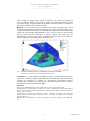
two Adriatic pits has been explored in March 2013. The presence of the hyper-dense water that was formed
in the northern Adriatic Sea in the extraordinary cold winter the year before was detected in the deep layer
of the Pomo Pit. Low microbial abundance and activity characterized both pits but the signal of more
efficient bacterial growth associated with more intense viral proliferation was detected in the deeper layer
of the Pomo Pit characterized by the presence of residual dense water.
Key-words: viruses, bacteria, dense water, Adriatic Sea.
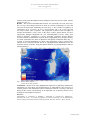
Introduction - The shelf dense water formation area is located in the N Adriatic shelf.
North Adriatic Dense Water (NAdDW) flows along the W Adriatic shelf, replacing old
waters in the middle and south Adriatic depressions (Pomo Pit and South Adriatic PitSAP respectively) (Mihanović et al., 2013). NAdDW partly transforms into Adriatic
dense Water and subsequently flows out the Adriatic through the Strait of Otranto,
sinking to the Ionian deep layers and affecting the whole deep Eastern Mediterranean.
The Adriatic Deep Water (ADW) originates in the South Adriatic. The outflow from
the Adriatic is compensated by the advection of saltier Levantine Intermediate Water
(LIW) from the Ionian Sea. In the winter 2012 the NAdDW reached extremely high
densities with σθ>30 kg m-3 (Mihanović et al., 2013) mainly due to long-lasting (~21
days) Bora wind bursts measured between the end of January and mid-February 2012
and was additionally favoured by very weak riverine discharge. Notwithstanding
previous investigations dealt with microbial dynamics in these areas, little is known
about microbial presence and activity in dense waters. Viruses and heterotrophic
prokaryotes (hereinafter called bacteria) were investigated as they constitute the most
pervasive component of marine plankton with dynamics and activity that are tightly
coupled with the water masses circulation.
Materials and methods - The study was carried out onboard R/V OGS ‘Explora’ in
March (21st to 28th) 2013. At two Adriatic pits, the middle one (Pomo, 42°52.650’N,
14°43.790’E, 270 m deep) and the south one (SAP, 41°32.010’ N, 18°5.100’E, 1200
m deep) water samples were collected for physico-chemical and microbial
characterization at eight depths by a Rosette sampler for 24 Niskin 10 L bottles
equipped with SBE 911 CTD probe. The abundance of bacteria and viruses was
determined by fluorescence microscopy according to Patel et al. (2007). Bacterial
Carbon Production (BCP) was assayed by the incorporation of [3H]-Leu while
respiration rates (ETS) were estimated according to Packard and Williams (1981).
Bacterial Growth Efficiency (BGE) was calculated according to Cole et al. (1988).
Virus-Bacterium Ratio, as a proxy of the relationship between these two components,
was obtained by dividing the abundance of viruses by the bacterial one.
179
Volume pre-print