1
AT E X
XX-9963ATEX Rev.02_0911
GRUPPI TRATTAMENTO ARIA - ISTRUZIONI ATEX
AIR PREPARATION EQUIPMENT - ATEX INSTRUCTIONS
HZE-C
HZE-F
ITALIANO
ENGLISH
GRUPPI TRATTAMENTO ARIA
SERIE HZ - Taglia 0/1/2
AIR PREPARATION EQUIPMENT
HZ SERIES - Sizes 0/1/2
Il codice dell’apparecchiatura riporta il suffisso “X” al termine del
corrispondente codice standard.
The suffix “X” is added at the end of the standard part number
of the equipment.
1 Trasporto e stoccaggio
1 Transport and Storage
Stoccare il prodotto in locali asciutti, areati e non esposti ad
agenti corrosivi.
2 Montaggio e smontaggio
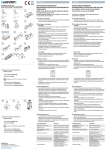
SPECIFICHE ETICHETTA PRODOTTO
PRODUCT LABEL
- Logo UNIVER / UNIVER logo
- Marcatura / Marking
II 3 GD c T5 5 °C ≤ Ta ≤ 60 °C
- Codice prodotto / Product code
- Lotto di produzione / Production lot
- Pressione massima / Maximum pressure
Store the product for short periods in dry, shaded and ventilated
premises which are not exposed to corrosive agents.
2 Assembly and Disassembly
Montaggio
Il prodotto deve essere integro. Non apportare modifiche se non
espressamente autorizzate.
Il montaggio e la messa in funzione devono essere fatte da
personale qualificato ed autorizzato, in conformità con le
istruzioni d’uso.
Utilizzare esclusivamente gli accessori previsti a catalogo.
Non utilizzare accessori di fissaggio o strumenti di montaggio
corrosi o danneggiati.
Limitare il più possibile il numero dei raccordi amovibili e la
lunghezza dei tubi flessibili.
Chiudere gli orifizi inutilizzati con gli appositi tappi di protezione.
Lasciare facilmente accessibili le superfici da pulire.
Proteggere l’apparecchio da oggetti in caduta.
Collegamento ai morsetti di messa a terra.
Ove previsto, per le apparecchiature elettriche o meccaniche,
deve essere utilizzato il morsetto di messa a terra di norma
evidenziato dal seguente simbolo:
Assembly
The product must be complete without any modification
unless expressly authorized.
The assembly and the starting have to be effected by specialized
and authorized staff in conformity with the directions for use.
Only the accessories indicated in the catalogue have to be used.
Don’t use fixing accessories or assembly equipment corroded
with rust or damaged.
Fixed fittings and the length of flexible tubes have to be
restricted to the minimum.
Close the unused orifices with the special protection plugs.
The surfaces to be cleaned have to be easily accessible.
Protect the equipment against objects likely to fall down.
Connection with the grounding terminals.
For the electric or mechanical products, where foreseen, the
standard grounding terminal with the following symbol has to
be used:
G RO UND
Tale morsetto deve essere collegato con la linea di messa a terra
generale dell’impianto mediante un conduttore avente sezione
≥ 4 mm2.
Abbinare gli elementi modulari tra loro tramite gli appositi kit di
montaggio.
This terminal has to be connected to the general grounding line
of the plant by means of a conductor with section ≥ 4 mm2.
Link together the modular elements by using the special
assembly kits.
Smontaggio
Scaricare la pressione di linea.
Disassembly
Discharge the pressure in line.
3 Messa in servizio
3 Starting
Alimentare il gruppo con aria compressa.
Regolare i componenti con le apposite manopole.
4 Utilizzo/Regolazione
5 Manutenzione e cura
The aim of the FRL unit is to prepare the compressed air in a way
such as to provide users with air having a stated quality and
stated characteristics. The unit can be used in potentially
explosive atmosphere in area 2 and 22, gas and dust.
The following requisites must be observed:
- Compressed air has to be used.
- Minimum and maximum pressure limits indicated in the
catalogue.
- Minimum and maximum temperature limits indicated on the
equipment marking.
- The pressurization of a discharged installation has to take place
gradually in order to anticipate sudden movements of the
actuator due to the absence of counterpressure.
- The compressed air being released must not be discharged in
explosive atmosphere.
- Make sure that the exhausts are conveyed adequately in a safe area.
- Pressure regulation. Control the supply pressure. Pull the knob
upwards and turn it clockwise or counter-clockwise; at the end
push the knob downwards in order to block the value thus
obtained.
- Regulation of the lubrication: turn the graduated lubricator
dome. As the latter is transparent it is possible to control the
dropping of the oil.
- Filling up of the oil: size 1 and 2: by means of the plug placed
on the lubricator without any tool.
This operation may be effected with the installation under
pressure.
- Filling up of the oil: size 0. Remove bowl with guard: the guard
has to be pushed upwards and ¼ turn has to be effected to
the left; afterwards the bowl has to be detached from the
guard by acting on the diametrically opposed tongues.
- Make sure that there is no pressure in the installation.
5 Maintenance and Care
In caso di presenza di impurità sulla superficie, pulire il
componente con un panno morbido antistatico.
Ogni intervento di revisione deve essere eseguito da personale
qualificato ed autorizzato, in conformità con le istruzioni d’uso.
Prima di effettuare qualunque operazione di manutenzione
all’impianto, accertarsi dell’assenza di pressione.
Revisionare l’apparecchio quando:
Should the surface present impurities, clean the component
with a soft antistatic cloth.
Each overhaul operation has to be carried out by qualified and
authorized staff in compliance with the operating instructions.
Before carrying out any maintenance on the installation make
sure that same is not under pressure.
Carry out overhaul of the equipment when:
Anomalia/Situazione
Intervento
Anomaly/situation
Intervention
Raggiunti i 2 anni
Effettuare la manutenzione ordinaria.
2 years have elapsed
Effect normal maintenance.
Visivo danneggiamento della parte
esterna
Consultare il distriburore.
Visible damage of the external part
Consult distributor.
Perdita percepibile
Controllare che i raccordi siano
connessi regolarmente.
Consultare il distriburore.
Perceptible leakage
Check that the fitting are correctly
fixed.
Consult distributor.
6 Dati tecnici di funzionamento
I-20128 MILANO - Via Eraclito, 31
Tel. +39-0225298.1 - Fax +39-022575254
[email protected]
www.univer-group.com
Connect the unit to the compressed air.
Adjust the components with the special knob.
4 Use/Adjustment
Scopo del gruppo FRL è trattare l’aria compressa in modo che
gli utilizzatori possano disporre di aria di qualità e caratteristiche
determinate. L’apparecchio può essere utilizzato in atmosfera
potenzialmente esplosiva in zona 2 e 22, gas e polveri.
È necessario rispettare le avvertenze seguenti:
- Si deve utilizzare aria compressa.
- Rispettare i limiti di pressione minimi e massimi indicati a
catalogo.
- Rispettare i limiti di temperatura minimi a massimi indicati
sulla marcatura dell’apparecchiatura.
- La pressurizzazione di un impianto scarico deve avvenire
gradualmente per prevenire movimenti improvvisi
dell’attuatore causa l’assenza di contropressione.
- L’aria compressa in scarico non deve essere scaricata in atmosfera
esplosiva.
- Convogliare gli scarichi in area sicura.
- Regolazione della pressione. Verificare la pressione di
alimentazione. Tirare la manopola verso l’alto e ruotarla in
senso orario o antiorario; al termine spingere la manopola verso
il basso per bloccare il valore raggiunto.
- Regolazione della lubrificazione: ruotare la cupola graduata.
Essendo trasparente permette di controllare il gocciolamento
dell’olio.
- Rabbocco dell’olio: Taglia 1 e 2: tramite il tappo posto sul
lubrificatore senza nessun attrezzo.
Può essere effettuato con l’impianto in pressione.
- Rabbocco dell’olio: Taglia 0. Rimuovere la tazza con guardia: si
spinge verso l’alto la guardia e si gira verso sinistra di ¼ di giro;
poi si stacca la tazza dalla guardia agendo sulle linguette
diametralmente opposte.
- Accertarsi dell’assenza di pressione nell’impianto.
UNIVER S.p.A.
G RO UND
6 Technical data
Pressione di funzionamento
(aria compressa)
10 bar ove non diversamente
indicato
Working pressure (compressed air)
Temperatura ambiente
-5 °C ÷ 60 °C
Ambient temperature
-5 °C ÷ 60 °C
Max. temperatura di superficie
≤ 85 °C
Max. surface temperature
< 85 °C
Fluido
T max 40 °C
Fluid
T max 40 °C
10 bar if not stated otherwise
7 Salute e sicurezza
7 Health and Security
Effettuare una valutazione dei rischi ed eliminare, o ridurre, le
potenziali fonti di innesco in conformità ai requisiti della zona
classificata d’installazione.
Osservare tutte le norme di salute e sicurezza previste per il sito
(area classificata) ove vengono installate le apparecchiature, nel
pieno rispetto dell’analisi del rischio del Datore di lavoro
(DL 626/94 Titolo VIII-bis) secondo DL 233/03 in attuazione della
Direttiva 1999/92/CE.
Indossare i dispositivi di protezione individuale previsti.
Eventuali applicazioni di componenti elettrici e/o elettronici
dovranno avvenire in conformità ai requisiti di protezione
prescritti dalla Direttiva Atex 94/9/CE.
Gli utenti finali hanno la responsabilità di garantire la compatibilità
del prodotto con l’applicazione specifica (ovvero pressione e
natura del fluido di potenza che possano influenzarne l’idoneità
e l’affidabilità).
Non maneggiare apparecchi che siano stati usati in presenza
di sostanze nocive, a meno che non siano stati completamente
decontaminati e certificati come sicuri per la manipolazione.
Il fluido di potenza utilizzato per gli apparecchi é solo aria.
A richiesta possono essere utilizzati gas inerti.
Se gli apparecchi devono essere usati in presenza di gas instabili,
accertarsi che non vengano superati i parametri d’esercizio indicati
dal fabbricante.
Questi apparecchi non sono dispositivi di sicurezza e devono
essere controllati/protetti da altri dispositivi al fine di prevenire
gli eccessi di pressione.
Ove le temperature superficiali degli apparecchi siano riscontrate
prossime alla temperatura minima di accensione dell’atmosfera
potenzialmente esplosiva, effettuare sempre un appropriato
isolamento termico (idoneo anche come ulteriore protezione da
polveri potenzialmente esplosive-grado D-) delle apparecchiature
come richiestodalla norma EN1127-1(par.6.4.2).
E’ fatto divieto assoluto di utilizzo di fiamme in prossimità degli
apparecchi sia in fase di esercizio che di manutenzione.
Al fine di evitare l’accumulo di polveri dovrà essere effettuata
una pulizia frequente dell’apparecchiatura tramite soffiaggio di aria.
Carry out an evaluation of risks and eliminate or reduce the
potential primer sources in accordance with the requisites of the
classified installation area.
Observe all health and security specifications foreseen for the
site (classified area), in which the products are installed, fully
respecting the risk analysis of the employer (DL 626/94 title
VIII-bis) according to DL 233/03 in accomplishment of the
Directive 1999/92/CE.
Wear the foreseen individual protection devices.
If electric or electronic components are added, this must be
done in accordance with the protection requisites prescribed by
the Directive Atex 94/9/CE.
The final users are responsible for guaranteeing the compatibility
of the product with the specific application (or pressure and
type of the power fluid which might affect the suitability and
reliability).
Don’t handle products which have been used in the presence of
harmful materials, unless they have been decontaminated and
certified as being secure for handling.
The power fluid used for the products is exclusively air.
Upon request it is possible to use inert gas.
If the products have to be used in the presence of instable gas,
make sure that the working parameters indicated by the
manufacturer are not exceeded.
These products are not to be considered security devices and
have to be controlled/protected by other devices in order to
prevent pressure excesses.
In case the surface temperature of the equipment is close to
the minimum ignotion temperature of the potentially explosive
atmosphere, make sure that an appropriate thermal insulation of
the equipment is effected (suitable also for a further protection
against potentially explosive dust - degreen D-) as requested by
the Standard EN1127-1(sect.6.4.2).
The use of flames near the equipment during both operation
and maintenance is absolutely prohibited.
A frequent cleaning of the equipment by means of air blow has
to be effected in order to avoid accumulation of dust.
Per ulteriori informazioni e dati tecnici consultare il catalogo
generale UNIVER oppure rivolgersi alla Sede.
For any further information or technical details refer to our
general UNIVER catalogue or contact our Head Office.