1
ISTRUZIONI PER L’UTILIZZO / INSTRUCTIONS FOR USE
INSTRUCCIONES PARA EL EMPLEO / GEBRAUCHSANWEISUNGEN
INSTRUCTION POUR L'EMPLOI / INSTRUÇÕES PARA O USO
1
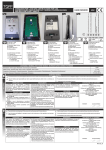
TELECOMANDO / REMOTE CONTROL
TELEMANDO / FERNBEDIENUNGSEINHEIT
TELECOMMANDE / TELECOMANDO
2
5
3
8
2
9
4
11
17
8
7
1
TR8
(IR/RX)
12
16
9
10
3
13
14
6
15
4
8
6
1) Pulsante 1-2
2) Pulsante 3-4
3) Pulsante 5-6
4) Pulsante 7-8
5) Trasmettitore infrarossi
6) Coperchio batterie
7) Basamento
8) Fori per fissaggio
9) Coperchio basamento
10) Blocco magnete
11) Ganci basamento
12) Viti di fissaggio
13) Magnete
14) Vano magnete
15) Gancio coperchio
16) N.2 Batterie 3V (CR2032)
17) Porta batterie
0P0000
1.0
06.06
COD. / P/N / CODE
VER. / AUFG.
REV.
12
tecnologie del movimento
IT
1) Push-button 1-2
EN
2) Push-button 3-4
3) Push-button 5-6
4) Push-button 7-8
5) Infrared transmitter
6) Battery cover
7) Basement
8) Fastening holes
9) Basement cover
10) Magnet block
11) Basement hooks
12) Fastening screws
13) Magnet
14) Magnet compartment
15) Cover hook
16) No. 2 3V Batteries (CR2032)
17) Battery holder
1) Pulsador 1-2
2) Pulsador 3-4
3) Pulsador 5-6
4) Pulsador 7-8
5) Transmitidor infrarrojos
6) Tapa baterías
7) Base
8) Agujeros para sujeción
9) Tapa base
10) Bloque imán
11) Ganchos base
12) Tornillos de sujeción
13) Imán
14) Alojamiento imán
15) Gancho tapa
16) N.2 baterías 3V (CR2032)
17) Porta baterías
ES
1) Druckknopf 1-2
DE
2) Druckknopf 3-4
3) Druckknopf 5-6
4) Druckknopf 7-8
5) Infrarot-Sender
6) Batteriefachdeckel
7) Sockel
8) Befestigungslöcher
9) Sockeldeckel
10) Magnetblock
11) Sockelhaken
12) Befestigungsschrauben
13) Magnet
14) Magnetfach
15) Deckelhaken
16) Nr. 2 Batterien 3V (CR2032)
17) Batteriefach
1) Poussoir 1-2
FR
2) Poussoir 3-4
3) Poussoir 5-6
4) Poussoir 7-8
5) Transmetteur infrarouges
6) Couvercle batteries
7) Embase
8) Trous pour fixation
9) Couvercle embase
10) Bloc aimant
11) Crochets embase
12) Vis de fixation
13) Aimant
14) Casier aimant
15) Crochet couvercle
16) N.2 Batteries 3V (CR2032)
17) Porte batteries
1) Botão 1-2
2) Botão 3-4
3) Botão 5-6
4) Botão 7-8
5) Transmissor infravermelhos
6) Tampa baterias
7) Base
8) Furos para a fixação
9) Tampa base
10) Bloco magneto
11) Ganchos base
12) Parafusos de fixação
13) Magneto
14) Alojamento do magneto
15) Gancho da tampa
16) 2 Baterias 3V (CR2032)
17) Porta-baterias
PT
DATI TECNICI / TECHNICAL DATA / DATOS TECNICOS / TECHNISCHE DATEN / DONNEES TECHNIQUES / DADOS TÉCNICOS
Frequenza (mod. RX) / Frequency (mod. RX) / Frecuencia (mod. RX) / Frequenz (Mod. RX) / Fréquence (mod. RX) / Freqüência (mod. RX)
433.92 MHz
6V
Alimentazione / Power supply / Alimentación / Stromversorgung / Alimentation / Alimentação
Raggio d’azione / Operating range / Rayo de acción / Reichweite / Rayon d'action / Raio de acção
15 ÷ 20 m
Temperatura di funzionamento / Operating temperature / Temperatura de funcionamiento / Betriebstemperatur / Température de fonctionnement / Temperatura de funcionamento
-10°C ÷ 55°C
160 x 53 x 20,3 mm
Dimensioni / Dimensions / Dimensiones / Abmessungen / Dimensions / Dimensões
N.8 (ON-OFF)
Pulsanti / Push-buttons / Pulsadores / Druckknöpfe / Poussoirs / Botões
Peso telecomando (senza batterie) / Remote control weight (without batteries) / Peso telemando (sin baterías)
Gewicht Fernbedienungseinheit (ohne Batterien) / Poids télécommande (sans batteries) / Peso do telecomando (sem baterias)
67 g
Peso supporto magnetico / Magnetic support weight / Peso soporte magnético / Gewicht magnetische Stütze / Poids support magnétique / Peso do suporte magnético
37 g
Paesi di utilizzazione / Countries of use / Países de empleo / Gebrauchsländer / Pays d'emploi / Países de utilização
AT
BE
CH
DE
ES
FI
FR
IE
IS
IT
LU
NL
NO
PT
SE
UK
ITALIANO
IT
AVVERTENZE GENERALI
• Le presenti istruzioni sono parte integrante del telecomando e devono
essere conservate per futuri riferimenti;
• Il Fabbricante declina ogni responsabilità per danni causati
dall’inosservanza delle norme e avvertenze qui riportate;
• È assolutamente vietato l’uso del telecomando in ambienti con
atmosfera potenzialmente esplosiva;
• Vietato aprire e/o manomettere il telecomando.
DESTINAZIONE D’USO
FUNZIONAMENTO
SOSTITUZIONE DELLE BATTERIE (FIG. 4)
DICHIARAZIONE CE DI CONFORMITÀ
1) Prima di azionare il telecomando l’utilizzatore deve
verificare la corretta assegnazione e identificazione
dei pulsanti luminosi ai vari azionamenti da
comandare;
2) Prima di azionare il telecomando l’utilizzatore deve
accertarsi che nelle vicinanze dell’azionamento
comandato a distanza non vi siano persone, animali e
cose la cui incolumità accidentalmente possa essere
compromessa;
3) Solo dopo aver eseguito i punti suddetti e
assicurandosi di trovarsi nel raggio d’azione di 15 ÷ 20
m dalla centrale di comando, l’utilizzatore può
azionare il telecomando premendo i relativi pulsanti
luminosi. Per il modello a raggi infrarossi (IR) dirigere
il telecomando con il trasmettitore infrarossi verso la
centrale di comando assicurandosi che il fascio non
sia interrotto da ostacoli. Una diminuzione della
portata del raggio d’azione può essere dovuta alle
batterie che si stanno scaricando.
1) Aprire il coperchio batterie (Rif. 6) tirando con
l’unghia o con un utensile idoneo il gancio (Rif. 15);
2) Estrarre con cautela dal telecomando, senza tirare i
fili di collegamento, il porta batterie (Rif. 17);
3) Sfilare le due batterie esauste (Rif. 16) e sostituirle
con quelle nuove: fare attenzione a rispettare la
corretta polarità, evitando di maneggiare le batterie a
mani nude;
4) Inserire nel telecomando il porta batterie;
5) Chiudere correttamente il coperchio accertandosi
che il gancio faccia “clic”;
6) Smaltire le batterie esauste nel rispetto della
legislazione vigente nel paese di utilizzazione.
TOPP SPA
via Galvani, 59 - 36066 Sandrigo (VI) Italy
www.topp.it
Dichiara che l’apparecchio elettrico denominato:
TELECOMANDO TR8 (IR/RX)
N° di serie dal 0000001 al 0001000
Anno di costruzione: 2006
è conforme alle condizioni delle seguenti direttive:
73/23/CEE - 89/336/CEE - 99/5/CEE
e le seguenti norme armonizzate:
ETSI EN 301 489-3 V1.4.1 (2002)
ETSI EN 301 489-1 V1.4.1 (2002)
ETSI EN 300 220 - 3 V1.1.1 (2000)
EN 60950-1 (2001) + EN 60950-1/A11 (2004);
BASAMENTO / ATTACCO A MURO (FIG. 3)
EN
EX
Il telecomando è stato progettato e realizzato
esclusivamente per comandare via radio (RX) o
infrarossi (IR) le unità di alimentazione e comando
attuatori “Originali TOPP SPA”. È assolutamente vietato
l’uso del telecomando per usi impropri diversi dalla
destinazione d’uso suddetta.
1) Aprire i ganci del basamento (Rif. 11);
2) Togliere i tappi dai fori di fissaggio (Rif. 8),
appoggiare il basamento al muro e segnare i fori;
3) Con un trapano idoneo fare due fori da Ø 6 mm,
inserire i relativi tasselli e avvitare parzialmente le
viti;
4) Agganciare il basamento alle viti (Rif. 12) e fissarle.
5) Inserire il magnete nell’apposito vano (Rif. 14) e
agganciare il coperchio (Rif. 9) al basamento.
ENGLISH
• Prima di utilizzare il telecomando è obbligatorio leggere e comprendere
in tutte le parti le presenti istruzioni e le istruzioni per l’uso della
centrale di comando e dei relativi attuatori comandati;
• Tenere il telecomando fuori dalla portata dei bambini e di persone non
autorizzate all’uso. Non lasciarlo mai incustodito;
ATTENZIONE: LE BATTERIE SONO ALTAMENTE
INQUINANTI. È ASSOLUTAMENTE VIETATO
DISPERDERLE NELL’AMBIENTE.
Sono state eseguite tutte le necessarie
prove di radiofrequenza.
06/06/2006
Cavalcante Matteo
GENERAL WARNINGS
• These instructions are integral part of the remote control and must be
preserved for future reference;
• The Manufacturer declines all liabilities for damages caused by the
inobservance of the regulations and warnings herein contained;
• Before using the remote control, it is compulsory to read and
understand these instructions in all their parts, as well as the
instructions for use of the main control unit and of the related controlled
actuators;
EX
• Keep the remote control out of reach of children and of people not
authorized to use it. Never leave it unattended;
• It is strictly forbidden to use the remote control in environments with
potentially explosive atmosphere;
• It is forbidden to open and/or to tamper the remote control.
DESTINATION OF USE
OPERATION
REPLACEMENT OF THE BATTERIES (FIG. 4)
DECLARATION OF CE CONFORMITY
The remote control was designed and manufactured
exclusively to control by radio (RX) or infrared (IR)
communication the original actuators feeding and
control units of “TOPP SPA”. It is strictly forbidden to use
the remote control for improper uses other then the
above mentioned destination of use.
1) Before enabling the remote control, the user must
check the correct assignment and identification of the
light push-buttons to the various drives to be
controlled;
2) Before enabling the remote control, the user must
check that close to the remotely controlled drive there
are no persons, animals and things whose safety may
accidentally be compromised;
3) Only after having performed the above mentioned
procedures and having checked to be within the
operating range of 15 ÷ 20 m from the main control
unit, the user can enable the remote control by
pressing the related light push-buttons. For the
infrared model (IR) direct the remote control with the
infrared transmitter towards the main control unit
making sure that the beam is not interrupted by any
obstacle. A reduction of the operating range can be
due to the batteries that run down.
1) Open the battery cover (Ref. 6) pulling the hook
(Ref. 15) with the nail or with a proper tool;
2) Carefully extract the battery holder (Ref. 17) from the
remote control without pulling the connection wires;
3) Remove the two run down batteries (Ref. 16) and
replace them with new ones: pay attention to
observe the correct polarity, avoiding handling the
batteries with bare hands;
4) Insert the battery holder in the remote control;
5) Correctly close the cover making sure that the hook
“clicks”;
6) Dispose the run down batteries in compliance with
the regulations in force in the country of use.
TOPP SPA
via Galvani, 59 - 36066 Sandrigo (VI) Italy
www.topp.it
Declares that the electric device called:
REMOTE CONTROL TR8 (IR/RX)
Serial No. from 0000001 to 0001000
Year of construction: 2006
complies with the requirements of the following
Directives:
73/23/EEC - 89/336/EEC - 99/5/EEC
and of the following harmonized standards:
ETSI EN 301 489-3 V1.4.1 (2002)
ETSI EN 301 489-1 V1.4.1 (2002)
ETSI EN 300 220 - 3 V1.1.1 (2000)
EN 60950-1 (2001) + EN 60950-1/A11 (2004);
BASEMENT / WALL CONNECTION (FIG. 3)
1) Open the basement hooks (Ref. 11);
2) Remove the plugs from the fastening holes (Ref. 8),
lean the basement to the wall, and mark the holes;
3) With a suitable drill create two 6 mm Ø holes, insert
the related dowels and partially screw the screws;
4) Couple the basement with the screws (Ref. 12) and
tighten these latter.
5) Insert the magnet in the proper compartment
(Ref. 14) and hook the cover (Ref. 9) to the
basement.
C A U T I O N : B AT T E R I E S A R E H I G H LY
POLLUTING. IT IS STRICTLY FORBIDDEN TO
DISCHARGE THEM IN THE ENVIRONMENT.
All necessary radiofrequency tests were performed.
06/06/2006
Cavalcante Matteo
ES
ESPAÑOL
ADVERTENCIAS GENERALES
• Estas instrucciones son parte integrante del telemando y se deben
guardar para futuras referencias;
• El Fabricante declina toda responsabilidad para daños causados por la
inobservancia de las normas y advertencias aquí indicadas;
DESTINACION DE USO
El telemando ha sido proyectado y realizado
exclusivamente para mandar vía radio (RX) o infrarrojos
(IR) las unidades de alimentación y mando accionadores
“Originales TOPP SPA”. Se prohíbe absolutamente el
uso del telemando para usos impropios diferentes del
arriba mencionado destino de uso.
BASE / ENGANCHE AL MURO (FIG. 3)
FRANÇAIS
FR
DEUTCH
DE
1) Abrir los ganchos de la base (Ref. 11);
2) Quitar los tapones desde los agujeros de sujeción
(Ref. 8), apoyar la base al muro y marcar los
agujeros;
3) Con un taladro adecuado hacer dos agujeros de Ø 6
mm, introducir las relativas clavijas y atornillar
parcialmente los tornillos;
4) Enganchar la base a los tornillos (Ref. 12) y
sujetarlas.
5) Introducir el imán en el alojamiento adecuado
(Ref. 14) y enganchar la tapa (Ref. 9) a la base.
• Antes de utilizar el telemando es obligatorio leer y comprender en todas
sus partes estas instrucciones y las instrucciones para el uso de la
central de mando y de los relativos accionadores mandados;
• Guardar el telemando fuera del alcance de los niños y de personas no
FUNCIONAMIENTO
1) Antes de accionar el telemando el usuario debe
averiguar la correcta asignación e identificación de
los pulsadores luminosos a los varios accionamientos
a mandar;
2) Antes de accionar el telemando el usuario debe
asegurarse que en las cercanas del accionamiento
mandado a distancia no hayan personas, animales y
cosas cuya salud accidentalmente pueda ser
comprometida;
3) Solamente después de haber realizado los
antedichos puntos y asegurándose de encontrarse
en el rayo de acción de 15 ÷ 20 m desde la central de
mando, el usuario puede accionar el telemando
pulsando los relativos pulsadores luminosos. Para el
modelo de rayos infrarrojos (IR) dirigir el telemando
con el transmitidor de infrarrojos hacia la central de
mando asegurándose que la faja no sea interrumpida
por obstáculos. Una disminución de la capacidad del
rayo de acción puede ser debida a las baterías que se
están descargando.
EX
autorizadas al uso. No dejarlo sin guardia;
• Se prohíbe absolutamente el uso del telemando en ambientes con
atmósfera potencialmente explosiva;
• Se prohíbe abrir y/o manipular el telemando.
SUSTITUCION DE LAS BATERIAS (FIG. 4)
DECLARACION CE DE CONFORMIDAD
1) Abrir la tapa de baterías (Ref. 6) tirando con la uña o
con un utensilio adecuado el gancho (Ref. 15);
2) Extraer con cuidado desde el telemando, sin tirare
los hilos de conexión, el porta baterías (Ref. 17);
3) Quitar las dos baterías descargadas (Ref. 16) y
sustituirlas con aquellas nuevas: hacer cuidado en el
respectar la correcta polaridad, evitando de manejar
las baterías con las manos nudas;
4) Introducir en el telemando el porta baterías;
5) Cerrar correctamente la tapa asegurándose que el
gancho haga “clic”;
6) Eliminar las baterías acabadas en el respeto de la
legislación en vigor en el país de empleo.
TOPP SPA
via Galvani, 59 - 36066 Sandrigo (VI) Italy
www.topp.it
Declara que el aparato eléctrico llamado:
TELEMANDO TR8 (IR/RX)
N° de serie desde el 0000001 al 0001000
Año de construcción: 2006
es conforme a las condiciones de las siguientes directivas:
73/23/CEE - 89/336/CEE - 99/5/CEE
y las siguientes normas harmonizadas:
ETSI EN 301 489-3 V1.4.1 (2002)
ETSI EN 301 489-1 V1.4.1 (2002)
ETSI EN 300 220 - 3 V1.1.1 (2000)
EN 60950-1 (2001) + EN 60950-1/A11 (2004);
CUIDADO: LAS BATERIAS LLEVAN GRAN
POLUCION. SE PROHIBE ABSOLUTAMENTE DE
ELIMINARLAS EN EL AMBIENTE.
Se han realizado todas las necesarias
pruebas de radiofrecuencia.
06/06/2006
Cavalcante Matteo
ALLGEMEINE HINWEISE
• Die gegenständlichen Anweisungen sind Bestandteil der
Fernbedienungseinheit und sind zum zukünftigen Nachschlagen
aufzubewahren;
• Der Hersteller lehnt jede Haftung für Schäden ab, die von der
Missachtung der hierein angegebenen Vorschriften und Hinweise
verursacht sind;
GEBRAUCHSBESTIMMUNG
• Vor dem Gebrauch der Fernbedienungseinheit muss man zwangsmäßig
die gegenständlichen Anweisungen und die Anweisungen zum
Gebrauch der Hauptsteuereinheit und der dazugehörenden
gesteuerten Stellantriebe vollkommen lesen und verstehen;
• Die Fernbedienungseinheit darf nicht in die Hände von Kindern und von
zum Gebrauch nicht autorisierten Leuten gelangen. Die Vorrichtung nie
BETRIEB
Die Fernbedienungseinheit wurde ausschließlich dazu 1) Vor der Inbetriebnahme der Fernbedienungseinheit
entworfen und hergestellt, um durch Funk- (RX) oder muss der Anwender die richtige Zuordnung und
Infrarotübertragung (IR) die Stromversorgungs- und Identifizierung der leuchtenden Druckknöpfe mit
Steuereinheiten der “Originalstellantriebe TOPP SPA” zu Rücksicht auf die verschiedenen Stellantriebe prüfen,
s t e u e r n . E s i s t s t r e n g v e r b o t e n , d i e die zu steuern sind;
Fernbedienungseinheit für unsachgemäße Zwecke 2) Vor der Inbetriebnahme der Fernbedienungseinheit
anders als die o.e. Gebrauchsbestimmung zu muss der Anwender prüfen, dass es in der Nahe des
verwenden.
ferngesteuerten Stellantriebs keine Personen, Tiere
SOCKEL / WANDANSCHLUSS (ABB. 3)
und Dingen gibt, deren Sicherheit zufällig gefährdet
sein könnte;
1) Die Haken vom Sockel (Bez. 11) öffnen;
2) Die Stopfen von den Befestigungslöchern (Bez. 8) 3) Erst nach den oben beschriebenen Kontrolle und nur
wenn man sich an einer Reichweite von 15 ÷ 20 m von
entfernen und den Sockel an die Wand lehnen; dann
der Hauptsteuereinheit befindet, kann der Anwender
die Löcher markieren;
die Fernbedienungseinheit betätigen, indem man auf
3) Mit einer zweckmäßigen Bohrmaschine zwei
die dazugehörenden leuchtenden Druckknöpfe
Bohrungen mit einem Ø von 6 mm schaffen. Die
drückt.
dazugehörenden Dübel einführen und die Schrauben
Beim Infrarot-Modell (IR) die Fernbedienungseinheit
teilweise anschrauben;
mit dem Infrarot-Sender nach der Hauptsteuereinheit
4) Den Sockel mit den Schrauben (Bez. 12) kuppeln
richten und prüfen, dass den Strahl von keinem
und sie befestigen.
Hindernis unterbrochen wird. Eine Verminderung der
5) Den Magnet ins zweckmäßige Fach (Bez. 14)
Reichweite kann von der Entladung der Batterien
einführen und den Deckel (Bez. 9) am Sockel
verursacht sein.
kuppeln.
EX
unbewacht lassen;
• Es ist streng verboten, die Fernbedienungseinheit in Umgebungen mit
potentiell explosiver Atmosphäre zu verwenden;
• Es ist verboten, die Fernbedienungseinheit zu öffnen oder an ihr
missbräuchlich einzugreifen.
AUSWECHSELN DER BATTERIEN (ABB. 4)
CE-KONFORMITÄTSERKLÄRUNG
1) Den Batteriefachdeckel (Bez. 6) öffnen, indem man
den Haken (Bez. 15) mit dem Nagel oder mit einem
zweckmäßigen Werkzeug abzieht;
2) Das Batteriefach (Bez. 17) ganz sorgfältig von der
Fernbedienungseinheit abziehen, ohne dabei die
Verbindungskabel zu ziehen;
3) Die zwei erschöpften Batterien (Bez. 16) entfernen
und sie mit neuen Batterien austauschen: dabei
achten die richtige Polarität zu beachten. Vermeiden,
die Batterien mit nackten Händen zu handhaben;
4) Das Batteriefach in die Fernbedienungseinheit
einführen;
5) Den Deckel richtigerweise schließen und dabei
prüfen, dass der Haken klickt;
6) Die erschöpften Batterien in Übereinstimmung mit
den im Gebrauchsland geltenden Regelungen
entsorgen.
TOPP SPA
via Galvani, 59 - 36066 Sandrigo (VI) Italy
www.topp.it
erklärt, dass die elektrische Vorrichtung:
FERNBEDIENUNGSEINHEIT TR8 (IR/RX)
Seriennummer von 0000001 bis 0001000
Baujahr: 2006
mit den Anforderungen der folgenden Richtlinien:
73/23/EWG - 89/336/EWG - 99/5/EWG
und mit den folgenden harmonisierten Normen
übereinstimmt:
ETSI EN 301 489-3 V1.4.1 (2002)
ETSI EN 301 489-1 V1.4.1 (2002)
ETSI EN 300 220 - 3 V1.1.1 (2000)
EN 60950-1 (2001) + EN 60950-1/A11 (2004);
AORSICHT: DIE BATTERIEN SIND SEHR
U M W E LT F E I N D L I C H . E S I S T S T R E N G
V E R B O T E N , S I E I N D I E U M W E LT Z U
VERBREITEN.
Alle notwendigen Radiofrequenzprüfungen sind
vorgenommen worden.
06/06/2006
Cavalcante Matteo
AVERTISSEMENTS GENERAUX
• Ces instructions sont une partie intégrante de la télécommande. Il faut
les conserver pour toute référence future;
• Le Producteur décline toute responsabilité pour dommages causés par
la non observance des normes et avertissements indiqués ici;
• Avant d'utiliser la télécommande il est obligatoire de lire et comprendre
dans toutes ses parties ces instructions et les instructions pour l'emploi
de la centrale de commande et des relatifs actionneurs commandés;
• Il faut conserver la télécommande hors la portée des enfants et des
EX
personnes non autorisées. Ne jamais la laisser sans garde;
• Il est absolument interdit d'utiliser la télécommande dans des
environnements avec une atmosphère potentiellement explosive;
• Il est interdit d'ouvrir et/ou manipuler la télécommande.
DESTINATION D’EMPLOI
FONCTIONNEMENT
REMPLACEMENT DES BATTERIES (FIG. 4)
DECLARATION CE DE CONFORMITE’
La télécommande a été projetée et réalisée
exclusivement pour commander par voie de radio (RX)
ou infrarouges (IR) les unités d'alimentation et
commande actionneurs “Originaux TOPP SPA”.
Il est absolument interdit l'emploi de la télécommande
pour utilisations non autorisées différentes de la susdite
destination pour l'emploi.
1) Avant d'actionner la télécommande l’utilisateur doit
vérifier la correcte assignation et identification des
poussoirs lumineux aux différents actionnements à
commander;
2) Avant d'actionner la télécommande l’utilisateur doit
s'assurer que dans les alentours de l'actionnement
commandé à distance il n'y a pas de personnes,
animaux et choses dont la santé puisse être
compromise par hasard;
3) Seulement après avoir réalisé les points susdits et
s'assurant de se trouver dans le rayon d'action de
15 ÷ 20 m de la centrale de commande, l'utilisateur
peut actionner la télécommande en appuyant sur les
relatifs poussoirs lumineux. Pour le modèle à rayon
infrarouges (IR) diriger la télécommande avec le
transmetteur infrarouges vers la centrale de
commande en s'assurant que le faisceau ne soit pas
interrompu par des obstacles. Une diminution de la
capacité du rayon d'action peut être due aux batteries
en train de se décharger.
1) Ouvrir le couvercle des batteries (Réf. 6) tirant avec
l'ongle ou bien un outil approprié le crochet (Réf. 15);
2) Extraire avec attention depuis la télécommande,
sans tirer les fils de connexion, le porte batteries
(Réf. 17);
3) Enlever les deux batteries déchargées (Réf. 16) et
les remplacer avec celles nouvelles: faire attention à
respecter la correcte polarité, évitant de manipuler
les batteries mains nues;
4) Introduire dans la télécommande le porte batteries;
5) Fermer correctement le couvercle en s'assurant que
le crochet fasse “clic”;
6) Eliminer les batteries déchargées dans le respect de
la législation en vigueur dans le pays d'emploi.
TOPP SPA
via Galvani, 59 - 36066 Sandrigo (VI) Italy
www.topp.it
Déclare que l'appareil électrique qui s'appelle:
TÉLÉCOMMANDE TR8 (IR/RX)
N° de série du 0000001 au 0001000
Année de construction: 2006
est conforme aux conditions des suivantes directives:
73/23/CEE - 89/336/CEE - 99/5/CEE
et les suivantes normes harmonisées:
ETSI EN 301 489-3 V1.4.1 (2002)
ETSI EN 301 489-1 V1.4.1 (2002)
ETSI EN 300 220 - 3 V1.1.1 (2000)
EN 60950-1 (2001) + EN 60950-1/A11 (2004);
EMBASE / ACCROCHAGE AU MUR (FIG. 3)
1) Ouvrir les crochets de l'embase (Réf. 11);
2) Enlever les bouchons depuis les trous de fixation
(Réf. 8), appuyer l'embase au mur et marquer les
trous;
3) Avec une perceuse appropriée faire deux trous de
Ø 6 mm, introduire les relatifs fiches et visser
partiellement les vis;
4) Accrocher l'embase aux vis (Réf. 12) et les fixer.
5) Introduire l'aimant dans le casier approprié (Réf. 14)
et accrocher le couvercle (Réf. 9) à l'embase.
ATTENTION: LES BATTERIES SONT TRES
POLLUANTES. IL EST ABSOLUMENT INTERDIT
DE LES DISPERSER DANS L'ENVIRONNEMENT.
On a réalisé tous les nécessaires essais de
radiofréquence.
06/06/2006
Cavalcante Matteo
PORTUGUESE
PT
ADVERTÊNCIAS GERAIS
• As presentes instruções são parte integrante do telecomando e devem
ser conservadas para referências futuras;
• O Fabricante declina qualquer responsabilidade derivada por danos
causados pela falta de observação às normas e advertências nesta
descritas;
• Antes de utilizar o telecomando é obrigatório ler e compreender em
todas as partes as presentes instruções e as instruções para o uso da
central de comando e dos relativos atuadores comandados;
• Manter o telecomando longe do alcance de crianças e de pessoas não
EX
autorizadas ao uso. Não deixá-lo jamais sem ser vigiado;
• É absolutamente proibido o uso do telecomando em ambientes com
atmosfera potencialmente explosiva;
• Proibido abrir e/ou manejar ao interno do telecomando.
DESTINAÇÃO DO USO
FUNCIONAMENTO
SUBSTITUIÇÃO DAS BATERIAS (FIG. 4)
DECLARAÇÃO CE DE CONFORMIDADE
O telecomando foi projetado e realizado
exclusivamente para comandar via rádio (RX) o
infravermelhos (IR) as unidades de alimentação e
comando atuadores “Originais TOPP SPA”.
È absolutamente proibido o uso do telecomando para
usos impróprios diversos da destinação do uso acima
mencionada.
1) Antes de operar o telecomando o utilizador deve
verificar a correta designação e identificação dos
botões luminosos aos vários acionamentos a serem
comandados;
2) Antes de operar o telecomando o utilizador deve
certificar-se que nas proximidades do acionamento
comandado à distância não estejam pessoas,
animais e coisas da qual incolumidade
acidentalmente possa ser comprometida;
3) Só após ter efetuado os pontos acima e
assegurando-se de encontrar-se no raio de acção de
15 ÷ 20 m da central de comando, o utilizador pode
operar o telecomando pressionando os relativos
botões luminosos. Para o modelo a raios
infravermelhos (IR) dirigir o telecomando com o
transmissor infravermelhos para a central de
comando assegurando-se que a faixa não seja
interrompida por obstáculos. Uma diminuição da
capacidade do raio de acção pode ser devida às
baterias que estão descarregando-se.
1) Abrir a tampa das baterias (Ref. 6) tirando com a
unha ou com uma ferramenta apropriada o gancho
(Ref. 15);
2) Extrair com cautela do telecomando, sem tirar os fios
de ligação, o porta-baterias (Ref. 17);
3) Desfiar as duas baterias exaustas (Ref. 16) e
substituir com as novas: prestar atenção em
respeitar a correta polaridade, evitando de manejar
as baterias com as mãos nuas;
4) Inserir no telecomando o porta-baterias;
5) Fechar corretamente a tampa certificando-se que o
gancho faça um “clic”;
6) Eliminar as baterias exaustas respeitando a
legislação vigente no país de utilização.
TOPP SPA
via Galvani, 59 - 36066 Sandrigo (VI) Italy
www.topp.it
Declara que o aparelho elétrico denominado:
TELECOMANDO TR8 (IR/RX)
N° de serie desde 0000001 ao 0001000
Ano de construção: 2006
é conforme às condições das seguintes diretivas:
73/23/CEE - 89/336/CEE - 99/5/CEE
e as seguintes normas harmonizadas:
ETSI EN 301 489-3 V1.4.1 (2002)
ETSI EN 301 489-1 V1.4.1 (2002)
ETSI EN 300 220 - 3 V1.1.1 (2000)
EN 60950-1 (2001) + EN 60950-1/A11 (2004);
BASE / LIGAÇÃO À MURO (FIG. 3)
1) Abrir os ganchos da base (Ref. 11);
2) Remover as tampas do furo de fixação (Ref. 8),
apoiar a base ao muro e marcar os furos;
3) Com um trépano apropriado fazer 2 furos de Ø 6 mm,
inserir as relativas buchas e atarraxar parcialmente
os parafusos;
4) Enganchar a base aos parafusos (Ref. 12) e fixar-las.
5) Inserir o magneto no próprio alojamento (Ref. 14) e
enganchar a tampa (Ref. 9) à base.
ATENÇÃO: AS BATERIAS SÃO ALTAMENTE
POLUINTES. É ABSOLUTAMENTE PROIBIDO
DEITAR-LAS NO AMBIENTE.
Foram efetuadas todas as necessárias provas de
radiofreqüência.
06/06/2006
Cavalcante Matteo
TOPP SPA
via Galvani, 59 - 36066 Sandrigo (VI) Italy
Tel. +39 0444 656700 - Fax +39 0444 656701 - [email protected] - www.topp.it



![Actuación eléctrica serie [IND]](http://vs1.manualzilla.com/store/data/006319787_1-12eaf8321d1e723b597123edeaaf504d-150x150.png)