1
GB
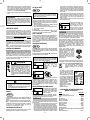
Note: Synthetic oil meeting ILSAC GFĆ2, API certiĆ
fication mark and API service symbol (shown at
left) with SJ/CF ENERGY CONSERVING" or highĆ
er, is an acceptable oil at all temperatures. Use of
synthetic oil does not alter required oil change
intervals.
CHECKING AND ADDING OIL
Fig. 3
•
•
•
•
Check oil level before starting the engine.
Check level daily, or after every eight (8) hours .
Keep oil level at FULL .
Do not overfill.
Oil filling procedure:
1. First add 2 liters (67 ounces).
2. Start and run engine at idle for 30 seconds. See Starting
Instructions.
3. Shut engine off and wait 30 seconds.
4. Then add more oil slowly to bring level to Full mark on
dipstick.
supplied by the equipment manufacturer to determine
which way your engine is equipped.)
See OIL PRESSURE in the MAINTENANCE SECTION for
oil filling instructions.
STARTING IN COLD WEATHER:
♦ Use correct type of oil for expected starting
temperature. See Oil.
♦ Use fresh gasoline, which has higher volatility to
improve starting.
♦ Remove external equipment/engine loads.
(See equipment operating instructions.)
♦ Open fuel shutĆoff valve, if equipped, before
starting engine.
♦ Allow engine to warm up several seconds to
several minutes, depending on outside temperature.
♦ Gradually open choke.
♦ For maximum performance and life, operate engine
with choke in OPEN and throttle in FAST.
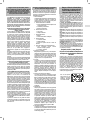
TO START ENGINE
Fig. 4
1. Open fuel shutĆoff valve (if equipped).
Oil checking procedure:
2. Move choke control to CHOKE or START .
1. Place engine level. Clean around oil fill and dipstick .
3. Move throttle (if equipped ) to FAST .
2. Remove dipstick and wipe clean with cloth.
4. Push rocker switch (if equipped ) to ON or RUN .
3. Then push dipstick back in and remove to check oil level.
5. Insert key and turn to START .
Oil should be at FULL line on dipstick .
CAUTION:
4. If oil is needed, add slowly.
To prolong starter life, use short starting cycles
5. Fill to FULL line on dipstick - recheck.
(5 seconds maximum, then wait one minute). Follow
6. Replace dipstick firmly.
equipment manufacturer's recommendations for
FUEL RECOMMENDATIONS
Use clean, fresh, regular unleaded gasoline with a
minimum of 85 octane. Fresh fuel prevents gum from
forming in the fuel system or on essential carburetor parts.
Purchase fuel in quantity that can be used within 30 days.
• Do not use gasoline which contains Methanol.
• Do not mix oil with gasoline.
• For engine protection use Briggs & Stratton Gasoline
Additive available from your Authorized Briggs &
Stratton Dealer (P/N 5041 or single use pouch).
This engine is certified to operate on gasoline. Exhaust
Emission Control System: EM (Engine Modifications).
CAUTION:
Some fuels, called oxygenated or reformulated
gasoline, are gasoline blended with alcohols or
ethers. Excessive amounts of these blendscan
damage the fuel system or cause perforĆ
manceproblems. If any undesirable operating
symptoms occur,use gasoline with a lower percentĆ
age of alcohol or ether.
6. Allow engine to warm up.
If choke equipped:
Slowly adjust toward RUN position. Wait until engine
runs smoothly before each choke adjustment.
WARNING
The manufacturer of the equipment on which
this engine is installed specifies top speed at
which the engine will be operated. DO NOT
EXCEED this speed.
1. Remove cap. Fill tank to
approximately 1Ć1/2 inches
below top of neck to allow for
fuel expansion. Be careful
not to overfill.
2. Replace cap before starting.
STARTING/STOPPING
WARNING
Fig. 4
If engine is equipped with an oil pressure switch, the switch
will either activate a warning light or stop the engine when
the engine runs low on oil. (Read the operating instructions
TO START ENGINE
Insert key and turn to START.
CAUTION:
To prolong starter life, use short starting cycles
(5 seconds maximum, then wait one minute). Follow
equipment manufacturer's recommendations for
charging.
TO STOP ENGINE
Turn key OFF. Remove key and store out of reach of
children.
MAINTENANCE
Regular maintenance will improve the performance and
extend the life of the engine. See any Authorized Briggs &
Stratton Dealer for service. Use only genuine Briggs &
Stratton parts. Other parts may not perform as well,
may damage the engine, and may result in injury. In
addition, use of other parts may void your warranty.
ENGINE AND ENGINE PARTS
We recommend that you see an authorized Briggs &
Stratton Service Dealer for all maintenance and service of
the engine and engine parts. Use only genuine Briggs &
Stratton parts.
Perform the following at recommended intervals:
Every 8 hours or daily
D Check oil level
D Check for oil leaks
Every 50 hours
D Check valve clearance *
D Clean spark arrester (if equipped)
Every 100 hours or every season
D Change oil *
D Change oil filter *
D Clean air cleaner **
D Check valve clearance on NG / LPG Engines.
Every 250 hours
1. Move throttle to SLOW (if equipped)
2. Turn key OFF . Remove key and store out of reach of
D Replace air cleaner cartridge **
D Change fuel filter
Every 600 hours
3. Push rocker switch (if equipped) to OFF or STOP.
4. Close fuel shutĆoff valve (if equipped).
D Replace safety filter cartridge
Yearly
children.
FUEL RECOMMENDATIONS
• Use clean, dry fuel, free of moisture or any particulate
material. Using fuels outside the following recommended
values may cause performance problems.
• In engines set up to run on LPG, commercial grade HD5
LPG is recommended. Recommended fuel composition
is fuel with a minimum fuel energy of 2500 BTU's/ft3 with
maximum propylene content of 5% and butane and
heavier gas content of 2.5% and minimum propane
content of 90%.
• NG or LPG engines are certified to operate on natural or
liquid propane gas.
WARNING
OIL PRESSURE SWITCH
Read the operating instructions supplied by the equipment
manufacturer for information on refueling natural or LP gas
engine.
D Check valve clearance
D Check battery electrolyte
Every 400 hours
TO STOP ENGINE
NATURAL / LIQUID PROPANE
GAS POWERED ENGINES
ADDING FUEL
WARNING
charging.
ADDING FUEL
The equipment on which this engine is
mounted is equipped with an automatic
safety gas fuel lockĆoff" valve. DO NOT
operate the equipment if the fuel lockĆoff"
valve is missing or inoperative.
3
D Change spark plugs
Change oil and filter after first 50 hours of use,
then every 100 hours or every season. Change oil
every 50 hours when operating the engine under
heavy load or in high temperatures.
Check valve clearance after first 50 hours of use,
then every 250 hours.
** Clean more often under dusty conditions or when
airborne debris is present. Replace air cleaner parts,
if very dirty.
*
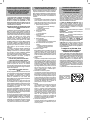
CHANGING OIL AND OIL FILTER
Fig. 5
Change oil and filter after first 50 hours and every 100
hours thereafter.
1. With engine OFF but still warm, remove oil drain plug and drain oil into appropriate receptacle. Reinstall drain
plug.
2. Remove oil filter . Before installing new filter, lightly oil
filter gasket with fresh, clean oil.