1
Kollmann
K-75A/B, K-1500A/B, & K-1500SP Drain Cleaning Machines
Operating Machine
Cable Applications
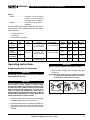
Standard Cable Standard 7/8″ or 11/4″ cable can be
used in straight lines from 3″ through 6″ and through fittings. (Figure 2)
WARNING
Operator should be thoroughly familiar with safety
precautions before attempting to operate this
equipment.
Be very careful when cleaning drains where cleaning compounds have been used. Wear gloves when
handling cable and avoid direct contact to the skin
and especially the eyes and facial area as serious
burns can result.
4″ and 6″ Tees
3″, 4″ and 6″ Y’s
3″, 4″ and 6″ Ells
Figure 2 – Standard Cable Application
Heavy-Duty Cable Where conditions allow, heavy-duty
11/4 inch cable should be used for faster results and
longer cable life. The heavy-duty cables work effectively
in 4″ through 8″ straight lines. (Figure 3)
CAUTION
This type cable should not be used in ares where 4″
“P” traps or 4″ running traps are currently in use.
To reduce risk of electrical shock, keep all electrical connections dry and off the ground. Do not
touch plug with wet hands.
CAUTION
Whenever running cable through traps and lines, be
sure there is water running to prevent cables from
heating up.
1. Make sure FOR/OFF/REV SWITCH is in OFF position
and plug power cord into a properly grounded receptacle. Test the GFCI for proper operation before
using the machine.
2. To start through a 4″ “P” trap, push cable by hand as
far as it will go.
3. Pull enough extra cable through machine to form almost a half circle between machine and trap.
6″ to 8″
Running Traps
4″ to 8″ Ells
4″ to 8″
Cleanouts
Figure 3 – Standard Cable Application
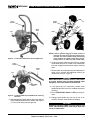
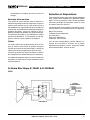
Securing Cable When it is necessary to secure cable already in line while another cable is being fed in through
machine loop cable. (Figure 4)
4. Hold cable loosely in mittened hand (left Hand), put
FOR/OFF/REV Switch in FOR (forward) position.
NOTE! The motor will start but cable will remain free and
idle.
NOTE! This procedure is especially helpful when cleaning
a line with quite a bit of fall or when roof conductors are being cleaned from the top of the building.
Faster Cleaning Obstructions of grease or fats can
be cleaned faster and more effectively by bending the
cable some 6″ or 8″ behind the cutter. (Figure 4)
Secured Cable
Bent Cable
Figure 4 – Securing Cable and Bending Cable for Faster
Cleaning
6
Ridge Tool Company • Elyria, Ohio • U.S.A.