1
Manuale di Istruzione Uso e Manutenzione
User and Maintenance Manual
Manuel d’Utilisation et d’Entretien
Gebrauchs- und Wartungsanleitung
Manual de Instrucciones de Uso y Mantenimiento
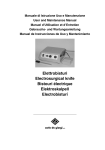
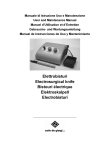
Electric Bistoury
Dati modello
Model data / Donnés du modèle / Modelldaten / Datos del modelo
Modello
Alimentazione
Anno di costruzione
Model
Power supply
Year of manufacture
Modèle
Alimentation
Année de fabrication
Modell
Betriebs-spannung
Baujahr
Modelo
Alimentación
Año de fabricación
645/00
230 V 50 Hz
120 V 60 Hz
2003
2004
2005
2006
2007
Manuale di Istruzione Uso e Manutenzione
Electric Bistoury
Via Tonale, 1 – 20021 Baranzate di Bollate (MI) – Italy
Tel. +39.02.356.15.43 r.a. – Fax +39.02.356.18.08
www.degiorgi.it e-mail [email protected]
ELECTRIC BISTOURY
INDICE
1 - NORME ED AVVERTENZE GENERALI ................................................... 3
1.1 - PREMESSA ............................................................................................ 3
1.2 - DESCRIZIONE DELLA MACCHINA ...................................................... 3
1.3 - RIFERIMENTI NORMATIVI .................................................................... 3
1.3.1. - Normativa obbligatoria ..................................................................... 3
1.3.2 - Normativa volontaria.......................................................................... 4
1.4 - PREDISPOSIZIONI A CARICO DEL CLIENTE...................................... 4
1.5 - ISTRUZIONI PER LA RICHIESTA DI INTERVENTI E RICAMBI........... 4
2- CARATTERISTICHE TECNICHE ............................................................... 4
3 - COMPONENTI ........................................................................................... 5
4 - FUNZIONAMENTO ED USO ..................................................................... 5
4.1 - FUNZIONAMENTO................................................................................. 5
4.2 - OPERATORE.......................................................................................... 6
4.3 - USO PREVISTO ..................................................................................... 6
4.4 - AVVERTENZE DI SICUREZZA .............................................................. 7
5 - ISTRUZIONI PER L'OPERATORE............................................................ 8
5.1 - COMANDI E UNITA' DI GOVERNO ....................................................... 8
5.2 - INDICAZIONI RELATIVE ALL'USO ....................................................... 8
5.2.1 - Avviamento ......................................................................................... 8
5.2.2 - Modi di arresto ed arresto di emergenza ......................................... 9
5.2.3 - Consigli operativi ............................................................................... 9
5.2.4 - Avvertenze .......................................................................................... 9
6 – MANUTENZIONE.................................................................................... 10
6.1 PULIZIA................................................................................................... 10
6.2 STERILIZZAZIONE................................................................................. 10
7 - DIAGNOSTICA ........................................................................................ 11
8 - ACCESSORI ............................................................................................ 11
8. 1 ELETTRODI ........................................................................................... 11
8. 2 ELETTRODO NEUTRO PER VETERINARI .......................................... 11
9 - ALLEGATI................................................................................................ 12
9. 1 DIAGRAMMI DI POTENZA DI USCITA - REGOLAZIONE SU CARICO
NOMINALE (1500 Ω) .................................................................................... 12
9. 2 DIAGRAMMI DI POTENZA DI USCITA IN FUNZIONE DEL CARICO a piena e a metà potenza ............................................................................ 13
9.3
ELENCO ELETTRODI....................................................................... 14
I-2
Carlo de Giorgi
ELECTRIC BISTOURY
1 - NORME ED AVVERTENZE GENERALI
1.1 - PREMESSA
Il presente manuale è proprietà della CARLO DE GIORGI S.r.l. Viene
vietata la riproduzione o la cessione a terzi dei contenuti del presente
documento. Tutti i diritti sono riservati.
1.2 - DESCRIZIONE DELLA MACCHINA
L’apparecchio in questione è un diatermocoagulatore (elettrobisturi a
Radio Frequenza) destinato al settore medico, dentale, estetico
(elettrodepilazione) e veterinario per operazioni di piccola chirurgia di
brevi durate (10÷20 sec.), a servizio intermittente.
Questo dispositivo deve essere utilizzato solamente da persone
debitamente istruite ed abilitate alla pratica chirurgica, le quali devono
aver maturato una adeguata esperienza nell’uso di un elettrobisturi.
Prima di procedere all’utilizzo dell’elettrobisturi è obbligatorio aver letto
interamente il contenuto di questo manuale istruzioni, imparando a
conoscere la posizione e la funzione svolta da tutti i comandi, facendo
attenzione a tutti gli avvertimenti ad alle precauzioni da rispettare.
La non osservanza di tale obbligo o un uso improprio potrebbe essere
causa di lesioni a danno dell’operatore, del paziente e delle persone
presenti. Tale dispositivo ricade nella Direttiva sui Dispositivi Medici
93/42/CEE, ed è classificato di tipo IIb secondo l’allegato IX, regola 9.
E’ ASSOLUTAMENTE VIETATO APRIRE O RIPARARE L’APPARECCHIO; IN CASO DI
MALFUNZIONAMENTI RIVOLGERSI SEMPRE ALLA CARLO DE GIORGI.
1.3 - RIFERIMENTI NORMATIVI
1.3.1. - Normativa obbligatoria
- Direttiva CEE n: 93/42 - Dispositivi Medicali (D.Lgs. n° 46/1997)
- Direttiva CEE n.73/23 - Bassa Tensione (DBT) (Legge n° 791/1977, D.Lgs n°
626/1996, D.Lgs n° 277/97)
- Direttiva CEE n.89/336 relativa alla Compatibilitá Elettromagnetica (EMC) - (D.
Lgs. n° 615/1996)
- DPR 27.4.1955 n.547, "Norme per la prevenzione degli infortuni sul lavoro"
- DPR 27.4.1956 n.303, "Norme generali per l'igiene del lavoro"
- Decreto Legislativo 12 agosto 1991 n.277 di attuazione delle direttive CEE
n.80/605; n.83/477; 86/188; 88/642 in materia di protezione dei lavoratori
contro i rischi derivanti da esposizione ad agenti chimici, fisici e biologici
durante il lavoro, a norma dell'art.7 della legge 30 luglio 1990, n.212
Carlo de Giorgi
I-3
ELECTRIC BISTOURY
1.3.2 - Normativa volontaria
- CEI EN 60601-1 (1991) Apparecchi elettromedicali - Parte 1 - Norme generali
per la sicurezza.
- CEI EN 60601-2-2 (1993) Apparecchi elettromedicali - Parte 1 - Norme
particolari per la sicurezza degli apparecchi per elettrochirurgia ad alta
frequenza.
- CEI EN 60601-1-2 (1991) Apparecchi elettromedicali - Parte 1 - Norme generali
per la sicurezza - Norma collaterale : compatibilità elettromagnetica Prescrizioni e prove.
1.4 - PREDISPOSIZIONI A CARICO DEL CLIENTE
L'utilizzatore installa l’apparecchio in locali adeguati dotati di impianto
elettrico rispondente alla normativa vigente.
Si raccomanda l’installazione in ambienti asciutti e illuminati in conformità
alla legislazione vigente.
NOTA: Con legislazione/normativa vigente si intende il quadro legislativo in vigore nel
paese di utilizzazione.
1.5 - ISTRUZIONI PER LA RICHIESTA DI INTERVENTI E RICAMBI
Per qualsiasi operazione di manutenzione elettrica, contattare la CARLO
DE GIORGI di Baranzate di Bollate, Via Tonale, 1.
Nel caso di anomalie, avarie, ecc., segnalare con precisione il difetto
riscontrato ai tecnici della CARLO DE GIORGI; indicare inoltre il numero
di lotto riportato nell’etichetta apposta posteriormente sull’apparecchio.
2- CARATTERISTICHE TECNICHE
645/00
Tensione
Frequenza
V
Hz
Potenza assorbita di picco
W
W
Potenza resa a 750 kHz/1500Ω
Fusibile ritardato T
Massa dell’apparecchio
A
Kg
230/120
50/60
App. di classe II
120
50 ± 20%
2X1,6 (230V)
3,15 (120V)
4
App. di tipo BF
L’apparecchio è provvisto di doppio isolamento elettrico (app. di Classe II)
e prevede una specifica protezione contro le correnti di dispersione e per
l’affidabilità del collegamento a terra, con particolare riferimento
all’elettrodo di massa rivolto al paziente (app. di tipo BF).
I-4
Carlo de Giorgi
ELECTRIC BISTOURY
3 - COMPONENTI
Nell'imballaggio fornito sono collocati:
a) alimentatore;
b) manipolo;
c) pedale;
d) cavo con elettrodo neutro cilindrico;
e) astuccio con n° 8 elettrodi;
f) istruzioni per l'uso.
Per propria natura l’apparecchio può essere movimentato a mano.
4 - FUNZIONAMENTO ED USO
4.1 - FUNZIONAMENTO
Posizionate l’alimentatore su di un piano adiacente l’operatore così che:
- esso sia stabilmente appoggiato, privo di rischi di caduta;
- il cordone del manipolo non sia sottoposto a trazione eccessiva, per
evitare rotture dei conduttori o il conseguente trascinamento dell’unità;
- sia sempre possibile verificare lo stato di funzionamento dell’apparecchio.
Collegate il manipolo (1) al connettore (2) denominato “active-electrode”
sul lato frontale dell’apparecchio;
Collegate l’elettrodo (3) al cavo (4), il quale va inserito nella boccola
denominata “plate” (5) sul lato frontale dell’apparecchio, il quale è così
pronto al funzionamento grazie al pulsante presente sul manipolo (1);
nel caso si desideri azionare l’apparecchio tramite il pedale (6), collegare
questo al connettore (7) presente sul retro.
Infine collegate la spina di alimentazione (8) alla presa di corrente.
6
8
2
5
9
7
3
4
1
Fig. 1
Carlo de Giorgi
I-5
ELECTRIC BISTOURY
A questo punto svitare la testina, inserire l’elettrodo scelto per il tipo di
intervento da eseguire e infine riavvitare la testina, avendo l’accortezza di
stringerla per assicurare il miglior contatto elettrico tra le parti.
Nel caso l’elettrodo non entri nella pinzetta, estrarre quest’ultima dalla sua
sede, introducendo con forza l’elettrodo; ad inserimento ottenuto
reinserire nel manipolo tali parti montate, ed infine riavvitare la testina,
con le precauzioni descritte sopra.
Si raccomanda di sterilizzare sempre il manipolo e gli elettrodi prima del
loro utilizzo; il manipolo è infatti costruito appositamente per essere
sterilizzato in autoclave.
Si ricorda che, dopo ogni utilizzo, l'apparecchio deve essere posto
in stato OFF posizionando l’interruttore generale su “O”.
4.2 - OPERATORE
L'operatore avvia l’apparecchio con un’azione volontaria tramite il
pulsante presente sul manipolo oppure tramite il pedale, per cui ha
sempre il diretto controllo del suo funzionamento.
4.3 - USO PREVISTO
L’apparecchio elettrobisturi è destinato all’utilizzo in studi medici,
odontoiatrici e veterinari per operazioni di piccola chirurgia e
microcoagulazione per brevi ed intermittenti durate (max 20 secondi).
L’apparecchio non è previsto per usi diversi da quelli stabiliti dal
costruttore.
I-6
Carlo de Giorgi
ELECTRIC BISTOURY
4.4 - AVVERTENZE DI SICUREZZA
- L'uso dell’apparecchio deve essere effettuato da personale qualificato e
comunque informato sui pericoli esistenti;
- Non utilizzare l'apparecchio nelle vicinanze di materiale infiammabile o
gas;
- Non aprire o smontare l’apparecchio;
- I portatori di pacemaker o elettrodi di stimolazione potrebbero subire
interferenze o danneggiamenti da parte dell’elettrobisturi; verificare la
compatibilità di tali elementi con l’apparecchio (chiedere ai Reparti
Cardiologia);
- Indossare indumenti da lavoro idonei e osservare le norme di sicurezza
valide per il proprio posto di lavoro;
- Utilizzare sempre l’elettrodo neutro che deve essere posto il più
possibile vicino alla parte da operare, facendolo impugnare saldamente
al paziente. Tale operazione deve essere effettuata ancor prima di
regolare l’apparecchio;
- Il paziente non deve assolutamente mai entrare in contatto con parti
metalliche messe a terra o con capacità a terra apprezzabile (es. tavoli
operatori, supporti, ecc.);
- Deve essere evitato il contatto pelle-pelle (es. tra braccia e corpo); ciò
può essere soddisfatto se il paziente è vestito oppure interponendo delle
garze asciutte;
- Se l’apparecchio viene utilizzato contemporaneamente ad apparecchi di
monitoraggio, tutti gli elettrodi di quest’ultimo devono essere posti il più
lontano possibile dalla zona in cui si sta operando;
- Si sconsigliano gli elettrodi di monitoraggio ad aghi;
- I cavi devono essere posti in modo tale da evitare il contatto con il
paziente o con altri conduttori;
- Il livello di potenza erogata deve essere il più basso possibile per il
raggiungimento dello scopo previsto;
- Porre attenzione all’uso di sostanze infiammabili liquide o gassose, ad
esempio per disinfezione, anestetico, solventi, ecc.; non essendo
l’apparecchiatura predisposta per ambienti a maggior rischio di
esplosione si raccomanda di azionare l’apparecchio solo quando queste
sostanze sono state eliminate o completamente evaporate, facendo
attenzione a eventuali ristagni;
- Sempre per il motivo precedente prestare attenzione alla presenza di
gas endogeni o di materiali impregnati di ossigeno (es. cotone idrofilo,
garze, ecc.);
- Controllare periodicamente gli accessori, con particolare riferimento allo
stato di isolamento dei cavi e degli elettrodi.
Carlo de Giorgi
I-7
ELECTRIC BISTOURY
5 - ISTRUZIONI PER L'OPERATORE
5.1 - COMANDI E UNITA' DI GOVERNO
L’apparecchiatura presenta i seguenti elementi di comando (Fig. 2):
- interruttore ON/OFF generale (1) con indicazioni "1" di ON e "0" di OFF;
- indicatore luminoso a led di colore rosso AL (anomalia) (4);
- pulsante giallo “CUT” di selezione della funzione di taglio e relativo
indicatore luminoso a led giallo di segnalazione (2);
- pulsante azzurro “COAG” di selezione della funzione di coagulo e
relativo indicatore luminoso a led azzurro di segnalazione (3);
- pulsanti controllo potenza “POWER” “▲” - “▼” e relativo display
(indicazione in W con tolleranza di ± 20%) (5);
1
6
2
3
4
5
Fig. 2
5.2 - INDICAZIONI RELATIVE ALL'USO
5.2.1 - Avviamento
Dopo aver seguito le operazioni di installazione dell’apparecchio, è ora
possibile avviarlo (Fig. 2):
1) montare sul manipolo l’elettrodo desiderato, come indicato al § 4.1;
2) selezionare la funzione desiderata tramitei pulsanti “CUT” (2) e/o
“COAG” (3);
3) accendere l’apparecchio tramite l’interruttore generale (1);
4) selezionare la potenza desiderata con i pulsanti “POWER” “▲”-“▼”
(5);
5) far impugnare al paziente l’elettrodo neutro;
6) premere il pulsante posto sul manipolo o il pedale; in questo modo si
attiva l’indicatore acustico e la relativa uscita di potenza sull’elettrodo
inserito sul manipolo.
I-8
Carlo de Giorgi
ELECTRIC BISTOURY
Si ricorda che dopo 20 secondi di funzionamento continuativo
l’apparecchio va in allarme, si accende l’indicatore luminoso rosso AL (2)
e contemporaneamente l’indicatore acustico proporrà una tonalità
intermittente, al fine di avvertire l’operatore di portare a termine nel tempo
più breve possibile l’operazione in svolgimento, in condizioni prive di
pericoli per il paziente; per poter continuare ad adoperare
l’apparecchiatura senza l’indicazione di allarme occorre spegnerla per
circa 10 secondi (ponendo in OFF l’interruttore generale).
L’apparecchio può anche essere utilizzato senza l’uso dell’elettrodo di
massa; questo è consentito solo per uso depilatorio o per operazioni con
potenza limitata (inferiore ad 1/3 della potenza massima erogabile).
5.2.2 - Modi di arresto ed arresto di emergenza
La funzione di arresto può essere ottenuta:
- rilasciando il pulsante sul manipolo o il pedale;
- ponendo in OFF l’interruttore generale;
- staccando il cavo di alimentazione dalla presa a cui è stata connessa.
5.2.3 - Consigli operativi
- Usare la quantità di corrente necessaria in base alle condizioni
operatorie e del tessuto, mantenendo l’elettrodo in costante movimento
senza esercitare pressione;
- Mantenere la punta dell’elettrodo sempre pulita;
- La selezione TAGLIO eroga una maggiore corrente, permettendo
incisioni più nette; inserendo la funzione COAGULO si può operare su
zone emorragiche o su tessuti molto sanguinanti;
- Se si nota una scarsa forza di taglio e se frammenti di tessuto
rimangono aderenti all’elettrodo si consiglia di aumentare la potenza di
erogazione premendo il pulsante "POWER" “▲” (5);
- Se si nota uno scintillio nella zona dell’elettrodo la potenza è troppo alta,
e occorre intervenire abbassandola premendo il pulsante "POWER"
“▼” (5);
5.2.4 - Avvertenze
PRIMA DI UTILIZZARE L’APPARECCHIATURA VERIFICARE LA
COMPATIBILITA’ CON GLI ALTRI STRUMENTI/APPARECCHI
UTILIZZATI NEL MEDESIMO LUOGO; L’ELETTROBISTURI INFATTI
EMETTE DISTURBI DI NATURA ELETTROMAGNETICA DOVUTI AL
SUO NORMALE FUNZIONAMENTO, IL CHE POTREBBE PROVOCARE
ANOMALIE SU ALTRE APPARECCHIATURE.
Carlo de Giorgi
I-9
ELECTRIC BISTOURY
PORRE SEMPRE IN OFF L’APPARECCHIATURA TUTTE LE VOLTE
CHE SI TERMINA IL LAVORO E DOPO UN ARRESTO DOVUTO A
QUALUNQUE RAGIONE.
IN CASO DI ANOMALIE ARRESTARE IMMEDIATAMENTE LA
MACCHINA
E
ISOLARLA
ELETTRICAMENTE;
PRIMA
DI
RIPRISTINARLA VERIFICARE LE RAGIONI CHE HANNO CAUSATO
L’ANOMALIA, CONTATTANDO PER ULTERIORI PROBLEMI TECNICI
LA DITTA CARLO DE GIORGI.
6 – MANUTENZIONE
Controllare periodicamente gli accessori, con particolare riferimento allo
stato degli elettrodi, ed eventualmente procedere alla sostituzione.
Verificare periodicamente lo stato di isolamento dei cavi. Le operazioni di
sostituzione dei cavi devono essere eseguite da personale istruito ed
autorizzato.
6.1 PULIZIA
L’apparecchio non richiede particolari interventi, se non nella
consuetudine di pulizia dei luoghi di lavoro: comunque per operare
interventi di pulizia isolare sempre la macchina sezionando la fonte di
energia.
Il dispositivo si può pulire con un panno morbido imbevuto di solventi
commerciali omologati ininfiammabili e atossici. Si eviti assolutamente la
penetrazione di liquidi nelle parti interne dell’apparecchio. Non usare
solventi forti o strumenti taglienti.
Si consiglia l’uso di sostanze non infiammabili e liquidi non conduttori di
elettricità.
6.2 STERILIZZAZIONE
Particolare attenzione deve essere posta nei riguardi della pulizia e della
sterilizzazione del manipolo e degli elettrodi, i quali sono sterilizzabili in
autoclave a 127° C per 30 minuti, dopo averli imbustati.
Il cavo e l’elettrodo neutro possono invece essere puliti con alcool o con
liquidi di sterilizzazione.
IMPORTANTE: la sterilizzazione del manipolo non deve mai essere
effettuata con liquidi conduttori di elettricità.
I - 10
Carlo de Giorgi
ELECTRIC BISTOURY
7 - DIAGNOSTICA
Se si riscontra un evidente basso livello di potenza in uscita, quando
l’apparecchio è impostato per erogare una maggiore potenza, verificare
l’applicazione dell’elettrodo neutro sia sul paziente che sull’apparecchio
(applicazione difettosa o cattivo contatto).
Nel caso di mancato funzionamento dell’apparecchio verificare il fusibile
presente nella parte posteriore ( 9 di Fig. 1). Per la sostituzione utilizzare
fusibili come da tabella al cap. 2.
Prima di verificare il fusibile è necessario porre l'interruttore generale in
posizione 0 (OFF) e isolare la macchina dalla alimentazione di energia;
verificare il funzionamento del fusibile e procedere quindi alla
sostituzione. Richiuso il tappo è possibile connettere nuovamente il cavo
di alimentazione.
In caso di continui malfunzionamenti, avarie o guasti, staccare
immediatamente la presa di alimentazione e contattare la ditta
CARLO DE GIORGI.
ATTENZIONE!
OGNI INTERVENTO SULLA MACCHINA DEVE ESSERE REALIZZATO
A MACCHINA ISOLATA DALLE FONTI DI ENERGIA
8 - ACCESSORI
8. 1 ELETTRODI
Si veda l’allegato riportante l’elenco degli elettrodi proposti.
8. 2 ELETTRODO NEUTRO PER VETERINARI
E’ possibile dotare l’apparecchiatura di un elettrodo neutro a piastra,
necessario per interventi su animali, i quali dovranno essere appoggiati al
di sopra di questa.
Carlo de Giorgi
I - 11
ELECTRIC BISTOURY
9 - ALLEGATI
9. 1 DIAGRAMMI DI POTENZA DI USCITA - REGOLAZIONE SU
CARICO NOMINALE (1500 Ω)
60
W
40
20
0
0
10
20
30
40
50
Pow er
W
TAGLIO
50
40
30
20
10
0
0
10
20
30
40
50
Pow er
COAGULO
I - 12
Carlo de Giorgi
ELECTRIC BISTOURY
9. 2 DIAGRAMMI DI POTENZA DI USCITA IN FUNZIONE DEL CARICO
- a piena e a metà potenza
80
W
60
40
20
0
100
300
500
1500
2500
Ohm
TAGLIO
60
W
40
20
2500
2000
1500
1000
500
400
300
200
100
0
Ohm
COAGULO
Carlo de Giorgi
I - 13
ELECTRIC BISTOURY
9.3
I - 14
ELENCO ELETTRODI
Carlo de Giorgi
User and Maintenance Manual
Electric Bistoury
Via Tonale, 1 – 20021 Baranzate di Bollate (MI) – Italia
Tel. +39.02.356.15.43 b.a. – Fax +39.02.356.18.08
www.degiorgi.it e-mail [email protected]
ELECTRIC BISTOURY
CONTENTS
1.1 - INTRODUCTION................................................................................... 3
1.2 - DESCRIPTION OF THE APPLIANCE .................................................. 3
1.3 - REFERENCE STANDARDS................................................................. 3
1.3.1. - Obligatory compliance................................................................... 3
1.3.2 - Voluntary compliance ...................................................................... 4
1.4 - RESPONSIBILITIES OF THE CUSTOMER ......................................... 4
1.5 - REQUESTS FOR SERVICE AND SPARE PARTS .............................. 4
2- TECHNICAL FEATURES ......................................................................... 4
3 - COMPONENTS ....................................................................................... 5
4 - OPERATION AND USE ........................................................................... 5
4.1 - OPERATION ......................................................................................... 5
4.2 - OPERATOR .......................................................................................... 6
4.3 - INTENDED USE ................................................................................... 6
4.4 - SAFETY WARNINGS ........................................................................... 7
5 - OPERATOR INSTRUCTIONS ................................................................. 8
5.1 - CONTROLS .......................................................................................... 8
Fig. 2 ............................................................................................................. 8
5.2 – INSTRUCTIONS FOR USE.................................................................. 8
5.2.1 - Setting into operation ...................................................................... 8
5.2.2 - Normal deactivation and emergency deactivation procedures ... 9
5.2.3 - Recommendations for use .............................................................. 9
5.2.4 - Warnings ........................................................................................... 9
6 - MAINTENANCE..................................................................................... 10
6.1 CLEANING............................................................................................ 10
6.2 - STERILIZATION ................................................................................. 10
7 - DIAGNOSTICS ...................................................................................... 11
8 - ACCESSORIES ..................................................................................... 11
8. 1 ELECTRODES ..................................................................................... 11
8. 2 VETERINARY NEUTRAL ELECTRODE ............................................. 11
9 - ANNEXES .............................................................................................. 12
9. 1 OUTPUT POWER DIAGRAMS – NOMINAL LOAD SETTING
(1500 Ω) ...................................................................................................... 12
9. 2 DIAGRAMS SHOWING OUTPUT POWER IN RELATION TO LOAD full power and half power ......................................................................... 13
9.3
ELECTRODE LIST .......................................................................... 14
GB - 2
Carlo de Giorgi
ELECTRIC BISTOURY
1 - STANDARDS AND GENERAL PRECAUTIONS
1.1 - INTRODUCTION
This manual is the property of CARLO DE GIORGI S.r.l. The contents of
this manual cannot be reproduced or disclosed to other parties. All rights
reserved.
1.2 - DESCRIPTION OF THE APPLIANCE
The appliance is a diathermic coagulator (radio frequency ESK) designed
for use in medical, aesthetic (electro-epilation) and veterinary applications
for minor surgery of short duration (from 10 to 20 seconds), with
intermittent duty. This device must be used exclusively by persons who
are properly trained and qualified to perform surgery and who have
adequate experience in the use of electrosurgical knives.
Before using the electrosurgical knife it is mandatory to have read the
contents of this manual in their entirety and to know and understand the
position and function of all the relative commands, paying particular
attention to all the safety warnings and precautions prescribed herein.
Failure to comply with this requirement or incorrect use of the appliance
can result in injury to the operator, the patient and other persons in the
vicinity. This appliance is covered by the terms of the Medical Devices
Directive 93/42/EEC and is classified as type IIb in accordance with annex
IX, regulation 9.
IT IS STRICTLY PROHIBITED TO ATTEMPT TO OPEN OR REPAIR THE APPLIANCE;
IN THE EVENT OF FAULTS OR ANOMALIES ALWAYS CONTACT CARLO DE GIORGI.
1.3 - REFERENCE STANDARDS
1.3.1. - Obligatory compliance
- EEC directive n. 93/42 – Medical Devices (Italian legislation: Legislative decree
D.Lgs. n° 46/1997)
- EEC directive n.73/23 – Low voltage Directive (Italian legislation: Law n°
791/1977, Legislative decrees D.Lgs n° 626/1996 and D.Lgs. n° 277/97)
- EEC directive n.89/336 relative to Electromagnetic Compatibility (EMC) (Italian legislation: Legislative decree D.Lgs n° 615/1996)
- DPR 27.4.1955 n.547, "Norme per la prevenzione degli infortuni sul lavoro"
(work accident prevention regulations)
- DPR 27.4.1956 n.303, "Norme generali per l'igiene del lavoro" (general work
hygiene regulations)
- Italian Legislative Decree 12 August 1991 n.277 implementing EEC directives
n.80/605; n.83/477; n.86/188; n.88/642 concerning the protection of workers
against risks deriving from exposure to chemical, physical and biological
agents in the workplace, as defined by art. 7 of Italian Law 30 July 1990, n.212
Carlo de Giorgi
GB - 3
ELECTRIC BISTOURY
1.3.2 - Voluntary compliance
- CEI EN 60601-1 (1991) Electromedical appliances - Part 1 – General safety regulations.
- CEI EN 60601-2-2 (1993) Electromedical appliances - Part 1 - Special
regulations for the safety of high frequency apparatuses for electrosurgery.
- CEI EN 60601-1-2 (1991) Electromedical appliances - Part 1 – General safety regulations
- Supplementary standard: electromagnetic compatibility – Prescriptions and tests.
1.4 - RESPONSIBILITIES OF THE CUSTOMER
The user must install the appliance in a suitable place equipped with an
electrical system that complies with established legislation.
The appliance must be installed in a dry environment that is illuminated in
accordance with the requirements of established legislation.
NOTE: The expression "established legislation" refers to the laws in force in the user's
country.
1.5 - REQUESTS FOR SERVICE AND SPARE PARTS
For all electrical maintenance requirements, contact CARLO DE GIORGI
di Baranzate di Bollate, Via Tonale, 1.
In the case of faults, notify CARLO DE GIORGI technical personnel of the
exact nature of the problem, specifying also the lot number shown on the
label affixed to the rear of the appliance.
2- TECHNICAL FEATURES
645/00
Voltage
Frequency
V
Hz
230/120
50/60
Peak power consumption
Power output at 750
kHz/1500Ω
Delayed acting fuse T
W
W
50 ± 20%
Mass of the appliance
kg
A
Class II app.
120
Type BF app.
2X1.6 (230V)
3.15 (120V)
4
The appliance features double electrical insulation (Class II) and a
dedicated system protecting against stray currents and ground faults, with
particular regard for the ground electrode on the patient (LF type
appliance).
GB - 4
Carlo de Giorgi
ELECTRIC BISTOURY
3 - COMPONENTS
The package contains:
a) power supply unit;
b) handpiece;
c) pedal;
d) cable with neutral cylindrical electrode;
e) case with n° 8 electrodes;
f) user instructions.
The appliance can be moved by hand without requiring lifting devices.
4 - OPERATION AND USE
4.1 - OPERATION
Set the power supply unit on a worksurface alongside the operator in such
a way that:
- it is in a stable position with no risk of falling;
- the handpiece lead is not subject to excessive traction, thus avoiding the
risk of breakage of internal wires or dragging of the power supply unit;
- the functional status of the appliance can be checked easily.
Connect handpiece (1) to connector (2) marked "active electrode" on the
front of the appliance;
Connect electrode (3) to cable (4), which must be inserted in the “plate”
socket (5) on the front panel; the appliance can be activated using the
button on the handpiece (1);
if you wish to activate the appliance using the pedal control (6), connect
the pedal cable to connector (7) on the rear of the appliance.
Finally, insert the power cord plug (8) into a mains socket outlet.
6
8
2
5
9
7
3
4
1
Fig. 1
Carlo de Giorgi
GB - 5
ELECTRIC BISTOURY
Now unscrew and remove the head, insert the required type of electrode
and then refit the head, tightening it appropriately to ensure the best
possible electrical continuity between the parts.
If the electrode cannot be inserted into the collet, extract the collet from its
location and push in the electrode with force; when the electrode has
been inserted, refit the resulting assembly into the handpiece and then
refit the head as described above.
Always sterilize the handpiece and electrodes before use; the handpiece
is specifically designed for sterilization in an autoclave.
Always switch OFF the appliance after use by setting the main
power switch to "O".
4.2 - OPERATOR
The operator starts the appliance by means of a voluntary command via
the button on the handpiece or the control pedal, thereby assuming direct
control of its operation.
4.3 - INTENDED USE
The electric bistoury is designed for use in medical, dental and veterinary
surgeries for minor surgery and micro cauterization for brief and
intermittent interventions (20 seconds max.).
The appliance must not be employed for any uses other than those
specified by the manufacturer.
GB - 6
Carlo de Giorgi
ELECTRIC BISTOURY
4.4 - SAFETY WARNINGS
-
-
-
-
-
-
-
The appliance must be used exclusively by skilled personnel who are
aware of the potential hazards;
Do not use the appliance in the vicinity of inflammable materials or
gases;
Do not open or disassemble the appliance;
Patients with pacemakers or stimulatory electrodes may be subject to
disturbances or damage to the relative systems caused by the
electrosurgical knife; check the compatibility with such devices with the
appliance (seek cardiology information);
Wear suitable work clothing and observe the safety regulations in
force in the workplace;
Always use the neutral electrode, which must be as close as possible
to the area of surgical intervention, and must be gripped tightly by the
patient. This procedure must be performed before you start setting up
the appliance;
The patient must not come into contact with metal parts that are
connected to ground or that have reduced ground impedance (e.g.
operating tables, stands, etc.);
Avoid all skin-skin contact (e.g. between arms and body); this can be
achieved if the patient is clothed or by interposing dry gauzes;
If the appliance is used in conjunction with monitoring equipment, all
the monitoring equipment electrodes must be kept as far away as
possible from the intervention site;
The use of needle type monitoring electrodes should be avoided
wherever possible;
The appliance cables must be arranged so that they are not in contact
with the patient or with other cables;
Use the lowest possible output power to obtain the desired results;
Pay attention to the use of inflammable liquids or gases such as
disinfectants, anaesthetics, solvents, etc.; the appliance is not
designed for use in atmosphere subject to explosion hazards so
ensure that any such substances have been completely eliminated or
evaporated and dispersed before activating the appliance (ensure
there are no residual substances in the area);
For the above reasons, also pay attention to the presence of
endogenous gases and materials impregnated with oxygen (e.g.
cotton wadding, gauzes, etc.);
Periodically inspect the accessories, with particular reference to the
condition of insulation of cables and electrodes.
Carlo de Giorgi
GB - 7
ELECTRIC BISTOURY
5 - OPERATOR INSTRUCTIONS
5.1 - CONTROLS
The appliance is equipped with the following control devices (Fig. 2):
- main power ON/OFF switch (1) with indications "1" (ON) and "0" (OFF);
- red AL (fault) indicator LED (4);
- yellow "CUT" button to select the cutting function, complete with yellow
indicator LED (2);
- blue "COAG" button to select the coagulation function, complete with
blue indicator LED (3);
- "POWER" control buttons “▲” - “▼” complete with display
(reading in W with tolerance of ± 20%) (5);
1
6
2
3
4
5
Fig. 2
5.2 – INSTRUCTIONS FOR USE
5.2.1 - Setting into operation
After performing the installation procedures, the appliance can be set into
operation (Fig. 2):
1) fit the required electrode on the handpiece as indicated in § 4.1;
2) select the required function using the "CUT" (2) and/or "COAG" (3)
buttons;
3) switch on the appliance by means of the main power switch (1);
4) select the required power level by means of the "POWER" buttons “▲”
- “▼” (5);
5) instruct the patient to grip the neutral electrode;
6) press the button on the handpiece or press the pedal control; this
action will start the audible signal and deliver power to the electrode
attached to the handpiece.
GB - 8
Carlo de Giorgi
ELECTRIC BISTOURY
Note that the appliance will assume alarm status after 20 seconds of
continuous use; this condition is signalled by illumination of the red AL
indicator (2) and a simultaneous intermittent beeping to inform the
operator that the current operation must be terminated as rapidly as
possible without prejudice to the patient; to continue using the appliance
without the alarm condition it must be switched off for approximately 10
seconds (by setting the main power switch to OFF).
The appliance can also be utilized without the ground electrode; this
procedure is permitted only for performing epilation or for low power
operations (less than 1/3 of the maximum output power).
5.2.2 - Normal deactivation and emergency deactivation procedures
The appliance can be deactivated as follows:
- by releasing the button on the handpiece or the pedal control;
- setting the main power switch to OFF;
- by unplugging the power cable from the mains socket outlet.
5.2.3 - Recommendations for use
- Use the level of currently strictly necessary in relation to the operational
conditions and the conditions of the patient's tissue, keeping the knife in
constant movement without exerting pressure;
- Keep the knife electrode tip clean;
- The CUT setting delivers higher current to allow cleaner incisions; the
COAG setting is suitable for working on haemorrhagic areas or bleeding
tissue in general;
- If you find that cutting power is insufficient or if fragments of tissue tend
to adhere to the knife electrode, increase output power by pressing
"POWER" button “▲” (5);
- Sparking in the area of the electrode indicates that output power is too
high; in this case reduce output power by pressing "POWER" button “▼”
(5);
5.2.4 - Warnings
BEFORE USING THE APPLIANCE CHECK ITS COMPATIBILITY WITH
THE OTHER EQUIPMENT/APPLIANCES IN USE IN THE AREA; THE
ELECTROSURGICAL KNIFE GENERATES ELECTROMAGNETIC
DISTURBANCES DURING NORMAL OPERATION WHICH COULD
INTERFERE WITH THE CORRECT OPERATION OF OTHER DEVICES
IN THE AREA.
Carlo de Giorgi
GB - 9
ELECTRIC BISTOURY
ALWAYS SWITCH OFF THE APPLIANCE WHEN YOU FINISH
WORKING WITH IT AND FOLLOWING ALL STOPPAGES,
IRRESPECTIVE OF THE MOTIVE.
IF YOU NOTICE MALFUNCTIONS, STOP THE APPLIANCE
IMMEDIATELY AND DISCONNECT IT FROM THE ELECTRICAL
POWER SUPPLY. BEFORE RECONNECTING THE POWER SUPPLY
FIND THE CAUSE OF THE FAULT AND REMEDY IT. IN THE CASE OF
PROBLEMS, CONSULT CARLO DE GIORGI.
6 - MAINTENANCE
Periodically inspect the accessories, with particular reference to the
condition of the electrodes, and replace them if necessary. Periodically
check the condition of cable insulation. The appliance cables must be
replaced exclusively by suitably skilled and authorised personnel.
6.1 CLEANING
The appliance does not require particular cleaning operations, with the
exception of regular cleaning of the working area: before cleaning the
appliance always disconnect it from the power supply.
Clean the appliance with a soft cloth moistened with approved nonflammable and non-toxic commercial solvents. Never allow liquids to
penetrate to the internal parts of the appliance. Do not use strong
solvents or sharp/pointed tools.
Use non-flammable cleaning products and liquids that do not conduct
electricity.
6.2 - STERILIZATION
Pay particular attention to cleaning and sterilizing the handpiece and
electrodes, which can be treated in an autoclave for 30 minutes at 127°C
after bagging.
The cable and neutral electrode must be cleaned with alcohol or sterilizing
products.
IMPORTANT: do not sterilize the handpiece with liquids that conduct
electricity.
GB - 10
Carlo de Giorgi
ELECTRIC BISTOURY
7 - DIAGNOSTICS
If the output power level is too low when the appliance is set up to deliver
higher power levels, check that the neutral electrode is properly in contact
with the patient and properly connected to the appliance (incorrect
application or bad contact).
If the appliance fails to operate check the fuse at the rear (9, Fig. 1). If the
fuse must be changed refer to the specifications in the table in chapter 2
of this manual.
Before checking the fuse, set the main switch to 0 (OFF) and unplug the
mains power cable; check the condition of the fuse and replace if
necessary. Once the fuse cap has been refitted you can insert the power
cable plug into the mains socket outlet.
If malfunctions and faulty operation persist, unplug the appliance
and consult CARLO DE GIORGI.
WARNING!
ALL WORK ON THE APPLIANCE MUST BE PERFORMED WITH
THE POWER SUPPLY DISCONNECTED
8 - ACCESSORIES
8. 1 ELECTRODES
Refer to the annexes for a list of available electrodes.
8. 2 VETERINARY NEUTRAL ELECTRODE
The appliance can be equipped with a plate electrode specifically
designed for positioning beneath the animal in veterinary applications.
Carlo de Giorgi
GB - 11
ELECTRIC BISTOURY
9 - ANNEXES
9. 1 OUTPUT POWER DIAGRAMS – NOMINAL LOAD SETTING (1500
Ω)
60
W
40
20
0
0
10
20
30
40
50
Pow er
W
CUTTING
50
40
30
20
10
0
0
10
20
30
40
50
Pow er
CAUTERIZING
GB - 12
Carlo de Giorgi
ELECTRIC BISTOURY
9. 2 DIAGRAMS SHOWING OUTPUT POWER IN RELATION TO LOAD
- full power and half power
80
W
60
40
20
0
100
300
500
1500
2500
Ohm
CUTTING
60
W
40
20
2500
2000
1500
1000
500
400
300
200
100
0
Ohm
CAUTERIZING
Carlo de Giorgi
GB - 13
ELECTRIC BISTOURY
9.3
GB - 14
ELECTRODE LIST
Carlo de Giorgi
Manuel d‘Utilisation et d’Entretien
Electric Bistoury
Via Tonale, 1 – 20021 Baranzate di Bollate (MI) – Italy
Tél. +39.02.356.15.43 r.a. – Fax +39.02.356.18.08
www.degiorgi.it e-mail [email protected]
ELECTRIC BISTOURY
INDEX
1.1 - AVANT-PROPOS ................................................................................. 3
1.2 - DESCRIPTION DE L’APPAREIL ......................................................... 3
1.3 - NORMES............................................................................................... 3
1.3.1 - Normes obligatoires......................................................................... 3
1.3.2 - Normes volontaires.......................................................................... 4
1.4 - PREDISPOSITIONS A LA CHARGE DU CLIENT ............................... 4
1.5 - DEMANDE D’INTERVENTIONS ET DE PIECES DE RECHANGE ..... 4
2 - CARACTERISTIQUES TECHNIQUES.................................................... 4
3 - COMPOSANTS........................................................................................ 5
4 - FONCTIONNEMENT ET UTILISATION .................................................. 5
4.1 - FONCTIONNEMENT ............................................................................ 5
4.2 - OPERATEUR........................................................................................ 6
4.3 - UTILISATION PREVUE ........................................................................ 6
4.4 - AVERTISSEMENTS DE SECURITE .................................................... 7
5 - INSTRUCTIONS POUR L'OPERATEUR ................................................ 8
5.1 - COMMANDES ...................................................................................... 8
5.2 - INDICATIONS RELATIVES A L'UTILISATION.................................... 8
5.2.1 - Mise en marche ................................................................................ 8
5.2.2 - Modes d’arrêt et arrêt d’urgence .................................................... 9
5.2.3 - Conseils ............................................................................................ 9
5.2.4 - Avertissements................................................................................. 9
6 - ENTRETIEN ........................................................................................... 10
6.1 - NETTOYAGE ...................................................................................... 10
6.2 - STERILISATION ................................................................................. 10
7 - DIAGNOSTIC......................................................................................... 11
8 - ACCESSOIRES ..................................................................................... 11
8.1 - ELECTRODES.................................................................................... 11
8.2 - ELECTRODE NEUTRE POUR VETERINAIRES ............................... 11
9 - ANNEXES .............................................................................................. 12
9.1 - DIAGRAMMES DE PUISSANCE DE SORTIE – REGLAGE SUR
CHARGE NOMINALE (1500 Ω).................................................................. 12
9.2- DIAGRAMMES DE PUISSANCE DE SORTIE EN FONCTION DE LA
CHARGE – à pleine et à moyenne puissance ......................................... 13
9.3
LISTE DES ELECTRODE ............................................................... 14
F-2
Carlo de Giorgi
ELECTRIC BISTOURY
1 - NORMES ET AVERTISSEMENTS GENERAUX
1.1 - AVANT-PROPOS
Le présent manuel appartient à la Sté CARLO DE GIORGI S.r.l. La
reproduction ou la cession à des tiers des contenus de ce document est
interdite. Tous les droits sont réservés.
1.2 - DESCRIPTION DE L’APPAREIL
L’appareil en objet est un diathermocoagulateur (bistouri à haute
fréquence) destiné au secteur médical, dentaire, esthétique
(électrodépilation) et vétérinaire pour des opérations de petite chirurgie de
durées très brèves (10÷20 sec.), à service intermittent.
Ce dispositif doit être utilisé uniquement par des personnes dûment
formées et habilitées à exercer la chirurgie, lesquelles ont acquis de
l’expérience dans l’utilisation d’un bistouri électrique.
Avant d’utiliser le bistouri électrique, il est impératif d’avoir lu tout le
contenu de ce manuel d’instructions, en apprenant à connaître la position
et la fonction de toutes les commandes et en faisant attention aux
avertissements et aux précautions à respecter.
La non-observation de cette obligation ou une utilisation impropre pourrait
être la cause de lésions à l’opérateur, au patient et aux personnes
présentes.
Ce dispositif retombe dans la Directive sur les Dispositifs Médicaux
93/42/CEE, et est classé de type IIb selon l’annexe IX, règle 9.
IL EST ABSOLUMENT INTERDIT D’OUVRIR OU DE REPARER L’APPAREIL ; EN CAS
DE DYSFONCTIONNEMENTS CONTACTER LA SOCIETE CARLO DE GIORGI.
1.3 - NORMES
1.3.1 - Normes
obligatoires
- Directive CEE n. 93/42 – Dispositifs Médicaux (D.L. n. 46/1997)
- Directive CEE n.73/23 - Basse Tension (DBT) (Loi n. 791/1977, D.L n.
626/1996, D.L n. 277/97)
- Directive CEE n.89/336 relative à la Compatibilité Electromagnétique (EMC) (D. L. n. 615/1996)
- DPR 27.4.1955 n.547, "Normes pour la prévention des accidents de travail"
- DPR 27.4.1956 n.303, "Normes générales pour l’hygiène du travail"
- Décret-Loi 12 août 1991 n.277 d’exécution des directives CEE n.80/605 ;
n.83/477 ; 86/188 ; 88/642 en matière de protection des travailleurs contre les
risques qui dérivent d’exposition à des agents chimiques, physiques et
biologiques pendant le travail, conformément à l’art. 7 de la loi n. 212 du 30
juillet 1990.
Carlo de Giorgi
F-3
ELECTRIC BISTOURY
1.3.2 - Normes volontaires
- CEI EN 60601-1 (1991) Appareils électromédicaux - Partie 1 - Normes générales pour
la sécurité.
- CEI EN 60601-2-2 (1993) Appareils électromédicaux - Partie 1 - Normes particulières
pour la sécurité des appareils pour l’électrochirurgie à haute fréquence.
- CEI EN 60601-1-2 (1991) Appareils électromédicaux - Partie 1 – Normes
générales pour la sécurité - Norme collatérale : compatibilité
électromagnétique – Prescriptions et essais.
1.4 - PREDISPOSITIONS A LA CHARGE DU CLIENT
L'utilisateur installe l’appareil dans des locaux adéquats dotés
d’installation électrique conforme aux normes en vigueur.
Il est recommandé d’installer l’appareil dans des lieux secs et bien
éclairés conformément aux lois en vigueur.
NOTA : Par loi/norme en vigueur on entend les lois et les normes en vigueur dans le pays
d'utilisation.
1.5 - DEMANDE D’INTERVENTIONS ET DE PIECES DE RECHANGE
Pour toute opération d’entretien électrique, se mettre en contact avec la
Sté CARLO DE GIORGI de Baranzate di Bollate, Via Tonale, 1.
Dans le cas d’anomalies, d’avaries, etc., signaler avec précision le défaut
relevé aux techniciens de la Sté CARLO DE GIORGI ; indiquer aussi le
numéro de lot reporté sur l’étiquette collée au dos de l’appareil.
2 - CARACTERISTIQUES TECHNIQUES
645/00
Tension
Fréquence
V
Hz
Puissance de crête absorbée
W
W
Puiss. de rend. à 750 kHz/1500Ω
Fusible retardé T
Masse de l’appareil
A
Kg
230/120
50/60
App. de classe II
120
50 ± 20%
2x1,6 (230V)
3,15 (120V)
4
App. de type BF
L’appareil est doté de double isolation électrique (app. de Classe II) et
prévoit une protection spécifique contre les courants de dispersion et pour
la fiabilité de la mise à la terre, en particulier l’électrode neutre qui doit
être saisi par le patient (app. de type BF).
F-4
Carlo de Giorgi
ELECTRIC BISTOURY
3 - COMPOSANTS
L'emballage comprend :
a) alimentateur ;
b) pièce à main ;
c) pédale ;
d) câble avec électrode neutre cylindrique ;
e) étui avec 8 électrodes ;
f) instructions pour l’utilisation.
De par sa nature l’appareil peut être déplacé à la main.
4 - FONCTIONNEMENT ET UTILISATION
4.1 - FONCTIONNEMENT
Placer l’alimentateur sur un plan à côté de l’opérateur pour :
- qu’il soit stable, sans risques de chute ;
- que le cordon de la pièce à main ne soit pas soumis à une traction
excessive afin d’éviter la rupture des conducteurs et, par conséquent, la
chute de l’unité ;
- pouvoir toujours vérifier l’état de fonctionnement de l’appareil.
Raccorder la pièce à main (1) au connecteur (2) dénommé "activeelectrode" placé sur le devant de l’appareil ;
Raccorder l’électrode (3) au câble (4), lequel doit être introduit dans la douille
appelée “plate” (5) sur la partie frontale de l’appareil. Pour faire fonctionner ce
dernier il suffit de presser le bouton présent sur la pièce à main (1) ;
si l’on veut actionner l’appareil par la pédale (6), raccorder celle-ci au
connecteur (7) placé derrière l’appareil.
Enfiler la fiche d’alimentation (8) dans la prise de courant.
6
8
2
5
9
7
3
4
1
Fig. 1
Carlo de Giorgi
F-5
ELECTRIC BISTOURY
Dévisser maintenant la tête, introduire l’électrode choisie pour le type
d’intervention puis revisser la tête en ayant soin de la serrer afin d’assurer
le meilleur contact électrique possible entre les pièces.
Si l’électrode n’entre pas dans la pince, extraire cette dernière de son
logement et introduire l’électrode avec force ; quand elle est bien entrée,
remettre dans la pièce à main les parties montées et revisser la tête
comme il a été dit ci-dessus.
Il est recommandé de toujours stériliser la pièce à main et les électrodes
avant leur utilisation ; la pièce à main est construite pour pouvoir être
stérilisée en autoclave.
Se rappeler qu’après chaque utilisation l'appareil doit être mis en
état OFF en tournant l’interrupteur général sur “O”.
4.2 - OPERATEUR
L'opérateur met en marche l’appareil par une action volontaire sur le
bouton de la pièce à main ou sur la pédale ; par conséquent, il a toujours
le contrôle direct de son fonctionnement.
4.3 - UTILISATION PREVUE
Le bistouri électrique est utilisé dans les cabinets de médecins, de
mécaniciens-dentistes et de vétérinaires pour des opérations de petite
chirurgie et de microcoagulation, pour des durées brèves et intermittentes
(20 secondes maxi.).
L’appareil n’est pas prévu pour des utilisations différentes de celles
indiquées par le fabricant.
F-6
Carlo de Giorgi
ELECTRIC BISTOURY
4.4 - AVERTISSEMENTS DE SECURITE
-
-
-
-
-
-
-
-
L'appareil ne peut être utilisé que par du personnel qualifié qui est
informé sur les dangers existants ;
Ne pas utiliser l'appareil à proximité de matières inflammables ou de
gaz ;
Ne pas ouvrir ou démonter l’appareil ;
Les personnes ayant un stimulateur cardiaque ou des électrodes de
stimulation pourraient subir des interférences ou des dommages de la
part du bistouri électrique ; vérifier la compatibilité de ces éléments
avec l’appareil (demander aux Services de Cardiologie).
Porter des vêtements de travail appropriés et observer les normes de
sécurité valables pour le lieu de travail.
Utiliser toujours l’électrode neutre qui doit être placée le plus près
possible de la partie à opérer, et saisi par le patient. Cette opération
doit être effectuée avant de régler l’appareil.
Le patient ne doit jamais entrer en contact avec les parties métalliques
mises à la terre ou avec capacité à terre appréciable (ex. tables
d’opérations, supports, etc.).
Il faut éviter le contact peau-peau (ex. entre les bras et le corps) ; cela
peut être évité si le patient est habillé ou en interposant des gazes
sèches.
Si l’appareil est utilisé en même temps que des appareils de
monitorage, toutes les électrodes de ce dernier doivent être placées le
plus loin possible de la zone dans laquelle on est en train d’opérer.
Les électrodes de monitorage à aiguilles sont déconseillées.
Les câbles doivent être placés de façon à éviter le contact avec le
patient ou avec d’autres conducteurs.
Le niveau de puissance distribuée doit être le plus bas possible afin
d’atteindre le but prévu.
Faire très attention à l’utilisation de substances inflammables liquides
ou gazeuses, par exemple pour désinfection, d’anesthésique, de
solvants, etc. ; l’appareil n’étant pas prévu pour des atmosphères à
fort risque d’explosion, il est recommandé de l’utiliser lorsque ces
substances ont été éliminées ou complètement évaporées. Attention à
la stagnation.
Toujours pour le même motif, s’assurer qu’il n’y ait pas de gaz
endogènes ou de matériaux imprégnés d’oxygène (ex. coton
hydrophile, gazes, etc.).
Contrôler périodiquement les accessoires, et surtout l’état d’isolation
des câbles et des électrodes.
Carlo de Giorgi
F-7
ELECTRIC BISTOURY
5 - INSTRUCTIONS POUR L'OPERATEUR
5.1 - COMMANDES
L’appareil est équipé des commandes suivantes (Fig. 2) :
- interrupteur ON/OFF général (1) avec indications "1" de ON et "0" de
OFF ;
- indicateur lumineux à led de couleur rouge AL (anomalie) (4) ;
- bouton jaune “CUT” de sélection de la fonction d'incision et indicateur
lumineux correspondant à led jaune de signalisation (2);
- bouton bleu ciel “COAG” de sélection de la fonction de coagulation et
indicateur lumineux correspondant à led bleu ciel de signalisation (3) ;
- boutons de contrôle puissance “POWER” “▲” - “▼” et afficheur
correspondant (indication en W avec tolérance de ± 20%) (5).
1
6
2
3
4
5
Fig. 2
5.2 - INDICATIONS RELATIVES A L'UTILISATION
5.2.1 - Mise en marche
Après avoir exécuté les opérations d’installation de l’appareil, celui-ci peut
être mis en marche (Fig. 2) :
1) monter l’électrode désirée sur la pièce à main, comme indiqué au §
4.1 ;
2) sélectionner la fonction désirée à l’aide des touches "CUT" (2) et/ou
"COAG" (3) ;
3) allumer l’appareil par l’interrupteur général (1) ;
4) sélectionner la puissance désirée à l’aide des boutons "POWER"
“▲” - “▼” (5) ;
5) faire saisir l’électrode neutre au patient ;
6) appuyer sur le bouton placé sur la pièce à main ou sur la pédale ce qui
provoque l’activation du signal sonore et la sortie de puissance sur
l’électrode insérée sur la pièce à main.
F-8
Carlo de Giorgi
ELECTRIC BISTOURY
Se rappeler qu’après 20 secondes de fonctionnement continu l’appareil va en
alarme, l’indicateur lumineux rouge AL (2) s’allume et simultanément le signal
sonore émet un son intermittent pour avertir l’opérateur qu’il doit terminer le plus
brièvement possible l’opération en cours, dans des conditions exemptes de
dangers pour le patient; pour pouvoir continuer à utiliser l’appareil sans
l’indication d’alarme, il faut l’éteindre pendant à peu près 10 secondes (mettre
l’interrupteur général sur OFF).
L’appareil peut aussi être utilisé sans l’électrode de masse; cela est possible
uniquement pour la dépilation ou pour des opérations avec puissance limitée
(inférieure à 1/3 de la puissance maximum fournie).
5.2.2 - Modes d’arrêt et arrêt d’urgence
La fonction d’arrêt peut être obtenue :
- en lâchant le bouton sur la pièce à main ou la pédale ;
- en mettant l’interrupteur général sur OFF ;
- en débranchant le câble d’alimentation de la prise à laquelle il a été connecté.
5.2.3 - Conseils
- Utiliser la quantité de courant nécessaire selon les conditions opératoires et du
tissu en maintenant l’électrode constamment en mouvement, sans exercer de
pression.
- La pointe de l’électrode doit toujours être propre.
- La sélection INCISER provoque une distribution plus forte de courant ce qui
permet des ouvertures plus nettes; la fonction COAGULER permet d’opérer
sur des zones hémorragiques ou sur des tissus qui saignent beaucoup.
- Si l’on remarque une faible force de coupe et si des fragments de tissu
restent sur l’électrode, il est conseillé d’augmenter la puissance de
distribution en appuyant sur le bouton "POWER" “▲” (5).
- Si l’on remarque une étincelle dans la zone de l’électrode, la puissance
est trop élevée ; la diminuer en appuyant sur le bouton "POWER" “▼”
(5).
5.2.4 - Avertissements
AVANT D’UTILISER L’APPAREIL VERIFIER S’IL EST COMPATIBLE AVEC
LES AUTRES INSTRUMENTS/APPAREILS UTILISES DANS LE MEME
LIEU; EN EFFET LE BISTOURI ELECTRIQUE EMET DES
DERANGEMENTS DE NATURE ELECTROMAGNETIQUE DUS A SON
FONCTIONNEMENT NORMAL, CE QUI POURRAIT PROVOQUER DES
ANOMALIES A D’AUTRES APPAREILS.
Carlo de Giorgi
F-9
ELECTRIC BISTOURY
A CHAQUE FOIS QUE L’ON TERMINE UN TRAVAIL ET APRES UN
ARRET POUR UN MOTIF QUELCONQUE METTRE L’INTERRUPTEUR
SUR OFF.
EN CAS D’ANOMALIES, ARRETER IMMEDIATEMENT L’APPAREIL ET
L’ISOLER ELECTRIQUEMENT. AVANT DE REMETTRE EN MARCHE,
VERIFIER LES RAISONS QUI ONT CAUSE L’ANOMALIE. S’IL Y A
D’AUTRES PROBLEMES TECHNIQUES, CONTACTER LA STE CARLO
DE GIORGI.
6 - ENTRETIEN
Contrôler périodiquement les accessoires, avec référence particulière à
l'état des électrodes ; les remplacer en cas de besoin. Vérifier
périodiquement l'état d'isolation des câbles. Les opérations de
remplacement des câbles doivent être effectuées par du personnel
instruit et autorisé.
6.1 - NETTOYAGE
L’appareil ne demande aucun entretien particulier, si ce n'est le nettoyage
normal des lieux de travail : pour le nettoyer, le débrancher.
Le dispositif peut être nettoyé au moyen d'un chiffon doux imbibé de
solvants commerciaux homologués ininflammables et atoxiques. Eviter la
pénétration de liquides à l'intérieur de l'appareil. Ne pas utiliser de
solvants forts ni d'instruments tranchants.
Il est conseillé d’utiliser des substances non inflammables et liquides qui
ne sont pas conducteurs d’électricité.
6.2 - STERILISATION
Le nettoyage et la stérilisation de la pièce à main et des électrodes doivent être
faits avec le plus grand soin ; les stériliser dans un autoclave à 127° C pendant
30 minutes, après les avoir introduits dans des enveloppes.
Le câble et l’électrode neutre peuvent tout simplement être nettoyés avec de
l’alcool ou avec des liquides de stérilisation.
IMPORTANT : la stérilisation de la pièce à main ne doit jamais être faite avec
des liquides conducteurs d’électricité.
F - 10
Carlo de Giorgi
ELECTRIC BISTOURY
7 - DIAGNOSTIC
Si l’on remarque un bas niveau de puissance en sortie, quand l’appareil
devrait produire une puissance plus élevée, vérifier l’application de
l’électrode neutre aussi bien sur le patient que sur l’appareil (application
défectueuse ou mauvais contact).
Si l’appareil ne fonctionne pas, vérifier le fusible présent dans la partie
arrière (9 - Fig. 1). Si nécessaire, le remplacer (voir tableau chap. 2).
Avant de vérifier le fusible, mettre l'interrupteur général sur 0 (OFF) et
interrompre l’alimentation électrique. Vérifier le fonctionnement du fusible
et le remplacer en cas de besoin. La protection étant refermée, connecter
de nouveau le câble d’alimentation.
En cas de mauvais fonctionnements, d’avaries ou de pannes,
débrancher immédiatement la prise d’alimentation et contacter la
Sté CARLO DE GIORGI.
ATTENTION!
TOUTE INTERVENTION SUR L’APPAREIL DOIT ETRE REALISEE
APRES INTERRUPTION DE L’ALIMENTATION ELECTRIQUE
8 - ACCESSOIRES
8.1 - ELECTRODES
Se reporter à l’annexe avec la liste des électrodes proposées.
8.2 - ELECTRODE NEUTRE POUR VETERINAIRES
Il est possible de doter l’appareil d’une électrode neutre à plaque,
nécessaire pour des interventions sur des animaux ; ceux-ci devront être
mis sur l’électrode.
Carlo de Giorgi
F - 11
ELECTRIC BISTOURY
9 - ANNEXES
9.1 -
DIAGRAMMES DE PUISSANCE DE SORTIE – REGLAGE SUR
CHARGE NOMINALE (1500 Ω)
60
W
40
20
0
0
10
20
30
40
50
Pow er
W
INCISER
50
40
30
20
10
0
0
10
20
30
40
50
Pow er
COAGULE
R
F - 12
Carlo de Giorgi
ELECTRIC BISTOURY
9.2 -
DIAGRAMMES DE PUISSANCE DE SORTIE EN FONCTION
DE LA CHARGE – à pleine et à moyenne puissance
80
W
60
40
20
0
100
300
500
1500
2500
Ohm
INCISER
60
W
40
20
2500
2000
1500
1000
500
400
300
200
100
0
Ohm
COAGULER
Carlo de Giorgi
F - 13
ELECTRIC BISTOURY
9.3
F - 14
LISTE DES ELECTRODE
Carlo de Giorgi
Gebrauchs- und Wartungsanleitung
Endo-Fisio-Mikromotor
Via Tonale, 1 – 20021 Baranzate di Bollate (MI) – Italy
Tel. +39.02.356.15.43 r.a. – Fax +39.02.356.18.08
www.degiorgi.it e-mail [email protected]
ELECTRIC BISTOURY
INHALTSVERZEICHNIS
1 - VORSCHRIFTEN UND ALLGEMEINE HINWEISE................................... 3
1.1 - VORBEMERKUNG ................................................................................. 3
1.2 - BESCHREIBUNG DES GERÄTS........................................................... 3
1.3 - BEZUGSNORMEN ................................................................................. 3
1.3.1. - Maßgebliche Normenvorschriften ................................................... 3
1.3.2 - Zusätzliche Normenvorschriften....................................................... 4
1.4 - BAUSEITIGE MASSNAHMEN ............................................................... 4
1.5-ANFORDERUNG VON SERVICELEISTUNGEN UND ERSATZTEILEN 4
2- TECHNISCHE DATEN................................................................................ 4
3 - BAUTEILE ................................................................................................. 5
4 - FUNKTIONSWEISE UND GEBRAUCH .................................................... 5
4.1 - FUNKTIONSWEISE................................................................................ 5
4.2 - BEDIENER.............................................................................................. 6
4.3 - BESTIMMUNGSGERECHTER GEBRAUCH ......................................... 6
4.4 - SICHERHEITSHINWEISE ...................................................................... 7
5 - BEDIENERANWEISUNGEN ..................................................................... 8
5.1 - STEUERUNGEN UND STEUERGERÄT................................................ 8
5.2 - GEBRAUCHSHINWEISE ....................................................................... 8
5.2.1 - Einschalten ......................................................................................... 8
5.2.2 - Abschalten und Not-Aus.................................................................... 9
5.2.3 - Praktische Ratschläge ....................................................................... 9
5.2.4 - Hinweis................................................................................................ 9
6 – WARTUNG.............................................................................................. 10
6.1 REINIGUNG ............................................................................................ 10
6.2 STERILISIERUNG .................................................................................. 10
7 - STÖRUNGSSUCHE ................................................................................ 11
8 - ZUBEHÖR................................................................................................ 11
8. 1 ELEKTRODEN....................................................................................... 11
8. 2 SCHUTZELEKTRODE FÜR TIERÄRZTLICHEN GEBRAUCH............. 11
9 - ANLAGEN................................................................................................ 12
9. 1 KENNLINIEN AUSGANGSLEISTUNG - BEI NENNLAST (1500 Ω) ..... 12
9. 2 KENNLINIEN LASTBEZOGENE AUSGANGSLEISTUNG - bei voller
und halber Leistung .................................................................................... 13
9.3
ELEKTRODENLISTE ........................................................................ 14
D-2
Carlo de Giorgi
ELECTRIC BISTOURY
1 - VORSCHRIFTEN UND ALLGEMEINE HINWEISE
1.1 - VORBEMERKUNG
Vorliegende Anleitung ist Eigentum der Firma CARLO DE GIORGI S.r.l.
Nachdruck bzw. Weitergabe der in dieser Anleitung enthaltenen
Informationen verboten. Alle Rechte vorbehalten.
1.2 - BESCHREIBUNG DES GERÄTS
Das
hierin
beschriebene
Gerät
betrifft
ein
diathermisches
Koagulationsgerät mit Aussetzbetrieb (Elektroskalpell mit Funkfrequenz)
zum Einsatz im medizinischen, dentalen, medizinästhetischen
(Elektrodepilation) und tierärztlichen Bereich für kleinere und kurze
(10÷20 s) chirurgische Eingriffe.
Der Gebrauch vorliegenden Gerätes darf ausschließlich durch
qualifiziertes und für chirurgische Eingriffe dieser Art befähigtes Personal
mit einer angemessenen praktischen Erfahrung in der Benutzung eines
Elektroskalpells erfolgen.
Vor Anwendung des Elektroablationsgerätes müssen die Angaben in
dieser Gebrauchsanleitung vollständig gelesen werden, um die Lage und
Funktion der Steuerungen kennenzulernen sowie die Hinweise und
Vorsichtsmaßnahmen richtig verstehen und befolgen zu können.
Die Missachtung dieser Vorschriften bzw. der bestimmungsfremde
Gebrauch des Gerätes sind mit einer Verletzungsgefahr für Bediener,
Patient und anwesende Personen verbunden.
Das Gerät fällt unter die Richtlinie für medizintechnische Vorrichtungen
EWG 93/42 und weist nach Anlage IX, Regel 9 die Geräteklasse IIb auf.
DAS GERÄT AUF KEINEN FALL EIGENMÄCHTIG ÖFFNEN ODER REPARIEREN. BEI
STÖRUNGEN STETS DIE FIRMA CARLO DE GIORGI VERSTÄNDIGEN.
1.3 - BEZUGSNORMEN
1.3.1. - Maßgebliche Normenvorschriften
-
EWG Richtlinie 93/42 - Medizintechnische Vorrichtungen
EWG 73/23 Richtlinie - Niederspannungsrichtlinie (NSR)
EWG 89/336 Richtlinie zur elektromagnetischen Verträglichkeit (EMV)
"Normen zum Unfallschutz"
"Allgemeine Normen zur Sicherheit und Gesundheit am Arbeitsplatz"
EWG Richtlinien 80/605; 83/477; 86/188; 88/642 zum Schutz der Arbeitnehmer
gegen die Gefahren durch den Umgang mit chemischen, physikalischen und
biologischen Stoffen
Carlo de Giorgi
D-3
ELECTRIC BISTOURY
1.3.2 - Zusätzliche Normenvorschriften
- EN 60601-1 (1991) Elektromedizinische Geräte - Teil 1 - Allgemeine
Sicherheitsnormen.
- EN 60601-2-2 (1993) Elektromedizinische Geräte - Teil 1 - Besondere
Sicherheitsnormen für elektrochirurgische Hochfrequenzgeräte.
- EN 60601-1-2 (1991) Elektromedizinische Geräte - Teil 1 - Allgemeine
Sicherheitsnormen - Beinorm: Elektromagnetische Verträglichkeit Vorschriften und Prüfungen.
1.4 - BAUSEITIGE MASSNAHMEN
Der Anwender wird das Gerät in geeigneten Räumlichkeiten mit einer
elektrischen Anlage nach geltenden Normenvorschriften installieren.
Die Installation des Geräts soll in trockenen und gemäß den geltenden
Bestimmungen beleuchteten Räumen erfolgen.
ANM.: Die Begriffe geltende Normenvorschriften/Bestimmungen beziehen sich auf die im
Anwendungsland maßgeblichen Gesetzesvorschriften.
1.5
ANFORDERUNG
ERSATZTEILEN
VON
SERVICELEISTUNGEN
UND
Für sämtliche elektrischen Wartungseingriffe die Firma CARLO DE
GIORGI in Baranzate di Bollate, Via Tonale, 1 verständigen.
Bei Defekten, Störungen usw. dem Fachpersonal der Firma CARLO DE
GIORGI den aufgetretenen Fehler genau anzeigen und außerdem die
Produktionsnummer auf dem rückseitigen Aufkleber angeben.
2- TECHNISCHE DATEN
645/00
Betriebsspannung
Frequenz
V
Hz
Max. Leistungsspitze
W
W
Leistung bei 750 kHz/1500Ω
Träge Sicherung T
Gewicht
A
kg
230/120
50/60
GerteklasseII
120
50 ± 20%
2X1,6 (230V)
3,15 (120V)
4
Gerätetyp BF
Das Gerät ist mit doppelter elektrischer Isolierung ausgestattet (Klasse II)
und beinhaltet einen spezifischen Schutz gegen Fehlerströme sowie
einen zuverlässigen Erdschluss mit ausdrücklichem Bezug auf die zum
Patienten gerichtete Masseelektrode (Gerätetyp BF).
D-4
Carlo de Giorgi
ELECTRIC BISTOURY
3 - BAUTEILE
Die Verpackung enthält:
a) Steuergerät
b) Handstück
c) Fußtret-Schalter
d) Kabel mit zylindrischer Schutzelektrode
e) Etui mit 8 Elektroden
f) Gebrauchsanleitungen.
Durch die Konstruktion des Geräts ist seine Verstellung von Hand
möglich.
4 - FUNKTIONSWEISE UND GEBRAUCH
4.1 - FUNKTIONSWEISE
Das Steuergerät wird auf einen Tisch vor dem Bediener aufgestellt, u.z.:
- standfest und ohne Sturzgefahr
- mit zugentlastetem Kabel des Handstücks zum Schutz vor Leiterbruch
bzw. kabelseitigem Verfahren der Einheit
- in einer zum Nachweis des Gerätebetriebs gerechten Lage.
Das Handstück (1) an die frontseitige Buchse (2) mit Bezeichnung
"active-electrode" anschließen.
Die Elektrode (3) an das Kabel (4) anschließen und dieses in die
frontseitige Buchse mit Bezeichnung "plate" (5) einstecken. Das Gerät
kann nun mit der Taste auf dem Handstück (1) eingeschaltet werden.
Zur Fußbetätigung des Gerätes den entsprechenden Fußtret-Schalter (6)
mit der rückseitigen Buchse (7) verbinden.
Daraufhin den Gerätestecker (8) an die Steckdose anschließen.
6
8
2
5
9
7
3
4
1
Abb. 1
Carlo de Giorgi
D-5
ELECTRIC BISTOURY
An dieser Stelle nun den Kopf abdrehen, die zum jeweiligen Eingriff
geeignete Elektrode einstecken und daraufhin den Kopf zwecks
einwandfreien elektrischen Kontakts wieder festschrauben.
Falls die Elektrode nicht in die Spannzange einrastet, die Spannzange
aus ihrem Sitz herausziehen, die Elektrode kräftig einschieben und dann
diese beiden Teile in das Handstück einfügen. Anschließend den Kopf
vorsichtig festschrauben.
Handstück und Elektroden vor dem Gebrauch stets sterilisieren. Das
Handstück ist eigens zur Sterilisierung in Autoklav ausgelegt.
Nach dem Gebrauch muss das Gerät durch Hauptschalter auf "O"
abgeschaltet werden.
4.2 - BEDIENER
Der Bediener bewirkt durch die Taste auf dem Handstück bzw. den
Fußtret-Schalter das Einschalten des Gerätes und steuert somit direkt
seinen Betrieb.
4.3 - BESTIMMUNGSGERECHTER GEBRAUCH
Das Elektroskalpell ist zum Einsatz mit Aussetzbetrieb in medizinischen,
zahn- und tierärztlichen Praxen für kleinere und kurze (max. 20
Sekunden) chirurgische sowie Mikrokoagulationseingriffe konzipiert.
Das Gerät ist nicht für von den Herstellervorgaben abweichenden
Zwecken bestimmt.
D-6
Carlo de Giorgi
ELECTRIC BISTOURY
4.4 - SICHERHEITSHINWEISE
-
-
-
-
-
-
-
-
Der Gebrauch des Geräts darf ausschließlich durch qualifiziertes und
in die bestehenden Gefahren eingeweihtes Fachpersonal erfolgen
Das Gerät nicht in der Nähe von entzündlichen Stoffen oder Gas
einsetzen
Das Gerät weder öffnen noch ausbauen
Bei Trägern von Schrittmachern oder Stimulationselektroden könnte
der Gebrauch des Elektroskalpells Störungen oder Schäden
verursachen. Die Kompatibilität dieser Elemente mit dem Gerät
feststellen (Auskunft bei kardiologischen Abteilungen)
Geeignete Berufskleidung tragen und die am Arbeitsplatz geltenden
Sicherheitsnormen beachten
Die Schutzelektrode soll in größtmöglicher Nähe zur operativen Stelle
vom Patienten fest umgriffen werden. Diesen Vorgang vor Einstellen
des Geräts ausführen
Der Patient darf auf keinen Fall mit geerdeten Metallteilen bzw. mit
Gegenständen signifikanter Erdungskapazität (z.B. OP-Tische,
Ständer usw.) in Berührung kommen
Jegliche Haut-Haut Berührung vermeiden (z.B. zwischen Armen und
Körper); dies erfolgt bei bekleideten Patienten oder durch trockene
Binden
Bei gleichzeitiger Benutzung des Elektroskalpells mit Messgeräten
sollten deren Elektroden möglichst weit von der operativen Stelle
angelegt werden
Von Nadel-Messelektroden wird abgeraten
Die Kabelführung soll den Kontakt mit Patienten bzw. anderen Leitern
ausschließen
Die jeweils für den Eingriff notwendige kleinstmögliche Leistungsstufe
verwenden
Vorsicht beim Umgang mit entzündlichen Flüssigkeiten oder Gasen,
z.B. für Desinfektion, Anästhesie, Lösungsmittel usw.; das Gerät ist
nicht für Ex-Bereiche geeignet und darf aus diesem Grund erst nach
Entfernung bzw. vollständiger Verdampfung dieser Stoffe (auf
Rückstände achten) eingeschaltet werden
Aus letzterem Grund ebenfalls auf das Vorhandensein endogener
Gase oder mit Sauerstoff getränkten Materialien (z.B. Watte, Binden
usw.) achtgeben
Das Zubehör regelmäßig überprüfen, besonders den Zustand der
Instrumente und der elektrischen Kabelisolierung.
Carlo de Giorgi
D-7
ELECTRIC BISTOURY
5 - BEDIENERANWEISUNGEN
5.1 - STEUERUNGEN UND STEUERGERÄT
Das Steuergerät beinhaltet die folgenden Steuerungen (Abb. 2):
- ON/OFF Hauptschalter(1) mit
ON- "1" und OFF-Anzeige "0"
- rote Led-Anzeige AL (Störung) (4)
- gelbe Taste “CUT” zur Auswahl der Schnittfunktion und entsprechende
gelbe Led-Anzeige (2)
- hellblaue Taste “COAG” zur Auswahl der Koagulationsfunktion und
entsprechende hellblaue Led-Anzeige (3)
- Tasten zur Steuerung der LEISTUNG “POWER” “▲” - “▼” und
entsprechende Anzeige (Anzeige in W mit Toleranz ± 20%) (5)
1
6
2
3
4
5
Abb. 2
5.2 - GEBRAUCHSHINWEISE
5.2.1 - Einschalten
Nach der Installation kann das Gerät nun folgendermaßen eingeschaltet
werden (Abb. 2):
1) die gewünschte Elektrode gemäß § 4.1 in das Handstück einsetzen
2) über Tasten “CUT” (2) bzw. “COAG” (3) die gewünschte Funktion
einstellen
3) das Gerät mit dem Hauptschalter (1) einschalten
4) die gewünschte Leistung anhand der Tasten “POWER” “▲” - “▼” (5)
einstellen
5) dem Patienten die Schutzelektrode übergeben
6) die Taste auf dem Handstück bzw. den Fußtret-Schalter betätigen; auf
diese Weise wird die akustische Anzeige und der entsprechende
Leistungsausgang auf der im Handstück eingesetzten Elektrode aktiviert.
D-8
Carlo de Giorgi
ELECTRIC BISTOURY
Es wird darauf hingewiesen, daß das Gerät nach 20 Sekunden in
Alarmzustand geht, die rote Led-Anzeige (2) aufleuchtet und gleichzeitig
die akustische Anzeige mit einem intermittierendem Tonzeichen dem
Bediener meldet, den ablaufenden Eingriff zum Schutz des Patienten
schnellstmöglich zu beenden; das Gerät muß zum Löschen der
Alarmanzeige für ca. 10 Sekunden abgeschaltet werden (Hauptschalter
auf OFF).
Das Gerät kann auch ohne Schutzelektrode benutzt werden; dies ist aber
nur für Depilationen bzw. andere Eingriffe bei geringer Leistung möglich
(1/3 der maximalen Leistung).
5.2.2 - Abschalten und Not-Aus
Es sind folgende Abschaltfunktionen gegeben:
- durch Loslassen der Handstücktaste bzw. des Fußtret-Schalters
- durch Stellen des Hauptschalters auf OFF
- durch Abziehen des Stromkabels von der Steckdose.
5.2.3 - Praktische Ratschläge
- Die für operative Bedingungen und Gewebeart notwendige Stromstärke
anwenden, hierbei die Elektrode ständig in Bewegung halten und nicht
andrücken.
- Die Elektrodenspitze muss stets sauber sein.
- Bei der Funktion SCHNITT werden durch Abgabe einer höheren
Stromstärke tiefere Schnitte gestattet; mit der Funktion KOAGULATION
sind Eingriffe auf hämorraghischen Stellen bzw. stark blutendem
Gewebe möglich.
- Für den Fall, daß eine schwache Schnittkraft festgestellt wird und
Gewebestückchen an der Elektrode haften bleiben, die Leistung durch
die Taste “POWER” “▲” (5) erhöhen.
- Funken im Bereich der Elektroden deuten auf eine überhöhte Leistung
hin, die Taste "POWER" “▼” (5) drücken.
5.2.4 - Hinweis
VOR GERÄTEGEBRAUCH SEINE KOMPATIBILITÄT MIT DEN ANDEREN IM
RAUM BEFINDLICHEN INSTRUMENTEN/GERÄTEN ÜBERPRÜFEN. DAS
ELEKTROSKALPELL
ERZEUGT
KONSTRUKTIONSBEDINGTE
ELEKTROMAGENTISCHE STÖRUNGEN, DIE DEN BETRIEB DER ANDEREN
GERÄTE BEEINTRÄCHTIGEN KÖNNEN.
DAS GERÄT MUSS NACH DER ARBEIT BZW. JEDEM STOPP VON
DER STROMVERSORGUNG GETRENNT WERDEN.
Carlo de Giorgi
D-9
ELECTRIC BISTOURY
BEI STÖRUNGEN DAS GERÄT SOFORT ANHALTEN UND
ELEKTRISCH ISOLIEREN. VOR DER ERNEUTEN INBETRIEBNAHME
DIE STÖRUNGSURSACHEN FESTSTELLEN UND BEI BESONDEREN
TECHNISCHEN PROBLEMEN DIE FIRMA CARLO DE GIORGI
VERSTÄNDIGEN.
6 – WARTUNG
Das Zubehör und insbesondere den Zustand der Elektroden regelmäßig
überprüfen und ggf. austauschen. Den Isolationszustand der Kabel
ebenefalls regelmäßig überprüfen. Für den Austausch der Kabel ist nut
eingewiesenes und autorisiertes Personal zuständig.
6.1 REINIGUNG
Das Gerät bedarf mit Ausnahme der normalen Reinigung am Arbeitsplatz
keiner besonderer Eingriffe. Während der Reinigung sollte das Gerät
immerhin von sämtlichen Energiequellen getrennt werden.
Das Gerät kann mit einem in handelsübliche, nicht entzündliche und
ungiftige Lösemittel getränkten weichen Tuch gereinigt werden. Es dürfen
auf keinen Fall Flüssigkeiten in das Gerät dringen. Weder scharfe
Lösemittel noch spitze Werkzeuge verwenden.
Bei der Reinigung keine entzündlichen Stoffe oder leitenden Flüssigmedien
verwenden.
6.2 STERILISIERUNG
Besonderes Augenmerk auf die Hygiene und Sterilisierung von
Handstück und Elektroden richten. Diese Teile sind in Autoklav und
verpackt bei 127 °C für die Dauer von 30 Minuten sterilisierbar.
Kabel und Schutzelektrode werden dagegen mit Alkohol oder
Desinfiziermitteln gereinigt.
WICHTIGER HINWEIS: zur Sterilisierung des Handstücks unter keinen
Umständen elektrisch leitende Flüssigmedien verwenden.
D - 10
Carlo de Giorgi
ELECTRIC BISTOURY
7 - STÖRUNGSSUCHE
Bei Abgabe einer niedrigeren Ausgangsleistung als eingestellt die
Verbindung der Schutzelektrode mit Patienten und Gerät überprüfen
(jeweils lockerer Griff bzw. Kontakt).
Bei Betriebsstörungen des Gerätes die rückseitige Schmelzsicherung
überprüfen (9 in Abb. 1). Zum Austausch Sicherungen nach Tabelle in
Kap. 2 verwenden.
Vor Kontrolle der Sicherung den Hauptschalter auf 0 (OFF) setzen und
die Maschine von jeglicher Energieversorgung trennen. Daraufhin die
Funktion der Sicherung nachweisen und letztere austauschen. Nach
Schließen der Schraubverschlusses das Stromkabel wieder anschließen.
Im Fall wiederholter Störungen, Defekte oder Betriebsfehler den
Netzstecker sofort abziehen; im Anschluss daran die Firma CARLO
DE GIORGI benachrichtigen.
ACHTUNG!
JEDER EINGRIFF AUF DER MASCHINE DARF NUR NACH
UNTERBRECHUNG DER ENERGIEVERSORGUNG ERFOLGEN
8 - ZUBEHÖR
8. 1 ELEKTRODEN
Es wird auf die Anlage mit dem Verzeichnis der angebotenen Elektroden
verwiesen.
8. 2 SCHUTZELEKTRODE FÜR TIERÄRZTLICHEN GEBRAUCH
Das Gerät kann zwecks operativen Eingriffen an Tieren mit einer
darunterliegenden Platten-Schutzelektrode ausgerüstet werden.
Carlo de Giorgi
D - 11
ELECTRIC BISTOURY
9 - ANLAGEN
9. 1 KENNLINIEN AUSGANGSLEISTUNG - BEI NENNLAST (1500 Ω)
60
W
40
20
0
0
10
20
30
40
50
Pow er
W
SCHNITT
50
40
30
20
10
0
0
10
20
30
40
50
Pow er
KOAGULATION
D - 12
Carlo de Giorgi
ELECTRIC BISTOURY
9. 2 KENNLINIEN LASTBEZOGENE AUSGANGSLEISTUNG - bei
voller und halber Leistung
80
W
60
40
20
0
100
300
500
1500
2500
Ohm
SCHNITT
60
W
40
20
2500
2000
1500
1000
500
400
300
200
100
0
Ohm
KOAGULATION
Carlo de Giorgi
D - 13
ELECTRIC BISTOURY
9.3
D - 14
ELEKTRODENLISTE
Carlo de Giorgi
Manual de Instrucciones, Uso y Mantenimiento
Electric Bistoury
Via Tonale, 1 – 20021 Baranzate di Bollate (MI) – Italia
Tel. +39.02.356.15.43 b.a. – Fax +39.02.356.18.08
www.degiorgi.it e-mail [email protected]
ELECTRIC BISTOURY
ÍNDICE
1 - NORMAS Y ADVERTENCIAS DE CARÁCTER GENERAL..................... 3
1.1 - PREMISA ................................................................................................ 3
1.2 - DESCRIPCIÓN DE LA MÁQUINA ......................................................... 3
1.3 - NORMAS DE REFERENCIA .................................................................. 3
1.3.1 - Normativa obligatoria ........................................................................ 3
1.3.2 - Normativa voluntaria.......................................................................... 4
1.4 - PREDISPOSICIONES A CARGO DEL CLIENTE .................................. 4
1.5 - PEDIDO DE INTERVENCIONES Y RECAMBIOS ................................. 4
2 - CARACTERÍSTICAS TÉCNICAS.............................................................. 4
3 - COMPONENTES ....................................................................................... 5
4 - FUNCIONAMIENTO Y USO ...................................................................... 5
4.1 - FUNCIONAMIENTO ............................................................................... 5
4.2 - OPERADOR............................................................................................ 6
4.3 - USO PREVISTO ..................................................................................... 6
4.4 - ADVERTENCIAS SOBRE SEGURIDAD................................................ 7
5 - INSTRUCCIONES PARA EL OPERADOR ............................................... 8
5.1 - MANDOS Y UNIDADES DE GOBIERNO............................................... 8
5.2 - INDICACIONES RELATIVAS AL USO .................................................. 8
5.2.1 - Arranque ............................................................................................. 8
5.2.2 - Modalidades de parada y parada de emergencia............................ 9
5.2.3 - Consejos operativos .......................................................................... 9
5.2.4 - Advertencias....................................................................................... 9
6 - MANTENIMIENTO ................................................................................... 10
6.1 - LIMPIEZA.............................................................................................. 10
6.2 - ESTERILIZACIÓN ................................................................................ 10
7 - DIAGNÓSTICO ........................................................................................ 11
8 - ACCESORIOS ......................................................................................... 11
8.1 - ELECTRODOS ..................................................................................... 11
8.2 - ELECTRODO NEUTRO PARA VETERINARIOS................................. 11
9 - ANEXOS .................................................................................................. 12
9.1 - DIAGRAMAS DE POTENCIA DE SALIDA – REGULACIÓN
EN CARGA NOMINAL (1500 Ω) .................................................................. 12
9.2- DIAGRAMAS DE POTENCIA DE SALIDA EN FUNCIÓN
DE LA CARGA - a plena potencia y a mitad de potencia......................... 13
9.3
LISTA DE ELECTRODOS................................................................. 14
E-2
Carlo de Giorgi
ELECTRIC BISTOURY
1 - NORMAS Y ADVERTENCIAS DE CARÁCTER GENERAL
1.1 - PREMISA
El presente manual es propiedad de CARLO DE GIORGI S.r.l. Queda
prohibida la reproducción y la comunicación a terceros de los contenidos del
presente documento. Quedan reservados todos los derechos.
1.2 - DESCRIPCIÓN DE LA MÁQUINA
Este aparato es un diatermocoagulador (electrobisturí de Radio Frecuencia) de
funcionamiento intermitente, destinado al sector médico, dental, estético
(electrodepilación) y veterinario para operaciones de pequeña cirugía de breve
duración (10÷20 seg).
Este dispositivo debe ser utilizado sólo por personas debidamente capacitadas y
habilitadas para la práctica quirúrgica, las que deben haber alcanzado una
adecuada experiencia en el uso de un electrobisturí.
Como operación previa al uso del electrobisturí es obligatorio leer enteramente
este manual de instrucciones, a fin de conocer la posición y función de todos los
mandos. Se deberá considerar atentamente las advertencias y normas
precautorias a respetar.
El incumplimiento de esta obligación o un uso impropio podría causar lesiones al
operador, al paciente y a otras personas presentes.
Este dispositivo está sujeto a las normas de la Directiva sobre Dispositivos
Médicos 93/42/CEE, y está clasificado como de tipo IIb según el anexo IX, regla 9.
QUEDA TERMINANTEMENTE PROHIBIDO ABRIR O REPARAR EL APARATO; EN
CASO DE FUNCIONAMIENTO ANÓMALO, SÍRVASE CONTACTAR SIEMPRE LA
EMPRESA FABRICANTE CARLO DE GIORGI.
1.3 - NORMAS DE REFERENCIA
1.3.1 - Normativa obligatoria
- Directiva CEE nº 93/42 - Dispositivos Médicos (D.Leg. n° 46/1997)
- Directiva CEE nº 73/23 – Baja Tensión (DBT) (Ley n° 791/1977, Decreto
Legislativo n° 626/1996, D.L n° 277/97)
- Directiva CEE nº 89/336 relativa a la Compatibilidad Electromagnética (EMC) - (D.
Leg. n° 615/1996)
- DPR nº 547 del 27.4.1955, "Normas para la prevención de los accidentes del trabajo"
- DPR nº 303 del 27.4.1956, "Normas generales sobre higiene en el trabajo"
- Decreto Legislativo nº 277 del 12 de agosto de 1991, de aplicación de las
directivas CEE nº 80/605; nº 83/477; 86/188 y 88/642 en lo referido a
protección de los trabajadores contra riesgos derivados de exposición a
agentes químicos, físicos y biológicos durante el trabajo, de conformidad con
lo establecido por el art. 7 de la ley nº 212 del 30 de julio de 1990.
Carlo de Giorgi
E-3
ELECTRIC BISTOURY
1.3.2 - Normativa voluntaria
- CEI EN 60601-1 (1991) Aparatos electromédicos - Parte 1 - Normas generales
sobre seguridad.
- CEI EN 60601-2-2 (1993) Aparatos electromédicos - Parte 1 - Normas
particulares sobre seguridad de los aparatos de alta frecuencia para
electrocirugía.
- CEI EN 60601-1-2 (1991) Aparatos electromédicos - Parte 1 - Normas
generales sobre seguridad - Norma colateral: compatibilidad electromagnética
- Disposiciones y pruebas.
1.4 - PREDISPOSICIONES A CARGO DEL CLIENTE
El usuario debe instalar el aparato en locales adecuados, dotados de instalación
eléctrica que cumpla con los requisitos establecidos por la normativa vigente.
Se recomienda la instalación del aparato en ambientes secos e
iluminados según lo dispuesto por las normas vigentes.
NOTA. Por legislación/normativa vigentes se entiende el cuadro legislativo vigente en el
país del usuario.
1.5 - PEDIDO DE INTERVENCIONES Y RECAMBIOS
Para efectuar cualquier operación de mantenimiento eléctrico se deberá
contactar al fabricante CARLO DE GIORGI de Baranzate di Bollate, Via
Tonale, 1 (Milano, Italia).
En caso de verificarse anomalías, averías, etc. indicar con precisión el
desperfecto a los técnicos de CARLO DE GIORGI; indicar también el
número de lote que aparece en la etiqueta fijada en la parte trasera.
2 - CARACTERÍSTICAS TÉCNICAS
645/00
Tensión
Frecuencia
V
Hz
Potencia consumida de punta
W
VA
Potencia rendida a 750 kHz/1500 Ω
Fusible retardado T
Masa del aparato
A
kg
230/120
50/60
Ap. de clase II
120
50 ± 20%
2 x 1,6 (230 V)
3,15 (120 V)
4
Ap. de tipo BF
El aparato está provisto de aislamiento eléctrico doble (ap. de clase II) y
cuenta con una protección específica contra las corrientes de dispersión
y para la fiabilidad de la conexión a tierra, en especial por lo que se
refiere al electrodo de masa dirigido al paciente (ap. de tipo BF).
E-4
Carlo de Giorgi
ELECTRIC BISTOURY
3 - COMPONENTES
Dentro del embalaje son colocados:
a) alimentador;
b) mango;
c) pedal;
d) cable con electrodo neutro cilíndrico;
e) estuche con ocho electrodos;
f) instrucciones para el uso.
Dadas sus características el aparato puede ser movido a mano.
4 - FUNCIONAMIENTO Y USO
4.1 - FUNCIONAMIENTO
Situar el alimentador en un plano adyacente al operador de manera que:
- el aparato quede apoyado de modo estable, sin riesgos de caída;
- el cordón del mango no quede sometido a tracción excesiva, a fin de
evitar roturas de los conductores o el consiguiente arrastre de la unidad;
- sea siempre posible controlar el estado de funcionamiento del aparato.
Enchufar el mango (1) al conector (2) denominado “active-electrode”
situado en la parte frontal del aparato.
Conectar el electrodo (3) al cable (4), el que debe ser introducido en el
casquillo denominado “plate” (5) situado en la parte frontal del aparato, el
que, de este modo, queda listo para ser puesto en funcionamiento
mediante el botón presente en el mango (1); en caso de que se desee
accionar el aparato mediante el pedal (6), se deberá enchufar este último
al conector (7) presente en la parte trasera.
Por último, conectar el enchufe de alimentación (8) a la toma de corriente.
6
8
2
5
9
7
3
4
1
Fig. 1
Carlo de Giorgi
E-5
ELECTRIC BISTOURY
A continuación desenroscar el cabezal, introducir el electrodo
seleccionado para el tipo de intervención que se debe efectuar y por
último enroscar nuevamente el cabezal, prestando atención al apriete
que debe garantizar el máximo contacto eléctrico entre las partes.
En caso de que el electrodo no entre en la pinza, extraer esta última de
su alojamiento, e introducir con fuerza el electrodo; una vez obtenida la
introducción, reinsertar en el mango estas partes que han sido montadas
y enroscar nuevamente el cabezal, adoptando las precauciones arriba
indicadas.
Se recomienda esterilizar siempre el mango y los electrodos antes de su
utilización; para este fin el mango es fabricado de modo tal que pueda ser
esterilizado en autoclave.
Se recuerda que, después de cada uso, el aparato debe ser puesto
en estado de desconexión (OFF), disponiendo para ello el
interruptor general en “O”.
4.2 - OPERADOR
El operador pone en marcha el aparato mediante acción voluntaria con el
pedal, por lo que mantiene siempre el directo control de su
funcionamiento.
4.3 - USO PREVISTO
El aparato electrobisturí está destinado al uso en gabinetes médicos,
odontológicos y veterinarios para operaciones de pequeña cirugía y
microcoagulación de breves e intermitentes duraciones (máx. 20
segundos).
El aparato no está previsto para usos diversos de aquéllos establecidos
por el fabricante.
E-6
Carlo de Giorgi
ELECTRIC BISTOURY
4.4 - ADVERTENCIAS SOBRE SEGURIDAD
-
-
-
-
-
-
-
-
El aparato debe ser utilizado por personal calificado e informado sobre
los peligros existentes.
No utilizar el aparato en proximidad de materiales inflamables o gas.
No abrir ni desmontar el aparato.
Los portadores de pacemaker o electrodos de estimulación podrían
sufrir interferencias o daños a causa del electrobisturí; verificar la
compatibilidad de dichos elementos con el aparato (consultar a la
sección Cardiología).
Usar ropa de trabajo idónea y respetar las normas de seguridad
válidas para el propio puesto de trabajo.
Utilizar siempre el electrodo neutro que debe ser colocado lo más próximo
posible a la parte que se debe operar, haciéndolo empuñar firmemente por
el paciente. Esta operación debe ser efectuada antes de regular el aparato.
El paciente no debe entrar en contacto con partes metálicas
conectadas a tierra o con capacidad a tierra significativa (por ej.:
mesas de operaciones, soportes, etc.).
Debe evitarse el contacto piel-piel (por ej. entre brazo y cuerpo); para
ello el paciente deberá estar vestido o bien se utilizará gasa seca para
mantener la separación.
Si el aparato es utilizado simultáneamente con aparatos de monitoreo,
todos los electrodos de este último deben ser colocados lo más lejos
posible de la zona en que se está operando.
No utilizar electrodos de monitoreo de agujas.
Los cables deben ser dispuestos de modo tal que se evite el contacto
con el paciente o con otros conductores.
El nivel de potencia suministrado debe ser el mínimo posible en
relación con el objetivo previsto.
Al utilizar sustancias inflamables líquidas o gaseosas, tales como por
ejemplo desinfectante, anestésico, solventes, etc. se deberá proceder
con gran prudencia; el aparato no está predispuesto para ambientes
sujetos a mayor riesgo de explosión, por lo que se recomienda su uso
sólo una vez que las citadas sustancias han sido eliminadas o
completamente evaporadas (controlar posibles estancamientos).
Siempre por el motivo precedente, se deberá prestar atención a la
presencia de gases endógenos o de materiales impregnados de
oxígeno (por ej. algodón hidrófilo, gasas, etc.).
Controlar periódicamente los accesorios y, en especial, el estado de
aislamiento de cables y electrodos.
Carlo de Giorgi
E-7
ELECTRIC BISTOURY
5 - INSTRUCCIONES PARA EL OPERADOR
5.1 - MANDOS Y UNIDADES DE GOBIERNO
El aparato presenta los siguientes elementos de mando (fig. 2):
- interruptor ON/OFF (1) con indicaciones “1” de ON y “0” de OFF;
- indicador luminoso de led de color rojo AL (anomalía) (4);
- botón amarillo “CUT” para seleccionar la función de corte y respectivo
indicador luminoso con led amarillo de señalización (2);
- botón azul “COAG” para seleccionar la función de coágulo y
respectivo indicador luminoso con led azul de señalización (3);
- botones de control potencia “POWER” “▲” y “▼” y respectivo display
(indicación en W con tolerancia de ± 20 %) (5).
1
6
2
3
4
5
Fig. 2
5.2 - INDICACIONES RELATIVAS AL USO
5.2.1 - Arranque
Una vez concluidas las operaciones de instalación del aparato, será
posible ponerlo en marcha (fig. 2):
1) montar en el mango el electrodo seleccionado, procediendo del modo
indicado en § 4.1;
2) seleccionar la función elegida mediante los botones “CUT” (2) y/o
“COAG” (3);
3) encender el aparato mediante el interruptor general (1);
4) seleccionar la potencia deseada mediante los botones “POWER” “▲”
y “▼” (5);
5) hacer empuñar por el paciente el electrodo neutro;
6) oprimir el botón presente en el mango o el pedal, a fin de activar el
avisador acústico y la respectiva salida de potencia en el electrodo
presente en el mango.
Se recuerda que después de 20 segundos de funcionamiento continuado, el
aparato entra en estado de alarma, se enciende el indicador luminoso rojo AL
E-8
Carlo de Giorgi
ELECTRIC BISTOURY
(2) y, simultáneamente, el avisador acústico emite una tonalidad intermitente,
mediante la cual advierte al operador que debe llevar a término en el menor
tiempo posible la operación que está efectuando, a fin de no provocar peligro
para el paciente; para continuar empleando el aparato sin indicación de alarma,
deberá ser apagado por aprox. 10 segundos (disponiendo en OFF el interruptor
general).
El aparato también puede ser utilizado sin usar el electrodo de masa; este uso
está permitido sólo para la depilación o para operaciones que requieren
potencia limitada (inferior a 1/3 de la potencia máxima disponible).
5.2.2 - Modalidades de parada y parada de emergencia
La función de parada se obtiene:
- soltando el botón del mango o el pedal;
- disponiendo en OFF el interruptor general;
- desenchufando el cable de alimentación de la toma en la que ha sido
conectado.
5.2.3 - Consejos operativos
- Usar la cantidad de corriente necesaria según las condiciones
operatorias y del tejido, manteniendo el electrodo en constante
movimiento, sin ejercer presión.
- Mantener siempre limpia la punta del electrodo.
- La selección CORTE proporciona más corriente, permitiendo incisiones
más netas; activando la función COAGULACIÓN se puede operar en
zonas hemorrágicas o en tejidos que sangran mucho.
- En caso de que la fuerza de corte sea escasa y fragmentos de tejido
queden adheridos al electrodo, se aconseja aumentar la potencia de
suministro presionando para ello el botón "POWER" “▲” (5).
- En caso de verificarse un chisporroteo en la zona del electrodo significa
que la potencia es demasiado alta, por lo que será necesario intervenir
para bajarla presionando el botón "POWER" “▼” (5).
5.2.4 - Advertencias
ANTES DE UTILIZAR EL APARATO CONTROLAR SU COMPATIBILIDAD
CON LOS OTROS INSTRUMENTOS/APARATOS UTILIZADOS EN EL MISMO
LUGAR. EN EFECTO, EL ELECTROBISTURÍ PROVOCA DISTURBIOS DE
TIPO ELECTROMAGNÉTICO DURANTE SU FUNCIONAMIENTO NORMAL,
LO QUE PODRÍA CAUSAR ANOMALÍAS DE FUNCIONAMIENTO EN OTRAS
MÁQUINAS.
Carlo de Giorgi
E-9
ELECTRIC BISTOURY
DISPONER SIEMPRE EN OFF EL APARATO CADA VEZ QUE SE
CONCLUYE EL TRABAJO O DESPUÉS DE UNA PARADA POR
CUALQUIER CAUSA.
EN CASO DE ANOMALÍAS PARAR DE INMEDIATO LA MÁQUINA Y
AISLARLA ELÉCTRICAMENTE; ANTES DE REANUDAR SU
FUNCIONAMIENTO LOCALIZAR LA CAUSA O CAUSAS DE
ANOMALÍA; EN CASO DE ULTERIORES PROBLEMAS TÉCNICOS
CONTACTAR LA EMPRESA CARLO DE GIORGI.
6 - MANTENIMIENTO
Controlar periódicamente los accesorios, con especial atención por lo que
se refiere al estado de los electrodos y, de ser necesario, efectuar la
sustitución. Verificar periódicamente el estado de aislamiento de los
cables.
Las operaciones de sustitución de los cables deben ser efectuadas por
personal capacitado y autorizado
6.1 - LIMPIEZA
El aparato no requiere intervenciones particulares salvo la habitual
limpieza de los lugares de trabajo. Para efectuar estas intervenciones de
limpieza la máquina deberá ser siempre aislada seccionando la fuente de
energía.
Para limpiar el dispositivo se aconseja utilizar un paño suave embebido
en algún solvente homologado disponible en comercio, que sea atóxico y
no inflamable. Evítese completamente la penetración de líquidos en las
partes internas del aparato. No usar solventes fuertes ni instrumentos
cortantes.
Se aconseja utilizar sustancias no inflamables y líquidos que no sean
conductores de electricidad.
6.2 - ESTERILIZACIÓN
Se debe prestar particular atención a la limpieza y a la esterilización del
mango y de los electrodos; éstos se esterilizan en autoclave a 127° C
durante 30 minutos, después de haberlos puesto dentro de bolsas.
En cambio, el cable y el electrodo neutro pueden ser limpiados con
alcohol o con líquido de esterilización.
IMPORTANTE. La esterilización del mango no debe ser efectuada
nunca con líquidos conductores de electricidad.
E - 10
Carlo de Giorgi
ELECTRIC BISTOURY
7 - DIAGNÓSTICO
En caso de constatar un evidente bajo nivel de potencia en salida, inferior
a aquélla predispuesta, controlar la aplicación del electrodo neutro tanto
en el paciente como en el aparato (aplicación defectuosa o contacto
inadecuado).
En caso de falta de funcionamiento del aparato, controlar el fusible
presente en la parte trasera (9 de fig. 1). Para la sustitución, utilizar
fusibles según se indica en la tabla del cap. 2.
Antes de controlar el fusible se deberá disponer el interruptor general en
posición 0 (OFF) y aislar la máquina respecto de la alimentación de
energía; controlar el funcionamiento del fusible y si es necesario,
sustituirlo. Una vez cerrado el tapón es posible conectar nuevamente el
cable de alimentación.
En caso de verificarse repetidas anomalías de funcionamiento,
averías o desperfectos, desconectar de inmediato la toma de
alimentación y contactar la empresa CARLO DE GIORGI.
¡ATENCIÓN!
TODA INTERVENCIÓN EN LA MÁQUINA DEBE EFECTUARSE CON LA
MISMA AISLADA DE LAS FUENTES DE ENERGÍA
8 - ACCESORIOS
8.1 - ELECTRODOS
Véase el anexo que incluye la lista de los electrodos propuestos.
8.2 - ELECTRODO NEUTRO PARA VETERINARIOS
Es posible equipar el aparato con un electrodo neutro de placa, necesario
para efectuar intervenciones en animales, los que deberán ser situados
sobre esta placa.
Carlo de Giorgi
E - 11
ELECTRIC BISTOURY
9 - ANEXOS
9.1 -
DIAGRAMAS DE POTENCIA DE SALIDA – REGULACIÓN EN
CARGA NOMINAL (1500 Ω)
60
W
40
20
0
0
10
20
30
40
50
Pow er
W
CORTE
50
40
30
20
10
0
0
10
20
30
40
50
Pow er
COAGULACIÓN
E - 12
Carlo de Giorgi
ELECTRIC BISTOURY
9.2 -
DIAGRAMAS DE POTENCIA DE SALIDA EN FUNCIÓN DE LA
CARGA - a plena potencia y a mitad de potencia
80
W
60
40
20
0
100
300
500
1500
2500
Ohm
CORTE
60
W
40
20
2500
2000
1500
1000
500
400
300
200
100
0
Ohm
COAGULACIÓN
Carlo de Giorgi
E - 13
ELECTRIC BISTOURY
9.3
E - 14
LISTA DE ELECTRODOS
Carlo de Giorgi
MAN 018 REV 03/11
Via Tonale, 1 – 20021 Baranzate di Bollate (MI) – Italy
Tel. +39.02.356.15.43 r.a. – Fax +39.02.356.18.08
http://www.degiorgi.it
E-Mail: [email protected]