1
OM-225 590H
2011−04
Processes
Stick (SMAW) Welding
MIG (GMAW) Welding
Flux Cored (FCAW) Welding
TIG (GTAW) Welding
Air Carbon Arc (CAC-A)
Cutting and Gouging
Description
Dual-Operator Engine Driven Welding
Generator
Miller DU-OP
®
File: Engine Drive
Visit our website at
www.MillerWelds.com
From Miller to You
Thank you and congratulations on choosing Miller. Now you can get
the job done and get it done right. We know you don’t have time to do
it any other way.
That’s why when Niels Miller first started building arc welders in 1929,
he made sure his products offered long-lasting value and superior
quality. Like you, his customers couldn’t afford anything less. Miller
products had to be more than the best they could be. They had to be the
best you could buy.
Today, the people that build and sell Miller products continue the
tradition. They’re just as committed to providing equipment and service
that meets the high standards of quality and value established in 1929.
This Owner’s Manual is designed to help you get the most out of your
Miller products. Please take time to read the Safety precautions. They
will help you protect yourself against potential hazards on the worksite.
We’ve made installation and operation quick
and easy. With Miller you can count on years
of reliable service with proper maintenance.
And if for some reason the unit needs repair,
there’s a Troubleshooting section that will
help you figure out what the problem is. The
Miller is the first welding parts list will then help you to decide the
equipment manufacturer in exact part you may need to fix the problem.
the U.S.A. to be registered to
the ISO 9001 Quality System Warranty and service information for your
Standard.
particular model are also provided.
Miller Electric manufactures a full line
of welders and welding related equipment.
For information on other quality Miller
products, contact your local Miller distributor to receive the latest full
line catalog or individual specification sheets. To locate your nearest
distributor or service agency call 1-800-4-A-Miller, or visit us at
www.MillerWelds.com on the web.
Mil_Thank 2009−09
Working as hard as you do
− every power source from
Miller is backed by the most
hassle-free warranty in the
business.
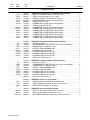
TABLE OF CONTENTS
SECTION 1 − SAFETY PRECAUTIONS − READ BEFORE USING . . . . . . . . . . . . . . . . . . . . . . . . . . . . . . . . . .
1-1. Symbol Usage . . . . . . . . . . . . . . . . . . . . . . . . . . . . . . . . . . . . . . . . . . . . . . . . . . . . . . . . . . . . . . . . . . . . . . . .
1-2. Arc Welding Hazards . . . . . . . . . . . . . . . . . . . . . . . . . . . . . . . . . . . . . . . . . . . . . . . . . . . . . . . . . . . . . . . . . .
1-3. Engine Hazards . . . . . . . . . . . . . . . . . . . . . . . . . . . . . . . . . . . . . . . . . . . . . . . . . . . . . . . . . . . . . . . . . . . . . .
1-4. Hydraulic Hazards . . . . . . . . . . . . . . . . . . . . . . . . . . . . . . . . . . . . . . . . . . . . . . . . . . . . . . . . . . . . . . . . . . . .
1-5. Compressed Air Hazards . . . . . . . . . . . . . . . . . . . . . . . . . . . . . . . . . . . . . . . . . . . . . . . . . . . . . . . . . . . . . . .
1-6. Additional Symbols For Installation, Operation, And Maintenance . . . . . . . . . . . . . . . . . . . . . . . . . . . . .
1-7. California Proposition 65 Warnings . . . . . . . . . . . . . . . . . . . . . . . . . . . . . . . . . . . . . . . . . . . . . . . . . . . . . . .
1-8. Principal Safety Standards . . . . . . . . . . . . . . . . . . . . . . . . . . . . . . . . . . . . . . . . . . . . . . . . . . . . . . . . . . . . .
1-9. EMF Information . . . . . . . . . . . . . . . . . . . . . . . . . . . . . . . . . . . . . . . . . . . . . . . . . . . . . . . . . . . . . . . . . . . . . .
SECTION 2 − CONSIGNES DE SÉCURITÉ − LIRE AVANT UTILISATION . . . . . . . . . . . . . . . . . . . . . . . . . . . .
2-1. Signification des symboles . . . . . . . . . . . . . . . . . . . . . . . . . . . . . . . . . . . . . . . . . . . . . . . . . . . . . . . . . . . . .
2-2. Dangers relatifs au soudage à l’arc . . . . . . . . . . . . . . . . . . . . . . . . . . . . . . . . . . . . . . . . . . . . . . . . . . . . . .
2-3. Dangers existant en relation avec le moteur . . . . . . . . . . . . . . . . . . . . . . . . . . . . . . . . . . . . . . . . . . . . . . .
2-4. Dangers liés à l’hydraulique . . . . . . . . . . . . . . . . . . . . . . . . . . . . . . . . . . . . . . . . . . . . . . . . . . . . . . . . . . . . .
2-5. Dangers liés à l’air comprimé . . . . . . . . . . . . . . . . . . . . . . . . . . . . . . . . . . . . . . . . . . . . . . . . . . . . . . . . . . .
2-6. Dangers supplémentaires en relation avec l’installation, le fonctionnement et la maintenance . . . . . .
2-7. Proposition californienne 65 Avertissements . . . . . . . . . . . . . . . . . . . . . . . . . . . . . . . . . . . . . . . . . . . . . . .
2-8. Principales normes de sécurité . . . . . . . . . . . . . . . . . . . . . . . . . . . . . . . . . . . . . . . . . . . . . . . . . . . . . . . . . .
2-9. Informations relatives aux CEM . . . . . . . . . . . . . . . . . . . . . . . . . . . . . . . . . . . . . . . . . . . . . . . . . . . . . . . . .
SECTION 3 − DEFINITIONS . . . . . . . . . . . . . . . . . . . . . . . . . . . . . . . . . . . . . . . . . . . . . . . . . . . . . . . . . . . . . . . . . . .
3-1. Symbols And Definitions . . . . . . . . . . . . . . . . . . . . . . . . . . . . . . . . . . . . . . . . . . . . . . . . . . . . . . . . . . . . . . .
SECTION 4 − SPECIFICATIONS . . . . . . . . . . . . . . . . . . . . . . . . . . . . . . . . . . . . . . . . . . . . . . . . . . . . . . . . . . . . . . . .
4-1. Description . . . . . . . . . . . . . . . . . . . . . . . . . . . . . . . . . . . . . . . . . . . . . . . . . . . . . . . . . . . . . . . . . . . . . . . . . .
4-2. Weld, Power, And Engine Specifications . . . . . . . . . . . . . . . . . . . . . . . . . . . . . . . . . . . . . . . . . . . . . . . . . .
4-3. Dimensions, Weights, And Operating Angles . . . . . . . . . . . . . . . . . . . . . . . . . . . . . . . . . . . . . . . . . . . . . .
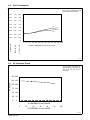
4-4. Fuel Consumption . . . . . . . . . . . . . . . . . . . . . . . . . . . . . . . . . . . . . . . . . . . . . . . . . . . . . . . . . . . . . . . . . . . . .
4-5. AC Generator Power . . . . . . . . . . . . . . . . . . . . . . . . . . . . . . . . . . . . . . . . . . . . . . . . . . . . . . . . . . . . . . . . . .
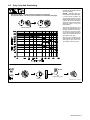
4-6. Duty Cycle And Overheating . . . . . . . . . . . . . . . . . . . . . . . . . . . . . . . . . . . . . . . . . . . . . . . . . . . . . . . . . . . .
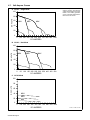
4-7. Volt-Ampere Curves . . . . . . . . . . . . . . . . . . . . . . . . . . . . . . . . . . . . . . . . . . . . . . . . . . . . . . . . . . . . . . . . . . .
SECTION 5 − INSTALLATION . . . . . . . . . . . . . . . . . . . . . . . . . . . . . . . . . . . . . . . . . . . . . . . . . . . . . . . . . . . . . . . . . .
5-1. Serial Number And Rating Label Location . . . . . . . . . . . . . . . . . . . . . . . . . . . . . . . . . . . . . . . . . . . . . . . . .
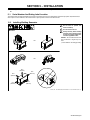
5-2. Installing Welding Generator . . . . . . . . . . . . . . . . . . . . . . . . . . . . . . . . . . . . . . . . . . . . . . . . . . . . . . . . . . . .
5-3. Grounding Generator To Truck Or Trailer Frame . . . . . . . . . . . . . . . . . . . . . . . . . . . . . . . . . . . . . . . . . . .
5-4. Activating The Dry Charge Battery (If Applicable) . . . . . . . . . . . . . . . . . . . . . . . . . . . . . . . . . . . . . . . . . . .
5-5. Connecting The Battery . . . . . . . . . . . . . . . . . . . . . . . . . . . . . . . . . . . . . . . . . . . . . . . . . . . . . . . . . . . . . . . .
5-6. Installing Exhaust Pipe . . . . . . . . . . . . . . . . . . . . . . . . . . . . . . . . . . . . . . . . . . . . . . . . . . . . . . . . . . . . . . . . .
5-7. Engine Prestart Checks . . . . . . . . . . . . . . . . . . . . . . . . . . . . . . . . . . . . . . . . . . . . . . . . . . . . . . . . . . . . . . . .
5-8. Safety Information For Connecting To Weld Output Terminals . . . . . . . . . . . . . . . . . . . . . . . . . . . . . . . . .
5-9. Weld Output Terminals . . . . . . . . . . . . . . . . . . . . . . . . . . . . . . . . . . . . . . . . . . . . . . . . . . . . . . . . . . . . . . . . .
5-10. Making Dual Operator CC Weld Connections w/ Separate Work Cables . . . . . . . . . . . . . . . . . . . . . . . .
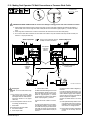
5-11. Making Dual Operator Mode CC Weld Connections w/ Common Work Cable . . . . . . . . . . . . . . . . . . .
5-12. Making Dual Operator CV Weld Connections w/ Separate Work Cables . . . . . . . . . . . . . . . . . . . . . . . .
5-13. Making Dual Operator CV Weld Connections w/ Common Work Cable . . . . . . . . . . . . . . . . . . . . . . . . .
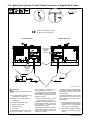
5-14. Making Dual Operator CC And CV Weld Connections w/ Separate Work Cables . . . . . . . . . . . . . . . .
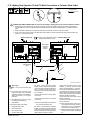
5-15. Making Dual Operator CC And CV Weld Connections w/ Common Work Cable . . . . . . . . . . . . . . . . .
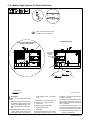
5-16. Making Single Operator CC Weld Connections . . . . . . . . . . . . . . . . . . . . . . . . . . . . . . . . . . . . . . . . . . . . .
5-17. Selecting Weld Cable Sizes* . . . . . . . . . . . . . . . . . . . . . . . . . . . . . . . . . . . . . . . . . . . . . . . . . . . . . . . . . . . .
5-18. Installing Ether Cylinder (Optional Ether Starting Aid) . . . . . . . . . . . . . . . . . . . . . . . . . . . . . . . . . . . . . . .
5-19. Remote 14 Receptacle Information . . . . . . . . . . . . . . . . . . . . . . . . . . . . . . . . . . . . . . . . . . . . . . . . . . . . . . .
5-20. Remote 14 Receptacle Connections . . . . . . . . . . . . . . . . . . . . . . . . . . . . . . . . . . . . . . . . . . . . . . . . . . . . .
1
1
1
3
4
4
5
6
7
7
8
8
8
10
11
12
13
14
15
15
16
16
17
17
17
17
18
18
19
20
21
21
21
22
23
23
24
24
25
26
27
28
29
30
31
32
33
34
35
35
36
TABLE OF CONTENTS
SECTION 6 − OPERATING THE WELDING GENERATOR . . . . . . . . . . . . . . . . . . . . . . . . . . . . . . . . . . . . . . . . .
6-1. Engine Controls . . . . . . . . . . . . . . . . . . . . . . . . . . . . . . . . . . . . . . . . . . . . . . . . . . . . . . . . . . . . . . . . . . . . . .
6-2. Weld Controls (See Section 6-3) . . . . . . . . . . . . . . . . . . . . . . . . . . . . . . . . . . . . . . . . . . . . . . . . . . . . . . . . .
6-3. Weld Control Descriptions (See Section 6-2) . . . . . . . . . . . . . . . . . . . . . . . . . . . . . . . . . . . . . . . . . . . . . .
SECTION 7 − OPERATING AUXILIARY EQUIPMENT . . . . . . . . . . . . . . . . . . . . . . . . . . . . . . . . . . . . . . . . . . . . .
7-1. 120 Volt And 240 Volt Duplex Receptacles . . . . . . . . . . . . . . . . . . . . . . . . . . . . . . . . . . . . . . . . . . . . . . . .
SECTION 8 − MAINTENANCE & TROUBLESHOOTING . . . . . . . . . . . . . . . . . . . . . . . . . . . . . . . . . . . . . . . . . . .
8-1. Routine Maintenance . . . . . . . . . . . . . . . . . . . . . . . . . . . . . . . . . . . . . . . . . . . . . . . . . . . . . . . . . . . . . . . . . .
8-2. Maintenance Label . . . . . . . . . . . . . . . . . . . . . . . . . . . . . . . . . . . . . . . . . . . . . . . . . . . . . . . . . . . . . . . . . . . .
8-3. Servicing Air Cleaner . . . . . . . . . . . . . . . . . . . . . . . . . . . . . . . . . . . . . . . . . . . . . . . . . . . . . . . . . . . . . . . . . .
8-4. Servicing Fuel And Lubrication Systems . . . . . . . . . . . . . . . . . . . . . . . . . . . . . . . . . . . . . . . . . . . . . . . . . .
8-5. Adjusting Engine Speed . . . . . . . . . . . . . . . . . . . . . . . . . . . . . . . . . . . . . . . . . . . . . . . . . . . . . . . . . . . . . . . .
8-6. Servicing Optional Ether Starting Aid . . . . . . . . . . . . . . . . . . . . . . . . . . . . . . . . . . . . . . . . . . . . . . . . . . . . .
8-7. Priming Fuel System . . . . . . . . . . . . . . . . . . . . . . . . . . . . . . . . . . . . . . . . . . . . . . . . . . . . . . . . . . . . . . . . . .
8-8. Inspecting And Cleaning Optional Spark Arrestor Muffler . . . . . . . . . . . . . . . . . . . . . . . . . . . . . . . . . . . .
8-9. Checking Generator Brushes . . . . . . . . . . . . . . . . . . . . . . . . . . . . . . . . . . . . . . . . . . . . . . . . . . . . . . . . . . .
8-10. Circuit Protection . . . . . . . . . . . . . . . . . . . . . . . . . . . . . . . . . . . . . . . . . . . . . . . . . . . . . . . . . . . . . . . . . . . . .
8-11. Troubleshooting . . . . . . . . . . . . . . . . . . . . . . . . . . . . . . . . . . . . . . . . . . . . . . . . . . . . . . . . . . . . . . . . . . . . . .
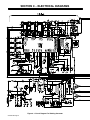
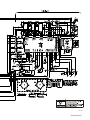
SECTION 9 − ELECTRICAL DIAGRAMS . . . . . . . . . . . . . . . . . . . . . . . . . . . . . . . . . . . . . . . . . . . . . . . . . . . . . . . .
SECTION 10 − RUN-IN PROCEDURE . . . . . . . . . . . . . . . . . . . . . . . . . . . . . . . . . . . . . . . . . . . . . . . . . . . . . . . . . . .
10-1. Wetstacking . . . . . . . . . . . . . . . . . . . . . . . . . . . . . . . . . . . . . . . . . . . . . . . . . . . . . . . . . . . . . . . . . . . . . . . . . .
10-2. Run-In Procedure Using Load Bank . . . . . . . . . . . . . . . . . . . . . . . . . . . . . . . . . . . . . . . . . . . . . . . . . . . . . .
10-3. Run-In Procedure Using Resistance Grid . . . . . . . . . . . . . . . . . . . . . . . . . . . . . . . . . . . . . . . . . . . . . . . . .
SECTION 11 − GENERATOR POWER GUIDELINES . . . . . . . . . . . . . . . . . . . . . . . . . . . . . . . . . . . . . . . . . . . . . .
SECTION 12 − PARTS LIST . . . . . . . . . . . . . . . . . . . . . . . . . . . . . . . . . . . . . . . . . . . . . . . . . . . . . . . . . . . . . . . . . . .
OPTIONS AND ACCESSORIES
WARRANTY
37
37
38
39
40
40
41
41
42
43
44
45
45
46
47
47
48
49
52
54
54
55
56
57
64
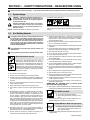
SECTION 1 − SAFETY PRECAUTIONS − READ BEFORE USING
rom_2010−03
Protect yourself and others from injury — read, follow, and save these important safety precautions and operating instructions.
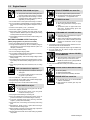
1-1. Symbol Usage
DANGER! − Indicates a hazardous situation which, if
not avoided, will result in death or serious injury. The
possible hazards are shown in the adjoining symbols
or explained in the text.
Indicates a hazardous situation which, if not avoided,
could result in death or serious injury. The possible
hazards are shown in the adjoining symbols or explained in the text.
NOTICE − Indicates statements not related to personal injury.
Indicates special instructions.
This group of symbols means Warning! Watch Out! ELECTRIC
SHOCK, MOVING PARTS, and HOT PARTS hazards. Consult symbols and related instructions below for necessary actions to avoid the
hazards.
1-2. Arc Welding Hazards
The symbols shown below are used throughout this manual
to call attention to and identify possible hazards. When you
see the symbol, watch out, and follow the related instructions
to avoid the hazard. The safety information given below is
only a summary of the more complete safety information
found in the Safety Standards listed in Section 1-8. Read and
follow all Safety Standards.
Only qualified persons should install, operate, maintain, and
repair this unit.
During operation, keep everybody, especially children, away.
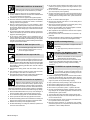
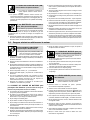
ELECTRIC SHOCK can kill.
Touching live electrical parts can cause fatal shocks or
severe burns. The electrode and work circuit is
electrically live whenever the output is on. The input
power circuit and machine internal circuits are also live
when power is on. In semiautomatic or automatic wire
welding, the wire, wire reel, drive roll housing, and all
metal parts touching the welding wire are electrically
live. Incorrectly installed or improperly grounded
equipment is a hazard.
Do not touch live electrical parts.
Wear dry, hole-free insulating gloves and body protection.
Insulate yourself from work and ground using dry insulating mats
or covers big enough to prevent any physical contact with the work
or ground.
Do not use AC output in damp areas, if movement is confined, or if
there is a danger of falling.
Use AC output ONLY if required for the welding process.
If AC output is required, use remote output control if present on
unit.
Additional safety precautions are required when any of the following electrically hazardous conditions are present: in damp
locations or while wearing wet clothing; on metal structures such
as floors, gratings, or scaffolds; when in cramped positions such
as sitting, kneeling, or lying; or when there is a high risk of unavoidable or accidental contact with the workpiece or ground. For these
conditions, use the following equipment in order presented: 1) a
semiautomatic DC constant voltage (wire) welder, 2) a DC manual
(stick) welder, or 3) an AC welder with reduced open-circuit voltage. In most situations, use of a DC, constant voltage wire welder
is recommended. And, do not work alone!
Disconnect input power or stop engine before installing or
servicing this equipment. Lockout/tagout input power according to
OSHA 29 CFR 1910.147 (see Safety Standards).
Properly install and ground this equipment according to its
Owner’s Manual and national, state, and local codes.
Always verify the supply ground — check and be sure that input
power cord ground wire is properly connected to ground terminal in
disconnect box or that cord plug is connected to a properly
grounded receptacle outlet.
When making input connections, attach proper grounding conductor first − double-check connections.
Keep cords dry, free of oil and grease, and protected from hot metal
and sparks.
Frequently inspect input power cord for damage or bare wiring —
replace cord immediately if damaged — bare wiring can kill.
Turn off all equipment when not in use.
Do not use worn, damaged, undersized, or poorly spliced cables.
Do not drape cables over your body.
If earth grounding of the workpiece is required, ground it directly
with a separate cable.
Do not touch electrode if you are in contact with the work, ground,
or another electrode from a different machine.
Use only well-maintained equipment. Repair or replace damaged
parts at once. Maintain unit according to manual.
Do not touch electrode holders connected to two welding machines at the same time since double open-circuit voltage will be
present.
Wear a safety harness if working above floor level.
Keep all panels and covers securely in place.
Clamp work cable with good metal-to-metal contact to workpiece
or worktable as near the weld as practical.
Insulate work clamp when not connected to workpiece to prevent
contact with any metal object.
Do not connect more than one electrode or work cable to any
single weld output terminal.
SIGNIFICANT DC VOLTAGE exists in inverter power
sources AFTER stopping engine.
Stop engine on inverter and discharge input capacitors according
to instructions in Maintenance Section before touching any parts.
HOT PARTS can burn.
Do not touch hot parts bare handed.
Allow cooling period before working on equipment.
To handle hot parts, use proper tools and/or wear heavy, insulated welding gloves and clothing to prevent burns.
FLYING METAL or DIRT can injure eyes.
Welding, chipping, wire brushing, and grinding
cause sparks and flying metal. As welds cool,
they can throw off slag.
Wear approved safety glasses with side shields even under your
welding helmet.
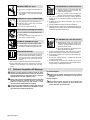
OM-225 590 Page 1
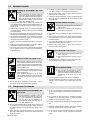
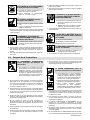
FUMES AND GASES can be hazardous.
Welding produces fumes and gases. Breathing these
fumes and gases can be hazardous to your health.
Keep your head out of the fumes. Do not breathe the fumes.
If inside, ventilate the area and/or use local forced ventilation at the
arc to remove welding fumes and gases.
If ventilation is poor, wear an approved air-supplied respirator.
Read and understand the Material Safety Data Sheets (MSDSs)
and the manufacturer’s instructions for metals, consumables,
coatings, cleaners, and degreasers.
Work in a confined space only if it is well ventilated, or while
wearing an air-supplied respirator. Always have a trained watchperson nearby. Welding fumes and gases can displace air and
lower the oxygen level causing injury or death. Be sure the breathing air is safe.
Do not weld in locations near degreasing, cleaning, or spraying operations. The heat and rays of the arc can react with vapors to form
highly toxic and irritating gases.
Do not weld on coated metals, such as galvanized, lead, or
cadmium plated steel, unless the coating is removed from the weld
area, the area is well ventilated, and while wearing an air-supplied
respirator. The coatings and any metals containing these elements
can give off toxic fumes if welded.
Do not weld on closed containers such as tanks, drums, or pipes,
unless they are properly prepared according to AWS F4.1 (see
Safety Standards).
Do not weld where the atmosphere may contain flammable dust,
gas, or liquid vapors (such as gasoline).
Connect work cable to the work as close to the welding area as
practical to prevent welding current from traveling long, possibly
unknown paths and causing electric shock, sparks, and fire hazards.
Do not use welder to thaw frozen pipes.
Remove stick electrode from holder or cut off welding wire at
contact tip when not in use.
Wear oil-free protective garments such as leather gloves, heavy
shirt, cuffless trousers, high shoes, and a cap.
Remove any combustibles, such as a butane lighter or matches,
from your person before doing any welding.
After completion of work, inspect area to ensure it is free of sparks,
glowing embers, and flames.
Use only correct fuses or circuit breakers. Do not oversize or bypass them.
Follow requirements in OSHA 1910.252 (a) (2) (iv) and NFPA 51B
for hot work and have a fire watcher and extinguisher nearby.
NOISE can damage hearing.
BUILDUP OF GAS can injure or kill.
Noise from some processes or equipment can damage hearing.
Shut off shielding gas supply when not in use.
Always ventilate confined spaces or use approved air-supplied respirator.
Wear approved ear protection if noise level is
high.
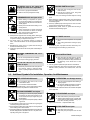
ELECTRIC AND MAGNETIC FIELDS (EMF)
can affect Implanted Medical Devices.
ARC RAYS can burn eyes and skin.
Arc rays from the welding process produce intense
visible and invisible (ultraviolet and infrared) rays that
can burn eyes and skin. Sparks fly off from the weld.
Wear an approved welding helmet fitted with a proper shade of filter
lenses to protect your face and eyes from arc rays and sparks
when welding or watching (see ANSI Z49.1 and Z87.1 listed in
Safety Standards).
Wear approved safety glasses with side shields under your
helmet.
Use protective screens or barriers to protect others from flash,
glare, and sparks; warn others not to watch the arc.
Wear protective clothing made from durable, flame-resistant material (leather, heavy cotton, or wool) and foot protection.
WELDING can cause fire or explosion.
Welding on closed containers, such as tanks, drums,
or pipes, can cause them to blow up. Sparks can fly off
from the welding arc. The flying sparks, hot workpiece,
and hot equipment can cause fires and burns. Accidental contact of
electrode to metal objects can cause sparks, explosion, overheating,
or fire. Check and be sure the area is safe before doing any welding.
Remove all flammables within 35 ft (10.7 m) of the welding arc. If
this is not possible, tightly cover them with approved covers.
Do not weld where flying sparks can strike flammable material.
Protect yourself and others from flying sparks and hot metal.
Be alert that welding sparks and hot materials from welding can
easily go through small cracks and openings to adjacent areas.
Watch for fire, and keep a fire extinguisher nearby.
Be aware that welding on a ceiling, floor, bulkhead, or partition can
cause fire on the hidden side.
OM-225 590 Page 2
Wearers of Pacemakers and other Implanted
Medical Devices should keep away.
Implanted Medical Device wearers should consult their doctor
and the device manufacturer before going near arc welding, spot
welding, gouging, plasma arc cutting, or induction heating
operations.
CYLINDERS can explode if damaged.
Shielding gas cylinders contain gas under high pressure. If damaged, a cylinder can explode. Since gas
cylinders are normally part of the welding process, be
sure to treat them carefully.
Protect compressed gas cylinders from excessive heat, mechanical shocks, physical damage, slag, open flames, sparks, and arcs.
Install cylinders in an upright position by securing to a stationary
support or cylinder rack to prevent falling or tipping.
Keep cylinders away from any welding or other electrical circuits.
Never drape a welding torch over a gas cylinder.
Never allow a welding electrode to touch any cylinder.
Never weld on a pressurized cylinder — explosion will result.
Use only correct shielding gas cylinders, regulators, hoses, and fittings designed for the specific application; maintain them and
associated parts in good condition.
Turn face away from valve outlet when opening cylinder valve.
Keep protective cap in place over valve except when cylinder is in
use or connected for use.
Use the right equipment, correct procedures, and sufficient number of persons to lift and move cylinders.
Read and follow instructions on compressed gas cylinders,
associated equipment, and Compressed Gas Association (CGA)
publication P-1 listed in Safety Standards.
1-3. Engine Hazards
BATTERY EXPLOSION can injure.
Always wear a face shield, rubber gloves, and
protective clothing when working on a battery.
Stop engine before disconnecting or connecting battery cables, battery charging cables (if
applicable), or servicing battery.
Do not allow tools to cause sparks when working on a battery.
Do not use welder to charge batteries or jump start vehicles unless the unit has a battery charging feature designed for this purpose.
Observe correct polarity (+ and −) on batteries.
Disconnect negative (−) cable first and connect it last.
Keep sparks, flames, cigarettes, and other ignition sources
away from batteries. Batteries produce explosive gases during
normal operation and when being charged.
Follow battery manufacturer’s instructions when working on or
near a battery.
BATTERY CHARGING OUTPUT can injure.
(Battery charging feature not present on all models.)
Have only qualified persons do battery charging work.
Charge lead-acid batteries only. Do not use battery charger to
supply power to an extra-low-voltage electrical system or to
charge dry cell batteries.
Do not charge a frozen battery.
Do not use damaged charging cables.
Do not charge a battery that has loose terminals or one showing
damage such as a cracked case or cover.
Before charging battery, select correct charger voltage to match
battery voltage.
Set battery charging controls to the Off position before connecting to battery. Do not allow battery charging clips to touch each
other.
Keep charging cables away from vehicle hood, door, or moving
parts.
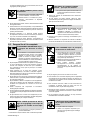
FUEL can cause fire or explosion.
Stop engine and let it cool off before checking or
adding fuel.
Do not add fuel while smoking or if unit is near
any sparks or open flames.
Do not overfill tank — allow room for fuel to expand.
Do not spill fuel. If fuel is spilled, clean up before starting engine.
Dispose of rags in a fireproof container.
Always keep nozzle in contact with tank when fueling.
MOVING PARTS can injure.
EXHAUST SPARKS can cause fire.
Do not let engine exhaust sparks cause fire.
Use approved engine exhaust spark arrestor in
required areas — see applicable codes.
HOT PARTS can burn.
Do not touch hot parts bare handed.
Allow cooling period before working on equipment.
To handle hot parts, use proper tools and/or
wear heavy, insulated welding gloves and
clothing to prevent burns.
STEAM AND HOT COOLANT can burn.
If possible, check coolant level when engine is
cold to avoid scalding.
Always check coolant level at overflow tank, if
present on unit, instead of radiator (unless told
otherwise in maintenance section or engine
manual).
If the engine is warm, checking is needed, and there is no overflow tank, follow the next two statements.
Wear safety glasses and gloves and put a rag over radiator cap.
Turn cap slightly and let pressure escape slowly before
completely removing cap.
Using a generator indoors CAN KILL
YOU IN MINUTES.
Generator exhaust contains carbon monoxide.
This is a poison you cannot see or smell.
NEVER use inside a home or garage, EVEN IF
doors and windows are open.
Only use OUTSIDE and far away from windows, doors, and
vents.
BATTERY ACID can BURN SKIN and EYES.
Do not tip battery.
Replace damaged battery.
Flush eyes and skin immediately with water.
ENGINE HEAT can cause fire.
Do not locate unit on, over, or near combustible
surfaces or flammables.
Keep exhaust and exhaust pipes way from
flammables.
Keep away from moving parts such as fans,
belts, and rotors.
Keep all doors, panels, covers, and guards
closed and securely in place.
Stop engine before installing or connecting unit.
Have only qualified persons remove doors, panels, covers, or
guards for maintenance and troubleshooting as necessary.
To prevent accidental starting during servicing, disconnect
negative (−) battery cable from battery.
Keep hands, hair, loose clothing, and tools away from moving
parts.
Reinstall doors, panels, covers, or guards when servicing is
finished and before starting engine.
Before working on generator, remove spark plugs or injectors to
keep engine from kicking back or starting.
Block flywheel so that it will not turn while working on generator
components.
OM-225 590 Page 3
1-4. Hydraulic Hazards
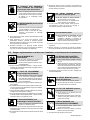
HYDRAULIC EQUIPMENT can injure
or kill.
Incorrect installation or operation of this unit
could result in equipment failure and personal
injury. Only qualified persons should install, operate, and service this unit according to its
Owner’s Manual, industry standards, and national, state, and local codes.
Do not exceed the rated output or capacity of the hydraulic pump
or any equipment in the hydraulic system. Design hydraulic system so failure of any hydraulic component will not put people or
property at risk.
Before working on hydraulic system, turn off and lockout/tagout
unit, release pressure, and be sure hydraulic pressure cannot be
accidentally applied.
Do not work on hydraulic system with unit running unless you are
a qualified person and following the manufacturer’s instructions.
Do not modify or alter hydraulic pump or manufacturer-supplied
equipment. Do not disconnect, disable, or override any safety
equipment in the hydraulic system.
Use only components/accessories approved by the manufacturer.
Keep away from potential pinch points or crush points created by
equipment connected to the hydraulic system.
Do not work under or around any equipment that is supported
only by hydraulic pressure. Properly support equipment by
mechanical means.
HYDRAULIC FLUID can injure or kill.
Before working on hydraulic system, turn off and
lockout/tagout unit, release pressure, and be sure
hydraulic pressure cannot be accidentally applied.
Relieve pressure before disconnecting or connecting hydraulic lines.
Check hydraulic system components and all connections and hoses for damage, leaks, and wear
before operating unit.
Wear protective equipment such as safety
glasses, leather gloves, heavy shirt and trousers,
high shoes, and a cap when working on hydraulic
system.
Use a piece of paper or cardboard to search for leaks−−never use
bare hands. Do not use equipment if leaks are found.
HYDRAULIC FLUID is FLAMMABLE−−do not work on hydraulics
near sparks or flames; do not smoke near hydraulic fluid.
Reinstall doors, panels, covers, or guards when servicing is
finished and before starting unit.
If ANY fluid is injected into the skin, it must be surgically removed
within a few hours by a doctor familiar with this type of injury or gangrene may result.
MOVING PARTS can injure.
Keep away from moving parts such as fans,
belts and rotors.
Keep all doors, panels, covers, and guards
closed and securely in place.
Keep hands, hair, loose clothing, and tools away from moving
parts.
Before working on hydraulic system, turn off and lockout/tagout
unit, release pressure, and be sure hydraulic pressure cannot be
accidentally applied.
Have only qualified people remove guards or covers for maintenance and troubleshooting as necessary.
Reinstall doors, panels, covers, or guards when servicing is
finished and before starting engine.
HOT PARTS AND FLUID can burn.
Do not touch hot parts bare handed or allow hot
fluid to contact skin.
Allow cooling period before working on equipment.
To handle hot parts, use proper tools and/or wear heavy, insulated welding gloves and clothing to prevent burns.
READ INSTRUCTIONS.
Read and follow all labels and the Owner’s
Manual carefully before installing, operating, or
servicing unit. Read the safety information at
the beginning of the manual and in each
section.
Use only genuine replacement parts from the manufacturer.
Perform maintenance and service according to the Owner’s
Manuals, industry standards, and national, state, and local
codes.
1-5. Compressed Air Hazards
COMPRESSED AIR EQUIPMENT can
injure or kill.
Incorrect installation or operation of this unit
could result in equipment failure and personal
injury. Only qualified persons should install, operate, and service this unit according to its
Owner’s Manual, industry standards, and national, state, and local codes.
Do not exceed the rated output or capacity of the compressor or
any equipment in the compressed air system. Design compressed
air system so failure of any component will not put people or property at risk.
Before working on compressed air system, turn off and lockout/
tagout unit, release pressure, and be sure air pressure cannot be
accidentally applied.
OM-225 590 Page 4
Do not work on compressed air system with unit running unless
you are a qualified person and following the manufacturer’s instructions.
Do not modify or alter compressor or manufacturer-supplied
equipment. Do not disconnect, disable, or override any safety
equipment in the compressed air system.
Use only components and accessories approved by the manufacturer.
Keep away from potential pinch points or crush points created by
equipment connected to the compressed air system.
Do not work under or around any equipment that is supported only
by air pressure. Properly support equipment by mechanical
means.
HOT METAL from air arc cutting and
gouging can cause fire or explosion.
Do not cut or gouge near flammables.
Watch for fire; keep extinguisher nearby.
COMPRESSED AIR can injure or kill.
Before working on compressed air system,
turn off and lockout/tagout unit, release pressure, and be sure air pressure cannot be accidentally applied.
Relieve pressure before disconnecting or connecting air lines.
Check compressed air system components
and all connections and hoses for damage,
leaks, and wear before operating unit.
Do not direct air stream toward self or others.
Wear protective equipment such as safety glasses, hearing protection, leather gloves, heavy shirt and trousers, high shoes, and
a cap when working on compressed air system.
Use soapy water or an ultrasonic detector to search for
leaks−−never use bare hands. Do not use equipment if leaks are
found.
Reinstall doors, panels, covers, or guards when servicing is
finished and before starting unit.
If ANY air is injected into the skin or body seek medical help immediately.
BREATHING COMPRESSED AIR can injure or kill.
Do not use compressed air for breathing.
Use only for cutting, gouging, and tools.
TRAPPED AIR PRESSURE AND WHIPPING
HOSES can injure.
Release air pressure from tools and system before servicing, adding or changing attachments, or opening compressor oil drain or oil fill
cap.
MOVING PARTS can injure.
Keep away from moving parts such as fans,
belts and rotors.
Keep all doors, panels, covers, and guards
closed and securely in place.
Keep hands, hair, loose clothing, and tools away from moving
parts.
Before working on compressed air system, turn off and lockout/
tagout unit, release pressure, and be sure air pressure cannot be
accidentally applied.
Have only qualified people remove guards or covers for maintenance and troubleshooting as necessary.
Reinstall doors, panels, covers, or guards when servicing is
finished and before starting engine.
HOT PARTS can burn.
Do not touch hot compressor or air system
parts.
Allow cooling period before working on equipment.
To handle hot parts, use proper tools and/or wear heavy, insulated welding gloves and clothing to prevent burns.
READ INSTRUCTIONS.
Read and follow all labels and the Owner’s
Manual carefully before installing, operating, or
servicing unit. Read the safety information at
the beginning of the manual and in each
section.
Use only genuine replacement parts from the manufacturer.
Perform maintenance and service according to the Owner’s
Manuals, industry standards, and national, state, and local
codes.
1-6. Additional Symbols For Installation, Operation, And Maintenance
FIRE OR EXPLOSION hazard.
Do not install or place unit on, over, or near
combustible surfaces.
Do not install unit near flammables.
Do not overload building wiring − be sure power supply system is
properly sized, rated, and protected to handle this unit.
OVERHEATING can damage motors.
Turn off or unplug equipment before starting or
stopping engine.
Do not let low voltage and frequency caused by
low engine speed damage electric motors.
Do not connect 50 or 60 Hertz motors to the 100 Hertz receptacle
where applicable.
FALLING EQUIPMENT can injure.
Use lifting eye to lift unit and properly installed
accessories only, NOT gas cylinders. Do not
exceed maximum lift eye weight rating (see
Specifications).
Use equipment of adequate capacity to lift and
support unit.
If using lift forks to move unit, be sure forks are long enough to
extend beyond opposite side of unit.
Keep equipment (cables and cords) away from moving vehicles
when working from an aerial location.
Follow the guidelines in the Applications Manual for the Revised
NIOSH Lifting Equation (Publication No. 94−110) when manually lifting heavy parts or equipment.
FLYING SPARKS can injure.
Wear a face shield to protect eyes and face.
Shape tungsten electrode only on grinder with
proper guards in a safe location wearing proper
face, hand, and body protection.
Sparks can cause fires — keep flammables away.
MOVING PARTS can injure.
Keep away from moving parts.
Keep away from pinch points such as drive
rolls.
OM-225 590 Page 5
WELDING WIRE can injure.
H.F. RADIATION can cause interference.
Do not press gun trigger until instructed to do
so.
Do not point gun toward any part of the body,
other people, or any metal when threading
welding wire.
OVERUSE can cause OVERHEATING.
Allow cooling period; follow rated duty cycle.
Reduce current or reduce duty cycle before
starting to weld again.
Do not block or filter airflow to unit.
STATIC (ESD) can damage PC boards.
High-frequency (H.F.) can interfere with radio
navigation, safety services, computers, and
communications equipment.
Have only qualified persons familiar with
electronic equipment perform this installation.
The user is responsible for having a qualified electrician
promptly correct any interference problem resulting from the
installation.
If notified by the FCC about interference, stop using the
equipment at once.
Have the installation regularly checked and maintained.
Keep high-frequency source doors and panels tightly shut, keep
spark gaps at correct setting, and use grounding and shielding to
minimize the possibility of interference.
Put on grounded wrist strap BEFORE handling
boards or parts.
Use proper static-proof bags and boxes to
store, move, or ship PC boards.
ARC WELDING can cause interference.
TILTING OF TRAILER can injure.
Use tongue jack or blocks to support weight.
Properly install welding generator onto trailer
according to instructions supplied with trailer.
READ INSTRUCTIONS.
Read and follow all labels and the Owner’s
Manual carefully before installing, operating, or
servicing unit. Read the safety information at
the beginning of the manual and in each
section.
Use only genuine replacement parts from the manufacturer.
Perform maintenance and service according to the Owner’s
Manuals, industry standards, and national, state, and local
codes.
Electromagnetic energy can interfere with
sensitive electronic equipment such as microprocessors, computers, and computer-driven
equipment such as robots.
Be sure all equipment in the welding area is
electromagnetically compatible.
To reduce possible interference, keep weld cables as short as
possible, close together, and down low, such as on the floor.
Locate welding operation 100 meters from any sensitive electronic equipment.
Be sure this welding machine is installed and grounded
according to this manual.
If interference still occurs, the user must take extra measures
such as moving the welding machine, using shielded cables,
using line filters, or shielding the work area.
1-7. California Proposition 65 Warnings
Welding or cutting equipment produces fumes or gases
which contain chemicals known to the State of California to
cause birth defects and, in some cases, cancer. (California
Health & Safety Code Section 25249.5 et seq.)
Battery posts, terminals and related accessories contain lead
and lead compounds, chemicals known to the State of
California to cause cancer and birth defects or other
reproductive harm. Wash hands after handling.
This product contains chemicals, including lead, known to
the state of California to cause cancer, birth defects, or other
reproductive harm. Wash hands after use.
OM-225 590 Page 6
For Gasoline Engines:
Engine exhaust contains chemicals known to the State of
California to cause cancer, birth defects, or other reproductive harm.
For Diesel Engines:
Diesel engine exhaust and some of its constituents are
known to the State of California to cause cancer, birth
defects, and other reproductive harm.
1-8. Principal Safety Standards
Safety in Welding, Cutting, and Allied Processes, ANSI Standard Z49.1,
from Global Engineering Documents (phone: 1-877-413-5184, website:
www.global.ihs.com).
Safe Practices for the Preparation of Containers and Piping for Welding
and Cutting, American Welding Society Standard AWS F4.1, from Global Engineering Documents (phone: 1-877-413-5184, website:
www.global.ihs.com).
National Electrical Code, NFPA Standard 70, from National Fire Protection Association, Quincy, MA 02269 (phone: 1-800-344-3555, website:
www.nfpa.org and www. sparky.org).
Safe Handling of Compressed Gases in Cylinders, CGA Pamphlet P-1,
from Compressed Gas Association, 4221 Walney Road, 5th Floor,
Chantilly, VA 20151 (phone: 703-788-2700, website:www.cganet.com).
Safety in Welding, Cutting, and Allied Processes, CSA Standard
W117.2, from Canadian Standards Association, Standards Sales, 5060
Spectrum Way, Suite 100, Ontario, Canada L4W 5NS (phone:
800-463-6727, website: www.csa-international.org).
Battery Chargers, CSA Standard C22.2 NO 107.2−01, from Canadian
Standards Association, Standards Sales, 5060 Spectrum Way, Suite
100, Ontario, Canada L4W 5NS (phone: 800-463-6727, website:
www.csa-international.org).
Safe Practice For Occupational And Educational Eye And Face Protection, ANSI Standard Z87.1, from American National Standards Institute,
25 West 43rd Street, New York, NY 10036 (phone: 212-642-4900, website: www.ansi.org).
Standard for Fire Prevention During Welding, Cutting, and Other Hot
Work, NFPA Standard 51B, from National Fire Protection Association,
Quincy, MA 02269 (phone: 1-800-344-3555, website: www.nfpa.org.
For Standards about hydraulic systems, contact the National Fluid
Power Association, Publications Department, 3333 North Mayfair
Road, Suite 211, Milwaukee, WI 53222-3219 (phone: (414) 778-3344,
website: www.nfpa.com).
OSHA, Occupational Safety and Health Standards for General Industry, Title 29, Code of Federal Regulations (CFR), Part 1910, Subpart Q,
and Part 1926, Subpart J, from U.S. Government Printing Office, Superintendent of Documents, P.O. Box 371954, Pittsburgh, PA 15250-7954
(phone: 1-866-512-1800) (there are 10 OSHA Regional Offices—
phone for Region 5, Chicago, is 312-353-2220, website:
www.osha.gov).
U.S. Consumer Product Safety Commission (CPSC), 4330 East West
Highway, Bethesda, MD 20814 (phone: 301-504-7923, website:
www.cpsc.gov).
Applications Manual for the Revised NIOSH Lifting Equation, The National Institute for Occupational Safety and Health (NIOSH), 1600
Clifton Rd, Atlanta, GA 30333 (phone: 1-800-232-4636, website:
www.cdc.gov/NIOSH).
1-9. EMF Information
Electric current flowing through any conductor causes localized electric
and magnetic fields (EMF). Welding current creates an EMF field
around the welding circuit and welding equipment. EMF fields may interfere with some medical implants, e.g. pacemakers. Protective
measures for persons wearing medical implants have to be taken. For
example, access restrictions for passers−by or individual risk assessment for welders. All welders should use the following procedures in
order to minimize exposure to EMF fields from the welding circuit:
1. Keep cables close together by twisting or taping them, or using a
cable cover.
2. Do not place your body between welding cables. Arrange cables
to one side and away from the operator.
3. Do not coil or drape cables around your body.
4. Keep head and trunk as far away from the equipment in the
welding circuit as possible.
5. Connect work clamp to workpiece as close to the weld as
possible.
6. Do not work next to, sit or lean on the welding power source.
7. Do not weld whilst carrying the welding power source or wire
feeder.
About Implanted Medical Devices:
Implanted Medical Device wearers should consult their doctor and the
device manufacturer before performing or going near arc welding, spot
welding, gouging, plasma arc cutting, or induction heating operations.
If cleared by your doctor, then following the above procedures is recommended.
OM-225 590 Page 7
SECTION 2 − CONSIGNES DE SÉCURITÉ − LIRE AVANT
UTILISATION
fre_rom_2010−03
Pour écarter les risques de blessure pour vous−même et pour autrui — lire, appliquer et ranger en lieu sûr ces consignes relatives
aux précautions de sécurité et au mode opératoire.
2-1. Signification des symboles
DANGER! − Indique une situation dangereuse qui si on
l’évite pas peut donner la mort ou des blessures graves.
Les dangers possibles sont montrés par les symboles
joints ou sont expliqués dans le texte.
Indique une situation dangereuse qui si on l’évite pas
peut donner la mort ou des blessures graves. Les dangers possibles sont montrés par les symboles joints ou
sont expliqués dans le texte.
NOTE − Indique des déclarations pas en relation avec des blessures
personnelles.
Indique des instructions spécifiques.
Ce groupe de symboles veut dire Avertissement! Attention! DANGER
DE CHOC ELECTRIQUE, PIECES EN MOUVEMENT, et PIECES
CHAUDES. Consulter les symboles et les instructions ci-dessous y
afférant pour les actions nécessaires afin d’éviter le danger.
2-2. Dangers relatifs au soudage à l’arc
Les symboles présentés ci-après sont utilisés tout au long du
présent manuel pour attirer votre attention et identifier les risques de danger. Lorsque vous voyez un symbole, soyez
vigilant et suivez les directives mentionnées afin d’éviter tout
danger. Les consignes de sécurité présentées ci-après ne
font que résumer l’information contenue dans les normes de
sécurité énumérées à la section 1-8. Veuillez lire et respecter
toutes ces normes de sécurité.
L’installation, l’utilisation, l’entretien et les réparations ne
doivent être confiés qu’à des personnes qualifiées.
Au cours de l’utilisation, tenir toute personne à l’écart et plus
particulièrement les enfants.
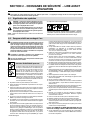
UN CHOC ÉLECTRIQUE peut tuer.
Un simple contact avec des pièces électriques peut
provoquer une électrocution ou des blessures graves. L’électrode et le circuit de soudage sont sous
tension dès que l’appareil est sur ON. Le circuit
d’entrée et les circuits internes de l’appareil sont
également sous tension à ce moment-là. En soudage
semi-automatique ou automatique, le fil, le dévidoir, le
logement des galets d’entraînement et les pièces
métalliques en contact avec le fil de soudage sont
sous tension. Des matériels mal installés ou mal mis
à la terre présentent un danger.
Ne jamais toucher les pièces électriques sous tension.
Porter des gants et des vêtements de protection secs ne comportant pas de trous.
S’isoler de la pièce et de la terre au moyen de tapis ou d’autres
moyens isolants suffisamment grands pour empêcher le contact
physique éventuel avec la pièce ou la terre.
Ne pas se servir de source électrique à courant électrique dans les
zones humides, dans les endroits confinés ou là où on risque de
tomber.
Se servir d’une source électrique à courant électrique UNIQUEMENT si le procédé de soudage le demande.
Si l’utilisation d’une source électrique à courant électrique s’avère
nécessaire, se servir de la fonction de télécommande si l’appareil
en est équipé.
Des précautions de sécurité supplémentaires sont requises dans
des environnements à risque comme: les endroits humides ou
lorsque l’on porte des vêtements mouillés; sur des structures métalliques au sol, grillages et échafaudages; dans des positions
assises, à genoux et allongées; ou quand il y a un risque important
de contact accidentel avec la pièce ou le sol. Dans ces cas utiliser
les appareils suivants dans l’ordre de préférence: 1) un poste à
souder DC semi−automatique de type CV (MIG/MAG), 2) un poste
OM-225 590 Page 8
à souder manuel (électrode enrobée) DC, 3) un poste à souder
manuel AC avec tension à vide réduite. Dans la plupart des cas, un
poste courant continu de type CV est recommandé. Et, ne pas travailler seul!
Couper l’alimentation ou arrêter le moteur avant de procéder à
l’installation, à la réparation ou à l’entretien de l’appareil.
Déverrouiller l’alimentation selon la norme OSHA 29 CFR
1910.147 (voir normes de sécurité).
Installer et mettre à la terre correctement cet appareil conformément à son manuel d’utilisation et aux codes nationaux,
provinciaux et municipaux.
Toujours vérifier la terre du cordon d’alimentation − Vérifier et
s’assurer que le fil de terre du cordon d’alimentation est bien
raccordé à la borne de terre du sectionneur ou que la fiche du
cordon est raccordée à une prise correctement mise à la terre.
En effectuant les raccordements d’entrée fixer d’abord le conducteur de mise à la terre approprié et contre-vérifier les connexions.
Les câbles doivent être exempts d’humidité, d’huile et de graisse;
protégez−les contre les étincelles et les pièces métalliques chaudes.
Vérifier fréquemment le cordon d’alimentation pour voir s’il n’est
pas endommagé ou dénudé − remplacer le cordon immédiatement
s’il est endommagé − un câble dénudé peut provoquer une électrocution.
Mettre l’appareil hors tension quand on ne l’utilise pas.
Ne pas utiliser des câbles usés, endommagés, de grosseur insuffisante ou mal épissés.
Ne pas enrouler les câbles autour du corps.
Si la pièce soudée doit être mise à la terre, le faire directement
avec un câble distinct − ne pas utiliser le connecteur de pièce ou le
câble de retour.
Ne pas toucher l’électrode quand on est en contact avec la pièce,
la terre ou une électrode provenant d’une autre machine.
Ne pas toucher des porte électrodes connectés à deux machines
en même temps à cause de la présence d’une tension à vide doublée.
N’utiliser qu’un matériel en bon état. Réparer ou remplacer
sur-le-champ les pièces endommagées. Entretenir l’appareil
conformément à ce manuel.
Porter un harnais de sécurité quand on travaille en hauteur.
Maintenir solidement en place tous les panneaux et capots.
Fixer le câble de retour de façon à obtenir un bon contact métalmétal avec la pièce à souder ou la table de travail, le plus près possible de la soudure.
Isoler la pince de masse quand pas mis à la pièce pour éviter le
contact avec tout objet métallique.
Il reste une TENSION DC NON NÉGLIGEABLE dans les
sources de soudage onduleur UNE FOIS le moteur coupé.
Couper l’alimentation du poste et décharger les condensateurs
d’entrée comme indiqué dans la Section Maintenance avant de
toucher des composants.
LES PIÈCES CHAUDES peuvent
provoquer des brûlures.
Ne pas toucher à mains nues les parties chaudes.
Prévoir une période de refroidissement avant
de travailler à l’équipement.
Ne pas toucher aux pièces chaudes, utiliser les outils recommandés et porter des gants de soudage et des vêtements épais pour
éviter les brûlures.
DES PIECES DE METAL ou DES
SALETES peuvent provoquer
des blessures dans les yeux.
Le soudage, l’écaillement, le passage de la pièce à la brosse en
fil de fer, et le meulage génèrent des étincelles et des particules
métalliques volantes. Pendant la période de refroidissement des
soudures, elles risquent de projeter du laitier.
Porter des lunettes de sécurité avec écrans latéraux ou un écran
facial.
LES FUMÉES ET LES GAZ peuvent être dangereux.
Le soudage génère des fumées et des gaz. Leur
inhalation peut être dangereux pour votre santé.
Eloigner votre tête des fumées. Ne pas respirer les fumées.
À l’intérieur, ventiler la zone et/ou utiliser une ventilation forcée au
niveau de l’arc pour l’évacuation des fumées et des gaz de soudage.
Si la ventilation est médiocre, porter un respirateur anti-vapeurs
approuvé.
Lire et comprendre les spécifications de sécurité des matériaux
(MSDS) et les instructions du fabricant concernant les métaux, les
consommables, les revêtements, les nettoyants et les dégraisseurs.
Travailler dans un espace fermé seulement s’il est bien ventilé ou
en portant un respirateur à alimentation d’air. Demander toujours à
un surveillant dûment formé de se tenir à proximité. Des fumées et
des gaz de soudage peuvent déplacer l’air et abaisser le niveau
d’oxygène provoquant des blessures ou des accidents mortels.
S’assurer que l’air de respiration ne présente aucun danger.
Ne pas souder dans des endroits situés à proximité d’opérations
de dégraissage, de nettoyage ou de pulvérisation. La chaleur et
les rayons de l’arc peuvent réagir en présence de vapeurs et former des gaz hautement toxiques et irritants.
Ne pas souder des métaux munis d’un revêtement, tels que l’acier
galvanisé, plaqué en plomb ou au cadmium à moins que le revêtement n’ait été enlevé dans la zone de soudure, que l’endroit soit
bien ventilé, et en portant un respirateur à alimentation d’air. Les
revêtements et tous les métaux renfermant ces éléments peuvent
dégager des fumées toxiques en cas de soudage.
Porter un casque de soudage approuvé muni de verres filtrants
approprié pour protéger visage et yeux pour protéger votre visage
et vos yeux pendant le soudage ou pour regarder (voir ANSI Z49.1
et Z87.1 énuméré dans les normes de sécurité).
Porter des lunettes de sécurité avec écrans latéraux même sous
votre casque.
Avoir recours à des écrans protecteurs ou à des rideaux pour
protéger les autres contre les rayonnements les éblouissements
et les étincelles ; prévenir toute personne sur les lieux de ne pas
regarder l’arc.
Porter des vêtements confectionnés avec des matières résistantes et ignifuges (cuir, coton lourd ou laine) et des bottes de
protection.
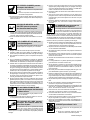
LE SOUDAGE peut provoquer un
incendie ou une explosion.
Le soudage effectué sur des conteneurs fermés tels
que des réservoirs, tambours ou des conduites peut
provoquer leur éclatement. Des étincelles peuvent
être projetées de l’arc de soudure. La projection d’étincelles, des
pièces chaudes et des équipements chauds peut provoquer des
incendies et des brûlures. Le contact accidentel de l’électrode avec
des objets métalliques peut provoquer des étincelles, une explosion,
un surchauffement ou un incendie. Avant de commencer le soudage,
vérifier et s’assurer que l’endroit ne présente pas de danger.
Déplacer toutes les substances inflammables à une distance de
10,7 m de l’arc de soudage. En cas d’impossibilité les recouvrir
soigneusement avec des protections homologués.
Ne pas souder dans un endroit là où des étincelles peuvent tomber
sur des substances inflammables.
Se protéger et d’autres personnes de la projection d’étincelles et
de métal chaud.
Des étincelles et des matériaux chauds du soudage peuvent
facilement passer dans d’autres zones en traversant de petites
fissures et des ouvertures.
Surveiller tout déclenchement d’incendie et tenir un extincteur à
proximité.
Le soudage effectué sur un plafond, plancher, paroi ou séparation
peut déclencher un incendie de l’autre côté.
Ne pas effectuer le soudage sur des conteneurs fermés tels que
des réservoirs, tambours, ou conduites, à moins qu’ils n’aient été
préparés correctement conformément à AWS F4.1 (voir les normes de sécurité).
Ne soudez pas si l’air ambiant est chargé de particules, gaz, ou vapeurs inflammables (vapeur d’essence, par exemple).
Brancher le câble de masse sur la pièce le plus près possible de la
zone de soudage pour éviter le transport du courant sur une
longue distance par des chemins inconnus éventuels en provoquant des risques d’électrocution, d’étincelles et d’incendie.
Ne pas utiliser le poste de soudage pour dégeler des conduites gelées.
En cas de non utilisation, enlever la baguette d’électrode du porteélectrode ou couper le fil à la pointe de contact.
LES ACCUMULATIONS DE GAZ
risquent de provoquer des blessures
ou même la mort.
Porter des vêtements de protection dépourvus d’huile tels que des
gants en cuir, une chemise en matériau lourd, des pantalons sans
revers, des chaussures hautes et un couvre chef.
Avant de souder, retirer toute substance combustible de vos poches telles qu’un allumeur au butane ou des allumettes.
Fermer l’alimentation du gaz protecteur en cas
de non utilisation.
Une fois le travail achevé, assurez−vous qu’il ne reste aucune trace d’étincelles incandescentes ni de flammes.
Veiller toujours à bien aérer les espaces confinés ou se servir
d’un respirateur d’adduction d’air homologué.
LES RAYONS DE L’ARC peuvent
provoquer des brûlures dans les
yeux et sur la peau.
Le rayonnement de l’arc du procédé de soudage
génère des rayons visibles et invisibles intenses
(ultraviolets et infrarouges) susceptibles de provoquer des brûlures
dans les yeux et sur la peau. Des étincelles sont projetées pendant le
soudage.
Utiliser exclusivement des fusibles ou coupe−circuits appropriés.
Ne pas augmenter leur puissance; ne pas les ponter.
Suivre les recommandations dans OSHA 1910.252(a)(2)(iv) et
NFPA 51B pour les travaux à chaud et avoir de la surveillance et un
extincteur à proximité.
LE BRUIT peut affecter l’ouïe.
Le bruit des processus et des équipements peut
affecter l’ouïe.
Porter des protections approuvés pour les
oreilles si le niveau sonore est trop élevé.
OM-225 590 Page 9
Les CHAMPS ÉLECTROMAGNÉTIQUES (CEM)
peuvent affecter les implants médicaux.
Les porteurs de stimulateurs cardiaques et
autres implants médicaux doivent rester à
distance.
Les porteurs d’implants médicaux doivent consulter leur
médecin et le fabricant du dispositif avant de s’approcher de la
zone où se déroule du soudage à l’arc, du soudage par points, du
gougeage, de la découpe plasma ou une opération de chauffage
par induction.
Si des BOUTEILLES sont endommagées, elles pourront exploser.
Des bouteilles de gaz protecteur contiennent du gaz
sous haute pression. Si une bouteille est endommagée, elle peut exploser. Du fait que les bouteilles de gaz font
normalement partie du procédé de soudage, les manipuler avec
précaution.
Protéger les bouteilles de gaz comprimé d’une chaleur excessive,
des chocs mécaniques, des dommages physiques, du laitier, des
flammes ouvertes, des étincelles et des arcs.
Placer les bouteilles debout en les fixant dans un support stationnaire ou dans un porte-bouteilles pour les empêcher de tomber ou
de se renverser.
Tenir les bouteilles éloignées des circuits de soudage ou autres
circuits électriques.
Ne jamais placer une torche de soudage sur une bouteille à gaz.
Une électrode de soudage ne doit jamais entrer en contact avec
une bouteille.
Ne jamais souder une bouteille pressurisée − risque d’explosion.
Utiliser seulement des bouteilles de gaz protecteur, régulateurs,
tuyaux et raccords convenables pour cette application spécifique;
les maintenir ainsi que les éléments associés en bon état.
Ne pas tenir la tête en face de la sortie en ouvrant la soupape de la
bouteille.
Maintenir le chapeau de protection sur la soupape, sauf en cas
d’utilisation ou de branchement de la bouteille.
Utiliser les équipements corrects, les bonnes procédures et suffisamment de personnes pour soulever et déplacer les bouteilles.
Lire et suivre les instructions sur les bouteilles de gaz comprimé,
l’équipement connexe et le dépliant P-1 de la CGA (Compressed
Gas Association) mentionné dans les principales normes de sécurité.
2-3. Dangers existant en relation avec le moteur
L’EXPLOSION DE LA BATTERIE
peut provoquer des blessures.
Ranger les câbles de charge à distance du capot, des portes et
des pièces mobiles du véhicule.
LE CARBURANT MOTEUR peut provoquer un incendie ou une explosion.
Toujours porter une protection faciale, des
gants en caoutchouc et vêtements de protection lors d’une intervention sur la batterie.
Arrêter le moteur avant de débrancher ou de brancher des câbles
de batterie, des câbles de chargeur de batterie (le cas échéant) ou
de batterie d’entretien.
Eviter de provoquer des étincelles avec les outils en travaillant sur
la batterie.
Ne pas utiliser l’appareil de soudage pour charger des batteries ou
faire démarrer des véhicules à l’aide de câbles de démarrage, sauf
si l’appareil dispose d’une fonctionnalité de charge de batterie
destinée à cet usage.
Observer la polarité correcte (+ et −) sur les batteries.
Débrancher le câble négatif (–) en premier lieu. Le rebrancher en
dernier lieu.
Les sources d’étincelles, flammes nues, cigarettes et autres
sources d’inflammation doivent être maintenues à l’écart des
batteries. Ces dernières produisent des gaz explosifs en
fonctionnement normal et en cours de charge.
Respecter les consignes du fabricant de la batterie pour
travailler sur une batterie ou à proximité.
Le COURANT DE CHARGE DE BATTERIE peut
provoquer des blessures (la fonctionnalité de charge de
batterie n’est pas disponible sur tous les modèles).
Les opérations de charge de batterie ne doivent être effectuées
que par des personnes qualifiées.
Ne charger que des batteries plomb−acide. Ne pas utiliser le
chargeur de batterie pour alimenter un autre circuit électrique
basse tension ou pour charger des batteries sèches.
Ne pas charger une batterie gelée.
Arrêter le moteur avant de vérifier le niveau de
carburant ou de faire le plein.
Ne pas faire le plein en fumant ou proche d’une source d’étincelles ou d’une flamme nue.
Ne pas faire le plein de carburant à ras bord; prévoir de l’espace
pour son expansion.
Faire attention de ne pas renverser de carburant. Nettoyer tout
carburant renversé avant de faire démarrer le moteur.
Jeter les chiffons dans un récipient ignifuge.
Toujours garder le pistolet en contact avec le réservoir lors du
remplissage.
Les PIÈCES MOBILES peuvent causer
des blessures.
S’abstenir de toucher des parties mobiles telles
que des ventilateurs, courroies et rotors.
Maintenir fermés et verrouillés les portes,
recouvrements et dispositifs de protection.
panneaux,
Arrêter le moteur avant d’installer ou brancher l’appareil.
Lorsque cela est nécessaire pour des travaux d entretien et de
dépannage, faire retirer les portes, panneaux, recouvrements ou
dispositifs de protection uniquement par du personnel qualifié.
Pour empêcher tout démarrage accidentel pendant les travaux
d’entretien, débrancher le câble négatif (−) de batterie de la borne.
Ne pas utiliser de câbles de charge endommagés.
Ne pas approcher les mains, cheveux, vêtements lâches et outils
des organes mobiles.
Ne pas charger une batterie dont les bornes sont desserrées ou
présentant une détérioration comme par exemple un boîtier ou un
couvercle fissuré.
Remettre en place les portes, panneaux, recouvrements ou
dispositifs de protection à la fin des travaux d’entretien et avant de
mettre le moteur en marche.
Avant de charger une batterie, sélectionner la tension de charge
correspondant à la tension de la batterie.
Régler les commandes de charge de batterie sur la position d’arrêt
avant de brancher la batterie. Veiller à ce que les pinces de charge
ne se touchent pas.
OM-225 590 Page 10
Avant d’intervenir, déposer les bougies ou injecteurs pour éviter la
mise en route accidentelle du moteur.
Bloquer le volant moteur pour éviter sa rotation lors d’une
intervention sur le générateur.
LES ÉTINCELLES À L’ÉCHAPPEMENT
peuvent provoquer un incendie.
Empêcher les étincelles d’échappement du
moteur de provoquer un incendie.
Utiliser uniquement un pare-étincelles
approuvé − voir codes en vigueur.
LES PIÈCES CHAUDES peuvent
provoquer des brûlures.
Ne pas toucher des parties chaudes à mains
nues.
Prévoir une période de refroidissement avant de
travailler à l’équipement.
Ne pas toucher aux pièces chaudes, utiliser les outils recommandés et porter des gants de soudage et des vêtements épais pour
éviter les brûlures.
LA VAPEUR ET LE LIQUIDE DE
REFROIDISSEMENT CHAUD peuvent
provoquer des brûlures.
Il est préférable de vérifier le liquide de refroidissement une fois le moteur refroidi pour éviter
de se brûler.
Toujours vérifier le niveau de liquide de refroidissement dans le
vase d’expansion (si présent), et non dans le radiateur (sauf si précisé autrement dans la section maintenance du manuel du
moteur).
Si le moteur est chaud et que le liquide doit être vérifié, opérer comme suivant.
Mettre des lunettes de sécurité et des gants, placer un torchon sur
le bouchon du radiateur.
Dévisser le bouchon légèrement et laisser la vapeur s’échapper
avant d’enlever le bouchon.
L’utilisation d’un groupe autonome
à l’intérieur PEUT VOUS TUER EN
QUELQUES MINUTES.
Les fumées d’un groupe autonome contient du
monoxyde de carbone. C’est un poison invisible et inodore.
JAMAIS utiliser dans une maison ou garage,
même avec les portes et fenêtres ouvertes.
Uniquement utiliser à l’EXTERIEUR, loin des portes, fenêtres et
bouches aération.
L’ACIDE DE LA BATTERIE peut provoquer des brûlures dans les YEUX et
sur la PEAU.
Ne pas renverser la batterie.
Remplacer une batterie endommagée.
Rincer immédiatement les yeux et la peau à l’eau.
LA CHALEUR DU MOTEUR peut provoquer un incendie.
Ne pas placer l’appareil sur, au-dessus ou à
proximité de surfaces inflammables.
Tenir à distance les produits inflammables de l’échappement.
2-4. Dangers liés à l’hydraulique
Les ÉQUIPEMENTS HYDRAULIQUES
peuvent provoquer des blessures ou
même la mort.
Une installation ou une utilisation incorrecte
de cet appareil pourrait conduire à des dégâts
matériels ou corporels. Seul un personnel
qualifié est autorisé à installer, faire fonctionner
et réparer cet appareil conformément à son
manuel d’utilisation, aux normes industrielles
et aux codes nationaux, d’état ou locaux.
Ne pas dépasser le débit nominal ou la capacité de la pompe
hydraulique ou de tout équipement du circuit hydraulique.
Concevoir le circuit hydraulique de telle sorte que la défaillance
d’un composant hydraulique ne risque pas de provoquer
un accident matériel ou corporel.
Avant d’intervenir sur le circuit hydraulique, couper l’alimentation
électrique, verrouiller et étiqueter l’appareil, détendre la pression
et s’assurer que le circuit hydraulique ne peut être remis sous
pression par inadvertance.
Ne pas intervenir sur le circuit hydraulique lorsque l’appareil
fonctionne. Seul un personnel qualifié et appliquant les consignes
du fabricant est autorisé le faire.
Ne pas modifier ou altérer la pompe hydraulique ou
les équipements fournis par le fabricant. Ne pas débrancher,
désactiver ou neutraliser les équipements de sécurité du circuit
hydraulique.
Utiliser uniquement des composants et accessoires homologués
par le fabricant.
Se tenir à l’écart de tout point présentant un danger de pincement
ou d’écrasement créé par l’équipement raccordé au circuit
hydraulique.
Ne pas intervenir sous ou autour d’un équipement qui n’est
soutenu que par la pression hydraulique. Soutenir l’équipement
de façon appropriée par un moyen mécanique.
Le LIQUIDE HYDRAULIQUE risque de
provoquer des blessures ou même la mort.
Avant d’intervenir sur le circuit hydraulique,
couper l’alimentation électrique, verrouiller
et étiqueter l’appareil, détendre la pression
et s’assurer que le circuit hydraulique ne peut
être remis sous pression par inadvertance.
Détendre la pression avant de débrancher ou
de brancher des canalisations hydrauliques.
Avant
d’utiliser
l’appareil,
contrôler
les composants du circuit hydraulique,
les branchements et les flexibles en recherchant
tout signe de détérioration, de fuite et d’usure.
Pour intervenir sur un circuit hydraulique, porter un équipement
de protection tel que des lunettes de sécurité, des gants de cuir,
une chemise et un pantalon en tissu résistant, des chaussures
montantes et une coiffe.
Pour rechercher des fuites, utiliser un morceau de papier ou
de carton, jamais les mains nues. En cas de détection de fuite,
ne pas utiliser l’équipement.
Le LIQUIDE HYDRAULIQUE est INFLAMMABLE. Ne pas
intervenir sur des composants hydrauliques à proximité
d’étincelles ou de flammes; ne pas fumer à proximité de liquide
hydraulique.
Remettre les portes, panneaux, recouvrements ou dispositifs
de protection quand l’entretien est terminé et avant de mettre
en marche l’appareil.
En cas de pénétration d’un QUELCONQUE liquide dans la peau,
celui−ci doit être retiré chirurgicalement sous quelques heures par
OM-225 590 Page 11
un médecin familiarisé avec ce type de blessure, faute de quoi
la gangrène pourrait apparaître.
Les PIÈCES MOBILES peuvent causer
des blessures.
S’abstenir de toucher des parties mobiles telles
que des ventilateurs, courroies et rotors.
Maintenir fermés et verrouillés les portes,
panneaux, recouvrements et dispositifs
de protection.
Ne pas approcher les mains, cheveux, vêtements lâches et outils
des organes mobiles.
Avant d’intervenir sur le circuit hydraulique, couper l’alimentation
électrique, verrouiller et étiqueter l’appareil, détendre la pression
et s’assurer que le circuit hydraulique ne peut être remis sous
pression par inadvertance.
Demander seulement à un personnel qualifié d’enlever
les dispositifs de sécurité ou les recouvrements pour effectuer,
s’il y a lieu, des travaux d’entretien et de dépannage.
Remettre en place les portes, panneaux, recouvrements ou
dispositifs de protection à la fin des travaux d’entretien et avant
de mettre le moteur en marche.
LES PIÈCES ET LIQUIDES CHAUDS
peuvent provoquer des brûlures.
Ne pas toucher les pièces chaudes à main nue
ni laisser des liquides chauds entrer en contact
avec la peau.
Prévoir une période de refroidissement avant d’intervenir
sur l’équipement.
Ne pas toucher aux pièces chaudes, utiliser les outils
recommandés et porter des gants de soudage et des vêtements
épais pour éviter les brûlures.
LIRE LES INSTRUCTIONS.
Lire et appliquer les instructions sur les
étiquettes et le Mode d’emploi avant
l’installation, l’utilisation ou l’entretien de
l’appareil. Lire les informations de sécurité au
début du manuel et dans chaque section.
N’utiliser que les pièces de rechange recommandées par le
constructeur.
Effectuer l’entretien en respectant les manuels d’utilisation,
les normes industrielles et les codes nationaux, d’état et locaux.
2-5. Dangers liés à l’air comprimé
Un ÉQUIPEMENT PNEUMATIQUE risque
de provoquer des blessures ou même
la mort.
Une installation ou une utilisation incorrecte de
cet appareil pourrait conduire à des dégâts
matériels ou corporels. Seul un personnel
qualifié est autorisé à installer, utiliser et
entretenir cet appareil conformément à son
manuel d’utilisation, aux normes industrielles et
aux codes nationaux, d’état ou locaux.
Ne pas dépasser le débit nominal ou la capacité du compresseur
ou de tout équipement du circuit d’air comprimé. Concevoir
le circuit d’air comprimé de telle sorte que la défaillance
d’un composant ne risque pas de provoquer un accident
matériel ou corporel.
Avant d’intervenir sur le circuit d’air comprimé, couper
l’alimentation électrique, verrouiller et étiqueter l’appareil,
détendre la pression et s’assurer que le circuit d’air ne peut être
mis sous pression par inadvertance.
Ne pas intervenir sur le circuit d’air comprimé lorsque l’appareil
fonctionne. Seul un personnel qualifié est autorisé, et appliquant
les consignes du fabricant.
Ne pas modifier ou altérer le compresseur ou les équipements
fournis par le fabricant. Ne pas débrancher, désactiver ou
neutraliser les équipements de sécurité du circuit d’air
comprimé.
Utiliser uniquement des composants et accessoires
homologués par le fabricant.
Se tenir à l’écart de tout point présentant un danger de pincement
ou d’écrasement créé par l’équipement raccordé au circuit d’air
comprimé.
Ne pas intervenir sous ou autour d’un équipement qui n’est
soutenu que par la pression pneumatique. Soutenir l’équipement
de façon appropriée par un moyen mécanique.
MÉTAL CHAUD provenant du découpage ou du gougeage à l’arc risque de
provoquer un incendie ou une explosion.
Ne pas découper ou gouger à proximité de
produits inflammables.
Attention aux risques d’incendie: tenir un extincteur à proximité.
OM-225 590 Page 12
L’AIR COMPRIMÉ risque de provoquer
des blessures ou même la mort.
Avant d’intervenir sur le circuit d’air comprimé,
couper l’alimentation électrique, verrouiller
et étiqueter l’appareil, détendre la pression
et s’assurer que le circuit d’air ne peut être mis
sous pression par inadvertance.
Détendre la pression avant de débrancher ou
de brancher des canalisations d’air.
Avant
d’utiliser
l’appareil,
contrôler
les composants du circuit d’air comprimé,
les branchements et les flexibles en
recherchant tout signe de détérioration, de fuite
et d’usure.
Ne pas diriger un jet d’air vers soi−même ou vers autrui.
Pour intervenir sur un circuit d’air comprimé, porter un équipement
de protection tel que des lunettes de sécurité, des gants de cuir,
une chemise et un pantalon en tissu résistant, des chaussures
montantes et une coiffe.
Pour rechercher des fuites, utiliser de l’eau savonneuse ou
un détecteur à ultrasons, jamais les mains nues. En cas
de détection de fuite, ne pas utiliser l’équipement.
Remettre les portes, panneaux, recouvrements ou dispositifs
de protection quand l’entretien est terminé et avant de mettre
en marche l’appareil.
En cas d’injection d’air dans la peau ou le corps, demander
immédiatement une assistance médicale.
L’INHALATION D’AIR COMPRIMÉ risque
de provoquer des blessures ou même
la mort.
Ne pas inhaler d’air comprimé.
Utiliser l’air comprimé uniquement pour
découper ou gouger ainsi que pour l’outillage
pneumatique.
Une PRESSION D’AIR RÉSIDUELLE
ET DES FLEXIBLES QUI FOUETTENT
risquent de provoquer des blessures.
Détendre la pression pneumatique des outils et
circuits avant d’entretenir, ajouter ou changer
des accessoires et avant d’ouvrir le bouchon
de vidange ou de remplissage d’huile
du compresseur.
Les PIÈCES MOBILES peuvent causer
des blessures.
S’abstenir de toucher des parties mobiles telles
que des ventilateurs, courroies et rotors.
Maintenir fermés et verrouillés les portes,
panneaux, recouvrements et dispositifs
de protection.
Ne pas approcher les mains, cheveux, vêtements lâches et outils
des organes mobiles.
Avant d’intervenir sur le circuit d’air comprimé, couper
l’alimentation électrique, verrouiller et étiqueter l’appareil,
détendre la pression et s’assurer que le circuit d’air ne peut être
mis sous pression par inadvertance.
Demander seulement à un personnel qualifié d’enlever
les dispositifs de sécurité ou les recouvrements pour effectuer,
s’il y a lieu, des travaux d’entretien et de dépannage.
Remettre en place les portes, panneaux, recouvrements ou
dispositifs de protection à la fin des travaux d’entretien et avant
de mettre le moteur en marche.
DES PIÈCES CHAUDES peuvent
provoquer des brûlures graves.
Ne pas toucher de pièces chaudes
du compresseur ou du circuit d’air.
Prévoir une période de refroidissement
avant d’intervenir sur l’équipement.
Ne pas toucher aux pièces chaudes, utiliser les outils
recommandés et porter des gants de soudage et
des vêtements épais pour éviter les brûlures.
LIRE LES INSTRUCTIONS.
Lire et appliquer les instructions sur les
étiquettes et le Mode d’emploi avant
l’installation, l’utilisation ou l’entretien de
l’appareil. Lire les informations de sécurité au
début du manuel et dans chaque section.
N’utiliser que les pièces de rechange recommandées par le
constructeur.
Effectuer l’entretien en respectant les manuels d’utilisation,
les normes industrielles et les codes nationaux, d’état et locaux.
2-6. Dangers supplémentaires en relation avec l’installation, le fonctionnement et la maintenance
Risque D’INCENDIE OU
D’EXPLOSION.
Ne pas placer l’appareil sur, au-dessus ou
à proximité de surfaces inflammables.
Ne pas installer l’appareil à proximité de produits inflammables.
Ne pas surcharger l’installation électrique − s’assurer que l’alimentation est correctement dimensionnée et protégée avant de
mettre l’appareil en service.
LA CHUTE DE L’ÉQUIPEMENT
peut provoquer des blessures.
Utiliser l’anneau de levage pour lever l’appareil
et les accessoires correctement installées
seuls, PAS les bouteilles de gaz. Ne pas dépasser le poids nominal maximal de l’œilleton
(voir les spécifications).
Utiliser un équipement de levage de capacité suffisante pour
lever l’appareil.
En utilisant des fourches de levage pour déplacer l’unité, s’assurer que les fourches sont suffisamment longues pour dépasser
du côté opposé de l’appareil.
Tenir l’équipement (câbles et cordons) à distance des véhicules
mobiles lors de toute opération en hauteur.
Suivre les consignes du Manuel des applications pour l’équation
de levage NIOSH révisée (Publication Nº94−110) lors du levage
manuelle de pièces ou équipements lourds.
LE SURCHAUFFEMENT peut
endommager le moteur électrique.
Arrêter ou déconnecter l’équipement avant de
démarrer ou d’arrêter le moteur.
Ne pas laisser tourner le moteur trop lentement sous risque d’endommager le moteur électrique à cause d’une tension et d’une fréquence trop faibles.
Ne pas brancher de moteur de 50 ou de 60 Hz à la prise de 100 Hz,
s’il y a lieu.
LES ÉTINCELLES PROJETÉES
peuvent provoquer des blessures.
Porter un écran facial pour protéger le visage et
les yeux.
Affûter l’électrode au tungstène uniquement à
la meuleuse dotée de protecteurs. Cette manœuvre est à exécuter dans un endroit sûr lorsque l’on porte l’équipement homologué de protection du visage, des mains et du corps.
Les étincelles risquent de causer un incendie − éloigner toute
substance inflammable.
Les PIÈCES MOBILES peuvent
causer des blessures.
Ne pas s’approcher des organes mobiles.
Ne pas s’approcher des points de coincement
tels que des rouleaux de commande.
LES FILS DE SOUDAGE peuvent
provoquer des blessures.
Ne pas appuyer sur la gâchette avant d’en
avoir reçu l’instruction.
Ne pas diriger le pistolet vers soi, d’autres personnes ou toute pièce mécanique en engageant le fil de soudage.
L’EMPLOI EXCESSIF peut
SURCHAUFFER L’ÉQUIPEMENT.
Laisser l’équipement refroidir ; respecter le facteur de marche nominal.
Réduire le courant ou le facteur de marche
avant de poursuivre le soudage.
Ne pas obstruer les passages d’air du poste.
OM-225 590 Page 13
LES CHARGES ÉLECTROSTATIQUES peuvent endommager les
circuits imprimés.
Établir la connexion avec la barrette de terre
avant de manipuler des cartes ou des pièces.
Utiliser des pochettes et des boîtes antistatiques pour stocker,
déplacer ou expédier des cartes de circuits imprimes.
UNE REMORQUE QUI BASCULE peut
provoquer des blessures.
Utiliser les supports de la remorque ou des
blocs pour soutenir le poids.
Installer convenablement le poste sur la remorque comme indiqué dans le manuel s’y rapportant.
Demander seulement à des personnes qualifiées familiarisées
avec des équipements électroniques de faire fonctionner l’installation.
L’utilisateur est tenu de faire corriger rapidement par un électricien
qualifié les interférences résultant de l’installation.
Si le FCC signale des interférences, arrêter immédiatement l’appareil.
Effectuer régulièrement le contrôle et l’entretien de l’installation.
Maintenir soigneusement fermés les portes et les panneaux des
sources de haute fréquence, maintenir les éclateurs à une distance correcte et utiliser une terre et un blindage pour réduire les
interférences éventuelles.
LE SOUDAGE À L’ARC risque de
provoquer des interférences.
LIRE LES INSTRUCTIONS.
Lire et appliquer les instructions sur les
étiquettes et le Mode d’emploi avant
l’installation, l’utilisation ou l’entretien de
l’appareil. Lire les informations de sécurité au
début du manuel et dans chaque section.
N’utiliser que les pièces de rechange recommandées par le
constructeur.
Effectuer l’entretien en respectant les manuels d’utilisation,
les normes industrielles et les codes nationaux, d’état et locaux.
LE RAYONNEMENT HAUTE FRÉQUENCE (H.F.) risque de provoquer
des interférences.
Le rayonnement haute fréquence (H.F.) peut
provoquer des interférences avec les équipements de radio−navigation et de communication, les services de sécurité et les ordinateurs.
L’énergie électromagnétique risque de provoquer des interférences pour l’équipement électronique sensible tel que les ordinateurs et
l’équipement commandé par ordinateur tel que
les robots.
Veiller à ce que tout l’équipement de la zone de soudage soit
compatible électromagnétiquement.
Pour réduire la possibilité d’interférence, maintenir les câbles de
soudage aussi courts que possible, les grouper, et les poser
aussi bas que possible (ex. par terre).
Veiller à souder à une distance de 100 mètres de tout équipement électronique sensible.
Veiller à ce que ce poste de soudage soit posé et mis à la terre
conformément à ce mode d’emploi.
En cas d’interférences après avoir pris les mesures précédentes, il incombe à l’utilisateur de prendre des mesures supplémentaires telles que le déplacement du poste, l’utilisation de câbles blindés, l’utilisation de filtres de ligne ou la pose de protecteurs dans la zone de travail.
2-7. Proposition californienne 65 Avertissements
Les équipements de soudage et de coupage produisent des
fumées et des gaz qui contiennent des produits chimiques
dont l’État de Californie reconnaît qu’ils provoquent des malformations congénitales et, dans certains cas, des cancers.
(Code de santé et de sécurité de Californie, chapitre 25249.5
et suivants)
Les batteries, les bornes et autres accessoires contiennent
du plomb et des composés à base de plomb, produits chimiques dont l’État de Californie reconnaît qu’ils provoquent des
cancers et des malformations congénitales ou autres
problèmes de procréation. Se laver les mains après manipulation.
Ce produit contient des éléments chimiques, dont le plomb,
reconnus par l’État de Californie pour leur caractère
OM-225 590 Page 14
cancérogène ainsi que provoquant des malformations
congénitales ou autres problèmes de procréation. Se laver
les mains après toute manipulation.
Pour les moteurs à essence :
Les gaz d’échappement des moteurs contiennent des produits chimiques dont l’État de Californie reconnaît qu’ils
provoquent des cancers et des malformations congénitales
ou autres problèmes de procréation.
Pour les moteurs diesel :
Les gaz d’échappement des moteurs diesel et certains de
leurs composants sont reconnus par l’État de Californie comme provoquant des cancers et des malformations
congénitales ou autres problèmes de procréation.
2-8. Principales normes de sécurité
Safety in Welding, Cutting, and Allied Processes, ANSI Standard Z49.1,
from Global Engineering Documents (phone: 1-877-413-5184, website:
www.global.ihs.com).
Safe Practices for the Preparation of Containers and Piping for Welding
and Cutting, American Welding Society Standard AWS F4.1, from Global Engineering Documents (phone: 1-877-413-5184, website:
www.global.ihs.com).
National Electrical Code, NFPA Standard 70, from National Fire Protection Association, Quincy, MA 02269 (phone: 1-800-344-3555, website:
www.nfpa.org and www. sparky.org).
Safe Handling of Compressed Gases in Cylinders, CGA Pamphlet P-1,
from Compressed Gas Association, 4221 Walney Road, 5th Floor,
Chantilly, VA 20151 (phone: 703-788-2700, website:www.cganet.com).
Safety in Welding, Cutting, and Allied Processes, CSA Standard
W117.2, from Canadian Standards Association, Standards Sales, 5060
Spectrum Way, Suite 100, Ontario, Canada L4W 5NS (phone:
800-463-6727, website: www.csa-international.org).
Battery Chargers, CSA Standard C22.2 NO 107.2−01, from Canadian
Standards Association, Standards Sales, 5060 Spectrum Way, Suite
100, Ontario, Canada L4W 5NS (phone: 800-463-6727, website:
www.csa-international.org).
Safe Practice For Occupational And Educational Eye And Face Protection, ANSI Standard Z87.1, from American National Standards Institute,
25 West 43rd Street, New York, NY 10036 (phone: 212-642-4900, website: www.ansi.org).
Standard for Fire Prevention During Welding, Cutting, and Other Hot
Work, NFPA Standard 51B, from National Fire Protection Association,
Quincy, MA 02269 (phone: 1-800-344-3555, website: www.nfpa.org.
For Standards about hydraulic systems, contact the National Fluid
Power Association, Publications Department, 3333 North Mayfair
Road, Suite 211, Milwaukee, WI 53222-3219 (phone: (414) 778-3344,
website: www.nfpa.com).
OSHA, Occupational Safety and Health Standards for General Industry, Title 29, Code of Federal Regulations (CFR), Part 1910, Subpart Q,
and Part 1926, Subpart J, from U.S. Government Printing Office, Superintendent of Documents, P.O. Box 371954, Pittsburgh, PA 15250-7954
(phone: 1-866-512-1800) (there are 10 OSHA Regional Offices—
phone for Region 5, Chicago, is 312-353-2220, website:
www.osha.gov).
U.S. Consumer Product Safety Commission (CPSC), 4330 East West
Highway, Bethesda, MD 20814 (phone: 301-504-7923, website:
www.cpsc.gov).
Applications Manual for the Revised NIOSH Lifting Equation, The National Institute for Occupational Safety and Health (NIOSH), 1600
Clifton Rd, Atlanta, GA 30333 (phone: 1-800-232-4636, website:
www.cdc.gov/NIOSH).
2-9. Informations relatives aux CEM
Le courant électrique qui traverse tout conducteur génère des champs
électromagnétiques (CEM) à certains endroits. Le courant de soudage
crée un CEM autour du circuit et du matériel de soudage. Les CEM
peuvent créer des interférences avec certains implants médicaux
comme des stimulateurs cardiaques. Des mesures de protection pour
les porteurs d’implants médicaux doivent être prises: par exemple, des
restrictions d’accès pour les passants ou une évaluation individuelle
des risques pour les soudeurs. Tous les soudeurs doivent appliquer les
procédures suivantes pour minimiser l’exposition aux CEM provenant
du circuit de soudage:
4. Maintenir la tête et le torse aussi loin que possible du matériel du
circuit de soudage.
1. Rassembler les câbles en les torsadant ou en les attachant avec
du ruban adhésif ou avec une housse.
2. Ne pas se tenir au milieu des câbles de soudage. Disposer les
câbles d’un côté et à distance de l’opérateur.
3. Ne pas courber et ne pas entourer les câbles autour de votre
corps.
En ce qui concerne les implants médicaux :
5. Connecter la pince sur la pièce aussi près que possible de la
soudure.
6. Ne pas travailler à proximité d’une source de soudage, ni
s’asseoir ou se pencher dessus.
7. Ne pas souder tout en portant la source de soudage ou le
dévidoir.
Les porteurs d’implants doivent d’abord consulter leur médecin avant
de s’approcher des opérations de soudage à l’arc, de soudage par
points, de gougeage, du coupage plasma ou de chauffage par induction. Si le médecin approuve, il est recommandé de suivre les
procédures précédentes.
OM-225 590 Page 15
SECTION 3 − DEFINITIONS
3-1. Symbols And Definitions
A
Stop Engine
Start Engine
Ether Starting Aid
Engine
Do Not Switch
While Welding
Or Under Load
Battery (Engine)
Circuit Protector
Engine Oil
Check Injectors/
Pump
Check Valve
Clearance
Fuel
Protective Earth
(Ground)
Positive
Negative
Certified/Trained
Mechanic
Welding Arc
Volts
Panel/Local
Remote
On
Temperature
Output (Contactor)
Alternating
Current
Stick (SMAW)
Welding
TIG (GTAW)
Welding
MIG (GMAW)
Welding
3
Three Phase
Seconds
1
Single Phase
Amperes
Time
Read Operator’s
Manual
OM-225 590 Page 16
V
h
Hours
s
SECTION 4 − SPECIFICATIONS
4-1. Description
This unit has two CC/CV modules with separate weld controls for applications where two welding arcs are needed. A
Welder Selector switch controls whether one or both sets of weld output terminals are active (see Section 6-2). When
the unit is operated in the dual operator mode, each welder has CC and CV weld output available for Stick, TIG, and
MIG welding. When in the single operator mode, CC weld output is available to the welder on the Welder B (right) side
only (CV not active in single operator mode).
4-2. Weld, Power, And Engine Specifications
Weld
Mode
Weld
Stations
Available
Weld
Output
Weld
Output
Range
Max.
OpenCircuit
Voltage
Rated
Welding
Output
Single
1
(Right Side)
CC/DC
30 − 600 A
85
550 A at 30
Volts DC, 40%
Duty Cycle
CC/DC
15 − 300 A
85
CV/DC
10 − 32 V
49
Dual
2
(Both Sides)
Generator Power
Rating
Single-Phase,
4 kVA/kW, 34/17 A,
120/240 V AC,
50/60 Hz
275 A at 31
Volts DC, 40%
Duty Cycle
(4 kVA/kW Shared By
All Receptacles)
Engine
Fuel
Capacity
Deutz
D914L03i
Air-Cooled,
Three-Cylinder,
48.2 HP Diesel
Engine
22.3 gal
(84.4 L)
4-3. Dimensions, Weights, And Operating Angles
Dimensions
Height
47-5/8 in (1210 mm)
Width
31-1/4 in (794 mm)
Depth
60-1/2 in (1537 mm)
A
59-1/8 in (1502 mm)
B
47-1/4 in (1200 mm)
C
43-1/4 in (1099 mm)
D
32-3/4 in (832 mm)
E
24-15/16 in (633 mm)
F
10-1/2 in (267 mm)
G
6-1/2 in (165 mm)
H
2-7/8 in (73 mm)
J
29-7/8 in (759 mm)
K
11/16 in (24 mm)
L
21/32 in (17 mm) Dia.
16 Holes
L
Engine End
!
Do not move or operate unit where it
could tip.
B
E
17.5°
F
K
J
H
20°
G
17.5°
20°
Weight
2115 lb (959 kg)
Do not exceed tilt angles or engine could
be damaged or unit could tip.
A
C
D
!
angles_1 8/99
158 699
Lifting Eye Weight Rating:
2161 lb (980 kg) Maximum
OM-225 590 Page 17
4-4. Fuel Consumption
The curve shows typical fuel use under the combined weld loads of both
sides (Welder A and Welder B).
7.57
1.70
2.00
6.62
1.46
1.75
5.67
1.25
1.50
4.73
1.04
1.25
3.78
0.83
1.00
2.84
0.62
0.75
1.98
0.40
0.50
0.95
0.21
0.25
CV
0
50
100 150 200 250 300 350 400 450 500 550 600
DC WELD AMPERES AT 40% DUTY CYCLE
U.S. GAL./HR.
IMP. GAL./HR.
LITERS/HR.
0
CC
195 711
4-5. AC Generator Power
The AC power curve shows the
generator power in amperes available at the 120 and 240 volt
receptacles.
150 300
AC VOLTS
125 250
100 200
75 150
50 100
25
50
0
0
0
5
10
15
20
AC AMPERES IN 240V MODE
25
30
0
10
20
30
40
AC AMPERES IN 120V MODE
50
60
193 018
OM-225 590 Page 18
4-6. Duty Cycle And Overheating
Duty Cycle is percentage of 10 minutes that unit can weld at rated load
without overheating.
NOTICE − Exceeding duty cycle
can damage unit and void warranty.
Dual Operator Mode − 40% Duty Cycle At 275 Amperes From Each Side
Single Operator Mode − 40% Duty Cycle At 550 Amperes From Welder B side (Right)
4 Minutes Welding
If a weld module overheats, the
High Temperature light goes on and
the thermostat opens to stop weld
output to that module. Wait fifteen
minutes for module to cool. Reduce
amperage, voltage, or duty cycle
before welding.
This unit has separate duty cycle
ratings for each operating mode. If
the unit is operated in the dual operator mode, the unit is rated at 40%
duty cycle. This means each side of
the unit can be operated at 275 amperes at 40% duty cycle.
6 Minutes Resting
When the unit is operated in the
single operator mode, the Welder B
side (right) is rated at 40% duty
cycle (550 A at 40% duty cycle).
Overheating
A or V
0
15
Minutes
OR
Reduce Duty Cycle
Ref. rduty1 5/95 − 194 313-A
OM-225 590 Page 19
4-7. Volt-Ampere Curves
A. CC/DC − Single Mode
The volt-ampere curve shows the
minimum, medium, and maximum
voltage and amperage output capabilities of the welding generator.
Curves of all other settings fall between the curves shown.
100
DC VOLTS
80
60
MIN
MED
MAX
40
20
0
0
100 200 300 400 500 600 700 800 900 1000
DC AMPERES
B. CC/DC − Dual Mode
100
DC VOLTS
80
MIN
60
MED
MAX
40
20
0
0
50
100 150 200 250 300 350 400 450 500
DC AMPERES
C. CV/DC Mode
100
DC VOLTS
80
60
40
MAX
MED
20
0
MIN
0
OM-225 590 Page 20
100 200 300 400 500 600 700 800 900 1000
DC AMPERES
194 397 / 194 398 / 194 399
SECTION 5 − INSTALLATION
When facing the front panel, the Welder B controls and weld terminals are on the right and the Welder A controls and weld terminals are on the
left.
5-1. Serial Number And Rating Label Location
The serial number and rating information for this product is located on the front. Use rating label to determine input power requirements and/or
rated output. For future reference, write serial number in space provided on back cover of this manual.
5-2. Installing Welding Generator
Movement
OR
!
Do not move or operate unit
where it could tip.
!
Do not lift unit from end.
!
Always securely fasten welding
generator onto transport vehicle
or trailer and comply with all DOT
and other applicable codes.
NOTICE − Do not install unit where air
flow is restricted or engine may overheat.
See Section 4-3 for lifting eye rating.
Location / Airflow Clearance
OR
18 in
(460 mm)
18 in
(460 mm)
18 in
(460 mm)
18 in
(460 mm)
18 in
(460 mm)
install1 1/08 − Ref. ST-800 652 / Ref. ST-800 477-A / ST-158 936-A / 804 712
OM-225 590 Page 21
5-3. Grounding Generator To Truck Or Trailer Frame
1
!
Always ground generator
frame to vehicle frame to prevent electric shock and static
electricity hazards.
!
Also see AWS Safety &
Health Fact Sheet No. 29,
Grounding of Portable And
Vehicle Mounted Welding
Generators.
!
Bed liners, shipping skids,
and some running gear insulate the welding generator
from the vehicle frame. Always connect a ground wire
from the generator equipment grounding terminal to
bare metal on the vehicle
frame as shown.
!
If unit does not have GFCI receptacles, use GFCI-protected extension cord.
1
Equipment Grounding
Terminal (On Front Panel)
Grounding Cable (Not
Supplied)
Metal Vehicle Frame
2
GND/PE
3
2
3
Connect cable from equipment
ground terminal to metal vehicle
frame. Use #10 AWG or larger
insulated copper wire.
Electrically
bond generator
frame to vehicle frame by metal-to-metal contact.
rot_grnd 2008-01 − 800 652-D
OM-225 590 Page 22
5-4. Activating The Dry Charge Battery (If Applicable)
!
3
Always wear a face shield,
rubber gloves and protective
clothing when working on a
battery.
Remove battery from unit.
1
2
2
1
3
Vent Caps
Sulfuric Acid Electrolyte
(1.265 Specific Gravity)
Well
Fill each cell with electrolyte to
bottom of well (maximum).
!
Do not overfill battery cells.
Wait ten minutes and check electrolyte level. If necessary, add electrolyte to raise to proper level. Reinstall vent caps.
4
Battery Charger
!
Read and follow all instructions supplied with battery
charger.
5
5 Amperes For 30 Minutes
Charge Time
30 Amperes For 12 Minutes
Charge Time
6
5
4
Charge battery. Disconnect charging cables and install battery.
When electrolyte
5A
+
is low, add
only distilled water to cells to
maintain proper level.
6
−
Tools Needed:
30 A
drybatt 12008−01 − S-0886
5-5. Connecting The Battery
!
Connect (−) Cable Last.
+
−
Tools Needed:
1/2 in
Ref 225 543 / 153 654-C
OM-225 590 Page 23
5-6. Installing Exhaust Pipe
!
!
Stop engine and let cool.
Do not blow exhaust toward
air cleaner or air intake.
Top View
Tools Needed:
1/2 in
exh_pipe2 4/96 − 154 089-A / 154 611 / 190 377
5-7. Engine Prestart Checks
Check all fluids daily. Engine must
be cold and on a level surface.
Follow run-in procedure in engine
manual. If unburned fuel and oil collect in exhaust pipe during run-in,
see Section 10.
1/2 in
(13 mm)
Fuel
Full
NOTICE − Do not use gasoline.
Gasoline will damage engine.
Add diesel fuel before starting
engine the first time (see maintenance label for specifications). Fill
fuel tank up to 1/2 in. (13 mm) from
top to allow room for expansion.
Open fuel shut-off valve.
Diesel
Do not run out of fuel or air enters
fuel system and causes starting
problems. Use primer pump to
prime injector system (see Section
8-7).
Oil
After fueling, check oil with unit on
level surface. If oil is not up to full
mark on dipstick, add oil (see maintenance label).
Engine stops if oil pressure is
too low.
OFF
To
FUEL
improve
starting:
ON
cold
weather
Keep battery in good condition.
Store battery in warm area.
Full
Use fuel formulated for cold
weather (diesel fuel can gel in
cold weather). Contact local
fuel supplier for fuel information.
Use correct grade oil for cold
weather.
Ref 804 285 / 013 466
OM-225 590 Page 24
5-8. Safety Information For Connecting To Weld Output Terminals
!
UNEXPECTED WELD OUTPUT can cause injury or fire.
Both weld outputs can be live (ON) when Welder Selector switch is in Welder A/Welder B position and engine is running.
Disconnect or insulate any unused cables.
Know where cables are located BEFORE starting engine.
!
ELECTRIC SHOCK can kill; ARCING can burn skin or damage electrical connections.
Stop engine before making any weld output connections.
Do not connect welding output of different polarities to the same structure.
See ANSI Z49.1 and OSHA Title 29, Chapter XVII, Part 1910, Subpart Q (addresses at beginning of manual).
When welding on the same workpiece, all connections to the workpiece must be of the same polarity.
Do not handle or come in contact with two live electrodes at the same time.
!
ELECTRIC SHOCK can kill; TWO TIMES NORMAL OPEN-CIRCUIT VOLTS can exist between electrode holders of opposite polarity.
Do not touch electrode holders of opposite polarity at the same time.
Separate electrode holders of opposite polarity to prevent contact.
Consult ANSI Z49.1 for common grounding safe practices.
OM-225 590 Page 25
5-9. Weld Output Terminals
Welder A (Left) Side
Welder B (Right) Side
9
8
7
7
8
9
Tools Needed:
3/4 in.
2
1
3
6
4
5
Ref. 225 543 / 802 292-A / 803 788-B
!
!
Stop engine.
Failure to properly connect weld
cables may cause excessive heat
and start a fire, or damage your machine.
Do not place anything between weld
1
2
cable terminal and copper bar. Make
sure that the surfaces of the weld cable
terminal and copper bar are clean.
Correct Weld Cable Connection
Incorrect Weld Cable Connection
OM-225 590 Page 26
3 Weld Output Terminal
4 Supplied Weld Output Terminal Nut
5 Weld Cable Terminal
6 Copper Bar
Remove supplied nut from weld output terminal. Slide weld cable terminal onto weld
output terminal and secure with nut so that
weld cable terminal is tight against copper
bar.
7 Negative (−) Weld Output Terminal
8
CV Weld Output Terminal
9
CC Weld Output Terminal
See Sections 5-10 thru 5-15 for dual operator output connections for CC and CV welding.
See Section 5-16 for single operator output
connections (CC only).
If unit has the Polarity switch option, the
Negative (−) weld output terminals are labeled Work receptacles and the CC weld
output terminals are labeled Electrode receptacles.
5-10. Making Dual Operator CC Weld Connections w/ Separate Work Cables
Tools Needed:
3/4 in
Direct Current Electrode Positive
(DCEP) connections are shown.
Welder B (Right) Side
Welder A (Left) Side
Note position
of Process
Selector
switches.
2
2
1
3
Ref. 225 543 / 802 292-A
!
Stop engine.
NOTICE − Do not exceed machine duty
cycle.
Use Dual Operator mode for CC and
CV welding (see Section 6-1).
See Section 5-17 for proper cable size.
1
Strain Reliefs
Route cables through strain reliefs.
2 Electrode Holder Cables
3 Work Cables
For Stick/TIG welding Direct Current Electrode Positive (DCEP), connect work
cables to Negative (−) terminals and electrode holder cables to CC terminals.
For Stick/TIG Direct Current Electrode
Negative (DCEN), connect work cables to
CC terminals and electrode holder cables
to Negative (−) terminals.
If unit has the Polarity switch option, connect work cables to Work receptacles and
electrode holder cables to Electrode receptacles.
Be
sure Process Selector switches
are set correctly. See Section 6-3.
OM-225 590 Page 27
5-11. Making Dual Operator Mode CC Weld Connections w/ Common Work Cable
Tools Needed:
3/4 in
!
INADEQUATE CABLE CONNECTIONS can cause serious damage to welding generator and create a hazardous condition.
When making weld connections with a common work cable, connect a weld cable of adequate size between the Negative (−) weld
terminals, and connect a single weld cable of adequate size from the Welder B (right) Negative (−) terminal to the workpiece.
When using these connections as a common work terminal, all connections must be of the same polarity.
For a common work cable connection, the work cable must be able to carry the combined weld output of both modules (see Section
5-17 for proper cable size).
Direct Current Electrode Positive
(DCEP) connections are shown.
Welder B (Right) Side
Welder A (Left) Side
Note position
of Process
Selector
switches.
1
4
2
2
3
Ref. 225 543 / 802 292-A
! Stop engine.
NOTICE − Do not exceed machine duty
cycle.
For common
work connection, work
cable must be able to carry combined
weld output of both CC weld output terminals (see Section 5-17 for proper
cable size).
Use Dual Operator mode for CC and
CV welding (see Section 6-1).
1 Strain Relief
Route cables through strain reliefs.
2 Electrode Holder Cables
OM-225 590 Page 28
3
Work Jumper Cable
4
Common Work Cable
For Stick/TIG welding Direct Current Electrode Positive (DCEP), connect common
work cable and work jumper cable to Welder B (right) Negative (−) terminal. Connect
other end of work jumper cable to Welder A
(left) Negative (−) terminal.
Connect electrode holder cables to CC terminals.
For Stick/TIG Direct Current Electrode
Negative (DCEN), connect common work
cable and work jumper cable to Welder B
(right) CC terminal. Connect other end of
work jumper cable to Welder A (left) CC terminal.
Connect electrode holder cables to Negative (−) terminals.
If unit has the Polarity switch option, connect common work cable and work jumper
cable to Welder B (right) Work receptacle.
Connect other end of work jumper cable to
Welder A (left) Work receptacle.
Connect electrode holder cables to Electrode receptacles.
Be
sure Process Selector switches
and optional Polarity switches are set
correctly. See Section 6-3.
5-12. Making Dual Operator CV Weld Connections w/ Separate Work Cables
Tools Needed:
3/4 in
Direct Current Electrode Positive
(DCEP) connections are shown.
Welder B (Right) Side
Welder A (Left) Side
Note position
of Process
Selector
switches.
2
Note position
of optional Polarity switch.
Note position
of optional
Polarity
switch.
2
1
3
Ref. 225 543 / 802 292-A
!
3
Use Dual Operator mode for CC and
For MIG and FCAW welding Direct Current
Electrode Positive (DCEP), connect work
cables to Negative (−) terminals and wire
feeder cables to CV terminals.
Stop engine.
NOTICE − Do not exceed machine duty
cycle.
CV welding (see Section 6-1).
See Section 5-17 for proper cable size.
1 Strain Reliefs
Route cables through strain reliefs.
2 Wire Feeder Cables
Work Cables
For MIG and FCAW Direct Current Electrode Negative (DCEN), connect work
cables to CV terminals and wire feeder
cables to Negative (−) terminals.
If unit has the Polarity switch option, connect work cables to Work receptacles and
wire feeder cables to CV receptacles.
Place optional Polarity switches in Re-
verse position when using CV weld receptacles. There is no CV weld output
when switch is in Straight position.
Be sure Process Selector and Polarity
switches are set correctly. See Section
6-3.
OM-225 590 Page 29
5-13. Making Dual Operator CV Weld Connections w/ Common Work Cable
Tools Needed:
3/4 in
!
INADEQUATE CABLE CONNECTIONS can cause serious damage to welding generator and create a hazardous condition.
When making weld connections with a common work cable, connect a weld cable of adequate size between the Negative (−)
weld terminals, and connect a single weld cable of adequate size from the Welder B (right) Negative (−) terminal to the workpiece.
When using these connections as a common work terminal, all connections must be of the same polarity.
For a common work cable connection, the work cable must be able to carry the combined weld output of both modules (see
Section 5-17 for proper cable size).
Direct Current Electrode Positive
Welder B (Right) Side
(DCEP) connections are shown.
Welder A (Left) Side
Note position
of Process
Selector
switches.
1
Note position
of optional
Polarity
switch.
4
2
3
Note position of optional
Polarity switch.
2
Ref. 225 543 / 802 292-A
!
Stop engine.
NOTICE − Do not exceed machine duty
cycle.
For common work connection, work
cable must be able to carry combined
weld output of both CC weld output terminals (see Section 5-17 for proper
cable size).
Use Dual Operator mode for CC and
CV welding (see Section 6-1).
1
Strain Relief
Route cables through strain reliefs.
2
Wire Feeder Cables
3
Work Jumper Cable
OM-225 590 Page 30
4
Common Work Cable
For MIG and FCAW welding Direct Current
Electrode Positive (DCEP), connect common work cable and work jumper cable to
Welder B (right) Negative (−) terminal.
Connect other end of work jumper cable to
Welder A (left) Negative (−) terminal.
Connect wire feeder cables to CV terminals.
For MIG and FCAW Direct Current Electrode Negative (DCEN), connect common
work cable and work jumper cable to Welder B (right) CV terminal. Connect other end
of work jumper cable to Welder A (left) CV
terminal.
Connect wire feeder cables to Negative (−)
terminals.
If unit has the Polarity switch option, connect common work cable and work jumper
cable to Welder B (right) Work receptacle.
Connect other end of work jumper cable to
Welder A (left) Work receptacle.
Connect wire feeder cables to CV receptacles.
Place optional Polarity switches in Re-
verse position when using CV weld receptacles. There is no CV weld output
when switch is in Straight position.
Be sure Process Selector and Polarity
switches are set correctly. See Section 6-3.
5-14. Making Dual Operator CC And CV Weld Connections w/ Separate Work Cables
Tools Needed:
3/4 in
Direct Current Electrode Positive
(DCEP) connections are shown.
Welder B (Right) Side
Welder A (Left) Side
Note position
of Process
Selector
switches.
3
1
Note position
of optional
Polarity
switch.
2
4
!
Stop engine.
NOTICE − Do not exceed machine duty
cycle.
Use Dual Operator mode for CC and
CV welding (see Section 6-1).
See Section 5-17 for proper cable size.
1
Strain Reliefs
Route cables through strain reliefs.
2
Electrode Holder Cable
3
Wire Feeder Cable
4
Work Cables
For Stick/TIG welding Direct Current Electrode Positive (DCEP), connect work
cable to Negative (−) terminal and electrode holder cable to CC terminal.
For Stick/TIG Direct Current Electrode
Negative (DCEN), connect work cable to
CC terminal and electrode holder cable to
Negative (−) terminal.
Be
sure Process Selector switches
are set correctly. See Section 6-3.
For MIG and FCAW welding Direct Current
Electrode Positive (DCEP), connect work
cable to Negative (−) terminal and wire
feeder cable to CV terminal.
For MIG and FCAW Direct Current Electrode Negative (DCEN), connect work
cable to CV terminal and wire feeder cable
to Negative (−) terminal.
Ref. 225 543 / 802 292-A
For Stick/TIG welding on units with Polarity
switch option, connect work cable to Work
receptacle and electrode cable to Electrode receptacle.
For MIG/FCAW welding on units with Polarity switch option, connect work cable to
Work receptacle and wire feeder cable to
CV receptacle.
Place optional Polarity switches in Re-
verse position when using CV weld receptacles. There is no CV weld output
when switch is in Straight position.
Be sure Process Selector and Polarity
switches are set correctly. See Section 6-3.
OM-225 590 Page 31
5-15. Making Dual Operator CC And CV Weld Connections w/ Common Work Cable
Tools Needed:
3/4 in
!
INADEQUATE CABLE CONNECTIONS can cause serious damage to welding generator and create a hazardous condition.
When making weld connections with a common work cable, connect a weld cable of adequate size between the Negative (−)
weld terminals, and connect a single weld cable of adequate size from the Welder B (right) Negative (−) terminal to the workpiece.
When using these connections as a common work terminal, all connections must be of the same polarity.
For a common work cable connection, the work cable must be able to carry the combined weld output of both modules (see
Section 5-17 for proper cable size).
Welder A (Left) Side
Direct Current Electrode Positive
(DCEP) connections are shown.
Welder B (Right) Side
Note position
of Process
Selector
switches.
1
Note position of
optional Polarity
switch.
5
2
3
4
Ref. 225 543 / 802 292-A
!
Stop engine.
NOTICE − Do not exceed machine duty
cycle.
For common work connection, work
cable must be able to carry combined
weld output of both CC weld output terminals (see Section 5-17 for proper
cable size).
For Direct Current Electrode Positive
(DCEP), connect common work cable and
work jumper cable to Welder B (right) Negative (−) terminal. Connect other end of
work jumper cable to Welder A (left) Negative (−) terminal.
Connect electrode holder cable to either
CC terminal.
Use Dual Operator mode for CC and
Connect wire feeder cable to CV terminal
on other side.
1
Be sure Process Selector switches are
CV welding (see Section 6-1).
Strain Reliefs
Route cables through strain reliefs.
2
Electrode Holder Cable
3
Wire Feeder Cable
4
Work Jumper Cable
5
Common Work Cable
OM-225 590 Page 32
set correctly. See Section 6-3.
For Direct Current Electrode Negative
(DCEN), connect common work cable and
work jumper cable to Welder B (right) CC
terminal. Connect other end of work jumper
cable to Welder A (left) CV terminal.
Connect electrode holder cable to either
Negative (−) terminal, and wire feeder
cable to remaining Negative (−) terminal.
If unit has the Polarity switch option, connect common work cable and work jumper
cable to Welder B (right) Work receptacle.
Connect other end of work jumper cable to
Welder A (left) Work receptacle.
Connect electrode holder cable to either
Electrode receptacle.
Connect wire feeder cable to CV receptacle on other side.
Place optional Polarity switch in Reverse position when using CV weld receptacle. There is no CV weld output
when switch is in Straight position.
Be sure Process Selector and Polarity
switches are set correctly. See Section
6-3.
5-16. Making Single Operator CC Weld Connections
Direct Current Electrode Positive
(DCEP) connections are shown.
Welder B(Right) Side
Welder A (left) Terminals Inactive
In Single Operator Mode
Note position
of Process
Selector
switch.
1
3
2
Tools Needed:
3/4 in
!
Stop engine.
NOTICE − Do not exceed machine duty
cycle.
Welder A (left) weld output terminals
are disabled in Single Operator mode.
Connect only to Welder B (right) terminals for Single Operator mode operation.
Use Single Operator mode for CC welding only. Welder A and Welder B CV
weld output terminals are disabled in
Ref. 225 543 / 802 292-A
Single Operator mode. (see Section
5-10).
to Negative (−) terminal and electrode holder cable to CC terminal.
See Section 5-17 for proper cable size.
For Stick/TIG Direct Current Electrode Negative (DCEN), connect work cable to CC
terminal and electrode holder cable to Negative (−) receptacle.
See Section 5-17 for proper cable size.
1 Strain Relief
Route cables through strain reliefs.
2 Electrode Holder Cable
3 Work Cable
For Stick/TIG welding Direct Current Electrode Positive (DCEP), connect work cable
If unit has the Polarity switch option, connect work cable to Work terminal and electrode holder cable to Electrode receptacle.
Be sure Process Selector switch is set
correctly. See Section 6-3.
OM-225 590 Page 33
5-17. Selecting Weld Cable Sizes*
NOTICE − The Total Cable Length in Weld Circuit (see table below) is the combined length of both weld cables. For example, if the power source is
100 ft (30 m) from the workpiece, the total cable length in the weld circuit is 200 ft (2 cables x 100 ft). Use the 200 ft (60 m) column to determine cable
size.
Weld Cable Size** and Total Cable (Copper) Length in Weld Circuit
Not Exceeding***
100 ft (30 m) or Less
150 ft
(45 m)
200 ft
(60 m)
250 ft
(70 m)
300 ft
(90 m)
350 ft
400 ft
(105 m) (120 m)
Weld Output
Terminals
!
!
Turn off power before
connecting to weld
output terminals.
Welding
Amperes
10 − 60%
Duty
Cycle
60 − 100%
Duty
Cycle
100
4 (20)
4 (20)
4 (20)
3 (30)
2 (35)
1 (50)
1/0 (60)
1/0 (60)
150
3 (30)
3 (30)
2 (35)
1 (50)
1/0 (60)
2/0 (70)
3/0 (95)
3/0 (95)
200
3 (30)
2 (35)
1 (50)
1/0 (60)
2/0 (70)
3/0 (95)
4/0 (120)
4/0 (120)
250
2 (35)
1 (50)
1/0 (60)
2/0 (70)
3/0 (95)
4/0 (120)
2 ea. 2/0
(2x70)
2 ea. 2/0
(2x70)
300
1 (50)
1/0 (60)
2/0 (70)
3/0 (95)
4/0 (120)
2 ea. 2/0
(2x70)
2 ea. 3/0
(2x95)
2 ea. 3/0
(2x95)
350
1/0 (60)
2/0 (70)
3/0 (95)
4/0 (120)
2 ea. 2/0
(2x70)
2 ea. 3/0
(2x95)
2 ea. 3/0
(2x95)
2 ea. 4/0
(2x120)
400
1/0 (60)
2/0 (70)
3/0 (95)
4/0 (120)
2 ea. 2/0
(2x70)
2 ea. 3/0
(2x95)
2 ea. 4/0
(2x120)
2 ea. 4/0
(2x120)
500
2/0 (70)
3/0 (95)
4/0 (120)
2 ea. 2/0
(2x70)
2 ea. 3/0
(2x95)
2 ea. 4/0
(2x120)
3 ea. 3/0
(3x95)
3 ea. 3/0
(3x95)
600
3/0 (95)
4/0 (120)
2 ea. 2/0
(2x70)
2 ea. 3/0
(2x95)
2 ea. 4/0
(2x120)
3 ea. 3/0
(3x95)
3 ea. 4/0
(3x120)
3 ea. 4/0
(3x120)
700
4/0 (120)
2 ea. 2/0
(2x70)
2 ea. 3/0
(2x95)
2 ea. 4/0
(2x120)
3 ea. 3/0
(3x95)
3 ea. 4/0
(3x120)
3 ea. 4/0
(3x120)
4 ea. 4/0
(4x120)
800
4/0 (120)
2 ea. 2/0
(2x70)
2 ea. 3/0
(2x95)
2 ea. 4/0
(2x120)
3 ea. 4/0
(3x120)
3 ea. 4/0
(3x120)
4 ea. 4/0
(4x120)
4 ea. 4/0
(4x120)
10 − 100% Duty Cycle
Do not use worn, damaged, undersized, or
poorly spliced cables.
* This
chart is a general guideline and may not suit all applications. If cable overheats, use next size larger cable.
**Weld cable size (AWG) is based on either a 4 volts or less drop or a current density of at least 300 circular mils per ampere.
( ) = mm2 for metric use
***For distances longer than those shown in this guide, call a factory applications rep. at 920-735-4505 (Miller) or 1-800-332-3281 (Hobart)
Ref. S-0007-G 2009−08
OM-225 590 Page 34
5-18. Installing Ether Cylinder (Optional Ether Starting Aid)
!
Stop engine.
!
Improper handling or exposure to ether can harm your
health. Follow manufacturer’s safety instructions on
cylinder.
!
Do not use Ether Starting Aid
while engine is running.
1
Open right side door.
1
Ether Cylinder
2
Nozzle
Remove cover and clean cylinder
nozzle.
2
3
4
3
Clamp
4
Fitting
5
Cap
6
Valve
Remove cap and clean fitting.
Install cylinder on fitting. Tighten
clamp.
5
After installing cylinder, wait at
6
least 10 minutes before using
to let ether particles settle and
prevent atomizer plugging.
Put cap on fitting when cylinder is
removed.
ether1 7/96 − 153 382-A / 225 543 / 804 289-A
5-19. Remote 14 Receptacle Information
Place Welder Selector switch in Welder A/Welder B position (dual operator mode) for both remote receptacles to work. Welder A (left) remote
receptacle output contactor and control is disabled when switch is in Welder B position.
Socket*
24 VOLTS AC
Socket Information
A
24 volts AC. Protected by supplementary protectors CB5 and CB6.
B
Contact closure to A completes 24 volts AC contactor control circuit.
C
Output to remote control; +10 volts DC in CV, 0 to +10 volts DC in CC.
REMOTE
OUTPUT
CONTROL
D
Remote control circuit common.
E
0 to +10 volts DC input command signal from remote control.
A/V
F
Current feedback; 0 to +10 volts dc, 1 volt per 100 amperes.
AMPERAGE
VOLTAGE
H
Voltage feedback; +1 volts DC per 10 arc volts.
115 VOLTS AC
I
115 volts, 15 amperes, 60 Hz ac. Protected by supplementary protectors CB5 and
CB6.
J
GND
Contact closure to I completes 115 volts AC contactor control circuit.
K
Chassis common.
G
Circuit common for 24 and 115 volts AC circuits.
*The remaining sockets are not used.
OM-225 590 Page 35
5-20. Remote 14 Receptacle Connections
Dual Operator Operation
A
B
K
J
I
H
C L N
D M
G
E F
OR
A
B
K
J
I
H
C L N
M
D
G
E F
OR
Single Operator Operation
A
B
K
J
I
H
C L N
D M
G
E F
60
0 AM
PS
OR
804 289-A / Ref 225 543
OM-225 590 Page 36
SECTION 6 − OPERATING THE WELDING GENERATOR
When facing the front panel, the Welder B
controls and weld terminals are on the right and the Welder A side controls and weld terminals are on
the left.
6-1. Engine Controls
3
4
1
5
2
225 543 / 804 289-A
See
Section 6-3 for weld control
descriptions.
1 Engine Start Button
2 Stop Switch
3 Ether Starting Aid Switch (Optional)
Push switch up and release while cranking
engine to release ether.
To Start: Press button and use Ether switch
(if necessary). Release button when engine
starts.
To Stop: Push switch down and hold. Release when engine stops.
If the engine does not start, let engine
NOTICE − If light goes on, stop engine and
check alternator and engine belt.
come to a complete stop before attempting restart.
4 Battery Charging Warning Light
Light goes on when battery is not charging.
5
Engine Hour Meter
OM-225 590 Page 37
6-2. Weld Controls (See Section 6-3)
1
300 AMPS
WELDER A
300 AMPS
Welder B
600 AMPS
Welder B
60
0 AM
PS
10
2
3
9
4
8
5
7
6
Ref. 225 543 / 191 848 / 804 289-A
OM-225 590 Page 38
6-3. Weld Control Descriptions (See Section 6-2)
1 Welder Selector Switch
Use switch to select Dual Operator or Single
Operator welding mode.
Place switch in Welder A/Welder B (dual operator) position for CC and CV output from Welder A (left) and Welder B (right) weld output terminals. Control the weld output from the terminals on each side using the weld controls on
that same side.
Place switch in Welder B (single operator)
position for CC weld output from Welder B
(right) weld output terminals only. CV weld output terminals on both sides do not work when
unit is in Single Operator mode.
Welder A (left) weld output terminals are
disabled in Single Operator mode. Connect only to Welder B (right) terminals for
Single Operator operation.
When in single Operator mode, only CC
weld output is available. Welder A (left)
and Welder B (right) side CV weld output
terminals are disabled in Single Operator
mode. (see Section 5-10).
2 Process Selector Switch
Use switch to select output for weld process.
If switch is in Stick/Tig position, place Welder
Selector switch in Welder A/Welder B or Welder B Position. If switch is in MIG position, place
Welder Selector switch in Welder A/Welder B
position only.
CV weld output for MIG is only available
when Welder Selector switch is in Welder
A/Welder B position. All weld output
stops if either Process Selector switch
is placed in MIG position when Welder
Selector switch is in Welder B position.
3
Arc Force (Dig) Control
Use control to automatically increase amperage as arc length is decreased to assist in arc
starts and reduce the chance of the electrode
sticking in the puddle. Turn clockwise to increase short-circuit amperage. Set at minimum for TIG welding.
4
Hot Start Switch
Use switch to disable hot start circuit. Turn
switch On for Stick (SMAW) and Submerged
Arc (SAW) Welding, and Air Carbon Arc Cutting and Gouging (CAC-A). Turn switch Off for
TIG (GTAW) welding.
When switch is in On position, higher short-circuit amperage helps arc starting. After arc
starts, the front panel or remote Amperage/
Voltage control setting determines weld amperage.
Weld Meters
With Process Selector switch in the Stick/Tig
position, meters read 0 (zero) with contactor
off. Meters display actual output voltage and
amperage with contactor on.
With Process Selector switch in the MIG position, voltmeter displays preset voltage with
contactor off. Voltmeter and ammeter display
actual output voltage and amperage with contactor on.
7
High Temperature Shutdown Light
Light goes on and weld output stops if weld
rectifier gets too warm. Let unit cool before
welding.
8
Remote Amperage/Voltage Control
Switch
The
hot start circuit does not function
when constant voltage (CV) welding.
For front panel control, place switch in Panel
position. For remote control, place switch in
Remote position, and connect remote device
(see Section 5-19).
5
Amperage/Voltage Control
9
When Process Selector switch is in the Stick/
TIG position, turn control clockwise to increase amperage. Read amperage from outer
scale of control. The Amperage/Voltage control adjusts amperage only when constant current (CC) welding and does not adjust opencircuit voltage.
When Process Selector switch is in the MIG
position, turn control clockwise to increase
voltage. Voltmeter value changes as control
knob is turned. Control can be adjusted while
welding.
Place optional Polarity switch in Reverse When Welder Selector switch is in Welder
position when using CV weld output.
There is no CV weld output when Polarity
switch is in Straight position.
NOTICE − Do not switch under load or with
output on.
6
B position (single operator mode), weld
amperage is two times the value selected
by the Amperage/Voltage control. For example, if Amperage/Voltage control is set
to 250 A, weld output is actually 500A.
Output (Contactor) Switch
For front panel control of output, place switch
in On (Hot) position. For remote control of output, place switch in Remote position, and connect remote device (see Section 5-19).
!
Weld output terminals are energized
when Output (Contactor) switch is On
and engine is running.
10 Polarity Switch (Optional)
NOTICE − Do not switch under load.
Use switch to change polarity of weld output
(see Sections 5-9 thru 5-16).
Place optional Polarity switch in Reverse
position when using CV weld receptacle.
There is no CV weld output when switch is
in Straight position.
OM-225 590 Page 39
SECTION 7 − OPERATING AUXILIARY EQUIPMENT
7-1. 120 Volt And 240 Volt Duplex Receptacles
4
6
3
2
5
1
190 376
!
Be sure equipment connected to the
240 V receptacles is GFCI-protected.
Generator power
is not affected by
position of Welder Selector switch.
4 kVA/kW generator power output is
shared by all receptacles.
1 240 V 20 A AC Receptacle RC1
2 120 V 20 A AC GFCI Receptacle
GFCI 1
3 240 V 20 A AC Receptacle RC2
4 120 V 20 A AC GFCI Receptacle
GFCI 2
Receptacles supply 60 Hz single-phase
power at weld/power speed.
If a ground fault is detected, the GFCI receptacle(s) circuit opens to disconnect the
OM-225 590 Page 40
faulty equipment and the GFCI Reset button pops out. Check for damaged tools,
cords, plugs, etc. connected to the receptacle. Press button to reset receptacle and
resume operation.
At least once a month, run engine at
weld/power speed and press Test button to verify GFCI is working properly.
5 Supplementary Protectors CB1 And
CB2
6 Supplementary Protectors CB3 And
CB4
CB1 and CB2 protect RC1 and GFCI 1 from
overload. If CB1 or CB2 opens, RC1 does
not work. 120 volts may still be present at
RC1. If CB2 opens, GFCI 1 does not work.
Press button to reset.
CB3 and CB4 protect RC2 and GFCI 2 from
overload. If CB3 or CB4 opens, RC2 does
not work. 120 volts may still be present at
RC2. If CB4 opens, GFCI 2 does not work.
Press button to reset.
If a supplementary protector
continues
to open, contact Factory Authorized
Service Agent.
Maximum output from each 120 volt GFCI
receptacle is 2.4 kVA/kW. Maximum output
from each 240 volt duplex receptacle half is
4.0 kVA/kW.
Total combined output from all receptacles
is 4 kVA/kW.
EXAMPLE: If 12 A is drawn from RC1, only
9 A is available at GFCI 1:
(240 V x 12 A) + (120 V x 9 A) = 4.0 kVA/kW
Generator power
weld output.
is not affected by
SECTION 8 − MAINTENANCE & TROUBLESHOOTING
8-1. Routine Maintenance
!
Recycle engine
fluids.
= Check
= Change
= Clean
* To be done by Factory Authorized Service Agent
Every
8
Hours
Stop engine before maintaining.
See
Engine Manual and Maintenance Label
for important start-up, service, and storage
information. Service engine more often if
used in severe conditions.
= Replace
Reference
Section 5-7,
8-4
FUEL
WATER
Fuel/Water Separator
Fuel Level
Oil Level
Oil, Fuel Spills
Every
50
Hours
Section 8-3
Air Cleaner Element
Weld Terminals
Battery Terminals
Air Cleaner Hoses
Every
100
Hours
Every
250
Hours
Engine
Manual,
Section 8-8
1/2 in.
(13 mm)
Unreadable Labels
Every
500
Hours
Spark Arrestor
Alternator Belt Tension
NOTICE − Change engine
oil and filter after initial 50 to
75 hours of use.
Weld Cables
Every
1000
Hours
Oil Oil Filter
FUEL
SLUDGE
OR
Valve Clearance*
Inside Unit
Fuel Filter
Section 8-4,
8-9 and Engine Manual
Drain Sludge
Slip Rings*
Brushes*
OM-225 590 Page 41
DIN EN 590
BS 2869: A1 and A2
ASTMD 975-88: 1-D, 2-D
NATO Code F-54 and F-75
ISO 8217 DMX
ISO 8217 DMA
S <= .5%
DIESEL
93.7L (24.75 gal)
8h std.
1850 RPM
12 V
BCI 24
650A@ -18C (0F)
250h std.
MILLER 192 938
Donaldson P822768
WIX 46489
(Optional)
MILLER 192 939
Donaldson P822769
WIX 46490
2. MILLER 249606
Deutz 118-1977
Fram P4102
1. MILLER 192 744
Donaldson P550587
Fram P1145A
1000h std.
MILLER 249605
Deutz 118-2001
Fram PH6923
API: CD/CE/CF-4
8.5L (9 qt)
500 h std.
13 mm
(1/2 in)
86
77
68
59
50
41
32
23
14
5
-4
-13
-22
-31
-40
-40
-30
-20
-10
3000h std.
0
10
20
30 °C
20°C (72° F)
in.- 0.15 mm
(0.006 in)
ex.- 0.15 mm
(0.006 in)
°F
5W/30 (Synthetic)
50 h std.
MILLER 066 271
Deutz 223-5256
Gates 7580
FILTER KIT
246989
30
250 h std.
40
237350-B
20W/20
OM-225 590 Page 42
10W
DEUTZ D914L03i
DIESEL ENGINE
8-2. Maintenance Label
15W/40
15W/30
10W/30
10W/40
8-3. Servicing Air Cleaner
!
1
2
3
Stop engine.
NOTICE − Do not run engine without air
cleaner or with dirty element. Engine
damage caused by using a damaged element is not covered by the warranty.
4
The air cleaner primary element can
be cleaned but the dirt holding capacity of the filter is reduced with each
cleaning. The chance of dirt reaching
the clean side of the filter while cleaning and the possibility of filter damage
makes cleaning a risk. Consider the
risk of unwarrantable equipment
damage when determining whether
to clean or replace the primary element.
Optional
5
If you decide to clean the primary element, we strongly recommend installing an optional safety element to provide additional engine protection.
Never clean a safety element. Replace the safety element after servicing the primary element three times.
Clean or replace primary element if dirty
(see note above before cleaning). Replace primary element if damaged. Replace primary element yearly or after six
cleanings.
1
Keep nozzle
2 in (51 mm)
from element.
Housing
2
Safety Element (Optional)
3
Primary Element
4
Dust Cap
5
Dust Ejector
To clean air filter:
Blow
Inspect
Wipe off cap and housing. Remove cap
and dump out dust. Remove element(s).
Wipe dust from inside cap and housing
with damp cloth. Reinstall safety element
(if present). Reinstall cap.
NOTICE − Do not clean housing with air
hose.
Clean primary element with compressed
air only.
Air pressure must not exceed 100 psi
(690 kPa). Use 1/8 in (3 mm) nozzle and
keep nozzle at least 2 in (51 mm) from
inside of element. Replace primary element if it has holes or damaged gaskets.
Reinstall primary element and cap (dust
ejector down).
aircleaner1 2/01 − ST-153 929-B / ST-153 585 / Ref. S-0698-B
OM-225 590 Page 43
8-4. Servicing Fuel And Lubrication Systems
8
Under Left Side
Of Fuel Tank Behind
Control Panel
!
Stop engine and let cool.
1
2
3
Oil Filter
Oil Drain Valve And Hose
Oil Fill Cap
4
Primary Fuel Filter (Fuel/
Water Separator)
5
Petcock
6
Secondary Fuel Filter
7
Fuel Shutoff Valve Lever
8
Sludge Drain Plug
To change oil and filter:
See engine manual.
6
To drain water from fuel system:
Open primary fuel filter petcock and
drain water into metal container.
Close petcock when water-free fuel
flows.
To replace primary fuel filter:
Close shutoff valve and turn filter
counterclockwise. Remove filter.
3
1
Apply thin coat of fuel to gasket on
new filter. Install new filter and turn
clockwise. Open shutoff valve. Use
primer pump to prime injector system (see Section 8-7).
Inspect fuel line, and replace if
cracked or worn.
To replace secondary fuel filter:
See engine manual.
To drain sludge from fuel tank:
This procedure should only be
done by a Factory Authorized
Service Agent.
Remove Welder A (left) control
panel to access sludge drain plug.
Put metal container under drain and
remove plug. Reinstall plug when
sludge has drained.
Reinstall control panel.
2
!
After servicing, start engine
and check for fuel leaks.
!
Stop engine, tighten connections as necessary, and wipe
up spilled fuel.
Close doors.
OFF
FUEL
ON
7
4
5
Tools Needed:
3/8, 7/16, 3/4 in
225 543 / 804 285-A / 013 466
OM-225 590 Page 44
8-5. Adjusting Engine Speed
Engine Speed
(No Load)
Weld/Power
RPM (HZ)
Engine speed is factory set and
should not require adjustment. After tuning engine, check engine
speed with tachometer. See table
for proper no load speed. If necessary, adjust speed as follows:
1850 (61.6)
1
Adjustment Rod
2
Thumbwheels
Start engine and turn thumbwheels
to increase or decrease engine no
load speed.
3
2
Speed Control Lever
Rotating lever clockwise increases
engine speed.
3
!
Stop engine.
Close side door.
1
2
Tools Needed:
3/8 in
804 285-A
8-6. Servicing Optional Ether Starting Aid
!
Stop engine.
!
Improper handling or exposure to ether can harm your
health. Follow manufacturer’s safety instructions on
cylinder.
If engine does not start in cold
weather, check ether cylinder as
follows:
Remove cylinder from valve.
1
1
Ether Cylinder
2
Valve
3
Scale
Weigh cylinder to see if it is empty.
Be sure atomizer is not plugged and
valve fitting is clean.
Replace cylinder according to
Section 5-18.
3
33 oz
(935 g)
15 oz
(425 g)
Full
Empty
2
ether2 7/96 − 153 382-A / Ref. 225 543 / S-0692
OM-225 590 Page 45
8-7. Priming Fuel System
!
Stop engine.
Open right hand side door.
1
Primer Pump
After running out of fuel or changing
fuel filters, use pump to prime fuel
system.
Push primer pump approximately
12 times to pump fuel into the injector system. Use Engine Control
switch to start engine.
1
225 543 / 804 286-A
OM-225 590 Page 46
8-8. Inspecting And Cleaning Optional Spark Arrestor Muffler
!
Stop engine and let cool.
1
Spark Arrestor Muffler
2
Cleanout Plug
Remove plug and remove any dirt
covering cleanout hole.
3
Exhaust Pipe
Start engine and run several minutes to blow out cleanout hole. If
nothing blows out of hole, briefly
cover end of exhaust pipe with fireproof material.
!
3
Stop engine and let cool.
Reinstall cleanout plug.
2
1
Tools Needed:
3/8 in
Ref. 800 633-B / Ref. 225 543
8-9. Checking Generator Brushes
!
Stop engine and let cool.
1
Generator Brush With Spring
Mark and disconnect leads at brush holder cap. Remove brushes.
Replace brushes if damaged or if brush
material is at or near minimum length.
1/2 in (13 mm)
Minimum Length
1-1/8 in (28.6 mm)
New Length
Replace
Damaged
Brushes
1
Ref 225 543 / S−0233−A
OM-225 590 Page 47
8-10. Circuit Protection
Tools Needed:
3
1
4
2
7
8
5
6
9
Ref. 802 300 / Ref. 802 292-A
!
Stop engine.
When a
supplementary protector or
fuse opens, it usually indicates a more
serious problem exists. Contact Factory Authorized Service Agent.
1
Fuse F1
2
Fuse F2
3
Fuse F3
4
Fuse F4
Open front panel.
Fuse F1 protects the exciter excitation
winding. If F1 opens, there is no weld or
generator power output on both sides.
Fuse F2 protects the exciter main field excitation winding. If F2 opens, there is no
weld output on both sides.
Fuse F3 protects Welder A (left) control
board PC1. If F3 opens, Welder A (left) weld
output stops.
OM-225 590 Page 48
Fuse F4 protects Welder B (right) control
board PC1. If F4 opens, Welder B (right)
weld output stops.
5 Supplementary Protector CB5
6 Supplementary Protector CB6
7 Supplementary Protector CB7
8 Supplementary Protector CB8
Supplementary Protector CB5 protects the
24 volt and 115 volt AC output to Welder A
(left) remote receptacle RC9. If CB5 opens,
Welder A (left) RC9 24 and 115 volt AC output stops.
Supplementary Protector CB6 protects the
24 volt and 115 volt AC output to Welder B
(right) remote receptacle RC8. If CB6
opens, Welder B (right) RC8 24 and 115 volt
AC output stops.
Supplementary Protector CB7 protects
field current regulator board PC4. If CB7
opens, weld and generator power output on
both sides stops.
Supplementary Protector CB8 protects the
generator field flashing circuit. If CB8
opens, weld and generator power output
may continue if generator maintains excitation. Weld and generator power output
stops if generator requires field flashing circuit to restore excitation.
Press button to reset supplementary protector.
9 Fuses F11, F12, F13, F21, F22, F23
These fuses protect the weld stator windings. If fuse F11, F12, or F13 opens, Welder
B (right) side output is erratic or low. If fuse
F21, F22, or F23 opens, Welder A (left) side
output is erratic or low.
10 Thermostats TP3 And TP4 (Internal −
Not Shown)
Thermostat TP3 protects Welder A (left)
SR2 rectifier and TP4 protects Welder B
(right) SR3 rectifier from overheating. If
TP3 or TP4 opens, Welder A (left) or Welder
B (right) weld output stops and the High
Temp. Shutdown light goes on. Wait fifteen
minutes for module to cool and thermostat
to automatically reset. Reduce amperage,
voltage, or duty cycle before welding.
8-11. Troubleshooting
A. Welding
Trouble
Remedy
No weld output on either side; generator Place Output (Contactor) switches in On (Hot) position, or place switches in Remote position and connect
power output okay at AC receptacles.
remote contactors to remote receptacles RC8 and RC9 (see Section 6-3).
Unit overheated (High Temp. Shutdown light goes on); wait several minutes for thermostat(s) TP3 and
TP4 to reset (see Section 8-10).
Check position of Process Selector switches and Welder Selector switch. All weld output stops if
either Process Selector switch is placed in CV position when Welder Selector switch is in Welder B
position (see Sections 6-1 and 6-3).
Check fuse F2, and replace if open (see Section 8-10). Have Factory Authorized Service Agent
check field current regulator board PC4.
Have Factory Authorized Service Agent check field current regulator board PC4 and Welder Selector
switch S2.
No weld output on either side and no Disconnect equipment from generator power receptacles during start-up.
generator power output at AC receptacles.
Check fuse F1, and replace if open (see Section 8-10).
Reset supplementary protectors CB7 and/or CB8 (see Section 8-10).
Have Factory Authorized Service Agent check brushes and slip rings, field excitation circuit, rotor, stator,
and field current regulator board PC4.
No Welder A (left) weld output; Welder B Check fuse F3, and replace if open (see Section 8-10).
(right) weld output okay.
Check position of Welder Selector switch. Welder A (left) weld output stops when Welder Selector
switch is placed in Welder B position (see Section 6-1).
Unit overheated (High Temp. Shutdown light goes on); wait several minutes for thermostat(s) TP3 to
reset (see Section 8-10).
Have Factory Authorized Service Agent check Welder A (left) contactor circuit.
No Welder B (right) weld output; Welder Check fuse F4, and replace if open (see Section 8-10).
A (left) weld output okay;
Unit overheated (High Temp. Shutdown light goes on); wait several minutes for thermostat(s) TP4 to
reset (see Section 8-10).
Have Factory Authorized Service Agent check Welder B (right) contactor circuit.
Low Welder A (left) weld output; Welder B (right) output okay.
Check position of Process Selector switch (see Section 6-3).
Increase Amperage/Voltage control setting.
Check fuses F21, F22, and F23, and replace if open. If fuse(s) are open, have Factory Authorized
Service Agent check main rectifier SR2.
Have Factory Authorized Service Agent check main rectifier SR2, synchronization transformers T5,
T6 and T7, and control board PC1.
Low Welder B (right) weld output;
Welder A (left) weld output okay.
Check position of Process Selector switch (see Section 6-3).
Increase Amperage/Voltage control setting.
Check fuses F11, F12, and F13, and replace if open. If fuse(s) are open, have Factory Authorized
Service Agent check main rectifier SR3.
Have Factory Authorized Service Agent check main rectifier SR3, synchronization transformers T8,
T9 and T10, and control board PC5.
OM-225 590 Page 49
Trouble
Low weld output on both sides.
Remedy
Check engine speed, and adjust if necessary (see Section 8-5).
Check position of Process Selector switch(s) (see Section 6-3).
Increase Amperage/Voltage controls settings.
Have Factory Authorized Service Agent check field current regulator board PC4.
High weld output on both sides.
Have Factory Authorized Service Agent check field current regulator board PC4.
Erratic weld output on either side.
Check and tighten connections inside and outside unit.
Be sure connection to work piece is clean and tight.
Use dry, properly stored electrodes.
Remove excessive coils from weld cables.
Check Process Selector switch(s) connections and contacts.
Welder A (left) side: check fuses F21, F22, and F23, and replace if open. If fuse(s) are open, have
Factory Authorized Service Agent check main rectifier SR2.
Welder B (right) side: check fuses F11, F12, and F13, and replace if open. If fuse(s) are open, have
Factory Authorized Service Agent check main rectifier SR3.
Have Factory Authorized Service Agent check Welder Selector switch S2.
Low open-circuit voltage on both sides.
Check engine speed, and adjust if necessary (see Section 8-5).
Have Factory Authorized Service Agent check field current regulator board PC4.
Low open-circuit voltage on either side.
Increase Amperage/Voltage control setting.
Welder A (left) side: check fuses F21, F22, and F23, and replace if open. If fuse(s) are open, have
Factory Authorized Service Agent check main rectifier SR2.
Welder B (right) side: check fuses F11, F12, and F13, and replace if open. If fuse(s) are open, have
Factory Authorized Service Agent check main rectifier SR3.
Have Factory Authorized Service Agent check main rectifiers SR2 and SR3, synchronization transformers T5 thru T10, and control board PC1 or PC5.
No control of weld output on either
side.
Place A/V Control switch in Panel position, or place switch in Remote position and connect remote
control to remote receptacle RC8 or RC9 (see Sections 5-19 and 6-3).
Have Factory Authorized Service Agent check control board PC1 or PC5.
No voltage control on either side; open- Repair or replace remote device.
circuit voltage present.
Place A/V Control switch in Panel position, or place switch in Remote position and connect remote
control to remote receptacle RC8 or RC9 (see Sections 5-19 and 6-3).
Check connections to Remote receptacle RC8 and RC9.
Have Factory Authorized Service Agent check control board PC1 or PC5.
Wire feeder does not work (either side). Reset Welder A (left) circuit breaker CB5 or Welder B (right) circuit breaker CB6 (see Section 8-10).
Check position of Process Selector switches and Welder Selector switch. All weld output stops if
either Process Selector switch is placed in CV position when Welder Selector switch is in Welder B
position (see Sections 6-1 and 6-3).
Check connections to Remote 14 receptacle RC8 (see Section 5-19).
Place optional Polarity switches in Reverse position. There is no CV weld output when Polarity switch
is in Straight position.
Have Factory Authorized Service Agent check brushes and slip rings, and field excitation circuit.
Repair or replace wire feeder.
OM-225 590 Page 50
B. Generator Power
Trouble
Remedy
No output at generator power AC re- Reset receptacle supplementary protectors (see Section 7-1).
ceptacles.
Press GFCI reset button on 120 volt GFCI receptacles (see Section 7-1).
Check fuse F1, and replace if open (see Section 8-10).
Check receptacle(s) for continuity and proper connections. Replace receptacle(s) if necessary.
Have Factory Authorized Service Agent check brushes and slip rings.
High or low output at generator power Check engine speed, and adjust if necessary (see Section 8-5).
AC receptacles.
C. Engine
Trouble
Engine will not crank.
Remedy
Check battery voltage, and replace battery if necessary.
Check battery connections and tighten if necessary.
Circuit breaker CB12 may have tripped. CB12 automatically resets when fault is corrected. Have Factory
Authorized Service Agent check wiring harness and components.
Engine cranks but does not start.
Check fuel level (see Section 5-7).
Open fuel valve (see Section 5-7).
Check battery voltage, and replace battery if necessary. Check engine charging system according to engine manual.
Have Factory Authorized Service Agent check time delay relay TD1, control relay CR5, fuel pump, and
fuel solenoid FS1.
Air in fuel system. Use primer pump to prime fuel system (see Section 8-7).
See engine manual.
Engine suddenly stops.
Check oil level (see Section 5-7). Automatic shutdown system stops engine if oil pressure is too low or
oil temperature is too high. Automatic shutdown system is inhibited for 30 seconds after start−up.
See engine manual.
Engine slowly stopped and cannot be re- Check fuel level (see Section 5-7).
started.
Check engine air and fuel filters (see Sections 8-3 and 8-4).
Engine hard to start in cold weather.
Use starting aid switch (see Section 6-1).
Keep battery in good condition. Store battery in warm area off cold surface.
Use fuel formulated for cold weather (diesel fuel can gel in cold weather). Contact local fuel supplier for
fuel information.
Use correct grade oil for cold weather (see Section 8-2).
Battery discharges between uses.
Clean battery, terminals, and posts with baking soda and water solution; rinse with clear water.
Periodically recharge battery (approximately every 3 months).
Replace battery.
Check voltage regulator and connections according to engine manual.
Engine uses oil during run-in period; Dry engine (see Section 10).
wetstacking occurs.
OM-225 590 Page 51
SECTION 9 − ELECTRICAL DIAGRAMS
Figure 9-1. Circuit Diagram For Welding Generator
OM-225 590 Page 52
225 565-C
OM-225 590 Page 53
SECTION 10 − RUN-IN PROCEDURE
run_in3 2007−05
10-1. Wetstacking
!
Do not perform run-in
procedure at less than 20
volts weld output and do not
exceed duty cycle or equipment damage may occur.
1
Welding Generator
2
Run diesel engines near rated voltage and current during run-in period
to properly seat piston rings and
prevent wetstacking. See nameplate, rating label, or specifications
section in this manual to find rated
voltage and current.
1
Do not idle engine longer than
necessary. Piston rings seat
faster if engine runs at weld/
power rpm, and the welding
generator is kept loaded during
run-in.
2
Engine Exhaust Pipe
Wetstacking is unburned fuel and
oil in the exhaust pipe and occurs
during run-in if the engine is run too
long at light load or idle rpm.
If exhaust pipe is coated with a wet,
black, tar-like substance, dry the
engine using one of the following
run-in procedures.
See the engine manual for additional engine run-in information.
OM-225 590 Page 54
10-2. Run-In Procedure Using Load Bank
!
Stop engine.
!
Do not touch hot exhaust
pipe, engine parts, or load
bank/grid.
!
Keep exhaust and pipe away
from flammables.
!
Do not perform run-in
procedure at less than 20
volts weld output and do not
exceed duty cycle or equipment damage may occur.
4
2
1
1 Load Bank
Turn all load bank switches Off. If
needed, connect load bank to 115
volts ac wall receptacle or generator auxiliary power receptacle.
2 Welding Generator
Place Welder Selector switch in
Welder B position (600 Amps), A/V
control in minimum position, and
both Process Selector switches in
Stick/TIG position.
3 Weld Cables
Connect load bank to generator
Welder B (right) weld output terminals using proper size weld cables
with correct connectors. Observe
correct polarity.
Start engine and run for several
minutes.
Set load bank switches and then
adjust generator A/V control so load
equals 350 Amps at 40 volts.
3
Check generator and load bank
meters after first five minutes then
every fifteen minutes to be sure
generator is loaded properly.
Check oil level frequently during run-in; add oil if needed.
It is recommended to run the welding generator for two hours minimum and up to four hours under
load. Place A/V control in minimum
position, then turn off load bank to
remove load. Run engine several
minutes at no load.
!
Stop engine and let cool.
4 Engine Exhaust Pipe
Repeat procedure if wetstacking is
present.
S-0683
OM-225 590 Page 55
10-3. Run-In Procedure Using Resistance Grid
6
2
!
Stop engine.
!
Do not touch hot exhaust
pipe, engine parts, or load
bank/grid.
!
Keep exhaust and pipe away
from flammables.
!
Do not perform run-in
procedure at less than 20
volts weld output and do not
exceed duty cycle or equipment damage may occur.
1 Resistance Grid
Use grid sized for generator rated
output.
1
Turn Off grid.
2 Welding Generator
Place Welder Selector switch in
Welder B position (600 Amps), A/V
control in minimum position, and
both Process Selector switches in
Stick/TIG position.
3 Weld Cables
Connect grid to generator Welder B
(right) weld output terminals using
proper size weld cables with correct connectors (polarity is not important).
4
3
5
Voltmeter
5 Clamp-On Ammeter
Connect voltmeter and ammeter as
shown, if not provided on generator.
Start engine and run for several
minutes.
Set grid switches and then adjust
generator A/V control so load
equals 350 Amps at 40 volts.
4
Check generator and meters after
first five minutes then every fifteen
minutes to be sure generator is
loaded properly.
+
Check oil level frequently during run-in; add oil if needed.
It is recommended to run the welding generator for two hours minimum and up to four hours under
load. Place A/V control in minimum
position, then shut down grid to
remove load. Run engine several
minutes at no load.
!
Stop engine and let cool.
6 Engine Exhaust Pipe
Repeat procedure if wetstacking is
present.
S-0684
OM-225 590 Page 56
SECTION 11 − GENERATOR POWER GUIDELINES
The views in this section are intended to be representative of all engine-driven welding generators. Your unit may differ from those shown.
11-1. Selecting Equipment
1
2
3
1
Generator Power Receptacles
− Neutral Bonded To Frame
3-Prong Plug From Case
Grounded Equipment
2-Prong Plug From Double
Insulated Equipment
Be sure equipment has double
insulated symbol and/or wording on it.
2
!
Do not use 2-prong plug unless equipment is double insulated.
3
OR
gen_pwr 2010−04 − ST-800 577
11-2. Grounding Generator To Truck Or Trailer Frame
!
Always ground generator
frame to vehicle frame to prevent electric shock and static
electricity hazards.
!
Also see AWS Safety &
Health Fact Sheet No. 29,
Grounding of Portable And
Vehicle Mounted Welding
Generators.
1
Equipment Grounding
Terminal (On Front Panel)
Grounding Cable (Not
Supplied)
Metal Vehicle Frame
2
3
1
2
GND/PE
Connect cable from equipment
ground terminal to metal vehicle
frame. Use #8 AWG or larger insulated copper wire.
Electrically
bond generator
frame to vehicle frame by metal-to-metal contact.
3
!
Bed liners, shipping skids,
and some running gear insulate the welding generator
from the vehicle frame. Always connect a ground wire
from the generator equipment grounding terminal to
bare metal on the vehicle
frame as shown.
!
If unit does not have GFCI receptacles, use GFCI-protected extension cord.
800 652-D
OM-225 590 Page 57
11-3. Grounding When Supplying Building Systems
1
1
2
2
GND/PE
Equipment Grounding
Terminal
Grounding Cable
Use #8 AWG or larger insulated
copper wire.
3
Ground Device
Use ground device as stated in
electrical codes.
2
!
Ground generator to system
earth ground if supplying
power to a premises (home,
shop, farm) wiring system.
!
Also see AWS Safety &
Health Fact Sheet No. 29,
Grounding of Portable And
Vehicle Mounted Welding
Generators.
3
ST-800 576-B
11-4. How Much Power Does Equipment Require?
1
Resistive Load
A light bulb is a resistive load and
requires a constant amount of power.
2
3
2
1
VOLTS 115
AMPS 4.5
Hz
60
Non-Resistive Load
Equipment with a motor is a non-resistive load and requires approximately six times more power while
starting the motor than when running
(see Section 11-8).
3
Rating Data
Rating shows volts and amperes, or
watts required to run equipment.
Amperes x Volts = Watts
3
Example 1: If a drill uses 4.5 amperes at 115 volts, calculate its running power requirement in watts.
4.5 A x 115 V = 520 W
The load applied by the drill is 520
watts.
Example 2: If three 200 watt flood
lamps are used with the drill from Example 1, add the individual loads to
calculate total load.
(3 x 200W) + 520 W = 1120 W
The total load applied by the three
flood lamps and drill is 1120 watts.
S-0623
OM-225 590 Page 58
11-5. Approximate Power Requirements For Industrial Motors
Industrial Motors
Split Phase
Capacitor Start-Induction Run
Capacitor Start-Capacitor Run
Fan Duty
Rating
Starting Watts
Running Watts
1/8 HP
1/6 HP
1/4 HP
1/3 HP
1/2 HP
1/3 HP
1/2 HP
3/4 HP
1 HP
1-1/2 HP
2 HP
3 HP
5 HP
1-1/2 HP
5 HP
7-1/2 HP
10 HP
1/8 HP
1/6 HP
1/4 HP
1/3 HP
1/2 HP
800
1225
1600
2100
3175
2020
3075
4500
6100
8200
10550
15900
23300
8100
23300
35000
46700
1000
1400
1850
2400
3500
300
500
600
700
875
720
975
1400
1600
2200
2850
3900
6800
2000
6000
8000
10700
400
550
650
800
1100
11-6. Approximate Power Requirements For Farm/Home Equipment
Farm/Home Equipment
Stock Tank De-Icer
Grain Cleaner
Portable Conveyor
Grain Elevator
Milk Cooler
Milker (Vacuum Pump)
FARM DUTY MOTORS
Std. (e.g. Conveyors,
Feed Augers, Air
Compressors)
High Torque (e.g. Barn
Cleaners, Silo Unloaders,
Silo Hoists, Bunk Feeders)
3-1/2 cu. ft. Mixer
High Pressure 1.8 Gal/Min
Washer 2 gal/min
2 gal/min
Refrigerator or Freezer
Shallow Well Pump
Sump Pump
Rating
1/4 HP
1/2 HP
3/4 HP
2 HP
1/3 HP
1/2 HP
3/4 HP
1 HP
1-1/2 HP
2 HP
3 HP
5 HP
1-1/2 HP
5 HP
7-1/2 HP
10 HP
1/2 HP
500 PSI
550 PSI
700 PSI
1/3 HP
1/2 HP
1/3 HP
1/2 HP
Starting Watts
Running Watts
1000
1650
3400
4400
2900
10500
1720
2575
4500
6100
8200
10550
15900
23300
8100
23300
35000
46700
3300
3150
4500
6100
3100
2150
3100
2100
3200
1000
650
1000
1400
1100
2800
720
975
1400
1600
2200
2850
3900
6800
2000
6000
8000
10700
1000
950
1400
1600
800
750
1000
800
1050
OM-225 590 Page 59
11-7. Approximate Power Requirements For Contractor Equipment
Contractor
Hand Drill
Circular Saw
Table Saw
Band Saw
Bench Grinder
Air Compressor
Electric Chain Saw
Electric Trimmer
Electric Cultivator
Elec. Hedge Trimmer
Flood Lights
Submersible Pump
Centrifugal Pump
Floor Polisher
High Pressure Washer
55 gal Drum Mixer
Wet & Dry Vac
OM-225 590 Page 60
Rating
Starting Watts
Running Watts
1/4 in
3/8 in
1/2 in
6-1/2 in
7-1/4 in
8-1/4 in
9 in
10 in
14 in
6 in
8 in
10 in
1/2 HP
1 HP
1-1/2 HP
2 HP
1-1/2 HP, 12 in
2 HP, 14 in
Standard 9 in
Heavy Duty 12 in
1/3 HP
18 in
HID
Metal Halide
Mercury
Sodium
Vapor
400 gph
900 gph
3/4 HP, 16 in
1 HP, 20 in
1/2 HP
3/4 HP
1 HP
1/4 HP
1.7 HP
2-1/2 HP
350
400
600
500
900
1400
4500
6300
2500
1720
3900
5200
3000
6000
8200
10500
1100
1100
350
500
2100
400
125
313
1000
1400
1250
600
900
4500
6100
3150
4500
6100
1900
900
1300
350
400
600
500
900
1400
1500
1800
1100
720
1400
1600
1000
1500
2200
2800
1100
1100
350
500
700
400
100
250
1000
200
500
1400
1600
950
1400
1600
700
900
1300
11-8. Power Required To Start Motor
Single-Phase Induction Motor Starting Requirements
Motor Start
Code
G
H
J
K
L
M
N
P
KVA/HP
6.3
7.1
8.0
9.0
10.0
11.2
12.5
14.0
4
1
3
AC MOTOR
VOLTS 230
AMPS 2.5
CODE M
Hz
60
HP
1/4
PHASE 1
1
2
3
4
2
Motor Start Code
Running Amperage
Motor HP
Motor Voltage
To find starting amperage:
Step 1: Find code and use table to
find kVA/HP. If code is not listed,
multiply running amperage by six to
find starting amperage.
Step 2: Find Motor HP and Volts.
Step 3: Determine starting amperage (see example).
Welding generator amperage output must be at least twice the
motor’s running amperage.
(kVA/HP x HP x 1000) / Volts =
Starting Amperage
Example: Calculate starting amperage required for a 230 V, 1/4 HP motor with a motor start code of M.
Volts = 230, HP = 1/4, kVA/HP =
11.2
(11.2 x 1/4 x 1000) / 230 = 12.2A
Starting the motor requires 12.2
amperes.
S-0624
11-9. How Much Power Can Generator Supply?
1
1
Limit Load To 90% Of
Generator Output
Always start non-resistive (motor)
loads in order from largest to smallest, and add resistive loads last.
2
2
5 Second Rule
If motor does not start within 5
seconds, turn off power to prevent
motor damage. Motor requires
more power than generator can
supply.
Ref. ST-800 396-A / S-0625
OM-225 590 Page 61
11-10. Typical Connections To Supply Standby Power
1
2
Utility
Electrical
Service
Have only qualified persons
perform these connections
according to all applicable
codes and safety practices.
!
Properly install and ground
this equipment according to
its Owner’s Manual and national, state, and local codes.
4
3
Transfer Switch
!
Fused
Disconnect
Switch
(If Required)
Welding
Generator
Output
Customer-supplied equipment
is required if generator will supply standby power during
emergencies or power outages.
5
Essential
Loads
1 Utility Electrical Service
2 Transfer Switch (Double-Throw)
Switch transfers the electrical load
from electric utility service to the
generator. Transfer load back to
electric utility when service is restored.
Install correct switch (customersupplied). Switch rating must be
same as or greater than the branch
overcurrent protection.
3 Fused Disconnect Switch
Install correct switch (customersupplied) if required by electrical
code.
4 Welding Generator Output
Generator output voltage and wiring must be consistent with regular
(utility) system voltage and wiring.
Connect generator with temporary
or permanent wiring suitable for the
installation.
Turn off or unplug all equipment
connected to generator before
starting or stopping engine. When
starting or stopping, the engine has
low speed which causes low voltage and frequency.
5 Essential Loads
Generator output may not meet the
electrical requirements of the premises. If generator does not produce
enough output to meet all requirements, connect only essential
loads (pumps, freezers, heaters,
etc. − See Section 11-4).
OM-225 590 Page 62
11-11. Selecting Extension Cord (Use Shortest Cord Possible)
Cord Lengths for 120 Volt Loads
If unit does not have GFCI receptacles, use GFCI-protected extension cord.
Maximum Allowable Cord Length in ft (m) for Conductor Size (AWG)*
Current
(Amperes)
Load (Watts)
5
600
7
840
10
1200
15
4
6
8
10
12
14
350 (106)
225 (68)
137 (42)
100 (30)
400 (122)
250 (76)
150 (46)
100 (30)
62 (19)
400 (122)
275 (84)
175 (53)
112 (34)
62 (19)
50 (15)
1800
300 (91)
175 (53)
112 (34)
75 (23)
37 (11)
30 (9)
20
2400
225 (68)
137 (42)
87 (26)
50 (15)
30 (9)
25
3000
175 (53)
112 (34)
62 (19)
37 (11)
30
3600
150 (46)
87 (26)
50 (15)
37 (11)
35
4200
125 (38)
75 (23)
50 (15)
40
4800
112 (34)
62 (19)
37 (11)
45
5400
100 (30)
62 (19)
50
6000
87 (26)
50 (15)
*Conductor size is based on maximum 2% voltage drop
Cord Lengths for 240 Volt Loads
If unit does not have GFCI receptacles, use GFCI-protected extension cord.
Maximum Allowable Cord Length in ft (m) for Conductor Size (AWG)*
Current
(Amperes)
Load (Watts)
5
1200
7
1680
10
2400
15
4
6
8
10
12
14
700 (213)
450 (137)
225 (84)
200 (61)
800 (244)
500 (152)
300 (91)
200 (61)
125 (38)
800 (244)
550 (168)
350 (107)
225 (69)
125 (38)
100 (31)
3600
600 (183)
350 (107)
225 (69)
150 (46)
75 (23)
60 (18)
20
4800
450 (137)
275 (84)
175 (53)
100 (31)
60 (18)
25
6000
350 (107)
225 (69)
125 (38)
75 (23)
30
7000
300 (91)
175 (53)
100 (31)
75 (23)
35
8400
250 (76)
150 (46)
100 (31)
40
9600
225 (69)
125 (38)
75 (23)
45
10,800
200 (61)
125 (38)
50
12,000
175 (53)
100 (31)
*Conductor size is based on maximum 2% voltage drop
OM-225 590 Page 63
SECTION 12 − PARTS LIST
Hardware is common and
not available unless listed.
26
25
5
24
6
7
8
9
10
4
3
11
2
12
13
9
10
1
27
101
28
29
18
16
14
19
20
30−See Fig. 12-4
21
17
22
23
15
32
31
9
94−See Fig. 12-2
10
33
35
100
99
34
36
37
38
39
40
96
41
97
81
98
95
93
82
83
92
84
85
87
91 90
89 88
86
Figure 12−1. Main Assembly
OM-225 590 Page 64
53
51
50
52
49
48
102
47
54
46
45−See Fig. 12-3
43
49
57
56
55
58
44
42
62
61
60
59
63
80
79
78
66
77
64
37
38
67
65
68
69
72
73
71
70
74
76−See Fig. 12-5
39
40
75
804 287-A
OM-225 590 Page 65
Item
No.
Dia.
Mkgs.
Part
No.
Description
Quantity
Figure 12−1. Main Assembly
..
..
..
..
..
..
..
..
..
..
..
..
..
..
..
..
..
..
..
..
..
..
..
..
..
..
..
..
..
..
..
..
..
..
..
..
..
..
..
..
..
..
..
..
..
..
..
..
..
..
..
..
..
..
..
..
1 . . . . . . . . . . . . . 605 288
2 . . . . . . . . . . . . . 070 010
3 . . . . . . . . . . . . . 088 696
4 . . . . . . . . . . . . . 134 771
5 . . . . . . . . . . . . . 184 675
6 . . . . . . . . . . . . . 182 022
7 . . . . . . . . . . . . . 020 185
8 . . . . . . . . . . . . . 053 525
9 . . . . . . . . . . . . . 172 071
10 . . . . . . . . . . . . 134 835
11 . . . . . . . . . . . . 097 507
12 . . . . . . . . . . . . 010 314
13 . . . . . . . . . . . . 039 599
14 . . . . . . . . . . . +048 227
15 . . . . . . . . . . . . 170 689
16 . . . . . . . . . . . +170 617
17 . . . . . . . . . . . . 017 479
18 . R3, R5 . . . 097 459
19 . . . . . . . . . . . . 216 565
20 . . TD1 . . . . 214 928
21 SR4, SR5 . . 035 704
22 . . CR5 . . . . 090 104
23 . . CB12 . . . . 205 927
24 . . . . . . . . . . . . 108 081
25 . . . . . . . . . . . . 124 941
26 . . . . . . . . . . . . 208 353
27 . . . . . . . . . . . . 032 453
28 . . . . . . . . . . . . 190 896
29 . . . . . . . . . . . . 010 460
30 SR2, SR3Figure 12−5.
31 . . . . . . . . . . . . 013 466
32 . . . . . . . . . . . . 145 282
33 . . . . . . . . . . . . 202 242
34 . . . . . . . . . . . . 192 744
35 . . . . . . . . . . . . 135 205
36 . . . . . . . . . . . . 116 707
37 . . . . . . . . . . . . 119 849
38 . . . . . . . . . . . . 071 731
39 . . . . . . . . . . . . 071 890
40 . . . . . . . . . . . . 071 730
41 . . . . . . . . . . . . 072 848
42 . . . . . . . . . . . . 010 875
43 . . . . . . . . . . . . 105 734
44 . . . . . . . . . . . . 176 232
45 . . . . . . . . Figure 12−3.
46 . . . . . . . . . . . +105 909
47 . . . . . . . . . . . . 192 041
48 . . . . . . . . . . . . 035 968
49 . . . . . . . . . . . . 158 610
50 . . . . . . . . . . . . 168 385
51 . . . . . . . . . . . +192 313
52 . . . . . . . . . . . . 222 513
53 . . . . . . . . . . . . 117 257
54 . . . . . . . . . . . +192 314
55 . . . . . . . . . . . . 225 589
56 . . . . . . . . . . . . 004 130
OM-225 590 Page 66
. . FITTING, pipe galv plug sqhd .250NPT . . . . . . . . . . . . . . . . . . . . . . . . . . . . . .
. . BOLT, J stl .250-20 x 2.750 pld . . . . . . . . . . . . . . . . . . . . . . . . . . . . . . . . . . . . .
. . STRAP, hold down fuel tank . . . . . . . . . . . . . . . . . . . . . . . . . . . . . . . . . . . . . . . .
. . PLUG, protective .640sq . . . . . . . . . . . . . . . . . . . . . . . . . . . . . . . . . . . . . . . . . . .
. . TANK, fuel 22.3gal (includes) . . . . . . . . . . . . . . . . . . . . . . . . . . . . . . . . . . . . . . .
. . . . CAP, fuel . . . . . . . . . . . . . . . . . . . . . . . . . . . . . . . . . . . . . . . . . . . . . . . . . . . . . . .
. . FITTING, pipe brs elbow st 1/8NPT . . . . . . . . . . . . . . . . . . . . . . . . . . . . . . . . .
. . FITTING, hose brs barbed M 5/16tbg x 1/8NPT . . . . . . . . . . . . . . . . . . . . . . .
. . CLAMP, hose .520-.605clp dia slfng . . . . . . . . . . . . . . . . . . . . . . . . . . . . . . . . .
. . HOSE, SAE .312 ID x .560 OD (order by ft) . . . . . . . . . . . . . . . . . . . . . . . . . .
. . STRIP, rbr adh back .125 x 1.000 x 20.500 60 duro . . . . . . . . . . . . . . . . . . . .
. . VALVE, shut-off fuel . . . . . . . . . . . . . . . . . . . . . . . . . . . . . . . . . . . . . . . . . . . . . . .
. . FITTING, brs barbed M 5/16 tbg x 1/4 NPT . . . . . . . . . . . . . . . . . . . . . . . . . .
. . UPRIGHT, base front . . . . . . . . . . . . . . . . . . . . . . . . . . . . . . . . . . . . . . . . . . . . . .
. . FRAME, mtg reactor and fuel tank . . . . . . . . . . . . . . . . . . . . . . . . . . . . . . . . . .
. . UPRIGHT, base center . . . . . . . . . . . . . . . . . . . . . . . . . . . . . . . . . . . . . . . . . . . .
. . SEAL, weather lift eye . . . . . . . . . . . . . . . . . . . . . . . . . . . . . . . . . . . . . . . . . . . . .
. . RESISTOR, WW fxd 375W 20 ohm . . . . . . . . . . . . . . . . . . . . . . . . . . . . . . . . .
. . BRACKET, mounting components . . . . . . . . . . . . . . . . . . . . . . . . . . . . . . . . . . .
. . TIMER, delay on make/break open 30 sec 12vdc . . . . . . . . . . . . . . . . . . . . .
. . RECTIFIER, Integ bridge 40. amp 800v . . . . . . . . . . . . . . . . . . . . . . . . . . . .
. . RELAY, encl 12vdc spst 30a/15vdc 5pin flange mtg . . . . . . . . . . . . . . . . . .
. . CIRCUIT BREAKER, auto reset 12vdc 12 amp . . . . . . . . . . . . . . . . . . . . . .
. . TERMINAL PROTECTOR, battery post mtg . . . . . . . . . . . . . . . . . . . . . . . . . .
. . CABLE, bat pos . . . . . . . . . . . . . . . . . . . . . . . . . . . . . . . . . . . . . . . . . . . . . . . . . .
. . HOLD DOWN, battery . . . . . . . . . . . . . . . . . . . . . . . . . . . . . . . . . . . . . . . . . . . . .
. . CABLE, bat neg . . . . . . . . . . . . . . . . . . . . . . . . . . . . . . . . . . . . . . . . . . . . . . . . . .
. . BATTERY, stor 12v 660 crk 110 rsv gp 24 low . . . . . . . . . . . . . . . . . . . . . . . .
. . STUD, stl .312-18 x 10.000 . . . . . . . . . . . . . . . . . . . . . . . . . . . . . . . . . . . . . . . .
. . RECTIFIER ASSEMBLY . . . . . . . . . . . . . . . . . . . . . . . . . . . . . . . . . . . . . . . . . . .
. . LABEL, fuel shut-off . . . . . . . . . . . . . . . . . . . . . . . . . . . . . . . . . . . . . . . . . . . . . .
. . FITTING, hose brs barbed elbow M 5/16tbg x 1/4NPT . . . . . . . . . . . . . . . .
. . BASE, fuel filter assy . . . . . . . . . . . . . . . . . . . . . . . . . . . . . . . . . . . . . . . . . . . . . .
. . FILTER, fuel spin−on . . . . . . . . . . . . . . . . . . . . . . . . . . . . . . . . . . . . . . . . . . . . . .
. . NUT, 625-11 .94 hex .76H stl pld . . . . . . . . . . . . . . . . . . . . . . . . . . . . . . . . . . . .
. . SUPPORT, front engine . . . . . . . . . . . . . . . . . . . . . . . . . . . . . . . . . . . . . . . . . . .
. . SCREW, 625-11 x 4.00 hexhd pln gr 5 pld . . . . . . . . . . . . . . . . . . . . . . . . . . . .
. . WASHER, flat stl .656 ID x 2.250 OD x .187thk . . . . . . . . . . . . . . . . . . . . . . .
. . RETAINER, mount eng/gen . . . . . . . . . . . . . . . . . . . . . . . . . . . . . . . . . . . . . . . .
. . TUBING, stl .875 OD x 12ga wall x 2.500 . . . . . . . . . . . . . . . . . . . . . . . . . . . .
. . MOUNT, eng/gen nprn .875 ID x 2.500 OD x 2.000 50 dur . . . . . . . . . . . . . .
. . CLAMP, muffler 2.000 dia . . . . . . . . . . . . . . . . . . . . . . . . . . . . . . . . . . . . . . . . . .
. . PIPE, muffler extension elbow 1.750 OD . . . . . . . . . . . . . . . . . . . . . . . . . . . . .
. . BAFFLE, air muffler exhaust . . . . . . . . . . . . . . . . . . . . . . . . . . . . . . . . . . . . . . .
. . SIDE CONTROL PANELS . . . . . . . . . . . . . . . . . . . . . . . . . . . . . . . . . . . . . . . . .
. . COVER, top . . . . . . . . . . . . . . . . . . . . . . . . . . . . . . . . . . . . . . . . . . . . . . . . . . . . .
. . LABEL, use diesel fuel only . . . . . . . . . . . . . . . . . . . . . . . . . . . . . . . . . . . . . . . .
. . WASHER, flat rbr 3.625 ID x 5.875 OD x .062thk . . . . . . . . . . . . . . . . . . . . . .
. . LABEL, warning electric shock . . . . . . . . . . . . . . . . . . . . . . . . . . . . . . . . . . . . . .
. . LABEL, warning battery explosion . . . . . . . . . . . . . . . . . . . . . . . . . . . . . . . . . . .
. . DOOR, side LH . . . . . . . . . . . . . . . . . . . . . . . . . . . . . . . . . . . . . . . . . . . . . . . . . . .
. . LABEL, warning falling equipment can cause serious . . . . . . . . . . . . . . . . . .
. . PANEL, end engine . . . . . . . . . . . . . . . . . . . . . . . . . . . . . . . . . . . . . . . . . . . . . . .
. . DOOR, side RH . . . . . . . . . . . . . . . . . . . . . . . . . . . . . . . . . . . . . . . . . . . . . . . . . .
. . LABEL, diesel engine maintenance f−3l914 . . . . . . . . . . . . . . . . . . . . . . . . . . .
. . BRACKET, support door . . . . . . . . . . . . . . . . . . . . . . . . . . . . . . . . . . . . . . . . . . .
1
2
2
2
1
1
1
1
6
9ft
2
1
3
1
1
1
1
2
1
1
2
1
1
2
1
1
1
1
1
1
1
2
1
1
4
1
4
4
4
4
2
1
1
1
2
1
1
1
2
1
1
2
1
1
1
2
Item
No.
Dia.
Mkgs.
Part
No.
Description
Quantity
Figure 12−1. Main Assembly (Continued)
. . 57 . . . . . . . . . . . . 087 341 . . BUMPER, door 1.000 OD x .750 high . . . . . . . . . . . . . . . . . . . . . . . . . . . . . . . 4
. . 58 . . . . . . . . . . . . 087 336 . . LATCH . . . . . . . . . . . . . . . . . . . . . . . . . . . . . . . . . . . . . . . . . . . . . . . . . . . . . . . . . . 2
. . 59 . . . . . . . . . . . . 048 213 . . BAFFLE, air intake . . . . . . . . . . . . . . . . . . . . . . . . . . . . . . . . . . . . . . . . . . . . . . . . 1
. . . . . . . . . . . . . . . . . . 194 467 . . WASHER, flat (for baffle) 6.25 ID x 11.50 OD x .62 T buna . . . . . . . . . . . . . 1
. . 60 . . . . . . . . . . . . 023 313 . . CLAMP, hose 3.250-3.000 clp dia slftg . . . . . . . . . . . . . . . . . . . . . . . . . . . . . . . 3
. . 61 . . . . . . . . . . . . 225 643 . . TUBE, air intake . . . . . . . . . . . . . . . . . . . . . . . . . . . . . . . . . . . . . . . . . . . . . . . . . . 1
. . 62 . . . . . . . . . . . . 225 642 . . HOSE, air cleaner . . . . . . . . . . . . . . . . . . . . . . . . . . . . . . . . . . . . . . . . . . . . . . . . 1
. . 63 . . . . . . . . . . . . 189 764 . . AIR CLEANER, intake . . . . . . . . . . . . . . . . . . . . . . . . . . . . . . . . . . . . . . . . . . . . . 1
. . 64 . . . . . . . . . . . . 165 785 . . HOSE, air cleaner 2.500 id . . . . . . . . . . . . . . . . . . . . . . . . . . . . . . . . . . . . . . . . . 1
. . . . . . . . . . . . . . . . . *192 938 . . FILTER, air element primary . . . . . . . . . . . . . . . . . . . . . . . . . . . . . . . . . . . . . . . . 1
. . . . . . . . . . . . . . . . *♦192 939 . . FILTER, air element safety . . . . . . . . . . . . . . . . . . . . . . . . . . . . . . . . . . . . . . . . . 1
. . 65 . . . . . . . . . . . . 203 460 . . BRACKET, mtg air cleaner . . . . . . . . . . . . . . . . . . . . . . . . . . . . . . . . . . . . . . . . . 1
. . 66 . . . . . . . . . . . . 237 006 . . ENGINE, Deutz dsl elec D914L03i (includes) . . . . . . . . . . . . . . . . . . . . . . . . . 1
. . . . . . . . . . . . . . . . . . *249605 . . . . FILTER, oil . . . . . . . . . . . . . . . . . . . . . . . . . . . . . . . . . . . . . . . . . . . . . . . . . . . . . 1
. . . . . . . . . . . . . . . . . . *249606 . . . . FILTER, fuel secondary . . . . . . . . . . . . . . . . . . . . . . . . . . . . . . . . . . . . . . . . . . 1
. . . . . . . . . . . . . . . . . *066 271 . . . . V−BELT . . . . . . . . . . . . . . . . . . . . . . . . . . . . . . . . . . . . . . . . . . . . . . . . . . . . . . . 1
. . . . . . . . . . . . . . . . . . . 246989 . . KIT, Filter (Includes Fuel, Oil, And Air Filters) . . . . . . . . . . . . . . . . . . . . . . . . . 1
. . . . . . . . . . . . . . . . . . 199 507 . . HOSE ASSY, oil drain 20.000 lg (includes) . . . . . . . . . . . . . . . . . . . . . . . . . . . 1
. . 67 . . . . . . . . . . . . 165 271 . . . . VALVE, oil drain 3/8−18 nptf . . . . . . . . . . . . . . . . . . . . . . . . . . . . . . . . . . . . . . 1
. . 68 . . . . . . . . . . . . 176 529 . . FTG, hose brs barbed fem 1/2 tbg x 3/8 npt . . . . . . . . . . . . . . . . . . . . . . . . 1
. . 69 . . . . . . . . . . . . 113 854 . . . . HOSE, sae .500 id x .780 od xcoil . . . . . . . . . . . . . . . . . . . . . . . . . . . . . . 1.66ft
. . . . . . . . . . . . . . . . . . 023 562 . . CLAMP, hose .312 − .875 clp dia . . . . . . . . . . . . . . . . . . . . . . . . . . . . . . . . . . 1
. . 70 . . . . . . . . . . . . 176 528 . . FTG, hose brs barbed elbow m 1/2 tbg x 1/2 npt . . . . . . . . . . . . . . . . . . . . . 1
. . 71 . . . . . . . . . . . . 206 906 . . ADAPTER, oil drain fitting . . . . . . . . . . . . . . . . . . . . . . . . . . . . . . . . . . . . . . . . . . 1
. . 72 . . . . . . . . . . . . 047 235 . . WASHER, seal oil copper .879id x 1.059od 111−8737 . . . . . . . . . . . . . . . . . . 1
. . 73 . . . . . . . . . . . . 195 745 . . SWITCH, pressure oil 1.5 bar nc cont . . . . . . . . . . . . . . . . . . . . . . . . . . . . . . . 1
. . 74 . . . . . . . . . . . . 195 746 . . SENDER, coolant temp & 130c switch . . . . . . . . . . . . . . . . . . . . . . . . . . . . . . . 1
. . 75 . . . . . . . . . . . . 083 476 . . MOUNT, eng/gen nprn .875 ID x 2.500 OD x 2.000 60 dur . . . . . . . . . . . . . . 2
. . 76 . . . . . . . . Figure 12−4. . . GENERATOR . . . . . . . . . . . . . . . . . . . . . . . . . . . . . . . . . . . . . . . . . . . . . . . . . . . . 1
. . 77 . . . . . . . . . . . . 225 120 . . LABEL, warning moving parts can cause injury . . . . . . . . . . . . . . . . . . . . . . . 2
. . 78 . . . . . . . . . . . . 176 236 . . BAFFLE, air outlet . . . . . . . . . . . . . . . . . . . . . . . . . . . . . . . . . . . . . . . . . . . . . . . . 1
. . 79 . . . . . . . . . . . . . . . . . . . . . . . CLAMP, muffler (included with engine) . . . . . . . . . . . . . . . . . . . . . . . . . . . . . . . 1
. . 80 . . . . . . . . . . . . 105 733 . . PIPE, muffler extension elbow 1.875 OD . . . . . . . . . . . . . . . . . . . . . . . . . . . . . 1
. . 81 . . . . . . . . . . . . 165 739 . . BASE . . . . . . . . . . . . . . . . . . . . . . . . . . . . . . . . . . . . . . . . . . . . . . . . . . . . . . . . . . . 1
. . 82 . . . . . . . . . . . . 191 446 . . EXTRUSION, rubber w/adhesive 1.000 x 1.000 D (order by ft) . . . . . . . . 2.1ft
. . 83 . . . . . . . . . . . . 173 352 . . EXTRUSION, rubber clamp/bulb (order by ft) . . . . . . . . . . . . . . . . . . . . . . . . 2.4ft
. . 84 . . . . . . . . . . . . 192 305 . . TRAY, base . . . . . . . . . . . . . . . . . . . . . . . . . . . . . . . . . . . . . . . . . . . . . . . . . . . . . . 1
. . 85 . . . . . . . . . . . . 176 167 . . NUT, 250-20 acorn nylon . . . . . . . . . . . . . . . . . . . . . . . . . . . . . . . . . . . . . . . . . . 6
. . 86 . . . . . . . . . . . . 192 303 . . ANGLE, mtg stabilizer . . . . . . . . . . . . . . . . . . . . . . . . . . . . . . . . . . . . . . . . . . . . . 4
. . 87 . Z1, Z2 . . . 192 296 . . STABILIZER . . . . . . . . . . . . . . . . . . . . . . . . . . . . . . . . . . . . . . . . . . . . . . . . . . . . . 2
. . 88 . . . . . . . . . . . . 205 791 . . BRACKET, mtg fuse assembly (includes) . . . . . . . . . . . . . . . . . . . . . . . . . . . . 1
. . 89 . . . . . . . . . . . . 204 965 . . . . STRIP, insulation . . . . . . . . . . . . . . . . . . . . . . . . . . . . . . . . . . . . . . . . . . . . . . . . 6
. . 90 . . . . . . . . . . . . . 026947 . . . . STAND-OFF, insul .250-20 x 1.0 . . . . . . . . . . . . . . . . . . . . . . . . . . . . . . . . . . 12
. . 91 F11-13, F21-23 . 027 267 . . FUSE, link 300 A 250 volt . . . . . . . . . . . . . . . . . . . . . . . . . . . . . . . . . . . . . . . . . . 6
. . 92 . . . . . . . . . . . . 192 304 . . PANEL, front lower . . . . . . . . . . . . . . . . . . . . . . . . . . . . . . . . . . . . . . . . . . . . . . . . 1
. . 93 . . . . . . . . . . . . 233 953 . . LABEL, warning general precautionary CSA . . . . . . . . . . . . . . . . . . . . . . . . . . 1
. . 94 . . . . . . . . Figure 12−2. . . FRONT PANEL . . . . . . . . . . . . . . . . . . . . . . . . . . . . . . . . . . . . . . . . . . . . . . . . . . . 1
. . 95 . . . . . . . . . . . . 175 256 . . INSULATOR, side RH . . . . . . . . . . . . . . . . . . . . . . . . . . . . . . . . . . . . . . . . . . . . . 1
. . 96 . . . . . . . . . . . . 192 300 . . SHROUD, generator LH . . . . . . . . . . . . . . . . . . . . . . . . . . . . . . . . . . . . . . . . . . . 1
. . 97 . T2, T4 . . . 192 371 . . TRANSFORMER, 115V pri 24VCT 8A w/leads . . . . . . . . . . . . . . . . . . . . . . . . 2
. . 98 . . . . . . . . . . . . 192 301 . . SHROUD, generator RH . . . . . . . . . . . . . . . . . . . . . . . . . . . . . . . . . . . . . . . . . . . 1
. . 99 . . . . . . . . . . . . 168 829 . . TRANSDUCER, current 1000A module max open loop . . . . . . . . . . . . . . . . 2
. 100 . . . . . . . . . . . . 192 299 . . SHROUD, generator center . . . . . . . . . . . . . . . . . . . . . . . . . . . . . . . . . . . . . . . . 1
. 101 . . . . . . . . . . . . 194 021 . . CAPACITOR ASSEMBLY, (includes) . . . . . . . . . . . . . . . . . . . . . . . . . . . . . . . . 2
. . . . . . . . . . . . . . . . . . 162 817 . . . . BUS BAR, capacitor . . . . . . . . . . . . . . . . . . . . . . . . . . . . . . . . . . . . . . . . . . . . . 2
. . . . . . C15, C20 . . 163 535 . . . . CAPACITOR, elctlt . . . . . . . . . . . . . . . . . . . . . . . . . . . . . . . . . . . . . . . . . . . . . . 6
. . . . . . . R4, R6 . . . 140 002 . . . . RESISTOR, WW fxd 10W . . . . . . . . . . . . . . . . . . . . . . . . . . . . . . . . . . . . . . . . 1
. . . . . . . . . . . . . . . . . . 162 799 . . . . BRACKET, mtg capacitors . . . . . . . . . . . . . . . . . . . . . . . . . . . . . . . . . . . . . . . 2
OM-225 590 Page 67
Item
No.
Dia.
Mkgs.
Part
No.
Description
Quantity
Figure 12−1. Main Assembly (Continued)
. 102 . . . . . . . . . . . . 233 088 . . LABEL, danger using a generator indoors can kill you in minutes (unit) . . . 1
. . . . . . . . . . . . . . . . . . 193 501 . . KIT, label (includes safety and informational labels) . . . . . . . . . . . . . . . . . . . . 1
+When ordering a component originally displaying a precautionary label, the label should also be ordered. Order label
individually or as part of Label Kit 193 501
*Recommended Spare Parts.
♦OPTIONAL
To maintain the factory original performance of your equipment, use only Manufacturer’s Suggested
Replacement Parts. Model and serial number required when ordering parts from your local distributor.
Hardware is common and
not available unless listed.
6
7
3
8
9
5
4
12
2
13
14
11
10
15
1
16
28
29
42
30
31
41
22
13
27
26
32
25
24
18
40
36
39
37
38
12
21
17
23
22
31
35
34
21
20
19
18
33
804 290-A
Figure 12−2. Front Panel
OM-225 590 Page 68
Item
No.
Dia.
Mkgs.
Part
No.
Description
Quantity
Figure 12−2. Front Panel (Figure 12−1. Item 94)
. . 1 . . . . . . . . . . . . . 225 550 . . PANEL, front control . . . . . . . . . . . . . . . . . . . . . . . . . . . . . . . . . . . . . . . . . . . . . .
. . 2 . . . . . . . . . . . . . 209 056 . . COVER, receptacle w/gasket . . . . . . . . . . . . . . . . . . . . . . . . . . . . . . . . . . . . . . .
. . 3 . . . . . . . . . . . . . 206 795 . . BOOT, circuit breaker . . . . . . . . . . . . . . . . . . . . . . . . . . . . . . . . . . . . . . . . . . . . .
. . 4 . . . . . . . . . . . . . . . . . . . . . . . . PLATE, ident control rating (order by model and serial number) . . . . . . . . .
. . 5 . . . . . . . . . . . . . 190 375 . . NAMEPLATE . . . . . . . . . . . . . . . . . . . . . . . . . . . . . . . . . . . . . . . . . . . . . . . . . . . .
. . 6 . . . . . . . . . . . . . 216 270 . . PANEL, aux power . . . . . . . . . . . . . . . . . . . . . . . . . . . . . . . . . . . . . . . . . . . . . . . .
. . 7 . GFCI1,2 . . 246 865 . . RECEPTACLE, str dx grd 2P3W 20A 125V GFCI . . . . . . . . . . . . . . . . . . . . .
. . 8 . . CB1-4 . . . 093 996 . . SUPPLEMENTARY PRO, man reset 1p 20a 250vac frict . . . . . . . . . . . . . . .
. . 9 . RC1, RC2 . . 193 257 . . RECEPTACLE, str dx grd 2P3W 15/20A 250V . . . . . . . . . . . . . . . . . . . . . . . .
. . 10 . . R10 . . . . 189 699 . . RESISTOR, WW tap 375W . . . . . . . . . . . . . . . . . . . . . . . . . . . . . . . . . . . . . . . .
. . 11 . . . . . . . . . . . . 038 620 . . LINK, jumper term blk 30A . . . . . . . . . . . . . . . . . . . . . . . . . . . . . . . . . . . . . . . . .
. . 12 . TE1,2 . . . . 038 621 . . BLOCK, term 30A 4 pole . . . . . . . . . . . . . . . . . . . . . . . . . . . . . . . . . . . . . . . . . .
. . 13 . T5 - 10 . . . 210 636 . . TRANSFORMER, control 6VA 120VCT . . . . . . . . . . . . . . . . . . . . . . . . . . . . . .
. . 14 . . PC4 . . . . 191 255 . . CIRCUIT CARD ASSEMBLY, field current regulator . . . . . . . . . . . . . . . . . . .
. . 15 . . . . . . . . . . . . 083 147 . . GROMMET, SCR NO 8/10 panel . . . . . . . . . . . . . . . . . . . . . . . . . . . . . . . . . . .
. . 16 . . . . . . . . . . . . 192 332 . . PANEL LAYOUT, mtg component . . . . . . . . . . . . . . . . . . . . . . . . . . . . . . . . . . .
. . 17 . CB7,8 . . . . 139 266 . . SUPPLEMENTARY PROTECTOR, man reset 1p 15a 250vac . . . . . . . . . .
. . . . . . . . . . . . . . . . . . 206 795 . . BOOT, circuit breaker clear hex nut . . . . . . . . . . . . . . . . . . . . . . . . . . . . . . . . .
. . 18 . . 1T,2T . . . . 190 210 . . BLOCK, term 5-3-3 . . . . . . . . . . . . . . . . . . . . . . . . . . . . . . . . . . . . . . . . . . . . . . .
. . 19 . . . . . . . . . . . . 083 030 . . STUD, brs .250-20 x 1 . . . . . . . . . . . . . . . . . . . . . . . . . . . . . . . . . . . . . . . . . . . . .
. . 20 . . . . . . . . . . . . 010 381 . . CONNECTOR, rectifier . . . . . . . . . . . . . . . . . . . . . . . . . . . . . . . . . . . . . . . . . . . .
. . 21 . T1, T3 . . . 192 367 . . TRANSFORMER, control . . . . . . . . . . . . . . . . . . . . . . . . . . . . . . . . . . . . . . . . . .
. . 22 . . . . . . . . . . . . 184 649 . . HOLDER, fuse mintr .250 . . . . . . . . . . . . . . . . . . . . . . . . . . . . . . . . . . . . . . . . . .
. . 23 . . F3,4 . . . *012 643 . . FUSE, mintr gl slo-blo 1A, 250V . . . . . . . . . . . . . . . . . . . . . . . . . . . . . . . . . . . .
. . 24 . . F1,2 . . . *125 847 . . FUSE, mintr cer slo-blo 12A, 250V . . . . . . . . . . . . . . . . . . . . . . . . . . . . . . . . .
. . 25 . . . . . . . . . . . . 129 351 . . SCREW, 008−32x .50 hexwhd.34d stl pld slffmg tap−rw . . . . . . . . . . . . . . . .
. . 26 . . . . . . . . . . . . 177 136 . . CLAMP, capacitor 1.375dia . . . . . . . . . . . . . . . . . . . . . . . . . . . . . . . . . . . . . . . .
. . 27 . . . C1 . . . . . 087 110 . . CAPACITOR, elctlt 240 . . . . . . . . . . . . . . . . . . . . . . . . . . . . . . . . . . . . . . . . . . . .
. . 28 . . SR1 . . . . 035 704 . . RECTIFIER, integ bridge . . . . . . . . . . . . . . . . . . . . . . . . . . . . . . . . . . . . . . . . . .
. . 29 . . . S2 . . . . . 192 292 . . SWITCH, paralleling . . . . . . . . . . . . . . . . . . . . . . . . . . . . . . . . . . . . . . . . . . . . . .
. . 30 . . . S4 . . . ♦021 467 . . SWITCH, tgl spst 3a 250v off−none−(on) spd term . . . . . . . . . . . . . . . . . . . .
. . . . . . . . . . . . . . . . ♦021 385 . . BOOT, toggle switch lever . . . . . . . . . . . . . . . . . . . . . . . . . . . . . . . . . . . . . . . . .
. . 31 . . PB1 . . . . 046 433 . . SWITCH, pb mc no spst 35a . . . . . . . . . . . . . . . . . . . . . . . . . . . . . . . . . . . . . . .
. . 32 . . S14 . . . . . 199 691 . . SWITCH,tgl spdt 6a 125vac on−none−mc spd term . . . . . . . . . . . . . . . . . . .
. . 33 . . . . . . . . . . . . 083 030 . . STUD . . . . . . . . . . . . . . . . . . . . . . . . . . . . . . . . . . . . . . . . . . . . . . . . . . . . . . . . . . .
. . 34 . . . HM . . . . . 210 424 . . METER, hour 12-24VDC . . . . . . . . . . . . . . . . . . . . . . . . . . . . . . . . . . . . . . . . . . .
. . 35 . . . . . . . . . . . . 021 385 . . BOOT, toggle switch lever . . . . . . . . . . . . . . . . . . . . . . . . . . . . . . . . . . . . . . . . .
. . 36 . . PL1 . . . . . 188 266 . . LIGHT, ind red lens 13V (includes) . . . . . . . . . . . . . . . . . . . . . . . . . . . . . . . . . .
. . 37 . . . . . . . . . . . . 082 788 . . . . HOLDER, light ind only . . . . . . . . . . . . . . . . . . . . . . . . . . . . . . . . . . . . . . . . . .
. . 38 . . . . . . . . . . . . 048 155 . . . . BULB, incand min . . . . . . . . . . . . . . . . . . . . . . . . . . . . . . . . . . . . . . . . . . . . . . .
. . 39 . . . . . . . . . . . . 082 789 . . . . LENS, light ind red . . . . . . . . . . . . . . . . . . . . . . . . . . . . . . . . . . . . . . . . . . . . . .
. . 40 . . . . . . . . . . . . 010 647 . . PIN, spring CS .156 x 1.250 . . . . . . . . . . . . . . . . . . . . . . . . . . . . . . . . . . . . . . . .
. . 41 . . . . . . . . . . . . 111 785 . . HANDLE, switch . . . . . . . . . . . . . . . . . . . . . . . . . . . . . . . . . . . . . . . . . . . . . . . . . .
. . 42 . . . . . . . . . . . . . . . . . . . . . . . PLATE, ident control rating (order by model and serial number) . . . . . . . . .
*Recommended Spare Parts.
1
4
4
1
1
1
2
4
2
1
2
2
6
1
4
1
2
2
2
1
1
2
4
2
2
2
1
1
1
1
1
1
1
1
1
1
1
1
1
1
1
1
1
1
♦OPTIONAL
To maintain the factory original performance of your equipment, use only Manufacturer’s Suggested
Replacement Parts. Model and serial number required when ordering parts from your local distributor.
OM-225 590 Page 69
Hardware is common and
not available unless listed.
1
31
30
32
29
33
2
34
28
27
7
26
3
8
6
5
4
9
10
11
25
24
14
23
13
35
22
21
12
36
15
20
19
18
16
17
802 320-A
Figure 12−3. Side Control Panels − Welder B (Right) Side Shown
OM-225 590 Page 70
Item
No.
Dia.
Mkgs.
Part
No.
Description
Quantity
Figure 12−3. Side Control Panels (Figure 12−1. Item 45)
. . 1 . . . . . . . . . . . . +192 330 . . PANEL, side output RH . . . . . . . . . . . . . . . . . . . . . . . . . . . . . . . . . . . . . . . . . . . .
. . 1 . . . . . . . . . . . . +192 325 . . PANEL, side output LH . . . . . . . . . . . . . . . . . . . . . . . . . . . . . . . . . . . . . . . . . . . .
. . 2 . . . . . . . . . . . . . 027 434 . . LABEL, welder will not start by applying power to terminals . . . . . . . . . . . . .
. . 3 . . . . . . . . . . . . . 010 828 . . HANDLE . . . . . . . . . . . . . . . . . . . . . . . . . . . . . . . . . . . . . . . . . . . . . . . . . . . . . . . .
. . 4 . . . . . . . . . . . . . 086 074 . . TUBING, cop .540 ID x .123 wall x .562 − welder A (left) side only . . . . . . .
. . 5 . . S1, S9 . . . 204 903 . . SWITCH, mode single w/ dust cover (includes) . . . . . . . . . . . . . . . . . . . . . . .
. . . . . . . . . . . . . . . . . . 163 557 . . . . SWITCH, mode single . . . . . . . . . . . . . . . . . . . . . . . . . . . . . . . . . . . . . . . . . . .
. . . . . . . . . . . . . . . . . . 202 881 . . . . COVER, dust . . . . . . . . . . . . . . . . . . . . . . . . . . . . . . . . . . . . . . . . . . . . . . . . . . .
. . 6 . . . . . . . . . . . . . 159 863 . . ELECTRONICS BOX . . . . . . . . . . . . . . . . . . . . . . . . . . . . . . . . . . . . . . . . . . . . .
. . 7 . . . PC5 . . . . 204 832 . . CIRCUIT CARD ASSEMBLY, welder B (right) side control . . . . . . . . . . . . . .
. . . . . . . . PC1 . . . . 204 835 . . CIRCUIT CARD ASSEMBLY, welder A (left) side control . . . . . . . . . . . . . . .
. . 8 . CR2, CR3 . . 000 770 . . RELAY, encl 24VDC 3PDT 10A/120VAC 11 pin . . . . . . . . . . . . . . . . . . . . . . .
. . 9 . . . GRD . . . . 185 011 . . STUD, primary board brs 10-32 x 1.592 . . . . . . . . . . . . . . . . . . . . . . . . . . . . . .
. . 10S3,6,7,8,10,11 011 609 . . SWITCH, tgl SPDT 15A 125VAC on-none-on . . . . . . . . . . . . . . . . . . . . . . . . .
. . 11 R1,2,7,8 . . . 035 897 . . POTENTIOMETER, cp std slot 1t 2w 1k linear . . . . . . . . . . . . . . . . . . . . . . . .
. . 12 LS1,2,3,4 . . 089 645 . . SWITCH, lim 11A 125V . . . . . . . . . . . . . . . . . . . . . . . . . . . . . . . . . . . . . . . . . . . .
. . 13 PC2, PC6 . . 231 149 . . CIRCUIT CARD ASSEMBLY, display w/program . . . . . . . . . . . . . . . . . . . . . .
. . 14 . . . . . . . . . . . . 165 316 . . STAND-OFF, No. 6-32 x .875 lg .312 hex nyl . . . . . . . . . . . . . . . . . . . . . . . . .
. . 15 . . . . . . . . . . . . 097 924 . . KNOB, pointer 1.625dia x .250 ID . . . . . . . . . . . . . . . . . . . . . . . . . . . . . . . . . . .
. . 16 . . . . . . . . . . . . 021 385 . . BOOT, toggle switch lever . . . . . . . . . . . . . . . . . . . . . . . . . . . . . . . . . . . . . . . . .
. . 17 . . . . . . . . . . . . 097 922 . . KNOB, pointer .875dia x .250 ID . . . . . . . . . . . . . . . . . . . . . . . . . . . . . . . . . . . .
. . 18 . . . . . . . . . . . . 148 956 . . HANDLE, switch . . . . . . . . . . . . . . . . . . . . . . . . . . . . . . . . . . . . . . . . . . . . . . . . . .
. . 19 . . . . . . . . . . . . . . . . . . . . . . . NAMEPLATE (order by model and serial number) . . . . . . . . . . . . . . . . . . . . .
. . 20 . . . . . . . . . . . . 162 815 . . PANEL, front upper . . . . . . . . . . . . . . . . . . . . . . . . . . . . . . . . . . . . . . . . . . . . . . .
. . 21 . . . . . . . . . . . . 161 297 . . CAM, switch selector 2posn . . . . . . . . . . . . . . . . . . . . . . . . . . . . . . . . . . . . . . . .
. . 22 . . . . . . . . . . . . 170 391 . . CONNECTOR, circ protective cap . . . . . . . . . . . . . . . . . . . . . . . . . . . . . . . . . .
. . 23 . . . . . . . . . . . . 241 432 . . TERMINAL, pwr output red . . . . . . . . . . . . . . . . . . . . . . . . . . . . . . . . . . . . . . . .
. . 24 . . . . . . . . . . . . 241 433 . . TERMINAL, pwr output black . . . . . . . . . . . . . . . . . . . . . . . . . . . . . . . . . . . . . . .
. . 25 . . . . . . . . . . . . 192 494 . . BUS BAR, connecting . . . . . . . . . . . . . . . . . . . . . . . . . . . . . . . . . . . . . . . . . . . . .
. . 26 . . . . . . . . . . . . 192 493 . . STAND-OFF, bus bar . . . . . . . . . . . . . . . . . . . . . . . . . . . . . . . . . . . . . . . . . . . . . .
. . 27 C2,4,5,21,22,23 . 136 736 . . CAPACITOR, cer disc .1uf 500VDC . . . . . . . . . . . . . . . . . . . . . . . . . . . . . . . . .
. . 28 . 3T, 4T . . . 190 210 . . BLOCK, term 5-3-3 . . . . . . . . . . . . . . . . . . . . . . . . . . . . . . . . . . . . . . . . . . . . . . .
. . 29 CB5, CB6 . . 139 266 . . SUPPLEMENTARY PROTECTOR, man reset 1p 15a 250vac . . . . . . . . . .
. . 30 RC8, RC9 . . 134 735 . . CONNECTOR, circ MS/CPC 14skt . . . . . . . . . . . . . . . . . . . . . . . . . . . . . . . . . .
. . 31 PC3, PC7 . . 181 261 . . CIRCUIT CARD ASSEMBLY, filter . . . . . . . . . . . . . . . . . . . . . . . . . . . . . . . . . .
. . 32 . . . . . . . . . . . . 165 316 . . STAND-OFF, No. 6-32 x .875 lg .312 hex nyl . . . . . . . . . . . . . . . . . . . . . . . . .
. . 33 . . . . . . . . . . ♦059 773 . . HANDLE, switch . . . . . . . . . . . . . . . . . . . . . . . . . . . . . . . . . . . . . . . . . . . . . . . . . .
. . 34 . . . . . . . . . . ♦010 647 . . PIN, spring . . . . . . . . . . . . . . . . . . . . . . . . . . . . . . . . . . . . . . . . . . . . . . . . . . . . . . .
. . . . . . . . . . . . . . . . ♦091 067 . . SWITCH, polarity . . . . . . . . . . . . . . . . . . . . . . . . . . . . . . . . . . . . . . . . . . . . . . . . .
. . . . . . . . . . . . . . . . ♦199 123 . . LABEL, component identification master polarity . . . . . . . . . . . . . . . . . . . . . .
. . . . . . . . . . . . . . . . ♦199 124 . . LABEL, component identification slave polarity . . . . . . . . . . . . . . . . . . . . . . . .
. . 35 PL2, PL3 . . 159 522 . . LED, yellow 2.1v 20 ma 45.0 mcd panel mtg .250 hole . . . . . . . . . . . . . . . . .
. . 36 . . . . . . . . . . . . 159 036 . . LENS, led clear panel mtg . . . . . . . . . . . . . . . . . . . . . . . . . . . . . . . . . . . . . . . . .
1
1
2
2
1
2
1
1
2
1
1
2
2
6
4
4
2
8
2
6
2
2
2
2
2
2
4
2
2
6
6
2
2
2
2
6
2
2
2
1
1
2
2
+When ordering a component originally displaying a precautionary label, the label should also be ordered. Order label
individually or as part of Label Kit 193 501
♦OPTIONAL
To maintain the factory original performance of your equipment, use only Manufacturer’s Suggested
Replacement Parts. Model and serial number required when ordering parts from your local distributor.
OM-225 590 Page 71
Hardware is common and
8
not available unless listed.
9
11
10
6
7
2
3
1
4
5
12
13
15
14
Ref. 048 456-E
Figure 12−4. Generator
Item
No.
Dia.
Mkgs.
Part
No.
Description
Quantity
Figure 12−4. Generator (Figure 12−1. Item 76)
..
..
..
..
..
..
..
..
..
..
..
..
..
..
..
1 . . . . . . . . . . . . *151 299
2 . . . . . . . . . . . . . 188 387
3 . . . . . . . . . . . . . 600 270
4 . . . . . . . . . . . . . 152 044
5 . . . . . . . . . . . . . 173 066
6 . . . . . . . . . . . . +205 600
7 . . . . . . . . . . . . . 039 207
8 . . . . . . . . . . . . . 192 286
9 . . . . . . . . . . . . . 024 617
10 . . . . . . . . . . . . 053 390
11 . . . . . . . . . . . . 083 748
12 . . . . . . . . . . . . 225 120
13 . . . . . . . . . . . . 195 704
14 . . . . . . . . . . . . 173 068
15 . . . . . . . . . . . . 143 220
. . BRUSH, contact elect clrg .375 x .750 . . . . . . . . . . . . . . . . . . . . . . . . . . . . . . .
. . BRUSHHOLDER/BRACKET ASSEMBLY, (includes) . . . . . . . . . . . . . . . . . . .
. . . . HOLDER, brush . . . . . . . . . . . . . . . . . . . . . . . . . . . . . . . . . . . . . . . . . . . . . . . .
. . . . CAP, holder brush . . . . . . . . . . . . . . . . . . . . . . . . . . . . . . . . . . . . . . . . . . . . . . .
. . . . BRACKET, mtg brushholder . . . . . . . . . . . . . . . . . . . . . . . . . . . . . . . . . . . . . .
. . STATOR, generator (includes) . . . . . . . . . . . . . . . . . . . . . . . . . . . . . . . . . . . . . .
. . . . BAFFLE, air generator . . . . . . . . . . . . . . . . . . . . . . . . . . . . . . . . . . . . . . . . . . .
. . ROTOR, generator (includes) . . . . . . . . . . . . . . . . . . . . . . . . . . . . . . . . . . . . . .
. . . . RING, retaining external . . . . . . . . . . . . . . . . . . . . . . . . . . . . . . . . . . . . . . . . .
. . . . BEARING, ball . . . . . . . . . . . . . . . . . . . . . . . . . . . . . . . . . . . . . . . . . . . . . . . . . .
. . . . FAN, rotor . . . . . . . . . . . . . . . . . . . . . . . . . . . . . . . . . . . . . . . . . . . . . . . . . . . . . .
. . LABEL, warning moving parts can cause injury . . . . . . . . . . . . . . . . . . . . . . .
. . STATOR, exciter aux pwr 120/240 . . . . . . . . . . . . . . . . . . . . . . . . . . . . . . . . . .
. . ENDBELL, generator (includes) . . . . . . . . . . . . . . . . . . . . . . . . . . . . . . . . . . . . .
. . . . O-RING 2.859ID x .139CS . . . . . . . . . . . . . . . . . . . . . . . . . . . . . . . . . . . . . . .
3
1
3
3
1
1
1
1
1
1
1
2
1
1
1
+When ordering a component originally displaying a precautionary label, the label should also be ordered. Order label
individually or as part of Label Kit 193 501
*Recommended Spare Parts.
To maintain the factory original performance of your equipment, use only Manufacturer’s Suggested
Replacement Parts. Model and serial number required when ordering parts from your local distributor.
OM-225 590 Page 72
Hardware is common and
not available unless listed.
1
802 319
Figure 12−5. Rectifier Assembly
Item
No.
Dia.
Mkgs.
Part
No.
Description
Quantity
Figure 12−5. Rectifier (Figure 12−1. Item 30)
. . 1 . . . . . . . . . . . . . 205 613 . . RECTIFIER ASSEMBLY . . . . . . . . . . . . . . . . . . . . . . . . . . . . . . . . . . . . . . . . . . . 1
. . . . . . . . . . . . . . . . . . 203 001 . . RECTIFIER, Si Diode (One Side Service kit W/Varnish Coating) . . . . . . . . 1
. . . . . PLG1, PLG2 . 158 720 . . CONNECTOR & SOCKETS . . . . . . . . . . . . . . . . . . . . . . . . . . . . . . . . . . . . . . . . 1
To maintain the factory original performance of your equipment, use only Manufacturer’s Suggested
Replacement Parts. Model and serial number required when ordering parts from your local distributor.
Some wiring harness components (switches, relays, supplementary protectors) are also referenced elsewhere in this parts list. Purchase
components separately or as part of the associated wiring harness.
Item
No.
Dia.
Mkgs.
Part
No.
Description
Quantity
Wiring Harnesses
. . . . . . . . . . . . . . . . . . . 195 702
. . . . . . . . . . . . . . . . . . . 188 512
. . . . . . . . . . . . . . . . . . . 187 651
. . . . . . . . RC13,21 . . 116 045
. . . . . . . . . PLG17 . . 135 275
. . . . . . . RC19, PLG20 168 071
. . HARNESS, wiring component panel (includes) . . . . . . . . . . . . . . . . . . .
. . . . SEAL, wire univ 6P/S 3 row . . . . . . . . . . . . . . . . . . . . . . . . . . . . . . . . . . . . .
. . . . SEAL, wire univ 9P/S 3 row . . . . . . . . . . . . . . . . . . . . . . . . . . . . . . . . . . . . .
. . . . HOUSING, plugs and pins . . . . . . . . . . . . . . . . . . . . . . . . . . . . . . . . . . . . . .
. . . . HOUSING, plugs and pins . . . . . . . . . . . . . . . . . . . . . . . . . . . . . . . . . . . . . .
. . . . HOUSING, plugs and pins . . . . . . . . . . . . . . . . . . . . . . . . . . . . . . . . . . . . . .
1
3
3
2
1
1
. . . . . . . . . . . . . . . . . . . 192 218
. . . . . . . . . . CR3 . . . 000 770
. . . . . . . . . . GRD . . . . 185 011
. . . . . . . . S8,10,11 . . 011 609
. . . . . . . . . . R7,8 . . . 035 897
. . . . . . . . . LS3, 4 . . 089 645
. . . . . . . . . PLG27 . . 131 056
. . . . . . . . . . . . . . . . . . . 187 651
. . . . . . . . . PLG20 . . 168 071
. . . . . . . . PLG9,26 . 148 439
. . . . . . . . . PLG12 . . 152 249
. . . . . . . . . PLG10 . . 153 501
. . . . . . . . . . RC22 . . . 168 845
. . . . . . . . . . RC23 . . . . 168846
. . . . . . . . . . PLG8 . . . 169 240
. . HARNESS, wiring control box welder B (right) (includes) . . . . . . . . .
. . . . RELAY, encl 24VDC 3PDT 10A/120VAC 11 pin . . . . . . . . . . . . . . . . . . . .
. . . . STUD, primary board brs 10-32 x 1.592 . . . . . . . . . . . . . . . . . . . . . . . . . .
. . . . SWITCH, tgl SPDT 15A 125VAC on-none-on . . . . . . . . . . . . . . . . . . . . . .
. . . . POTENTIOMETER, cp std slot 1t 2w 1k linear . . . . . . . . . . . . . . . . . . . .
. . . . SWITCH, lim 11A 125V . . . . . . . . . . . . . . . . . . . . . . . . . . . . . . . . . . . . . . . . .
. . . . CONNECTOR, housing plug pins and sockets . . . . . . . . . . . . . . . . . . . . .
. . . . SEAL, wire univ 9P/S 3 row . . . . . . . . . . . . . . . . . . . . . . . . . . . . . . . . . . . . .
. . . . CONNECTOR, housing plug pins and sockets . . . . . . . . . . . . . . . . . . . . .
. . . . CONNECTOR, housing plug pins and sockets . . . . . . . . . . . . . . . . . . . . .
. . . . CONNECTOR, housing plug pins and sockets . . . . . . . . . . . . . . . . . . . . .
. . . . CONNECTOR, housing plug pins and sockets . . . . . . . . . . . . . . . . . . . . .
. . . . CONNECTOR, housing plug pins and sockets . . . . . . . . . . . . . . . . . . . . .
. . . . CONNECTOR, housing plug pins and sockets . . . . . . . . . . . . . . . . . . . . .
. . . . CONNECTOR, housing plug pins and sockets . . . . . . . . . . . . . . . . . . . . .
1
1
1
3
2
2
1
1
1
2
1
1
1
1
1
OM-225 590 Page 73
Item
No.
Dia.
Mkgs.
Part
No.
Description
Quantity
Wiring Harnesses
. . . . . . . . . . . . . . . . . . . 192 208
. . . . . . . . . . CR2 . . . 000 770
. . . . . . . . . . GRD . . . . 185 011
. . . . . . . . . S3,6,7 . . . 011 609
. . . . . . . . . . R1,8 . . . 035 897
. . . . . . . . . . LS1,2 . . . 089 645
. . . . . . . . . PLG18 . . 131 056
. . . . . . . . . . . . . . . . . . . 187 651
. . . . . . . . . PLG19 . . 168 071
. . . . . . . . PLG4,11 . 148 439
. . . . . . . . . . PLG5 . . . 152 249
. . . . . . . . . PLG10 . . 153 501
. . . . . . . . . . RC6 . . . 168 845
. . . . . . . . . . RC7 . . . . 168846
. . . . . . . . . . PLG3 . . . 169 240
. . HARNESS, wiring control box welder A (left) (includes) . . . . . . . . . . .
. . . . RELAY, encl 24VDC 3PDT 10A/120VAC 11 pin . . . . . . . . . . . . . . . . . . . .
. . . . STUD, primary board brs 10-32 x 1.592 . . . . . . . . . . . . . . . . . . . . . . . . . .
. . . . SWITCH, tgl SPDT 15A 125VAC on-none-on . . . . . . . . . . . . . . . . . . . . . .
. . . . POTENTIOMETER, cp std slot 1t 2w 1k linear . . . . . . . . . . . . . . . . . . . .
. . . . SWITCH, lim 11A 125V . . . . . . . . . . . . . . . . . . . . . . . . . . . . . . . . . . . . . . . . .
. . . . CONNECTOR, housing plug pins and sockets . . . . . . . . . . . . . . . . . . . . .
. . . . SEAL, wire univ 9P/S 3 row . . . . . . . . . . . . . . . . . . . . . . . . . . . . . . . . . . . . .
. . . . CONNECTOR, housing plug pins and sockets . . . . . . . . . . . . . . . . . . . . .
. . . . CONNECTOR, housing plug pins and sockets . . . . . . . . . . . . . . . . . . . . .
. . . . CONNECTOR, housing plug pins and sockets . . . . . . . . . . . . . . . . . . . . .
. . . . CONNECTOR, housing plug pins and sockets . . . . . . . . . . . . . . . . . . . . .
. . . . CONNECTOR, housing plug pins and sockets . . . . . . . . . . . . . . . . . . . . .
. . . . CONNECTOR, housing plug pins and sockets . . . . . . . . . . . . . . . . . . . . .
. . . . CONNECTOR, housing plug pins and sockets . . . . . . . . . . . . . . . . . . . . .
1
1
1
3
2
2
1
1
1
2
1
1
1
1
1
. . . . . . . . . . . . . . . . . . . 192 336
. . . . . . . . . . . 4T . . . . 190 210
. . . . . . . . . . CB6 . . . 139 266
. . . . . . . . . . RC9 . . . 134 735
. . . . . . . . . . PC7 . . . 181 261
. . . . . . . . . PLG24 . . . 115 094
. . . . . . . . . PLG22 . . 168 847
. . . . . . . . . PLG23 . . 152 249
. . . . . . . . . PLG21 . . 135 556
. . . . . . . . . . . . . . . . . . . 188 512
. . HARNESS, wiring unit welder B (right) (includes) . . . . . . . . . . . . . . . . .
. . . . BLOCK, term 5-3-3 . . . . . . . . . . . . . . . . . . . . . . . . . . . . . . . . . . . . . . . . . . . .
. . . . SUPPLEMENTARY PROTECTOR, man reset 1p 15a 250vac . . . . . . .
. . . . CONNECTOR, circ MS/CPC 14skt . . . . . . . . . . . . . . . . . . . . . . . . . . . . . . .
. . . . CIRCUIT CARD ASSEMBLY, filter . . . . . . . . . . . . . . . . . . . . . . . . . . . . . . .
. . . . HOUSING, plug and sockets . . . . . . . . . . . . . . . . . . . . . . . . . . . . . . . . . . . .
. . . . HOUSING, plug pins and sockets . . . . . . . . . . . . . . . . . . . . . . . . . . . . . . . .
. . . . HOUSING, plug pins and sockets . . . . . . . . . . . . . . . . . . . . . . . . . . . . . . . .
. . . . HOUSING, plug pins and sockets . . . . . . . . . . . . . . . . . . . . . . . . . . . . . . . .
. . . . SEAL, wire univ 6P/S 3 row . . . . . . . . . . . . . . . . . . . . . . . . . . . . . . . . . . . . .
1
1
1
1
1
1
1
1
1
1
. . . . . . . . . . . . . . . . . . . 192 337
. . . . . . . . . . . 3T . . . . 190 210
. . . . . . . . . . CB5 . . . 139 266
. . . . . . . . . . RC8 . . . 134 735
. . . . . . . . . . PC3 . . . 181 261
. . . . . . . . . PLG14 . . . 115 094
. . . . . . . . . . PLG6 . . . 168 847
. . . . . . . . . . PLG3 . . . 152 249
. . . . . . . . . PLG13 . . 135 556
. . . . . . . . . . . . . . . . . . . 188 512
. . HARNESS, wiring unit welder A (left) (includes) . . . . . . . . . . . . . . . . . .
. . . . BLOCK, term 5-3-3 . . . . . . . . . . . . . . . . . . . . . . . . . . . . . . . . . . . . . . . . . . . .
. . . . SUPPLEMENTARY PROTECTOR, man reset 1p 15a 250vac . . . . . . .
. . . . CONNECTOR, circ MS/CPC 14skt . . . . . . . . . . . . . . . . . . . . . . . . . . . . . . .
. . . . CIRCUIT CARD ASSEMBLY, filter . . . . . . . . . . . . . . . . . . . . . . . . . . . . . . .
. . . . HOUSING, plug and sockets . . . . . . . . . . . . . . . . . . . . . . . . . . . . . . . . . . . .
. . . . HOUSING, plug pins and sockets . . . . . . . . . . . . . . . . . . . . . . . . . . . . . . . .
. . . . HOUSING, plug pins and sockets . . . . . . . . . . . . . . . . . . . . . . . . . . . . . . . .
. . . . HOUSING, plug pins and sockets . . . . . . . . . . . . . . . . . . . . . . . . . . . . . . . .
. . . . SEAL, wire univ 6P/S 3 row . . . . . . . . . . . . . . . . . . . . . . . . . . . . . . . . . . . . .
1
1
1
1
1
1
1
1
1
1
...................
. . . . . . . . . . PB1 . . .
. . . . . . . . . . . S14 . . .
. . . . . . . . . . SR4,5 . .
225 595
046 433
199 691
035 704
. . HARNESS, engine du−op (includes) . . . . . . . . . . . . . . . . . . . . . . . . . . . . .
. . . . SWITCH, pb mc no spst 35a 12vdc w/black cap . . . . . . . . . . . . . . . . . . .
. . . . SWITCH, tgl spdt 6a 125vac on−none−mc spd term . . . . . . . . . . . . . . . .
. . . . RECTIFIER, integ bridge 40. amp 800v . . . . . . . . . . . . . . . . . . . . . . . . . . .
1
1
1
2
...................
. . . . . . . . . GFCI1,2 .
. . . . . . . . . RC1,2 . .
. . . . . . . . CB1,2,3,4 .
192 334
151 981
193 257
093 996
. . HARNESS, aux power panel (includes . . . . . . . . . . . . . . . . . . . . . . . . . .
. . . . RCPT, str dx grd 2p3w 15/20a 125v *5−20r gfi . . . . . . . . . . . . . . . . . . . . .
. . . . RCPT, str dx grd 2p3w 15/20a 250v *6−20r . . . . . . . . . . . . . . . . . . . . . . .
. . . . SUPPLEMENTARY PRO, man reset 1p 20a 250vac frict . . . . . . . . . . . .
1
2
2
4
OM-225 590 Page 74
Effective January 1, 2010
(Equipment with a serial number preface of MA or newer)
Warranty Questions?
Call
1-800-4-A-MILLER
for your local
Miller distributor.
Your distributor also gives
you ...
Service
You always get the fast,
reliable response you
need. Most replacement
parts can be in your
hands in 24 hours.
Support
Need fast answers to the
tough welding questions?
Contact your distributor.
The expertise of the
distributor and Miller is
there to help you, every
step of the way.
This limited warranty supersedes all previous Miller warranties and is exclusive with no other
guarantees or warranties expressed or implied.
LIMITED WARRANTY − Subject to the terms and conditions 6. 90 Days — Parts
below, Miller Electric Mfg. Co., Appleton, Wisconsin, warrants to its
* Accessory (Kits)
original retail purchaser that new Miller equipment sold after the
* Canvas Covers
effective date of this limited warranty is free of defects in material
* Induction Heating Coils and Blankets, Cables, and
and workmanship at the time it is shipped by Miller. THIS
Non-Electronic Controls
WARRANTY IS EXPRESSLY IN LIEU OF ALL OTHER
* M-Guns
WARRANTIES, EXPRESS OR IMPLIED, INCLUDING THE
* MIG Guns and Subarc (SAW) Guns
WARRANTIES OF MERCHANTABILITY AND FITNESS.
* Remote Controls and RFCS-RJ45
Within the warranty periods listed below, Miller will repair or replace
* Replacement Parts (No labor)
any warranted parts or components that fail due to such defects in
* Roughneck Guns
material or workmanship. Miller must be notified in writing within
* Spoolmate Spoolguns
thirty (30) days of such defect or failure, at which time Miller will
provide instructions on the warranty claim procedures to be
followed.
Miller shall honor warranty claims on warranted equipment listed
below in the event of such a failure within the warranty time
periods. All warranty time periods start on the delivery date of the
equipment to the original end-user purchaser, and not to exceed
one year after the equipment is shipped to a North American
distributor or eighteen months after the equipment is shipped to an
International distributor.
1.
2.
3.
4.
5.
5 Years Parts — 3 Years Labor
* Original main power rectifiers only to include SCRs,
diodes, and discrete rectifier modules
3 Years — Parts and Labor
* Engine Driven Welding Generators
(NOTE: Engines are warranted separately by the
engine manufacturer.)
* Inverter Power Sources (Unless Otherwise Stated)
* Plasma Arc Cutting Power Sources
* Process Controllers
* Semi-Automatic and Automatic Wire Feeders
* Smith 30 Series Flowgauge and Flowmeter
Regulators (No Labor)
* Transformer/Rectifier Power Sources
* Water Coolant Systems (Integrated)
2 Years — Parts
* Auto-Darkening Helmet Lenses (No Labor)
1 Year — Parts and Labor Unless Specified
* Automatic Motion Devices
* CoolBelt and CoolBand Blower Unit (No Labor)
* External Monitoring Equipment and Sensors
* Field Options
(NOTE: Field options are covered for the remaining
warranty period of the product they are installed in, or
for a minimum of one year — whichever is greater.)
* Flowgauge and Flowmeter Regulators (No Labor)
* RFCS Foot Controls (Except RFCS-RJ45)
* Fume Extractors
* HF Units
* ICE Plasma Cutting Torches (No Labor)
* Induction Heating Power Sources, Coolers, and
Electronic Controls/Recorders
* Load Banks
* Motor Driven Guns (w/exception of Spoolmate
Spoolguns)
* PAPR Blower Unit (No Labor)
* Positioners and Controllers
* Racks
* Running Gear/Trailers
* Spot Welders
* Subarc Wire Drive Assemblies
* Water Coolant Systems (Non-Integrated)
* Weldcraft-Branded TIG Torches (No Labor)
* Work Stations/Weld Tables (No Labor)
6 Months — Parts
* Batteries
* Bernard Guns (No Labor)
* Tregaskiss Guns (No Labor)
Miller’s True Blue® Limited Warranty shall not apply to:
1.
2.
3.
Consumable components; such as contact tips,
cutting nozzles, contactors, brushes, relays, work
station table tops and welding curtains, or parts that
fail due to normal wear. (Exception: brushes and
relays are covered on all engine-driven products.)
Items furnished by Miller, but manufactured by others,
such as engines or trade accessories. These items are
covered by the manufacturer’s warranty, if any.
Equipment that has been modified by any party other than
Miller, or equipment that has been improperly installed,
improperly operated or misused based upon industry
standards, or equipment which has not had reasonable
and necessary maintenance, or equipment which has
been used for operation outside of the specifications for
the equipment.
MILLER PRODUCTS ARE INTENDED FOR PURCHASE AND
USE BY COMMERCIAL/INDUSTRIAL USERS AND PERSONS
TRAINED AND EXPERIENCED IN THE USE AND
MAINTENANCE OF WELDING EQUIPMENT.
In the event of a warranty claim covered by this warranty, the
exclusive remedies shall be, at Miller’s option: (1) repair; or (2)
replacement; or, where authorized in writing by Miller in
appropriate cases, (3) the reasonable cost of repair or
replacement at an authorized Miller service station; or (4) payment
of or credit for the purchase price (less reasonable depreciation
based upon actual use) upon return of the goods at customer’s risk
and expense. Miller’s option of repair or replacement will be F.O.B.,
Factory at Appleton, Wisconsin, or F.O.B. at a Miller authorized
service facility as determined by Miller. Therefore no
compensation or reimbursement for transportation costs of any
kind will be allowed.
TO THE EXTENT PERMITTED BY LAW, THE REMEDIES
PROVIDED HEREIN ARE THE SOLE AND EXCLUSIVE
REMEDIES. IN NO EVENT SHALL MILLER BE LIABLE FOR
DIRECT,
INDIRECT,
SPECIAL,
INCIDENTAL
OR
CONSEQUENTIAL DAMAGES (INCLUDING LOSS OF
PROFIT), WHETHER BASED ON CONTRACT, TORT OR ANY
OTHER LEGAL THEORY.
ANY EXPRESS WARRANTY NOT PROVIDED HEREIN AND
ANY
IMPLIED
WARRANTY,
GUARANTY
OR
REPRESENTATION AS TO PERFORMANCE, AND ANY
REMEDY FOR BREACH OF CONTRACT TORT OR ANY
OTHER LEGAL THEORY WHICH, BUT FOR THIS PROVISION,
MIGHT ARISE BY IMPLICATION, OPERATION OF LAW,
CUSTOM OF TRADE OR COURSE OF DEALING, INCLUDING
ANY IMPLIED WARRANTY OF MERCHANTABILITY OR
FITNESS FOR PARTICULAR PURPOSE, WITH RESPECT TO
ANY AND ALL EQUIPMENT FURNISHED BY MILLER IS
EXCLUDED AND DISCLAIMED BY MILLER.
Some states in the U.S.A. do not allow limitations of how long an
implied warranty lasts, or the exclusion of incidental, indirect,
special or consequential damages, so the above limitation or
exclusion may not apply to you. This warranty provides specific
legal rights, and other rights may be available, but may vary from
state to state.
In Canada, legislation in some provinces provides for certain
additional warranties or remedies other than as stated herein, and
to the extent that they may not be waived, the limitations and
exclusions set out above may not apply. This Limited Warranty
provides specific legal rights, and other rights may be available,
but may vary from province to province.
miller_warr 2010−01
Owner’s Record
Please complete and retain with your personal records.
Model Name
Serial/Style Number
Purchase Date
(Date which equipment was delivered to original customer.)
Distributor
Address
City
State
Zip
For Service
Contact a DISTRIBUTOR or SERVICE AGENCY near you.
Always provide Model Name and Serial/Style Number.
Contact your Distributor for:
Welding Supplies and Consumables
Options and Accessories
Personal Safety Equipment
Service and Repair
Miller Electric Mfg. Co.
An Illinois Tool Works Company
1635 West Spencer Street
Appleton, WI 54914 USA
Replacement Parts
Training (Schools, Videos, Books)
Technical Manuals (Servicing Information
and Parts)
Circuit Diagrams
For International Locations Visit
www.MillerWelds.com
Welding Process Handbooks
To locate a Distributor or Service Agency visit
www.millerwelds.com or call 1-800-4-A-Miller
Contact the Delivering Carrier to:
File a claim for loss or damage during
shipment.
For assistance in filing or settling claims, contact
your distributor and/or equipment manufacturer’s
Transportation Department.
ORIGINAL INSTRUCTIONS − PRINTED IN USA
International Headquarters−USA
USA Phone: 920-735-4505 Auto-Attended
USA & Canada FAX: 920-735-4134
International FAX: 920-735-4125
© 2010 Miller Electric Mfg. Co.
2010−01