1
RI.MOS. s.r.l. viale Gramsci, 29 – 41037 MIRANDOLA (MO) ITALY – tel. +39 0535 – 25755 –
fax +39 0535 – 25509 e-mail: [email protected] – http://www.rimos.com
FERTIRAM ®
PRODOTTI MONOUSO STERILI PER LA FECONDAZIONE ASSISTITA
Disposable sterile devices for assisted fertilization
TRANSFER SLOW – Inaudi catheter
Set trasferimento embrioni con introduttore
Embryo transfer set with introducer
COD.770250
I
Il catetere è mantenuto alla temperatura di +37° in condizioni sterili.
Il lavaggio del catetere non è richiesto.
E' richiesto alle pazienti con utero antiverso di riempire la vescica per ridurre l'angolo uterino.
E’ consigliata una isterometria ed una cervicometria ecografica per un corretto posizionamento del
catetere.
PROCEDURA SUGGERITA
Introdurre lo speculum, visualizzare la cervice uterina e rimuovere il muco cervicale. "Toccare"
gentilmente la cervice uterina con una garza imbevuta di terreno di coltura per embrioni.
•
•
•
•
•
Posizionare il fermo azzurro, sulla base della cervicometria, sull’introduttore ed inserire
quest’ultimo nel canale cervicale fino a che il fermo azzurro non arrivi a contatto con la cervice
uterina; così facendo la punta del catetere raggiunge, senza superarlo, l’ostio uterino interno
(OUI).
Contemporaneamente, in laboratorio, aspirare nel catetere in sequenza: circa 1 cm di aria, poi
0.5-1 cm di terreno di coltura contenente gli embrioni, seguiti da 1 cm di aria.
Estrarre gentilmente il mandrino giallo dall’introduttore ed inserire il catetere
precedentemente caricato con gli embrioni; quando il primo segno più marcato sul catetere
coinciderà con l’ingresso dell’introduttore, la punta del catetere sarà sulla punta
dell’introduttore. Spingere a questo punto il catetere e portarlo oltre l’OUI nella cavità
uterina. Avvalendosi della scala centimetrata presente sul catetere, raggiungere il punto
prescelto, deciso in precedenza sulla base della isterometria.
Tenendo fermo il catetere spingere sul pistone per rilasciare gli embrioni nella cavità uterina.
Grazie alla ecoriflettenza del catetere è possibile effettuare il trasferimento sotto controllo
ecografico.
Dopo aver rilasciato gli embrioni, ritirare dolcemente il catetere ed introduttore verificando la
eventuale presenza di embrioni rimasti.
Transfer Slow
Rev 02 January 2012
RI.MOS. s.r.l. viale Gramsci, 29 – 41037 MIRANDOLA (MO) ITALY – tel. +39 0535 – 25755 –
fax +39 0535 – 25509 e-mail: [email protected] – http://www.rimos.com
Avvertenza: Leggere le istruzioni prima dell’uso. Non riutilizzare. Utilizzare solo se la confezione è
integra. Utilizzare immediatamente dopo l’apertura della busta. Distruggere dopo l’utilizzo in accordo
alle norme vigenti. Il dispositivo deve essere utilizzato solo da personale medico specializzato.
GB
The catheter is stored at a temperature of 37° C in sterile conditions.
Catheter washing is not required.
Patients with anteverted uterus should fill urinary bladder in order to reduce uterine angle.
An ultrasound hysterometry and measurement of cervical length are suggested for a correct catheter
positioning.
SUGGESTED PROCEDURE
Introduce the speculum, expose the cervix and gently remove the cervical mucus. Gently “touch” the
uterine cervix with a gauze soaked with embryo culture medium.
- Place the blue stopper on the introducer on the cervical length bases. Insert the introducer in
the cervical canal until the blue stopper gets in contact with uterine cervix. In this way, the
catheter tip is able to reach the internal uterine ostium (IUO), without overcoming it.
- At the same time, in the laboratory, aspirate in the catheter as following: approx 1 cm of air,
then 0.5-1 cm of culture medium with the embryos, followed by 1 cm of air.
- Gently take out the yellow mandrel and introduce the catheter previously loaded with the
embryos. When first strongest mark on the catheter is in correspondence of introducer entry,
catheter tip matches introducer tip. At this point, push the catheter and bring it forward over
IUO into uterine cavity. Making use of the graduation marking placed on the catheter, the
preselected transfer point can be reached, on the basis of the previous hysterometry.
- Keep then the catheter still and push the plunger forward to release the embryos into the
uterine cavity. The catheter echogenicity allows ultrasound-guided embryo transfer.
- Once embryos have been released, gently withdraw both catheter and introducer, checking
possible presence of any retained embryos.
Caution: read the instructions before using the device. Do not reuse. Use only if the package is not
damaged. Use immediately after opening. Dispose after use according to the laws in force. For use
only under trained medical staff.
FR
Le cathéter est maintenu à une température de 37° dans des conditions stériles
Le nettoyage du cathéter n'est pas nécessaire.
Il est nécessaire pour les patients dont l'utérus est antéversé de remplir leur vessie dans le but de
réduire l'angle utérin.
Il est recommandé d'effectuer une hystérométrie et une cervicomètrie sous échographie pour vérifier
le positionnement correct du cathéter.
Procedure Recommandee
Introduire le speculum, exposer le col de l’utérus et enlever doucement la glaire cervicale. Frotter
gentiment le col de l’utérus avec une compresse de gaz imbibé du milieu de culture pour embryons.
Placer l’arret bleu sur l’introducteur sur la base de la cervicomètrie. Insérer l’introducteur
dans le canal cervical jusqu’à ce que l’arrêt bleu soit en contact avec le col de l’utérus. De
cette façon, la pointe du cathéter rejoint l’ostium interne, sans le dépasser.
Transfer Slow
Rev 02 January 2012
RI.MOS. s.r.l. viale Gramsci, 29 – 41037 MIRANDOLA (MO) ITALY – tel. +39 0535 – 25755 –
fax +39 0535 – 25509 e-mail: [email protected] – http://www.rimos.com
En même temps, en laboratoire , aspirer dans le cathéter en séquence : environ 1 cm d’air,
puis 0.5-1 cm de milieu de culture d’ embryons, suivi par 1 cm d’air.
Extraire doucement le mandrin jaune de l’introducteur et insérer le cathéter précédemment
chargé avec les embryons. Lorsque la première encoche la plus marquée sur le cathéter
coïncide avec l’entrée de l’introducteur, la pointe du cathéter se trouve sur la pointe de
l’introducteur. À ce moment là, pousser le cathéter et le conduire au delà de l’ostium interne
dans la cavité utérine. À l’aide de la graduation en centimètre placée sur le cathéter, rejoindre
le point précédemment présélectionné sur la base de l’hystérométrie.
En tenant le cathéter bloqué, pousser le piston afin de relâcher les embryons dans la cavité
utérine. L’échogénicité du cathéter permet d’effectuer un transfert d’embryons échoguidé.
Après avoir relâché les embryons, retirer doucement le cathéter et l’introducteur, en vérifiant
la présence éventuelle d' embryons.
-
-
Avertissements : lire le mode d’emploi avant l’utilisation. Ne pas réutiliser si l’emballage n’est pas en
parfait état. Utiliser immédiatement après l’ouverture du sachet. Après détruire le dispositif selon les
règles en vigueur. Le dispositif doit être utilisé par un personnel médical spécialisé.
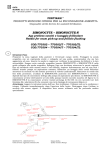
T U B O P R O S S IM A L E R IG ID O Ø e s t 6 F r
rig id p ro s s im a l tu b e O .D . 6 F r
R A C C O R D O L U E R L O C K F E M M IN A
fe m a le lu e r lo c k c o n n e c to r
T U B O D IS T A L E M O R B ID O Ø e s t 4 F r
s o ft d is ta l tu b e O .D . 4 F r
2
3
4
O
G
O
L
1
5
2 6 0 .0 0 m m
F IL O D I N Y L O N
w ire n y lo n
1 0 5 .0 0 m m
C AN NULA
c a n n u la
1 5 5 .0 0 m m
TUBO FERM O
tu b e s to p
FER M O SCO RREVOLE
a d ju s ta b le p o s itio n e r
1
2
3
4
T U B O C O N IC O
c o n ic a l tu b e
R A C C O R D O L U E R L O C K F E M M IN A
fe m a le lu e r lo c k c o n n e c to r
T U B O IM P U G N A T U R A M A N D R IN O
p ip e h a n d le s p in d le
R A C C O R D O L U E R L O C K F E M M IN A
fe m a le lu e r lo c k c o n n e c to r
5
1 7 0 ,0 0 m m
M A N D R IN O
chuck
I prodotti FERTIRAM sono fabbricati con materiali biocompatibili idonei alla fecondazione assistita, sottoposti a test MEA (embriotossicità) e LAL
(controllo endotossine batteriche) e sterilizzati a raggi beta
FERTIRAM products are manufactured from biocompatible materials suitable for human assisted fertilization, MEA & LAL tested and Beta Sterilized.
Transfer Slow
Rev 02 January 2012