1
52500194_BA_EC350e_E_Jan06
12.4.2007
9:46 Uhr
Seite 10
10
EasyClean 350 e
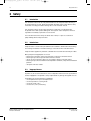
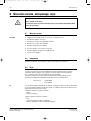
2 Safety
2.1
Introduction
This instruction manual lists the main points of how to use the EasyClean 350 e efficiently, in
the intended manner. For safe, trouble-free operation, operators must be aware of these safety
instructions and comply with further warning notices in the instruction manual.
This instruction manual, and the safety requirements in particular, must be observed by
the operator and all other persons working with the EasyClean 350 e. Compliance with local
regulations and statutory requirements is also essential.
The instruction manual must always be stored close at hand, in a place accessible to all
people working with the EasyClean 350 e.
2.2
Intended use
EasyClean 350 e is intended solely for automatic/semi automatic controlled or manual flushing
and cleaning of electrodes in retractable housings, as described in this instruction manual.
EasyClean 350 e supports fully automatic calibration when used with the transmitter pH 2100 e.
Other prerequisites for appropriate use include:
– observing the instructions, notes and requirements set out in this instruction manual
– observing the prescribed inspection and maintenance intervals
– correct care and maintenance of the unit, in accordance with the instruction manual
– observing the prescribed environmental and operational conditions, and permitted installation
positions
– compliance with local statutes.
2.3
Inappropriate use
Any other use, or use not mentioned here, that is incompatible with the technical specifications is
deemed inappropriate. The operator is solely responsible for any damage arising from such use.
The following are deemed particularly inappropriate:
– use of hydraulic fluid in place of compressed air
– use of suspensions as cleaning media
– use of salt acid of > 10 %
– use of steam (> 95 °C) for flushing.
© 04/07 Mettler-Toledo AG, CH-8606 Greifensee
Printed in Switzerland
EasyClean 350 e
52 500 194