1
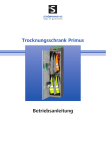
78-560-550 27.03.2012 Primus Betriebsanleitung Operating manual Notice d‘instructions Istruzioni per l'uso Inhaltsverzeichnis ..............................................................................5 Table of contents .............................................................................19 Sommaire ........................................................................................33 Indice ...............................................................................................47 Primus 3 4 Primus Inhaltsverzeichnis 1 Vorwort ................................................................................................................................................................................. 6 1.1 Bestimmungsgemäße Verwendung ........................................................................................................................... 6 2 Allgemeine Hinweise ........................................................................................................................................................... 7 2.1 Sicherheitsvorschriften ............................................................................................................................................... 7 2.2 Warnhinweise ............................................................................................................................................................ 7 2.3 Schutzvorrichtungen .................................................................................................................................................. 8 3 Funktion ................................................................................................................................................................................ 9 4 Technische Daten .............................................................................................................................................................. 10 5 Transport, Lagerung und Veränderung des Standortes ................................................................................................ 11 5.1 Transportbedingungen des Geräts .......................................................................................................................... 11 5.2 Lagerung des Geräts ............................................................................................................................................... 11 5.3 Entfernen der Verpackung und Standortwahl .......................................................................................................... 11 6 Beschreibung der Bedienelemente .................................................................................................................................. 12 6.1 Betrieb ...................................................................................................................................................................... 12 7 Wartung .............................................................................................................................................................................. 13 7.1 Reinigung ................................................................................................................................................................. 13 7.2 UV-Lampe (Option) .................................................................................................................................................. 13 7.3 Beduftung ................................................................................................................................................................ 14 8 Fehlerbehebung ................................................................................................................................................................. 15 8.1 Übertemperaturschalter ........................................................................................................................................... 16 9 Schaltplan ........................................................................................................................................................................... 17 10 Stilllegung und Entsorgung ............................................................................................................................................ 18 Primus 5 1 Vorwort Diese Betriebsanleitung muss vor der ersten Inbetriebnahme vom Bedienpersonal und von den für die Erhaltung des Trocknungsschrankes Verantwortlichen gelesen werden. Schäden, die durch Nichtbeachtung der darin enthaltenen Hinweise entstehen, werden durch die Garantie nicht gedeckt. Der Verwender des Trocknungsschrankes ist gesetzlich verpflichtet, die Unfallvorschriften für das betreffende Land zu beachten. Weiters ist diese Betriebsanleitung vertraulich zu behandeln. Sie darf nur befugten Personen zugänglich gemacht werden. Eine Überlassung an Dritte darf nur mit schriftlicher Zustimmung der Firma WINTERSTEIGER erfolgen. Alle Unterlagen sind im Sinne des Urheberrechtes geschützt. Die Weitergabe und Vervielfältigung von Unterlagen, auch auszugsweise, sowie eine Verwertung und Mitteilung ihres Inhaltes sind nicht gestattet, soweit nicht ausdrücklich schriftlich zugestanden. Zuwiderhandlungen sind strafbar und verpflichten zu Schadenersatz. Alle Rechte zur Ausübung von gewerblichen Schutzrechten sind der Firma WINTERSTEIGER vorbehalten. 1.1 Bestimmungsgemäße Verwendung Der Trocknungsschrank Primus ist ausschließlich für das Trocknen und Aufbewahren von Kleidung, Schuhen, Stiefeln, Handschuhen und Helmen gebaut (bestimmungsgemäßer Gebrauch). Jeder darüber hinausgehende Gebrauch gilt als nicht bestimmungsgemäß. Der Hersteller haftet nicht für daraus resultierende Schäden. Das Risiko hierfür trägt allein der Benutzer. Zur bestimmungsgemäßen Verwendung gehört auch die Einhaltung der vom Hersteller vorgeschriebenen Betriebs-, Wartungs- und Instandhaltungsbestimmungen. Die einschlägigen Unfallverhütungsvorschriften sowie die sonstigen allgemein anerkannten sicherheitstechnischen, und arbeitsmedizinischen Regeln sind einzuhalten. Eigenmächtige Veränderungen am Trocknungsschrank schließen eine Haftung des Herstellers für daraus resultierende Schäden aus. Wir sind stets bemüht, unsere Erzeugnisse zu verbessern und behalten uns darum das Recht vor, alle Änderungen und Verbesserungen anzubringen, die wir für zweckmäßig halten. Eine Verpflichtung, diese auf früher gelieferte Maschinen und Geräte auszudehnen, ist damit jedoch nicht verbunden. Alle Abbildungen, Maße und Gewichtsangaben in der Bedienungsanleitung sind unverbindlich. Originalbetriebsanleitung © Copyright 2011 by WINTERSTEIGER AG ::: A-4910 Ried/I Dimmelstrasse 9 Tel. +43 7752 919-0 E-mail: [email protected] Autor und Grafik: Maria Marek-Pollhammer 6 Primus 2 Allgemeine Hinweise 2.1 Sicherheitsvorschriften Schließen Sie das Gerät nur an Steckdosen an, die von einer Elektrofachkraft überprüft wurden. Beachten Sie dabei die richtige Anschlussspannung! Die Anschlusswerte sind auf dem Typenschild ersichtlich. Prüfen Sie, ob diese Angaben mit der Spannung des Netzes übereinstimmen. Der Trocknungsschrank darf nur mit vollständig montierten Schutzen und Abdeckungen betrieben werden! Vor jeder Standortverschiebung oder bei Geräteeingriffen Netzstecker ziehen! Das Gerät darf nur mit Original WINTERSTEIGER Ersatzteilen bzw. Verbrauchsmaterial betrieben werden. Wird Fremdmaterial verwendet, geschieht dies auf eigene Gefahr und Verantwortung des Betreibers, die Garantie erlischt dadurch! Sorgen Sie für eine gute Belüftung des Arbeitsraumes! 2.2 Warnhinweise Verletzungsgefahr! Es muss regelmäßig kontrolliert werden, ob sich diese Warnaufkleber noch auf der Maschine befinden. Unleserliche oder fehlende Warnaufkleber müssen sofort erneuert werden. Die Aufkleber befinden sich an der linken Innenwand des Gerätes. Vor Inbetriebnahme die Betriebsanleitung und Sicherheitshinweise lesen und beachten! Bestellnummer: 78-166-001 Vor Öffnen des Gerätes Netzstecker ziehen! Bestellnummer: 78-166-002 Primus 7 Warnung vor dem UV-Licht der UV-Lampe! Nicht direkt in die UV-Lampe blicken! Dieser Aufkleber ist nur vorhanden, wenn die Maschine über die Option UV-Lampe verfügt. Bestellnummer: 78-150-120 2.3 Schutzvorrichtungen Sämtliche Schutzvorrichtungen dürfen während des Betriebes nicht entfernt werden. Der Trocknungsschrank Primus erfüllt die Niederspannungsrichtlinie und die EMV-Richtlinie. 8 Primus 3 Funktion Einfache Bedienung über analoge Zeitschaltuhr (schaltbar bis 6 Stunden). Leistungsfähige Raumlufttrocknung oder Warmlufttrocknung, frei schaltbar Keimreduktion in der Luft durch UV-Lampe (Option) Energiesparende Trocknung von hochwertiger Arbeits- und Einsatzkleidung Geruchsneutralisierung durch Duftmittel Innenbelüftete Trocknungsdüsen für 4 Paar Schuhe, Stiefel oder Handschuhe (Option) 2 Kleiderstangen Halter für 4 Paar Handschuhe an der Türinnenseite Ablage für Helme (Option) Primus 9 4 Technische Daten Typ Primus Trocknungsschrank Nennspannung, Frequenz, Leistung, Nennstrom, Absicherung: 1 AC 208-230V 50/60 Hz; 0,85 kW; Absicherung 4/15 A Die richtige Anschlussspannung ist zusätzlich am Typenschild ersichtlich! Leistung Heizung: 1 x 800 W Leistung Gebläse: 1 x 40 W UV-Lampe (Option): 1 Stück Umgebungstemperatur: +18 bis 40°C Luftfeuchtigkeit: 30% - 80% Die Verwendung des Gerätes ist nur in gut belüfteten, trockenen Innenräumen gestattet! 10 Abmessungen (HxBxT): 2100 mm x 500 mm x 800 mm Gewicht: 85 kg Trocknungsdauer: ab 1,5 Stunden. Abhängig von der Durchnässung, der Temperatur und dem Material ist eine längere Trocknungsdauer möglich. Keimreduktion: Keimreduktion in der Luft durch UV-Lampe (Option) Geräuschemission: unter 70 dB(A) Primus 5 Transport, Lagerung und Veränderung des Standortes 5.1 Transportbedingungen des Geräts Das Gerät muss in der Originalverpackung und in der darauf angegebenen Position transportiert werden. 5.2 Lagerung des Geräts Temperatur: 0° bis +40°C. Um Schäden zu vermeiden, legen Sie keine anderen Pakete oder Kisten auf die Verpackung des Geräts! 5.3 Entfernen der Verpackung und Standortwahl Achten Sie beim Entfernen der Verpackung darauf, dass das Gerät nicht beschädigt wird. Bei der Wahl des Standortes muss die Funktionalität im Vordergrund stehen. Das Gerät muss in einem möglichst trockenen, gut belüfteten Raum aufgestellt werden. Die Raumhöhe muss mindestens 2,3 m betragen. Die Steckdose soll sich unmittelbar neben dem Gerät befinden. Beachten Sie bei der Wahl des Standortes besonders die Richtlinien und Gesetze betreffend der Sicherheit am Arbeitsplatz! Achten Sie darauf, dass die Luftzufuhr niemals ganz oder teilweise blockiert wird (Gerät nicht verbauen!). Damit die Trocknung und Keimreduktion optimal funktioniert, darf die Raumtemperatur nicht unter 18°C liegen. Stecken Sie keine Gegenstände in das Ansaugluftgitter oder das Schutzgitter. Verschließen Sie diese Öffnungen auch nicht teilweise. Niemals Flüssigkeiten in den Luftkreislauf gießen oder sprühen, da die Gefahr eines Stromschlages und der Beschädigung des Gerätes besteht. Primus 11 6 Beschreibung der Bedienelemente A B A: Hauptschalter Einschalten und Ausschalten des Gerätes B: Zeitschaltuhr Einstellen der Trocknungsdauer zwischen 0 und 6 Stunden C: Heizung Einschalten und Ausschalten der Heizung C 6.1 Betrieb Gerät an die Spannungsversorgung anschließen. Gerät mit dem Hauptschalter [A] einschalten. Mit der Zeitschaltuhr die gewünschte Trocknungsdauer einstellen. Mit dem Drehknopf [C] entweder Warmlufttrocknung oder Raumlufttrocknung auswählen. Beachten Sie folgende Hinweise bei der Trocknung ihrer Arbeitskleidung: Handschuhe auf die integrierten Handschuhhalter an der Tür stekken. Arbeitskleidung mit einem Kleiderhaken auf die montierten Kleiderstangen hängen. Schuhe, Stiefel oder Handschuhe auf die innenbelüfteten Trocknungsdüsen stecken (Option). C Der Trocknungsschrank Primus hat eine Kapazität von 2 bis 4 Arbeitsausrüstungen. Zwischen der Ausrüstung muss etwas Luft bleiben, damit eine optimale Luftzirkulation möglich ist. Nach dem Ausschalten der Heizung läuft die Lüftung noch 10 bis 15 Minuten nach. C 12 Primus 7 Wartung Vor sämtlichen Wartungsarbeiten Gerät ausschalten und Netzstecker ziehen! 7.1 Reinigung Gerät innen und außen regelmäßig mit einem feuchten Putzlappen reinigen. Reinigen Sie das Gerät niemals mit Wasser, da dadurch elektrische Bauteile zerstört werden! Im Falle einer Nichtbeachtung wird für Folgeschäden keine Haftung sowie Gewährleistung übernommen. 7.2 UV-Lampe (Option) Die verwendete UV-Lampe erlaubt eine wirksame Keimreduktion für eine Betriebszeit von 2000 Stunden, danach muss die UV-Lampe ersetzt werden. Führen Sie einmal im Monat eine Sichtkontrolle der UV-Lampe im Betrieb durch. Sie sehen an der Rückwand des Schrankes bläuliches Licht durchschimmern. A Verletzungsgefahr! Blicken Sie nicht direkt in die UV-Lampe! Die UV-Strahlen können die Augen schädigen! Wechseln der UV-Lampe B Verletzungsgefahr! C Gerät von der Spannungsversorgung trennen! Alle Schrauben [A] entfernen. Deckel [B] entfernen. UV-Lampe [C] vorsichtig entfernen. Verletzungsgefahr! Die UV-Lampe enthält giftiges Quecksilber. Entsorgen Sie die UVLampe entsprechend den landesüblichen Vorschriften! Primus Neue Lampe [C] einsetzen und Deckel [B] mit den Schrauben [A] wieder fixieren. 13 7.3 Beduftung D Wenn der Duft nachlässt, Duftmittel [D] ersetzen. Das Duftmittel wirkt ca. einen Monat lang. Bestellnummern für das Duftmittel: 55-100-772 Vanille 24 Stück 55-100-774 Vanille 10 Stück 55-100-761 Karibik 24 Stück 55-100-762 Karibik 10 Stück C 14 Primus 8 Fehlerbehebung Fehler Problem Ursache Behebung Das Gerät ist nicht eingesteckt. Gerät einstecken. Spannungsversorgung nicht. Elektrofachkraft kontaktieren. funktioniert Das Gerät funktioniert nicht Das Gerät trocknet nicht Trockenleistung des Geräts nimmt ab oder Gerät heizt nicht Ausbleiben des Duftes UV-Lampe funktioniert nicht Der Hauptschalter steht auf „0“ Hauptschalter einschalten Keine Trocknungsdauer eingestellt Trocknungsdauer einstellen Kap. 6.1 Betrieb, Seite 12) Ungenügende Luftzufuhr Kontrollieren Sie die Luftzufuhr am Gerät oder im Raum Luftfeuchtigkeit > 80% Je geringer die Luftfeuchtigkeit, desto besser die Trocknung. Raumtemperatur < 18°C Je höher die Raumtemperatur, desto besser die Trocknung Übertemperaturschalter der Heizung hat ausgelöst, da eine Temperatur von 80°C überschritten wurde (siehe Kontrollieren, ob innen oder außen Lüftungsschlitze verdeckt sind. siehe Kap. 8.1 Übertemperaturschalter, Seite 16 Gebläse defekt Gebläse kontrollieren Duftmittel aufgebraucht Duftmittel erneuern Kontrollieren, ob die UV-Lampe eingesteckt und eingeschaltet ist (siehe Kap. 7.2 UV-Lampe (Option), Seite 13) bzw. UV-Lampe wechseln Bei Geräteeingriffen Netzstecker ziehen! Das Gerät darf nur mit vollständig montierten Schutzen und Abdeckungen betrieben werden. Primus 15 8.1 Übertemperaturschalter Löst der Übertemperaturschalter der Heizung aus, muss der Schalter zurückgesetzt werden. Verletzungsgefahr! Gerät von der Spannungsversorgung trennen! Nur eine Elektrofachkraft darf die Störung beheben! Betroffenen Heizlüfter ausbauen. Taste [A] drücken. Heizlüfter wieder einbauen. A 16 Primus 9 Schaltplan Primus 17 10 Stilllegung und Entsorgung Verletzungsgefahr! Trennen Sie vor dem Stilllegen und Demontieren die Maschine von der Stromversorgung oder jeglichem externen Antrieb. Verwenden Sie für die Demontage nur geeignetes Werkzeug. Zerlegen und entsorgen Sie bei der Stilllegung der Maschine alle Bestandteile fachgerecht. Reinigen Sie alle öl- und fetthaltigen Teile vor der Entsorgung. Öl und Fett dürfen keinesfalls in die Umwelt gelangen. Halten Sie bei der Entsorgung der Bestandteile die landesspezifischen Vorschriften ein! Maschine fachgerecht demontieren und in einzelne Bestandteile zerlegen. Öl- und fetthaltige Bestandteile reinigen. Bestandteile nach Materialgruppen (Stahl, Kunststoff, Elektro- und Elektronikbauteile u.s.w.) entsorgen. Öl und Fett umweltgerecht entsorgen, auch biologisch abbaubare Öle und Fette. 18 Primus Table of contents 1 Foreword ............................................................................................................................................................................. 20 1.1 Proper use ............................................................................................................................................................... 20 2 General information ........................................................................................................................................................... 21 2.1 Safety information .................................................................................................................................................... 21 2.2 Warnings .................................................................................................................................................................. 21 2.3 Safety devices .......................................................................................................................................................... 22 3 Function .............................................................................................................................................................................. 23 4 Technical data .................................................................................................................................................................... 24 5 Transport, storage and relocation .................................................................................................................................... 25 5.1 Transport conditions for the equipment ................................................................................................................... 25 5.2 Storing the equipment .............................................................................................................................................. 25 5.3 Removing the packaging and choosing a site ......................................................................................................... 25 6 Description of controls ...................................................................................................................................................... 26 6.1 Operation ................................................................................................................................................................. 26 7 Maintenance ....................................................................................................................................................................... 27 7.1 Cleaning ................................................................................................................................................................... 27 7.2 UV lamp (optional) ................................................................................................................................................... 27 7.3 Deodorizing .............................................................................................................................................................. 28 8 Troubleshooting ................................................................................................................................................................. 29 8.1 Excess temperature switch ...................................................................................................................................... 30 9 Circuit diagram ................................................................................................................................................................... 31 10 Shut-down and disposal ................................................................................................................................................. 32 Primus 19 1 Foreword This operating manual must be read by operating personnel and those responsible for maintenance of the drying locker before initial use. Damage caused by failure to follow the instructions herein will not be covered by the warranty. The user of this drying locker is legally bound to observe the accident prevention regulations of the country in question. Furthermore, this operating manual shall be treated confidentially. Only authorized persons shall be allowed access to it. It shall only be entrusted to third parties on written permission from WINTERSTEIGER. All documents are protected under copyright. Distribution, reproduction and utilization of documents and parts thereof, as well as communication of its contents, are not permitted unless authorized expressly and in writing. Infringements are liable to prosecution and will result in damage claims. WINTERSTEIGER shall retain all rights to exercise industrial property rights. 1.1 Proper use The Primus drying locker is designed exclusively for drying and storing clothes, shoes, boots, gloves and helmets (intended use). Any other use is considered inappropriate. The manufacturer shall not be liable for damage occurring from inappropriate use. The user bears full responsibility in this case. Appropriate usage also includes following the operating, maintenance and service stipulations set out by the manufacturer. You must also observe applicable accident prevention regulations and other generally accepted safety and occupational health regulations. In case of unauthorized changes to the drying locker, the manufacturer will not be liable for any resulting damage. We constantly try to improve our products and therefore reserve the right to make any changes or improvements we feel are appropriate. We are, however, not obligated to extend these changes or improvements to already delivered machines or devices. All images, dimensions and weight specifications in the instructions are non-binding. Original operating manual © Copyright 2011 by WINTERSTEIGER AG ::: A-4910 Ried/I Dimmelstrasse 9 Tel. +43 7752 919-0 Email: [email protected] Author and illustrations: Maria Marek-Pollhammer 20 Primus 2 General information 2.1 Safety information Only connect the unit to power outlets, which have been tested by an electrician. Be sure you are using the right connection voltage! See the type label for the connected load. Check whether these specifications match the power supply voltage. The drying locker may be operated only with all safeguards and covers attached. Disconnect the power if you need to relocate or work on the equipment. Use only original WINTERSTEIGER spare parts / consumables when operating the equipment. Any use of foreign material shall be at the risk of the operator and will invalidate the warranty! Make sure the room has good supply of fresh air. 2.2 Warnings Risk of injury! Regular checks must be made to ensure that the warning labels are still attached to the machine. Illegible or missing warning labels must be replaced immediately. The labels are located on the left inside panel of the unit. The operating manual and the safety information must be read and observed before commissioning the machine. Order number: 78-166-001 Disconnect the power before opening the device. Order number: 78-166-002 Primus 21 Warning: The UV lamp emits UV light! Do not look directly at the UV lamp! This label can only be found if the unit is equipped with the optional UV lamp. Order number: 78-150-120 2.3 Safety devices Do not remove any safety devices during operation. The Primus drying locker meets the low voltage guideline and the EMC guideline. 22 Primus 3 Function Simple operation using an analog timer clock (switchable for up to 6 hours) Simple switch between high performance ambient air drying or warm air drying A UV lamp (optional) reduces germs in the air Energy saving drying of quality work clothes and gear Odors are eliminated by means of a deodorant Ventilated drying nozzles for 4 pairs of shoes, boots or gloves (optional) 2 bars for hangers Holders for 4 pairs of gloves on the inside of the door Shelf for helmets (optional) Primus 23 4 Technical data Type Primus drying locker Rated voltage, frequency, power, rated current, fuses: 1 AC 208-230 V 50/60 Hz; 0.85 kW; 4/15 A fuse The correct connection voltage is additionally displayed on the type label! Heater output: 1 x 800 W Air circulation fan output: 1 x 40 W UV lamp (optional): Qty 1 Ambient temperature: +18 to 40°C Humidity: 30% - 80% The unit may only be used in dry, well-ventilated indoor rooms! 24 Dimensions (HxWxD): 2100 mm x 500 mm x 800 mm Weight: 85 kg Drying time: Min. 1.5 hours. A longer drying time is possible depending on dampness, temperature and material. Germ reduction: A UV lamp (optional) reduces germs in the air. Noise emission: below 70 dB(A) Primus 5 Transport, storage and relocation 5.1 Transport conditions for the equipment Always use the original packaging and the position shown when transporting the equipment. 5.2 Storing the equipment Temperature: 0° to +40°C. To avoid damage, do not place any other packages or boxes on the packaging for the equipment! 5.3 Removing the packaging and choosing a site Ensure that the unit is not damaged when removing the packing material. When choosing a location, functionality should be your foremost concern. The unit must be set up in a dry-as-possible, wellventilated room. The room height must be at least 2.3 m. The power outlet should be located directly next to the unit. When choosing a site, pay special attention to best practices and legal requirements for health and safety at work! Ensure that the air supply is never completely or partially blocked (do not obstruct the unit). In order for the drying and the germ reduction to function optimally, the room temperature must never fall below 18°C. Do not insert any objects into the air intake or protective grid. Never block, or partially block, these openings. Never pour or spray liquids into the air circuit - danger of electric shock and damage to the equipment. Primus 25 6 Description of controls A B A: Main switch Switches the equipment on and off B: Timer clock Setting the drying time to between 0 and 6 hours C: Heating Switches the heater on and off C 6.1 Operation Connect the unit to the power supply. Switch the unit on using the main switch [A]. Set the desired drying time with the timer clock. Select either warm air drying or ambient air drying by means of the switch [C]. When drying work clothes, observe the following instructions: Place gloves on the integrated glove holders on the door. Hang work clothes on hangers and then on the integrated bar for hangers. Place shoes, boots or gloves on the ventilated drying nozzles (optional). C The Primus drying locker has a capacity of 2 to 4 sets of work clothes. An air gap must be kept between the equipment to allow best possible circulation of air. After switching off the heater, the ventilation will continue to run for about 10 - 15 minutes. C 26 Primus 7 Maintenance Switch off the equipment and pull the power plug before commencing maintenance work! 7.1 Cleaning Clean the inside and outside of the equipment at regular intervals using a moist cloth. Never clean the unit with water, since this could damage the electrical components! No liability or warranty will be assumed for consequential damage if you fail to observe this. 7.2 UV lamp (optional) The utilized UV lamp ensures an effective germ reduction for an operating period of 2000 hours. After this the UV lamp must be replaced. Perform a visual check of the UV lamp in operation once a month. You will see a bluish light glowing on the back side of the locker. A Risk of injury! Do not look directly at the UV lamp! The UV rays can damage your eyes! Changing the UV lamp Risk of injury! B C Disconnect the unit from the power supply! Remove all screws [A]. Remove lid [B]. Carefully remove UV lamp [C]. Risk of injury! The UV lamp contains poisonous mercury. Dispose of the UV lamp according to national regulations! Primus Insert a new lamp [C] and secure lid [D] with the screws [A]. 27 7.3 Deodorizing D When the scent becomes weaker, replace the deodorant [D]. The deodorant will last for approx. one month. Order numbers for the deodorant: 55-100-772 Vanilla 24 pcs 55-100-774 Vanilla 10 pcs 55-100-761 Caribbean 24 pcs 55-100-762 Caribbean 10 pcs C 28 Primus 8 Troubleshooting Error Problem The equipment is not working The equipment is not drying The equipment's drying performance has deteriorated, or the equipment is not heating. No scent UV lamp not working Cause Elimination The unit is not plugged in Plug in unit Power supply not working Contact electrician The main switch is set to "0" Switch on the main switch No drying time set Set drying time (see chapt. 6.1 Operation, page 26) Insufficient air supply Check the air supply to the equipment or room Humidity > 80% The lower the humidity, the better the drying effect Ambient temperature < 18°C The higher the ambient temperature, the better the drying effect The excess temperature switch on the heater has been triggered because the temperature exceeded 80°C Check the inside and outside of the drying locker to see if the ventilation louvers are blocked see Chap. 8.1 Excess temperature switch, page 30 Air circulation fan defective Check the air circulation fan Deodorant used up Replace deodorant Check to see if the UV lamp is inserted and switched on (see chapt. 7.2 UV lamp (optional), page 27) or replace UV lamp Disconnect the power whenever you work on the equipment! The drying locker may be operated only with all safeguards and covers attached . Primus 29 8.1 Excess temperature switch The excess temperature switch of the heater must be reset if it has been triggered. Risk of injury! Disconnect the unit from the power supply! Only an electrician may do the repair! Uninstall the concerned heater. Press button [A]. Reinstall the heater. A 30 Primus 9 Circuit diagram Primus 31 10 Shut-down and disposal Risk of injury! Disconnect the machine from the mains supply or any external drive prior to shutting down and dismantling. Use only suitable tools for dismantling. When shutting down the machine dismantle and dispose of all machine parts properly. Clean all oily and greasy components prior to disposal. Oil and grease should never be allowed to pollute the environment. Ensure that all disposal regulations specific to your country are adhered to! Dismantle the machine properly into its individual components. Clean oily and greasy components. Dispose of components by material group (steel, plastic, electrical and electronic components, etc.). Dispose of oil and grease in an environmentally friendly manner. 32 Primus Sommaire 1 Préface ................................................................................................................................................................................ 34 1.1 Utilisation conforme ................................................................................................................................................. 34 2 Remarques générales ........................................................................................................................................................ 35 2.1 Prescriptions de sécurité .......................................................................................................................................... 35 2.2 Signalisation des dangers ........................................................................................................................................ 35 2.3 Dispositifs de protection ........................................................................................................................................... 36 3 Fonctions ............................................................................................................................................................................ 37 4 Caractéristiques techniques ............................................................................................................................................. 38 5 Transport, entreposage et changement d'emplacement ............................................................................................... 39 5.1 Conditions de transport de l'appareil ....................................................................................................................... 39 5.2 Entreposage de l'appareil ........................................................................................................................................ 39 5.3 Déballage et choix de l'emplacement ...................................................................................................................... 39 6 Description des organes de commande .......................................................................................................................... 40 6.1 Exploitation .............................................................................................................................................................. 40 7 Maintenance ....................................................................................................................................................................... 41 7.1 Nettoyage ................................................................................................................................................................. 41 7.2 Lampe UV (en option) .............................................................................................................................................. 41 7.3 Désodorisation ......................................................................................................................................................... 42 8 Élimination des erreurs ..................................................................................................................................................... 43 8.1 Interrupteur de température excessive .................................................................................................................... 44 9 Schéma électrique ............................................................................................................................................................. 45 10 Mise à l'arrêt définitive et élimination ............................................................................................................................ 46 Primus 33 1 Préface Avant la première mise en service, la présente notice d'utilisation doit être lue par le personnel opérateur et par les personnes responsables de la préservation de l'armoire de séchage. Les dommages résultant d'une non-observation des consignes du manuel ne sont pas couverts par la garantie. L'utilisateur de l'armoire de séchage est tenu par la loi de respecter la réglementation nationale respective en matière de prévention des accidents. Par ailleurs, ce manuel de service doit être traité confidentiellement. Seules les personnes autorisées y ont accès. Il ne peut être cédé à des tiers qu'après consentement écrit de la part de la société WINTERSTEIGER. Toute la documentation est protégée par des droits d'auteur. La transmission et la reproduction des textes ou d'une partie de ceux-ci ainsi que l'utilisation et la communication de leur contenu sont illicites, sauf autorisation expresse par écrit. Toute contravention est punissable et entraîne des dommages-intérêts. Tous les droits de propriété industrielle sont réservés à la société WINTERSTEIGER. 1.1 Utilisation conforme L'armoire de séchage Primus est conçue exclusivement pour le séchage et le rangement de vêtements, chaussures, bottes, gants et casques (utilisation conforme). Toute autre utilisation est considérée comme non conforme à l'usage prévu. Le fabricant décline toute responsabilité pour les dommages qui en résulteraient. L'utilisateur en assume seul le risque. L'utilisation conforme englobe également l'observation des consignes de fonctionnement, d'entretien et de maintenance prescrites par le fabricant. La réglementation en matière de prévention des accidents ainsi que les autres réglementations généralement reconnues en matière de sécurité et de médecine du travail doivent être appliquées. La responsabilité du fabricant n'est pas engagée en cas de dommages survenant suite à des modifications apportées à l'armoire de séchage sans concertation préalable. Nous nous efforçons d'améliorer nos produits en permanence, c'est pourquoi nous nous réservons le droit d'y apporter des modifications ou améliorations jugées utiles. Ceci n'implique pas que nous sommes tenus d'opérer les mêmes modifications sur des machines ou appareils déjà livrés. Toutes les illustrations, mesures et poids figurant dans le manuel de service sont sans garantie. Manuel de service original © Copyright 2011 WINTERSTEIGER AG ::: A-4910 Ried/I Dimmelstrasse 9 Tél. +43 7752 919-0 E-mail : [email protected] Rédaction et mise en page : Maria Marek-Pollhammer 34 Primus 2 Remarques générales 2.1 Prescriptions de sécurité Ne raccordez l'appareil qu'à des prises secteur ayant été contrôlées par un électricien qualifié. Veiller à une tension d'alimentation correcte ! La tension requise pour l'appareil figure sur la plaque signalétique. Vérifier si la tension secteur correspond bien aux indications de la plaque. L'armoire de séchage peut uniquement être mise en service lorsque toutes les protections et tous les capots sont montés ! Toujours retirer la prise secteur avant tout déplacement de l'appareil ou toute intervention sur celui-ci ! L'appareil peut uniquement être mis en service avec des consommables et pièces de rechange d'origine WINTERSTEIGER ! L'utilisation de matériel de marque étrangère se fait aux risques et sous la responsabilité de l'exploitant ; elle entraîne en outre la perte de la garantie ! Veillez à ce que la pièce de travail soit bien aérée ! 2.2 Signalisation des dangers Risque de blessures ! Vous devez contrôler régulièrement si ces étiquettes d'avertissement se trouvent encore sur la machine. Les étiquettes illisibles ou manquantes doivent immédiatement être renouvelées. Les étiquettes se trouvent sur la paroi gauche interne de l'appareil. Avant la mise en service, lisez le manuel de service et les consignes de sécurité et respectez-les. Numéro de commande : 78-166-001 Retirez la fiche secteur avant d'ouvrir l'appareil ! Numéro de commande : 78-166-002 Primus 35 Attention à la lumière UV de la lampe ! Ne pas regarder directement dans la lampe UV ! Cette étiquette n'est disponible que lorsque la machine dispose de l'option lampe UV. Numéro de commande : 78-150-120 2.3 Dispositifs de protection Aucun dispositif de protection ne doit être enlevé durant le fonctionnement de la machine. L'armoire de séchage Primus est conforme à la directive basse tension et à la directive CEM. 36 Primus 3 Fonctions Manipulation simple via un minuteur analogique (commutable jusqu'à 6 heures) Séchage à l'air ambiant ou à l'air chaud performant, commutable librement Réduction des bactéries de l'air par la lampe UV (en option) Séchage économique des vêtements de travail et d'intervention de haute qualité Désodorisation par désodorisant Buses de séchage ventilées par l'intérieur pour 4 paires de chaussures, bottes ou gants (en option) 2 barres porte-cintres Support pour 4 paires de gants sur l'intérieur de la porte Plateau de rangement pour les casques (en option) Primus 37 4 Caractéristiques techniques Type Armoire de séchage Primus Tension nominale, fréquence, puissance, courant nominal, protection par fusible : 1 AC 208-230V 50/60 Hz; 0,85 kW; fusibles 4/15 A La tension requise figure de plus sur la plaque signalétique ! Puissance de chauffage : 1 x 800 W Puissance de ventilateur : 1 x 40 W Lampe UV (en option) : 1 unité Température ambiante : +18 à 40 °C Humidité de l'air : 30% - 80% L'appareil ne doit être utilisé que dans des pièces bien aérées et sèches ! 38 Dimensions (h x l x p) : 2100 mm x 500 mm x 800 mm Poids : 85 kg Durée du séchage : À partir d'une heure et demi. En fonction de l'humidité, de la température et du matériau, une durée de séchage supérieure est possible. Réduction des bactéries : Réduction des bactéries de l'air par la lampe UV (en option) Émissions sonores : Inférieures à 70 dB(A) Primus 5 Transport, entreposage et changement d'emplacement 5.1 Conditions de transport de l'appareil L'appareil doit être transporté dans son emballage d'origine et dans la position indiquée dessus. 5.2 Entreposage de l'appareil Température : 0 °C à +40 °C. Afin d'éviter un endommagement de l'appareil, ne posez aucun autre paquet ou caisse sur son emballage ! 5.3 Déballage et choix de l'emplacement Faites attention lors du retrait de l'emballage à ne pas endommager l'appareil. Lors du choix du lieu d'installation, la fonctionnalité est le critère le plus important. L'appareil doit être mis en place dans une pièce bien ventilée et sèche. La pièce doit posséder une hauteur de plafond d'au moins 2,3 m. La prise secteur doit se trouver juste à côté de l'appareil. Lors du choix du lieu d'installation, respectez tout particulièrement les directives et régulations concernant la sécurité sur le lieu de travail ! Veillez à ce que l'arrivée d'air ne soit pas bloquée, que ce soit totalement ou en partie (ne pas cadrer l'appareil !). Pour que le séchage et la réduction des bactéries fonctionnent de manière optimale, la température de la pièce ne doit pas être inférieure à 18°C. Ne placez aucun objet sur la grille d'aspiration d'air ou sur la grille de protection. N'obstruez pas ces orifices, ne serait-ce que partiellement. Ne versez ou ne vaporisez jamais de liquide dans le circuit d'air car ceci représente un risque d'électrocution et d'endommagement de l'appareil. Primus 39 6 Description des organes de commande A B A: Interrupteur principal Mise en marche et arrêt de l'appareil B: Minuteur Réglage de la durée de séchage entre 0 et 6 heures C: Chauffage Mise en marche et arrêt du chauffage C 6.1 Exploitation Raccorder l'appareil à l'alimentation en tension. Activer l'appareil au moyen de l'interrupteur principal [A]. Régler la durée de séchage souhaitée avec le minuteur. Sélectionner à l'aide de l'interrupteur [C] un séchage à l'air chaud ou à l'air ambiant. Respectez les remarques suivantes lors du séchage de vos vêtements de travail : Placer les gants sur les supports de gants intégrés à la porte. Accrocher les vêtements de travail, après les avoir placés sur le cintre, sur les barres porte-cintres montées. Placer les chaussures, bottes ou gants sur les buses de séchage ventilées par l'intérieur (en option). C L'armoire de séchage Primus peut loger entre 2 et 4 équipements de travail simultanément. Les équipements de travail doivent être légèrement espacés les uns des autres afin de permettre une circulation de l'air optimale. Après avoir éteint le chauffage, la ventilation fonctionne encore pendant 10 à 15 minutes. C 40 Primus 7 Maintenance Avant tous travaux de maintenance sur l'appareil, éteignez l'appareil et débranchez-le ! 7.1 Nettoyage Nettoyez régulièrement l'intérieur et l'extérieur de l'appareil à l'aide d'un chiffon humide. Ne nettoyez jamais l'appareil avec de l'eau car les composants électriques pourraient être endommagés ! Aucune responsabilité ni aucune garantie ne peuvent être assumées en cas de non-observation de ce point. 7.2 Lampe UV (en option) La lampe UV utilisée permet une réduction des bactéries efficace pendant une durée de fonctionnement de 2000 heures, après quoi la lampe UV doit être remplacée. Effectuez une fois par mois un contrôle visuel de la lampe UV pendant le fonctionnement. Vous voyez une lumière bleutée sur la paroi arrière de l'armoire. A Risque de blessures ! Ne pas regarder directement dans la lampe UV ! Les rayons UV risqueraient d'abîmer vos yeux ! Remplacement de la lampe UV B Risque de blessures ! C Séparer l'appareil de l'alimentation en tension ! Retirer toutes les vis [A]. Retirer le couvercle [B]. Retirer la lampe UV [C] avec précaution. Risque de blessures ! La lampe UV contient du mercure nocif. Éliminez la lampe UV dans le respect des prescriptions spécifiques nationales ! Primus Installer une nouvelle lampe [C] et fixer à nouveau le couvercle [B] avec les vis [A]. 41 7.3 Désodorisation D Lorsque l'odeur s'affaiblit, remplacer le désodorisant [D]. Le désodorisant agit env. un mois. Numéros de commande pour le désodorisant: 55-100-772 Vanille 24 unités 55-100-774 Vanille 10 unités 55-100-761 Caraïbes 24 unités 55-100-762 Caraïbes 10 unités C 42 Primus 8 Élimination des erreurs Erreur, problème Cause Remède L'appareil n'est pas branché Brancher l'appareil L'alimentation fonctionne pas en tension ne L'appareil ne fonctionne pas L'appareil ne sèche pas La puissance de séchage de l'appareil diminue ou l'appareil ne chauffe pas Absence d'odeur La lampe UV ne fonctionne pas Contacter un électricien L'interrupteur principal est sur « 0 » Mettez l'interrupteur principal sur la position Marche Aucun séchage réglé Régler la durée du séchage (voir chap. 6.1 Exploitation, page 40) Arrivée d'air insuffisante Contrôlez l'arrivée d'air au niveau de l'appareil ou dans la pièce Humidité de l'air > 80% Plus l'air est sec, plus le séchage est efficace Température de la pièce < 18 °C Plus la température ambiante est élevée, plus le séchage est efficace Contrôler si les fentes d'aération sont recouvertes à l'intérieur ou à l'extérieur L'interrupteur de température excessive du chauffage a réagi, la température de 80 °C ayant été dépassée voir chap. 8.1 Interrupteur température excessive, page 44 Ventilateur défectueux Contrôler le ventilateur Désodorisant épuisé Remplacer le désodorisant de Contrôler si la lampe UV est insérée et activée (voir chap. 7.2 Lampe UV (en option), page 41) remplacer la lampe UV si nécessaire En cas d'intervention sur l'appareil, débrancher la fiche secteur ! L'appareil peut uniquement être mis en service lorsque toutes les protections et tous les capots sont montés. Primus 43 8.1 Interrupteur de température excessive Si l'interrupteur de température excessive du chauffage se déclenche, l'interrupteur doit être réinitialisé. Risque de blessures ! Séparer l'appareil de l'alimentation en tension ! Seul un électricien est autorisé à éliminer le dysfonctionnement ! Démonter les ventilateurs de chauffage concernés. Appuyer sur la touche [A]. Remonter les ventilateurs de chauffage. A 44 Primus 9 Schéma électrique Primus 45 10 Mise à l'arrêt définitive et élimination Risque de blessure ! Avant la mise à l'arrêt définitive et le démontage de la machine, déconnectez la machine de l'alimentation électrique et de tout entraînement externe. Pour le démontage, utilisez uniquement un outillage approprié. Lors de la mise à l'arrêt définitive, démontez et éliminez correctement tous les composants de la machine. Nettoyez tous les composants contenant de l'huile ou de la graisse avant de les éliminer. La graisse et l'huile doivent être éliminés à part et ne peuvent en aucun cas polluer l'environnement Pour l'élimination des composants, respectez les prescriptions nationales en la matière. Démontez correctement la machine en ses différents composants. Nettoyez les composants contenant de la graisse ou de l'huile. Éliminez les composants par type de matériau (acier, matière plastique, composants électriques et électroniques, etc.). Eliminez l'huile et la graisse, y compris les huiles et graisses biodégradables, dans le respect de l'environnement. 46 Primus Indice 1 Premessa ............................................................................................................................................................................ 48 1.1 Utilizzo conforme al fine previsto ............................................................................................................................. 48 2 Indicazioni generali ............................................................................................................................................................ 49 2.1 Norme di sicurezza .................................................................................................................................................. 49 2.2 Avvertimenti ............................................................................................................................................................. 49 2.3 Dispositivi di protezione ........................................................................................................................................... 50 3 Funzionamento .................................................................................................................................................................. 51 4 Dati tecnici .......................................................................................................................................................................... 52 5 Trasporto, immagazzinamento e variazione di ubicazione ............................................................................................ 53 5.1 Condizioni di trasporto del dispositivo ...................................................................................................................... 53 5.2 Immagazzinamento del dispositivo .......................................................................................................................... 53 5.3 Rimozione dell'imballaggio e scelta dell'ubicazione ................................................................................................. 53 6 Descrizione degli elementi di comando ........................................................................................................................... 54 6.1 Funzionamento ........................................................................................................................................................ 54 7 Manutenzione ..................................................................................................................................................................... 55 7.1 Pulizia ...................................................................................................................................................................... 55 7.2 Lampada UV (opzionale) ......................................................................................................................................... 55 7.3 Profumazione ........................................................................................................................................................... 56 8 Eliminazione dei guasti ..................................................................................................................................................... 57 8.1 Interruttore di sovratemperatura .............................................................................................................................. 58 9 Schema elettrico ................................................................................................................................................................ 59 10 Messa a riposo e smaltimento ........................................................................................................................................ 60 Primus 47 1 Premessa Prima di procedere con la prima messa in funzione, il personale preposto al comando e alla manutenzione dell'armadio d'asciugatura deve leggere attentamente le presenti istruzioni per l'uso. Eventuali danni provocati dal mancato rispetto delle presenti indicazioni non sono coperti dalla garanzia. L'utilizzatore dell'armadio d'asciugatura è tenuto per legge a rispettare le norme antinfortunistiche vigenti nel paese di utilizzo del dispositivo. Inoltre, le presenti istruzioni per l'uso devono essere trattate in maniera confidenziale. La documentazione può essere consegnata esclusivamente alle persone addette e autorizzate. Non è consentita una cessione a terzi senza la previa autorizzazione scritta della ditta WINTERSTEIGER. Tutti i documenti sono tutelati ai sensi dei diritti di autore. La trasmissione cosiccome la riproduzione delle documentazioni consegnate, il loro uso e la comunicazione del loro contenuto a terzi sono vietati, anche parzialmente, se non espressamente consentito per iscritto. Le violazioni sono punibili ai sensi di legge e comportano l'obbligo di risarcimento danni. Tutti i diritti avanzabili per la tutela dei diritti di protezione industriali sono riservati alla ditta WINTERSTEIGER. 1.1 Utilizzo conforme al fine previsto L'armadio d'asciugatura Primus è concepito esclusivamente per l'asciugatura e la conservazione di indumenti, scarpe, stivali, guanti e caschi (uso conforme al fine previsto). Qualsiasi impiego che esuli da quest'ambito viene considerato come utilizzo improprio. Il costruttore non si assume alcuna responsabilità per eventuali danni conseguenti. Il rischio è interamente a carico dell'utente. L'impiego conforme al fine previsto implica anche il rispetto delle istruzioni operative, di manutenzione e di manutenzione preventiva fornite dal costruttore. Vanno altresì rispettate le norme antinfortunistiche generali nonché le norme tecniche di sicurezza generalmente riconosciute e le regole in materia di medicina del lavoro. In caso di manomissione dell'armadio d'asciugatura, il costruttore non risponde dei danni che potrebbero prodursi. Nell'ambito del costante sviluppo e miglioramento dei nostri prodotti, ci riserviamo il diritto di apportare eventuali modifiche e migliorie che dovessimo ritenere necessarie. Ciò non implica alcun obbligo da parte nostra di modificare le macchine e le apparecchiature fornite in passato. Le immagini, le dimensioni e i pesi indicati nelle istruzioni per l'uso sono dati puramente indicativi. Istruzioni per l'uso originali © Copyright 2011 by WINTERSTEIGER AG ::: A-4910 Ried/I Dimmelstrasse 9 Tel. +43 7752 919-0 E-mail: [email protected] Autore e progetto grafico: Maria Marek-Pollhammer 48 Primus 2 Indicazioni generali 2.1 Norme di sicurezza Collegare il dispositivo a prese di corrente che siano state preventivamente controllate da un tecnico elettricista. Rispettare il corretto valore della tensione di alimentazione! I valori sono riportati sulla targhetta. Verificare la corrispondenza dei dati con quelli della tensione di rete. L'armadio d'asciugatura deve essere utilizzato con tutte le coperture e i dispositivi di protezione montati! Prima di spostare il dispositivo o di intervenire su di esso, staccare sempre la spina di alimentazione! Utilizzare il dispositivo solo con i pezzi di ricambio e il materiale di consumo originali WINTERSTEIGER. L'utilizzo di pezzi e materiali non originali avviene a proprio rischio e pericolo e sotto la responsabilità del gestore; ciò comporta il decadimento della garanzia per il dispositivo! Assicurare una buona aerazione dell'ambiente. 2.2 Avvertimenti Pericolo di lesioni! Controllare regolarmente se questi adesivi di avvertimento sono ancora sulla macchina. Gli adesivi non leggibili o mancanti devono essere immediatamente sostituiti. Gli adesivi si trovano sulla parete interna sinistra del dispositivo. Prima di effettuare la messa in funzione, leggere ed osservare le istruzioni per l'uso e le indicazioni di sicurezza! Codice ordine: 78-166-001 Staccare la spina dalla presa di corrente prima di aprire l'apparecchio! Codice ordine: 78-166-002 Primus 49 Avvertenza riguardo ai raggi ultravioletti della lampada UV! Non rivolgere lo sguardo direttamente verso la lampada UV! Questo adesivo è presente solamente se la macchina dispone della lampada UV opzionale. Codice ordine: 78-150-120 2.3 Dispositivi di protezione Durante il funzionamento non è consentito rimuovere nessuno dei dispositivi di protezione. L'armadio d'asciugatura Primus è conforme agli standard previsti dalla Direttiva Bassa Tensione e dalla Direttiva Compatibilità Elettromagnetica. 50 Primus 3 Funzionamento Semplicità d'uso con timer analogico (consente fino a 6 ore di accensione) Efficace asciugatura dell'ambiente o asciugatura ad aria calda, selezionabile a piacere Riduzione dei germi presenti nell'aria grazie alla lampada UV (opzionale) Asciugatura a basso consumo energetico di abbigliamento professionale e da pronto intervento Neutralizzazione degli odori grazie all'agente profumante Ugelli d'asciugatura ventilati internamente per 4 paia di scarpe, stivali o guanti (opzionale) 2 aste appendiabiti Supporti per 4 paia di guanti sul lato interno dell'anta Ripiano per caschi (opzionale) Primus 51 4 Dati tecnici Tipo Armadio d´asciugatura Primus Tensione nominale, frequenza, potenza, corrente nominale, protezione: 1 AC 208-230V 50/60 Hz; 0,85 kW; fusibile 4/15 A Il corretto valore della tensione è riportato anche sulla targhetta! Potenza riscaldamento: 1 x 800 W Potenza ventilatore: 1 x 40 W Lampada UV (opzionale): 1 pz. Temperatura ambiente: da +18 a 40°C Umidità dell'aria: 30% - 80% L'utilizzo del dispositivo è consentito solo all'interno di locali ben aerati e asciutti. 52 Dimensioni (HxLxP): 2100 mm x 500 mm x 800 mm Peso: 85 kg Tempi d'asciugatura: Almeno 1 ora e mezzo. Ci può volere anche più tempo in relazione a quanto sono bagnati gli indumenti, alla temperatura e al materiale. Riduzione dei germi: Riduzione dei germi presenti nell'aria grazie alla lampada UV (opzionale) Emissione sonora: Inferiore a 70 dB(A) Primus 5 Trasporto, immagazzinamento e variazione di ubicazione 5.1 Condizioni di trasporto del dispositivo Il dispositivo deve essere trasportato nell'imballaggio originale e nella posizione indicata sull'imballaggio stesso. 5.2 Immagazzinamento del dispositivo Temperatura: da 0° a +40°C. Per evitare danni, non collocare alcun altro pacco o cassa sopra l'imballaggio del dispositivo! 5.3 Rimozione dell'imballaggio e scelta dell'ubicazione Prestare attenzione a non danneggiare il dispositivo nel rimuovere l'imballaggio. Nella scelta dell'ubicazione ciò che importa innanzitutto è la funzionalità. Il dispositivo deve essere installato in un locale ben aerato e asciutto. Il locale deve avere un'altezza di almeno 2,3 m. Deve essere disponibile una presa di corrente nelle immediate vicinanze del dispositivo. Scegliere l'ubicazione rispettando in particolare le direttive e le leggi in materia di sicurezza sul posto di lavoro! Assicurarsi che la fornitura dell'aria non sia mai bloccata nemmeno parzialmente (non ostruire in alcun modo il dispositivo!). Affinché l'asciugatura e la riduzione dei germi funzionino in maniera ottimale, la temperatura ambiente non deve scendere sotto i 18°C. Non infilare alcun oggetto nella griglia d'aspirazione o nella griglia di protezione. Non chiudere queste aperture nemmeno parzialmente. Non versare e non spruzzare mai liquidi nel circuito dell'aria, perché si rischia di subire una scossa elettrica e di danneggiare il dispositivo. Primus 53 6 Descrizione degli elementi di comando A B A: Interruttore principale Inserimento e disinserimento del dispositivo B: Timer Impostazione del tempo d'asciugatura tra 0 e 6 ore C: Riscaldamento Inserimento e disinserimento del riscaldamento C 6.1 Funzionamento Collegare il dispositivo all'alimentazione elettrica. Accendere il dispositivo mediante l'interruttore principale [A]. Con il timer impostare il tempo d'asciugatura desiderato. Con la manopola [C] selezionare asciugatura ad aria calda oppure asciugatura ambiente. Seguire le seguenti istruzioni per l'asciugatura dell'abbigliamento professionale: Infilare i guanti sugli appositi supporti incorporati nell'anta. Appendere l'abbigliamento professionale con un appendiabiti sulle aste appendiabiti montate. Infilare scarpe, stivali o guanti sugli ugelli d'asciugatura ventilati internamente (opzionale). C L'armadio d'asciugatura Primus può contenere da 2 a 4 equipaggiamenti professionali. Tra gli equipaggiamenti si deve lasciare un po' d'aria per consentire una circolazione ottimale dell'aria. Dopo il disinserimento del riscaldamento la ventilazione continua a funzionare per ulteriori 10-15 minuti. C 54 Primus 7 Manutenzione Prima di qualsiasi intervento di manutenzione spegnere il dispositivo e staccare la spina! 7.1 Pulizia Pulire periodicamente l'interno e l'esterno del dispositivo con uno straccio inumidito. Non pulire mai il dispositivo con acqua. Si rovinerebbero irreparabilmente i componenti elettrici! La mancata osservanza di questo divieto annulla i diritti di garanzia. 7.2 Lampada UV (opzionale) La lampada UV utilizzata consente un'efficace disinfezione per 2000 ore di funzionamento, dopo di che la lampada UV va sostituita. Una volta al mese eseguire un controllo visivo della lampada UV durante il funzionamento. Sulla parete posteriore dell'armadio si intravede una luce azzurrina. A Pericolo di lesioni! Non rivolgere lo sguardo direttamente verso la lampada UV! I raggi ultravioletti possono danneggiare gli occhi! Sostituzione della lampada UV B Pericolo di lesioni! C Staccare il dispositivo dall'alimentazione elettrica! Rimuovere tutte le viti [A]. Rimuovere il coperchio [B]. Rimuovere con cautela la lampada UV [C]. Pericolo di lesioni! La lampada UV contiene mercurio tossico. Smaltire la lampada UV nel rispetto delle normative locali! Primus Inserire una nuova lampada [C] e fissare nuovamente il coperchio [B] con le viti [A]. 55 7.3 Profumazione D Quando il profumo comincia ad attenuarsi sostituire l'agente profumante [D]. L'agente profumante agisce per circa un mese. Codici d'ordine per l'agente profumante: 55-100-772 Vaniglia 24 pz. 55-100-774 Vaniglia 10 pz. 55-100-761 Caraibi 24 pz. 55-100-762 Caraibi 10 pz. C 56 Primus 8 Eliminazione dei guasti Errore Problema Causa Rimedio Il dispositivo non è collegato alla corrente Collegare il dispositivo L'alimentazione funziona Rivolgersi ad un elettricista di tensione non Il dispositivo non funziona Il dispositivo non asciuga L'efficienza d'asciugatura del dispositivo diminuisce o il dispositivo non riscalda Non viene emanato il profumo La lampada UV non funziona L'interruttore principale è posizionato su "0" Inserire l'interruttore principale Non è stato impostato il tempo d'asciugatura Impostare il tempo d'asciugatura (vedi cap. 6.1 Funzionamento, pagina 54) Fornitura dell'aria insufficiente Controllare la fornitura dell'aria sul dispositivo e nel locale Umidità dell'aria > 80% Tanto più bassa è l'umidità dell'aria, tanto migliore è l'asciugatura Temperatura ambiente < 18°C Tanto più alta è la temperatura ambiente, tanto migliore è l'asciugatura È scattato l'interruttore di sovratemperatura perché è stata superata una temperatura di 80°C Controllare internamente ed esternamente che le feritoie di ventilazione non siano ostruite vedi cap. 8.1 Interruttore sovratemperatura, pagina 58 Il ventilatore è guasto Controllare il ventilatore L'agente profumante è esaurito Sostituire l'agente profumante di Controllare che la lampada UV sia collegata alla corrente e sia accesa (vedi cap. 7.2 Lampada UV (opzionale), pagina 55) se necessario, sostituire la lampada UV Staccare la spina prima di qualsiasi intervento sul dispositivo! Mettere in funzione il dispositivo con tutte le coperture e i dispositivi di protezione montati. Primus 57 8.1 Interruttore di sovratemperatura Se scatta l'interruttore di sovratemperatura del riscaldamento, l'interruttore deve essere resettato. Pericolo di lesioni! Staccare il dispositivo dall'alimentazione elettrica! Solo un elettricista può eliminare il guasto! Smontare il termoventilatore interessato. Premere il pulsante [A]. Rimontare il termoventilatore. A 58 Primus 9 Schema elettrico Primus 59 10 Messa a riposo e smaltimento Pericolo di lesioni! Prima della messa a riposo e dello smontaggio, staccare la macchina dall'alimentazione elettrica o da qualsiasi azionamento esterno. Per lo smontaggio utilizzare solo attrezzi adeguati. Per la messa a riposo della macchina, smontare e smaltire tutti i componenti a regola d'arte. Prima dello smaltimento pulire tutti i componenti da olio e grasso. Olio e grasso non devono essere versati nell'ambiente. Per lo smaltimento dei componenti, osservare le normative specifiche del paese! Smontare la macchina secondo le istruzioni e smontare i singoli componenti. Pulire i componenti dai residui di olio e grasso. Smaltire i componenti suddividendoli in gruppi secondo il materiale (acciaio, plastica, componenti elettrici ed elettronici e così via). Smaltire olio e grasso a norma di legge, inclusi olio e grasso biologici. 60 Primus