1
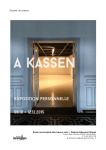
FIG. 1 (s� I L L U M I N A T I N G)
1
User’s Manual
Eastside Projects
Draft five (s� U S I N G)
EXHIBITING
DESCRIBING
NARRATING
DISPLAYING
FOUNDING
CURATING
ACCUMULATING
NOT-FOR-PROFITEERING
ARTIST-CURATING
CONTINUING
BUDGETING
COMMISSIONING
MODIFYING
FUNDING
PROVOKING
TRANSFORMING
OCCUPYING
INTRODUCING
PRODUCING
LAYERING
BELONGING
SEEKING
REPRESENTING
COLLECTING
STAFFING
SLOGANEERING
HOSTING
RETAINING
CONTRIBUTING
INSPIRING
CULTIVATING
DOCUMENTING PRECEDING
ORGANISING
CIRCULATING
REFERRING
COMPLICATING
TIMING
INTERPRETING
ESCAPING
DEMANDING
UPCYCLING
EVALUATING
II
INTEGRATING QUESTIONING DECODING
HAIRDRESSING
COMPLAINING
CONFOUNDING
ANSWERING
WHISTLE-BLOWING
ADJUSTING
ENGAGING
SEQUENCING USING
PARTNERING
SUPPORTING
SPECIFYING
BORROWING
CRITICISING
LINING
COLLABORATING
FACILITATING
ADAPTING
COOPERATING
VISITING
ADDING
RESPONDING
DESIGNING
QUESTIONING
WELCOMING
TYPE-DESIGNING
REFLECTING
OPENING
PRINTING
ILLUMINATING
OPERATING
PROGRAMMING
OVERPRINTING
STAFFING II
PUBLISHING
PUBLICISING
PRIVATISING
Policy-Making
DISTRIBUTING
SELLING
PLACEMAKING
INVESTING
Speaking
ADVERTISING
PLANTING
ECONOMISING
DOG-WHISTLING
COMMUNICATING
LOCALISING
TWEETING
NEIGHBOURING
PATHS
fifth
Organisations do not often provide user’s manuals.
This is the fourth draft user’s manual for Eastside
Projects. It explains what the organisation is
made of, how it was set up, who it is for, how it
can be used and what it can offer. As would be
the case for operating a machine or learning a
subject, a manual may be necessary for the full
use of Eastside Projects. ¶ In this draft, the manual
is structured as an alphabetical compendium
of verbs. Each of these interconnected entries
describes an activity engaged in by Eastside
Projects as an organisation or a process occurring
in the Eastside Projects building. Beneath each
entry is a prompt to the reader to follow one of
multiple narrative paths through the text. ¶ Readers
unfamiliar with Eastside Projects should begin
at D E S C R I B I N G. ¶ Other suggested starting
points: ¶ W E L C O M I N G ¶ E X H I B I T I N G
¶ NARRATING ¶ COMPLICATING
¶ I N T E G R A T I N G.
FIG. 2 (s� W E L C O M I N G)
Matthew Harrison, ‘Willkommen.
Bienvenue. Welcome. C’mon In.’ (2008).
Eastside Projects front door handle.
The entries overprinted in pink
and blue in this fifth draft
manual for Eastside Projects
were composed in response
to the proceedings of ‘Public
Evaluation Event’. This three
day symposium took place at
Eastside Projects during 27 to
29 October 2011. ¶ Staged as a
series of public presentations,
invited contributors (see FIG.
6, p. 24) evaluated three years
of Eastside Projects from
various critical points of view.
Draft four of this manual — on
which this present draft five is
overprinted — was used as a
prompt and reference during
the event. ¶ Corrections and
additions for draft five
1
were formulated during
‘Public Evaluation Event’, and
the overprinted elements now
operate as a layer of critical
commentary on the statements
in draft four. New suggested
starting points are:
¶ DISTRIBUTING ¶ OPERATING
¶ PRODUCING. ¶ For more on this
process begin at EVALUATING.
ACCUMULATING II
Eastside Projects accumulates
a community of artists,
designers, academics,
2 curators and thinkers.
The influence of these
relationships is apparent
in many aspects of the
space, programme, working
structures and thinking of the
organisation.
ADJUSTING
The new material overprinted
in the margins of this fifth
draft manual is arranged
alphabetically. Adjustments to
existing entries appear either
as supplementary entries
in the margins, or as marks
obscuring or altering parts of
the original document. ¶ Turn
to USING.
ACCUMULATING
At the end of each exhibition at Eastside Projects
we build on, recycle and upcycle its remains. In
this way, each exhibition alters the space, and the
space writes and records its own history. Each
new addition responds to and alters the existing
conditions. The gallery accumulates the traces
of its use as part of a learning process. ¶ During
this process, certain artworks have become longterm fixtures of the space. These include works by
artists Susan Collis, Peter Fend, Martino Gamper
(s� C O M M I S S I O N I N G), Matthew Harrison
(s� W E L C O M I N G), Barbara Holub, ISAN,
Heather and Ivan Morison (s� M O D I F Y I N G),
Scott Myles, Jennifer T� (s� P L A C E M A K I N G),
Lawrence Weiner (s� T I M I N G), and Carey
Young. ¶ Turn to C O N T I N U I N G.
Art Review. We also advertise in local listings
magazine Area. ¶ Turn to C O M M U N I C A T I N G.
ADAPTING
S� FIG. 10, pp. 22–23, then turn to A D D I N G.
BELONGING
Eastside is a regeneration area of Birmingham that
has frequently changed its boundaries over the last
ten years. It was established by Birmingham City
Council as a rebranding of the former industrial
heart of the city, meant to reshape the commercial
centre and increase the flow of business and
civic functions. ¶ The name has b�n abandoned
and reclaimed on a number of occasions. Within
current proposals, Eastside Projects is no longer
located within Eastside. ¶ Turn to S T A F F I N G.
ADDING
The following objects were added to the space in
its initial repurposing in 2008. ¶ S� FIG. 5, pp. 7–8,
then turn to D E S I G N I N G.
ADVERTISING
We advertise our events and exhibitions programme
in art magazines such as Frieze, Art Monthly and
ANSWERING
Eastside Projects has developed from
responses to the following questions: ¶ How
do architecture and design support exhibitionmaking? ¶ Can architecture and design be used
as curatorial strategies as part of a gallery
programme? ¶ Can exhibitions reveal the means,
relationships, and underlying ideologies in the
making and representation of space? ¶ Turn to
S E Q U E N C I N G.
ARTIST-CURATING
Positioning a thing/place/message in relation to
another as art. ¶ Turn to C O M M I S S I O N I N G.
3
FIG. 22 (s� B E L O N G I N G)
Nikki Pugh, ‘19,264 Seconds of
Qualitative and Quantitative Data
(Curzon Street, 2010)’ (detail).
Representation of GPS data mapping
changes in the geography of Eastside.
FIG. 23
Three charts showing Eastside
Projects’ total expenditure during
2008–2011.
2008–2009
£129,442
4
2009–2010
£152,337
ACE
BCU
OTHER
PHF
TOTAL
B O R R O W I N G (s� also R E V E R S E - E N G I N E E R I N G)
A section of Mobile Wall System from Vienna
Secession (designed by Adolf Krischanitz in 1986)
was on loan to Eastside Projects during ‘Narrative
Show’ and ‘Painting Show’ (May 2011 to February
2012). The Mobile Wall System was transported
855 miles from Vienna to Birmingham. ¶ The wall
represents a carrier of narrative. ¶ In September
2011 two parts of the wall were relocated to the
Architectural Association in London for ‘Narrative
Show Exposition’. ¶ Turn to C O L L A B O R A T I N G.
B U D G E T I N G (s� also FIG. 23, left)
FIG.3, Eastside Projects Income
2008–2009
2009–2010
2010–2011
£100,000
£102,700
£126,551
£9,000
£12,700
£17,500
£23,319
£24,366
£71,669
—
—
£115,000
£132,319
£139,766
£330,720
ACE = Arts Council England
¶ Turn to F U N D I N G.
BCU = Birmingham City University
PHF = Paul Hamlyn Foundation Breakthrough Fund
CIRCULATING
S� FIG. 20, p. 44, then turn to T I M I N G.
2010–2011
£310,493
COLLABORATING
We believe in working collaboratively towards
change. Collaboration is based on mutual
dependence, it is unpredictable, precarious, fragile.
It is driven by individuals through the desire to
multiply their potential to overcome scarcity or
inequality in a way that they cannot alone. ¶ Turn
to C O O P E R A T I N G.
C O L L ECT I N G
The gallery is a collection. The gallery is an
artwork. ¶ Turn to R E T A I N I N G.
COMMISSIONING
Martino Gamper was commissioned to make
an addition to the gallery as a contribution to
the exhibition ‘Book Show’ (July to September
2010). During the exhibition Gamper’s four-panel
concertina structure in red, grey, yellow and white
laser-cut powder coated st�l was used to display
Katerina Šeda and Radim Peško’s project ‘Der
Geist Von Uhyst’, a book in four editions,
each bound on a different edge. ¶ During
February 2011 the structure was used
to present Book Works publications
during the exhibition ‘Again, A Time
Machine’. It remains in daily use
for storing and displaying books.
¶ Turn to P R O V O K I N G.
FIG. 4 (s� C O M M I S S I O N I N G)
Martino Gamper, ‘Untitled’ (2010).
Hinged book display system, laser cut
powder coated st�l.
COMPLAINING
On Friday 28 October 2011,
as part of ‘Public Evaluation
Event’, An Endless Supply —
a design practice founded
by former Eastside Projects
employees Harry Blackett and
Robin Kirkham — presented
a series of anecdotal
indictments of Eastside
Projects. ¶ The following is
an extract from their scripted
performance. ¶ … ¶ Simon &
Tom Bloor, ‘As Long As It Lasts’
(21 February to 4 April 2009)
¶ Third show in programme
too soon for directors to be
exhibiting their own work? 
Undeclared high pollen count
forces volunteer to leave
5
early. Debilitates him for a
day after allergic reaction. ¶ A
necessary music, unnecessarily
quiet. Where’s VRU? ¶ I’m
still waiting for publication
colophon. ¶ The billboard fell
down. ¶ … ¶ Joanne Tatham
& Tom O’Sullivan, ‘Does
Your Contemplation of the
Situation Fuck with the Flow
of Circulation?’ (4 July to 6
September 2009) ¶ Difficult
major summer show. ¶ A white
tunnel is about as delicate as
a white suit. ¶ Gallery director
should turn his phone off during
public conversation with artists.
¶ Sunday openings aren’t
working, just because you can
doesn’t mean you should, all
time low attendance figures.
¶ Attention artist-led spaces.
You don’t exist if you don’t
have a landline. ¶ Clarification
needed as to volunteers
payment and complimentary
ESP membership. ¶ The
billboard fell down. ¶ … 
‘hobbypopMUSEUM’ (8 May
to 13 June 2010) ¶ Newspaper
now feels like a daily as
opposed to a big thick Sunday.
¶ The most interesting element
of the exhibition was the
install, something completely
closed to the public. ¶ Most
hands off curating to date. 
The billboard fell down. ¶ …
¶ Carey Young, ‘Memento
Park’ (27 November 2010
6 to 29 January 2011)
¶ Delayed installation
becomes performance during
private view. ¶ No support
system for Future Jobs Fund
employees who need it. 
Staff rotation needs to be
staggered to avoid one step
forward, two steps back. 
Specta update late. ¶ I’m still
waiting for Carey Young’s
major monograph. ¶ The
billboard fell down. ¶ … 
‘Narrative Show’ (14 May to 10
September 2011) ¶ Experience
of gallery now predominantly
through the website and
Twitter, being on the outside
communication is a problem.
¶ Sending emails where
COMMUNICATING
We distribute printed matter to other venues
and institutions locally and using postal services
across the UK and internationally. We use online
platforms such as our website, Twitter and
Facebook. ¶ Anyone can join our fr� mailing list to
receive messages from us by email or in print. To
subscribe email [email protected] ¶ Turn
to T W E E T I N G.
COMPLICATING
We exist to respond to the best and most
challenging contemporary art and to put radical
historical models and precedents to good use.
We believe that if the art of today is complex and
demanding then the places that we conceive for
producing and experiencing it should reflect this.
¶ Turn to I N T E R P R E T I N G.
CONFOUNDING
S� FIG. 19, p. 42, then turn to E N G A G I N G.
CONTINUING
“But walls don’t stay as walls, things happen to
them, things are put on them. So why not let
the thing evolve, let it continue, and s� what
happens?” ¶ — Peter Nadin, interviewed by Céline
Condorelli, 2009. ¶ Turn to M O D I F Y I N G.
FIG. 5.1 (s� A D D I N G)
Support Structure, ‘Scaffold as
Declaration of Altered Conditions’ (2008).
Temporary external and internal facades,
scaffold tubing, fixings, boards, timber
hoardings, paint, various electrical fittings
for outdoor lighting.
FIG. 5.2
Support Structure, ‘Functional
Configuration’ (2008).
Gallery entrance: front door, lights,
mobile front desk.
CONTRIBUTING
S� FIG. 6, p. 11. ¶ A list of groups and individuals
who have worked with Eastside Projects. ¶ Turn to
O R G A N I S I N G.
C O O P E R A T I N G (s� also P R E C E D I N G)
Eastide Projects is part of a fragile ecology of arts
organisations in Birmingham. Since 2010 the gallery
has participated in We Are Eastside, a consortium
leading independent arts in the city. The following
text constitutes the We Are Eastside manifesto
and is set in the typeface developed for the project
in 2010 by James Langdon and designed by Radim
Peško. ¶ Turn to R E S P O N D I N G.
FIG. 5.3 (s� A D D I N G)
Support Structure, ‘Functional
Construction: Residency Studio’ (2008).
Stud wall construction, exterior dove
grey and clear corrugated PVC sh�ts,
interior plasterboard, double doors to
common area.
FIG. 5.4
Support Structure, ‘Functional
Construction: Recording Studio’ (2008).
Offset double stud wall construction,
exterior cladding anthracite coloured
MDF, interior plasterboard. Recording
booth, single soundproof door.
FIG. 5.5
Support Structure, ‘Functional
Construction: VRU Office’ (2008).
Stud wall construction, exterior cladding
Pyrok, interior plasterboard. Single door
to kitchen, access to recording studio.
CRITICISING
Crit Club is a series of intensive critical practice
discussions facilitated by ESP staff and guest
practitioners. Crit Club focuses on addressing
text is in image form is bad
practice. This point has been
raised with three separate
current members of staff, an
example of failing to learn
from previous experiences. 
Eastside Projects listens but
it does not learn. ¶ Turn to
ADJUSTING.
CULTIVATING
Eastside Projects is a cultural
organisation, which means we
participate in the formation of
culture. We intend our primary
activity to be cultivating: to
take care, to tend to, and to
preserve. The relationship
between man and his ecology
needs to be cultivated
9
until the universe becomes
fit for human habitation. ¶ Turn
to PRECEDING.
DISTRIBUTING
See FIG. 24, p. 12. One of
three broad terms used during
‘Public Evaluation Event’ to
classify the labour required
to maintain Eastside Projects
(see also PRODUCING and
OPERATING). ¶ A proposition:
distribution is how messages go
out into the world; the actions
that are prompted by sharing
information, knowledge, ideas,
and conditions. ¶ Following
‘Public Evaluation Event’ we
revised the job description
for one of our staff members
to become ‘Gallery Assistant:
Distribution’. In this context,
by distributing we mean: 
Marketing (advertising, web
and other associated elements)
¶ Lectures, talks, events ¶ Extra
Special People programme. 
Turn to SPEAKING.
DOG-WHISTLING
As a contribution to the
exhibition ‘This is the Gallery
and the Gallery is Many Things’
(September to November
2008), Kelly Large instigated
a perverse social ritual in
the gallery. Each morning,
following the opening of the
building, the alarm was
left to sound until a
10 passerby or neighbour
entered the building to
complain. This process forced
our immediate neighbours —
a taxi repair workshop and
a limousine hire company —
to enter the gallery, where
they were prompted to look
around. During a presentation
at ‘Public Evaluation Event’,
Large likened this process
to a dog-whistle, suggesting
that Eastside Projects’ most
receptive audience is remote
— outside Birmingham — and
encouraging us to continue to
foster local relations.
practice development and the long term concerns
of individual members within a group context.
¶ Turn to F A C I L I T A T I N G.
CURATING
Positioning a thing/place/message in relation to
another. ¶ Turn to A R T I S T - C U R A T I N G.
DECODING
S� FIG. 18, p. 42, then turn to C O N F O U N D I N G.
DEMANDING
If previous gallery structures tend to lull you into
passivity then Eastside Projects demands, through
both its programme and the nature of its space,
that you are active. We invite you to project your
own contemplation onto the objects and narratives
presented in the gallery. This process is a prompt for
further work beyond the public space of the gallery
into and onto the public sphere. This should be the
purpose of the gallery. ¶ Turn to D E C O D I N G.
DESCRIBING
Eastside Projects is an exhibition space with many
differences. It is a fr�, public space that is being
imagined and organised by artists. We commission
and present experimental contemporary art
exhibitions, and propose ways in which art may be
useful to society. ¶ Turn to F O U N D I N G.
FIG. 6
List of groups
and individuals
who have worked
with Eastside
Projects.
Gavin Wade
Céline Condorelli
James Langdon
Herbert Bayer
Adrienne Wade
Simon Bloor
Tom Bloor
Ruth Claxton
Liam Gillick
Peter Fend
Andrew Reilly
Heather Morison
Ivan Morison
ISAN
Don Hoo
Elen Bonner
Matt North
Elizabeth Rowe
Fay Khan
Matthew Harrison
Laureana Toledo
Lawrence Weiner
John Butler
Gregory Sporton
Mel Jordan
Yasmeen
Baig-Clifford
Stuart Whipps
Kelscaff
Robert
Hepburn-Scott
Lara Ratnaraja
Henrik Schrat
David Burrows
Simon O’Sullivan
a.a.s.
Zoo Art Fair
Freee
Genie Printing
Chris Poolman
Richard Woods
Keith Wilson
Joseph Hallam
Kelly Large
Chen Shaoxiong
Ben Kinmont
Mithu Sen
Mark Titchner
Bill Drummond
Spartacus
Chetwynd
Marte Eknaes
Marc Bijl
Iain Forsyth
Jane Pollard
Magnus Quaife
Rain Li
Jimmy Fantastik
Barbara Holub
Book Works
Walid Glaied
Helen Grundy
Nicki Lupton
Lisa Dawn Metherill
Joe Welden
David Miller
Apexa Patel
Antonio Roberts
Tim Stock
Harry Blackett
Rachel Clarke
Gene-George Earle
Beth Fisher
Rita Fletcher
Sarah Farmer
Harminder
Singh Judge
Terry Robinson
Nami Patel
Shezad Dawood
Access Local
Asia Alfasi
Hans Christian Dany
Stefan Heidenreich
Karin Kihlberg
Reuben Henry
Plastique
Fantastique
Olav Westphalen
Lee Stowers
Helen Brown
Kate PenningtonWilson
Mark Essen
Dave Rhodes
Jo Masding
Robin Kirkham
Nick Balmforth
Elle Cole
Cliff Collins
Richard Cresswell
Ben Dawson
Gale & Co.
Beatrice Gibson
Flatpack Festival
The Elephant Trust
Barcham Trees
Wysing Arts Centre
Leeds Met Gallery
Suki Bansi
Gill Whitting
Ikon Gallery
Lorne Stott
Nav Haq
Athanasios Argianas
Art & Language
Mel Bochner
Susan Collis
Michael Dean
Tatiana Echeverri
Fernandez
Lothar Hempel
Torsten
Lauschmann
Marko Lulic
David Medalla
Scott Myles
Elizabeth Price
Tommy Støckel
Sue Tompkins
Franz West
Joanne Tatham
Tom O’Sullivan
Supersonic Festival
Alberto Arsie
Robin Aurora
John Taylor
Mithu Sen & friends
Grizedale Arts
Para/Site Art Space
David Osbaldeston
Shedhalle Zurich
Michael Takeo
Magruder
Bedwyr Williams
The Hut Project
Malgras & Naudet
Stan’s Café
Daniel Salomon
Juneau Projects
Stone Canyon
Nocturne
DJ Simpson
Clarke & McDevitt
The Event
Viviana Checchia
Ceri Hand
Pete Cole
Jenny Stokes
Melissa
Kay Hurlbutt
Alex Nikitas
Georgina Barney
Alex Kapila
Naomi Paul
Kate Hattley
Kerry Rousell
Dore Robinson
Sarah Gordon
Amanda Hadingue
Ian Flynn
Katharine Kavanagh
Alice Forrest
Doug Fishbone
Ross McCarry
Minta Peltokangas
Hannah-Kaisa
Taskinen
Leena Rasanen
Bert Ross
Simeon Corless
We Are Eastside
Future Jobs Fund
Angela Maxwell
Chris Brooke
Faiza Rehan
Stefanie Andreou
Anna Marsh
Matthew Scandrett
Andre De Jong
Richard Savine
Madeleine Saether
Matt Foster
Tacita Dean
Hannah James
Albrecht Schäfer
Ines Schaber
Douglas Gordon
Grace Ndiritu
Jeanne van
Heeswijk
Paul Hamlyn
Foundation
Breakthrough
Fund
Common Purpose
Fierce Festival
hobbypop MUSEUM
Sharman & Co.
Emmerson Press
Katy Woods
Michele Mooney
Jennifer Tee
Richard Niessen
Monica Szewczyk
Museum de
Paviljoens
Hamburg
Kunstverein
Christian Jendreiko
Volker Zander
Matthew de
Pulford
Aaron Barefoot
Adam Beckley
Derek Hales
Andrew Hill
James Bayley
Jim Kennedy
David Hately
Jonathan Hackett
Lucky Singh
Andy Bole
Andrew Moscardo
Karl Held
Amin Samman
Hannah Spencer
David Williamson
Manchester
Contemporary
Mart Spruijt
Steenhouwerij
Buitenpost bv
Nina Beier
Marie Lund
Ulises Carrión
Daniel Eatock
Martino Gamper
Nina Katchadourian
Moritz Küng
Richard Venlet
Kelly Large
John Latham
Fraser Muggeridge
Rollo Press
Katerina Šeda
Radim Peško
Yann Sérandour
Simon Starling
Werkplaats
Typografie
Keith Wilson
Åbäke
Vito Acconci
Tauba Auerbach
Bedford Press
Melissa Dubbin
Aaron S. Davidson
Will Holder
Jeremy Jansen
OK-RM
Walter Warton
Carey Young
Jennifer Allen
Paula Cooper
Gallery
mima
Cornerhouse
Ioanna Karavela
Bull Ring Carpets
A. Appleby & Son
The New York Art
Book Fair
William Pope.L
Motto Distribution
Chiara Mingharelli
Naomi Thompson
Barbara Steveni
Graham Dunning
Ruth Ewan
Emma Cocker
David Rowan
Josephine Flynn
S Mark Gubb
Pil and Galia
Kollectiv
Sally O’Reilly
Brian Dillon
Paul Hobson
Zelina Garland
Liz Hawley
Mel Brimfield
Paul Eachus
Becky Shaw
Mac
Friction Arts
Project Pigeon
Companis
Lauren Davies
The Lombard
Method
Vinyl Art Space
Marcus Coates
Lizzie Neilson
Rebecca Bibby
Touseef Saleem
Polly Fibre
Jodii Marsh
William Lambie
Tegid Cartwright
Beth Hogan
Adam Smythe
Alex Bailey
Georgie Parks
Julia Gouin
Samuel Rodgers
Nicola Lowery
Anna Morris
Maurizio Bortolotti
Dan Graham
Lisson Gallery
Building Design
Joe Hollyoak
Nigel Edmondson
Jonathan Monk
Slavs & Tatars
Paul Wade
The Happy Hypocrite
An Endless Supply
Dora García
Nathaniel Mellors
Raimandus
Malašauskas
John Russell
Jemima Stehli
Poster Club
Cally Spooner
Vienna Secession
Andrew Bass
Architectural
Association
Wayne Daly
Zak Kyes
Alison Tarry
Emma Perry
James Kennedy
Jennifer Andrews
Jon Muir
Victoria Sprigg
Lindsey Crabb
Hannah Najjar
Lucy Barrritt
Liam Smyth
Sukhjeven
Chumber
William Davie
Clare
Hollingworth
Continues on
p. 24.
FIG. 24 (s� D I S T R I B U T I N G)
Three charts showing Eastside
Projects’ total expenditure on
distribution during 2008–2011.
2008–2009
£7,743
2009–2010
£11,974
12
2010–2011
£31,493
Economising
“Not all production is
commodity production. Not
all production is production
for financial exchange. Not
all production is determined
by supply and demand.
DESIGNING
Maxim: No default positions. No definitive forms.
¶ Turn to T Y P E - D E S I G N I N G.
D I S P L AY I N G
Eastside Projects questions the concept of a
default display environment. We do not perceive the
gallery as a ‘neutral’ space for staging exhibitions.
The gallery and its spatial configuration must be
reconsidered in response to each new programmatic
situation. ¶ Turn to A C C U M U L A T I N G.
DOCUMENTING
S� FIG. 7, pp. 14–17. Artist Stuart Whipps has
b�n making photographic documentation of
activities at Eastside Projects from a series of
fixed positions since before the gallery opened in
2008. ¶ In May 2011 Whipps installed eight camera
mounting brackets in new fixed positions around
the gallery. Periodically, during ‘Narrative Show’
(May to September 2011), the artist made new
photographs from these positions, recording the
transformations occurring in the space. ¶ Turn to
R E F E R R I N G.
E N G A G I N G (s� also FIG. 29, p. 35)
Extra Special People (ESP) is an associate
membership programme for anyone who would
benefit from engaging with the dynamic,
ambitious, artist-led environment provided by
Eastside Projects. ¶ Turn to S U P P O R T I N G.
ESCAPING
S� FIG. 12, pp. 26–27, then turn to U P C Y C L I N G.
EXHIBITING
We believe in the vitality of the medium of
exhibitions. ¶ Turn to D I S P L A Y I N G.
F A C I L I TA T I N G
ESP members m�t to develop their own and
others’ practice within a regional, national and
international context supported by Eastside
Projects. ¶ Turn to V I S I T I N G.
F O U N D I N G (s� also E C O N O M I S I N G and P R E C E D I N G)
Gavin Wade first conceived and now runs
Eastside Projects with a founding collective
comprising Simon & Tom Bloor, Céline Condorelli,
Ruth Claxton and James Langdon. ¶ We are
a group of individuals who are motivated by
common interests, and work together to achieve
a common objective. Our collective permits us
to share decision-making processes and exercise
political, organisational and social power through
consensus, on an egalitarian basis, not focused
on financial benefit. ¶ Turn to N O T - F O R P R O F I T E E R I N G.
Economics is not the best
method of examining noneconomic production.
Economists give artists bad
advice.” ¶ — The Freee Art
Collective, ‘Economists Are
Wrong! The Warsaw Manifesto
2011’, published for ‘Public
Evaluation Event’.
EVALUATING
See FIG. 25, pp. 14–15.
The apparatus of ‘Public
Evaluation Event’ consisted
of: two projectors, one
displaying supporting visual
material required by the
contributing speakers, the
other displaying live updates
from the Twitter hashtag
13
#PEE11; two stenographers
operating stenotypes; a
monitor displaying live text
output from the stenotypes;
sound and video recording
equipment; webcasting
equipment; printed handouts
presenting charts and other
supporting information (see
FIG. 23, p. 4.); seating, tables
and refreshments. ¶ Turn to
QUESTIONING.II
Exhibiting II
Art is not exhibited. Art exhibits.
FIG. 25.1, 25.2 (s� E V A L U A T I N G)
The apparatus of ‘Public Evaluation Event’.
14
FIG. 7.1, 7.2, 7.3 (s� D O C U M E N T I N G)
Documentation by Stuart Whipps of the
exhibition ‘Narrative Show’ from fixed positions.
15
FIG. 8 (s� T I M I N G)
Lawrence Weiner ‘As long as it lasts’ (2008).
Painted text installed on gallery column from
October 2008 to October 2009.
16
FUNDING
Our exhibition and publication programmes have
received additional project-specific support from
the following funding bodies: ¶ CFAR (BIAD,
Birmingham
City University);
Diversity Arts
Forum; The
Elephant Trust;
The Embassy of
Mexico; Fonds
BKVB; Future
Jobs Fund; Ikon
Gallery; Lisson
Gallery; Mondriaan
Foundation;
TrAIN, London
College of Communication. ¶ Additional core
funding provided by Business Link West Midlands.
¶ Turn to O C C U P Y I N G.
FIG. 7.4, 7.5, 7.6 (s� D O C U M E N T I N G)
Documentation by Stuart Whipps of the
exhibition ‘Narrative Show’ from fixed positions.
HAIRDRESSING
“Let’s build an artworld in the image of the
hairdresser. The hairdresser attacks the way things
are. The hairdresser ploughs through facts with
the not-yet. The hairdresser scours reality with
alternatives. The hairdresser makes systematic
mercenary war on what in fact is. This is why even
the most perfectionist hairdresser is ultimately
on the side of wildness. The hairdresser trims
individualistic and indisciplined growths into
unified planned wholes and truth bearing events.”
¶ — Freee, ‘The Whistle-blower’s Pocket Guide to
Dissent in the Public Sphere Incorporating Let’s
Build and Fuck Globalisation’, 2010. ¶ Turn to
W H I S T L E - B L O W I N G.
HOSTING
During Public Evaluation
Event, FormContent — an
organisation founded in
2007 by Francesco Pedraglio,
Caterina Riva and Pieternel
Vermoortel in east London
— delivered a performance
on the theme of hosting.
The following is an extract
from their script. ¶ As a
statement, Eastside Projects
takes a very particular
conceptual structure that
can be conceived of as a
practice of hosting. ¶ … 
The host welcomes relatives,
friends and acquaintances,
stray dogs, passers‑by, back
packers, and so on.
17
ILLUMINATING
S� FIG. 1, front cover.
¶ Lighting Eastside Projects.
INSPIRING
S� FIG. 14, p. 29, then turn
to C I R C U L A T I N G.
INTEGRATING
Eastside Projects considers
design, organisational
structures and architecture to be an integral part
of its programme. ¶ Turn to A N S W E R I N G.
¶ The invitation is never
persistent, though, yet subtly
delivered. The host likes
interruptions, interferences,
twists and shifts, background
noises. ¶ The host collects and
produces, but never discards.
¶ Occasionally the host enjoys
swapping positions with
the guests, making the role
interchangeable, shifting
subjectivities. The host
doesn’t host, but absorbs.
¶ Turn to CULTIVATING.
INVESTING
Eastside Projects is a good
investment for public and
private stakeholders who are
seeking to use their funds
to generate social value. We
are currently undertaking
a series of Social Return on
Investment (SROI) reports.
SROI is a principles-based
method for measuring
18 extra-financial value
— environmental and
social value not currently
reflected in conventional
financial accounts — relative
to resources invested. It
can be used by any entity
to evaluate impact on
stakeholders, identify ways
to improve performance, and
enhance the performance
of investments. Our first
SROI has been to measure
the impact of our work
with the Future Jobs Fund
(FJF) to employ unemployed
practitioners within our own
organisation and partner
organisations. ¶ Scenario I:
SROI for the state only, based
INTERPRETING
Our mission is thr�fold: ¶ 1) To not compromise
the nature of the artworks we exhibit by offering
unnecessary layers of interpretation, ¶ 2) To
assist artists by providing a rich context within
which they may express the full potential of their
work, and ¶ 3) To support the public to engage
in both interpreting perception and perceiving
interpretation. ¶ Turn to D E M A N D I N G.
INTRODUCING
S� FIG. 9, pp. 20–21. ¶ A list of artists who made
their first Birmingham presentation at Eastside
Projects. ¶ Turn to S E E K I N G.
L AY E R I N G
“The space also acts as a growing archive of its own
production and evolution. There was an interesting
point for me during the installation of Tacita Dean’s
work, ‘Darmstadter Werkblock’ (2007) in ‘Curtain
Show’ (March to April 2010). The artist’s assistant
could not understand why the wall was the way it
was (s� T R A N S F O R M I N G). ¶ It was difficult
to explain how, while being the remainder of an
artwork, it was also part of the gallery and the
existing conditions that we wanted Tacita’s film
to work within. Once it was clear that there was
a congruent relationship betw�n the space and
the subject matter in Tacita’s own film of the
relationship betw�n Joseph Beuys’s work and
the space it existed within, he was happy with it,
and didn’t even want to paint over other areas we
thought could be neatened! ¶ People s�m to n�d
to create a difference betw�n what is considered
artwork and what is not, as if the gallery context
itself was not work and could be ignored. It is
difficult to explain until people come to Eastside
Projects; the space just makes sense when you
are present in it. Perhaps this is because it is so far
from a white cube, and all the layers of the making
of the space are apparent and overlaid, making it
too complex to read from a distance.” ¶ — Céline
Condorelli, in ‘Manifesta Journal #10’. ¶ Turn to
C O L L E C T I N G.
LINING
The interior architecture of Eastside Projects
occupies the building with a thin and fragile layer:
a lining. This temporary, ad-hoc aesthetic reveals
at any moment the layers of activity that have
shaped the conditions of the space. ¶ Turn to
A D A P T I N G.
LOCALISING
In 2011 our str�t sign was designed, fabricated
in powder coated st�l and scr�nprinted
all within 300 yards of the gallery. ¶ Turn to
N E I G H B O U R I N G.
on evaluation of savings
made and income generated
for the state through
investment in FJF employees
at Eastside Projects. 
Headline calculation: every
£1 invested generates a
return of £3.75. ¶ Net saving
for the state is £2.75 for
every £1 invested in Eastside
Projects. ¶ Scenario II: SROI
for multiple stakeholders
impacted by the employment
of FJF practitioners at
Eastside Projects. ¶ Headline
calculation: every £1
invested generates a return
of £7.59. ¶ Net benefit for
our stakeholders and for the
economy of Birmingham
19
is £6.59 for every £1
invested in employment at
Eastside Projects by the
state. ¶ We intend to publish
the detailed calculations of
our completed SROI reports
in ‘This is the Gallery and
the Gallery is Many Things’,
to be published in 2012. 
Neil Powell is assisting with
our SROI Reports. ¶ Turn to
ECONOMISING.
FIG. 9
List of Eastside
Projects
exhibitions.
Artists marked
with a �symbol
were exhibiting
in Birmingham
for the first time.
‘This is the Gallery
and the Gallery is
Many Things’
27 September to
22 November 2008
�Marc Bijl
�Chen Shaoxiong
�Spartacus
Chetwynd
& Marte Eknaes
�Bill Drummond
Jimmy Fantastik
�Peter Fend
Iain Forsyth
& Jane Pollard
Liam Gillick
Joseph Hallam
�Matthew Harrison
�Barbara Holub
�ISAN
�Ben Kinmont
Kelly Large
Heather
& Ivan Morison
�Magnus Quaife
�SCUPA
�Mithu Sen
Support Structure
Mark Titchner
�Laureana Toledo
& Rain Li
Lawrence Weiner
�Henrik Schrat
‘One-Day-Comic’
6 December 2008
to 31 January 2009
�Shezad Dawood
‘Feature:
Architecture’
6 December 2008
to 31 January 2009
Simon & Tom Bloor
‘As long as it lasts’
21 February
to 4 April 2009
‘This is the Gallery and
the Gallery is Many Things’
Henrik Schrat
‘One-Day-Comic’
Shezad Dawood
‘Feature: Architecture’
Simon & Tom Bloor
‘As long as it lasts’
‘Sculpture Show’
Artists’ Films
21 February
to 4 April 2009
�Johanna Billing
�Beatrice Gibson
& Alex Waterman
‘Sculpture Show’
2 May to
13 June 2009
�Athanasios
Argianas
Art & Language
�Mel Bochner
�Susan Collis
�Michael Dean
�Tatiana Echeverri
Fernandez
�Lothar Hempel
�Torsten
Lauschmann
�Marko Lulic
�David Medalla
�Scott Myles
�Elizabeth Price
�Tommy Støckel
�Sue Tompkins
�Franz West
�Joanne Tatham
& Tom O’Sullivan
‘Does your
contemplation
of the situation
fuck with the flow
of circulation’
4 July to
6 September 2009
‘Abstract Cabinet
Show’
26 September to
8 November 2009
Laureana Toledo
& John Taylor
Mithu Sen
Support Structure
�Para/Site Art
Space
Heather
& Ivan Morison
�Magnus Quaife
& David
Osbaldeston
�Shedhalle Zurich
�Michael Takeo
Magruder
�Bedwyr Williams
Grizedale Arts
�The Hut Project
�Malgras & Naudet
Contemporary
Stan’s Cafe
Freee
�Daniel Salomon
Juneau Projects
�Stone Canyon
Nocturne
�DJ Simpson
�Clarke & McDevitt
‘Second Gallery
Programme’
25 September to
6 November 2010
Companis
Freee
Christian Jendreiko
Gene-George Earle
Joanne Masding
Ultra High
Temperature
Doug Fishbone
Elizabeth McAlpine
�hobbypopMUSEUM
‘Raving Gardens’
8 May to
13 June 2010
Joanne Tatham & Tom O’Sullivan
‘Does your contemplation …’
‘Abstract Cabinet Show’
Liam Gillick
‘Two Short Plays’
�Jennifer Tee
‘Local Myths’
25 September to
6 November 2010
hobbypopMUSEUM
‘Raving Gardens’
‘Book Show’
Jennifer Tee
‘Local Myths’
�Carey Young
‘Memento Park’
27 November 2010
to 29 January 2011
Liam Gillick
‘Two Short Plays’
27 November 2009
to 23 January 2010
‘Curtain Show’
13 March to
17 April 2010
Céline Condorelli
Tacita Dean
Douglas Gordon
Barbara Holub
�Hannah James
Grace Ndiritu
Lilly Reich
Erik Satie
�Ines Schaber
Albrecht Schäfer
‘Book Show’
3 July to
4 September 2010
�Nina Beier
& Marie Lund
�Ulises Carrión
�Daniel Eatock
�Martino Gamper
Nina Katchadourian
�Moritz Küng
& Richard Venlet
Kelly Large
�John Latham
Fraser Muggeridge
�Rollo Press
�Katerina Šeda
& Radim Peško
�Yann Sérandour
Simon Starling
�Werkplaats
Typografie
Keith Wilson
‘Curtain Show’
�‘Poster Club’
14 May to
9 July 2011
Laura Aldridge
Anne-Marie
Copestake
Kendall Koppe
Tom O’Sullivan
Nicolas Party
Ciara Phillips
Michael Stumpf
‘Narrative Show’
14 July to
10 September 2011
Helen Brown
Dora García
�Raimundas
Malašauskas
�Nathaniel Mellors
Jonathan Monk
Heather
& Ivan Morison
Sally O’Reilly
Apexa Patel
�John Russell
Henrik Schrat
Cally Spooner
�Jemima Stehli
& Filho da Mãe
Stuart Whipps
Freee
�Poster Club
�William Pope.L
‘Narrative Show’
William Pope.L
‘Child’
‘Painting Show’
William Pope.L
‘Child’
17 September to
5 November 2011
Dan Graham
‘Models and Videos’
26 February to
16 April 2011
Carey Young
‘Memento Park’
‘Again,
A Time Machine’
A Book Works
touring exhibition
26 February to
16 April 2011
�Jonathan Monk
�Slavs and Tatars
�Dora García
The Happy Hypocrite
Dan Graham
‘Models and Videos’
‘Painting Show’
26 November 2011
to 25 February 2012
Fabienne Audéoud
& John Russell
�George Best
�Ashley Bickerton
�Simon Bill
�Joe Bradley
�Brendan Cass
�George Condo
�Cullinan/Richards
�Mark Handforth
Dietmar Lutz
‘Corridor Plateau II’
�Barry McGee
�David Musgrave
Paul Newman
André Niebur
�Rupert Norfolk
Nicolas Party
William Pope.L
Laure Prouvost
�Rob Pruitt
�RH Quaytman
�Imran Qureshi
�Alessandro Raho
�Dan Rees
DJ Simpson
�Tamuna Sirbiladze
�Josh Smith
�Alexis
Marguerite Teplin
�Paul Thek
�Hayley Tompkins
�Richard Tuttle
�Markus Vater
Richard Woods
�Zheng Guogu
‘Corridor Plateau II’
Curated by
Kunstverein
Schwerte
�Michael Bauer
�Christian
Freudenberger
�Markus Karstieß
�Seb Koberstädt
�Andrew Palmer
�Peyman Rahimi
�Detlef Weinrich
FIG. 10.1 (s� A D A P T I N G)
86 Heath Mill Lane, Summer 2008.
FIG. 10.2
86 Heath Mill Lane, Summer 2011.
FIG. 6
List of groups
and individuals
who have worked
with Eastside
Projects
(continued from
p. 11).
Jennie Pardoe
Jenny Andrews
Tobias Hanisch
Siân Conway
Chris Phillips
Jess Holt
Malcolm
Henderson
Alison Watson
Robert Willis
Annabel Wyatt
Andrew
Moscardo-Parker
Simon Bailey
Peter Brown
Siân Davies
David Dunphy
24
Alexis Lucia Ellis
Simon Fox
Gillian Wylde
Dom Allen
Sophie Lisa
Beresford
Stephen Cornford
Petra Cortright
Flat Soufflée
Rob Gawthrop
Christopher
Gladwin
Laura James &
Samuel Rodgers
Maria Minerva
Pete McPartlan
Oneohtrix
Point Never
Alex Peverett
LUX
Eva Weinmayr
S Mark Gubb
Katarzyna
Kosmala
Castlefield Gallery
Aid & Abet
BAZ
Institute for
Boundary
Interactions
Other Asias
Outpost
Tactile Bosch
The Royal
Standard
Judy Stevens
Paul Harfleet
David Raymond
Conroy
Birmingham
Friends of the
Earth
Digbeth Residents
Association
Edible Eastside
James Smith
Tether
Helga Henry
Andy Bass
Wendy Law
Maria Fusco
Hildegarde Darby
Mick Wilson
Sarah Thelwall
Julie Crawshaw
FormContent
Rebecca
Gordon-Nesbitt
Siân Vaughan
Jonathan Vickery
Helen Legg
Liz Hawley
Maria Lind
Andy Field
Public Works
Francis McKee
Gillian Croft
Dierdre Jordan
Queen & Crawford
Matthew
Higginbottom
Matt Foster
Joseph Welden
Matthew Moore
Olly Jones
Avonstar Trading
Jonathan Gordon
Rupert Pane
Sophie von
Hellermann
MODIFYING
For example, the Eastside Projects office is the
artwork ‘Pleasure Island’ by Heather and Ivan
Morison. Originally commissioned for the Wales
Pavilion at the Venice Biennale in 2007, the
structure has b�n modified to function as an office.
New features include a kitchen, desks, shelving
and a larger entrance.
Listed in
pink are
contributors
to ‘Public
Evaluation
Event’.
FIG. 11 (s� M O D I F Y I N G)
Heather & Ivan Morison,
‘Pleasure Island’ (2008).
Sculpture converted to office.
¶ The artists are presenting a series of puppet
shows within ‘Pleasure Island’ as part of the gallery
programme. ¶ In July 2011 the artists created an
annex to ‘Pleasure Island’ as a home for Mighty
Titan, a mynah bird who we are teaching to recite
the phrase ‘Du vergisst Dinge. Du vergisst Dinge.
Du musst.’ ¶ Turn to T R A N S F O R M I N G.
NARRATING
Narrative is a fundamental part of Eastside
Projects’ methodology and practice. Making
explicit the idea of narrative within an exhibition
programme and why it is useful creates a context
in which to assimilate and express ideas. This
‘performance’ is through material, actions and
language. ¶ Language cannot describe a spatial,
cumulative, and phenomenological environment
and all the artworks that exist within these
parameters. At a certain point in narrating an
element of fiction comes into play, which might
be closer to the real experience of the space, and
this becomes a f�dback mechanism, that allows
us to question and interpret the life of the space.
¶ By now Eastside Projects is not just a physical
‘building-up’, joining together and combining of
elements, but also a narrative flowing through the
space. ¶ The world is understood through myths.
All meaning comes to us as stories. We can take
control of these stories to create our own meaning
and form new myths. Fragments of stories and
half-remembered truths form constantly re-written
histories and articulate new and possible futures.
¶ Turn to C U R A T I N G.
N E I G H B O U R I N G (s� also D O G - W H I S T L I N G)
In November 2009 Eastside Projects staged
the launch of ‘Fuck Book’, a new collection of
George Best
Ashley Bickerton
Simon Bill
Joe Bradley
Brendan Cass
George Condo
Cullinan Richards
Mark Handforth
Dietmar Lutz
Hayley Tompkins
Barry McGee
David Musgrave
Paul Newman
André Niebur
Rupert Norfolk
Nicolas Party
Laure Prouvost
Rob Pruitt
RH Quaytman
Imran Qureshi
Alessandro Raho
Dan Rees
Tamuna Sirbiladze
John Russell
Fabienne Audéoud
Josh Smith
Alexis Marguerite
Teplin
Paul Thek
Richard Tuttle
Markus Vater
Richard Woods
Zheng Guogu
Kenny Schachter
Collection
Frank Cohen
Collection
Deutsche Bank
Collection
Rob Chilton
Collection
Montana Cans
Corvi Mora
Gavin Brown’s
Enterprise
Jonathan Viner
Sprueth Magers
White Cube
MOT Gallery
Carlson Gallery
Vilma Gold
The Modern Institute
Kunstverein
Schwerte
Michael Bauer
Christian
Freudenberger
Markus Karstieb
Seb Koberstädt
Andrew Palmer
Peyman Rahimi
Detlef Weinrich
Basith Uddin
Man Chi Pun
Aaron Sloman
Shout
Duncan Marquiss
Vitamin Creative
Space
Yangjiang Group
Paul Harrison
Gavin Delahunty
Beth Bramich
Pendragon
Packaging
25
OPERATING
See FIG. 26, p. 27. One of
three broad terms used
during ‘Public Evaluation
Event’ to classify the labour
required to maintain Eastside
Projects (see also PRODUCING
and DISTRIBUTING). ¶ A
proposition: operation is the
organisation of manpower,
place and resources.
Operation is conditions and
policies. ¶ Following ‘Public
Evaluation Event’ we revised
the job description for one
of our staff members to
become ‘Gallery Assistant:
Operation’. In this context,
by operating we mean:
26 ¶ Building costs (rent,
insurance, health and
safety, maintenance) 
Organisational costs (board
and director meetings,
accountancy, equipment,
administration materials and
general expenses) ¶ Personnel
(staff salaries, temporary
assistants, travel and
transport). ¶ Turn to STAFFING.II
FIG. 12 (s� E S C A P I N G)
Jennifer T�, ‘Transcend
and Escape’ (2010).
Designed by Richard Niessen.
publications by Berlin based artists Declan Clarke
and Paul McDevitt in a Daddy Hummer, the largest
limousine in Europe, loaned by our neighbours VIP
Limousines and parked outside the gallery.
NOT-FOR-PROFITEERING
Eastside Projects is an artist-run space as public
gallery, not for profit company limited by guarant�
registration number 6402007. ¶ We are an Arts
Council England National Portfolio Organisation
in partnership with Birmingham City University,
supported by the Paul Hamlyn Foundation
Breakthrough Fund. ¶ Turn to B U D G E T I N G.
OCCUPYING
Eastside Projects occupies an industrial
building, previously a cabinet makers, in Heath
Mill Lane, Eastside, Birmingham, UK. ¶ Turn to
B E L O N G I N G.
OPENING
Eastside Projects is open Thursdays 12 to 6.30pm,
Fridays and Saturdays 12 to 5pm. (Closed during
installation of exhibitions.) Admission is fr�. ¶ Turn
to P R O G R A M M I N G.
ORGANISING
Eastside Projects s�ks to continuously question
its status as an organisation and respond to the
pressures of becoming an institution. Our ambition
is to incorporate the methodologies of art-making
at all scales and functions of the organisation.
O V E R P R I N T I N G (s� also U P C Y C L I N G )
A series of announcements for the exhibition
‘Narrative Show’ (May to September 2011) were
repeatedly overprinted. The exhibition was
constructed around an evolving narrative ‘scripted’
by artists. 10,000 announcements were printed
in May and have b�n regularly overprinted and
distributed since, simultaneously announcing
and documenting the changing conditions in the
exhibition. ¶ Turn to P U B L I C I S I N G.
FIG. 26 (s� O P E R A T I N G)
Three charts showing Eastside
Projects’ total expenditure on
operation during 2008–2011.
II
PARTNERING
We have partnered with the following organisations
to present exhibitions: Book Works, London;
Cornerhouse, Manchester; Grizedale Arts, Cumbria;
L�ds Met Gallery, L�ds; mima, Middlesbrough;
Museum de Paviljoens, Amsterdam; Wysing Arts
Centre, Cambridge. ¶ Turn to B O R R O W I N G.
PLACEMAKING
In October 2010 Eastside Projects acquired an
eighth column, a new fr�standing pillar joining the
row of seven supporting the roof of the building
along its central axis. The existing columns are
five-metre high cast concrete and st�l supports —
2008–2009
£78,736
27
2009–2010
£106,117
2010–2011
£175,028
Partnering II
To make exhibitions Extra
Special People has partnered
with Tactile Bosch (Cardiff),
Rogue Project Space
(Manchester), The Royal
Standard (Liverpool), Rhys
and Hannah Present (Bristol)
Curfew Tower (NI), Hanson
Street Studios (Glasgow).
elegant expressions of their functional simplicity.
¶ The new column is an artwork by Jennifer T�.
‘Local Myths’ is a thr�-metre high carved carrara
marble totem with regular diagonal notches
along its sides and a peaked apex — an elegant
expression of the artist’s quixotic practice.
Policy-Making
We must look out for sites of
policy void in order to fill
them. ¶ Turn to INVESTING.
PRECEDING
Between the late 1990s and
2007 various artist-led
projects and groups
28 existed in Birmingham.
Lack of access to
affordable, secure, long
term space was a consistent
barrier to development. ¶ Key
projects that helped produce
the conditions which led
to Eastside Projects were 
B16 ¶ The Bond ¶ City Space
¶ Colony ¶ Crowd 6 ¶ The
Foundation ¶ [Insertspace]
¶ Periscope ¶ Self Service
¶ Space Banana ¶ Spectacle
¶ Springhill Institute. ¶ In 2012
access to affordable, secure
long term space for artist-led
and independent initiatives
is no better. ¶ The artist-led
space is not a stop gap. The
artist-led space is a public
PLANTING
In 2009 twenty Silver Birch tr�s from Simon and
Tom Bloor’s Eastside Projects exhibition ‘As long
as it lasts’ were made available to be planted in
the planned Birmingham City Park. Individuals and
organisations are invited to sponsor a tr�. A plaque
with each individual or organisation’s name will be
placed in the civic area with the tr�s, promising a
commitment of growth and regeneration towards
the formation of a new public space. Each donor
also receives an editioned scr�nprint by the artists.
¶ Turn to L O C A L I S I N G.
PRINTING
Our communications emphasise printed matter as
a rich and vital expression of the sensibilities of the
gallery. ¶ Turn to O V E R P R I N T I N G.
FIG. 13 (s� P L A C E M A K I N G)
Jennifer T�, ‘Local Myths’ (2010).
Carrara marble column.
¶ The new column supports no physical aspect of
the gallery, but instead supports the notion of local
myths: with the letters L-O-C-A-L-M-Y-T-H-S
carved proud of the surface in vertical succession
down the length of its cool veined surface. T�’s
totem is a long-term artwork in Eastside Projects,
eventually to be located in a permanent site in the
Eastside area. ¶ Turn to P L A N T I N G.
PROGRAMMING
Each year we programme four to five exhibitions in
our main gallery and four to five exhibitions in our
second gallery. ¶ We also present talks and events
in various contexts on-site and off-site. ¶ S�
E N G A G I N G then turn to P U B L I S H I N G.
PROVOKING
We do not make art for the public. We are the
public that makes art. This is how we are of
benefit to society. ¶ Turn to I N T R O D U C I N G.
good. Imagine a city with many
different Eastside Projects.
PRIVATISING
We are compelled to find
sources of private income.
¶ Turn to POLICY-MAKING.
PRODUCING
See FIG. 27, p. 30. One of
three broad terms used during
‘Public Evaluation Event’
to classify the labour and
resources required to maintain
Eastside Projects (See also
OPERATING and DISTRIBUTING).
¶ A proposition: production is
the actions that lead to making
things, and what is made.
Things might be art,
29
objects, books, messages,
exhibitions, the layers
of making space and its
narrative. ¶ Following ‘Public
Evaluation Event’ we revised
the job description for one
of our staff members to
become ‘Gallery Assistant:
Production’. In this context,
by producing we mean: 
Exhibition conception 
Construction ¶ Installation 
Technical equipment ¶ Artists’
fees and expenses. ¶ Turn to
REPRESENTING.
FIG. 14 (s� P L A N T I N G)
FIG. 27 (s� P R O D U C I N G)
Three charts showing Eastside
Projects’ total expenditure on
production during 2008–2011.
2008–2009
£42,943
30
2009–2010
£34,246
2010–2011
£103,801
PUBLICISING
The billboards on the exterior and interior of
Eastside Projects are the only such display
sites in the city operating outside the control of
the major advertising corporations. ¶ Billboard
hoardings proliferate in regeneration zones in
city centre locations, as developers look to
maximise their income by offering the use of their
sites to communicate to those walking, driving
and traveling by public transport. We declare
our publicness through the use of this platform
to commission and present artworks. ¶ Works
have included Liam Gillick’s ‘The Doors Of The
Administration Building Will Remain Open’ (2008)
and ‘The Whatnots Of The Administration Building
Will Remain Open’ (2008), Mark Titchner’s ‘Cut Us
Don’t Kill Us’ (2010), and Carey Young’s ‘Inventory’
(2007) (remade for Eastside Projects, 2010). ¶ Turn
to P L A C E M A K I N G.
PUBLISHING
Publishing is an important aspect of Eastside
Projects’ activity — a mobile extension of the
gallery space. We produce printed matter, books,
comics and editioned artworks. ¶ We have
represented ourselves at various independent
publishing fairs, including Publish and be Damned
(London, 2009), Spike Island Artists’ Book Fair
(Bristol, 2009), Pa/Per View (London, 2011) and
The New York Art Book Fair (New York, 2010).
¶ Turn to S E L L I N G.
QUESTIONING
We intend Eastside Projects to be a questioning
structure that in turn produces more questions and
also, of course, possible answers. These typically
take the form of exhibitions and curatorial enquiry,
and are pointed towards a set of innate properties
of exhibition making; but also beyond that to the
sh�r elation of organising and discovering objects
and ideas in space and context, for redefining and
transforming essential human tools. This is why we
exist and why you may wish to use us. ¶ Turn to
R E F L E C T I N G.
REFERRING
At least thr� exhibition precedents provide
reference points and an underlying ethos for the
continuing evolution of the gallery as an artwork.
¶ 1) El Lissitzky’s ‘Abstract Cabinet’ (1926/1930),
at the International Kunstausstellung Dresden
and Hannover Museum represents a clear and
radical emergence of the artist-curator generating
a constructed environment for artworks by Piet
Mondrian, Naum Gabo and Lissitzky himself. It
functioned as an artwork in itself, intertwined
with the selection and integration of other artists’
works. ¶ The ‘Abstract Cabinet’ can be used as a
QUESTIONING II
In preparation for ‘Public
Evaluation Event’ Eastside
Projects invited questions from
our audience for consideration
during the event. The following
is a selection of questions
received. ¶ Do exhibitions
stand up against Twitter as a
contemporary form? ¶ What
is the role of small visual
arts organisations within the
wider arts ecology? ¶ How
can intangible assets be
acknowledged as a resource?
¶ How does one measure
cultural value? ¶ Should
contemporary art be funded
by the government? ¶ How
collaborative are you?
31
¶ How do you justify your
hierarchical structure?
¶ Is your budget completely
transparent and public? 
How much time do you spend
branding your organisation as
opposed to challenging it? 
How much time do you spend
thinking about the exhibitions
and supporting artists within
the total amount of time
spent working? ¶ Why do you
stick to the term ‘gallery’
knowing its elitist origin? Is the
idea of a ‘new gallery’ not a
contradiction in terms? ¶ Have
you ever failed? ¶ Do you take
the notion of ‘art’ for granted?
¶ How do we collectively
make the case that artists
model for an art space, a display device designed
specifically to support different directions in a
programme. We might think not of El Lissitzky’s
aesthetics but of his approach to spatial design
as a form of curating, the building and graphics
supporting and producing the curatorial process.
¶ 2) Peter Nadin Gallery (1978–1979), New York,
by Peter Nadin, Christopher d’Arcangelo and Nick
Lawson. A continuous exhibition titled ‘The work
shown in this space is a response to the existing
conditions and/or work previously shown within
the space’. Artists included Daniel Buren, Peter
Fend, Dan Graham, Louise Lawler, Sean Scully and
Lawrence Weiner. The artists directly responded
to each others’ work, developing a cumulative
environment. Two of the artists (Fend and Weiner)
contributed semi-permanent works to the first
exhibition at Eastside Projects.
¶ Nadin et al’s 1978 project began with this
announcement: “We have joined together to
execute functional constructions and to alter or
refurbish existing structures as a means of surviving
in a capitalist economy.” This text forms the
starting point for Eastside Projects’ gallery policy
and strategy. ¶ Just as Nadin et al’s exhibition
started with the ‘empty’ gallery space, ‘This is the
Gallery and the Gallery is Many Things’ (September
to November 2008) — the first exhibition at
Eastside Projects — followed suit in an unravelling
of function, design and execution by the gallery
and the artists.
FIG. 15.2
Peter Nadin Gallery (1978–1979).
FIG. 15.1 (s� R E F E R R I N G)
El Lissitzky, ‘Abstract Cabinet’ (1926/1930).
contribute socially, culturally
and economically? ¶ Do you
think we know your answers?
¶ Are you Eastside till you die?
¶ Is your board permanent?
Can it be changed and/
or added to? ¶ What is your
curatorial policy on Eastside
Projects’ gallery directors
showing their own works?
¶ What is your position on
unpaid labour? ¶ How do you
choose the artists you exhibit?
¶ Do you feel the William
Pope.L show is a success?
¶ Who is the audience? 
Given the elitist tendencies
of the art world, how does
Eastside Projects engage
with the people of
32 Birmingham and align
with social struggles in
these recessionary times? 
Is Eastside Projects aware
of the critical literature
that is developing around
regeneration and what is its
strategy in relation to the
proposed ‘Cultural Quarter’?
¶ Turn to COMPLAINING.
¶ 3) ‘This is the Show and the Show is Many
Things’ (1994), Museum van Hedendaagse Kunst,
Ghent, curated by Bart de Baere. The exhibition
included Honoré d’O, Fabrice Hybert, Louise
Bourgeois, Suchan Kinoshita, Jason Rhoades and
33
REPRESENTING
See FIG. 28, below. ¶ Turn to
HOSTING.
FIG. 28
Chart showing basic demographic
of artists exhibiting at Eastside
Projects 2008–2011.
FIG. 15.3
‘This is the Show and the Show is
Many Things’ (1994).
REVERSE-ENGINEERING
In March 2012, the Mobile
Wall System (see BORROWING)
will be returned to Vienna
Secession. A new long-term
work for Eastside Projects
by Gavin Wade, ‘Mobile Wall
System with 41 Permanent
Pole Positions on a Square
and Triangular Grid (After
Adolf Krischanitz)’ (2011)
was conceived as a
support system first
34 used for ‘Painting
Show’ (November 2011
to February 2012). This
new system was reverseengineered from Krischanitz’s
original by design and
fabrication workshop Queen
& Crawford. Eastside Projects’
system now comprises
¶ 12 powder coated aluminium
support poles, 281.5 x 5 x 5cm
¶ 10 powder coated aluminium
support poles 393.5 x 5 x 5cm
¶ 10 hardwood, plywood and
MDF panels, 281.5 x 197.5 x
5cm ¶ 10 hardwood, plywood
and MDF panels, 113.5 x 197.5
x 5cm ¶ stainless steel bolts
¶ stainless steel and brass
floor inserts.
Luc Tuymans. The artists collectively planned
the exhibition as a joint enterprise, defining
relationships betw�n each other and redefining
functions of the museum space. The title of the first
Eastside Projects exhibition, ‘This is the Gallery and
the Gallery is Many Things’, is adapted from this
exhibition and also functions as a policy and slogan.
R E F L E C T I N G p. 40
S� FIG. 21 (draft five). The text in FIG. 21 has
b�n processed using the online application
Wordcounter. All of the words used in this manual
have b�n sorted and are shown organised by the
frequency of their use. ¶ Our vocabulary reflects
our concerns. ¶ Turn to I L L U M I N A T I N G.
RESPONDING
In April 2011, the We Are Eastside consortium
issued the following statement in response to the
announcement of the restructuring of funding for
the arts through Arts Council England’s National
Portfolio: ¶ “The cuts to the arts through Arts
Council England and Birmingham City Council
represent a shift in the arts ecology of the city.
We Are Eastside has a strong position through a
shared vision of Birmingham as an international
exemplar of ambitious collaboration across art
forms, combined expertise, resources and ideas,
and sustainable independent arts activity. Together
we can inspire the next generation of young people
in our city.” ¶ Turn to Q U E S T I O N I N G.
R E TA I N I N G
We have a developing policy to negotiate with
artists commissioned to make major works for
Eastside Projects to retain a copy of any edition as
a legacy gift to a future Birmingham Museum of
Contemporary Art. ¶ Turn to D O C U M E N T I N G.
SEEKING
Actors ¶ Bass players called John ¶ Collaborators
¶ Extra Special People ¶ Fish tank gravel ¶ Offset
printing press ¶ Questions ¶ Volunt�rs ¶ Turn to
S L O G A N E E R I N G.
SELLING
We operate a small shop at the gallery and
online, selling our publications, selected guest
2008–2009 (39)
35
2009–2010 (63)
2010–2011 (85)
FIG. 29 (s� E N G A G I N G)
Three charts showing growth of
ESP membership.
publications, selected art magazines (such as
Frieze, Art Review, The Happy Hypocrite) and
editioned artworks. ¶ Turn to A D V E R T I S I N G.
SEQUENCING
“A book is a thr�-dimensional structure, a
message sent through a sequential support.”
¶ — Ulises Carrión, ‘Bookworks Revisited’ (1979),
in ‘Book’, EP 10.1. ¶ Turn to S P E C I F Y I N G.
Beth Bramich (Gallery Assistant: Distribution)
STA F F I N G
Eastside Projects is presently staffed by
¶ Alex Bailey (Gallery Assistant) ¶ Ruth Claxton
(Associate Director) ¶ Julia Gouin (Gallery
Assistant) ¶ Fay Khan (Administrator) ¶ Georgie
Park (Gallery Assistant) ¶ Samuel Rodgers (Gallery
Assistant) ¶ Elizabeth Rowe (ESP Coordinator)
¶ Gavin Wade (Director) ¶ Katy Woods (ESP
Coordinator). ¶ Turn to C O N T R I B U T I N G.
Bethan Lewis (Gallery Assistant: Operation)
S U P P O R T I N G (s� also P A R T N E R I N G )
ESP members are offered a range of opportunities
to develop their practice and car�r through critical
group discussions, practical support and guidance,
exhibition and residency opportunities, networking
events and one-to-one support from established
art professionals and ESP staff. ¶ Dialogue betw�n
members is generated and supported through a
w�kly programme of informal and formal events
including seminars, talks, film scr�nings and visits
to exhibitions, events and projects in other UK
cities. ¶ Turn to C R I T I C I S I N G.
II
36
FIG. 16 (s� S E Q U E N C I N G)
SLOGANEERING
Turn to I N S P I R I N G.
Speaking
It is pointed out to us that
we utilise persuasive ways of
speaking. We have dynamic,
sexy, cool, words. We often use
maxims and mottos. We need
more, quieter words perhaps.
¶ Turn to DOG-WHISTLING.
SPECIFYING
Eastside Projects has a large main gallery space,
255 square metres; a second smaller gallery, 70
square metres, (equipped for video projection);
and an office/studio. Birmingham City University’s
Visualisation Research Unit (VRU) offices and
studios for image and sound editing are also onsite. ¶ Turn to L I N I N G.
Joseph Welden
(Gallery Assistant:
Production)
TIMING
S� FIG. 8, p. 15, then turn to E S C A P I N G.
TITLING
24-Hour Show ¶ Anti-Show ¶ Birmingham Show 
Build Show ¶ Collage Show ¶ Collective Show
STAFFING II
In 2010 we employed our first
gallery assistants with the
support of Future Jobs Fund.
These gallery assistant posts
are offered to developing art
practitioners for a period of
one year. ¶ Following ‘Public
Evaluation Event’ we have
changed the job descriptions
we use for our staff to reflect
the constitution of our
activities outlined in the entries
operating, distributing,
producing. These terms have
proved to be a useful means of
organising our work. ¶ Turn to
PRIVATISING.
SUPPORTING II
37
Support is the tragic
double of the prefix. Support
can’t spend time alone with
itself, but is condemned to
existence only in relation to
something else. Prefix usually
means an entity placed before
something else in order to
change its meaning — such
as the ‘in’ which prefixes
inedible — but in the case of
support, a prefix is largely an
entity placed before (beneath
/ behind / below) something
to maintain it in the condition
it is already in. ¶ For example:
¶ In support of structure ¶ In
support of structural trauma
¶ In support of ideology 
In support of the band that
everybody really came to
see ¶ In support of language
¶ In support of someone
else ¶ In support of, erm,
bishops. ¶ — Beatrice Gibson,
‘Definitions of Support’, in
‘Support Structures’ (2009).
38
TRANSFORMING
A square plinth was constructed in MDF to support
artworks by Athanasios Argianas, Michael Dean,
Tatiana Echeverri Fernandez, Lothar Hempel,
Marko Lulic and Franz West during ‘Sculpture
Show’ (May to June 2009).
¶ These materials were upcycled by artists Joanne
Tatham and Tom O’Sullivan to construct an artwork
in the form of a painted tunnel for the exhibition
‘Does your contemplation of the situation fuck with
the flow of circulation?’ (July to September 2009).
FIG. 17.2
Joanne Tatham and Tom O’Sullivan,
‘Does your contemplation of the stituation
fuck with the flow of circulation?’ (2009).
Titling Ii
Furniture Show ¶ Printed Show
¶ Cutaway Show ¶ Game Show
¶ High Speed Show
¶ Inbetween Show ¶ MacGuffin
Show ¶ Mayors Show 
Pavilion Show ¶ Rip-off Show
¶ Shit Show ¶ Support Show
¶ Uber Show.
¶ Comic Show ¶ Common Show ¶ Critical Show 
Curating Show ¶ Display Show ¶ Dymaxion Show
¶ Empty Show ¶ Evaluation Show ¶ Figure Show 
Fill Show ¶ Function Show ¶ Herbert Bayer Show 
House Show ¶ KPI Show ¶ Manual Show ¶ Museum
Show ¶ No Show ¶ Overprint Show ¶ Painting Show
¶ Post Show ¶ Projection Show ¶ Public Show 
Puppet Show ¶ Reality Show ¶ Recession Show 
Riot Show ¶ School Show ¶ Solo Show ¶ Strip Show
¶ Super Show ¶ Title Show ¶ Triangle Show ¶ Type
Show ¶ Universe Show ¶ Upcycle Show ¶ Wall Show
¶ World Show ¶ X-Ray Show.
FIG. 17.1 (s� T R A N S F O R M I N G)
‘Sculpture Show’ (2009).
¶ ‘Abstract Cabinet Show’ (September to
November 2009) upcycled the tunnel in the
following ways. One side was re-covered with
wallpaper by DJ Simpson; one wall was extended
with a service point for a performance; the back
was converted into a commercial gallery art fair
stand; lighting was added to the inside of the
tunnel for an exhibition of hanging instructions
called ‘This Way Up’ curated by Magnus Quaife
and David Osbaldeston; and finally Stan’s Cafe
undertook a five hour performance entitled ‘The
Commentators’ on the roof of the tunnel during a
busy launch night.
FIG. 21
The 100 most
commonly used
words in this
manual, listed
by order of the
frequency of
their appearance.
the392
to275
and239
of217
a174
in145
is121
turn86
eastside85
project82
for74
show61
we61
gallery58
as57
it57
by54
art48
an48
exhibition46
space40
be39
this35
our34
are34
with33
support33
was32
that30
on29
use28
work26
from26
at25
public23
not23
artist22
you22
new22
also20
follow20
evaluation19
artwork18
Birmingham18
do18
organisation18
have17
through17
public16
programme16
event16
city15
within15
how15
their15
were15
what14
wall14
can14
build14
make14
mean14
show13
design13
other13
form13
present13
has13
each13
us13
book12
staff
12
may
12
question12
these12
time12
one12
part11
then11
operate11
print11
all11
display11
way11
point11
structure11
context10
overprint10
or10
manual10
term10
condition10
event10
fund10
see10
invest10
39
¶ For the following exhibition, ‘Two Short Plays’ by
Liam Gillick (November 2009 to January 2010),
the tunnel was dismantled and the painted and
wallpapered panels were used to construct a new
gallery wall as the backdrop for Gillick’s plays.
FIG. 17.4
Liam Gillick, ‘Two Short Plays’ (2009).
¶ In July 2010 the walls were dismantled and the
materials used to construct tables, book cases and
a plan chest for the Eastside Projects office.
FIG. 17.5
‘Book Show’ (2010).
FIG. 17.3
‘Abstract Cabinet Show’ (2009).
TWEETING II
Selected tweets from @eprjcts
#PEE11: ¶ We are the
production of the ‘to be looked
at’ and the ‘to be attended to’.
¶ We are enablers of display. 
We are the history of ‘artistrun space’. ¶ We may not have
a fundamental core principle.
¶ We are exhausting. ¶ We
may advocate for a system
of self regulation through a
peer network. ¶ We engage
in a system of reputation,
profile and currency. ¶ We
are not innocent. ¶ We might
not comply with the existing
conditions of public support.
¶ We are disclosers of
problematics. ¶ We want
40 and need advocates. 
We must be patient. ¶ We
are loyal. ¶ We might not live
forever. ¶ We must reproduce
and become parents. ¶ We
must keep a keen eye on
what we are not looking for.
¶ We must learn from our
experiences. ¶ Make sure we
really do. ¶ We must swap
positions with our guests. 
We must do long term cultural
planning. ¶ We might be ‘anti’
and ‘ante’. ¶ We must develop
art that is unfathomable,
unimaginable. ¶ We cannot
deny that we are connected to
the Birmingham of the 1970s. 
We might be a new knowledge
micro-economy.
¶ Turn to L A Y E R I N G.
TWEETING
Selected tw�ts from @eprjcts: ¶ A book able to
reverse time. ¶ A water damaged Bas Jan Ader
book. ¶ We’re cutting out pictures of Koi Carp
and swimming men for Dan Graham! ¶ Narrative
drives social cohesion. ¶ The hedgehog is a
specialist, the fox a generalist. ¶ Eastside Projects
is a multiplex! ¶ The withdrawal of support for
public good leads to art’s separation from society.
Not the other way around. ¶ Scaffold training
happening right now in the gallery. Some sound
advice and sensible footwear on show. ¶ What is
the opposite of painting? ¶ Art is the dismantling of
reality. ¶ Capitalism is over. ¶ Memorials promote
forgetting. ¶ “When I don’t know what an artist is
doing, that’s when I’m having a good time. That’s
when I’m s�ing art. — Christopher Williams.”
¶ We must be a thinking space.
¶ We must never become a
brand. ¶ We care about the
area we are in and our city.
¶ We are compelled to find
private revenue income. ¶ We
must work hard to protect
ourselves and our partner
organisations for the futures
that we are able to anticipate.
¶ We must punch above our
weight. ¶ Develop provision
for ultra extra special people.
¶ Our graphic design is not
a reflection of the gallery. It
is the gallery. ¶ We must get
some leopard skin pattern into
our design. ¶ We must be an
important node in the
cultural life of our city.
41
¶ We need to be ‘just a
really nice place to hang out’.
¶ Birmingham is a second city
similar to New York. ¶ We are a
structural mechanism of social
order. ¶ We are here to change
power relations. ¶ We must
be multicultural. ¶ We must
continue, and champion, the
idea of thinking in public. ¶ We
must be gardeners. ¶ We must
know when to stop. ¶ We must
tweet things that we believe
in. ¶ We will go to Stockholm in
three years time.
42
TYPE-DESIGNING
In 2010 Eastside Projects invited Radim Peško
to develop a new typeface for the gallery.
The result, Specta, is a typeface designed for
adaptability and specificity. Its first version
comprised an initial collection of letter forms
that are being modified and added to in
response to the changing conditions
of the gallery and the n�ds of
its vocabulary. Condensed,
bold and monospaced versions
are now also in use. The
first Specta type specimen
appears here and constitutes
the entries D E C O D I N G and
C O N F O U N D I N G.
¶ Turn to P R I N T I N G.
FIG. 18 (s� D E C O D I N G)
FIG. 19 (s� C O N F O U N D I N G)
UPCYCLING
Upcycling means speaking in a polyphonous way
¶ Choose upcycling to survive ¶ Upcycling is an
important form of protest ¶ Avoid being a human
resource ¶ Upcycle now, pay never ¶ Take and copy
and paste and change this manifesto ¶ Upcycle this
text ¶ — RELAX (chiarenza & hauser & co.), What
is Wealth? ¶ Turn to H A I R D R E S S I N G.
VISITING
ESP organises regular visits to arts organisations
in other UK cities, providing opportunities for
members to broaden their UK networks and take
part in exchange projects. Recent trips have
visited Glasgow, Nottingham and Bristol.
WELCOMING
S� FIG. 2, p. 1. ¶ The front door handle at Eastside
Projects is an artwork by Matthew Harrison. Titled
‘Willkommen. Bienvenue. Welcome. C’mon In.’
(2008), it is constructed from the following timbers:
¶ African Ebony ¶ African Padauk ¶ American Black
Walnut ¶ American Cherry ¶ Ash ¶ B�ch ¶ Brazilian
Tulipwood ¶ Bubinga ¶ Cuban Mahogany ¶ East
African Pau Rosa ¶ Lacewood ¶ London Plane
¶ Maple ¶ Mopane ¶ Pink Ivory ¶ Purpleheart ¶ Pau
Amarelo ¶ Santiné Bloodwood ¶ Violet Rosewood
¶ Wenge ¶ Zebrano. ¶ Turn to O P E N I N G.
UPCYCLING II
A question from the audience
at ‘Public Evaluation Event’
enquired as to why Eastside
Projects takes so little care
over its choice of envelopes:
routinely our printed matter
is mailed in generic office
envelopes. ¶ In response,
at the suggestion of Fraser
Muggeridge, the 1200
overprinted announcements
for ‘Narrative Show’ (see
overprinting) that remained
at the end of the exhibition
were transformed into bespoke
envelopes. ¶ Announcements
for the exhibitions ‘Painting
Show’ and ‘Corridor Plateau
II’ were subsequently
43
mailed in these envelopes.
The format for these two
new announcements was
determined by the dimensions
of the envelopes that could
economically be made
from the ‘Narrative Show’
announcements.
USING
Following ‘Public Evaluation
Event’ discussion took place
between the six directors of
Eastside Projects about the
implications of the term ‘user’
in the title of this document.
Concerns were raised that
those using the space, in
any capacity, should not be
considered to be passive; and
that Eastside Projects should
not be considered to be a preprogrammed entity in the same
sense as an appliance, or any
other more typical subject of
a user’s manual. ¶ To clarify,
we mean to cast the user in a
self-determinate role.
WHISTLE-BLOWING
“Generating and maintaining a dissenting presence
in the public sphere. Whistle-blowing is a calling
to attention and a call to account for actions in
the public sphere. Whistle-blowing contests public
modes of address, complimenting other forms such
as radical political slogans, disaffected billboard
posters, protesting performances, revolutionary
manifestos and rabble rousing videos. Artist
collective Freee are devising new techniques of
whistle-blowing, techniques that they say we
can all use to halt the flow of ideology.” ¶ Turn to
P A R T N E R I N G.
44
FIG. 20 (s� C I R C U L A T I N G)
Joanne Tatham and Tom O’Sullivan,
‘Does your contemplation of the stituation
fuck with the flow of circulation?’ (2009).
Eastside Projects User’s Manual
Draft Four, October 2011 Draft five, February 2012
ISBN 978-1-906753-29-0
Edited and designed by James Langdon
with Gavin Wade, Céline Condorelli,
Simon & Tom Bloor, Ruth Claxton
14–15
Drawings on cover and pages 1, 5, 7, 8, 22–23, 24,
28, 36 by Walter Warton
Drawing on page 42 by Tom Bloor
Installation photographs by Stuart Whipps
Specta typefaces by Radim Peško
Eastside Projects
86 Heath Mill Lane, Birmingham, B9 4AR, UK
Tel. 0121 771 1778
www.eastsideprojects.org
www.twitter.com/eprjcts
www.facebook.com/eastsideprojects
ENTRIES
ACCUMULATING
ADAPTING ACCUMULATING II
ADJUSTING
ADDING
ADVERTISING
ANSWERING
ARTIST-CURATING
BELONGING
BORROWING
BUDGETING
CIRCULATING
COLLABORATING
COLLECTING
COMMISSIONING
COMMUNICATING
COMPLICATING
CONFOUNDING
CONTINUING
CONTRIBUTING
COOPERATING
CRITICISING
CURATING COMPLAINING
DECODING CULTIVATING
DEMANDING
DESCRIBING
DESIGNING DISTRIBUTING
DOG-WHISTLING
DISPLAYING
DOCUMENTING
Economising
ENGAGING
ESCAPING EVALUATING
II
EXHIBITING Exhibiting FACILITATING
FOUNDING
HOSTING
FUNDING
HAIRDRESSING
ILLUMINATING
INSPIRING INVESTING
INTEGRATING
INTERPRETING
INTRODUCING
LAYERING
LINING
LOCALISING
MODIFYING
NARRATING
NEIGHBOURING
NOT-FORPROFITEERING
OCCUPYING
OPENING OPERATING
ORGANISING
OVERPRINTING
PARTNERING
PLACEMAKING
PLANTING Partnering II
Policy-Making
PRINTING
PROGRAMMING
PROVOKING PRECEDING
PRIVATISING
PUBLICISING PRODUCING
PUBLISHING
QUESTIONING
QUESTIONING II
REFERRING
REFLECTING
RESPONDING REPRESENTING
RETAINING
REVERSESEEKING
ENGINEERING
SELLING
SEQUENCING
SLOGANEERING
SPECIFYING SpeakingII
STAFFING STAFFING
SUPPORTING Ii
SUPPORTING
TIMING
Titling Ii
TITLING
TRANSFORMING
TWEETing Ii
TWEETING
TYPE-DESIGNING
UPCYCLING UPCYCLING II
USING
VISITING
WELCOMING
WHISTLE-BLOWING