1
OPERATING INSTRUCTIONS
A
E D
C
B
OFF
AC
OFF ON
FUEL SELECTOR
FLAME
PUSH WHEN LIGHTING
IMPORTANCE OF LEVELING A
REFRIGERATOR
In an absorption refrigerator system, ammonia is liquefied in the finned condenser coil at the top rear of the
refrigerator. The liquid ammonia then flows into the
evaporator (inside the freezer section) and is exposed
to a circulating flow of hydrogen gas, which causes the
ammonia to evaporate, creating a cold condition in the
freezer.
When starting this refrigerator for the very first time, the
cooling cycle may require up to four hours of running
time before the cooling unit is fully operational.
The tubing in the evaporator section is specifically sloped
to provide a continuous movement of liquid ammonia,
flowing downward by gravity through this section. If the
refrigerator is operated when it is not level and the vehicle is not moving, liquid ammonia will accumulate in
sections of the evaporator tubing. This will slow the circulation of hydrogen and ammonia gas, or in severe
cases, completely block it, resulting in a loss of cooling.
Any time the vehicle is parked for several hours with the
refrigerator operating, the vehicle should be leveled to
prevent this loss of cooling.
The vehicle needs to be leveled only so it is comfortable
to live in (no noticeable sloping of floor or walls).
When the vehicle is moving, the leveling is not critical,
as the rolling and pitching movement of the vehicle will
pass to either side of level, keeping the liquid ammonia
from accumulating in the evaporator tubing.
LP GAS OPERATION
Before starting the refrigerator, check that all the manual
gas valves are in the ON position. DO NOT forget the
manual shutoff valve on the rear of the refrigerator see
FIG. 1.
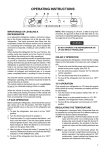
1. To start the refrigerator, turn knob A to the “GAS”
position.
2. Turn the thermostat knob B to position 4.
3. Push the button C in until it reaches the bottom - and
hold, push the button D for the piezo igniter several
times to light the burner. This can be observed on the
flame indicator E. When the flame is on, the red indicator is in the green field, (ON).
4. After the gas is lit keep the button C pressed for 10
seconds. Release the button and check that the RED
indicator is in the GREEN field, (ON).
5. To shut off the refrigerator turn the knob A to “OFF”
position.
THERMOSTAT
NOTE: After changing an LP tank, or after a long shutoff period, the gas line is likely to be filled with air. You
may have to repeat the lighting procedure several times
to purge the air out of the gas lines.
! WARNING
DO NOT OPERATE THE REFRIGERATOR ON
LP GAS WHILST TRAVELLING
230-240 V OPERATION
Before operating the refrigerator, check that the voltage
stated on the data plate is the same as main voltage in
use.
1. Check to be sure that the power cord is properly connected to the power supply. (See FIG. 9).
2. Turn the knob A to position marked “AC” for 230-240
volt AC operation.
3. Turn the thermostat knob B to position 4.
4. To shut off the refrigerator turn the knob A to “OFF”
position.
12 V OPERATION
Only operate your refrigerator on 12V when the engine
of the vehicle is running - otherwise your battery will soon
be discharged.
1. Turn the knob A to the position marked “DC” for 12
volts operation.
2. Note: there is no thermostat function on 12 V DC
operation, the refrigerator works continuously.
3. To shut off the refrigerator turn the knob A to “OFF”
position.
REGULATING THE TEMPERATURE
The refrigerator is equipped with a thermostat that can
be adjusted by turning the knob B to different setting to
maintain the desired cabinet temperature.
At OFF In gas operation, the thermostat closes its main
valve and the burner runs continuously at the
bypass rate, just enough to keep the burner lit.
In electrical operation, the contacts in the thermostat are open and the heating elements are
off.
At MAX In gas operation, the thermostat allows the
burner to remain on high flame continuously. In
electric operation, the heating element is “ON”
continuously. Lowest cabinet and freezer temperatures are obtained at this setting.
7
The thermostat can be adjusted between “MAX” and
“OFF” to obtain the desired cabinet temperature.
The closer the knob is to “MAX” - the colder the cabinet
temperature. The closer the knob is to “OFF” - the warmer
the cabinet temperature.
When the thermostat reaches the set temperature, it will
cut the burner back to bypass or, in electric operation,
(230-240 V AC) shut off the heating element.
The setting of the thermostat is not critical, but we recommend it be adjust to maintain a dry frost on the cooling fins. Adjust the thermostat knob closer to “MAX” when
the outside temperature becomes warm.
HOW TO USE THE REFRIGERATOR
FOOD STORAGE COMPARTMENT
The food storage compartment is completely closed and
unventilated, which is necessary to maintain the required
low temperature for food storage. Consequently, foods
having a strong odor or those that absorb odors easily
should be covered. Vegetables, salads etc. should be
covered to retain their crispness. The coldest positions
in the refrigerator are under the cooling fins and at the
bottom of the refrigerator. The warmer areas are on the
upper door shelves. This should be considered when
placing different types of food in the refrigerator.
FROZEN FOOD STORAGE
COMPARTMENT
Quick frozen soft fruits and ice cream should be placed
in the coldest part of the compartment, which is at the
bottom of the aluminum liner. Frozen vegetables, may
be stored in any part of the compartment.
This compartment is not designed for deep or quick freezing of food. Meat or fish, whether raw or prepared, can
be stored in the frozen food storage compartment provided they are precooled first in the refrigerator. They
can be stored about three times longer in the frozen food
compartment as compared to the fresh food compartment. To prevent food from drying out, keep it in covered dishes, containers, plastic bags or wrapped in aluminium foil.
Ice cubes can be made in the freezer compartment.
For faster ice making, the trays should be placed in direct contact with the bottom of the freezer compartment.
Ice making is accelerated if the thermostat knob B is
turned to the “MAX” setting.
It is a good idea to do this a few hours before the anticipated need for ice, but be sure to turn the thermostat
back to the normal setting when the ice is formed.
Food in the lower compartment may be frozen if the thermostat is left on “MAX”.
DEFROSTING
Shut off the refrigerator by turning the knob A to “OFF”
position. Empty the refrigerator, leaving the drip tray under the finned evaporator, and the cabinet and freezer
doors open. Defrosting time can be reduced by filling
the ice trays with hot water and placing them in the freezer
compartment.
8
NOTE: Defrost water runs from the drip tray to a receptacle at the rear of the refrigerator where it normally
evaporates. (See FIG. 1).
With a lot of defrost water as a result of heavy frosts
build up on the cooling fins, move the plastic drain tube
into a water tight bucket or container, (access through
louvered service panel on the outside of the vehicle).
When all frost has melted, wipe up the excess moisture
and empty the accumulated water from the bucket. Replace the drain tube to its original position.
Dry the interior of the refrigerator with a clean cloth.
Replace all food and set the thermostat to “MAX” for a
few hours, then reset the thermostat to its normal position.
! CAUTION
DO NOT use a hot air blower. Permanent damage
could result from warping the metal or plastic parts.
DO NOT use a knife or an ice pick, or other sharp
tools to remove frost from the freezer compartment.
They can create a leak in the ammonia system.
CLEANING THE REFRIGERATOR
Cleaning the refrigerator is usually done after it is defrosted or put into storage. To clean the interior liner of
the refrigerator, use lukewarm weak soda solution. Use
only warm water to clean the finned evaporator, gasket,
ice tray and shelves.
NEVER use strong chemicals or abrasives to clean
these parts, as the protective surfaces will be damaged. It is important to always keep the refrigerator
clean.
SHUT- OFF (STORAGE PROCEDURE)
To shut off the refrigerator, turn the knob A to “OFF”
position. If the refrigerator will not be in operation for a
period of weeks, it should be emptied, defrosted, cleaned
and the doors left ajar. The ice trays should also be dried
and kept outside the cabinet.
! WARNING
DO NOT store explosive substances in the refrigerator, such as cigarette lighter gas, gasoline, ether
or the like.
NOTE: Sodium chromate is used for corrosion protection (less than 2 weight % of the coolant).
Heaters
Cover,
Terminal block
Flue baffle
12 Volts
DC
12 Volts
DC
Heater
Reigniter
Protection
cover
Evaporation Tray
Screw for protection cover
12 volt terminal block
Inlet fitting
FIG. 1
Burner jet
Manual gas
shutoff valve
Flexible cord
Drain water hose
Refrigerator control panel
A
E
D
C
B
OFF
AC
OFF ON
FUEL SELECTOR
FLAME
PUSH WHEN LIGHTING
THERMOSTAT
LEGEND
A. ON/OFF, Fuel Selector Switch
B. Thermostat Knob, Gas/Electric
C. Flame Failure Safety Valve
Push-button
D. Piezo Igniter
E. Flame Indicator
FIG. 2
2