1
Bulletin 30-05 — Page 8
The plenum size, using internal dimensions, should be
based on the maximum airflow shown in Table 1. For simplicity and to take maximum advantage of static regain, do
not downsize the plenum except where needed for tight
spaces. In some cases, when the plenum equivalent length
is over 150 feet (45 m), the plenum should be oversized.
For example, the M2430 with 550 CFM (259 L/s) will use
a 7-inch (18 cm) ID plenum per Table 1. However, if the
equivalent plenum length is over 150 feet (45 m), it should
be upsized to 9-inch (23 cm) ID.
Plenum Installation
Fiberglass Plenum. Before beginning plenum installation
it will save on fabrication of plenum joints if the layout is
consulted as to the location of tees and elbows in relation
to the air handler. Proper planning at the outset as to the
match-up of these joints can save on having to fabricate
ship-lap joints when the standard 4-foot plenum lengths are
cut to shorter lengths.
Where fiberglass is used, the plenum, tees, and elbows are
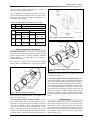
supplied with pre-fabricated male and female ship-lap*
joints on each end. Tees and elbows are supplied with male
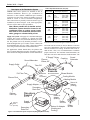
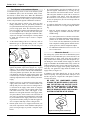
and female ends as shown in Figure 8.
Female
Male
Figure 8. Tee and Elbow End Configurations
Once the duct sections are fitted together, use either UL181A-H heat seal tape (UL-181A-P pressure sensitive tape
or UL-181A-M duct mastic may also be used) to connect
the sections together. The UL-181A-H is a heat seal tape
that requires the use of a hot iron. Done properly, it is the
most secure joining method. However, it is difficult sometimes to maneuver the iron when you are in tight spaces.
Therefore, as alternative, use the UL-181A-P tape or UL181A-M duct mastic to join the sections. Be sure to use a
small squeegee to apply pressure to the tape. And always
be sure that external surface of the duct is clean. For more
information, refer to the manufacturer of tape, regarding
shelf life, surface preparation and application temperatures
for these closure systems. Continue to assemble plenum
making sure ship-lap joints are snug. Tape each joint securely with UL181A-H heat activated tape (available as
UPC-17). For square plenum use a short 4-inch (102 mm)
piece of tape on each side of the ship-lap joint taping
*
The pre-fabricated male and female ends on the plenum and plenum
fittings are most commonly called ship-lap joints. Tools are available to
facilitate fabrication of the male and female ship-lap joints on the ends of
the plenum. Alternatively, a utility knife can be used to form ends. Ends
properly cut should fit snugly.
© Copyright 2007 Unico, Inc.
across the flap. Be sure to pull flap tight before ironing.
Once all four sides are secured, tape completely around the
duct. As each length of plenum is added be sure it is properly supported so no strain is put on the joints. The square
tees and elbows have tape flaps on all four sides of each
male ship-lap joint. The end cap has extra foil facing that
extends on each side to serve as a tape flap. To facilitate
folding the flap over each side of the plenum the end cap
flap can be cut at each corner.
Be sure tape is centered over the joint and provide an overlap of at least 2 inches (51 mm) at the end of the tape before ironing. Be sure surface of plenum is clean and free of
dust or dirt.
Metal Plenum. All joints, including the longitudinal snaplock seam in the metal pipe and the tee and elbow joints
must be sealed with UL181A-P tape to prevent any air
leakage. The complete metal plenum system should be
insulated with a minimum of 1.5 inches (38 mm) of fiberglass insulation with vapor barrier. Where higher R factors
are desired, the thickness of the insulation can be increased.
Insert male crimped ends into the un-crimped female end.
Use a minimum of three self-tapping sheet metal screws to
mechanically secure each plenum joint, including the one
at the plenum adapter. Tape each joint using UL-181A-P
pressure sensitive tape or use UL-181A-M duct mastic. Be
sure that all longitudinal seams of the metal pipe are also
sealed with tape. It is also helpful to locate the longitudinal
seam at one location such as at the top of the pipe as once
the pipe is insulated the longitudinal seam is to be avoided
for cutting holes for the attachment of the plenum takeoffs.
Insulate the bare metal with a minimum of 1-1/2 inches (38
mm) of fiberglass insulation with vapor barrier and tape
securely in place. Use either an aluminum foil faced fiberglass insulation blanket or a silver insulation sleeve. Tape
all insulation seams with UL-181A-P or UL-181B-FX
tape. Be careful not to compress the insulation while wrapping it around the duct or while taping the seams.
When using metal plenum, be sure that the elbows have a
generous radius and the tees are the full flow design. All
joints in tees and elbows must be sealed with UL181A-P
tape before insulating. Never use an elbow as the first fitting off the air handler; always use a least 24 inches (61
cm) of straight duct before the elbow and use large radius
elbow. If a tee is not used, maintain the maximum duct size
whenever possible. Reduce the duct size only if the plenum
equivalent length is less than 150 feet (46 m) and the airflow is below the maximum allowable in Table 1.
Accidental punctures or tears in the plenum facing should
be repaired to minimize leakage and provide a neat appearance. If the damaged area is small repair it with the same
tape as used for sealing the plenum joints or vapor barrier.
Where large areas of the facing have been damaged in fiberglass duct remove the section of damaged duct and replace with new duct, using ship-lap joints at both ends.