1
15621_SP_WSLawns_Conc_32oz_F.ai
Date
8.27.13 PT
Output Size
100%
Neck
Sticker
CMYK
PMS 348
PMS 3005
PMS 374
Line K
Yelloqw
Magenta
Black
as
listed
®
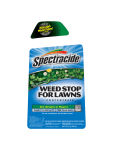
WEED STOP
®
FOR LAWNS
C O N C E N T R A T E
Herbicida concentrado para céspedes
See Results
In Hours
Kills Weed
Roots
plantain
dandelion
clover
henbit
Treats Up To 16,000 Sq Ft
17-14948
File Name
For use on Northern and Southern Lawns
Active Ingredients:
*2,4-D, dimethylamine salt...............7.59%
**Mecoprop-p, dimethylamine salt......1.83%
‡
Dicamba, dimethylamine salt ...........0.84%
Other Ingredients ........................ 89.74%
* 0.540 lb 2,4-D acid equivalent per gallon or 6.30%.
** 0.129 lb Mecoprop-p acid equivalent per gallon or 1.51%.
‡
0.059 lb Dicamba acid equivalent per gallon or 0.69%.
Contains the single isomer form of Mecoprop-p.
KEEP OUT OF REACH OF CHILDREN MANTÉNGASE FUERA DEL ALCANCE DE LOS NIÑOS
NOTE: DO NOT USE ON
TM
FLORATAM VARIETY OF
MIX WITH
ST. AUGUSTINEGRASS
IN FLORIDA.
WATER
†
For terms of guarantee, see back panel.
back booklet for additional
el folleto en la parte posterior para
CAUTION Seeprecautionary
PRECAUCION Consulte
statements.
conocer las declaraciones preventivas adicionales. Net 32 fl oz (1 qt / 946 mL)
File Name
15621_SP_WSLawns_Conc_32oz_B.ai
CMYK
Date
8.27.13 PT
CUÁNDO USAR
1. PRIMAVERA: La mejor época para tratar las malezas es cuando son pequeñas y están
creciendo.
2. OTOÑO: Muchas malezas problemáticas germinan en el otoño y un tratamiento en ese
momento eliminará muchas de las malezas del próximo año.
CUÁNTO USAR
TRATAMIENTO LOCALIZADO
Para lograr un mejor control, si rocía zonas pequeñas o malezas individuales, use un rociador
a presión. No utilice un rociador con aplicador tipo manguera. Mezcle como se indica en la
tabla siguiente. Agite bien antes de rociar. Asegúrese de mojar cada maleza.
TODO EL CÉSPED
ROCIADORES A PRESIÓN
Mida en el tanque rociador la cantidad de concentrado que indica la tabla siguiente y diluya
con 1 galón de agua. Cierre el tanque rociador y agite bien antes de rociar. Para tratar 250 pies
cuadrados utilice un tipo de rocío que descargue gotas pequeñas pero que no forme niebla.
Cantidad necesaria de concentrado en 1 galón de agua para tratar
250 pies cuadrados de césped (Tratamiento localizado o todo el césped)
Tipo de césped
Cantidad de concentrado
San Agustín*, Bahía, Ciempiés
1/2 onz. líq. (1 cda. sopera)
Césped Bermuda, Agrostis
2/3 onz. líq. (4 cdtas.)
Pasto azul, Festuca, Rye, Zoysia
1 onz. líq. (2 cdas. soperas)
*NO LO USE EN LA VARIEDAD ‘FLORATAM’ DEL PASTO SAN AGUSTÍN EN FLORIDA.
ROCIADORES CON APLICADOR TIPO MANGUERA
ROCIADORES (CON SELECTOR) “SOLO PARA CONCENTRADO”
1. Utilizando la tabla siguiente, determine la cantidad de concentrado que se debe aplicar cada
250 pies cuadrados de césped.
2. Llene la jarra del rociador con la cantidad de concentrado adecuada para cubrir la zona a
ser tratada. No agregue agua al rociador.
3. Fije el selector del rociador en la posición de ajuste indicada en la tabla siguiente.
4. Conecte el rociador a la manguera. Extienda la manguera hasta el lugar a tratar que se
encuentre más alejado y retroceda hacia el grifo mientras lo aplica de modo de no caminar
sobre las zonas tratadas. Aplique uniformemente al césped.
WEEDS CONTROLLED / MALEZAS CONTROLADAS:
BROADLEAF WEEDS / MALEZAS DE HOJA ANCHA:
• Chicory
• Cinquefoil
• Clover, crimson
• Clover, hop
• Clover, red
• Clover, strawberry
• Clover, sweet
• Clover, white
• Cockle
• Cocklebur
• Common mullein
• Cranesbill
• Creeping Jenny
(Creeping Charlie)
• Cudweed
• Curly dock
• Daisy, English
• Daisy fleabane
• Daisy, oxeye
• Dandelion
• Deadnettle
• Dichondra
• Dogbane
• Dogfennel
• Dollarweed
• Elderberry
• English daisy
• False dandelion
• Falseflax
• False sunflower
• Fiddleneck
• Filaree
• Fleabane
• Florida pusley
• Frenchweed
• Galinsoga
• Goathead
• Goldenrod
• Ground ivy
• Gumweed
• Hairy fleabane
• Hawkweed
• Healall
• Heartleaf drymary
• Heath aster
• Hedge bindweed
• Hedge mustard
• Hemp
• Henbit
• Hoary cress
• Hoary plantain
• Hoary vervain
• Horsenettle
• Jimsonweed
• Knawel
• Knotweed
• Kochia
• Lambsquarters
• Lespedeza
• Mallow
• Matchweed
• Mexicanweed
• Milk vetch
• Morningglory
• Mouseear hawkweed
• Mugwort
• Musk thistle
• Mustard
• Narrowleaf plantain
• Narrowleaf vetch
• Nettle
• Orange hawkweed
• Oriental cocklebur
• Oxalis
• Parsley-piert
• Parsnip
• Pearlwort
• Pennycress
• Pennywort
• Peppergrass
• Pepperweed
• Pigweed
• Pineywoods
bedstraw
• Plains coreopsis
(tickseed)
• Plantain
• Poison ivy
• Poison oak
• Pokeweed
• Poorjoe
• Prairie sunflower
• Prickly lettuce
• Prickly sida
• Prostrate knotweed
• Prostrate pigweed
• Prostrate spurge
• Prostrate vervain
• Puncturevine
• Purslane, common
• Ragweed
• Red sorrel
• Redroot pigweed
• Redstem filaree
• Rough cinquefoil
• Rough fleabane
• Russian pigweed
• Russian thistle
• Scarlet pimpernel
• Scotch thistle
• Sheep sorrel
• Shepherdspurse
• Slender plantain
• Smallflower
galinsoga
• Smooth dock
• Smooth pigweed
• Soliva
• Sorrel
• Sowthistle
• Spanishneedles
• Speedwell
• Spiny amaranth
• Spiny cocklebur
• Spiny sowthistle
• Spotted catsear
• Spotted spurge
• Spurweed
• Stinging nettle
• Strawberry, India
mock
• Tall nettle
• Tall vervain
• Tansy ragwort
• Tansy mustard
• Tanweed
• Thistle
• Trailing crownvetch
• Tumble mustard
• Tumble pigweed
• Velvetleaf
• Venice mallow
• Virginia buttonweed
• Virginia creeper
• Virginia pepperweed
• Water pennywort
• Wavyleaf bullthistle
• Western clematis
• Western salsify
• White mustard
• Wild aster
• Wild buckwheat
• Wild carrot
• Wild four-o’clock
• Wild garlic
• Wild geranium
• Wild lettuce
• Wild marigold
• Wild mustard
• Wild onion
• Wild parsnip
• Wild radish
• Wild rape
• Wild strawberry
• Wild sweet potato
• Wild vetch
• Woodsorrel
• Woolly croton
• Woolly
morningglory
• Woolly plantain
• Wormseed
• Yarrow
• Yellow rocket
• Yellowflower
pepperweed
and other
broadleaf
weeds
READ ENTIRE LABEL BEFORE USE.
DIRECTIONS FOR USE
It is a violation of Federal law to use this product in a manner inconsistent with its labeling.
SHAKE WELL BEFORE USING.
STOP
100%
PMS 348
Precauciones y restricciones:
No aplique este producto de modo que entre en contacto con trabajadores ni personas, ya
sea directamente o por arrastre. Solo las personas que apliquen este producto con
protección pueden permanecer en el lugar durante la aplicación.
No use este producto en ni cerca de plantas deseables, incluyendo dentro de la franja de
goteo de las raíces de árboles y arbustos deseables, ya que pueden sufrir daños. La
cantidad máxima de aplicaciones al voleo por lugar se limita a dos por año con un mínimo
de 30 días entre aplicaciones.
CÁLCULOS DE MEDICIÓN
Calcule los pies cuadrados multiplicando la longitud por el ancho. 1 onz. líq. = 2 cdas. soperas
(6 cdtas.); 2 onz. líq. = 4 cdas. soperas; 4 onz. líq. = ½ taza; 8 onz. líq. = 1 taza;
16 onz. líq. = 1 pinta; 32 onz. líq. = 1 cuarto de galón
• Annual yellow
sweetclover
• Aster
• Austrian fieldcress
• Bedstraw
• Beggarticks
• Betony, Florida
• Bindweed, field
• Bird vetch
• Bitter wintercress
• Bittercress, hairy
• Bitterweed
• Black-eyed Susan
• Black medic
• Black mustard
• Blackseed plantain
• Blessed thistle
• Bloodflower
milkweed
• Blue lettuce
• Blue vervain
• Bracted plantain
• Brassbuttons
• Bristly oxtongue
• Broadleaf dock
• Broadleaf plantain
• Broomweed
• Buckhorn
• Buckhorn plantain
• Bulbous buttercup
• Bull thistle
• Bullnettle
• Burclover
• Burdock
• Burning nettle
• Burweed
• Buttercup
• Buttonweed
• Canada thistle
• Carolina geranium
• Carpetweed
• Catchweed bedstraw
• Catnip
• Catsear
• Chickweed, common
• Chickweed, mouseear
Output Size
Do not enter or allow entry until sprays have dried.
Ajuste del selector
Área tratada
Tipo de césped
Onzas en el rociador
1/2 onz. líq.
250 pies2
San Agustín*, Bahía,
1/2 onz. líq.
2
Ciempiés
2 onz. líq.
1,000 pies
2
2/3 onz. líq.
250
pies
Césped Bermuda,
2/3 onz. líq.
Agrostis
2 2/3 onz. líq.
1,000 pies2
1 onz. líq.
250 pies2
Pasto azul, Rye, Festuca,
1 onz. líq.
Zoysia
4 onz. líq.
1,000 pies2
*NO LO USE EN LA VARIEDAD ‘FLORATAM’ DEL PASTO SAN AGUSTÍN EN FLORIDA.
EJEMPLO: Para tratar 1,000 pies cuadrados de césped Festuca, agregue 4 onz. líq. de
concentrado al rociador, con el selector en la posición de 1 onz. líq. Para más detalles sobre el
uso apropiado de su rociador con selector, revise las indicaciones que recibió al comprarlo.
ROCIADORES “PARA CONCENTRADO MÁS AGUA”
Para rociadores que requieren agregar agua junto al concentrado antes de la aplicación:
1. Utilizando la tabla siguiente, determine la cantidad de concentrado necesaria para tratar
250 pies cuadrados de césped.
2. Vierta el concentrado dentro de la jarra del rociador hasta el nivel necesario de “onza
líquida.”
3. Después agregue la cantidad apropiada de agua hasta el nivel de “galones.” Vuelva a poner
la tapa del rociador en la jarra y agite bien antes de rociar.
4. Conecte el rociador a la manguera. Extienda la manguera hasta el lugar a tratar que se
encuentre más alejado y retroceda hacia el grifo mientras lo aplica de modo de no caminar
sobre las zonas tratadas. Aplique uniformemente sobre el césped.
Pies2
a tratar
250
Onzas de concentrado a usar para:
Pasto azul,
Césped
San Agustín*,
Bahía, Ciempiés
Festuca, Rye,
Bermuda,
Zoysia
Agrostis
1/2
2/3
1
Galones
de
agua
1
1,000
2
2 2/3
4
4
5,000
10
13 1/3
20
20
32
8,000
32
16
21 1/3
*NO LO USE EN LA VARIEDAD ‘FLORATAM’ DEL PASTO SAN AGUSTÍN EN FLORIDA.
EJEMPLO: Para tratar 1,000 pies cuadrados de Festuca, vierta el concentrado hasta la marca
de 4 onz. líq. y agregue agua hasta la marca de 4 galones. Para más detalles sobre el uso
apropiado de su rociador con selector, revise las indicaciones que recibió al comprarlo.
CONSEJOS SOBRE EL USO
• Para obtener mejores resultados, corte el césped antes de tratar las malezas.
• No trate las malezas cuando la temperatura del aire sea superior a 85°F porque puede
dañar el pasto.
• No riegue dentro de las seis horas de efectuado el tratamiento. Si llueve dentro de las seis
horas de la aplicación, el control de malezas puede ser deficiente.
• Para céspedes nuevos, trate dentro de las 24 horas después de la siembra. En
céspedes establecidos, espere tres semanas después del tratamiento antes de volver a
sembrar. Cuando el nuevo césped comience a crecer, espere a que alcance una altura de 2
pulgadas antes de aplicar el tratamiento. Para céspedes nuevos, aplique según las
instrucciones si hay malezas.
Precautions and Restrictions:
Do not apply this product in a way that will contact workers or other persons either directly
or through drift. Only protected handlers may be in the area during application.
Do not use this product on or near desirable plants, including within the dripline of the
roots of desirable trees and shrubs, since injury may result. The maximum number of
broadcast applications per treatment site is two per year with a minimum of 30 days
between applications.
MEASUREMENT CALCULATIONS
Calculate square feet by multiplying length by width. 1 fl oz = 2 Tbsp (6 tsp); 2 fl oz = 4 Tbsp;
4 fl oz = 1/2 cup; 8 fl oz = 1 cup; 16 fl oz = 1 pint; 32 fl oz = 1 qt
WHEN TO USE
1. SPRING: The best time to treat weeds is when they are small and growing.
2. FALL: Many problem weeds germinate in the fall, and treatment then will eliminate many
of next year’s weeds.
• No permita que el rocío llegue a las hortalizas o las plantas ornamentales puesto que puede
provocarles daños. No rocíe alrededor de las raíces de árboles y plantas ornamentales. El
trébol resultará dañado si se rocía.
• Cuando utilice un rociador con aplicador tipo manguera o un rociador a presión, evite rocíos
demasiado finos porque pueden ser arrastrados y dañar otras plantas.
• Si algunas malezas resistentes no mueren en el plazo de tres semanas, repita el
tratamiento. No es necesaria una aplicación al voleo. Siga las instrucciones para el
tratamiento localizado.
• El uso de este producto cuando las temperaturas del aire son inferiores a los 60ºF, puede
resultar en un control de las malezas más lento.
INSTRUCCIONES PARA RELLENAR
Para rellenar el herbicida para céspedes de Spectracide® Weed Stop®: Vierta 10 onz. líq.
de este producto en una botella vacía y diluya en 1 gal. de agua. Vea las instrucciones
completas en la etiqueta del herbicida para céspedes de Spectracide Weed Stop.
Si entra en contacto con los ojos: Mantenga los ojos abiertos y enjuague con agua lentamente, con cuidado,
durante 15 a 20 minutos. Si hay lentes de contacto, retírelos después de los primeros 5 minutos, luego continúe
enjuagando los ojos. Llame a un centro de control de envenenamientos o a un médico para recibir instrucciones
de tratamiento.
Si entra en contacto con la piel o la ropa: Quítese la ropa contaminada. Lave inmediatamente la piel con
abundante agua durante 15 a 20 minutos. Llame a un centro de control de envenenamientos o a un médico
para recibir instrucciones de tratamiento.
Si se ingiere: Llame inmediatamente a un centro de control de envenenamientos o a un médico para recibir
instrucciones de tratamiento. Si la persona puede tragar, haga que beba poco a poco un vaso de agua. No
induzca el vómito a menos que así se lo indique un centro de control de envenenamientos o un médico. No
administre nada por la boca a una persona que haya perdido el conocimiento.
Cuando llame a un centro de control de envenenamientos o a un médico, o intente obtener tratamiento, tenga
a la mano el envase o la etiqueta del producto. También puede llamar al 1-800-917-5438 para obtener
información acerca del tratamiento médico de urgencia.
Nota para el médico: El daño probable a las mucosas puede contraindicar el uso del lavado gástrico.
Riesgos para el medio ambiente
Este producto puede ser tóxico para los peces y los invertebrados acuáticos y puede afectar de manera adversa
a las plantas que no sean el objetivo. No lo aplique directamente al agua, en aquellas zonas donde exista agua
superficial o en zonas intermareales por debajo del nivel promedio de la marea alta. El arrastre y el
escurrimiento pueden resultar peligrosos para los organismos acuáticos de las zonas cercanas al sitio de
aplicación. No contamine el agua cuando elimine las aguas de lavado del equipo ni los residuos del enjuague.
Este producto químico tiene propiedades y características relacionadas con sustancias químicas detectadas en
aguas subterráneas. El uso de este producto químico en zonas de suelos permeables, particularmente donde
la capa freática es poco profunda, puede ocasionar la contaminación del agua subterránea. La aplicación
alrededor de un tanque de agua o un pozo puede contaminar el agua potable o subterránea.
EXAMPLE: To treat 1,000 sq ft of fescue lawn, add 4 fl oz of concentrate to the sprayer with
sprayer dial set on 1 fl oz. Check the directions you received when you purchased your
sprayer for further details on the proper use of your dial sprayer.
“CONCENTRATE-PLUS-WATER” SPRAYERS
For sprayers that require the addition of water as well as concentrate prior to application:
1. From the chart below, determine amount of concentrate required to treat each 250 sq ft of
lawn.
2. Pour concentrate into sprayer jar to the required “fl oz” level.
3. Then add the appropriate amount of water to the “gals.” level. Replace sprayer top on jar
and shake well before spraying.
4. Attach sprayer to hose. Extend hose to the farthest area of lawn to be treated and work
back toward faucet so that you do not walk over treated areas. Apply evenly to lawn.
Ounces of Concentrate to Use for:
Amount of Concentrate in 1 gal Water
Required to Treat 250 sq ft of Lawn (Spot treatment or entire lawn)
Grass Type
Amount of Concentrate
1/2 fl oz (1 Tbsp)
St. Augustine*, Bahia, Centipede
2/3 fl oz (4 tsp)
Bermuda, Bentgrass
Bluegrass, Fescue, Rye, Zoysia
1 fl oz (2 Tbsp)
*DO NOT USE ON FLORATAM VARIETY OF ST. AUGUSTINEGRASS IN FLORIDA.
HOSE-END SPRAYERS
“CONCENTRATE ONLY” (DIAL) SPRAYERS
1. From the chart below determine amount of concentrate to be applied for each 250 sq ft of
lawn.
2. Fill sprayer jar with enough concentrate to cover area to be treated. Do not add water to
sprayer.
3. Set dial on sprayer to the setting from the chart below.
4. Attach sprayer to hose. Extend hose to the farthest area of lawn to be treated and work
back toward faucet so that you do not walk over treated areas. Apply evenly to lawn.
Grass Type
St. Augustine*,
Bahia, Centipede
Bermuda,
Bentgrass
Bluegrass, Rye,
Fescue, Zoysia
Dial Setting
1/2 fl oz
2/3 fl oz
1 fl oz
Area Treated
250 sq ft
1,000 sq ft
250 sq ft
1,000 sq ft
250 sq ft
1,000 sq ft
Ounces in Sprayer
1/2 fl oz
2 fl oz
2/3 fl oz
2 2/3 fl oz
1 fl oz
4 fl oz
Sq ft
to be
Treated
St. Augustine*,
Bahia,
Centipede
Bermuda,
Bentgrass
Bluegrass,
Fescue, Rye,
Zoysia
Gallons
of
Water
250
1/2
2/3
1
1
1,000
2
2 2/3
4
4
5,000
10
13 1/3
20
20
8,000
16
21 1/3
32
32
*DO NOT USE ON FLORATAM VARIETY OF ST. AUGUSTINEGRASS IN FLORIDA.
EXAMPLE: To treat 1,000 sq ft of fescue, pour in concentrate to the 4 fl oz mark and add
water to the 4 gal mark. Check the directions you received when you purchased your sprayer
for further details on the proper use of your sprayer.
USE TIPS
• For best results, mow lawn before treating weeds.
• Do not treat when air temperatures exceed 85°F or damage to grass may occur.
• Do not water within six hours of treatment. Poor weed control may result if rainfall occurs
within six hours of application.
• For new lawns, treat within 24 hours after seeding. On established lawns, wait three
weeks after treatment before re-seeding. Once new grass has started to grow, wait until it
has reached a height of 2 inches before treating. Treat as directed for newly sodded lawns
if weeds are present.
• Do not allow spray to get on vegetables or ornamental plants since injury may result. Do
not spray around roots of trees and ornamentals. Clover will be damaged if sprayed.
• Whether using a hose-end sprayer or pressure sprayer, avoid sprays that are too fine
because they can drift and damage other plants.
• If certain tough weeds are not dead within three weeks, repeat treatment. Broadcast
application is not necessary; follow spot treatment directions.
• Use of this product when air temperatures are below 60ºF may result in delayed
appearance of weed control.
*DO NOT USE ON FLORATAM VARIETY OF ST. AUGUSTINEGRASS IN FLORIDA.
FIRST AID
If in Eyes: Hold eye open and rinse slowly and gently with water for 15-20 minutes. Remove contact
lenses, if present, after the first 5 minutes, then continue rinsing eye. Call a Poison Control Center or
doctor for treatment advice. If on Skin or Clothing: Take off contaminated clothing. Rinse skin
immediately with plenty of water for 15-20 minutes. Call a Poison Control Center or doctor for
treatment advice. If Swallowed: Call a Poison Control Center or doctor immediately for treatment
advice. Have person sip a glass of water if able to swallow. Do not induce vomiting unless told to do
so by a Poison Control Center or doctor. Do not give anything by mouth to an unconscious person.
Have the product container or label with you when calling a Poison Control Center or doctor, or going
for treatment. You may also contact 1-800-917-5438 for emergency medical treatment information.
Note to Physician: Probable mucosal damage may contraindicate the use of gastric lavage.
Environmental Hazards
This product may be toxic to fish and aquatic invertebrates and may adversely affect non-target
plants. Do not apply directly to water, to areas where surface water is present, or to intertidal areas
below the mean high-water mark. Drift and runoff may be hazardous to aquatic organisms in water
adjacent to treated areas. Do not contaminate water when disposing of equipment washwaters or
rinsate.
This chemical has properties and characteristics associated with chemicals detected in groundwater.
The use of this chemical in areas where soils are permeable, particularly where the water table is
shallow, may result in groundwater contamination. Application around a cistern or well may result in
contamination of drinking water or groundwater.
NOTICE: To the extent consistent with applicable law, buyer assumes all responsibility for
safety and use not in accordance with directions.
Questions & Comments? Call 1-800-917-5438 or visit our website at www.spectracide.com
PRIMEROS AUXILIOS
FOR LAWNS
C O N C E N T R A T E
Herbicida concentrado para céspedes
Rainproof
in Hours
DECLARACIONES PREVENTIVAS
PRIMEROS AUXILIOS
Si entra en contacto con los ojos: Mantenga los ojos abiertos y enjuague con agua lentamente, con
cuidado, durante 15 a 20 minutos. Si hay lentes de contacto, retírelos después de los primeros
5 minutos, luego continúe enjuagando los ojos. Llame a un centro de control de envenenamientos o
a un médico para recibir instrucciones de tratamiento. Si entra en contacto con la piel o la ropa:
Quítese la ropa contaminada. Lave inmediatamente la piel con abundante agua durante 15 a
20 minutos. Llame a un centro de control de envenenamientos o a un médico para recibir
instrucciones de tratamiento. Si se ingiere: Llame inmediatamente a un centro de control de
envenenamientos o a un médico para recibir instrucciones de tratamiento. Si la persona puede tragar,
haga que beba poco a poco un vaso de agua. No induzca el vómito a menos que así se lo indique un
centro de control de envenenamientos o un médico. No administre nada por la boca a una persona
que haya perdido el conocimiento.
Cuando llame a un centro de control de envenenamientos o a un médico, o intente obtener
tratamiento, tenga a la mano el envase o la etiqueta del producto. También puede llamar al
1-800-917-5438 para obtener información acerca del tratamiento médico de urgencia.
Nota para el médico: El daño probable a las mucosas puede contraindicar el uso del lavado gástrico.
Riesgos para el medio ambiente
Este producto puede ser tóxico para los peces y los invertebrados acuáticos y puede afectar de
manera adversa a las plantas que no sean el objetivo. No lo aplique directamente al agua, en aquellas
zonas donde exista agua superficial o en zonas intermareales por debajo del nivel promedio de la
marea alta. El arrastre y el escurrimiento pueden resultar peligrosos para los organismos acuáticos
de las zonas cercanas al sitio de aplicación. No contamine el agua cuando elimine las aguas de
lavado del equipo ni los residuos del enjuague.
Este producto químico tiene propiedades y características relacionadas con sustancias químicas
detectadas en aguas subterráneas. El uso de este producto químico en zonas de suelos permeables,
particularmente donde la capa freática es poco profunda, puede ocasionar la contaminación del agua
subterránea. La aplicación alrededor de un tanque de agua o un pozo puede contaminar el agua
potable o subterránea.
NOTA: Hasta el grado que sea compatible con la legislación pertinente, el comprador asume
toda la responsabilidad para seguridad y uso que no estén de acuerdo con las instrucciones.
¿Preguntas o comentarios? Llame al 1-800-917-5438.
Distributed by Spectrum Group, Division of United Industries Corporation
PO Box 142642, St. Louis, MO 63114-0642
EPA Reg. No. 478-121-8845 EPA Est. Nos. 9688-MO-1 U , 79533-WI-1 BT ,
58996-MO-1 AE , 11623-GA-1 CK , 11623-GA-3 CN
Circled letter is first letter of lot number. 17-14949 © 2013 UIC
PEEL HERE
RESEALABLE LABEL
ABRA AQUÍ
ETIQUETA RESELLABLE
WEED STOP
ALMACENAMIENTO Y ELIMINACIÓN
Riesgos para los seres humanos y los animales domésticos
PRECAUCIÓN. Causa irritación moderada en los ojos. Nocivo si se absorbe por la piel. Nocivo si se ingiere. Evite
el contacto con la piel, los ojos y la ropa. Use camisa de manga larga, pantalones largos, calcetines y zapatos.
Lávese muy bien con agua y jabón después de manipularlo y antes de comer, beber, masticar chicle, usar
tabaco o usar el baño.
ALTO. LEA TODA LA ETIQUETA
ANTES DE USAR.
®
Almacenamiento: Guarde en un lugar fresco y seco, lejos del calor y del fuego. Si el producto se congela, agite
bien antes de usar una vez se haya descongelado. Eliminación: Si está vacío: Envase no rellenable. No vuelva
a usar ni rellenar este envase. Ofrézcalo para reciclar, si existe esa opción. Si está parcialmente vacío: Llame
a su servicio local de eliminación de desechos para obtener instrucciones de eliminación. Nunca tire el
producto sin usar por ningún drenaje interno ni externo.
HOW MUCH TO USE
SPOT TREATMENT
To spray small areas or individual weeds, use a pressure sprayer for better control. Do not
use a hose-end sprayer. Mix as directed in table below. Shake well before spraying. Be
certain to wet each weed.
ENTIRE LAWN
PRESSURE SPRAYERS
Measure amount of concentrate from chart below into sprayer tank and dilute with 1 gal of
water. Close tank sprayer and shake well before spraying. Use a spray pattern that gives
small spray droplets without any fine mist to treat 250 sq ft.
STOP READ ENTIRE LABEL BEFORE USE.
®
Kills Weed
Roots!
Won’t Harm
Lawns**
20+0
Kills 200+ Types
of Weeds
Overnight
Results
Treats up to
16,000 sq ft
PRODUCT FACTS
WHAT IT DOES:
Kills all major broadleaf weeds including dandelion,
chickweed and clover (See inside for complete list.)
WHEN TO USE:
Do not apply when daytime temperatures are
above 85°F as lawn injury can occur.
WHERE TO USE:
QUESTIONS & COMMENTS:
Call 1-800-917-5438 or visit our website at
Lawns: Kills the weeds, not the lawn.™ **
www.spectracide.com
**When used as directed.
Treats Northern & Southern Grasses: Bluegrass, Fescue, Zoysia, Bermuda, St. Augustine*, Bentgrass, Centipede,
Bahia, Rye
†
GUARANTEED RESULTS OR YOUR MONEY BACK
If you are not satisfied with this product for any reason, send your written request for a refund to the address
below, together with the original dated store receipt showing the price you paid. Please allow 6-8 weeks for
processing.
*DO NOT USE ON FLORATAM VARIETY OF ST. AUGUSTINEGRASS IN FLORIDA.
NOTICE: To the extent consistent with applicable law, buyer assumes all responsibility for
safety and use not in accordance with directions.
NOTA: Hasta el grado que sea compatible con la legislación pertinente, el comprador asume
toda la responsabilidad para seguridad y uso que no estén de acuerdo con las instrucciones.
Distributed by Spectrum Group
Division of United Industries Corporation
PROOF OF PURCHASE
PO Box 142642, St. Louis, MO 63114-0642
EPA Reg. No. 478-121-8845
EPA Est. Nos. 9688-MO-1 U , 79533-WI-1 BT ,
58996-MO-1 AE , 11623-GA-1 CK , 11623-GA-3 CN
Circled letter is first letter of lot number.
17-14949 © 2013 UIC
FPO UPC
0 71121 95834 1
REFILL DIRECTIONS
To refill the Spectracide® Weed Stop® For Lawns: Pour 10 fl oz of this product into the
empty bottle and dilute to 1 gal with water. See the Spectracide Weed Stop For Lawns label
for complete directions.
STORAGE AND DISPOSAL
Storage: Store in a cool, dry area away from heat or open flame. If product freezes, shake
well before use once it has thawed. Disposal: If empty: Nonrefillable container. Do not reuse
or refill this container. Offer for recycling, if available. If partly filled: Call your local solid
waste agency for disposal instructions. Never place unused product down any indoor or
outdoor drain.
PRECAUTIONARY STATEMENTS
Hazards to Humans and Domestic Animals
CAUTION. Causes moderate eye irritation. Harmful if absorbed through skin. Harmful if
swallowed. Avoid contact with skin, eyes or clothing. Wear long-sleeved shirt, long pants, and
shoes plus socks. Wash thoroughly with soap and water after handling and before eating,
drinking, chewing gum, using tobacco or using the toilet.
FIRST AID
If in Eyes: Hold eye open and rinse slowly and gently with water for 15-20 minutes. Remove
contact lenses, if present, after the first 5 minutes, then continue rinsing eye. Call a Poison
Control Center or doctor for treatment advice.
If on Skin or Clothing: Take off contaminated clothing. Rinse skin immediately with plenty
of water for 15-20 minutes. Call a Poison Control Center or doctor for treatment advice.
If Swallowed: Call a Poison Control Center or doctor immediately for treatment advice. Have
person sip a glass of water if able to swallow. Do not induce vomiting unless told to do so by
a Poison Control Center or doctor. Do not give anything by mouth to an unconscious person.
Have the product container or label with you when calling a Poison Control Center or doctor,
or going for treatment. You may also contact 1-800-917-5438 for emergency medical
treatment information.
Note to Physician: Probable mucosal damage may contraindicate the use of gastric lavage.
Environmental Hazards
This product may be toxic to fish and aquatic invertebrates and may adversely affect
non-target plants. Do not apply directly to water, to areas where surface water is present, or
to intertidal areas below the mean high-water mark. Drift and runoff may be hazardous to
aquatic organisms in water adjacent to treated areas. Do not contaminate water when
disposing of equipment washwaters or rinsate.
This chemical has properties and characteristics associated with chemicals detected in
groundwater. The use of this chemical in areas where soils are permeable, particularly where
the water table is shallow, may result in groundwater contamination. Application around a
cistern or well may result in contamination of drinking water or groundwater.
ALTO LEA TODA LA ETIQUETA ANTES DE USAR.
MODO DE EMPLEO
Se considera una violación a la ley federal usar este producto de una manera que no sea la
indicada en la etiqueta. AGITE BIEN ANTES DE USAR.
ALTO
No entre ni permita que entre nadie hasta que los rocíos se hayan secado.
File Name
15621_SP_WSLawns_Conc_32oz_B.ai
CMYK
Date
8.27.13 PT
CUÁNDO USAR
1. PRIMAVERA: La mejor época para tratar las malezas es cuando son pequeñas y están
creciendo.
2. OTOÑO: Muchas malezas problemáticas germinan en el otoño y un tratamiento en ese
momento eliminará muchas de las malezas del próximo año.
CUÁNTO USAR
TRATAMIENTO LOCALIZADO
Para lograr un mejor control, si rocía zonas pequeñas o malezas individuales, use un rociador
a presión. No utilice un rociador con aplicador tipo manguera. Mezcle como se indica en la
tabla siguiente. Agite bien antes de rociar. Asegúrese de mojar cada maleza.
TODO EL CÉSPED
ROCIADORES A PRESIÓN
Mida en el tanque rociador la cantidad de concentrado que indica la tabla siguiente y diluya
con 1 galón de agua. Cierre el tanque rociador y agite bien antes de rociar. Para tratar 250 pies
cuadrados utilice un tipo de rocío que descargue gotas pequeñas pero que no forme niebla.
Cantidad necesaria de concentrado en 1 galón de agua para tratar
250 pies cuadrados de césped (Tratamiento localizado o todo el césped)
Tipo de césped
Cantidad de concentrado
San Agustín*, Bahía, Ciempiés
1/2 onz. líq. (1 cda. sopera)
Césped Bermuda, Agrostis
2/3 onz. líq. (4 cdtas.)
Pasto azul, Festuca, Rye, Zoysia
1 onz. líq. (2 cdas. soperas)
*NO LO USE EN LA VARIEDAD ‘FLORATAM’ DEL PASTO SAN AGUSTÍN EN FLORIDA.
ROCIADORES CON APLICADOR TIPO MANGUERA
ROCIADORES (CON SELECTOR) “SOLO PARA CONCENTRADO”
1. Utilizando la tabla siguiente, determine la cantidad de concentrado que se debe aplicar cada
250 pies cuadrados de césped.
2. Llene la jarra del rociador con la cantidad de concentrado adecuada para cubrir la zona a
ser tratada. No agregue agua al rociador.
3. Fije el selector del rociador en la posición de ajuste indicada en la tabla siguiente.
4. Conecte el rociador a la manguera. Extienda la manguera hasta el lugar a tratar que se
encuentre más alejado y retroceda hacia el grifo mientras lo aplica de modo de no caminar
sobre las zonas tratadas. Aplique uniformemente al césped.
WEEDS CONTROLLED / MALEZAS CONTROLADAS:
BROADLEAF WEEDS / MALEZAS DE HOJA ANCHA:
• Chicory
• Cinquefoil
• Clover, crimson
• Clover, hop
• Clover, red
• Clover, strawberry
• Clover, sweet
• Clover, white
• Cockle
• Cocklebur
• Common mullein
• Cranesbill
• Creeping Jenny
(Creeping Charlie)
• Cudweed
• Curly dock
• Daisy, English
• Daisy fleabane
• Daisy, oxeye
• Dandelion
• Deadnettle
• Dichondra
• Dogbane
• Dogfennel
• Dollarweed
• Elderberry
• English daisy
• False dandelion
• Falseflax
• False sunflower
• Fiddleneck
• Filaree
• Fleabane
• Florida pusley
• Frenchweed
• Galinsoga
• Goathead
• Goldenrod
• Ground ivy
• Gumweed
• Hairy fleabane
• Hawkweed
• Healall
• Heartleaf drymary
• Heath aster
• Hedge bindweed
• Hedge mustard
• Hemp
• Henbit
• Hoary cress
• Hoary plantain
• Hoary vervain
• Horsenettle
• Jimsonweed
• Knawel
• Knotweed
• Kochia
• Lambsquarters
• Lespedeza
• Mallow
• Matchweed
• Mexicanweed
• Milk vetch
• Morningglory
• Mouseear hawkweed
• Mugwort
• Musk thistle
• Mustard
• Narrowleaf plantain
• Narrowleaf vetch
• Nettle
• Orange hawkweed
• Oriental cocklebur
• Oxalis
• Parsley-piert
• Parsnip
• Pearlwort
• Pennycress
• Pennywort
• Peppergrass
• Pepperweed
• Pigweed
• Pineywoods
bedstraw
• Plains coreopsis
(tickseed)
• Plantain
• Poison ivy
• Poison oak
• Pokeweed
• Poorjoe
• Prairie sunflower
• Prickly lettuce
• Prickly sida
• Prostrate knotweed
• Prostrate pigweed
• Prostrate spurge
• Prostrate vervain
• Puncturevine
• Purslane, common
• Ragweed
• Red sorrel
• Redroot pigweed
• Redstem filaree
• Rough cinquefoil
• Rough fleabane
• Russian pigweed
• Russian thistle
• Scarlet pimpernel
• Scotch thistle
• Sheep sorrel
• Shepherdspurse
• Slender plantain
• Smallflower
galinsoga
• Smooth dock
• Smooth pigweed
• Soliva
• Sorrel
• Sowthistle
• Spanishneedles
• Speedwell
• Spiny amaranth
• Spiny cocklebur
• Spiny sowthistle
• Spotted catsear
• Spotted spurge
• Spurweed
• Stinging nettle
• Strawberry, India
mock
• Tall nettle
• Tall vervain
• Tansy ragwort
• Tansy mustard
• Tanweed
• Thistle
• Trailing crownvetch
• Tumble mustard
• Tumble pigweed
• Velvetleaf
• Venice mallow
• Virginia buttonweed
• Virginia creeper
• Virginia pepperweed
• Water pennywort
• Wavyleaf bullthistle
• Western clematis
• Western salsify
• White mustard
• Wild aster
• Wild buckwheat
• Wild carrot
• Wild four-o’clock
• Wild garlic
• Wild geranium
• Wild lettuce
• Wild marigold
• Wild mustard
• Wild onion
• Wild parsnip
• Wild radish
• Wild rape
• Wild strawberry
• Wild sweet potato
• Wild vetch
• Woodsorrel
• Woolly croton
• Woolly
morningglory
• Woolly plantain
• Wormseed
• Yarrow
• Yellow rocket
• Yellowflower
pepperweed
and other
broadleaf
weeds
READ ENTIRE LABEL BEFORE USE.
DIRECTIONS FOR USE
It is a violation of Federal law to use this product in a manner inconsistent with its labeling.
SHAKE WELL BEFORE USING.
STOP
100%
PMS 348
Precauciones y restricciones:
No aplique este producto de modo que entre en contacto con trabajadores ni personas, ya
sea directamente o por arrastre. Solo las personas que apliquen este producto con
protección pueden permanecer en el lugar durante la aplicación.
No use este producto en ni cerca de plantas deseables, incluyendo dentro de la franja de
goteo de las raíces de árboles y arbustos deseables, ya que pueden sufrir daños. La
cantidad máxima de aplicaciones al voleo por lugar se limita a dos por año con un mínimo
de 30 días entre aplicaciones.
CÁLCULOS DE MEDICIÓN
Calcule los pies cuadrados multiplicando la longitud por el ancho. 1 onz. líq. = 2 cdas. soperas
(6 cdtas.); 2 onz. líq. = 4 cdas. soperas; 4 onz. líq. = ½ taza; 8 onz. líq. = 1 taza;
16 onz. líq. = 1 pinta; 32 onz. líq. = 1 cuarto de galón
• Annual yellow
sweetclover
• Aster
• Austrian fieldcress
• Bedstraw
• Beggarticks
• Betony, Florida
• Bindweed, field
• Bird vetch
• Bitter wintercress
• Bittercress, hairy
• Bitterweed
• Black-eyed Susan
• Black medic
• Black mustard
• Blackseed plantain
• Blessed thistle
• Bloodflower
milkweed
• Blue lettuce
• Blue vervain
• Bracted plantain
• Brassbuttons
• Bristly oxtongue
• Broadleaf dock
• Broadleaf plantain
• Broomweed
• Buckhorn
• Buckhorn plantain
• Bulbous buttercup
• Bull thistle
• Bullnettle
• Burclover
• Burdock
• Burning nettle
• Burweed
• Buttercup
• Buttonweed
• Canada thistle
• Carolina geranium
• Carpetweed
• Catchweed bedstraw
• Catnip
• Catsear
• Chickweed, common
• Chickweed, mouseear
Output Size
Do not enter or allow entry until sprays have dried.
Ajuste del selector
Área tratada
Tipo de césped
Onzas en el rociador
1/2 onz. líq.
250 pies2
San Agustín*, Bahía,
1/2 onz. líq.
2
Ciempiés
2 onz. líq.
1,000 pies
2
2/3 onz. líq.
250
pies
Césped Bermuda,
2/3 onz. líq.
Agrostis
2 2/3 onz. líq.
1,000 pies2
1 onz. líq.
250 pies2
Pasto azul, Rye, Festuca,
1 onz. líq.
Zoysia
4 onz. líq.
1,000 pies2
*NO LO USE EN LA VARIEDAD ‘FLORATAM’ DEL PASTO SAN AGUSTÍN EN FLORIDA.
EJEMPLO: Para tratar 1,000 pies cuadrados de césped Festuca, agregue 4 onz. líq. de
concentrado al rociador, con el selector en la posición de 1 onz. líq. Para más detalles sobre el
uso apropiado de su rociador con selector, revise las indicaciones que recibió al comprarlo.
ROCIADORES “PARA CONCENTRADO MÁS AGUA”
Para rociadores que requieren agregar agua junto al concentrado antes de la aplicación:
1. Utilizando la tabla siguiente, determine la cantidad de concentrado necesaria para tratar
250 pies cuadrados de césped.
2. Vierta el concentrado dentro de la jarra del rociador hasta el nivel necesario de “onza
líquida.”
3. Después agregue la cantidad apropiada de agua hasta el nivel de “galones.” Vuelva a poner
la tapa del rociador en la jarra y agite bien antes de rociar.
4. Conecte el rociador a la manguera. Extienda la manguera hasta el lugar a tratar que se
encuentre más alejado y retroceda hacia el grifo mientras lo aplica de modo de no caminar
sobre las zonas tratadas. Aplique uniformemente sobre el césped.
Pies2
a tratar
250
Onzas de concentrado a usar para:
Pasto azul,
Césped
San Agustín*,
Bahía, Ciempiés
Festuca, Rye,
Bermuda,
Zoysia
Agrostis
1/2
2/3
1
Galones
de
agua
1
1,000
2
2 2/3
4
4
5,000
10
13 1/3
20
20
32
8,000
32
16
21 1/3
*NO LO USE EN LA VARIEDAD ‘FLORATAM’ DEL PASTO SAN AGUSTÍN EN FLORIDA.
EJEMPLO: Para tratar 1,000 pies cuadrados de Festuca, vierta el concentrado hasta la marca
de 4 onz. líq. y agregue agua hasta la marca de 4 galones. Para más detalles sobre el uso
apropiado de su rociador con selector, revise las indicaciones que recibió al comprarlo.
CONSEJOS SOBRE EL USO
• Para obtener mejores resultados, corte el césped antes de tratar las malezas.
• No trate las malezas cuando la temperatura del aire sea superior a 85°F porque puede
dañar el pasto.
• No riegue dentro de las seis horas de efectuado el tratamiento. Si llueve dentro de las seis
horas de la aplicación, el control de malezas puede ser deficiente.
• Para céspedes nuevos, trate dentro de las 24 horas después de la siembra. En
céspedes establecidos, espere tres semanas después del tratamiento antes de volver a
sembrar. Cuando el nuevo césped comience a crecer, espere a que alcance una altura de 2
pulgadas antes de aplicar el tratamiento. Para céspedes nuevos, aplique según las
instrucciones si hay malezas.
Precautions and Restrictions:
Do not apply this product in a way that will contact workers or other persons either directly
or through drift. Only protected handlers may be in the area during application.
Do not use this product on or near desirable plants, including within the dripline of the
roots of desirable trees and shrubs, since injury may result. The maximum number of
broadcast applications per treatment site is two per year with a minimum of 30 days
between applications.
MEASUREMENT CALCULATIONS
Calculate square feet by multiplying length by width. 1 fl oz = 2 Tbsp (6 tsp); 2 fl oz = 4 Tbsp;
4 fl oz = 1/2 cup; 8 fl oz = 1 cup; 16 fl oz = 1 pint; 32 fl oz = 1 qt
WHEN TO USE
1. SPRING: The best time to treat weeds is when they are small and growing.
2. FALL: Many problem weeds germinate in the fall, and treatment then will eliminate many
of next year’s weeds.
• No permita que el rocío llegue a las hortalizas o las plantas ornamentales puesto que puede
provocarles daños. No rocíe alrededor de las raíces de árboles y plantas ornamentales. El
trébol resultará dañado si se rocía.
• Cuando utilice un rociador con aplicador tipo manguera o un rociador a presión, evite rocíos
demasiado finos porque pueden ser arrastrados y dañar otras plantas.
• Si algunas malezas resistentes no mueren en el plazo de tres semanas, repita el
tratamiento. No es necesaria una aplicación al voleo. Siga las instrucciones para el
tratamiento localizado.
• El uso de este producto cuando las temperaturas del aire son inferiores a los 60ºF, puede
resultar en un control de las malezas más lento.
INSTRUCCIONES PARA RELLENAR
Para rellenar el herbicida para céspedes de Spectracide® Weed Stop®: Vierta 10 onz. líq.
de este producto en una botella vacía y diluya en 1 gal. de agua. Vea las instrucciones
completas en la etiqueta del herbicida para céspedes de Spectracide Weed Stop.
Si entra en contacto con los ojos: Mantenga los ojos abiertos y enjuague con agua lentamente, con cuidado,
durante 15 a 20 minutos. Si hay lentes de contacto, retírelos después de los primeros 5 minutos, luego continúe
enjuagando los ojos. Llame a un centro de control de envenenamientos o a un médico para recibir instrucciones
de tratamiento.
Si entra en contacto con la piel o la ropa: Quítese la ropa contaminada. Lave inmediatamente la piel con
abundante agua durante 15 a 20 minutos. Llame a un centro de control de envenenamientos o a un médico
para recibir instrucciones de tratamiento.
Si se ingiere: Llame inmediatamente a un centro de control de envenenamientos o a un médico para recibir
instrucciones de tratamiento. Si la persona puede tragar, haga que beba poco a poco un vaso de agua. No
induzca el vómito a menos que así se lo indique un centro de control de envenenamientos o un médico. No
administre nada por la boca a una persona que haya perdido el conocimiento.
Cuando llame a un centro de control de envenenamientos o a un médico, o intente obtener tratamiento, tenga
a la mano el envase o la etiqueta del producto. También puede llamar al 1-800-917-5438 para obtener
información acerca del tratamiento médico de urgencia.
Nota para el médico: El daño probable a las mucosas puede contraindicar el uso del lavado gástrico.
Riesgos para el medio ambiente
Este producto puede ser tóxico para los peces y los invertebrados acuáticos y puede afectar de manera adversa
a las plantas que no sean el objetivo. No lo aplique directamente al agua, en aquellas zonas donde exista agua
superficial o en zonas intermareales por debajo del nivel promedio de la marea alta. El arrastre y el
escurrimiento pueden resultar peligrosos para los organismos acuáticos de las zonas cercanas al sitio de
aplicación. No contamine el agua cuando elimine las aguas de lavado del equipo ni los residuos del enjuague.
Este producto químico tiene propiedades y características relacionadas con sustancias químicas detectadas en
aguas subterráneas. El uso de este producto químico en zonas de suelos permeables, particularmente donde
la capa freática es poco profunda, puede ocasionar la contaminación del agua subterránea. La aplicación
alrededor de un tanque de agua o un pozo puede contaminar el agua potable o subterránea.
EXAMPLE: To treat 1,000 sq ft of fescue lawn, add 4 fl oz of concentrate to the sprayer with
sprayer dial set on 1 fl oz. Check the directions you received when you purchased your
sprayer for further details on the proper use of your dial sprayer.
“CONCENTRATE-PLUS-WATER” SPRAYERS
For sprayers that require the addition of water as well as concentrate prior to application:
1. From the chart below, determine amount of concentrate required to treat each 250 sq ft of
lawn.
2. Pour concentrate into sprayer jar to the required “fl oz” level.
3. Then add the appropriate amount of water to the “gals.” level. Replace sprayer top on jar
and shake well before spraying.
4. Attach sprayer to hose. Extend hose to the farthest area of lawn to be treated and work
back toward faucet so that you do not walk over treated areas. Apply evenly to lawn.
Ounces of Concentrate to Use for:
Amount of Concentrate in 1 gal Water
Required to Treat 250 sq ft of Lawn (Spot treatment or entire lawn)
Grass Type
Amount of Concentrate
1/2 fl oz (1 Tbsp)
St. Augustine*, Bahia, Centipede
2/3 fl oz (4 tsp)
Bermuda, Bentgrass
Bluegrass, Fescue, Rye, Zoysia
1 fl oz (2 Tbsp)
*DO NOT USE ON FLORATAM VARIETY OF ST. AUGUSTINEGRASS IN FLORIDA.
HOSE-END SPRAYERS
“CONCENTRATE ONLY” (DIAL) SPRAYERS
1. From the chart below determine amount of concentrate to be applied for each 250 sq ft of
lawn.
2. Fill sprayer jar with enough concentrate to cover area to be treated. Do not add water to
sprayer.
3. Set dial on sprayer to the setting from the chart below.
4. Attach sprayer to hose. Extend hose to the farthest area of lawn to be treated and work
back toward faucet so that you do not walk over treated areas. Apply evenly to lawn.
Grass Type
St. Augustine*,
Bahia, Centipede
Bermuda,
Bentgrass
Bluegrass, Rye,
Fescue, Zoysia
Dial Setting
1/2 fl oz
2/3 fl oz
1 fl oz
Area Treated
250 sq ft
1,000 sq ft
250 sq ft
1,000 sq ft
250 sq ft
1,000 sq ft
Ounces in Sprayer
1/2 fl oz
2 fl oz
2/3 fl oz
2 2/3 fl oz
1 fl oz
4 fl oz
Sq ft
to be
Treated
St. Augustine*,
Bahia,
Centipede
Bermuda,
Bentgrass
Bluegrass,
Fescue, Rye,
Zoysia
Gallons
of
Water
250
1/2
2/3
1
1
1,000
2
2 2/3
4
4
5,000
10
13 1/3
20
20
8,000
16
21 1/3
32
32
*DO NOT USE ON FLORATAM VARIETY OF ST. AUGUSTINEGRASS IN FLORIDA.
EXAMPLE: To treat 1,000 sq ft of fescue, pour in concentrate to the 4 fl oz mark and add
water to the 4 gal mark. Check the directions you received when you purchased your sprayer
for further details on the proper use of your sprayer.
USE TIPS
• For best results, mow lawn before treating weeds.
• Do not treat when air temperatures exceed 85°F or damage to grass may occur.
• Do not water within six hours of treatment. Poor weed control may result if rainfall occurs
within six hours of application.
• For new lawns, treat within 24 hours after seeding. On established lawns, wait three
weeks after treatment before re-seeding. Once new grass has started to grow, wait until it
has reached a height of 2 inches before treating. Treat as directed for newly sodded lawns
if weeds are present.
• Do not allow spray to get on vegetables or ornamental plants since injury may result. Do
not spray around roots of trees and ornamentals. Clover will be damaged if sprayed.
• Whether using a hose-end sprayer or pressure sprayer, avoid sprays that are too fine
because they can drift and damage other plants.
• If certain tough weeds are not dead within three weeks, repeat treatment. Broadcast
application is not necessary; follow spot treatment directions.
• Use of this product when air temperatures are below 60ºF may result in delayed
appearance of weed control.
*DO NOT USE ON FLORATAM VARIETY OF ST. AUGUSTINEGRASS IN FLORIDA.
FIRST AID
If in Eyes: Hold eye open and rinse slowly and gently with water for 15-20 minutes. Remove contact
lenses, if present, after the first 5 minutes, then continue rinsing eye. Call a Poison Control Center or
doctor for treatment advice. If on Skin or Clothing: Take off contaminated clothing. Rinse skin
immediately with plenty of water for 15-20 minutes. Call a Poison Control Center or doctor for
treatment advice. If Swallowed: Call a Poison Control Center or doctor immediately for treatment
advice. Have person sip a glass of water if able to swallow. Do not induce vomiting unless told to do
so by a Poison Control Center or doctor. Do not give anything by mouth to an unconscious person.
Have the product container or label with you when calling a Poison Control Center or doctor, or going
for treatment. You may also contact 1-800-917-5438 for emergency medical treatment information.
Note to Physician: Probable mucosal damage may contraindicate the use of gastric lavage.
Environmental Hazards
This product may be toxic to fish and aquatic invertebrates and may adversely affect non-target
plants. Do not apply directly to water, to areas where surface water is present, or to intertidal areas
below the mean high-water mark. Drift and runoff may be hazardous to aquatic organisms in water
adjacent to treated areas. Do not contaminate water when disposing of equipment washwaters or
rinsate.
This chemical has properties and characteristics associated with chemicals detected in groundwater.
The use of this chemical in areas where soils are permeable, particularly where the water table is
shallow, may result in groundwater contamination. Application around a cistern or well may result in
contamination of drinking water or groundwater.
NOTICE: To the extent consistent with applicable law, buyer assumes all responsibility for
safety and use not in accordance with directions.
Questions & Comments? Call 1-800-917-5438 or visit our website at www.spectracide.com
PRIMEROS AUXILIOS
FOR LAWNS
C O N C E N T R A T E
Herbicida concentrado para céspedes
Rainproof
in Hours
DECLARACIONES PREVENTIVAS
PRIMEROS AUXILIOS
Si entra en contacto con los ojos: Mantenga los ojos abiertos y enjuague con agua lentamente, con
cuidado, durante 15 a 20 minutos. Si hay lentes de contacto, retírelos después de los primeros
5 minutos, luego continúe enjuagando los ojos. Llame a un centro de control de envenenamientos o
a un médico para recibir instrucciones de tratamiento. Si entra en contacto con la piel o la ropa:
Quítese la ropa contaminada. Lave inmediatamente la piel con abundante agua durante 15 a
20 minutos. Llame a un centro de control de envenenamientos o a un médico para recibir
instrucciones de tratamiento. Si se ingiere: Llame inmediatamente a un centro de control de
envenenamientos o a un médico para recibir instrucciones de tratamiento. Si la persona puede tragar,
haga que beba poco a poco un vaso de agua. No induzca el vómito a menos que así se lo indique un
centro de control de envenenamientos o un médico. No administre nada por la boca a una persona
que haya perdido el conocimiento.
Cuando llame a un centro de control de envenenamientos o a un médico, o intente obtener
tratamiento, tenga a la mano el envase o la etiqueta del producto. También puede llamar al
1-800-917-5438 para obtener información acerca del tratamiento médico de urgencia.
Nota para el médico: El daño probable a las mucosas puede contraindicar el uso del lavado gástrico.
Riesgos para el medio ambiente
Este producto puede ser tóxico para los peces y los invertebrados acuáticos y puede afectar de
manera adversa a las plantas que no sean el objetivo. No lo aplique directamente al agua, en aquellas
zonas donde exista agua superficial o en zonas intermareales por debajo del nivel promedio de la
marea alta. El arrastre y el escurrimiento pueden resultar peligrosos para los organismos acuáticos
de las zonas cercanas al sitio de aplicación. No contamine el agua cuando elimine las aguas de
lavado del equipo ni los residuos del enjuague.
Este producto químico tiene propiedades y características relacionadas con sustancias químicas
detectadas en aguas subterráneas. El uso de este producto químico en zonas de suelos permeables,
particularmente donde la capa freática es poco profunda, puede ocasionar la contaminación del agua
subterránea. La aplicación alrededor de un tanque de agua o un pozo puede contaminar el agua
potable o subterránea.
NOTA: Hasta el grado que sea compatible con la legislación pertinente, el comprador asume
toda la responsabilidad para seguridad y uso que no estén de acuerdo con las instrucciones.
¿Preguntas o comentarios? Llame al 1-800-917-5438.
Distributed by Spectrum Group, Division of United Industries Corporation
PO Box 142642, St. Louis, MO 63114-0642
EPA Reg. No. 478-121-8845 EPA Est. Nos. 9688-MO-1 U , 79533-WI-1 BT ,
58996-MO-1 AE , 11623-GA-1 CK , 11623-GA-3 CN
Circled letter is first letter of lot number. 17-14949 © 2013 UIC
PEEL HERE
RESEALABLE LABEL
ABRA AQUÍ
ETIQUETA RESELLABLE
WEED STOP
ALMACENAMIENTO Y ELIMINACIÓN
Riesgos para los seres humanos y los animales domésticos
PRECAUCIÓN. Causa irritación moderada en los ojos. Nocivo si se absorbe por la piel. Nocivo si se ingiere. Evite
el contacto con la piel, los ojos y la ropa. Use camisa de manga larga, pantalones largos, calcetines y zapatos.
Lávese muy bien con agua y jabón después de manipularlo y antes de comer, beber, masticar chicle, usar
tabaco o usar el baño.
ALTO. LEA TODA LA ETIQUETA
ANTES DE USAR.
®
Almacenamiento: Guarde en un lugar fresco y seco, lejos del calor y del fuego. Si el producto se congela, agite
bien antes de usar una vez se haya descongelado. Eliminación: Si está vacío: Envase no rellenable. No vuelva
a usar ni rellenar este envase. Ofrézcalo para reciclar, si existe esa opción. Si está parcialmente vacío: Llame
a su servicio local de eliminación de desechos para obtener instrucciones de eliminación. Nunca tire el
producto sin usar por ningún drenaje interno ni externo.
HOW MUCH TO USE
SPOT TREATMENT
To spray small areas or individual weeds, use a pressure sprayer for better control. Do not
use a hose-end sprayer. Mix as directed in table below. Shake well before spraying. Be
certain to wet each weed.
ENTIRE LAWN
PRESSURE SPRAYERS
Measure amount of concentrate from chart below into sprayer tank and dilute with 1 gal of
water. Close tank sprayer and shake well before spraying. Use a spray pattern that gives
small spray droplets without any fine mist to treat 250 sq ft.
STOP READ ENTIRE LABEL BEFORE USE.
®
Kills Weed
Roots!
Won’t Harm
Lawns**
20+0
Kills 200+ Types
of Weeds
Overnight
Results
Treats up to
16,000 sq ft
PRODUCT FACTS
WHAT IT DOES:
Kills all major broadleaf weeds including dandelion,
chickweed and clover (See inside for complete list.)
WHEN TO USE:
Do not apply when daytime temperatures are
above 85°F as lawn injury can occur.
WHERE TO USE:
QUESTIONS & COMMENTS:
Call 1-800-917-5438 or visit our website at
Lawns: Kills the weeds, not the lawn.™ **
www.spectracide.com
**When used as directed.
Treats Northern & Southern Grasses: Bluegrass, Fescue, Zoysia, Bermuda, St. Augustine*, Bentgrass, Centipede,
Bahia, Rye
†
GUARANTEED RESULTS OR YOUR MONEY BACK
If you are not satisfied with this product for any reason, send your written request for a refund to the address
below, together with the original dated store receipt showing the price you paid. Please allow 6-8 weeks for
processing.
*DO NOT USE ON FLORATAM VARIETY OF ST. AUGUSTINEGRASS IN FLORIDA.
NOTICE: To the extent consistent with applicable law, buyer assumes all responsibility for
safety and use not in accordance with directions.
NOTA: Hasta el grado que sea compatible con la legislación pertinente, el comprador asume
toda la responsabilidad para seguridad y uso que no estén de acuerdo con las instrucciones.
Distributed by Spectrum Group
Division of United Industries Corporation
PROOF OF PURCHASE
PO Box 142642, St. Louis, MO 63114-0642
EPA Reg. No. 478-121-8845
EPA Est. Nos. 9688-MO-1 U , 79533-WI-1 BT ,
58996-MO-1 AE , 11623-GA-1 CK , 11623-GA-3 CN
Circled letter is first letter of lot number.
17-14949 © 2013 UIC
FPO UPC
0 71121 95834 1
REFILL DIRECTIONS
To refill the Spectracide® Weed Stop® For Lawns: Pour 10 fl oz of this product into the
empty bottle and dilute to 1 gal with water. See the Spectracide Weed Stop For Lawns label
for complete directions.
STORAGE AND DISPOSAL
Storage: Store in a cool, dry area away from heat or open flame. If product freezes, shake
well before use once it has thawed. Disposal: If empty: Nonrefillable container. Do not reuse
or refill this container. Offer for recycling, if available. If partly filled: Call your local solid
waste agency for disposal instructions. Never place unused product down any indoor or
outdoor drain.
PRECAUTIONARY STATEMENTS
Hazards to Humans and Domestic Animals
CAUTION. Causes moderate eye irritation. Harmful if absorbed through skin. Harmful if
swallowed. Avoid contact with skin, eyes or clothing. Wear long-sleeved shirt, long pants, and
shoes plus socks. Wash thoroughly with soap and water after handling and before eating,
drinking, chewing gum, using tobacco or using the toilet.
FIRST AID
If in Eyes: Hold eye open and rinse slowly and gently with water for 15-20 minutes. Remove
contact lenses, if present, after the first 5 minutes, then continue rinsing eye. Call a Poison
Control Center or doctor for treatment advice.
If on Skin or Clothing: Take off contaminated clothing. Rinse skin immediately with plenty
of water for 15-20 minutes. Call a Poison Control Center or doctor for treatment advice.
If Swallowed: Call a Poison Control Center or doctor immediately for treatment advice. Have
person sip a glass of water if able to swallow. Do not induce vomiting unless told to do so by
a Poison Control Center or doctor. Do not give anything by mouth to an unconscious person.
Have the product container or label with you when calling a Poison Control Center or doctor,
or going for treatment. You may also contact 1-800-917-5438 for emergency medical
treatment information.
Note to Physician: Probable mucosal damage may contraindicate the use of gastric lavage.
Environmental Hazards
This product may be toxic to fish and aquatic invertebrates and may adversely affect
non-target plants. Do not apply directly to water, to areas where surface water is present, or
to intertidal areas below the mean high-water mark. Drift and runoff may be hazardous to
aquatic organisms in water adjacent to treated areas. Do not contaminate water when
disposing of equipment washwaters or rinsate.
This chemical has properties and characteristics associated with chemicals detected in
groundwater. The use of this chemical in areas where soils are permeable, particularly where
the water table is shallow, may result in groundwater contamination. Application around a
cistern or well may result in contamination of drinking water or groundwater.
ALTO LEA TODA LA ETIQUETA ANTES DE USAR.
MODO DE EMPLEO
Se considera una violación a la ley federal usar este producto de una manera que no sea la
indicada en la etiqueta. AGITE BIEN ANTES DE USAR.
ALTO
No entre ni permita que entre nadie hasta que los rocíos se hayan secado.
File Name
15621_SP_WSLawns_Conc_32oz_B.ai
CMYK
Date
8.27.13 PT
CUÁNDO USAR
1. PRIMAVERA: La mejor época para tratar las malezas es cuando son pequeñas y están
creciendo.
2. OTOÑO: Muchas malezas problemáticas germinan en el otoño y un tratamiento en ese
momento eliminará muchas de las malezas del próximo año.
CUÁNTO USAR
TRATAMIENTO LOCALIZADO
Para lograr un mejor control, si rocía zonas pequeñas o malezas individuales, use un rociador
a presión. No utilice un rociador con aplicador tipo manguera. Mezcle como se indica en la
tabla siguiente. Agite bien antes de rociar. Asegúrese de mojar cada maleza.
TODO EL CÉSPED
ROCIADORES A PRESIÓN
Mida en el tanque rociador la cantidad de concentrado que indica la tabla siguiente y diluya
con 1 galón de agua. Cierre el tanque rociador y agite bien antes de rociar. Para tratar 250 pies
cuadrados utilice un tipo de rocío que descargue gotas pequeñas pero que no forme niebla.
Cantidad necesaria de concentrado en 1 galón de agua para tratar
250 pies cuadrados de césped (Tratamiento localizado o todo el césped)
Tipo de césped
Cantidad de concentrado
San Agustín*, Bahía, Ciempiés
1/2 onz. líq. (1 cda. sopera)
Césped Bermuda, Agrostis
2/3 onz. líq. (4 cdtas.)
Pasto azul, Festuca, Rye, Zoysia
1 onz. líq. (2 cdas. soperas)
*NO LO USE EN LA VARIEDAD ‘FLORATAM’ DEL PASTO SAN AGUSTÍN EN FLORIDA.
ROCIADORES CON APLICADOR TIPO MANGUERA
ROCIADORES (CON SELECTOR) “SOLO PARA CONCENTRADO”
1. Utilizando la tabla siguiente, determine la cantidad de concentrado que se debe aplicar cada
250 pies cuadrados de césped.
2. Llene la jarra del rociador con la cantidad de concentrado adecuada para cubrir la zona a
ser tratada. No agregue agua al rociador.
3. Fije el selector del rociador en la posición de ajuste indicada en la tabla siguiente.
4. Conecte el rociador a la manguera. Extienda la manguera hasta el lugar a tratar que se
encuentre más alejado y retroceda hacia el grifo mientras lo aplica de modo de no caminar
sobre las zonas tratadas. Aplique uniformemente al césped.
WEEDS CONTROLLED / MALEZAS CONTROLADAS:
BROADLEAF WEEDS / MALEZAS DE HOJA ANCHA:
• Chicory
• Cinquefoil
• Clover, crimson
• Clover, hop
• Clover, red
• Clover, strawberry
• Clover, sweet
• Clover, white
• Cockle
• Cocklebur
• Common mullein
• Cranesbill
• Creeping Jenny
(Creeping Charlie)
• Cudweed
• Curly dock
• Daisy, English
• Daisy fleabane
• Daisy, oxeye
• Dandelion
• Deadnettle
• Dichondra
• Dogbane
• Dogfennel
• Dollarweed
• Elderberry
• English daisy
• False dandelion
• Falseflax
• False sunflower
• Fiddleneck
• Filaree
• Fleabane
• Florida pusley
• Frenchweed
• Galinsoga
• Goathead
• Goldenrod
• Ground ivy
• Gumweed
• Hairy fleabane
• Hawkweed
• Healall
• Heartleaf drymary
• Heath aster
• Hedge bindweed
• Hedge mustard
• Hemp
• Henbit
• Hoary cress
• Hoary plantain
• Hoary vervain
• Horsenettle
• Jimsonweed
• Knawel
• Knotweed
• Kochia
• Lambsquarters
• Lespedeza
• Mallow
• Matchweed
• Mexicanweed
• Milk vetch
• Morningglory
• Mouseear hawkweed
• Mugwort
• Musk thistle
• Mustard
• Narrowleaf plantain
• Narrowleaf vetch
• Nettle
• Orange hawkweed
• Oriental cocklebur
• Oxalis
• Parsley-piert
• Parsnip
• Pearlwort
• Pennycress
• Pennywort
• Peppergrass
• Pepperweed
• Pigweed
• Pineywoods
bedstraw
• Plains coreopsis
(tickseed)
• Plantain
• Poison ivy
• Poison oak
• Pokeweed
• Poorjoe
• Prairie sunflower
• Prickly lettuce
• Prickly sida
• Prostrate knotweed
• Prostrate pigweed
• Prostrate spurge
• Prostrate vervain
• Puncturevine
• Purslane, common
• Ragweed
• Red sorrel
• Redroot pigweed
• Redstem filaree
• Rough cinquefoil
• Rough fleabane
• Russian pigweed
• Russian thistle
• Scarlet pimpernel
• Scotch thistle
• Sheep sorrel
• Shepherdspurse
• Slender plantain
• Smallflower
galinsoga
• Smooth dock
• Smooth pigweed
• Soliva
• Sorrel
• Sowthistle
• Spanishneedles
• Speedwell
• Spiny amaranth
• Spiny cocklebur
• Spiny sowthistle
• Spotted catsear
• Spotted spurge
• Spurweed
• Stinging nettle
• Strawberry, India
mock
• Tall nettle
• Tall vervain
• Tansy ragwort
• Tansy mustard
• Tanweed
• Thistle
• Trailing crownvetch
• Tumble mustard
• Tumble pigweed
• Velvetleaf
• Venice mallow
• Virginia buttonweed
• Virginia creeper
• Virginia pepperweed
• Water pennywort
• Wavyleaf bullthistle
• Western clematis
• Western salsify
• White mustard
• Wild aster
• Wild buckwheat
• Wild carrot
• Wild four-o’clock
• Wild garlic
• Wild geranium
• Wild lettuce
• Wild marigold
• Wild mustard
• Wild onion
• Wild parsnip
• Wild radish
• Wild rape
• Wild strawberry
• Wild sweet potato
• Wild vetch
• Woodsorrel
• Woolly croton
• Woolly
morningglory
• Woolly plantain
• Wormseed
• Yarrow
• Yellow rocket
• Yellowflower
pepperweed
and other
broadleaf
weeds
READ ENTIRE LABEL BEFORE USE.
DIRECTIONS FOR USE
It is a violation of Federal law to use this product in a manner inconsistent with its labeling.
SHAKE WELL BEFORE USING.
STOP
100%
PMS 348
Precauciones y restricciones:
No aplique este producto de modo que entre en contacto con trabajadores ni personas, ya
sea directamente o por arrastre. Solo las personas que apliquen este producto con
protección pueden permanecer en el lugar durante la aplicación.
No use este producto en ni cerca de plantas deseables, incluyendo dentro de la franja de
goteo de las raíces de árboles y arbustos deseables, ya que pueden sufrir daños. La
cantidad máxima de aplicaciones al voleo por lugar se limita a dos por año con un mínimo
de 30 días entre aplicaciones.
CÁLCULOS DE MEDICIÓN
Calcule los pies cuadrados multiplicando la longitud por el ancho. 1 onz. líq. = 2 cdas. soperas
(6 cdtas.); 2 onz. líq. = 4 cdas. soperas; 4 onz. líq. = ½ taza; 8 onz. líq. = 1 taza;
16 onz. líq. = 1 pinta; 32 onz. líq. = 1 cuarto de galón
• Annual yellow
sweetclover
• Aster
• Austrian fieldcress
• Bedstraw
• Beggarticks
• Betony, Florida
• Bindweed, field
• Bird vetch
• Bitter wintercress
• Bittercress, hairy
• Bitterweed
• Black-eyed Susan
• Black medic
• Black mustard
• Blackseed plantain
• Blessed thistle
• Bloodflower
milkweed
• Blue lettuce
• Blue vervain
• Bracted plantain
• Brassbuttons
• Bristly oxtongue
• Broadleaf dock
• Broadleaf plantain
• Broomweed
• Buckhorn
• Buckhorn plantain
• Bulbous buttercup
• Bull thistle
• Bullnettle
• Burclover
• Burdock
• Burning nettle
• Burweed
• Buttercup
• Buttonweed
• Canada thistle
• Carolina geranium
• Carpetweed
• Catchweed bedstraw
• Catnip
• Catsear
• Chickweed, common
• Chickweed, mouseear
Output Size
Do not enter or allow entry until sprays have dried.
Ajuste del selector
Área tratada
Tipo de césped
Onzas en el rociador
1/2 onz. líq.
250 pies2
San Agustín*, Bahía,
1/2 onz. líq.
2
Ciempiés
2 onz. líq.
1,000 pies
2
2/3 onz. líq.
250
pies
Césped Bermuda,
2/3 onz. líq.
Agrostis
2 2/3 onz. líq.
1,000 pies2
1 onz. líq.
250 pies2
Pasto azul, Rye, Festuca,
1 onz. líq.
Zoysia
4 onz. líq.
1,000 pies2
*NO LO USE EN LA VARIEDAD ‘FLORATAM’ DEL PASTO SAN AGUSTÍN EN FLORIDA.
EJEMPLO: Para tratar 1,000 pies cuadrados de césped Festuca, agregue 4 onz. líq. de
concentrado al rociador, con el selector en la posición de 1 onz. líq. Para más detalles sobre el
uso apropiado de su rociador con selector, revise las indicaciones que recibió al comprarlo.
ROCIADORES “PARA CONCENTRADO MÁS AGUA”
Para rociadores que requieren agregar agua junto al concentrado antes de la aplicación:
1. Utilizando la tabla siguiente, determine la cantidad de concentrado necesaria para tratar
250 pies cuadrados de césped.
2. Vierta el concentrado dentro de la jarra del rociador hasta el nivel necesario de “onza
líquida.”
3. Después agregue la cantidad apropiada de agua hasta el nivel de “galones.” Vuelva a poner
la tapa del rociador en la jarra y agite bien antes de rociar.
4. Conecte el rociador a la manguera. Extienda la manguera hasta el lugar a tratar que se
encuentre más alejado y retroceda hacia el grifo mientras lo aplica de modo de no caminar
sobre las zonas tratadas. Aplique uniformemente sobre el césped.
Pies2
a tratar
250
Onzas de concentrado a usar para:
Pasto azul,
Césped
San Agustín*,
Bahía, Ciempiés
Festuca, Rye,
Bermuda,
Zoysia
Agrostis
1/2
2/3
1
Galones
de
agua
1
1,000
2
2 2/3
4
4
5,000
10
13 1/3
20
20
32
8,000
32
16
21 1/3
*NO LO USE EN LA VARIEDAD ‘FLORATAM’ DEL PASTO SAN AGUSTÍN EN FLORIDA.
EJEMPLO: Para tratar 1,000 pies cuadrados de Festuca, vierta el concentrado hasta la marca
de 4 onz. líq. y agregue agua hasta la marca de 4 galones. Para más detalles sobre el uso
apropiado de su rociador con selector, revise las indicaciones que recibió al comprarlo.
CONSEJOS SOBRE EL USO
• Para obtener mejores resultados, corte el césped antes de tratar las malezas.
• No trate las malezas cuando la temperatura del aire sea superior a 85°F porque puede
dañar el pasto.
• No riegue dentro de las seis horas de efectuado el tratamiento. Si llueve dentro de las seis
horas de la aplicación, el control de malezas puede ser deficiente.
• Para céspedes nuevos, trate dentro de las 24 horas después de la siembra. En
céspedes establecidos, espere tres semanas después del tratamiento antes de volver a
sembrar. Cuando el nuevo césped comience a crecer, espere a que alcance una altura de 2
pulgadas antes de aplicar el tratamiento. Para céspedes nuevos, aplique según las
instrucciones si hay malezas.
Precautions and Restrictions:
Do not apply this product in a way that will contact workers or other persons either directly
or through drift. Only protected handlers may be in the area during application.
Do not use this product on or near desirable plants, including within the dripline of the
roots of desirable trees and shrubs, since injury may result. The maximum number of
broadcast applications per treatment site is two per year with a minimum of 30 days
between applications.
MEASUREMENT CALCULATIONS
Calculate square feet by multiplying length by width. 1 fl oz = 2 Tbsp (6 tsp); 2 fl oz = 4 Tbsp;
4 fl oz = 1/2 cup; 8 fl oz = 1 cup; 16 fl oz = 1 pint; 32 fl oz = 1 qt
WHEN TO USE
1. SPRING: The best time to treat weeds is when they are small and growing.
2. FALL: Many problem weeds germinate in the fall, and treatment then will eliminate many
of next year’s weeds.
• No permita que el rocío llegue a las hortalizas o las plantas ornamentales puesto que puede
provocarles daños. No rocíe alrededor de las raíces de árboles y plantas ornamentales. El
trébol resultará dañado si se rocía.
• Cuando utilice un rociador con aplicador tipo manguera o un rociador a presión, evite rocíos
demasiado finos porque pueden ser arrastrados y dañar otras plantas.
• Si algunas malezas resistentes no mueren en el plazo de tres semanas, repita el
tratamiento. No es necesaria una aplicación al voleo. Siga las instrucciones para el
tratamiento localizado.
• El uso de este producto cuando las temperaturas del aire son inferiores a los 60ºF, puede
resultar en un control de las malezas más lento.
INSTRUCCIONES PARA RELLENAR
Para rellenar el herbicida para céspedes de Spectracide® Weed Stop®: Vierta 10 onz. líq.
de este producto en una botella vacía y diluya en 1 gal. de agua. Vea las instrucciones
completas en la etiqueta del herbicida para céspedes de Spectracide Weed Stop.
Si entra en contacto con los ojos: Mantenga los ojos abiertos y enjuague con agua lentamente, con cuidado,
durante 15 a 20 minutos. Si hay lentes de contacto, retírelos después de los primeros 5 minutos, luego continúe
enjuagando los ojos. Llame a un centro de control de envenenamientos o a un médico para recibir instrucciones
de tratamiento.
Si entra en contacto con la piel o la ropa: Quítese la ropa contaminada. Lave inmediatamente la piel con
abundante agua durante 15 a 20 minutos. Llame a un centro de control de envenenamientos o a un médico
para recibir instrucciones de tratamiento.
Si se ingiere: Llame inmediatamente a un centro de control de envenenamientos o a un médico para recibir
instrucciones de tratamiento. Si la persona puede tragar, haga que beba poco a poco un vaso de agua. No
induzca el vómito a menos que así se lo indique un centro de control de envenenamientos o un médico. No
administre nada por la boca a una persona que haya perdido el conocimiento.
Cuando llame a un centro de control de envenenamientos o a un médico, o intente obtener tratamiento, tenga
a la mano el envase o la etiqueta del producto. También puede llamar al 1-800-917-5438 para obtener
información acerca del tratamiento médico de urgencia.
Nota para el médico: El daño probable a las mucosas puede contraindicar el uso del lavado gástrico.
Riesgos para el medio ambiente
Este producto puede ser tóxico para los peces y los invertebrados acuáticos y puede afectar de manera adversa
a las plantas que no sean el objetivo. No lo aplique directamente al agua, en aquellas zonas donde exista agua
superficial o en zonas intermareales por debajo del nivel promedio de la marea alta. El arrastre y el
escurrimiento pueden resultar peligrosos para los organismos acuáticos de las zonas cercanas al sitio de
aplicación. No contamine el agua cuando elimine las aguas de lavado del equipo ni los residuos del enjuague.
Este producto químico tiene propiedades y características relacionadas con sustancias químicas detectadas en
aguas subterráneas. El uso de este producto químico en zonas de suelos permeables, particularmente donde
la capa freática es poco profunda, puede ocasionar la contaminación del agua subterránea. La aplicación
alrededor de un tanque de agua o un pozo puede contaminar el agua potable o subterránea.
EXAMPLE: To treat 1,000 sq ft of fescue lawn, add 4 fl oz of concentrate to the sprayer with
sprayer dial set on 1 fl oz. Check the directions you received when you purchased your
sprayer for further details on the proper use of your dial sprayer.
“CONCENTRATE-PLUS-WATER” SPRAYERS
For sprayers that require the addition of water as well as concentrate prior to application:
1. From the chart below, determine amount of concentrate required to treat each 250 sq ft of
lawn.
2. Pour concentrate into sprayer jar to the required “fl oz” level.
3. Then add the appropriate amount of water to the “gals.” level. Replace sprayer top on jar
and shake well before spraying.
4. Attach sprayer to hose. Extend hose to the farthest area of lawn to be treated and work
back toward faucet so that you do not walk over treated areas. Apply evenly to lawn.
Ounces of Concentrate to Use for:
Amount of Concentrate in 1 gal Water
Required to Treat 250 sq ft of Lawn (Spot treatment or entire lawn)
Grass Type
Amount of Concentrate
1/2 fl oz (1 Tbsp)
St. Augustine*, Bahia, Centipede
2/3 fl oz (4 tsp)
Bermuda, Bentgrass
Bluegrass, Fescue, Rye, Zoysia
1 fl oz (2 Tbsp)
*DO NOT USE ON FLORATAM VARIETY OF ST. AUGUSTINEGRASS IN FLORIDA.
HOSE-END SPRAYERS
“CONCENTRATE ONLY” (DIAL) SPRAYERS
1. From the chart below determine amount of concentrate to be applied for each 250 sq ft of
lawn.
2. Fill sprayer jar with enough concentrate to cover area to be treated. Do not add water to
sprayer.
3. Set dial on sprayer to the setting from the chart below.
4. Attach sprayer to hose. Extend hose to the farthest area of lawn to be treated and work
back toward faucet so that you do not walk over treated areas. Apply evenly to lawn.
Grass Type
St. Augustine*,
Bahia, Centipede
Bermuda,
Bentgrass
Bluegrass, Rye,
Fescue, Zoysia
Dial Setting
1/2 fl oz
2/3 fl oz
1 fl oz
Area Treated
250 sq ft
1,000 sq ft
250 sq ft
1,000 sq ft
250 sq ft
1,000 sq ft
Ounces in Sprayer
1/2 fl oz
2 fl oz
2/3 fl oz
2 2/3 fl oz
1 fl oz
4 fl oz
Sq ft
to be
Treated
St. Augustine*,
Bahia,
Centipede
Bermuda,
Bentgrass
Bluegrass,
Fescue, Rye,
Zoysia
Gallons
of
Water
250
1/2
2/3
1
1
1,000
2
2 2/3
4
4
5,000
10
13 1/3
20
20
8,000
16
21 1/3
32
32
*DO NOT USE ON FLORATAM VARIETY OF ST. AUGUSTINEGRASS IN FLORIDA.
EXAMPLE: To treat 1,000 sq ft of fescue, pour in concentrate to the 4 fl oz mark and add
water to the 4 gal mark. Check the directions you received when you purchased your sprayer
for further details on the proper use of your sprayer.
USE TIPS
• For best results, mow lawn before treating weeds.
• Do not treat when air temperatures exceed 85°F or damage to grass may occur.
• Do not water within six hours of treatment. Poor weed control may result if rainfall occurs
within six hours of application.
• For new lawns, treat within 24 hours after seeding. On established lawns, wait three
weeks after treatment before re-seeding. Once new grass has started to grow, wait until it
has reached a height of 2 inches before treating. Treat as directed for newly sodded lawns
if weeds are present.
• Do not allow spray to get on vegetables or ornamental plants since injury may result. Do
not spray around roots of trees and ornamentals. Clover will be damaged if sprayed.
• Whether using a hose-end sprayer or pressure sprayer, avoid sprays that are too fine
because they can drift and damage other plants.
• If certain tough weeds are not dead within three weeks, repeat treatment. Broadcast
application is not necessary; follow spot treatment directions.
• Use of this product when air temperatures are below 60ºF may result in delayed
appearance of weed control.
*DO NOT USE ON FLORATAM VARIETY OF ST. AUGUSTINEGRASS IN FLORIDA.
FIRST AID
If in Eyes: Hold eye open and rinse slowly and gently with water for 15-20 minutes. Remove contact
lenses, if present, after the first 5 minutes, then continue rinsing eye. Call a Poison Control Center or
doctor for treatment advice. If on Skin or Clothing: Take off contaminated clothing. Rinse skin
immediately with plenty of water for 15-20 minutes. Call a Poison Control Center or doctor for
treatment advice. If Swallowed: Call a Poison Control Center or doctor immediately for treatment
advice. Have person sip a glass of water if able to swallow. Do not induce vomiting unless told to do
so by a Poison Control Center or doctor. Do not give anything by mouth to an unconscious person.
Have the product container or label with you when calling a Poison Control Center or doctor, or going
for treatment. You may also contact 1-800-917-5438 for emergency medical treatment information.
Note to Physician: Probable mucosal damage may contraindicate the use of gastric lavage.
Environmental Hazards
This product may be toxic to fish and aquatic invertebrates and may adversely affect non-target
plants. Do not apply directly to water, to areas where surface water is present, or to intertidal areas
below the mean high-water mark. Drift and runoff may be hazardous to aquatic organisms in water
adjacent to treated areas. Do not contaminate water when disposing of equipment washwaters or
rinsate.
This chemical has properties and characteristics associated with chemicals detected in groundwater.
The use of this chemical in areas where soils are permeable, particularly where the water table is
shallow, may result in groundwater contamination. Application around a cistern or well may result in
contamination of drinking water or groundwater.
NOTICE: To the extent consistent with applicable law, buyer assumes all responsibility for
safety and use not in accordance with directions.
Questions & Comments? Call 1-800-917-5438 or visit our website at www.spectracide.com
PRIMEROS AUXILIOS
FOR LAWNS
C O N C E N T R A T E
Herbicida concentrado para céspedes
Rainproof
in Hours
DECLARACIONES PREVENTIVAS
PRIMEROS AUXILIOS
Si entra en contacto con los ojos: Mantenga los ojos abiertos y enjuague con agua lentamente, con
cuidado, durante 15 a 20 minutos. Si hay lentes de contacto, retírelos después de los primeros
5 minutos, luego continúe enjuagando los ojos. Llame a un centro de control de envenenamientos o
a un médico para recibir instrucciones de tratamiento. Si entra en contacto con la piel o la ropa:
Quítese la ropa contaminada. Lave inmediatamente la piel con abundante agua durante 15 a
20 minutos. Llame a un centro de control de envenenamientos o a un médico para recibir
instrucciones de tratamiento. Si se ingiere: Llame inmediatamente a un centro de control de
envenenamientos o a un médico para recibir instrucciones de tratamiento. Si la persona puede tragar,
haga que beba poco a poco un vaso de agua. No induzca el vómito a menos que así se lo indique un
centro de control de envenenamientos o un médico. No administre nada por la boca a una persona
que haya perdido el conocimiento.
Cuando llame a un centro de control de envenenamientos o a un médico, o intente obtener
tratamiento, tenga a la mano el envase o la etiqueta del producto. También puede llamar al
1-800-917-5438 para obtener información acerca del tratamiento médico de urgencia.
Nota para el médico: El daño probable a las mucosas puede contraindicar el uso del lavado gástrico.
Riesgos para el medio ambiente
Este producto puede ser tóxico para los peces y los invertebrados acuáticos y puede afectar de
manera adversa a las plantas que no sean el objetivo. No lo aplique directamente al agua, en aquellas
zonas donde exista agua superficial o en zonas intermareales por debajo del nivel promedio de la
marea alta. El arrastre y el escurrimiento pueden resultar peligrosos para los organismos acuáticos
de las zonas cercanas al sitio de aplicación. No contamine el agua cuando elimine las aguas de
lavado del equipo ni los residuos del enjuague.
Este producto químico tiene propiedades y características relacionadas con sustancias químicas
detectadas en aguas subterráneas. El uso de este producto químico en zonas de suelos permeables,
particularmente donde la capa freática es poco profunda, puede ocasionar la contaminación del agua
subterránea. La aplicación alrededor de un tanque de agua o un pozo puede contaminar el agua
potable o subterránea.
NOTA: Hasta el grado que sea compatible con la legislación pertinente, el comprador asume
toda la responsabilidad para seguridad y uso que no estén de acuerdo con las instrucciones.
¿Preguntas o comentarios? Llame al 1-800-917-5438.
Distributed by Spectrum Group, Division of United Industries Corporation
PO Box 142642, St. Louis, MO 63114-0642
EPA Reg. No. 478-121-8845 EPA Est. Nos. 9688-MO-1 U , 79533-WI-1 BT ,
58996-MO-1 AE , 11623-GA-1 CK , 11623-GA-3 CN
Circled letter is first letter of lot number. 17-14949 © 2013 UIC
PEEL HERE
RESEALABLE LABEL
ABRA AQUÍ
ETIQUETA RESELLABLE
WEED STOP
ALMACENAMIENTO Y ELIMINACIÓN
Riesgos para los seres humanos y los animales domésticos
PRECAUCIÓN. Causa irritación moderada en los ojos. Nocivo si se absorbe por la piel. Nocivo si se ingiere. Evite
el contacto con la piel, los ojos y la ropa. Use camisa de manga larga, pantalones largos, calcetines y zapatos.
Lávese muy bien con agua y jabón después de manipularlo y antes de comer, beber, masticar chicle, usar
tabaco o usar el baño.
ALTO. LEA TODA LA ETIQUETA
ANTES DE USAR.
®
Almacenamiento: Guarde en un lugar fresco y seco, lejos del calor y del fuego. Si el producto se congela, agite
bien antes de usar una vez se haya descongelado. Eliminación: Si está vacío: Envase no rellenable. No vuelva
a usar ni rellenar este envase. Ofrézcalo para reciclar, si existe esa opción. Si está parcialmente vacío: Llame
a su servicio local de eliminación de desechos para obtener instrucciones de eliminación. Nunca tire el
producto sin usar por ningún drenaje interno ni externo.
HOW MUCH TO USE
SPOT TREATMENT
To spray small areas or individual weeds, use a pressure sprayer for better control. Do not
use a hose-end sprayer. Mix as directed in table below. Shake well before spraying. Be
certain to wet each weed.
ENTIRE LAWN
PRESSURE SPRAYERS
Measure amount of concentrate from chart below into sprayer tank and dilute with 1 gal of
water. Close tank sprayer and shake well before spraying. Use a spray pattern that gives
small spray droplets without any fine mist to treat 250 sq ft.
STOP READ ENTIRE LABEL BEFORE USE.
®
Kills Weed
Roots!
Won’t Harm
Lawns**
20+0
Kills 200+ Types
of Weeds
Overnight
Results
Treats up to
16,000 sq ft
PRODUCT FACTS
WHAT IT DOES:
Kills all major broadleaf weeds including dandelion,
chickweed and clover (See inside for complete list.)
WHEN TO USE:
Do not apply when daytime temperatures are
above 85°F as lawn injury can occur.
WHERE TO USE:
QUESTIONS & COMMENTS:
Call 1-800-917-5438 or visit our website at
Lawns: Kills the weeds, not the lawn.™ **
www.spectracide.com
**When used as directed.
Treats Northern & Southern Grasses: Bluegrass, Fescue, Zoysia, Bermuda, St. Augustine*, Bentgrass, Centipede,
Bahia, Rye
†
GUARANTEED RESULTS OR YOUR MONEY BACK
If you are not satisfied with this product for any reason, send your written request for a refund to the address
below, together with the original dated store receipt showing the price you paid. Please allow 6-8 weeks for
processing.
*DO NOT USE ON FLORATAM VARIETY OF ST. AUGUSTINEGRASS IN FLORIDA.
NOTICE: To the extent consistent with applicable law, buyer assumes all responsibility for
safety and use not in accordance with directions.
NOTA: Hasta el grado que sea compatible con la legislación pertinente, el comprador asume
toda la responsabilidad para seguridad y uso que no estén de acuerdo con las instrucciones.
Distributed by Spectrum Group
Division of United Industries Corporation
PROOF OF PURCHASE
PO Box 142642, St. Louis, MO 63114-0642
EPA Reg. No. 478-121-8845
EPA Est. Nos. 9688-MO-1 U , 79533-WI-1 BT ,
58996-MO-1 AE , 11623-GA-1 CK , 11623-GA-3 CN
Circled letter is first letter of lot number.
17-14949 © 2013 UIC
FPO UPC
0 71121 95834 1
REFILL DIRECTIONS
To refill the Spectracide® Weed Stop® For Lawns: Pour 10 fl oz of this product into the
empty bottle and dilute to 1 gal with water. See the Spectracide Weed Stop For Lawns label
for complete directions.
STORAGE AND DISPOSAL
Storage: Store in a cool, dry area away from heat or open flame. If product freezes, shake
well before use once it has thawed. Disposal: If empty: Nonrefillable container. Do not reuse
or refill this container. Offer for recycling, if available. If partly filled: Call your local solid
waste agency for disposal instructions. Never place unused product down any indoor or
outdoor drain.
PRECAUTIONARY STATEMENTS
Hazards to Humans and Domestic Animals
CAUTION. Causes moderate eye irritation. Harmful if absorbed through skin. Harmful if
swallowed. Avoid contact with skin, eyes or clothing. Wear long-sleeved shirt, long pants, and
shoes plus socks. Wash thoroughly with soap and water after handling and before eating,
drinking, chewing gum, using tobacco or using the toilet.
FIRST AID
If in Eyes: Hold eye open and rinse slowly and gently with water for 15-20 minutes. Remove
contact lenses, if present, after the first 5 minutes, then continue rinsing eye. Call a Poison
Control Center or doctor for treatment advice.
If on Skin or Clothing: Take off contaminated clothing. Rinse skin immediately with plenty
of water for 15-20 minutes. Call a Poison Control Center or doctor for treatment advice.
If Swallowed: Call a Poison Control Center or doctor immediately for treatment advice. Have
person sip a glass of water if able to swallow. Do not induce vomiting unless told to do so by
a Poison Control Center or doctor. Do not give anything by mouth to an unconscious person.
Have the product container or label with you when calling a Poison Control Center or doctor,
or going for treatment. You may also contact 1-800-917-5438 for emergency medical
treatment information.
Note to Physician: Probable mucosal damage may contraindicate the use of gastric lavage.
Environmental Hazards
This product may be toxic to fish and aquatic invertebrates and may adversely affect
non-target plants. Do not apply directly to water, to areas where surface water is present, or
to intertidal areas below the mean high-water mark. Drift and runoff may be hazardous to
aquatic organisms in water adjacent to treated areas. Do not contaminate water when
disposing of equipment washwaters or rinsate.
This chemical has properties and characteristics associated with chemicals detected in
groundwater. The use of this chemical in areas where soils are permeable, particularly where
the water table is shallow, may result in groundwater contamination. Application around a
cistern or well may result in contamination of drinking water or groundwater.
ALTO LEA TODA LA ETIQUETA ANTES DE USAR.
MODO DE EMPLEO
Se considera una violación a la ley federal usar este producto de una manera que no sea la
indicada en la etiqueta. AGITE BIEN ANTES DE USAR.
ALTO
No entre ni permita que entre nadie hasta que los rocíos se hayan secado.
File Name
15621_SP_WSLawns_Conc_32oz_B.ai
CMYK
Date
8.27.13 PT
CUÁNDO USAR
1. PRIMAVERA: La mejor época para tratar las malezas es cuando son pequeñas y están
creciendo.
2. OTOÑO: Muchas malezas problemáticas germinan en el otoño y un tratamiento en ese
momento eliminará muchas de las malezas del próximo año.
CUÁNTO USAR
TRATAMIENTO LOCALIZADO
Para lograr un mejor control, si rocía zonas pequeñas o malezas individuales, use un rociador
a presión. No utilice un rociador con aplicador tipo manguera. Mezcle como se indica en la
tabla siguiente. Agite bien antes de rociar. Asegúrese de mojar cada maleza.
TODO EL CÉSPED
ROCIADORES A PRESIÓN
Mida en el tanque rociador la cantidad de concentrado que indica la tabla siguiente y diluya
con 1 galón de agua. Cierre el tanque rociador y agite bien antes de rociar. Para tratar 250 pies
cuadrados utilice un tipo de rocío que descargue gotas pequeñas pero que no forme niebla.
Cantidad necesaria de concentrado en 1 galón de agua para tratar
250 pies cuadrados de césped (Tratamiento localizado o todo el césped)
Tipo de césped
Cantidad de concentrado
San Agustín*, Bahía, Ciempiés
1/2 onz. líq. (1 cda. sopera)
Césped Bermuda, Agrostis
2/3 onz. líq. (4 cdtas.)
Pasto azul, Festuca, Rye, Zoysia
1 onz. líq. (2 cdas. soperas)
*NO LO USE EN LA VARIEDAD ‘FLORATAM’ DEL PASTO SAN AGUSTÍN EN FLORIDA.
ROCIADORES CON APLICADOR TIPO MANGUERA
ROCIADORES (CON SELECTOR) “SOLO PARA CONCENTRADO”
1. Utilizando la tabla siguiente, determine la cantidad de concentrado que se debe aplicar cada
250 pies cuadrados de césped.
2. Llene la jarra del rociador con la cantidad de concentrado adecuada para cubrir la zona a
ser tratada. No agregue agua al rociador.
3. Fije el selector del rociador en la posición de ajuste indicada en la tabla siguiente.
4. Conecte el rociador a la manguera. Extienda la manguera hasta el lugar a tratar que se
encuentre más alejado y retroceda hacia el grifo mientras lo aplica de modo de no caminar
sobre las zonas tratadas. Aplique uniformemente al césped.
WEEDS CONTROLLED / MALEZAS CONTROLADAS:
BROADLEAF WEEDS / MALEZAS DE HOJA ANCHA:
• Chicory
• Cinquefoil
• Clover, crimson
• Clover, hop
• Clover, red
• Clover, strawberry
• Clover, sweet
• Clover, white
• Cockle
• Cocklebur
• Common mullein
• Cranesbill
• Creeping Jenny
(Creeping Charlie)
• Cudweed
• Curly dock
• Daisy, English
• Daisy fleabane
• Daisy, oxeye
• Dandelion
• Deadnettle
• Dichondra
• Dogbane
• Dogfennel
• Dollarweed
• Elderberry
• English daisy
• False dandelion
• Falseflax
• False sunflower
• Fiddleneck
• Filaree
• Fleabane
• Florida pusley
• Frenchweed
• Galinsoga
• Goathead
• Goldenrod
• Ground ivy
• Gumweed
• Hairy fleabane
• Hawkweed
• Healall
• Heartleaf drymary
• Heath aster
• Hedge bindweed
• Hedge mustard
• Hemp
• Henbit
• Hoary cress
• Hoary plantain
• Hoary vervain
• Horsenettle
• Jimsonweed
• Knawel
• Knotweed
• Kochia
• Lambsquarters
• Lespedeza
• Mallow
• Matchweed
• Mexicanweed
• Milk vetch
• Morningglory
• Mouseear hawkweed
• Mugwort
• Musk thistle
• Mustard
• Narrowleaf plantain
• Narrowleaf vetch
• Nettle
• Orange hawkweed
• Oriental cocklebur
• Oxalis
• Parsley-piert
• Parsnip
• Pearlwort
• Pennycress
• Pennywort
• Peppergrass
• Pepperweed
• Pigweed
• Pineywoods
bedstraw
• Plains coreopsis
(tickseed)
• Plantain
• Poison ivy
• Poison oak
• Pokeweed
• Poorjoe
• Prairie sunflower
• Prickly lettuce
• Prickly sida
• Prostrate knotweed
• Prostrate pigweed
• Prostrate spurge
• Prostrate vervain
• Puncturevine
• Purslane, common
• Ragweed
• Red sorrel
• Redroot pigweed
• Redstem filaree
• Rough cinquefoil
• Rough fleabane
• Russian pigweed
• Russian thistle
• Scarlet pimpernel
• Scotch thistle
• Sheep sorrel
• Shepherdspurse
• Slender plantain
• Smallflower
galinsoga
• Smooth dock
• Smooth pigweed
• Soliva
• Sorrel
• Sowthistle
• Spanishneedles
• Speedwell
• Spiny amaranth
• Spiny cocklebur
• Spiny sowthistle
• Spotted catsear
• Spotted spurge
• Spurweed
• Stinging nettle
• Strawberry, India
mock
• Tall nettle
• Tall vervain
• Tansy ragwort
• Tansy mustard
• Tanweed
• Thistle
• Trailing crownvetch
• Tumble mustard
• Tumble pigweed
• Velvetleaf
• Venice mallow
• Virginia buttonweed
• Virginia creeper
• Virginia pepperweed
• Water pennywort
• Wavyleaf bullthistle
• Western clematis
• Western salsify
• White mustard
• Wild aster
• Wild buckwheat
• Wild carrot
• Wild four-o’clock
• Wild garlic
• Wild geranium
• Wild lettuce
• Wild marigold
• Wild mustard
• Wild onion
• Wild parsnip
• Wild radish
• Wild rape
• Wild strawberry
• Wild sweet potato
• Wild vetch
• Woodsorrel
• Woolly croton
• Woolly
morningglory
• Woolly plantain
• Wormseed
• Yarrow
• Yellow rocket
• Yellowflower
pepperweed
and other
broadleaf
weeds
READ ENTIRE LABEL BEFORE USE.
DIRECTIONS FOR USE
It is a violation of Federal law to use this product in a manner inconsistent with its labeling.
SHAKE WELL BEFORE USING.
STOP
100%
PMS 348
Precauciones y restricciones:
No aplique este producto de modo que entre en contacto con trabajadores ni personas, ya
sea directamente o por arrastre. Solo las personas que apliquen este producto con
protección pueden permanecer en el lugar durante la aplicación.
No use este producto en ni cerca de plantas deseables, incluyendo dentro de la franja de
goteo de las raíces de árboles y arbustos deseables, ya que pueden sufrir daños. La
cantidad máxima de aplicaciones al voleo por lugar se limita a dos por año con un mínimo
de 30 días entre aplicaciones.
CÁLCULOS DE MEDICIÓN
Calcule los pies cuadrados multiplicando la longitud por el ancho. 1 onz. líq. = 2 cdas. soperas
(6 cdtas.); 2 onz. líq. = 4 cdas. soperas; 4 onz. líq. = ½ taza; 8 onz. líq. = 1 taza;
16 onz. líq. = 1 pinta; 32 onz. líq. = 1 cuarto de galón
• Annual yellow
sweetclover
• Aster
• Austrian fieldcress
• Bedstraw
• Beggarticks
• Betony, Florida
• Bindweed, field
• Bird vetch
• Bitter wintercress
• Bittercress, hairy
• Bitterweed
• Black-eyed Susan
• Black medic
• Black mustard
• Blackseed plantain
• Blessed thistle
• Bloodflower
milkweed
• Blue lettuce
• Blue vervain
• Bracted plantain
• Brassbuttons
• Bristly oxtongue
• Broadleaf dock
• Broadleaf plantain
• Broomweed
• Buckhorn
• Buckhorn plantain
• Bulbous buttercup
• Bull thistle
• Bullnettle
• Burclover
• Burdock
• Burning nettle
• Burweed
• Buttercup
• Buttonweed
• Canada thistle
• Carolina geranium
• Carpetweed
• Catchweed bedstraw
• Catnip
• Catsear
• Chickweed, common
• Chickweed, mouseear
Output Size
Do not enter or allow entry until sprays have dried.
Ajuste del selector
Área tratada
Tipo de césped
Onzas en el rociador
1/2 onz. líq.
250 pies2
San Agustín*, Bahía,
1/2 onz. líq.
2
Ciempiés
2 onz. líq.
1,000 pies
2
2/3 onz. líq.
250
pies
Césped Bermuda,
2/3 onz. líq.
Agrostis
2 2/3 onz. líq.
1,000 pies2
1 onz. líq.
250 pies2
Pasto azul, Rye, Festuca,
1 onz. líq.
Zoysia
4 onz. líq.
1,000 pies2
*NO LO USE EN LA VARIEDAD ‘FLORATAM’ DEL PASTO SAN AGUSTÍN EN FLORIDA.
EJEMPLO: Para tratar 1,000 pies cuadrados de césped Festuca, agregue 4 onz. líq. de
concentrado al rociador, con el selector en la posición de 1 onz. líq. Para más detalles sobre el
uso apropiado de su rociador con selector, revise las indicaciones que recibió al comprarlo.
ROCIADORES “PARA CONCENTRADO MÁS AGUA”
Para rociadores que requieren agregar agua junto al concentrado antes de la aplicación:
1. Utilizando la tabla siguiente, determine la cantidad de concentrado necesaria para tratar
250 pies cuadrados de césped.
2. Vierta el concentrado dentro de la jarra del rociador hasta el nivel necesario de “onza
líquida.”
3. Después agregue la cantidad apropiada de agua hasta el nivel de “galones.” Vuelva a poner
la tapa del rociador en la jarra y agite bien antes de rociar.
4. Conecte el rociador a la manguera. Extienda la manguera hasta el lugar a tratar que se
encuentre más alejado y retroceda hacia el grifo mientras lo aplica de modo de no caminar
sobre las zonas tratadas. Aplique uniformemente sobre el césped.
Pies2
a tratar
250
Onzas de concentrado a usar para:
Pasto azul,
Césped
San Agustín*,
Bahía, Ciempiés
Festuca, Rye,
Bermuda,
Zoysia
Agrostis
1/2
2/3
1
Galones
de
agua
1
1,000
2
2 2/3
4
4
5,000
10
13 1/3
20
20
32
8,000
32
16
21 1/3
*NO LO USE EN LA VARIEDAD ‘FLORATAM’ DEL PASTO SAN AGUSTÍN EN FLORIDA.
EJEMPLO: Para tratar 1,000 pies cuadrados de Festuca, vierta el concentrado hasta la marca
de 4 onz. líq. y agregue agua hasta la marca de 4 galones. Para más detalles sobre el uso
apropiado de su rociador con selector, revise las indicaciones que recibió al comprarlo.
CONSEJOS SOBRE EL USO
• Para obtener mejores resultados, corte el césped antes de tratar las malezas.
• No trate las malezas cuando la temperatura del aire sea superior a 85°F porque puede
dañar el pasto.
• No riegue dentro de las seis horas de efectuado el tratamiento. Si llueve dentro de las seis
horas de la aplicación, el control de malezas puede ser deficiente.
• Para céspedes nuevos, trate dentro de las 24 horas después de la siembra. En
céspedes establecidos, espere tres semanas después del tratamiento antes de volver a
sembrar. Cuando el nuevo césped comience a crecer, espere a que alcance una altura de 2
pulgadas antes de aplicar el tratamiento. Para céspedes nuevos, aplique según las
instrucciones si hay malezas.
Precautions and Restrictions:
Do not apply this product in a way that will contact workers or other persons either directly
or through drift. Only protected handlers may be in the area during application.
Do not use this product on or near desirable plants, including within the dripline of the
roots of desirable trees and shrubs, since injury may result. The maximum number of
broadcast applications per treatment site is two per year with a minimum of 30 days
between applications.
MEASUREMENT CALCULATIONS
Calculate square feet by multiplying length by width. 1 fl oz = 2 Tbsp (6 tsp); 2 fl oz = 4 Tbsp;
4 fl oz = 1/2 cup; 8 fl oz = 1 cup; 16 fl oz = 1 pint; 32 fl oz = 1 qt
WHEN TO USE
1. SPRING: The best time to treat weeds is when they are small and growing.
2. FALL: Many problem weeds germinate in the fall, and treatment then will eliminate many
of next year’s weeds.
• No permita que el rocío llegue a las hortalizas o las plantas ornamentales puesto que puede
provocarles daños. No rocíe alrededor de las raíces de árboles y plantas ornamentales. El
trébol resultará dañado si se rocía.
• Cuando utilice un rociador con aplicador tipo manguera o un rociador a presión, evite rocíos
demasiado finos porque pueden ser arrastrados y dañar otras plantas.
• Si algunas malezas resistentes no mueren en el plazo de tres semanas, repita el
tratamiento. No es necesaria una aplicación al voleo. Siga las instrucciones para el
tratamiento localizado.
• El uso de este producto cuando las temperaturas del aire son inferiores a los 60ºF, puede
resultar en un control de las malezas más lento.
INSTRUCCIONES PARA RELLENAR
Para rellenar el herbicida para céspedes de Spectracide® Weed Stop®: Vierta 10 onz. líq.
de este producto en una botella vacía y diluya en 1 gal. de agua. Vea las instrucciones
completas en la etiqueta del herbicida para céspedes de Spectracide Weed Stop.
Si entra en contacto con los ojos: Mantenga los ojos abiertos y enjuague con agua lentamente, con cuidado,
durante 15 a 20 minutos. Si hay lentes de contacto, retírelos después de los primeros 5 minutos, luego continúe
enjuagando los ojos. Llame a un centro de control de envenenamientos o a un médico para recibir instrucciones
de tratamiento.
Si entra en contacto con la piel o la ropa: Quítese la ropa contaminada. Lave inmediatamente la piel con
abundante agua durante 15 a 20 minutos. Llame a un centro de control de envenenamientos o a un médico
para recibir instrucciones de tratamiento.
Si se ingiere: Llame inmediatamente a un centro de control de envenenamientos o a un médico para recibir
instrucciones de tratamiento. Si la persona puede tragar, haga que beba poco a poco un vaso de agua. No
induzca el vómito a menos que así se lo indique un centro de control de envenenamientos o un médico. No
administre nada por la boca a una persona que haya perdido el conocimiento.
Cuando llame a un centro de control de envenenamientos o a un médico, o intente obtener tratamiento, tenga
a la mano el envase o la etiqueta del producto. También puede llamar al 1-800-917-5438 para obtener
información acerca del tratamiento médico de urgencia.
Nota para el médico: El daño probable a las mucosas puede contraindicar el uso del lavado gástrico.
Riesgos para el medio ambiente
Este producto puede ser tóxico para los peces y los invertebrados acuáticos y puede afectar de manera adversa
a las plantas que no sean el objetivo. No lo aplique directamente al agua, en aquellas zonas donde exista agua
superficial o en zonas intermareales por debajo del nivel promedio de la marea alta. El arrastre y el
escurrimiento pueden resultar peligrosos para los organismos acuáticos de las zonas cercanas al sitio de
aplicación. No contamine el agua cuando elimine las aguas de lavado del equipo ni los residuos del enjuague.
Este producto químico tiene propiedades y características relacionadas con sustancias químicas detectadas en
aguas subterráneas. El uso de este producto químico en zonas de suelos permeables, particularmente donde
la capa freática es poco profunda, puede ocasionar la contaminación del agua subterránea. La aplicación
alrededor de un tanque de agua o un pozo puede contaminar el agua potable o subterránea.
EXAMPLE: To treat 1,000 sq ft of fescue lawn, add 4 fl oz of concentrate to the sprayer with
sprayer dial set on 1 fl oz. Check the directions you received when you purchased your
sprayer for further details on the proper use of your dial sprayer.
“CONCENTRATE-PLUS-WATER” SPRAYERS
For sprayers that require the addition of water as well as concentrate prior to application:
1. From the chart below, determine amount of concentrate required to treat each 250 sq ft of
lawn.
2. Pour concentrate into sprayer jar to the required “fl oz” level.
3. Then add the appropriate amount of water to the “gals.” level. Replace sprayer top on jar
and shake well before spraying.
4. Attach sprayer to hose. Extend hose to the farthest area of lawn to be treated and work
back toward faucet so that you do not walk over treated areas. Apply evenly to lawn.
Ounces of Concentrate to Use for:
Amount of Concentrate in 1 gal Water
Required to Treat 250 sq ft of Lawn (Spot treatment or entire lawn)
Grass Type
Amount of Concentrate
1/2 fl oz (1 Tbsp)
St. Augustine*, Bahia, Centipede
2/3 fl oz (4 tsp)
Bermuda, Bentgrass
Bluegrass, Fescue, Rye, Zoysia
1 fl oz (2 Tbsp)
*DO NOT USE ON FLORATAM VARIETY OF ST. AUGUSTINEGRASS IN FLORIDA.
HOSE-END SPRAYERS
“CONCENTRATE ONLY” (DIAL) SPRAYERS
1. From the chart below determine amount of concentrate to be applied for each 250 sq ft of
lawn.
2. Fill sprayer jar with enough concentrate to cover area to be treated. Do not add water to
sprayer.
3. Set dial on sprayer to the setting from the chart below.
4. Attach sprayer to hose. Extend hose to the farthest area of lawn to be treated and work
back toward faucet so that you do not walk over treated areas. Apply evenly to lawn.
Grass Type
St. Augustine*,
Bahia, Centipede
Bermuda,
Bentgrass
Bluegrass, Rye,
Fescue, Zoysia
Dial Setting
1/2 fl oz
2/3 fl oz
1 fl oz
Area Treated
250 sq ft
1,000 sq ft
250 sq ft
1,000 sq ft
250 sq ft
1,000 sq ft
Ounces in Sprayer
1/2 fl oz
2 fl oz
2/3 fl oz
2 2/3 fl oz
1 fl oz
4 fl oz
Sq ft
to be
Treated
St. Augustine*,
Bahia,
Centipede
Bermuda,
Bentgrass
Bluegrass,
Fescue, Rye,
Zoysia
Gallons
of
Water
250
1/2
2/3
1
1
1,000
2
2 2/3
4
4
5,000
10
13 1/3
20
20
8,000
16
21 1/3
32
32
*DO NOT USE ON FLORATAM VARIETY OF ST. AUGUSTINEGRASS IN FLORIDA.
EXAMPLE: To treat 1,000 sq ft of fescue, pour in concentrate to the 4 fl oz mark and add
water to the 4 gal mark. Check the directions you received when you purchased your sprayer
for further details on the proper use of your sprayer.
USE TIPS
• For best results, mow lawn before treating weeds.
• Do not treat when air temperatures exceed 85°F or damage to grass may occur.
• Do not water within six hours of treatment. Poor weed control may result if rainfall occurs
within six hours of application.
• For new lawns, treat within 24 hours after seeding. On established lawns, wait three
weeks after treatment before re-seeding. Once new grass has started to grow, wait until it
has reached a height of 2 inches before treating. Treat as directed for newly sodded lawns
if weeds are present.
• Do not allow spray to get on vegetables or ornamental plants since injury may result. Do
not spray around roots of trees and ornamentals. Clover will be damaged if sprayed.
• Whether using a hose-end sprayer or pressure sprayer, avoid sprays that are too fine
because they can drift and damage other plants.
• If certain tough weeds are not dead within three weeks, repeat treatment. Broadcast
application is not necessary; follow spot treatment directions.
• Use of this product when air temperatures are below 60ºF may result in delayed
appearance of weed control.
*DO NOT USE ON FLORATAM VARIETY OF ST. AUGUSTINEGRASS IN FLORIDA.
FIRST AID
If in Eyes: Hold eye open and rinse slowly and gently with water for 15-20 minutes. Remove contact
lenses, if present, after the first 5 minutes, then continue rinsing eye. Call a Poison Control Center or
doctor for treatment advice. If on Skin or Clothing: Take off contaminated clothing. Rinse skin
immediately with plenty of water for 15-20 minutes. Call a Poison Control Center or doctor for
treatment advice. If Swallowed: Call a Poison Control Center or doctor immediately for treatment
advice. Have person sip a glass of water if able to swallow. Do not induce vomiting unless told to do
so by a Poison Control Center or doctor. Do not give anything by mouth to an unconscious person.
Have the product container or label with you when calling a Poison Control Center or doctor, or going
for treatment. You may also contact 1-800-917-5438 for emergency medical treatment information.
Note to Physician: Probable mucosal damage may contraindicate the use of gastric lavage.
Environmental Hazards
This product may be toxic to fish and aquatic invertebrates and may adversely affect non-target
plants. Do not apply directly to water, to areas where surface water is present, or to intertidal areas
below the mean high-water mark. Drift and runoff may be hazardous to aquatic organisms in water
adjacent to treated areas. Do not contaminate water when disposing of equipment washwaters or
rinsate.
This chemical has properties and characteristics associated with chemicals detected in groundwater.
The use of this chemical in areas where soils are permeable, particularly where the water table is
shallow, may result in groundwater contamination. Application around a cistern or well may result in
contamination of drinking water or groundwater.
NOTICE: To the extent consistent with applicable law, buyer assumes all responsibility for
safety and use not in accordance with directions.
Questions & Comments? Call 1-800-917-5438 or visit our website at www.spectracide.com
PRIMEROS AUXILIOS
FOR LAWNS
C O N C E N T R A T E
Herbicida concentrado para céspedes
Rainproof
in Hours
DECLARACIONES PREVENTIVAS
PRIMEROS AUXILIOS
Si entra en contacto con los ojos: Mantenga los ojos abiertos y enjuague con agua lentamente, con
cuidado, durante 15 a 20 minutos. Si hay lentes de contacto, retírelos después de los primeros
5 minutos, luego continúe enjuagando los ojos. Llame a un centro de control de envenenamientos o
a un médico para recibir instrucciones de tratamiento. Si entra en contacto con la piel o la ropa:
Quítese la ropa contaminada. Lave inmediatamente la piel con abundante agua durante 15 a
20 minutos. Llame a un centro de control de envenenamientos o a un médico para recibir
instrucciones de tratamiento. Si se ingiere: Llame inmediatamente a un centro de control de
envenenamientos o a un médico para recibir instrucciones de tratamiento. Si la persona puede tragar,
haga que beba poco a poco un vaso de agua. No induzca el vómito a menos que así se lo indique un
centro de control de envenenamientos o un médico. No administre nada por la boca a una persona
que haya perdido el conocimiento.
Cuando llame a un centro de control de envenenamientos o a un médico, o intente obtener
tratamiento, tenga a la mano el envase o la etiqueta del producto. También puede llamar al
1-800-917-5438 para obtener información acerca del tratamiento médico de urgencia.
Nota para el médico: El daño probable a las mucosas puede contraindicar el uso del lavado gástrico.
Riesgos para el medio ambiente
Este producto puede ser tóxico para los peces y los invertebrados acuáticos y puede afectar de
manera adversa a las plantas que no sean el objetivo. No lo aplique directamente al agua, en aquellas
zonas donde exista agua superficial o en zonas intermareales por debajo del nivel promedio de la
marea alta. El arrastre y el escurrimiento pueden resultar peligrosos para los organismos acuáticos
de las zonas cercanas al sitio de aplicación. No contamine el agua cuando elimine las aguas de
lavado del equipo ni los residuos del enjuague.
Este producto químico tiene propiedades y características relacionadas con sustancias químicas
detectadas en aguas subterráneas. El uso de este producto químico en zonas de suelos permeables,
particularmente donde la capa freática es poco profunda, puede ocasionar la contaminación del agua
subterránea. La aplicación alrededor de un tanque de agua o un pozo puede contaminar el agua
potable o subterránea.
NOTA: Hasta el grado que sea compatible con la legislación pertinente, el comprador asume
toda la responsabilidad para seguridad y uso que no estén de acuerdo con las instrucciones.
¿Preguntas o comentarios? Llame al 1-800-917-5438.
Distributed by Spectrum Group, Division of United Industries Corporation
PO Box 142642, St. Louis, MO 63114-0642
EPA Reg. No. 478-121-8845 EPA Est. Nos. 9688-MO-1 U , 79533-WI-1 BT ,
58996-MO-1 AE , 11623-GA-1 CK , 11623-GA-3 CN
Circled letter is first letter of lot number. 17-14949 © 2013 UIC
PEEL HERE
RESEALABLE LABEL
ABRA AQUÍ
ETIQUETA RESELLABLE
WEED STOP
ALMACENAMIENTO Y ELIMINACIÓN
Riesgos para los seres humanos y los animales domésticos
PRECAUCIÓN. Causa irritación moderada en los ojos. Nocivo si se absorbe por la piel. Nocivo si se ingiere. Evite
el contacto con la piel, los ojos y la ropa. Use camisa de manga larga, pantalones largos, calcetines y zapatos.
Lávese muy bien con agua y jabón después de manipularlo y antes de comer, beber, masticar chicle, usar
tabaco o usar el baño.
ALTO. LEA TODA LA ETIQUETA
ANTES DE USAR.
®
Almacenamiento: Guarde en un lugar fresco y seco, lejos del calor y del fuego. Si el producto se congela, agite
bien antes de usar una vez se haya descongelado. Eliminación: Si está vacío: Envase no rellenable. No vuelva
a usar ni rellenar este envase. Ofrézcalo para reciclar, si existe esa opción. Si está parcialmente vacío: Llame
a su servicio local de eliminación de desechos para obtener instrucciones de eliminación. Nunca tire el
producto sin usar por ningún drenaje interno ni externo.
HOW MUCH TO USE
SPOT TREATMENT
To spray small areas or individual weeds, use a pressure sprayer for better control. Do not
use a hose-end sprayer. Mix as directed in table below. Shake well before spraying. Be
certain to wet each weed.
ENTIRE LAWN
PRESSURE SPRAYERS
Measure amount of concentrate from chart below into sprayer tank and dilute with 1 gal of
water. Close tank sprayer and shake well before spraying. Use a spray pattern that gives
small spray droplets without any fine mist to treat 250 sq ft.
STOP READ ENTIRE LABEL BEFORE USE.
®
Kills Weed
Roots!
Won’t Harm
Lawns**
20+0
Kills 200+ Types
of Weeds
Overnight
Results
Treats up to
16,000 sq ft
PRODUCT FACTS
WHAT IT DOES:
Kills all major broadleaf weeds including dandelion,
chickweed and clover (See inside for complete list.)
WHEN TO USE:
Do not apply when daytime temperatures are
above 85°F as lawn injury can occur.
WHERE TO USE:
QUESTIONS & COMMENTS:
Call 1-800-917-5438 or visit our website at
Lawns: Kills the weeds, not the lawn.™ **
www.spectracide.com
**When used as directed.
Treats Northern & Southern Grasses: Bluegrass, Fescue, Zoysia, Bermuda, St. Augustine*, Bentgrass, Centipede,
Bahia, Rye
†
GUARANTEED RESULTS OR YOUR MONEY BACK
If you are not satisfied with this product for any reason, send your written request for a refund to the address
below, together with the original dated store receipt showing the price you paid. Please allow 6-8 weeks for
processing.
*DO NOT USE ON FLORATAM VARIETY OF ST. AUGUSTINEGRASS IN FLORIDA.
NOTICE: To the extent consistent with applicable law, buyer assumes all responsibility for
safety and use not in accordance with directions.
NOTA: Hasta el grado que sea compatible con la legislación pertinente, el comprador asume
toda la responsabilidad para seguridad y uso que no estén de acuerdo con las instrucciones.
Distributed by Spectrum Group
Division of United Industries Corporation
PROOF OF PURCHASE
PO Box 142642, St. Louis, MO 63114-0642
EPA Reg. No. 478-121-8845
EPA Est. Nos. 9688-MO-1 U , 79533-WI-1 BT ,
58996-MO-1 AE , 11623-GA-1 CK , 11623-GA-3 CN
Circled letter is first letter of lot number.
17-14949 © 2013 UIC
FPO UPC
0 71121 95834 1
REFILL DIRECTIONS
To refill the Spectracide® Weed Stop® For Lawns: Pour 10 fl oz of this product into the
empty bottle and dilute to 1 gal with water. See the Spectracide Weed Stop For Lawns label
for complete directions.
STORAGE AND DISPOSAL
Storage: Store in a cool, dry area away from heat or open flame. If product freezes, shake
well before use once it has thawed. Disposal: If empty: Nonrefillable container. Do not reuse
or refill this container. Offer for recycling, if available. If partly filled: Call your local solid
waste agency for disposal instructions. Never place unused product down any indoor or
outdoor drain.
PRECAUTIONARY STATEMENTS
Hazards to Humans and Domestic Animals
CAUTION. Causes moderate eye irritation. Harmful if absorbed through skin. Harmful if
swallowed. Avoid contact with skin, eyes or clothing. Wear long-sleeved shirt, long pants, and
shoes plus socks. Wash thoroughly with soap and water after handling and before eating,
drinking, chewing gum, using tobacco or using the toilet.
FIRST AID
If in Eyes: Hold eye open and rinse slowly and gently with water for 15-20 minutes. Remove
contact lenses, if present, after the first 5 minutes, then continue rinsing eye. Call a Poison
Control Center or doctor for treatment advice.
If on Skin or Clothing: Take off contaminated clothing. Rinse skin immediately with plenty
of water for 15-20 minutes. Call a Poison Control Center or doctor for treatment advice.
If Swallowed: Call a Poison Control Center or doctor immediately for treatment advice. Have
person sip a glass of water if able to swallow. Do not induce vomiting unless told to do so by
a Poison Control Center or doctor. Do not give anything by mouth to an unconscious person.
Have the product container or label with you when calling a Poison Control Center or doctor,
or going for treatment. You may also contact 1-800-917-5438 for emergency medical
treatment information.
Note to Physician: Probable mucosal damage may contraindicate the use of gastric lavage.
Environmental Hazards
This product may be toxic to fish and aquatic invertebrates and may adversely affect
non-target plants. Do not apply directly to water, to areas where surface water is present, or
to intertidal areas below the mean high-water mark. Drift and runoff may be hazardous to
aquatic organisms in water adjacent to treated areas. Do not contaminate water when
disposing of equipment washwaters or rinsate.
This chemical has properties and characteristics associated with chemicals detected in
groundwater. The use of this chemical in areas where soils are permeable, particularly where
the water table is shallow, may result in groundwater contamination. Application around a
cistern or well may result in contamination of drinking water or groundwater.
ALTO LEA TODA LA ETIQUETA ANTES DE USAR.
MODO DE EMPLEO
Se considera una violación a la ley federal usar este producto de una manera que no sea la
indicada en la etiqueta. AGITE BIEN ANTES DE USAR.
ALTO
No entre ni permita que entre nadie hasta que los rocíos se hayan secado.
File Name
15621_SP_WSLawns_Conc_32oz_B.ai
CMYK
Date
8.27.13 PT
CUÁNDO USAR
1. PRIMAVERA: La mejor época para tratar las malezas es cuando son pequeñas y están
creciendo.
2. OTOÑO: Muchas malezas problemáticas germinan en el otoño y un tratamiento en ese
momento eliminará muchas de las malezas del próximo año.
CUÁNTO USAR
TRATAMIENTO LOCALIZADO
Para lograr un mejor control, si rocía zonas pequeñas o malezas individuales, use un rociador
a presión. No utilice un rociador con aplicador tipo manguera. Mezcle como se indica en la
tabla siguiente. Agite bien antes de rociar. Asegúrese de mojar cada maleza.
TODO EL CÉSPED
ROCIADORES A PRESIÓN
Mida en el tanque rociador la cantidad de concentrado que indica la tabla siguiente y diluya
con 1 galón de agua. Cierre el tanque rociador y agite bien antes de rociar. Para tratar 250 pies
cuadrados utilice un tipo de rocío que descargue gotas pequeñas pero que no forme niebla.
Cantidad necesaria de concentrado en 1 galón de agua para tratar
250 pies cuadrados de césped (Tratamiento localizado o todo el césped)
Tipo de césped
Cantidad de concentrado
San Agustín*, Bahía, Ciempiés
1/2 onz. líq. (1 cda. sopera)
Césped Bermuda, Agrostis
2/3 onz. líq. (4 cdtas.)
Pasto azul, Festuca, Rye, Zoysia
1 onz. líq. (2 cdas. soperas)
*NO LO USE EN LA VARIEDAD ‘FLORATAM’ DEL PASTO SAN AGUSTÍN EN FLORIDA.
ROCIADORES CON APLICADOR TIPO MANGUERA
ROCIADORES (CON SELECTOR) “SOLO PARA CONCENTRADO”
1. Utilizando la tabla siguiente, determine la cantidad de concentrado que se debe aplicar cada
250 pies cuadrados de césped.
2. Llene la jarra del rociador con la cantidad de concentrado adecuada para cubrir la zona a
ser tratada. No agregue agua al rociador.
3. Fije el selector del rociador en la posición de ajuste indicada en la tabla siguiente.
4. Conecte el rociador a la manguera. Extienda la manguera hasta el lugar a tratar que se
encuentre más alejado y retroceda hacia el grifo mientras lo aplica de modo de no caminar
sobre las zonas tratadas. Aplique uniformemente al césped.
WEEDS CONTROLLED / MALEZAS CONTROLADAS:
BROADLEAF WEEDS / MALEZAS DE HOJA ANCHA:
• Chicory
• Cinquefoil
• Clover, crimson
• Clover, hop
• Clover, red
• Clover, strawberry
• Clover, sweet
• Clover, white
• Cockle
• Cocklebur
• Common mullein
• Cranesbill
• Creeping Jenny
(Creeping Charlie)
• Cudweed
• Curly dock
• Daisy, English
• Daisy fleabane
• Daisy, oxeye
• Dandelion
• Deadnettle
• Dichondra
• Dogbane
• Dogfennel
• Dollarweed
• Elderberry
• English daisy
• False dandelion
• Falseflax
• False sunflower
• Fiddleneck
• Filaree
• Fleabane
• Florida pusley
• Frenchweed
• Galinsoga
• Goathead
• Goldenrod
• Ground ivy
• Gumweed
• Hairy fleabane
• Hawkweed
• Healall
• Heartleaf drymary
• Heath aster
• Hedge bindweed
• Hedge mustard
• Hemp
• Henbit
• Hoary cress
• Hoary plantain
• Hoary vervain
• Horsenettle
• Jimsonweed
• Knawel
• Knotweed
• Kochia
• Lambsquarters
• Lespedeza
• Mallow
• Matchweed
• Mexicanweed
• Milk vetch
• Morningglory
• Mouseear hawkweed
• Mugwort
• Musk thistle
• Mustard
• Narrowleaf plantain
• Narrowleaf vetch
• Nettle
• Orange hawkweed
• Oriental cocklebur
• Oxalis
• Parsley-piert
• Parsnip
• Pearlwort
• Pennycress
• Pennywort
• Peppergrass
• Pepperweed
• Pigweed
• Pineywoods
bedstraw
• Plains coreopsis
(tickseed)
• Plantain
• Poison ivy
• Poison oak
• Pokeweed
• Poorjoe
• Prairie sunflower
• Prickly lettuce
• Prickly sida
• Prostrate knotweed
• Prostrate pigweed
• Prostrate spurge
• Prostrate vervain
• Puncturevine
• Purslane, common
• Ragweed
• Red sorrel
• Redroot pigweed
• Redstem filaree
• Rough cinquefoil
• Rough fleabane
• Russian pigweed
• Russian thistle
• Scarlet pimpernel
• Scotch thistle
• Sheep sorrel
• Shepherdspurse
• Slender plantain
• Smallflower
galinsoga
• Smooth dock
• Smooth pigweed
• Soliva
• Sorrel
• Sowthistle
• Spanishneedles
• Speedwell
• Spiny amaranth
• Spiny cocklebur
• Spiny sowthistle
• Spotted catsear
• Spotted spurge
• Spurweed
• Stinging nettle
• Strawberry, India
mock
• Tall nettle
• Tall vervain
• Tansy ragwort
• Tansy mustard
• Tanweed
• Thistle
• Trailing crownvetch
• Tumble mustard
• Tumble pigweed
• Velvetleaf
• Venice mallow
• Virginia buttonweed
• Virginia creeper
• Virginia pepperweed
• Water pennywort
• Wavyleaf bullthistle
• Western clematis
• Western salsify
• White mustard
• Wild aster
• Wild buckwheat
• Wild carrot
• Wild four-o’clock
• Wild garlic
• Wild geranium
• Wild lettuce
• Wild marigold
• Wild mustard
• Wild onion
• Wild parsnip
• Wild radish
• Wild rape
• Wild strawberry
• Wild sweet potato
• Wild vetch
• Woodsorrel
• Woolly croton
• Woolly
morningglory
• Woolly plantain
• Wormseed
• Yarrow
• Yellow rocket
• Yellowflower
pepperweed
and other
broadleaf
weeds
READ ENTIRE LABEL BEFORE USE.
DIRECTIONS FOR USE
It is a violation of Federal law to use this product in a manner inconsistent with its labeling.
SHAKE WELL BEFORE USING.
STOP
100%
PMS 348
Precauciones y restricciones:
No aplique este producto de modo que entre en contacto con trabajadores ni personas, ya
sea directamente o por arrastre. Solo las personas que apliquen este producto con
protección pueden permanecer en el lugar durante la aplicación.
No use este producto en ni cerca de plantas deseables, incluyendo dentro de la franja de
goteo de las raíces de árboles y arbustos deseables, ya que pueden sufrir daños. La
cantidad máxima de aplicaciones al voleo por lugar se limita a dos por año con un mínimo
de 30 días entre aplicaciones.
CÁLCULOS DE MEDICIÓN
Calcule los pies cuadrados multiplicando la longitud por el ancho. 1 onz. líq. = 2 cdas. soperas
(6 cdtas.); 2 onz. líq. = 4 cdas. soperas; 4 onz. líq. = ½ taza; 8 onz. líq. = 1 taza;
16 onz. líq. = 1 pinta; 32 onz. líq. = 1 cuarto de galón
• Annual yellow
sweetclover
• Aster
• Austrian fieldcress
• Bedstraw
• Beggarticks
• Betony, Florida
• Bindweed, field
• Bird vetch
• Bitter wintercress
• Bittercress, hairy
• Bitterweed
• Black-eyed Susan
• Black medic
• Black mustard
• Blackseed plantain
• Blessed thistle
• Bloodflower
milkweed
• Blue lettuce
• Blue vervain
• Bracted plantain
• Brassbuttons
• Bristly oxtongue
• Broadleaf dock
• Broadleaf plantain
• Broomweed
• Buckhorn
• Buckhorn plantain
• Bulbous buttercup
• Bull thistle
• Bullnettle
• Burclover
• Burdock
• Burning nettle
• Burweed
• Buttercup
• Buttonweed
• Canada thistle
• Carolina geranium
• Carpetweed
• Catchweed bedstraw
• Catnip
• Catsear
• Chickweed, common
• Chickweed, mouseear
Output Size
Do not enter or allow entry until sprays have dried.
Ajuste del selector
Área tratada
Tipo de césped
Onzas en el rociador
1/2 onz. líq.
250 pies2
San Agustín*, Bahía,
1/2 onz. líq.
2
Ciempiés
2 onz. líq.
1,000 pies
2
2/3 onz. líq.
250
pies
Césped Bermuda,
2/3 onz. líq.
Agrostis
2 2/3 onz. líq.
1,000 pies2
1 onz. líq.
250 pies2
Pasto azul, Rye, Festuca,
1 onz. líq.
Zoysia
4 onz. líq.
1,000 pies2
*NO LO USE EN LA VARIEDAD ‘FLORATAM’ DEL PASTO SAN AGUSTÍN EN FLORIDA.
EJEMPLO: Para tratar 1,000 pies cuadrados de césped Festuca, agregue 4 onz. líq. de
concentrado al rociador, con el selector en la posición de 1 onz. líq. Para más detalles sobre el
uso apropiado de su rociador con selector, revise las indicaciones que recibió al comprarlo.
ROCIADORES “PARA CONCENTRADO MÁS AGUA”
Para rociadores que requieren agregar agua junto al concentrado antes de la aplicación:
1. Utilizando la tabla siguiente, determine la cantidad de concentrado necesaria para tratar
250 pies cuadrados de césped.
2. Vierta el concentrado dentro de la jarra del rociador hasta el nivel necesario de “onza
líquida.”
3. Después agregue la cantidad apropiada de agua hasta el nivel de “galones.” Vuelva a poner
la tapa del rociador en la jarra y agite bien antes de rociar.
4. Conecte el rociador a la manguera. Extienda la manguera hasta el lugar a tratar que se
encuentre más alejado y retroceda hacia el grifo mientras lo aplica de modo de no caminar
sobre las zonas tratadas. Aplique uniformemente sobre el césped.
Pies2
a tratar
250
Onzas de concentrado a usar para:
Pasto azul,
Césped
San Agustín*,
Bahía, Ciempiés
Festuca, Rye,
Bermuda,
Zoysia
Agrostis
1/2
2/3
1
Galones
de
agua
1
1,000
2
2 2/3
4
4
5,000
10
13 1/3
20
20
32
8,000
32
16
21 1/3
*NO LO USE EN LA VARIEDAD ‘FLORATAM’ DEL PASTO SAN AGUSTÍN EN FLORIDA.
EJEMPLO: Para tratar 1,000 pies cuadrados de Festuca, vierta el concentrado hasta la marca
de 4 onz. líq. y agregue agua hasta la marca de 4 galones. Para más detalles sobre el uso
apropiado de su rociador con selector, revise las indicaciones que recibió al comprarlo.
CONSEJOS SOBRE EL USO
• Para obtener mejores resultados, corte el césped antes de tratar las malezas.
• No trate las malezas cuando la temperatura del aire sea superior a 85°F porque puede
dañar el pasto.
• No riegue dentro de las seis horas de efectuado el tratamiento. Si llueve dentro de las seis
horas de la aplicación, el control de malezas puede ser deficiente.
• Para céspedes nuevos, trate dentro de las 24 horas después de la siembra. En
céspedes establecidos, espere tres semanas después del tratamiento antes de volver a
sembrar. Cuando el nuevo césped comience a crecer, espere a que alcance una altura de 2
pulgadas antes de aplicar el tratamiento. Para céspedes nuevos, aplique según las
instrucciones si hay malezas.
Precautions and Restrictions:
Do not apply this product in a way that will contact workers or other persons either directly
or through drift. Only protected handlers may be in the area during application.
Do not use this product on or near desirable plants, including within the dripline of the
roots of desirable trees and shrubs, since injury may result. The maximum number of
broadcast applications per treatment site is two per year with a minimum of 30 days
between applications.
MEASUREMENT CALCULATIONS
Calculate square feet by multiplying length by width. 1 fl oz = 2 Tbsp (6 tsp); 2 fl oz = 4 Tbsp;
4 fl oz = 1/2 cup; 8 fl oz = 1 cup; 16 fl oz = 1 pint; 32 fl oz = 1 qt
WHEN TO USE
1. SPRING: The best time to treat weeds is when they are small and growing.
2. FALL: Many problem weeds germinate in the fall, and treatment then will eliminate many
of next year’s weeds.
• No permita que el rocío llegue a las hortalizas o las plantas ornamentales puesto que puede
provocarles daños. No rocíe alrededor de las raíces de árboles y plantas ornamentales. El
trébol resultará dañado si se rocía.
• Cuando utilice un rociador con aplicador tipo manguera o un rociador a presión, evite rocíos
demasiado finos porque pueden ser arrastrados y dañar otras plantas.
• Si algunas malezas resistentes no mueren en el plazo de tres semanas, repita el
tratamiento. No es necesaria una aplicación al voleo. Siga las instrucciones para el
tratamiento localizado.
• El uso de este producto cuando las temperaturas del aire son inferiores a los 60ºF, puede
resultar en un control de las malezas más lento.
INSTRUCCIONES PARA RELLENAR
Para rellenar el herbicida para céspedes de Spectracide® Weed Stop®: Vierta 10 onz. líq.
de este producto en una botella vacía y diluya en 1 gal. de agua. Vea las instrucciones
completas en la etiqueta del herbicida para céspedes de Spectracide Weed Stop.
Si entra en contacto con los ojos: Mantenga los ojos abiertos y enjuague con agua lentamente, con cuidado,
durante 15 a 20 minutos. Si hay lentes de contacto, retírelos después de los primeros 5 minutos, luego continúe
enjuagando los ojos. Llame a un centro de control de envenenamientos o a un médico para recibir instrucciones
de tratamiento.
Si entra en contacto con la piel o la ropa: Quítese la ropa contaminada. Lave inmediatamente la piel con
abundante agua durante 15 a 20 minutos. Llame a un centro de control de envenenamientos o a un médico
para recibir instrucciones de tratamiento.
Si se ingiere: Llame inmediatamente a un centro de control de envenenamientos o a un médico para recibir
instrucciones de tratamiento. Si la persona puede tragar, haga que beba poco a poco un vaso de agua. No
induzca el vómito a menos que así se lo indique un centro de control de envenenamientos o un médico. No
administre nada por la boca a una persona que haya perdido el conocimiento.
Cuando llame a un centro de control de envenenamientos o a un médico, o intente obtener tratamiento, tenga
a la mano el envase o la etiqueta del producto. También puede llamar al 1-800-917-5438 para obtener
información acerca del tratamiento médico de urgencia.
Nota para el médico: El daño probable a las mucosas puede contraindicar el uso del lavado gástrico.
Riesgos para el medio ambiente
Este producto puede ser tóxico para los peces y los invertebrados acuáticos y puede afectar de manera adversa
a las plantas que no sean el objetivo. No lo aplique directamente al agua, en aquellas zonas donde exista agua
superficial o en zonas intermareales por debajo del nivel promedio de la marea alta. El arrastre y el
escurrimiento pueden resultar peligrosos para los organismos acuáticos de las zonas cercanas al sitio de
aplicación. No contamine el agua cuando elimine las aguas de lavado del equipo ni los residuos del enjuague.
Este producto químico tiene propiedades y características relacionadas con sustancias químicas detectadas en
aguas subterráneas. El uso de este producto químico en zonas de suelos permeables, particularmente donde
la capa freática es poco profunda, puede ocasionar la contaminación del agua subterránea. La aplicación
alrededor de un tanque de agua o un pozo puede contaminar el agua potable o subterránea.
EXAMPLE: To treat 1,000 sq ft of fescue lawn, add 4 fl oz of concentrate to the sprayer with
sprayer dial set on 1 fl oz. Check the directions you received when you purchased your
sprayer for further details on the proper use of your dial sprayer.
“CONCENTRATE-PLUS-WATER” SPRAYERS
For sprayers that require the addition of water as well as concentrate prior to application:
1. From the chart below, determine amount of concentrate required to treat each 250 sq ft of
lawn.
2. Pour concentrate into sprayer jar to the required “fl oz” level.
3. Then add the appropriate amount of water to the “gals.” level. Replace sprayer top on jar
and shake well before spraying.
4. Attach sprayer to hose. Extend hose to the farthest area of lawn to be treated and work
back toward faucet so that you do not walk over treated areas. Apply evenly to lawn.
Ounces of Concentrate to Use for:
Amount of Concentrate in 1 gal Water
Required to Treat 250 sq ft of Lawn (Spot treatment or entire lawn)
Grass Type
Amount of Concentrate
1/2 fl oz (1 Tbsp)
St. Augustine*, Bahia, Centipede
2/3 fl oz (4 tsp)
Bermuda, Bentgrass
Bluegrass, Fescue, Rye, Zoysia
1 fl oz (2 Tbsp)
*DO NOT USE ON FLORATAM VARIETY OF ST. AUGUSTINEGRASS IN FLORIDA.
HOSE-END SPRAYERS
“CONCENTRATE ONLY” (DIAL) SPRAYERS
1. From the chart below determine amount of concentrate to be applied for each 250 sq ft of
lawn.
2. Fill sprayer jar with enough concentrate to cover area to be treated. Do not add water to
sprayer.
3. Set dial on sprayer to the setting from the chart below.
4. Attach sprayer to hose. Extend hose to the farthest area of lawn to be treated and work
back toward faucet so that you do not walk over treated areas. Apply evenly to lawn.
Grass Type
St. Augustine*,
Bahia, Centipede
Bermuda,
Bentgrass
Bluegrass, Rye,
Fescue, Zoysia
Dial Setting
1/2 fl oz
2/3 fl oz
1 fl oz
Area Treated
250 sq ft
1,000 sq ft
250 sq ft
1,000 sq ft
250 sq ft
1,000 sq ft
Ounces in Sprayer
1/2 fl oz
2 fl oz
2/3 fl oz
2 2/3 fl oz
1 fl oz
4 fl oz
Sq ft
to be
Treated
St. Augustine*,
Bahia,
Centipede
Bermuda,
Bentgrass
Bluegrass,
Fescue, Rye,
Zoysia
Gallons
of
Water
250
1/2
2/3
1
1
1,000
2
2 2/3
4
4
5,000
10
13 1/3
20
20
8,000
16
21 1/3
32
32
*DO NOT USE ON FLORATAM VARIETY OF ST. AUGUSTINEGRASS IN FLORIDA.
EXAMPLE: To treat 1,000 sq ft of fescue, pour in concentrate to the 4 fl oz mark and add
water to the 4 gal mark. Check the directions you received when you purchased your sprayer
for further details on the proper use of your sprayer.
USE TIPS
• For best results, mow lawn before treating weeds.
• Do not treat when air temperatures exceed 85°F or damage to grass may occur.
• Do not water within six hours of treatment. Poor weed control may result if rainfall occurs
within six hours of application.
• For new lawns, treat within 24 hours after seeding. On established lawns, wait three
weeks after treatment before re-seeding. Once new grass has started to grow, wait until it
has reached a height of 2 inches before treating. Treat as directed for newly sodded lawns
if weeds are present.
• Do not allow spray to get on vegetables or ornamental plants since injury may result. Do
not spray around roots of trees and ornamentals. Clover will be damaged if sprayed.
• Whether using a hose-end sprayer or pressure sprayer, avoid sprays that are too fine
because they can drift and damage other plants.
• If certain tough weeds are not dead within three weeks, repeat treatment. Broadcast
application is not necessary; follow spot treatment directions.
• Use of this product when air temperatures are below 60ºF may result in delayed
appearance of weed control.
*DO NOT USE ON FLORATAM VARIETY OF ST. AUGUSTINEGRASS IN FLORIDA.
FIRST AID
If in Eyes: Hold eye open and rinse slowly and gently with water for 15-20 minutes. Remove contact
lenses, if present, after the first 5 minutes, then continue rinsing eye. Call a Poison Control Center or
doctor for treatment advice. If on Skin or Clothing: Take off contaminated clothing. Rinse skin
immediately with plenty of water for 15-20 minutes. Call a Poison Control Center or doctor for
treatment advice. If Swallowed: Call a Poison Control Center or doctor immediately for treatment
advice. Have person sip a glass of water if able to swallow. Do not induce vomiting unless told to do
so by a Poison Control Center or doctor. Do not give anything by mouth to an unconscious person.
Have the product container or label with you when calling a Poison Control Center or doctor, or going
for treatment. You may also contact 1-800-917-5438 for emergency medical treatment information.
Note to Physician: Probable mucosal damage may contraindicate the use of gastric lavage.
Environmental Hazards
This product may be toxic to fish and aquatic invertebrates and may adversely affect non-target
plants. Do not apply directly to water, to areas where surface water is present, or to intertidal areas
below the mean high-water mark. Drift and runoff may be hazardous to aquatic organisms in water
adjacent to treated areas. Do not contaminate water when disposing of equipment washwaters or
rinsate.
This chemical has properties and characteristics associated with chemicals detected in groundwater.
The use of this chemical in areas where soils are permeable, particularly where the water table is
shallow, may result in groundwater contamination. Application around a cistern or well may result in
contamination of drinking water or groundwater.
NOTICE: To the extent consistent with applicable law, buyer assumes all responsibility for
safety and use not in accordance with directions.
Questions & Comments? Call 1-800-917-5438 or visit our website at www.spectracide.com
PRIMEROS AUXILIOS
FOR LAWNS
C O N C E N T R A T E
Herbicida concentrado para céspedes
Rainproof
in Hours
DECLARACIONES PREVENTIVAS
PRIMEROS AUXILIOS
Si entra en contacto con los ojos: Mantenga los ojos abiertos y enjuague con agua lentamente, con
cuidado, durante 15 a 20 minutos. Si hay lentes de contacto, retírelos después de los primeros
5 minutos, luego continúe enjuagando los ojos. Llame a un centro de control de envenenamientos o
a un médico para recibir instrucciones de tratamiento. Si entra en contacto con la piel o la ropa:
Quítese la ropa contaminada. Lave inmediatamente la piel con abundante agua durante 15 a
20 minutos. Llame a un centro de control de envenenamientos o a un médico para recibir
instrucciones de tratamiento. Si se ingiere: Llame inmediatamente a un centro de control de
envenenamientos o a un médico para recibir instrucciones de tratamiento. Si la persona puede tragar,
haga que beba poco a poco un vaso de agua. No induzca el vómito a menos que así se lo indique un
centro de control de envenenamientos o un médico. No administre nada por la boca a una persona
que haya perdido el conocimiento.
Cuando llame a un centro de control de envenenamientos o a un médico, o intente obtener
tratamiento, tenga a la mano el envase o la etiqueta del producto. También puede llamar al
1-800-917-5438 para obtener información acerca del tratamiento médico de urgencia.
Nota para el médico: El daño probable a las mucosas puede contraindicar el uso del lavado gástrico.
Riesgos para el medio ambiente
Este producto puede ser tóxico para los peces y los invertebrados acuáticos y puede afectar de
manera adversa a las plantas que no sean el objetivo. No lo aplique directamente al agua, en aquellas
zonas donde exista agua superficial o en zonas intermareales por debajo del nivel promedio de la
marea alta. El arrastre y el escurrimiento pueden resultar peligrosos para los organismos acuáticos
de las zonas cercanas al sitio de aplicación. No contamine el agua cuando elimine las aguas de
lavado del equipo ni los residuos del enjuague.
Este producto químico tiene propiedades y características relacionadas con sustancias químicas
detectadas en aguas subterráneas. El uso de este producto químico en zonas de suelos permeables,
particularmente donde la capa freática es poco profunda, puede ocasionar la contaminación del agua
subterránea. La aplicación alrededor de un tanque de agua o un pozo puede contaminar el agua
potable o subterránea.
NOTA: Hasta el grado que sea compatible con la legislación pertinente, el comprador asume
toda la responsabilidad para seguridad y uso que no estén de acuerdo con las instrucciones.
¿Preguntas o comentarios? Llame al 1-800-917-5438.
Distributed by Spectrum Group, Division of United Industries Corporation
PO Box 142642, St. Louis, MO 63114-0642
EPA Reg. No. 478-121-8845 EPA Est. Nos. 9688-MO-1 U , 79533-WI-1 BT ,
58996-MO-1 AE , 11623-GA-1 CK , 11623-GA-3 CN
Circled letter is first letter of lot number. 17-14949 © 2013 UIC
PEEL HERE
RESEALABLE LABEL
ABRA AQUÍ
ETIQUETA RESELLABLE
WEED STOP
ALMACENAMIENTO Y ELIMINACIÓN
Riesgos para los seres humanos y los animales domésticos
PRECAUCIÓN. Causa irritación moderada en los ojos. Nocivo si se absorbe por la piel. Nocivo si se ingiere. Evite
el contacto con la piel, los ojos y la ropa. Use camisa de manga larga, pantalones largos, calcetines y zapatos.
Lávese muy bien con agua y jabón después de manipularlo y antes de comer, beber, masticar chicle, usar
tabaco o usar el baño.
ALTO. LEA TODA LA ETIQUETA
ANTES DE USAR.
®
Almacenamiento: Guarde en un lugar fresco y seco, lejos del calor y del fuego. Si el producto se congela, agite
bien antes de usar una vez se haya descongelado. Eliminación: Si está vacío: Envase no rellenable. No vuelva
a usar ni rellenar este envase. Ofrézcalo para reciclar, si existe esa opción. Si está parcialmente vacío: Llame
a su servicio local de eliminación de desechos para obtener instrucciones de eliminación. Nunca tire el
producto sin usar por ningún drenaje interno ni externo.
HOW MUCH TO USE
SPOT TREATMENT
To spray small areas or individual weeds, use a pressure sprayer for better control. Do not
use a hose-end sprayer. Mix as directed in table below. Shake well before spraying. Be
certain to wet each weed.
ENTIRE LAWN
PRESSURE SPRAYERS
Measure amount of concentrate from chart below into sprayer tank and dilute with 1 gal of
water. Close tank sprayer and shake well before spraying. Use a spray pattern that gives
small spray droplets without any fine mist to treat 250 sq ft.
STOP READ ENTIRE LABEL BEFORE USE.
®
Kills Weed
Roots!
Won’t Harm
Lawns**
20+0
Kills 200+ Types
of Weeds
Overnight
Results
Treats up to
16,000 sq ft
PRODUCT FACTS
WHAT IT DOES:
Kills all major broadleaf weeds including dandelion,
chickweed and clover (See inside for complete list.)
WHEN TO USE:
Do not apply when daytime temperatures are
above 85°F as lawn injury can occur.
WHERE TO USE:
QUESTIONS & COMMENTS:
Call 1-800-917-5438 or visit our website at
Lawns: Kills the weeds, not the lawn.™ **
www.spectracide.com
**When used as directed.
Treats Northern & Southern Grasses: Bluegrass, Fescue, Zoysia, Bermuda, St. Augustine*, Bentgrass, Centipede,
Bahia, Rye
†
GUARANTEED RESULTS OR YOUR MONEY BACK
If you are not satisfied with this product for any reason, send your written request for a refund to the address
below, together with the original dated store receipt showing the price you paid. Please allow 6-8 weeks for
processing.
*DO NOT USE ON FLORATAM VARIETY OF ST. AUGUSTINEGRASS IN FLORIDA.
NOTICE: To the extent consistent with applicable law, buyer assumes all responsibility for
safety and use not in accordance with directions.
NOTA: Hasta el grado que sea compatible con la legislación pertinente, el comprador asume
toda la responsabilidad para seguridad y uso que no estén de acuerdo con las instrucciones.
Distributed by Spectrum Group
Division of United Industries Corporation
PROOF OF PURCHASE
PO Box 142642, St. Louis, MO 63114-0642
EPA Reg. No. 478-121-8845
EPA Est. Nos. 9688-MO-1 U , 79533-WI-1 BT ,
58996-MO-1 AE , 11623-GA-1 CK , 11623-GA-3 CN
Circled letter is first letter of lot number.
17-14949 © 2013 UIC
FPO UPC
0 71121 95834 1
REFILL DIRECTIONS
To refill the Spectracide® Weed Stop® For Lawns: Pour 10 fl oz of this product into the
empty bottle and dilute to 1 gal with water. See the Spectracide Weed Stop For Lawns label
for complete directions.
STORAGE AND DISPOSAL
Storage: Store in a cool, dry area away from heat or open flame. If product freezes, shake
well before use once it has thawed. Disposal: If empty: Nonrefillable container. Do not reuse
or refill this container. Offer for recycling, if available. If partly filled: Call your local solid
waste agency for disposal instructions. Never place unused product down any indoor or
outdoor drain.
PRECAUTIONARY STATEMENTS
Hazards to Humans and Domestic Animals
CAUTION. Causes moderate eye irritation. Harmful if absorbed through skin. Harmful if
swallowed. Avoid contact with skin, eyes or clothing. Wear long-sleeved shirt, long pants, and
shoes plus socks. Wash thoroughly with soap and water after handling and before eating,
drinking, chewing gum, using tobacco or using the toilet.
FIRST AID
If in Eyes: Hold eye open and rinse slowly and gently with water for 15-20 minutes. Remove
contact lenses, if present, after the first 5 minutes, then continue rinsing eye. Call a Poison
Control Center or doctor for treatment advice.
If on Skin or Clothing: Take off contaminated clothing. Rinse skin immediately with plenty
of water for 15-20 minutes. Call a Poison Control Center or doctor for treatment advice.
If Swallowed: Call a Poison Control Center or doctor immediately for treatment advice. Have
person sip a glass of water if able to swallow. Do not induce vomiting unless told to do so by
a Poison Control Center or doctor. Do not give anything by mouth to an unconscious person.
Have the product container or label with you when calling a Poison Control Center or doctor,
or going for treatment. You may also contact 1-800-917-5438 for emergency medical
treatment information.
Note to Physician: Probable mucosal damage may contraindicate the use of gastric lavage.
Environmental Hazards
This product may be toxic to fish and aquatic invertebrates and may adversely affect
non-target plants. Do not apply directly to water, to areas where surface water is present, or
to intertidal areas below the mean high-water mark. Drift and runoff may be hazardous to
aquatic organisms in water adjacent to treated areas. Do not contaminate water when
disposing of equipment washwaters or rinsate.
This chemical has properties and characteristics associated with chemicals detected in
groundwater. The use of this chemical in areas where soils are permeable, particularly where
the water table is shallow, may result in groundwater contamination. Application around a
cistern or well may result in contamination of drinking water or groundwater.
ALTO LEA TODA LA ETIQUETA ANTES DE USAR.
MODO DE EMPLEO
Se considera una violación a la ley federal usar este producto de una manera que no sea la
indicada en la etiqueta. AGITE BIEN ANTES DE USAR.
ALTO
No entre ni permita que entre nadie hasta que los rocíos se hayan secado.