1
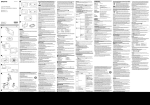
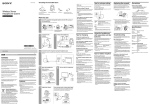
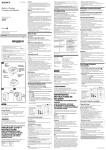
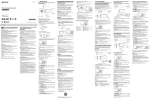
Where not to place this unit 4-414-627-02(1) Accessory Kit Kit d’accessoires ˎ ˎ ˎ Do not place this unit in any of the following locations, whether it is in use or in storage. Doing so may lead to a malfunction. ˎˎ In direct sunlight such as on dashboards or near heating apparatus, as this unit may become deformed or malfunction ˎˎ Where there is excessive vibration ˎˎ Where there is strong electromagnetism or radiant rays ˎˎ Where there is excessive sand In locations such as the seashore and other sandy areas or where dust clouds occur, protect this unit from sand and dust. There is a risk of malfunction. ˎ ˎ 1 ˎ ˎ ˎ ˎ ˎ ˎ Precautions on Use CHARGE ˎ Operating Instructions Mode d’emploi ˎˎ Attach the battery pack firmly to this unit when charging the battery pack. ˎˎ To protect the battery pack, remove it from this unit when charging is completed. ˎˎ Do not drop or apply mechanical shock to this unit. ˎˎ Keep this unit away from TVs or AM receivers. Noise from this unit may enter a TV or radio if placed nearby. ˎˎ Unplug this unit from the wall outlet (wall socket) after use. Hold this unit when you unplug it from the wall outlet (wall socket). ˎˎ Be sure that nothing metallic comes into contact with the metal parts of this unit. If it does, a short may occur and this unit may be damaged. ˎˎ Do not connect this unit to a voltage adaptor (travel converter) for overseas travel. This may result in overheating or another malfunction. ˎˎ The battery pack and this unit can become warm during or immediately after recharging. BC-CSN/BC-CSNB ˎ ˎ ˎ ˎ ˎ ˎ ˎ ˎ ˎ TV AM TV Maintenance ˎˎ If this unit gets dirty, wipe it using a soft dry cloth. ˎˎ If this unit gets very dirty, wipe it using a cloth with a little neutral solvent added, and then wipe it dry. ˎˎ Do not use thinners, benzine, alcohol, etc., as they will damage the surface of this unit. ˎˎ When you use a chemical cleaning cloth, refer to its instruction manual. ˎˎ Using a volatile solvent such as an insecticide or keeping this unit in contact with a rubber or vinyl product for a long time may cause deterioration or damage to this unit. ˎ ACC-CSBN ACC-HDCSN ˎ ˎ ˎ © 2011 Sony Corporation Printed in Japan ˎ To Charge the Battery Pack ˎ 1 Attach the battery pack. Keeping the battery mark in the same direction as the charger mark , insert the battery pack until it clicks into place. (See illustration ). ˎ ˎ ˎ The ACC-CSBN/ACC-HDCSN comes with the following accessories: ACC-CSBN Rechargeable Battery Pack (NP-BN1) (1) Battery Charger (BC-CSN/BC-CSNB) (1) Set of printed documentation ACC-HDCSN Rechargeable Battery Pack (NP-BN1) (1) Battery Charger (BC-CSN/BC-CSNB) (1) HDMI Cable (DLC-HEM20) (1) Set of printed documentation 1 Power plug 2 CHARGE Battery pack CHARGE lamp CHARGE CHARGE 1 Charger mark Battery mark NP-BN1 185 To remove the battery pack Maximum output voltage: DC 4.2 V / Mean output voltage: DC 3.6 V / Capacity (typ.): 2.3 Wh (630 mAh) / Capacity (min.): 2.2 Wh (600 mAh) / Operating temperature: 0 °C to 40 °C (32 °F to 104 °F) / Dimensions: Approx. 35.5 mm × 4.9 mm × 40.8 mm (w/h/d) (1 7/16 in. × 7/32 in. × 1 5/8 in.) / Mass: Approx. 15 g (0.6 oz.) Charging time BC-CSN/BC-CSNB Thank you for purchasing the Sony Battery charger. 25 ˎ Before operating this Battery charger, please read this manual thoroughly and retain it for future reference. ˎ Owner’s Record The model and serial numbers are located on the bottom. Record the serial number in the space provided below. Refer to these numbers whenever you call upon your Sony dealer regarding this product. JBRC http://www.jbrc.net/hp/contents/index.html Model No. BC-CSN/BC-CSNB ˎ NP-BN1 ACC-CSBN/ACC-HDCSN ACC-CSBN ACC-HDCSN HDMI CHARGE ˎ ˎ CHARGE ˎ NP-BN1 (1) BC-CSN/BC-CSNB (1) NP-BN1 (1) BC-CSN/BC-CSNB (1) DLC-HEM20 (1) 100V-240V ˎ AC100 V 240 V 50 Hz/60 Hz 4 VA 7 VA 2 W DC4.2 V 0.25 A 0 40 20 +60 55 83 23.5 55g BC-CSN/BC-CSNB 10 30 ˎ 1 ˎ CHARGE 2 3 ˎ Brand Name Battery Type Rating 1.5 0.15 ˎˎ Use the nearby wall outlet (wall socket) when using this unit. Even when the CHARGE lamp of this unit is off, the power is not disconnected. If any trouble occurs while this unit is in use, unplug it from the wall outlet (wall socket) to disconnect the power. ˎˎ Do not use this unit in a narrow space such as between a wall and furniture. ˎ ˎ CHARGE 10 1 30 PRECAUTION The set is not disconnected from the AC power source (mains) as long as it is connected to the wall outlet (wall socket), even if the set itself has been turned off. CHARGE ˎ NOTICE FOR THE CUSTOMERS IN THE U.S.A. CAUTION CHARGE 1 DC 4.2 V mAh 40 DC 3.6 V 2.3 Wh 630 2.2 Wh 600 mAh 0 35.5 mm 4.9 mm 40.8 mm 15 g You are cautioned that any changes or modifications not expressly approved in this manual could void your authority to operate this equipment. NOTE 1 ˎ BC-CSN/BC-CSNB ˎ CHARGE ˎ ˎ ˎ ˎ ˎ ( ˎ ˎ ˎ ( ) ) 0 ( ) 30 40 CHARGE 10 30 10 Sony NP-BN1 DC 3.6 V typ.: 2.3 Wh (630 mAh) min.: 2.2 Wh (600 mAh) CAUTION CHARGE ˋˋIf the shape of the plug does not fit the power outlet, use an attachment plug adaptor of the proper configuration for the power outlet. ˋˋThis power unit is intended to be correctly orientated in a vertical or floor mount position. Battery to be recharged for this product is follows CHARGE ˎ -SAVE THESE INSTRUCTIONS DANGER TO REDUCE THE RISK OF FIRE OR ELECTRIC SHOCK, CAREFULLY FOLLOW THESE INSTRUCTIONS The nameplate indicating operating voltage, power consumption, etc. is located on the bottom. 2 Remove the battery pack by sliding it in the opposite direction to when you attached it. Battery pack Normal charging time (Approx.) NP-BN1 185 min ˎˎ For more about the battery life, see the instruction manual of your camera. ˎˎ The charging time may differ depending on the condition of the battery pack or the ambient temperature. ˎˎ The times shown are for charging an empty battery pack, which has been run down with a camera, using this unit at an ambient temperature of 25 °C (77 °F). Charging temperature The temperature range for charging is 0 °C to 40 °C (32 °F to 104 °F). For maximum battery efficiency, the recommended temperature range when charging is 10 °C to 30 °C (50 °F to 86 °F). To use the battery pack quickly To reduce fire or shock hazard, do not expose the unit to rain or moisture. Do not expose the batteries to excessive heat such as sunshine, fire or the like. To reduce the risk of fire or electric shock, 1) do not expose the unit to rain or moisture. 2) do not place objects filled with liquids, such as vases, on the apparatus. IMPORTANT SAFETY INSTRUCTIONS ˎ ˎ Serial No. WARNING 1 Always connect the power plug with the prongs at the top (See illustration ). Do not connect the power plug with the prongs at the bottom (See illustration ). The CHARGE lamp (orange) lights up and charging begins. When the CHARGE lamp goes out, normal charging is completed (Normal charge). For a full charge, which allows you to use the battery pack longer than usual, leave the battery pack in place for approximately another one hour (Full charge). NP-BN1 Specifications 2 Pull the power plug up, and then connect it to a wall outlet (wall socket). This equipment has been tested and found to comply with the limits for a Class B digital device, pursuant to Part 15 of the FCC Rules. These limits are designed to provide reasonable protection against harmful interference in a residential installation. This equipment generates, uses, and can radiate radio frequency energy and, if not installed and used in accordance with the instructions, may cause harmful interference to radio communications. However, there is no guarantee that interference will not occur in a particular installation. If this equipment does cause harmful interference to radio or television reception, which can be determined by turning the equipment off and on, the user is encouraged to try to correct the interference by one or more of the following measures: ˋˋReorient or relocate the receiving antenna. ˋˋIncrease the separation between the equipment and receiver. ˋˋConnect the equipment into an outlet on a circuit different from that to which the receiver is connected. ˋˋConsult the dealer or an experienced radio/TV technician for help. Notes on Use This unit does not have dust-proof, splash-proof or water-proof specifications. Warranty for Recorded Content Contents of the recording cannot be compensated if recording or playback is not made due to a malfunction of the battery pack, battery charger, etc. You can remove the battery pack from this unit and use it even if charging is not completed. However, the charging time affects the time that the battery pack can be used. Notes ˎˎ If the CHARGE lamp does not light up, check if the battery pack is firmly attached to this unit. ˎˎ When a fully charged battery pack is installed, the CHARGE lamp lights up once and then goes out. ˎˎ A battery pack that has not been used for a long time may take longer than usual to charge. ˎˎ The charged battery pack gradually discharges even if you do not use it. Charge the battery pack before use to avoid missing any recording opportunities. This unit supports worldwide voltages 100 V to 240 V. Do not use an electronic voltage transformer, as this may cause a malfunction. Troubleshooting When the CHARGE lamp blinks, check through the following chart. The CHARGE lamp blinks in two ways. Blinks slowly: Turns on and off repeatedly every 1.5 seconds Blinks quickly:Turns on and off repeatedly every 0.15 seconds The action to be taken depends on the way the CHARGE lamp blinks. When the CHARGE lamp keeps blinking slowly Charging is pausing. This unit is in the standby state. If the room temperature is out of the appropriate temperature range, charging stops automatically. When the room temperature returns to the appropriate range, the CHARGE lamp lights up and charging restarts. We recommend charging the battery pack at 10 °C to 30 °C (50 °F to 86 °F). When the CHARGE lamp keeps blinking quickly When charging the battery pack for the first time in one of the following situations, the CHARGE lamp may blink quickly. If this happens, remove the battery pack from this unit, reattach it and charge it again. When the battery pack is left for a long time When the battery pack is left installed in the camera for a long time Immediately after purchase If the CHARGE lamp keeps blinking quickly, check through the following chart. Remove the battery pack that is being charged and then firmly attach the same battery pack again. The CHARGE lamp blinks again: Install another battery pack. The CHARGE lamp lights up and does not blink again: If the CHARGE lamp goes out because the charging time has passed, there is no problem. The CHARGE lamp blinks again: The problem is with this unit. The CHARGE lamp lights up and does not blink again: If the CHARGE lamp goes out because the charging time has passed, the problem is with the battery pack first installed. Please contact your nearest Sony dealer in connection with the product that may have a problem. Specifications Input rating Output rating Operating temperature Storage temperature Dimensions (Approx.) Mass 100 V - 240 V AC 50 Hz/60 Hz 4 VA - 7 VA 2 W Battery charge terminal: 4.2 V DC 0.25 A 0 °C to 40 °C (32 °F to 104 °F) –20 °C to +60 °C (–4 °F to +140 °F) 55 mm × 83 mm × 23.5 mm (w/h/d) (2 1/4 in. × 3 3/8 in. × 15/16 in.) Approx. 55 g (2 oz) Design and specifications are subject to change without notice. Fiche d’alimentation ˎˎ À un endroit exposé à des vibrations excessives ˎˎ À un endroit exposé à un électromagnétisme ou à des radiations ˎˎ À un endroit où il y a beaucoup de sable Au bord de la mer ou sur des sols sableux, où aux endroits où des nuages de poussière sont fréquents, protégez l’appareil du sable ou de la poussière. L’appareil risquerait sinon de tomber en panne. Précautions d’emploi Batterie rechargeable Témoin CHARGE Repère du chargeur Repère de la batterie ˎˎ Insérez bien la batterie rechargeable dans cet appareil avant de la charger. ˎˎ Pour protéger la batterie rechargeable, retirez-la de cet appareil lorsque la charge est terminée. ˎˎ Ne laissez pas tomber ou n’appliquez pas de choc mécanique à cet appareil. ˎˎ Gardez cet appareil à l’écart des téléviseurs ou récepteurs AM. Placé près d’un téléviseur ou d’un poste de radio, cet appareil peut causer du bruit. ˎˎ Débranchez cet appareil de la prise murale après utilisation. Saisissez cet appareil lorsque vous le débranchez de la prise murale. ˎˎ Veillez à ne pas mettre d’objets métalliques au contact des pièces métalliques de cet appareil. Ceci pourrait causer un court-circuit et endommager l’appareil. ˎˎ Ne branchez pas cet appareil sur un adaptateur de tension (convertisseur de voyage) lorsque vous voyagez à l’étranger. Ceci pourrait causer une surchauffe ou une autre défaillance. ˎˎ La batterie rechargeable et cet appareil peuvent devenir chauds pendant ou immédiatement après la charge. Entretien L’ ACC-CSBN/ACC-HDCSN est livré avec les accessoires suivants : ACC-CSBN Batterie rechargeable (NP-BN1) (1) Chargeur de batterie (BC-CSN/BC-CSNB) (1) Jeu de documents imprimés ACC-HDCSN Batterie rechargeable (NP-BN1) (1) Chargeur de batterie (BC-CSN/BC-CSNB) (1) Câble HDMI (DLC-HEM20) (1) Jeu de documents imprimés NP-BN1 Spécifications Tension de sortie maximale: 4,2 V CC / Tension de sortie moyenne: 3,6 V CC / Capacité (typ.): 2,3 Wh (630 mAh) / Capacité (min.): 2,2 Wh (600 mAh) / Température de fonctionnement: 0 °C à 40 °C (32 °F à 104 °F) / Dimensions: environ 35,5 mm × 4,9 mm × 40,8 mm (l/h/p) (1 7/16 po. × 7/32 po. × 1 5/8 po.) / Poids: environ 15 g (0,6 oz) BC-CSN/BC-CSNB Merci pour l’achat de ce chargeur de batterie Sony. Avant d’utiliser ce chargeur de batterie, veuillez lire attentivement ce manuel et le conserver pour toute référence future. Aide-mémoire Les numéros de modèle et de série se situent sous l’appareil. Prendre en note le numéro de série dans l’espace prévu ci-dessous. Se reporter à ces numéros lors des communications avec le détaillant Sony au sujet de ce produit. Modèle no BC-CSN/BC-CSNB No de série AVERTISSEMENT Afin de réduire les risques d’incendie ou de décharge électrique, n’exposez pas cet appareil à la pluie ou à l’humidité. N’exposez pas les piles à une chaleur excessive, notamment aux rayons directs du soleil, à une flamme, etc. Pour réduire les risques d’incendie ou d’électrocution, 1) n’exposez l’appareil à la pluie ou à l’humidité ; 2) ne placez pas d’objets remplis de liquides (vases, etc.) sur l’appareil. IMPORTANTES INSTRUCTIONS DE SECURITE -CONSERVEZ CES INSTRUCTIONS DANGER AFIN DE REDUIRE LE RISQUE D’INCENDIE OU DE DECHARGE ELECTRIQUE, SUIVEZ EXACTEMENT CES INSTRUCTIONS ˋˋSi la forme de la fiche ne correspond pas à la prise secteur, utilisez un adaptateur de fiche accessoire de configuration correcte pour la prise secteur. ˋˋCet appareil peut être installé en position verticale ou horizontale. La plaque signalétique indiquant la tension de fonctionnement, la consommation, etc. se trouve sous l’appareil. Les batteries pouvant être rechargées pour ce produit sont les suivantes ˎˎ Lorsque cet appareil est sale, essuyez-le avec un chiffon sec et doux. ˎˎ Lorsque cet appareil est très sale, essuyez-le avec un chiffon et un peu de solvant neutre puis séchez-le. ˎˎ N’utilisez pas de diluants, benzine, alcool, etc. car ils endommageraient la surface de cet appareil. ˎˎ Si vous utilisez un tissu de nettoyage chimique, consultez son mode d’emploi. ˎˎ L’emploi d’un solvant volatil, comme un insecticide, ou la mise en contact direct de cet appareil avec un produit en caoutchouc ou en plastique pendant une longue période peut détériorer ou endommager cet appareil. Pour charger la batterie rechargeable 1 Insérez la batterie rechargeable. Alignez le repère de la batterie dans la direction du repère du chargeur et insérez la batterie de sorte qu’elle s’encliquette. (Voir l’illustration ). 2 Relevez la fiche d’alimentation, puis branchez-la sur une prise murale. Raccordez toujours la fiche d’alimentation avec les broches orientées vers le haut (Voir l’illustration ). Ne raccordez pas la fiche d’alimentation avec les broches orientées vers le bas (Voir l’illustration ). Le témoin CHARGE (orange) s’allume et la recharge commence. Lorsque le témoin CHARGE s’éteint, la charge normale est terminée (Charge normale). Pour une charge complète, qui permet d’utiliser la batterie rechargeable plus longtemps que la normale, laissez la batterie rechargeable en place pendant encore une heure environ (Charge complète). Pour retirer la batterie rechargeable Retirez la batterie en la faisant glisser dans le sens opposé de l’insertion. Temps de charge Batterie rechargeable Temps de charge normale (environ) NP-BN1 185 min ˎˎ Pour de plus amples informations sur l’autonomie d’une batterie, reportez-vous au mode d’emploi de votre appareil photo. ˎˎ Le temps de charge peut être différent selon l’état de la batterie rechargeable ou la température ambiante. ˎˎ Les temps indiqués correspondent à la charge d’une batterie rechargeable vide, usée sur une caméra, à une température ambiante de 25 °C (77 °F). Température de charge La température doit se situer entre 0 °C et 40 °C (32 °F à 104 °F) pour la charge. Pour une efficacité maximale de la batterie, la température conseillée pour la charge est de 10 °C à 30 °C (50 °F à 86 °F). Pour utiliser rapidement la batterie rechargeable Vous pouvez retirer la batterie rechargeable de cet appareil et l’utiliser même si la charge n’est pas terminée. Cependant, le temps de charge a une influence sur l’autonomie de la batterie rechargeable. Remarques ˎˎ Si le témoin CHARGE ne s’allume pas, vérifiez si la batterie rechargeable est bien insérée dans cet appareil. ˎˎ Lorsqu’une batterie chargée est installée, le témoin CHARGE s’allume une fois puis s’éteint. ˎˎ Une batterie rechargeable qui n’a pas été utilisée pendant longtemps peut être plus longue à charger que la normale. ˎˎ La batterie chargée se décharge graduellement même si elle n’est pas utilisée. Chargez la batterie rechargeable pour éviter de manquer des occasions d’enregistrer. Cet appareil supporte les tensions du monde entier, de 100 V à 240 V. N’utilisez pas un transformateur électronique de tension car ceci pourrait provoquer un dysfonctionnement. En cas de problème Lorsque le témoin CHARGE clignote, vérifiez les points du tableau suivant. ATTENTION Le témoin CHARGE clignote de deux façons. Clignotement lent : S’allume et s’éteint toutes les 1,5 secondes de façon répétée. Clignotement rapide : S’allume et s’éteint toutes les 0,15 secondes de façon répétée. La mesure à prendre dépend de la façon dont le témoin CHARGE clignote. PRÉCAUTION Lorsque le témoin CHARGE continue de clignoter lentement La charge est en pause. Cet appareil est en attente. Si la température de la pièce est hors de la plage de températures appropriée, la charge s’arrête automatiquement. Lorsque la température de la pièce revient dans la plage appropriée, le témoin CHARGE s’allume et la charge redémarre. Il est conseillé de charger la batterie rechargeable entre 10 °C et 30 °C (50 °F et 86 °F ). Lorsque le témoin CHARGE continue de clignoter rapidement Marque Type de batterie Valeur nominale Sony NP-BN1 CC 3,6 V typique: 2,3 Wh (630 mAh) minimale: 2,2 Wh (600 mAh) ˎˎ Utilisez une prise murale proche lorsque vous utilisez cet appareil. Même lorsque le témoin CHARGE de cet appareil est éteint, l’alimentation n’est pas coupée. Si un problème devait se produire pendant l’utilisation de cet appareil, débranchez celui-ci de la prise murale pour le mettre hors tension. ˎˎ N’utilisez pas cet appareil dans un espace confiné, comme entre un mur et un meuble. L’appareil n’est pas déconnecté de la source d’alimentation secteur tant qu’il reste branché sur la prise murale, même s’il a été mis hors tension. AVIS À LA CLIENTÈLE AUX ÉTATS-UNIS AVERTISSEMENT Par la présente, vous êtes avisé du fait que tout changement ou toute modification ne faisant pas l’objet d’une autorisation expresse dans le présent manuel pourrait annuler votre droit d’utiliser l’appareil. Note L’appareil a été testé et est conforme aux exigences d’un appareil numérique de Classe B, conformément à la Partie 15 de la réglementation de la FCC. Ces critères sont conçus pour fournir une protection raisonnable contre les interférences nuisibles dans un environnement résidentiel. L’appareil génère, utilise et peut émettre des fréquences radio; s’il n’est pas installé et utilisé conformément aux instructions, il pourrait provoquer des interférences nuisibles aux communications radio. Cependant, il n’est pas possible de garantir que des interférences ne seront pas provoquées dans certaines conditions particulières. Si l’appareil devait provoquer des interférences nuisibles à la réception radio ou à la télévision, ce qui peut être démontré en allumant et éteignant l’appareil, il est recommandé à l’utilisateur d’essayer de corriger cette situation par l’une ou l’autre des mesures suivantes : ˋˋRéorienter ou déplacer l’antenne réceptrice. ˋˋAugmenter la distance entre l’appareil et le récepteur. ˋˋBrancher l’appareil dans une prise ou sur un circuit différent de celui sur lequel le récepteur est branché. ˋˋConsulter le détaillant ou un technicien expérimenté en radio/ téléviseurs. Remarques concernant l’emploi Cet appareil n’est pas étanche à la poussière, aux éclaboussures d’eau ou à l’eau. Garantie concernant les enregistrements L’utilisateur ne pourra pas être dédommagé pour une absence d’enregistrement ou de lecture due à une défectuosité de la batterie, du chargeur de batterie, ou autre. Où ne pas poser l’appareil Ne posez pas cet appareil aux endroits suivants, ni pour la charge ni pour l’entreposage. Ceci peut entraîner une panne. ˎˎ À la lumière directe du soleil, comme sur le tableau de bord d’une voiture ou à proximité d’un appareil de chauffage, car l’appareil peut se déformer ou tomber en panne. La première fois que vous chargez la batterie dans une des situations suivantes, le témoin CHARGE peut clignoter rapidement. Dans ce cas, retirez la batterie de cet appareil puis réinsérez-la et chargez-la de nouveau. Si la batterie est restée longtemps inutilisée Si la batterie est restée longtemps dans l’appareil photo Immédiatement après l’achat Si le témoin CHARGE continue de clignoter rapidement, vérifiez les points du tableau suivant. Retirez la batterie rechargeable qui a été chargée et insérez-la de nouveau fermement dans le chargeur. Le témoin CHARGE clignote de nouveau : Installez une autre batterie. Le témoin CHARGE s’allume et ne clignote plus : Si le témoin CHARGE s’éteint parce que le temps de charge est dépassé, il n’y a aucun problème. Le témoin CHARGE clignote de nouveau : Le problème vient de cet appareil. Le témoin CHARGE s’allume et ne clignote plus : Si le témoin CHARGE s’éteint parce que le temps de charge est dépassé, le problème vient de la première batterie installée. Veuillez contacter le revendeur Sony le plus proche du produit présentant éventuellement un problème. Spécifications Puissance nominale d’entrée Puissance nominale de sortie Température de fonctionnement Température d’entreposage Dimensions (environ) Poids 100 V - 240 V CA 50 Hz/60 Hz 4 VA - 7 VA 2 W Borne de charge de la batterie : 4,2 V CC 0,25 A 0 °C à 40 °C (32 °F à 104 °F) –20 °C à +60 °C (–4 °F à +140 °F) 55 mm × 83 mm × 23,5 mm (l/h/p) (2 1/4 po. × 3 3/8 po. × 15/16 po.) environ 55 g (2 oz) La conception et les spécifications peuvent être modifiées sans préavis. 1 2