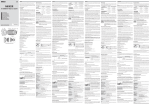
1
@
Jp
En Circular Polarizing Filter @ (52/58/62/67/72/77mm)
No reproduction in any form of this manual, in whole or in
part (except for brief quotation in critical articles or reviews),
may be made without written authorization
from NIKON CORPORATION.
De Zirkuläre Polarisationsfilter @ (52/58/62/67/72/77 mm)
Fr
Filtre polarisant circulaire @ (52/58/62/67/72/77 mm)
Es Filtro polarizador circular @ (52/58/62/67/72/77mm)
Nl
Circulair polarisatiefilter @ (52/58/62/67/72/77 mm)
It
Filtro polarizzatore circolare @ (52/58/62/67/72/77mm)
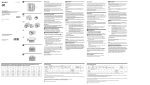
Nomenclature
Nomenklatur
Nomenclature
Nomenclatura
Benaming van de onderdelen
Nomenclatura
Adjustment ring
Einstellring
Bague de réglage
Aro de ajuste
Afstelring
Anello di regolazione
Instruction Manual
Bedienungsanleitung
Manuel d’utilisation
Manual de instrucciones
Handleiding
Manuale Istruzioni
Attachment ring
Montagering
Bague de fixation
Aro de instalación
Bevestigingsring
Anello di collegamento
NIKON CORPORATION
FUJI BLDG., 2-3, MARUNOUCHI 3-CHOME, CHIYODA-KU,
TOKYO 100-8331, JAPAN
Printed in Japan TT3H02000301 (K346) 76
2
2
18mm F3.5S
AF 24mm F2.8D
24mm F2S
24mm F2.8S
28mm F2S
AF 28mm F2.8D
28mm F2.8S
PC 28mm F3.5
2
35mm F1.4S
35mm F2S
50mm F1.2S
50mm F1.4S
AF 24 50mm F3.3 4.5D
AF 28 105mm F3.3 4.5D
35 70mm F3.3 4.5S
35 135mm F3.5 4.5S
English
Accessories
Important
Introduction
• Filter cases: CP-10 (for 52mm), CP-11 (for 58mm),
CP-12 (for 62mm), CP-13 (for 67mm),
CP-14 (for 72mm), and CP-15 (for 77mm)
• If possible, avoid getting water on the filter or smudging it with fingerprints. If water stains or smudges get on the
filter, remove them using a soft clean cotton cloth moistened with pure ethanol alcohol or lens cleaning solution.
• Do not leave these filters in locations subject to high temperatures, high humidity, or direct sunlight for a long time.
Attaching the filters
Notes on using hoods and avoiding vignetting
• Hold the attachment ring of the filter and screw it clockwise
into the front threads of the lens.
• Most dedicated bayonet hoods, except certain models, can be used without causing vignetting. This includes the
dedicated screw-in hood HN-31 for the AF 85mm f/1.4D and the built-in hood for the AF-S 300mm f/4D.
• Slip-on type hoods cannot be used with these filters. Use the screw-in hood HN-9 for the AF 28mm f/1.4D and
HN-22 for the 35-200mm f/3.5-4.5 instead.
• With the following lenses and hoods, circular polarizing filters cause vignetting.
Thank you for purchasing the Nikon Circular Polarizing
Filter II. This line of filters is designed to be used with Nikon
autofocus, auto-exposure SLRs. It also works with manual
focus cameras and is effective with both color and black
and white film.
Major features
• In general, light reflected from water, glass, or other shiny
materials is polarized and adversely affects image
definition. Circular polarizing filters reduce or eliminate
unwanted reflections and increase the overall contrast of
subjects in low-contrast situations.
• Usually, light from the sky is polarized due to reflections
and dispersions in the air. Circular polarizing filters cut
these reflections, making the sky bluer or intensifying
colors.
• Nikon made its line of Circular Polarizing Filter II much
thinner and lighter than conventional models, allowing
many lenses to be used without causing vignetting, and
applied multiple layer coatings on both sides to reduce
ghost images and flare.
• Nikon Circular Polarizing Filter II features the same
attachment size as the front threads of the lens, allowing
attachment of a regular lens cap.
• Many dedicated bayonet hoods and certain optional hoods
can be used with these filters without causing vignetting
(see the table that follows).
• Using a filter of a different diameter or thickness may cause
vignetting. Performance is not guaranteed if two or more
filters are stacked together.
How to use
• While looking through the camera’s viewfinder, turn the
adjustment ring until you obtain the desired effect. To
deepen the color of a blue sky, turn the adjustment ring until
the viewfinder image becomes the darkest.
Slight color casts may appear in the viewfinder, but will not
register on the actual film.
• With AF cameras having 3D matrix or multi-sensor
metering, the correct exposure may not be obtained. In this
case, use center-weighted metering. For cameras having a
TTL exposure meter, no exposure compensation is
required. For other cameras, make exposure compensation
by approx. 2 to 4 filter factors (+1 to +2 f/stops).
• With lenses whose lens barrel rotates during AF operation,
perform focusing before adjusting the filter. (Note that focus
may be off slightly while adjusting the filter under certain
conditions.) With a dedicated bayonet hood, be sure to
attach the hood after adjusting the filter.
Lens
Dedicated Filter
hood
diameter
18mm f/3.5
AF 24mm f/2.8D
24mm f/2
24mm f/2.8
28mm f/2
AF 28mm f/2.8D
28mm f/2.8
PC 28mm f/3.5
HK-9
HN-1
HK-2
HN-1
HN-1
HN-2
HN-2
HN-9
72
52
52
52
52
52
52
72
35mm f/1.4
35mm f/2
50mm f/1.2
50mm f/1.4
AF 24 50mm f/3.3 4.5D
AF 28 105mm f/3.3 4.5D
35 70mm f/3.3 4.5
35 135mm f/3.5 4.5
HN-3
HN-3
HS-12
HS-9
HB-3
HB-18
HN-2
HN-22
52
52
52
52
62
62
52
62
Lens itself
With hood
(slightly at ∞ setting)
(slightly at ∞ setting)
(slightly at ∞ setting)
(slightly at ∞ setting)
(slightly at ∞ setting)
At the normal position:
At the max. shift position:
(slightly at ∞ setting)
(slightly at ∞ setting)
(slightly at ∞ setting)
(slightly at ∞ setting)
(slightly at wideangle setting)
(slightly at ∞ setting)
At the normal position:
At the max. shift position:
(slightly at ∞ setting)
(slightly at wideangle setting)
(slightly at ∞ setting)
: Usable
: Usable but with slight vignetting
• Do not attach these filters to these lenses as vignetting occurs either with lens itself or when
a lens hood is attached: the AF 20mm f/2.8D, 20mm f/2.8, 28-85mm f/3.5-4.5, and AF 35-105mm f/3.5-4.5D
Deutsch
Zubehör
Wichtig
Kurzbeschreibung
• Filtergehäuse: CP-10 (für 52 mm), CP-11 (für 58 mm),
CP-12 (für 62 mm), CP-13 (für 67 mm),
CP-14 (für 72 mm), und CP-15 (für 77 mm)
• Schützen Sie das Filter vor Nässe und Verschmutzung durch Fingerabdrücke. Reinigen Sie die Filteroberflächen
mit einem in Alkohol oder Linsenreiniger angefeuchteten Wattebausch.
• Schützen Sie das Filter vor hohen Temperaturen, Feuchtigkeit und direkter Sonneneinstrahlung.
Ansetzen des Filters
Hinweise zur Verwendung von Gegenlichtblenden ohne Vignettierung
• Schrauben Sie den Montagering des Filters in das
Frontgewinde des Objektivs.
• Das Anbringen von Filtern falscher Durchmesser und/oder
Stärke führt zu Vignettierung. Bei gleichzeitigem Einsatz
von mehr als einem Filter sind gute Resultate nicht
gewährleistet.
• Die meisten Gegenlichtblenden lassen sich ohne Vignettierung verwenden, einschließlich der Schraubblende
HN-31 für das Nikon AF 85mm f/1,4D sowie die eingebaute Gegenlichtblende des AF-S 300mm f/4D.
• Aufsteckblenden sind für diese Filter ungeeignet. Verwenden Sie stattdessen die Schraubblende HN-9 für das
AF 28mm f/1,4D oder HN-22 für das 35-200mm f/3,5-4,5.
• Mit den folgenden Objektiven und Gegenlichtblenden führen die zirkulären Polarisationsfilter zu Vignettierung.
Wir danken Ihnen für das Vertrauen, das Sie Nikon mit dem
Kauf des zirkulären Polarisationsfilters II entgegenbringen.
Die Filter dieser Serie eignen sich für Nikons AutofokusSpiegelreflexkameras mit Belichtungsautomatik. Sie eignen
sich darüber hinaus für Kameras mit manueller
Scharfeinstellung und sind wirksam für sowohl Farb- als
auch Schwarzweißfilm.
Die wichtigsten Merkmale
• Von Wasser, Glas oder hellen Oberflächen reflektiertes
Licht wird in der Regel polarisiert, was zu einer
Beeinträchtigung der Bilddefinition führt. Unerwünschte
Reflexionen lassen sich durch zirkuläre Polarisationsfilter
bei gleichzeitiger Kontrastverbesserung reduzieren.
• Auch das Licht vom Himmel wird durch Reflexionen und
Dispersionen in der Luft oft polarisiert. Zirkuläre
Polarisationsfilter sorgen hier für eine kräftigeres Blau
bzw. insgesamt verbesserte Farbintensität.
• Die neuen zirkularen Polarisationsfilter II von Nikon sind
deutlich dünner als herkömmliche Modelle, so dass sie für
noch mehr Objektive geeignet sind, ohne zu Vignettierung
zu führen. Eine Mehrfachvergütung auf beiden Filterseiten
reduziert Reflexbildungen und Streulicht.
• Die neuen zirkulären Polarisationsfilter II von Nikon bieten
die gleichen Frontgewindedurchmesser wie die Objektive,
so dass sie bei Anbringung von regulären Objektivkappen
geschützt werden können.
• Es stehen zahlreiche Gegenlichtblenden zur Auswahl, die
in Verbindung mit diesen Filtern keine Vignettierung
verursachen. (Siehe Tabelle weiter unten.)
Gebrauch
• Blicken Sie durch den Kamerasucher und drehen Sie den
Einstellring bis Sie den gewünschten Effekt erzielen. Um
das Blau des Himmels zu verstärken, drehen Sie den
Einstellring bis das Sucherbild am dunkelsten ist. Ein
geringfügiger Farbstich im Sucherbild hat keinerlei
Auswirkung auf das Bild im Film.
• Bei 3D-Matrix- und Multisensormessung mit entsprechend
ausgerüsteten Autofokuskameras lässt sich u.U. keine
korrekte Belichtung erzielen. Stattdessen mittenbetonte
Messung verwenden. Bei Kameras mit TTLBelichtungsmesser ist keine Belichtungskorektur
erforderlich. Bei anderen Kameras kompensieren Sie bitte
um 2 bis 4 Filterfaktoren (+1 bis +2 Blendenstufen).
• Bei Objektiven, deren Tubus sich während der
Scharfeinstellung dreht, stellen Sie die Schärfe vor dem
Einstellen des Filters ein. (Bei Einstellen des Filters kann in
bestimmten Fällen die Scharfeinstellung leicht abweichen.)
Bringen Sie die Gegenlichtblende erst an, nachdem die
Einstellung des Filters erfolgt ist.
Objektiv
Dedizierte
FilterdurchGegenlichtblende messer
18mm f/3.5
AF 24mm f/2.8D
24mm f/2
24mm f/2.8
28mm f/2
AF 28mm f/2.8D
28mm f/2.8
PC 28mm f/3.5
HK-9
HN-1
HK-2
HN-1
HN-1
HN-2
HN-2
HN-9
72
52
52
52
52
52
52
72
35mm f/1.4
35mm f/2
50mm f/1.2
50mm f/1.4
AF 24 50mm f/3.3 4.5D
AF 28 105mm f/3.3 4.5D
35 70mm f/3.3 4.5
35 135mm f/3.5 4.5
HN-3
HN-3
HS-12
HS-9
HB-3
HB-18
HN-2
HN-22
52
52
52
52
62
62
52
62
Nur Objektiv
(geringfügig in ∞-Einstellung)
(geringfügig in ∞-Einstellung)
In Normalposition:
Bei max. Versatzposition:
(geringfügig in ∞ -Einstellung)
(geringfügig bei Weitwinkeleinstellung)
(geringfügig in ∞-Einstellung)
: Not usable
Mit Gegenlichtblende
(geringfügig in ∞-Einstellung)
(geringfügig in ∞-Einstellung)
(geringfügig in ∞-Einstellung)
In Normalposition:
Bei max. Versatzposition:
(geringfügig in ∞-Einstellung)
(geringfügig in ∞-Einstellung)
(geringfügig in ∞-Einstellung)
(geringfügig in ∞-Einstellung)
( geringfügig bei Weitwinkeleinstellung)
(geringfügig in ∞-Einstellung)
: Geeignet
: Geeignet, aber geringfügige Vignettierung
• Diese Filter nicht mit den folgenden Objektiven verwenden, weil sonst mit Vignettierung
die Folge ist: AF 20mm f/2,8D, 20mm f/2,8, 28-85mm f/3,5-4,5 und AF 35-105mm f/3,5-4,5D
: Nicht geeignet
Français
Introduction
Nous vous remercions pour votre achat de ce filtre
polarisant circulaire II Nikon. Cette gamme de filtres est
conçue pour être utilisée avec les appareils reflex
autofocus, à exposition automatique Nikon. Elle fonctionne
aussi avec les appareils à mise au point manuelle, et est
efficace à la fois avec le film couleur et le film noir et blanc.
Principales caractéristiques
Accessoires
Important
• Boîtes à filtres:
CP-10 (pour 52 mm), CP-11 (pour 58 mm),
CP-12 (pour 62 mm), CP-13 (pour 67 mm),
CP-14 (pour 72 mm) et CP-15 (pour 77 mm)
• Si possible, évitez de mouiller le filtre avec de l’eau ou de le salir avec des traces de doigts. En cas de taches d’eau
ou de saletés sur le filtre, éliminez-les avec un chiffon en coton doux et propre humidifié d’alcool éthylique pur ou de
solution de nettoyage pour objectif.
• Ne laissez pas ces filtres à des endroits soumis à des températures élevées, une forte humidité ou en plein soleil
pendant longtemps.
Fixation des filtres
• Saisissez la bague de fixation du filtre et vissez-la dans le
sens horaire sur le filetage avant de l’objectif.
• L’emploi d’un filtre de diamètre ou d’épaisseur différents
peut causer du vignettage. Les performances ne sont pas
garanties si deux filtres ou plus sont empilés.
Remarques sur l’emploi des pare-soleil et l’évitement du vignettage
• La plupart des pare-soleil à baïonnette dédiés, sauf certains modèles, sont utilisables sans produire de vignettage. Cela
inclut le pare-soleil vissant dédié HN-31 pour le AF 85mm f/1.4D et le pare-soleil intégré pour le AF-S 300mm f/4D.
• Les pare-soleil à emboîtement ne sont pas utilisables avec ces filtres. Utilisez à la place le pare-soleil vissant HN-9 pour
le AF 28mm f/1.4D et le HN-22 pour le 35-200mm f/3.5-4.5.
• Les filtres polarisants circulaires causeront un vignettage avec les objectifs et pare-soleil suivants.
• En général, la lumière réfléchie de l’eau, du verre ou de
matériaux brillant est polarisée et affecte la définition de
l’image. Les filtres polarisants circulaires réduisent ou
éliminent les réflexions indésirables et augmentent le
contraste d’ensemble des sujets dans des situations à
faible contraste.
• Ordinairement, la lumière du ciel est polarisée à cause de
réflexions et dispersions dans l’air. Les filtres polarisants
circulaires coupent ces réflexions, rendant le ciel plus bleu
ou intensifiant les couleurs.
• Nikon a rendu sa gamme de filtres polarisants circulaires
II plus fins et légers que les modèles conventionnels, ce
qui permet l’emploi de beaucoup d’objectifs sans causer
de vignettage, et appliqué un revêtement multicouche sur
les deux côtés pour réduire les images fantômes et le
maculage.
• Les filtres polarisants circulaires II Nikon ont la même
taille de fixation que le filetage avant de l’objectif, ce qui
permet le montage d’un bouchon d’objectif ordinaire.
• Beaucoup de pare-soleil à baïonnette dédiés et certains
pare-soleil en option sont utilisables avec ces filtres sans
produire de vignettage (voir le tableau suivant).
Utilisation
Español
Accessorios
Importante
Introducción
• Cajas de filtro: CP-10 (para 52mm), CP-11 (para 58mm),
CP-12 (para 62mm), CP-13 (para 67mm),
CP-14 (para 72mm) y CP-15 (para 77mm)
• En lo posible, no moje o manche el filtro con sus dedos. Si se mancha el filtro, limpie con un paño de algodón suave,
limpio, empapado en alcohol etanol puro o solución de limpieza de lentes.
• No deje estos filtros donde queden expuestos a altas temperaturas, humedad o rayos del sol durante mucho tiempo.
Instalación de los filtros
Notas sobre el uso de viseras evitando las esquinas negras
• Sujete el anillo de instalación del filtro y atornille a la
derecha en la rosca delantera del objetivo.
• El uso de un filtro de otro diámetro o espesor puede
producir esquinas negras. No podemos garantizar el
resultado cuando se usan dos o más filtros uno sobre otro.
• La mayoría de las viseras de bayoneta especiales, excepto ciertos modelos pueden utilizarse sin que aparezcan esquinas
negras. Esto es cierto para la visera roscadas HN-31 para AF 85mm f/1.4D y la visera integrada para AF-S 300mm f/4D.
• No puede utilizar viseras de instalación por deslizamiento en estos filtros. En su lugar, utilice la visera roscada HN-9 para
AF 28mm f/1.4D y HN-22 para 35-200mm f/3.5-4.5.
• En los siguientes objetivos y viseras, el filtro polarizador circular produce esquinas negras.
Muchas gracias por su compra del Filtro Polarizador
Circular II de Nikon. Esta línea de filtros fue diseñada para
utilizar con los SLR de enfoque y exposición automásticos.
También sirve para cámaras de enfoque manual y es
efectivo tanto con películas color como blanco y negro.
Principales características
• En general, la luz que se refleja en el agua, vidrio u otros
materiales lustrosos se polariza y afecta negativamente la
definición de la imagen. El filtro polarizador circular reduce
o elimina los reflejos indeseados y aumenta el contraste
general de objetos en situaciones de poco contraste.
• Normalmente la luz del cielo se polariza por los reflejos y
dispersiones del aire. El filtro polarizador circular elimina
estos reflejos para un cielo sea más azul o colores más
intensos.
• Nikon fabricó su línea de Filtros Polarizadores Circulares
II más finos y ligeros que los modelos convencionales,
para que pueda utilizar en muchos objetivos sin que
aparezcan esquinas negras y tiene múlitples capas en
ambos lados para reducir las imágenes fantasmas y
reflejos de luz.
• El Filtro Polarizador Circular II de Nikon tiene el mismo
tamaño de instalación que las roscas delante del objetivo
para que pueda instalar una tapa de objetivo normal.
• Puede utilizar muchas de las viseras de bayoneta
especiales y algunas viseras opcionales con estos filtros
sin que aparezcan esquinas negras (Véase la tabla siguiente).
Nederlands
Inleiding
Hartelijk dank voor de aanschaf van dit Nikon circulair
polarisatiefilter II. Deze serie filters is ontworpen voor gebruik
met Nikon spiegelreflexcamera’s uitgerust met autofocus en
automatische belichtingsregeling. De filters werken ook met
camera’s met handmatige scherpstelling en ze zijn tevens
geschikt voor zowel kleurenfilm als zwart/wit film.
Voornaamste kenmerken
• Over het algemeen zal licht dat gereflecteerd wordt door
water, glas of andere materialen die schitteren,
gepolariseerd worden wat een nadelige invloed heeft op
de beelddefinitie. Een circulair polarisatiefilter vermindert
of elimineert ongewenste reflecties en verbetert het totale
contrast van onderwerpen in een contrastarme situatie.
• Gewoonlijk wordt het licht van de lucht gepolariseerd als
gevolg van reflecties en dispersies in de lucht. Een
circulair polarisatiefilter elimineert deze reflecties
waardoor de lucht blauwer wordt en de kleuren intenser.
• Deze nieuwe serie Nikon circulaire polarisatiefilters II zijn
veel dunner en lichter dan conventionele modellen,
waardoor vele objectieven gebruikt kunnen worden zonder
dat vignettering optreedt, en tevens zijn meerdere
coatinglagen aan beide kanten toegepast waardoor
spookbeelden en lichtvlekken worden voorkomen.
• De Nikon circulaire polarisatiefilters II hebben dezelfde
montage-afmeting als de schroefdraad aan de voorkant
van het objectief waardoor er een normale lensdop op
gezet kan worden.
• Met deze filters kunnen tevens vele speciale
bajonetkappen en andere optionele kappen worden
gebruikt zonder dat vignettering optreedt (zie de
hiernavolgende tabel).
• En regardant dans le viseur de l’appareil, tournez la bague
d’ajustement jusqu’à l’obtention de l’effet souhaité. Pour
foncer la couleur d’un ciel bleu, tournez la bague
d’ajustement jusqu’à ce que l’image du viseur devienne plus
sombre. De légers écoulements de couleur peuvent
apparaître dans le viseur, mais ils ne seront pas reproduits
sur le film lui-même.
• Avec les boîtiers AF à mesure matricielle 3D ou multicapteurs, l’exposition correcte peut ne pas être obtenue.
Dans ce cas, recourez à la mesure centrale pondérée. Pour
les boîtiers à indicateur d’exposition TTL, aucune correction
d’exposition n’est requise. Pour les autres boîtiers, faites
une correction d’exposition d’environ 2 à 4 facteurs de filtre
(+1 à +2 de valeurs d’ouverture).
• Avec des objectifs dont le barillet tourne pendant le
fonctionnement AF, effectuez la mise au point avant
d’ajuster le filtre. (Notez que la mise au point peut être
légèrement décalée pendant l’ajustement du filtre dans
certaines conditions.) Avec un pare-soleil à baïonnette
dédié, fixez bien le pare-soleil après l’ajustement du filtre.
Cómo utilizar
• Mientras mira por el visor de la cámara, gire el aro de ajuste
hasta obtener el efecto deseado. Para que el cielo sea un
azul más oscuro, gire el aro de ajuste hasta que la imagen
en el visor se vea más oscura. Puede aparecer una ligera
sombra en el visor pero no en la película en sí.
• En las cámaras AF con matriz tridimensional o medición por
mútiples sensores, puede no ser posible una exposición
correcta. En este caso, utilice una medición con énfasis en
el centro. Para cámaras con medidor de exposición TTL por
el objetivo, no es necesario compensar la exposición. Para
otras cámaras, haga la compensación con aprox. 2 a 4
factores de filtro (+1 a +2 paradas/f).
• Si el cilindro del objetivo gira durante el enfoque automático,
haga el enfoque antes de ajustar el filtro. (El enfoque puede
aparecer ligeramente borroso cuando ajuste el filtro en
ciertas condiciones.) Con una visera de bayoneta especial,
instale la visera después de ajustar el filtro.
Objectif
Pare-soleil Diamètre
dédié
du filtre
18mm f/3.5
AF 24mm f/2.8D
24mm f/2
24mm f/2.8
28mm f/2
AF 28mm f/2.8D
28mm f/2.8
PC 28mm f/3.5
HK-9
HN-1
HK-2
HN-1
HN-1
HN-2
HN-2
HN-9
72
52
52
52
52
52
52
72
35mm f/1.4
35mm f/2
50mm f/1.2
50mm f/1.4
AF 24 50mm f/3.3 4.5D
AF 28 105mm f/3.3 4.5D
35 70mm f/3.3 4.5
35 135mm f/3.5 4.5
HN-3
HN-3
HS-12
HS-9
HB-3
HB-18
HN-2
HN-22
52
52
52
52
62
62
52
62
Objectif lui-même
(légèrement vers le repère ∞)
(légèrement vers le repère ∞)
En position normale:
En position de changement max.:
(légèrement vers le repère ∞)
(léger au réglage grand-angle)
(légèrement vers le repère ∞)
Avec pare-soleil
(légèrement vers le repère ∞)
(légèrement vers le repère ∞)
(légèrement vers le repère ∞)
En position normale:
En position de changement max.:
(légèrement vers le repère ∞)
(légèrement vers le repère ∞)
(légèrement vers le repère ∞)
(légèrement vers le repère ∞)
(léger au réglage grand-angle)
(légèrement vers le repère ∞)
: Utilisable
: Utilisable mais avec léger vignettage
• N’attachez pas ces filtres à ces objectifs si du vignettage est produit avec l’objectif lui-même ou
quand un pare-soleil est monté: AF 20mm f/2.8D, 20mm f/2.8, 28-85mm f/3.5-4.5 et AF 35-105mm f/3.5-4.5D.
Visera
especial
Diám.
de filtro
18mm f/3.5
AF 24mm f/2.8D
24mm f/2
24mm f/2.8
28mm f/2
AF 28mm f/2.8D
28mm f/2.8
PC 28mm f/3.5
HK-9
HN-1
HK-2
HN-1
HN-1
HN-2
HN-2
HN-9
72
52
52
52
52
52
52
72
35mm f/1.4
35mm f/2
50mm f/1.2
50mm f/1.4
AF 24 50mm f/3.3 4.5D
AF 28 105mm f/3.3 4.5D
35 70mm f/3.3 4.5
35 135mm f/3.5 4.5
HN-3
HN-3
HS-12
HS-9
HB-3
HB-18
HN-2
HN-22
52
52
52
52
62
62
52
62
Objetivo
Objetivo en sí
Con visera
(ligeramente en ajuste ∞)
(ligeramente en ajuste ∞)
(ligeramente en ajuste ∞)
En la posición normal:
En la posición de cambio máxima:
(ligeramente en ajuste ∞)
(un poco en gran angular)
(ligeramente en ajuste ∞)
(ligeramente en ajuste ∞)
(ligeramente en ajuste ∞)
En la posición normal:
En la posición de cambio máxima:
(ligeramente en ajuste ∞)
(ligeramente en ajuste ∞)
(ligeramente en ajuste ∞)
(ligeramente en ajuste ∞)
(un poco en gran angular)
(ligeramente en ajuste ∞)
: Utizable
: Utilizable pero con esquinas negras
• No instale estos filtros en estos objetvos porque aparecen esquinas negras porel objetivo en sí o
cuando se instala la visera: AF 20mm f/2.8D, 20mm f/2.8, 28-85mm f/3.5-4.5 y AF 35-105mm f/3.5-4.5D
Introduzione
Grazie per aver acquistato il filtro polarizzatore circolare
Nikon II. Questa linea di filtri è stata progettata per essere
utilizzata con i sistemi autofocus Nikon e con le reflex
monobiettivo ad esposizione automatica. Tali filtri sono
inoltre in grado di funzionare perfettamente con fotocamere
con messa a fuoco manuale e con pellicole sia a colori sia
in bianco e nero.
Caratteristiche principali
• In generale, la luce riflessa dall’acqua, dal vetro o da altri
materiali lucenti, viene polarizzata e influenza
negativamente la definizione delle immagini. I filtri
polarizzatori circolari riducono o eliminano i riflessi
indesiderati ed aumentano il contrasto complessivo dei
soggetti in situazioni di scarso contrasto.
• Normalmente, la luminosità del cielo è polarizzata a causa
dei riflessi e della dispersione nell’aria. I filtri polarizzatori
circolari riducono tali riflessi, intensificando il blu del cielo
o accentuando i colori.
• I filtri polarizzatori circolari II Nikon sono molto più sottili e
leggeri rispetto ai modelli convenzionali, e consentono
quindi di utilizzare vari obiettivi senza causare l’effetto
vignettatura, nonché di applicare rivestimenti a più strati
su entrambi i lati al fine di ridurre l’effetto immagini
sbiadite e la luce parassita.
• Il filtro polarizzatore circolare Nikon II presenta lo stesso
tipo di collegamento della filettatura anteriore
dell’obiettivo, consentendo l’aggancio di un normale
coperchietto obiettivo.
• Con questo tipo di filtri è possibile utilizzare molti paraluce
a baionetta dedicati ed alcuni paraluce opzionali, senza
causare l’effetto vignettatura (vedi la tabella seguente).
: No utilizable
Accessoires
Belangrijk
• Filterdoosjes: CP-10 (voor 52 mm), CP-11 (voor 58 mm),
CP-12 (voor 62 mm), CP-13 (voor 67 mm),
CP-14 (voor 72 mm) en CP-15 (voor 77 mm)
• Wees voorzichtig dat er geen water op het filter spat of dat er vingervlekken op komen. Als er waterdruppels of vingervlekken
op het filter komen, kunt u deze verwijderen met een zacht en schoon katoenen doekje bevochtigd met zuivere ethanolalcohol
of lensreinigingsvloeistof.
• Leg deze filters niet langdurig op plaatsen die blootgesteld staan aan hoge temperaturen, hoge vochtigheid of direct zonlicht.
Bevestigen van de filters
• Pak de bevestigingsring van het filter vast en schroef het
filter in de richting van de klok op de voorkant van het
objectief.
• Bij gebruik van een filter met een verkeerde diameter of
dikte kan vignettering optreden. Als gelijktijdig twee of meer
filters gebruikt worden, is het mogelijk dat de verwachte
prestaties niet worden verkregen.
Gebruik
• Kijk door de zoeker van de camera en draai aan de
afstelring totdat u het gewenste effect hebt verkregen. Om
de kleur van een blauwe lucht intenser te maken, draait u
aan de afstelring totdat het beeld in de zoeker zo donker
mogelijk is. Het kan gebeuren dat er een geringe
kleurschaduw in de zoeker te zien is, maar deze zal niet op
de film worden opgenomen.
• Bij AF-camera’s met 3D matrix of multisensor belichtingsmeting is het mogelijk dat de juiste belichtingswaarde niet
wordt verkregen. In dat geval kunt u de centrumgerichte
meting gebruiken. Bij camera’s met een TTL belichtingsmeter is er geen belichtingscompensatie vereist. Voor
andere camera’s kunt u een belichtingscompensatie
instellen van circa 2 tot 4 filterfactoren (+1 tot +2 f/stops).
• Bij objectieven waarvan de objectiefvatting draait tijdens AFinstelling dient u de scherpstelling uit te voeren voordat het
filter wordt afgesteld. (In sommige gevallen kan het
gebeuren dat de scherpstelling een weinig verminderd bij
het afstellen van het filter.) Bij een speciale bajonetkap moet
de kap worden aangebracht nadat het filter is afgesteld.
Opmerkingen betreffende het gebruik van kappen en het voorkomen van vignettering
• De meeste speciale bajonetkappen, met uitzondering van sommige modellen, kunnen gebruikt worden zonder dat
vignettering optreedt. Hieronder valt tevens de speciale inschroeftype kap HN-31 voor de AF 85mm f/1.4D en de
ingebouwde kap voor de AF-S 300mm f/4D.
• Opschuiftype kappen kunnen niet met deze filters worden gebruikt. Gebruik in plaats daarvan de inschroeftype kap
HN-9 voor de AF 28mm f/1.4D en de HN-22 voor de 35-200mm f/3.5-4.5.
• Bij de volgende objectieven en kappen zullen de circulaire polarisatiefilters vignettering veroorzaken.
Speciale
FilterObjectief
Alleen objectief
Met kap
kap
diameter
18mm f/3.5
AF 24mm f/2.8D
24mm f/2
24mm f/2.8
28mm f/2
AF 28mm f/2.8D
28mm f/2.8
PC 28mm f/3.5
HK-9
HN-1
HK-2
HN-1
HN-1
HN-2
HN-2
HN-9
72
52
52
52
52
52
52
72
35mm f/1.4
35mm f/2
50mm f/1.2
50mm f/1.4
AF 24 50mm f/3.3 4.5D
AF 28 105mm f/3.3 4.5D
35 70mm f/3.3 4.5
35 135mm f/3.5 4.5
HN-3
HN-3
HS-12
HS-9
HB-3
HB-18
HN-2
HN-22
52
52
52
52
62
62
52
62
(een weinig bij de ∞ instelling)
(een weinig bij de ∞ instelling)
In de normale stand:
In de max. verschuivingsstand:
(een weinig bij de ∞ instelling)
(een weinig bij de groothoek-instelling)
(een weinig bij de ∞ instelling)
(een weinig bij de ∞ instelling)
(een weinig bij de ∞ instelling)
(een weinig bij de ∞ instelling)
In de normale stand:
In de max. verschuivingsstand:
(een weinig bij de ∞ instelling)
(een weinig bij de ∞ instelling)
(een weinig bij de ∞ instelling)
(een weinig bij de ∞ instelling)
(een weinig bij de groothoek-instelling)
(een weinig bij de ∞ instelling)
: Bruikbaar
: Bruikbaar maar met een weinig vignettering
• Bevestig deze filters niet op de volgende objectieven want vignettering kan optreden bij gebruik van enkel het objectief
of wanneer de lenskap is aangebracht: de AF 20mm f/2.8D, de 20mm f/2.8, de 28-85mm f/3.5-4.5 en de AF 35-105mm f/3.5-4.5D
Italiano
: Non utilisable
: Niet buikbaar
Accessori
Importante
• Astucci per filtro:
CP-10 (per 52mm), CP-11 (per 58mm),
CP-12 (per 62mm), CP-13 (per 67mm),
CP-14 (per 72mm) e CP-15 (per 77mm)
• Se possibile, evitare di bagnare il filtro o di lasciarvi delle impronte. In caso contrario, rimuovere l’acqua o le impronte
utilizzando un panno di cotone morbido e pulito, inumidito con alcool denaturato puro o soluzione detergente per obiettivi.
• Non lasciare per lungo tempo questo tipo di obiettivi in luoghi soggetti a temperature elevate, alti livelli di umidità o alla luce
diretta del sole.
Montaggio dei filtri
• Afferrare l’anello di collegamento del filtro e avvitarlo in
senso orario nella filettatura anteriore dell’obiettivo.
• L’utilizzo di un filtro di diametro o spessore differente,
potrebbe causare l’effetto vignettatura. Qualora si
inseriscano due o più filtri contemporaneamente, non sarà
possibile garantire una performance ottimale.
Note circa l’utilizzo dei paraluce e la vignettatura
• La maggior parte dei paraluce a baionetta, salvo alcuni modelli, possono essere utilizzati senza rischio di effetto vignettatura.
Tra questi, il paraluce ad avvitamento specifico HN-31 per AF 85mm f/1.4D e il paraluce incorporato per AF-S 300mm f/4D.
• I paraluce tipo a incastro non possono essere utilizzati con questi filtri. Utilizzare quindi il paraluce ad avvitamento HN-9 per
AF 28mm f/1.4D e HN-22 per 35-200mm f/3.5-4.5.
• Con i seguenti obiettivi e paraluce, i filtri polarizzatori circolari causano l’effetto vignettatura.
Paraluce Diametro
dedicato del filtro
Modalità di utilizzo
Obiettivo
• Guardando attraverso il mirino della fotocamera, ruotare
l’anello di regolazione fino ad ottenere l’effetto desiderato.
Per intensificare il blu del cielo, ruotare l’anello di
regolazione finché l’immagine nel mirino diventi più scura. E’
probabile che nel mirino si assista ad un lieve effetto “color
cast” che, tuttavia, non sarà registrato sulla pellicola.
• Con le fotocamere AF a matrice 3D o misurazione “multisensor”, non è possibile ottenere l’esposizione corretta. In
tal caso, utilizzare la misurazione a preferenza centrale. Per
le fotocamere con un esposimetro TTL, non è necessaria
alcuna correzione dell’esposizione. Per altri tipi di
fotocamere, effettuare una correzione dell’esposizione di
circa 2-4 fattori filtro (apertura del diaframma da +1 a +2 ).
• In caso di obiettivo il cui barilotto ruoti durante l’operazione
AF, eseguire la messa a fuoco prima della regolazione del
filtro. (Tenere presente che, durante la regolazione del filtro
in determinate condizioni, la messa a fuoco potrebbe
affievolirsi leggermente). Qualora si utilizzi un paraluce a
baionetta idoneo, collegarlo dopo aver effettuato la
regolazione del filtro.
18mm f/3.5
AF 24mm f/2.8D
24mm f/2
24mm f/2.8
28mm f/2
AF 28mm f/2.8D
28mm f/2.8
PC 28mm f/3.5
HK-9
HN-1
HK-2
HN-1
HN-1
HN-2
HN-2
HN-9
72
52
52
52
52
52
52
72
35mm f/1.4
35mm f/2
50mm f/1.2
50mm f/1.4
AF 24 50mm f/3.3 4.5D
AF 28 105mm f/3.3 4.5D
35 70mm f/3.3 4.5
35 135mm f/3.5 4.5
HN-3
HN-3
HS-12
HS-9
HB-3
HB-18
HN-2
HN-22
52
52
52
52
62
62
52
62
Obiettivo stesso
(leggermente, con impostazione ∞)
(leggermente, con impostazione ∞)
In posizione normale:
In posizione di spostamento massimo:
(leggermente, con impostazione ∞)
(leggermente, con impostazione grandangolo)
(leggermente, con impostazione ∞)
Con paraluce
(leggermente, con impostazione ∞)
(leggermente, con impostazione ∞)
(leggermente, con impostazione ∞)
In posizione normale:
In posizione di spostamento massimo:
(leggermente, con impostazione ∞)
(leggermente, con impostazione ∞)
(leggermente, con impostazione ∞)
(leggermente, con impostazione ∞)
(leggermente, con impostazione grandangolo)
(leggermente, con impostazione ∞)
: Utilizzabile
: Utilizzabile, ma con leggero effetto vignettatura
• Evitare di collegare questi filtri a questi obiettivi poiché l’effetto vignettaura si verifica sia utilizzando l’obiettivo
stesso, sia collegando un paraluce: AF 20mm f/2.8D, 20mm f/2.8, 28-85mm f/3.5-4.5 e AF 35-105mm f/3.5-4.5D
: Non utilizzabile